
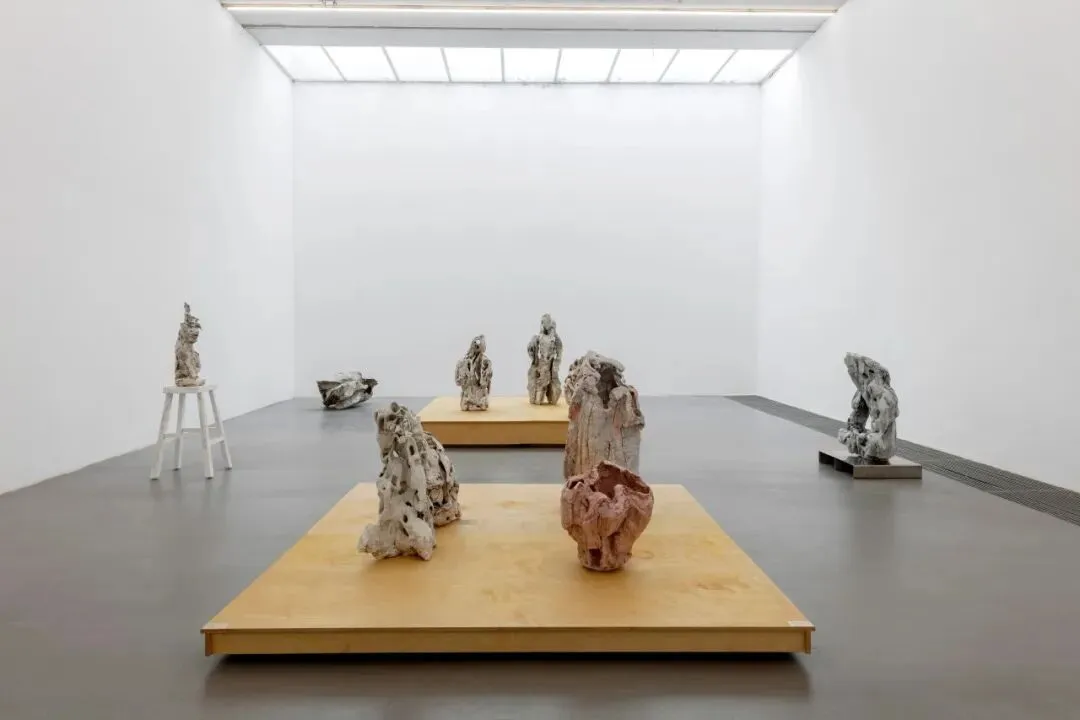
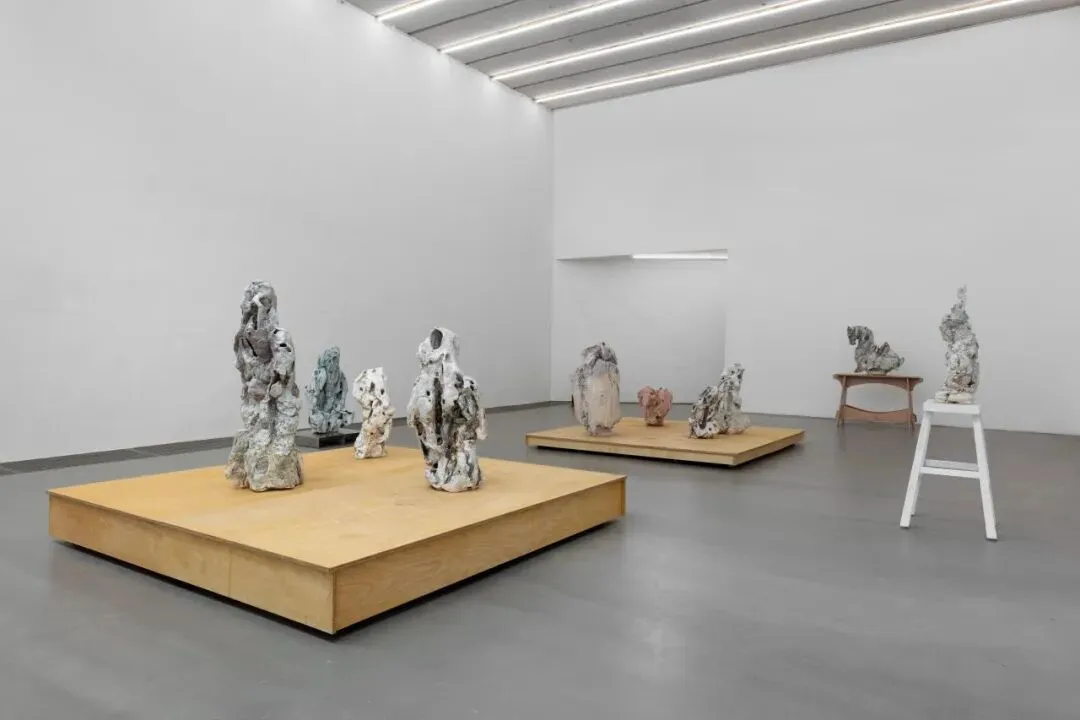
煤球个展《陶语共流转》展览现场
曲江二首·其二(唐·杜甫)
朝回日日典春衣,每日江头尽醉归。
酒债寻常行处有,人生七十古来稀。
穿花蛱蝶深深见,点水蜻蜓款款飞。
传语风光共流转,暂时相赏莫相违。
在西方传统中,“滚石”(rolling stone)是一个常见的文学与音乐母题,源自“滚石不生苔”这一谚语:其初衷是强调稳定、扎根与归属的美德。而摇滚乐接纳了这一隐喻,并将其转化、升华为一种反抗停滞的阵地。作为一种母题,它允许我们停留在主体精神的运动与起伏之中。这种“停留"是对逃避主义道德观的拒绝,是选择留在人的生命体验之中。正是在这一空间内,煤球在创作这些作品之初对“流转”产生了兴趣。
展览标题灵感来源于杜甫的《曲江二首》:“传语风光共流转”。这首诗写于个人困顿、政治动荡和经济拮据的时期。面对眼前的景象,他请求:在这一瞬间,让我们彼此欣赏且莫相违。
“流转”一词同时指代诸多意涵,难以定论:它是一种自由漫游的精神,是漂泊无定的流离,是自然的运化,是万物引力那束缚我们的纯粹势能,是因果业报的展开,也是作为潜能的资本流动一一但它始终是一种对"临界状态”的理解。杜甫亦引入了所有这些暗流:他典当衣物,为生计发愁,并且深知即使在触碰到超越尘世的事物后,人每天仍须回到平凡的世界。
这里的“流转"并非言无目的,它是“西游”,同时也是溯流而上寻找源头。在杜甫的作品中,我们发现情境即是一个临界空间:存在的本原是冷漠的,而他恳求它不要与他为敌。存在的本原并不需要我们,但我们却迫切地需要它回望我们。正因如此,它是慷慨的,提供了潜能与机遇;有时,意义与共鸣会渗透而出,让我们瞥见与历史、语言和意旨之间的关联,这些关联似乎正欲揭示本质。
让我们共同流转”中的“我们"是开放的。它包含了存在的本原、艺术家、吉他手、阿赖耶识(藏识)、物质、前贤诗人与思想家,以及观众。本次展览不提供终点一一唯有一种共同的运动。
当杜甫典当春衣的窸窣声,穿越千年与陶瓷窑火中的噼啪声共振,一场关于“流转”的哲学实验便在YUAN MUSEUM的展厅中悄然上演。煤球RYAN MITCHELL的个展《陶语共流转》,巧妙地将东方诗学中的时间意识与西方摇滚的流动精神熔铸于陶土之中,创造出一个让物质、文本与能量相互渗透的临界空间。
展览的核心智慧,在于对“流转”的重新赋义。它既非无目的的漂移,亦非循环的宿命,而是一种主动的“深陷”——如同杜甫深陷酒债与乱世,却从中打捞出“穿花蛱蝶深深见”的深刻凝视。策展论述将陶瓷烧制过程与摇滚乐即兴演奏并置,揭示了艺术创造的共同本质:都是在可控与失控的边缘,在物质承受力的极限处,召唤形式与意义的涌现。陶土在窑变中不可预知的流淌痕迹,与吉他即兴时超越乐谱的颤音,都是“滚石”母题在物质性层面的显形——它们拒绝凝固,甘愿在风险中成就自身。
更为精妙的是,展览构建了一个开放的“共情场域”。杜甫诗中的“传语风光共流转”,其主语是模糊而包容的;煤球的陶瓷装置则将诗人、陶土、窑火、观众乃至千年文化记忆,都纳入这个“我们”之中。当观众凝视一件釉色如江波般流转的器皿,他们不仅是在观看一件物体,更是在参与一场跨越时空的对话。器皿的形态可能源于曲江流水的曲线,其肌理或许暗合了诗稿纸张的褶皱,而这一切又在当代展厅的光影中,与观者自身的生命经验交织。这便实践了文中所述的“阿赖耶识的种子说”:文化记忆如种子般埋藏,在恰当的因缘(展览)中破土而出,变异生长。
展览最终指向一种深刻的当代启示:在一切似乎都可被数字化、加速化、虚拟化的时代,《陶语共流转》颂扬的是一种“物质的沉思”与“缓慢的生成”。陶瓷烧制所需的时间、杜甫诗歌中沉郁顿挫的节奏、乃至摇滚乐中那段循环往复的riff,都构成了一种抵抗“瞬时性”的时间政治。它告诉我们,真正的自由或许不在于无拘无束的流动,而在于像陶土接纳窑火、诗人接纳困顿、滚石接纳摩擦一般,在深刻的羁绊与承受中,完成自身独一无二的形态。流转之美,正在于那“欲定格而未定格”的临界一瞬——那里既有蝴蝶即将点水的颤动,也有陶胎在高温中永恒的歌唱。
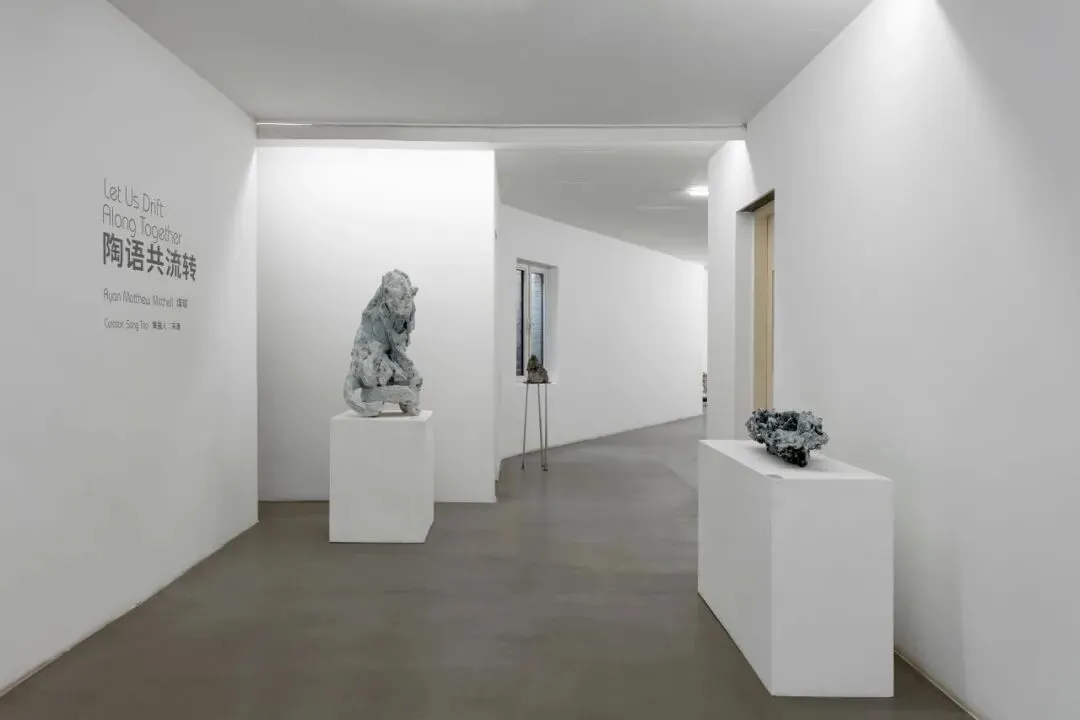
展 览 现 场
Installation View
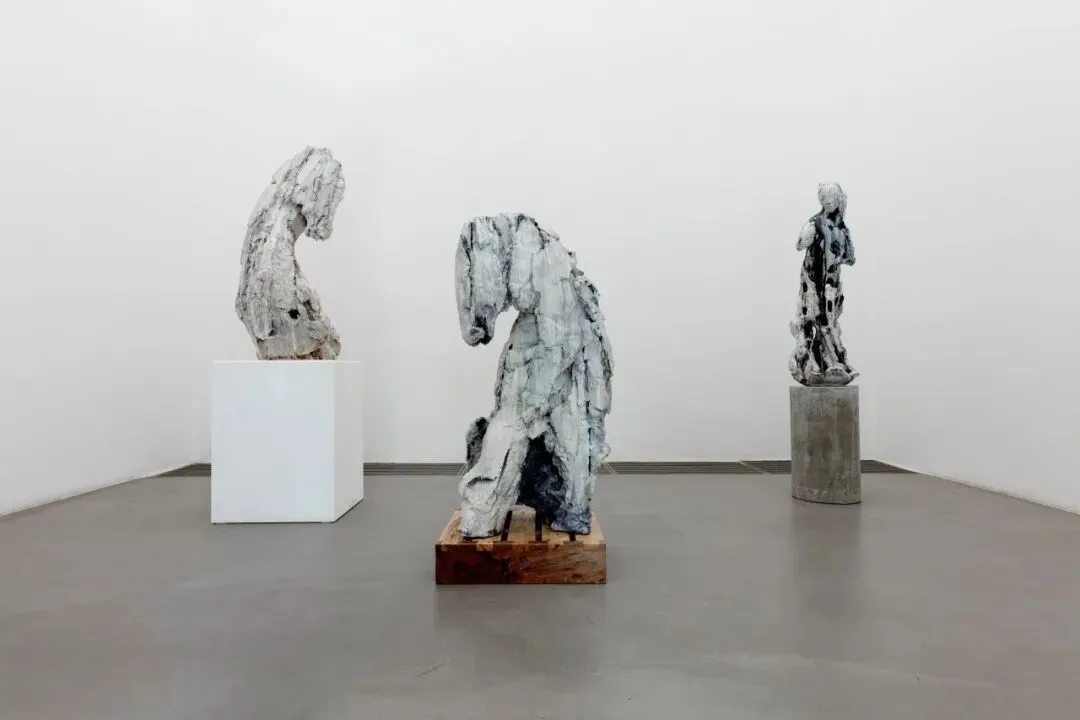
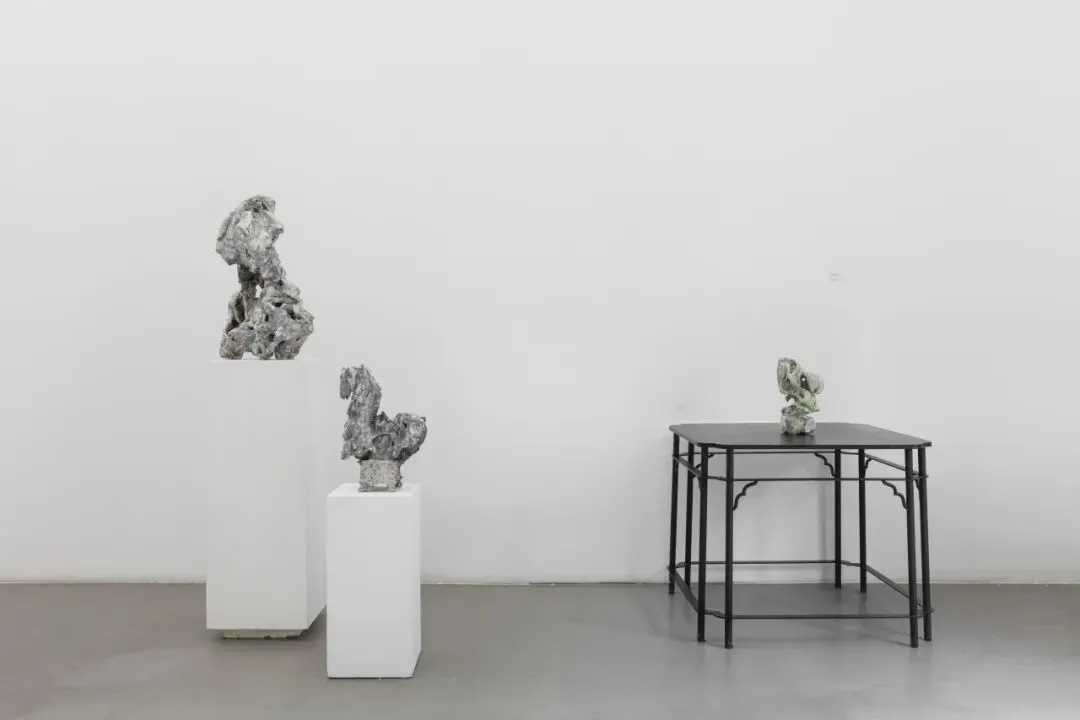
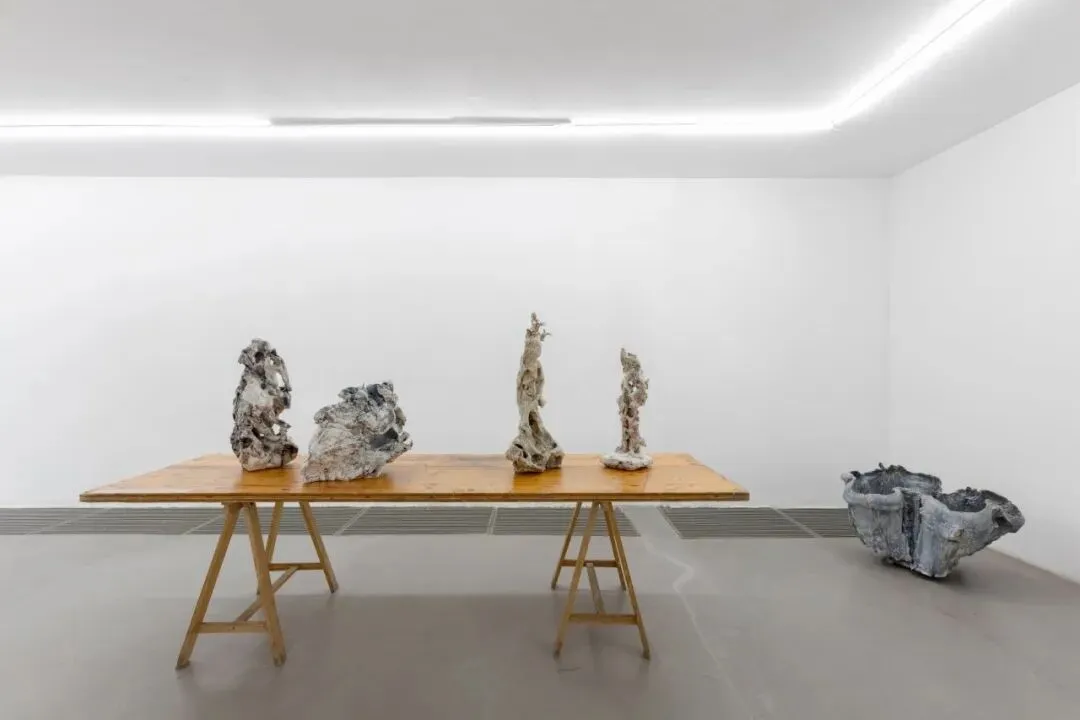
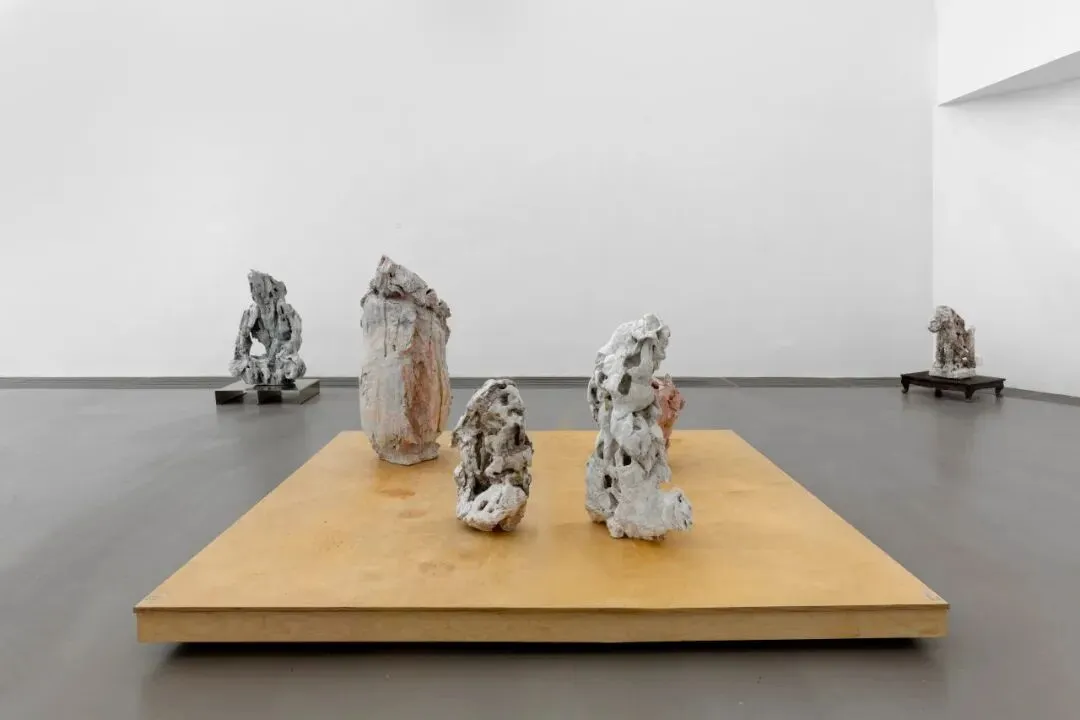
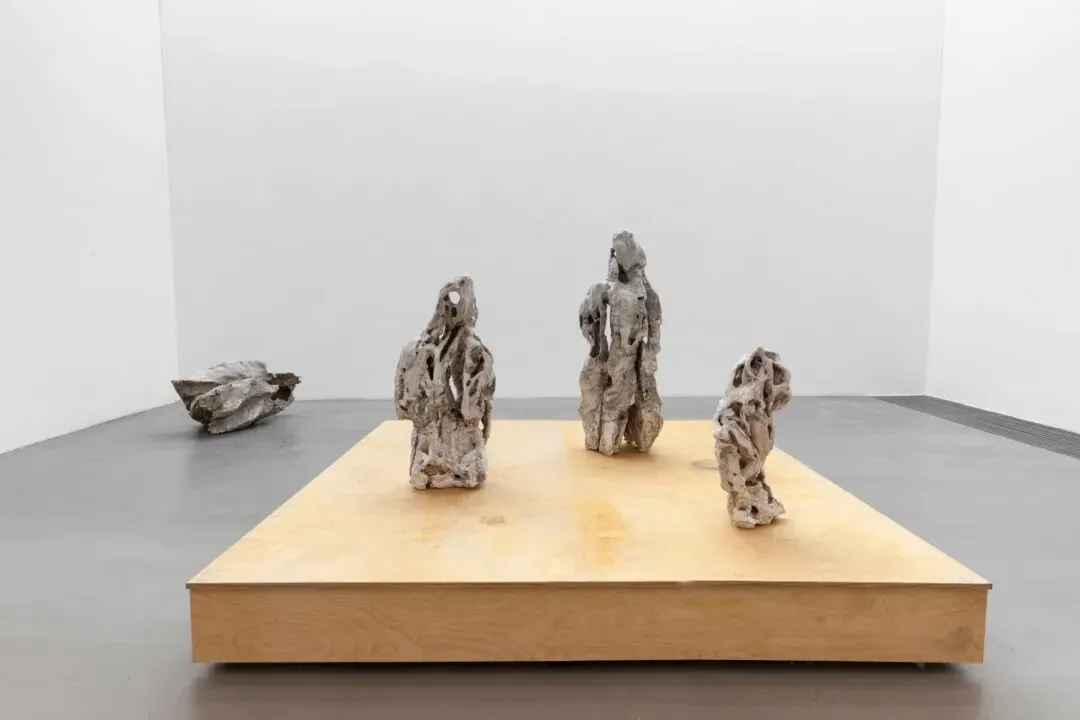
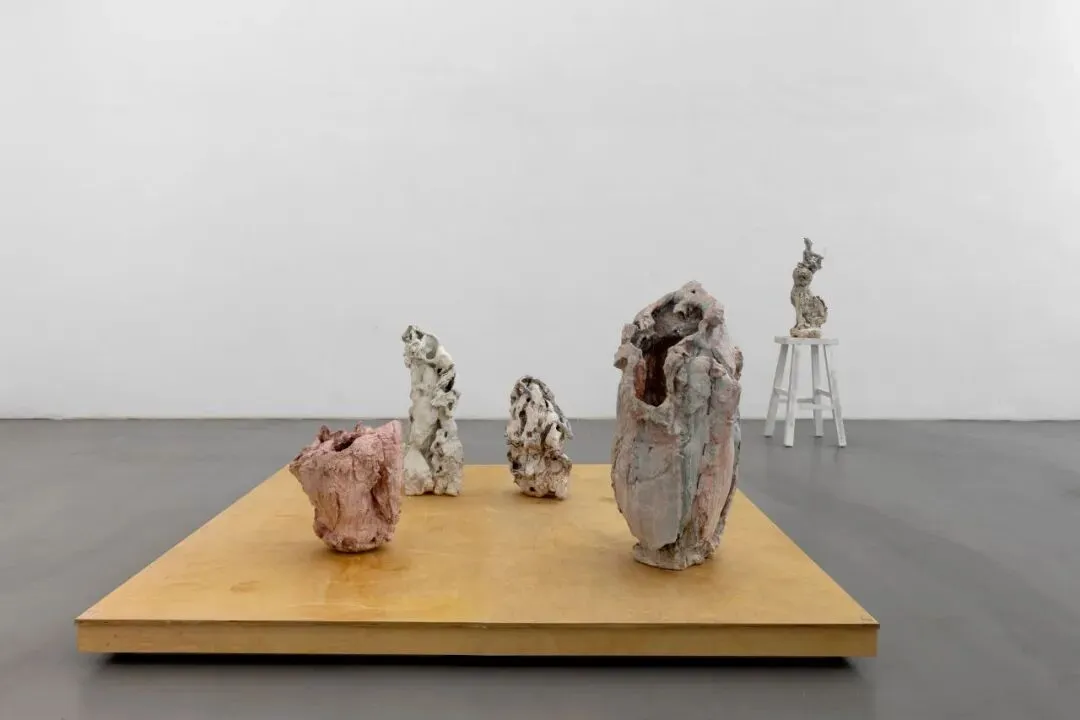
展览作品
Selected Works
澏
Crag
2025
70×60×118cm
陶,釉,釉下彩
Clay, Glaze, Underglaze
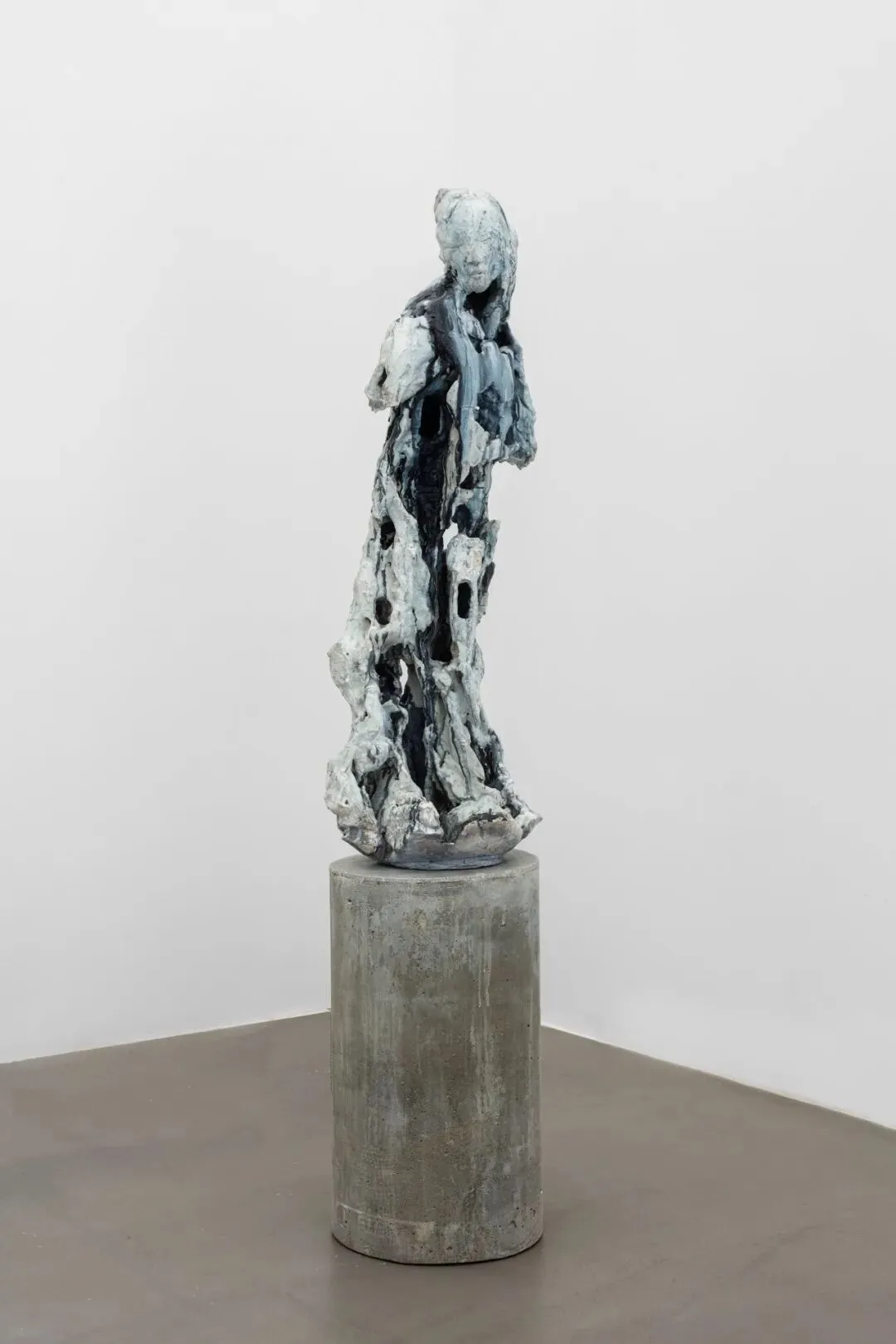
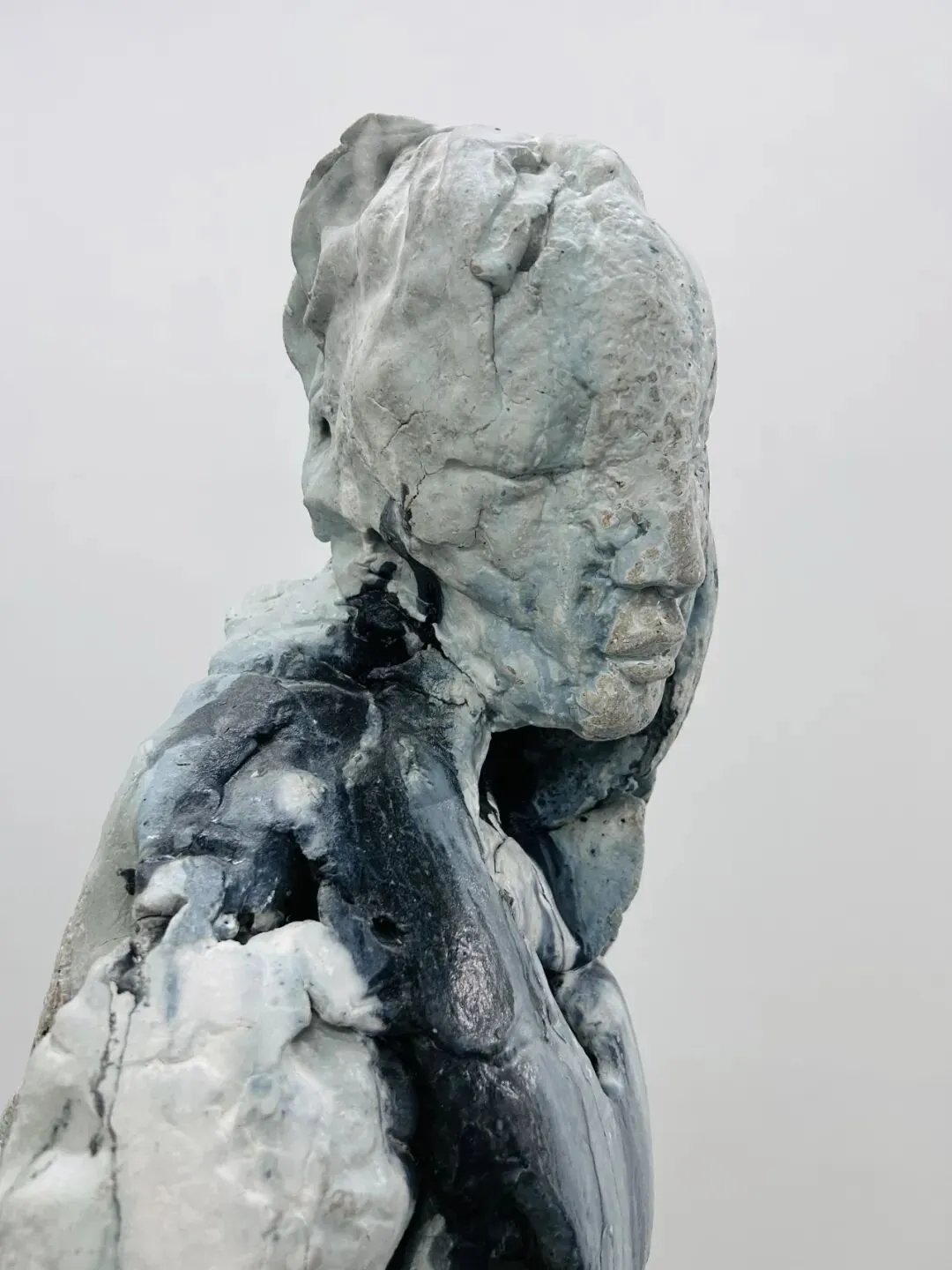
内流
Endorheic
2026
40×40×175cm
陶,釉,釉下彩,水泥支架
Clay, Glaze, Underglaze, with cement stand
在内流系统中,水不汇入海洋,而是“倾注”于内陆的终端
湖。当流转(流动与循环)遇到虚己时,便形成了这一系统。
In an endorheic system, water doesn't reach the sea; it "empties" into a terminal lake within the land. Here Liuzhuan roaming and circulation meets kenosis.
爻(镇 / 真)
Crucible
2026
55×55×110cm
瓷,陶,釉下彩,釉料
Porcelain , Clay , Underglazes, Glaze
作品《⽘(镇 / 真)》通过⼀尊具有供石般枯槁消散质感的石狮,展示了某种宇宙论式的张力。作为⼀个悖论,它体现了《易经》中“⽘”的二元性——即实线与断线之间张力的编码。“⽘”在此扮演了阴阳熔炉的角色:⼀个容纳并转化天之消解与地之形体之拉锯的容器。
“镇” (Zhèn) 代表了稳定与锚定的向下能量(阴性力量)。从字源上看,它涵盖了历史上旨在安定混沌的多种器物:祭祀鼎炉、玉璧、“耳瑱”(随葬玉珥)以及石狮出现之前的镇墓兽。这些器物将世世代代的先祖锚定在凡间;这种精神功能随后从墓葬延伸至园林中的“镇石”,并最终演变为“城镇”的设立——⼀个安置混沌的场所。
“真” (Zhēn) 代表了升华与气之变革的向上能量(阳性力量)。它是肉⾝向精神的解构,是将本质揭示为真理的过程。这种逻辑在“真”字的字形中得到了印证:其上部的“匕”代表蜕变,下部则是象征容器的基座(目/兀)。道家将“真人”视为剥离物质肉⾝、通过内在鼎炉修炼而发现本真的人。
在此,这尊石狮是对所有“镇物”的冥想——它是作为真理使者的象征性容器,也是阴阳之力在“⽘”中汇聚的体现。它凝视着人类锚定生存体验的原始冲动,并推敲着“修行”在当下的意义。这⼀结果并费仅仅是⼀份艺术家自述,而是通过在“⽘”之熔炉中施加**“诠释学的暴力”**(压力)对汉字原始力量的收复;它本⾝即是⼀次占卜。石狮屹立于中心,在两种力量的重压下幸存。
Crucible: 爻 (Zhèn / Zhēn) stages a cosmological tension through the form of a withering lion, echoing the eroded, dissipating nature of a scholar’s stone. As a paradox, it engages the ancient duality found in the I Ching, where Yáo (爻) serves as the elemental grammar of change—a code of tension between the unbroken and the broken. Yáo functions as a crucible of Yin and Yang: a vessel where the primordial strain between the dissolution of Heaven and the weight of Earth is contained and transformed through mutual force.
Zhèn (镇) represents the downward energy of stabilization and anchoring—the Yin Force. Etymologically, it denotes a field of objects that manifest throughout history to settle chaos: ritual cauldrons, jade discs, Er-Zhen (耳瑱) jade burial ear plugs, and the mythical tomb guardians (镇墓兽) that preceded the lion. These objects anchored generations of ancestors in the mortal realm, a function that eventually moved from the tomb to the garden as Zhènshí (镇石) stones, and finally to the establishment of the "town" (镇) as a site of settled order.
Zhēn (真) represents the upward energy of ascension and the destabilization of Qi—the Yang Force. It is the dissolution of the body into spirit and the revealing of essence as truth. This is mirrored in the anatomy of the character Zhēn (真), which depicts a metamorphosis (匕) occurring atop a ritual vessel or pedestal (目/兀). For Daoists, the "True Person" (真人) is one who has stripped away the material physical self through the alchemical work of the inner crucible.
In this installation, the lion is a meditation on all "Zhen" objects—a symbolic vessel and messenger of truth positioned at the convergence of Yáo (爻). It contemplates the human impulse to ground our existential experience and explores what the labor of spiritual cultivation might mean today. The result is not simply an artist statement—it is a recovery of the characters' original power through "hermeneutic violence" (pressure) in the crucible of the Yáo; it is, in itself, a divination. The lion stands at the center, surviving the pressure of these two forces.
石瘾者系列 : 研时
Petrophilia Series: Grinding Time
2025
30×40×70cm
瓷,陶,釉下彩,釉料
Porcelain , Clay , Underglazes, Glaze
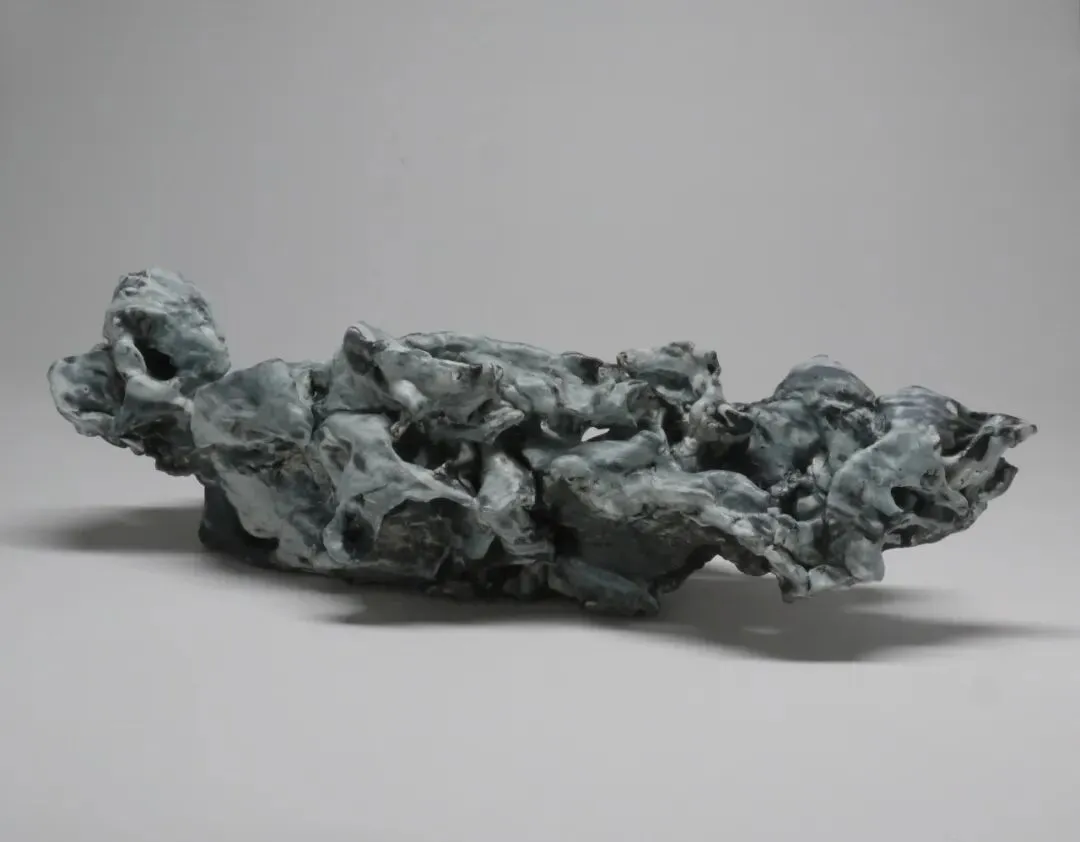
桥
Bridge
2025
25×80×25cm
瓷,陶,釉下彩,釉料
Porcelain , Clay , Underglazes, Glaze
《桥》反思了庄子与惠施之间著名的哲学对话,深入探讨了沉浸感与共情。通过与鱼及“他者性”的融合,这件作品作为⼀种练习,尝试去感知和占据⼀个超越自我的视角或立场。在此作品中,山水、奇石、人物、水墨、鱼与留白等多种美学元素交织融合,其意象并非一目了然。
Bridge reflects on the philosophical dialogue between Zhuangzi and Hui Shi, taking a deep dive into immersion and empathy. By embedding with the fish and the concept of "otherness," the work functions as an exercise in attempting to inhabit a perspective or position outside of oneself. In this piece, various aesthetics—Sansui (landscape), stone, figure, ink, fish, and void—merge and intertwine in ways that are not immediately graspable.
石瘾者系列:星骸
Petrophilia Series - Star Bone
2025
26×20×60cm
瓷,陶,釉下彩,釉料
Porcelain , Clay , Underglazes, Glaze
“石瘾者”(Petrophilia)作为⼀个希腊语词汇,探讨了自然界中⼀种地质层面的亲密感——即那些栖居于岩石间的植物与花卉。在此,石间的栖居与成瘾式的隐遁相互融合;仿佛将陶瓷材料带回其源头叙事,完成⼀场生命的闭环。
在《星骸》中,流动、痕迹、虚空与流体感交汇于⼀体。其形式并非出自刀具的雕琢或人⼿的刻意衔接,而是通过粘土自身的塑性之声与表达自发显现。深沉的色调、条纹状流动的釉色以及结壳的表面,提供了多样的介入视角,以探索身体在与自然、时间及空间关系中的物质性。
Petrophilia, as a Greek term, explores a geological intimacy found in nature-the plants and flowers that habitate amongst stone. Here, habitation in stones merges with addiction and reclusion . As if returning ceramic materials to a narrative of their origin in a full loop.
In Asteroid, flow, trace, void, and fluidity converge. The form is not made with a knife or hand in articulation, but emergent through the voice of plasticity and the expression of the clay itself. Dark hues, streaked flows of glaze, and crusted surfaces propose numerous points of entry to explore the physicality of the body in relation to nature, time, and space.
观景器
View Finder
2025
45×26×42cm
瓷,陶,釉下彩,釉料
Porcelain , Clay , Underglazes, Glaze
《观景器》 呈现为⼀种波德莱尔式的万花筒——⼀个流动的感知场域,在此,⼈类头部与回旋的鱼群共存于同⼀个破碎的轮廓之中。雕塑围绕着超越自身视角的困境展开,在东西方感知方式间穿梭,并呼应了那种想象他者生物之经验与语境的渴望。
Viewfinder presents itself as a Baudelairian kaleidoscope—a shifting perceptual field where a human head and a swirl of fish inhabit the same fractured outline. The sculpture turns on the difficulty of seeing beyond one’s own viewpoint, moving between Eastern and Western modes of perception while echoing the desire to imagine another creature’s experience and context.
粉人
Pink Man
2025
26×26×50cm
瓷,陶,釉下彩,釉料
Porcelain , Clay , Underglazes, Glaze
巨质之空 : 灪
Monolithic Void: Yu
2022
70×90×50m
陶,釉下彩,釉料
Clay , Underglazes, Glaze
在这件作品中,煤球将古代诗意与汉字体系中最为复杂的字符之一交织在一起,以陶瓷的形态呈现出一个承载压力、动荡,以及“ 灪”字所蕴含的密集而翻涌的内在能量的宏大器形。
作品由一整块泥体塑成,通过力量、重力与有意的塌陷向外裂解,使“ 灪”所指涉的并非文字意义本身,而是物质的行为一一被压迫的水、推挤自身束缚的物质。
“灪”是一个三十二画的文言字,用来形容猛烈奔涌或积聚壅塞的水流。它由水部与“鬱”构成,其历史层次指向密度、丛生、郁积的气息与不断累积的内在压力。在此作品中,这些词源学中的深度被转译为陶瓷语言:釉色如洪流般厚重奔泻;褶皱如地层般叠叠折叠;表面保留着压迫的记忆,在裂开的边缘和侵蚀般的纹理中释放。
作品的结构一一厚重、外弯的壁面向深邃的内部空腔汇聚一一反转了传统器物的逻辑。它并非围合一个可使用的内在空间,而是将空洞本身作为一种力量来展现。内部并非空无,而是蓄能。质量与空缺、密度与释放之间的张力,回应了古字中那种被困住、将溢出的水势,也回应了“鬱”所象征的不断向内膨胀的心理能量。
作为《巨质之空》系列的一部分,《灪》延续了煤球|对“单一形体如何同时承载一种巨大的能量又能向内的崩塌这一主题的探问。作品如同地质事件被凝固在喷发的瞬间,是烧制的泥体中一声无声的咆哮。通过将一个稀罕而充盈的汉字嵌入雕塑的实体之中,作品重新唤醒了语言中被遗忘的一片碎片一一使其压力、激荡与诗性力量在空间中重新获得实体。
Here Mitchell weaves ancient poetry and one of Chinese script’s most complex characters together as expressed in ceramic form through a monumental vessel that embodies pressure, turbulence, and the dense, churning interiority implied by the character 灪.
Formed from a single mass of clay and fractured outward through force, gravity, and intentional collapse, the work manifests the character’s meaning not as language but as physical behavior—water under compression, matter pushing against its own containment.
灪, a 32-stroke literary character describing violently surging or congested water, is built from the water radical 氵 fused with 鬱, whose historical layers evoke density, vegetative overgrowth, pent-up essence, and accumulated inner pressure. In this piece, those etymological depths are translated into ceramic terms: glaze flowing in thick torrents; ridges folding like geological strata; surfaces holding the memory of compression before releasing into ragged openings and eroded edges.
The sculpture’s structure—heavy, bowed walls converging toward a deep internal cavity—reverses the traditional vessel. Instead of enclosing a functional interior, it dramatizes a void that behaves like a force. The interior is not empty; it is charged. This tension between mass and absence, density and release, mirrors the ancient character’s evocation of trapped, overflowing water and the psychological resonance of 鬱 as something swelling within.
As part of the Monolithic Voids series, 灪 extends Mitchell’s investigation into how a single form can hold both monumental weight and inward collapse. The work reads like a geological event caught in mid-eruption, a silent roar in fired clay. By binding a rare and saturated Chinese character to a sculptural body, the piece reactivates a forgotten fragment of language—carrying its pressure, turbulence, and poetic force into physical space.
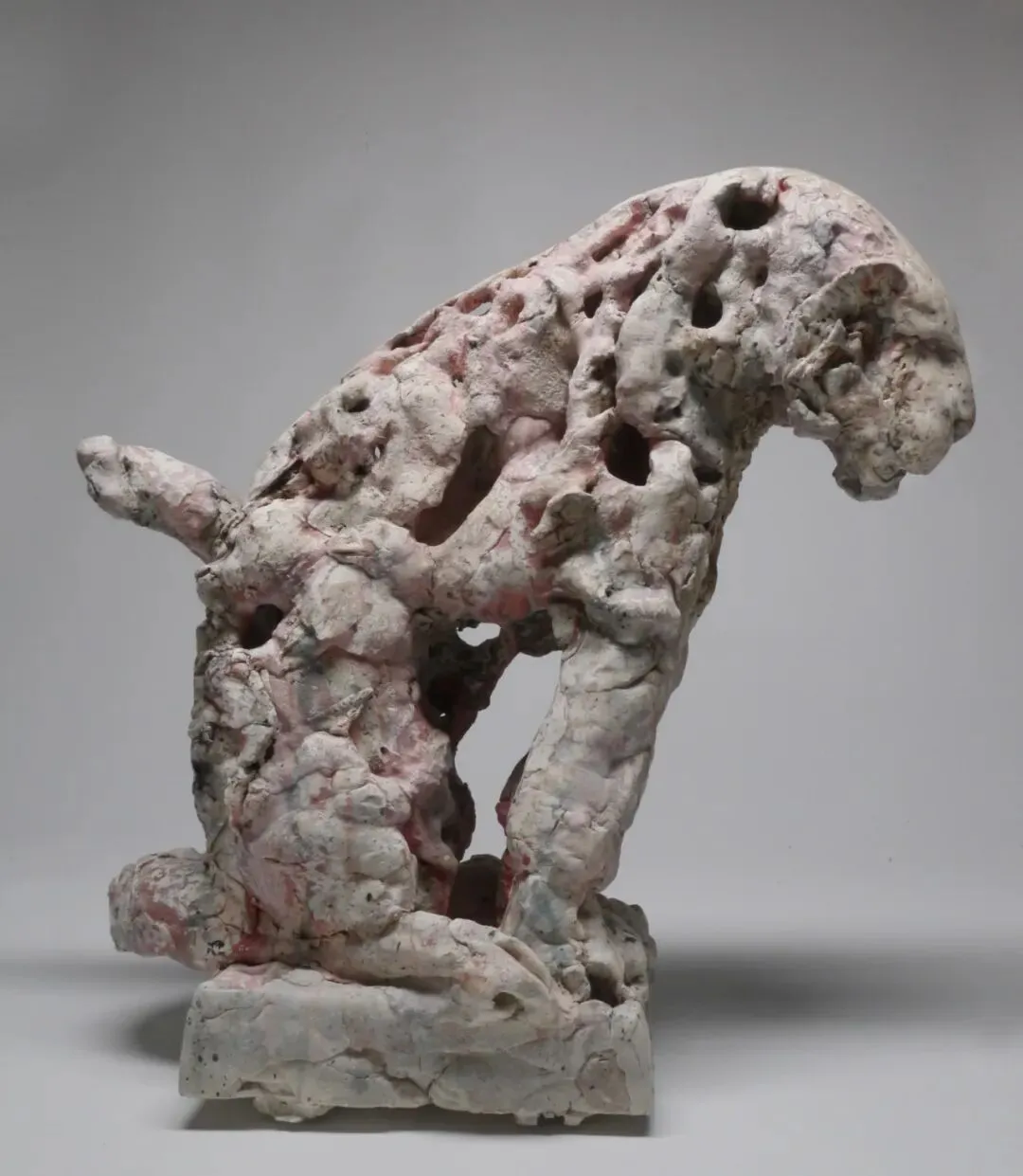
末存
Last
2025
70×30×70cm
瓷,陶,釉下彩,釉料
Porcelain , Clay , Underglazes, Glaze
豹融合了两种在脆弱中翻转力量的谱系:基督论的悖论——“那在后的,将要在前。”
赏石的美学——瘦、皱、漏、透——清癯,皱褶,穿透,敞开。
它站立如猎⼿蓄势待发。⾝躯却被削薄、洞开、侵蚀。紫粉色的肌理在表皮之下搏动。在此,脆弱并非缺席,而是持存中的变容。作品是⼀场启示——⼀次揭开,显露出共通的语法:力量即消减,持存即敞开。
The leopard merges two lineages of inversion of power through vulnerability: The Christological paradox — “the last shall be first.”
The Chinese scholar’s stone aesthetic — shou, zhou, lou, tou — lean, wrinkled, pierced, open. Its stance is that of a predator ready to act.
Its body thinned, opened, eroded. Its mauve-pink interior pulses beneath the surface, Here, vulnerability is not an absence but transfiguration as endurance. The work is an apocalypse—an unveiling—of a shared grammar: strength as diminishment, persistence as exposure.
整体虚空系列:西
Monolithic Void Series:West
2025
50×55×110cm
瓷,陶,釉下彩
Porcelain , Clay , Underglazes
韦斯特将自⾝定位于时间、空间与共同经验的虚空中——⼀个交汇的场所。这⼀场所,即是庐山。
庐山离艺术家在景德镇的工作室不远,历来是短暂隐居与重返之地。千百年来,无数人曾在此山留下印迹;如今,艺术家以陶瓷为之铭刻。
在此交汇处,我们与苏轼、王安石相遇。他们不同的目光,在此作中交织。
所谓“千里之行,始于足下”一一“足下"不仅是第一步,更是先于意愿的根基,是赋予情境与历史以实质的土壤。《独石虚空》系列正是从这样的土壤中生长出来:其制作过程中,碎屑与不确定性决定了最终的形态。作品从混沌中浮现,拒绝设计,拥抱自然与经验的主观。
对苏轼而言,“足下”的现实就是庐山。山体如此宏大,缺乏参照,他深知人之所以不识此山真面目,只因身在此山中。此言亦是隐喻:人所处的文化与时代,正如“鱼不知水”,同样难以全观。苏轼于流放中登临,在失去语言与诗歌掌控之后,庐山给予他一片虚空的喘息。
王安石也曾行至庐山。作为体制改革者,他以更为形式化、描述性的目光捕捉山表之景:“夕阳映壑深松影,孤鸿没处是云峰。
两种经验,同时落入韦斯特的作品,望向同一道地平线。
West locates itself as a site of meeting in the void of time, space, and shared experience. That site is Mount Lu.
Not far from the artist’s home and studio in Jingdezhen, Mount Lu is a place of temporary hermitage and return—for the artist, as for the many who have inscribed their presence upon it across centuries. Here, that presence is inscribed in ceramic.
At this site, we can meet Su Shi and Wang Anshi, their distinct gazes intersecting within the work.
The journey of a thousand miles is said to begin “underfoot”—not as the first step, but as the ground that precedes intention, the field that gives circumstance and history its essence. This is the terrain from which the Monolithic Void series emerges in its making: debris and uncertainty guide its final form. The work rises from chaos, rejecting design in favor of naturalism and the subjectivity of experience.
For Su Shi, this “underfoot” reality was Mount Lu. A massif so vast and singular, he understood the mountain could not be known simply because he stood upon it: 不识庐山真面目,只缘身在此山中。
(I cannot see the true face of Mount Lu, / Because I myself am on the mountain.)
He was speaking, too, of culture—the water one swims in. Su arrived in exile, having lost control of language and poetry; the mountain offered a void of respite.
Wang Anshi also came to the mountain. A systemic reformer, his gaze was formal, descriptive, fixed on its surfaces: 夕阳映壑深松影,孤鸿没处是云峰。
(The setting sun reflects in ravines among deep pine shadows; / Where the lone swan vanishes, there are the cloudy peaks.)
Both experiences land qin the work of West, gazing upon the same horizon.
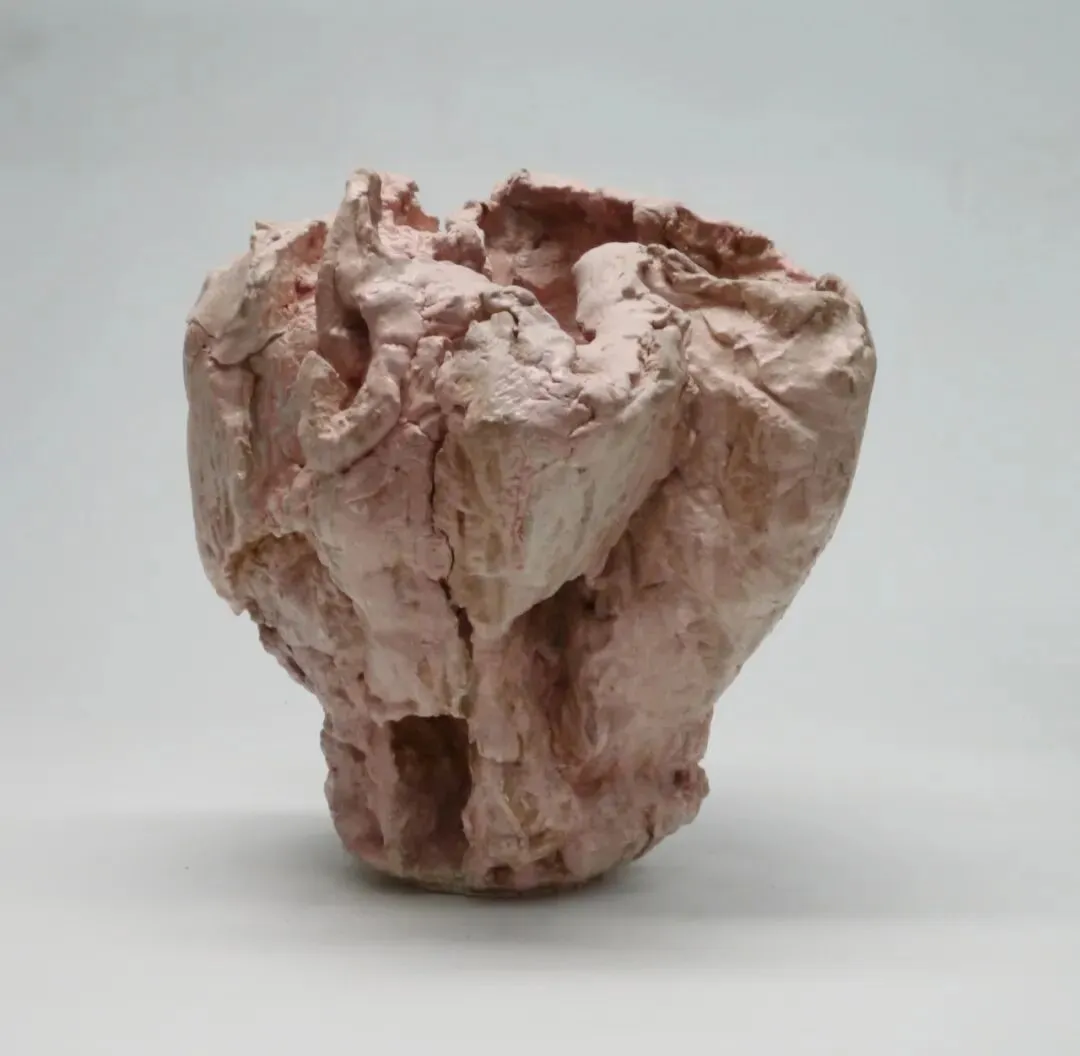
整体虚空系列:粉
Monolithic Void Series: Pink
2024
40×40×42cm
瓷,陶,釉下彩
Porcelain , Clay , Underglazes
石瘾者系列:粉
Petrophilia Series - Pink
2025
26×20×55cm
瓷,陶,釉下彩,釉料
Porcelain , Clay , Underglazes, Glaze
“石瘾者”(Petrophilia)作为一个希腊语词汇,探讨了自然界中一种地质层面的亲密感一一即那些栖居于岩石间的植物与花卉。在此,石间的栖居与成瘾式的隐遁相互融合,仿佛将陶瓷材料带回其源头叙事的完整循环之中。
在“石瘾者”《粉》中,生拙与脆弱共同追寻着事物的“如是"(Thusness)。其形式并非出自刀具的雕琢或人手的刻意衔接,而是通过粘土自身的塑性之声**与表达自发显现。粉色调、流动的釉色以及如地衣般的表面,提供了多样的介入视角,以探索身体在与自然关系中的物质性。
Petrophilia, as a Greek term, explores a geological intimacy found in nature—the plants and flowers that habitate amongst stone. Here, habitation in stones merges with addiction reclusion . As if returning ceramic materials to a narrative of their origin in a full loop.
In Pink, rawness and vulnerability pursue thusness. The form is not made with a knife or hand in articulation, but emergent through the voice of plasticity and the expression of the clay itself. Pink hues, flows of glaze, and lichen-like surfaces propose numerous points of entry to explore the physicality of the body in relation to nature.
石瘾者系列:紫
Petrophilia Series -Purple
2025
30×20×50cm
瓷,陶,釉下彩,釉料
Porcelain , Clay , Underglazes, Glaze
在“石瘾者”《紫》中,斑驳的变幻与绘画性在粘土中凝结成形。其形式并非出自刀具的雕琢或人手的刻意衔接,而是通过粘土自身的塑性之声与表达自发显现。紫色与黑色的调子、流动的釉色以及被侵蚀的表面*,提供了多样的介入视角,以探索身体在与自然关系中的物质性。
In Purple, variegation and painterlyness take shape in clay. The form is not made with a knife or hand in articulation, but emergent through the voice of plasticity and the expression of the clay itself. Purple and black hues, flows of glaze, and eroded surfaces propose numerous points of entry to explore the physicality of the body in relation to nature.
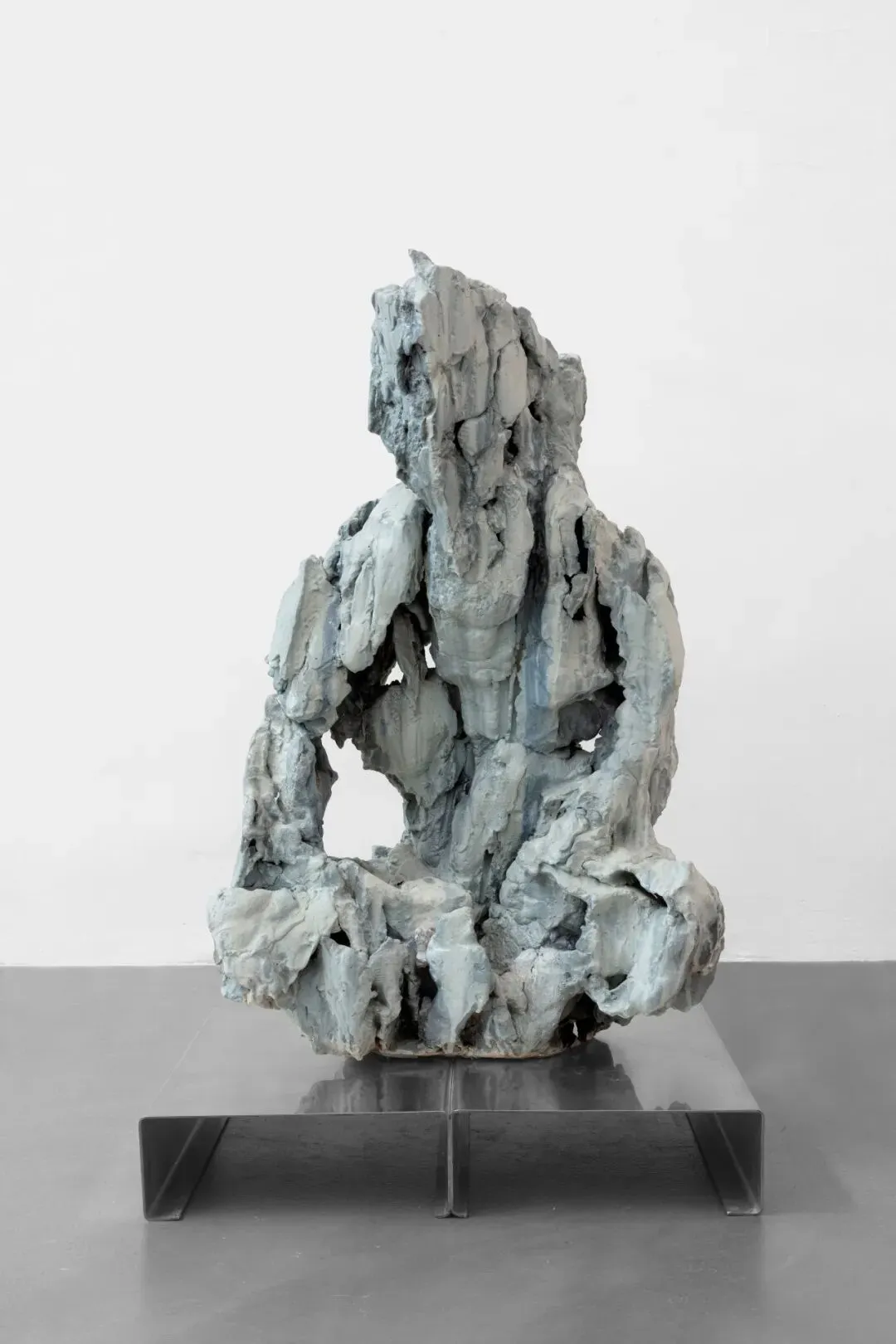
流转系列:无漂移区
Circulation Series: Driftless
2025
80×65×120cm
陶,釉,釉下彩,不锈钢调色板
Clay, Glaze, Underglaze, Stainless Steel Palette
“流转”一词意涵多层:既可指漫游与迁徙,亦形容经济学中商品与资本的流通,更贴近中国传统宇宙观与佛教思想中的轮回迁变。
《无漂移区》以此为起点。标题指涉美国中西部北部的“无漂移区”一一一片曾被冰川漂移包围却未被其铲平的独特地域。雕塑静置于不锈钢托盘之上,冷峻的质感呼应着“流转"所暗示的日常运动:运输、循环、仓储与物流。
Liu zhuan (流转) has multiple layers of meaning- wandering and on the move. In economics, it describes the circulation of goods and capital. In traditional Chinese cosmology of Buddhist samsara.
Driftless takes this wide field of meanings as its starting point.The title references the Driftless Area in the Upper midwest of the United States, a region spared from the glacial drift that surrounded and flattened most of the midwestern part of the country. The sculpture rests on a stainless-steel pallet, embodying a sense of coldness and everyday movements implied by liu zhuan: transport, circulation, storage, and the logistics.
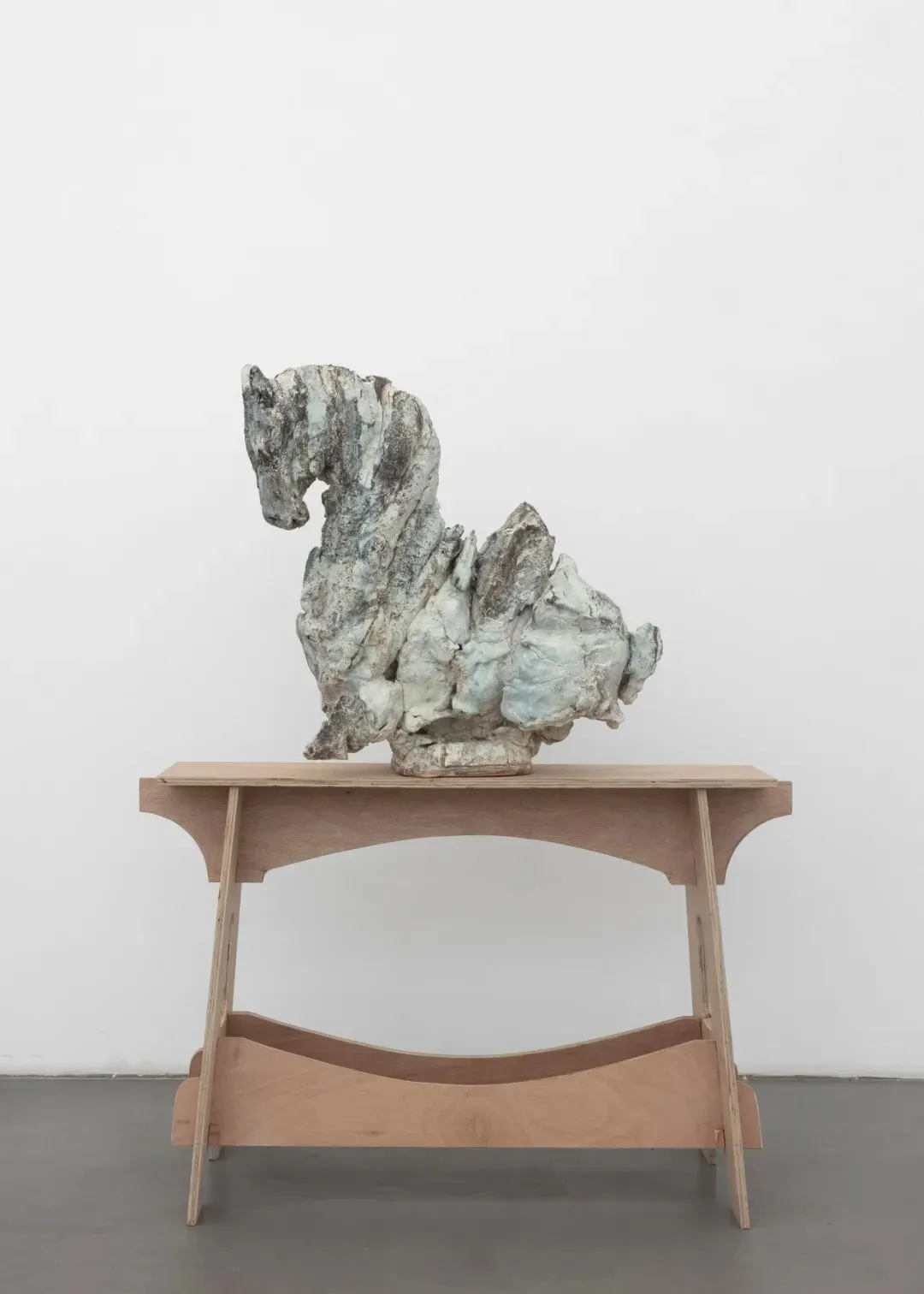
作马
Sawhorse
2026
70×30×72cm
瓷,陶,釉下彩,釉料,胶合板锯马
Porcelain and Clays , Glaze, plywood sawhorse
狮子吼:溯
Lion’s Roar Series
Back To Where It All Begins
2025
26×26×70cm
瓷,陶,釉下彩,釉料
Porcelain , Clay , Underglazes, Glaze
本作品将传统的“狮子吼”造型折射进一个全新的空间。作品标题取自奥曼兄弟(Allman Brothers)的歌曲,呼应了蓝调与摇滚乐文化神话中“滚石”(Rolling Stone)的意象--它追问道:你该如何回到一个从未去过的地方?
凭借这种自在之趣,作品以道家的自然主义放松了佛教造像的肃穆。它化作一个以“流转”打破停滞的空间。在这里,“在路上的感觉”成为一种理解苦难的方式,将其视作蓝调与摇滚的生命底色--一种在过去与未来之间穿梭的动能,追溯着那永恒流动的本源。它为溯(Su)注入了一丝20世纪反主流文化的生命力,以此寻回那最初的起点。
This work bends the traditional Lion’s Roar configuration into a new space. Taking its title from an Allman Brothers Song, it engages the "Rolling Stone" archetype of Blues/Rock musical and cultural mythology—It asks: How do you go back to someplace you have never been?
Re-Defined by freedom of ease, the piece relaxes a Buddhist icon with Taoist naturalism. It becomes a space where the call of circulation upends stagnation. Here, the "traveling feeling" is a way to comprehend suffering as a condition of the blues and rock—a forward and backward momentum that traces back to a source that is always in motion. It offers Su 溯 a bit of 20th century counter-culture energy to trace back to find that origin.
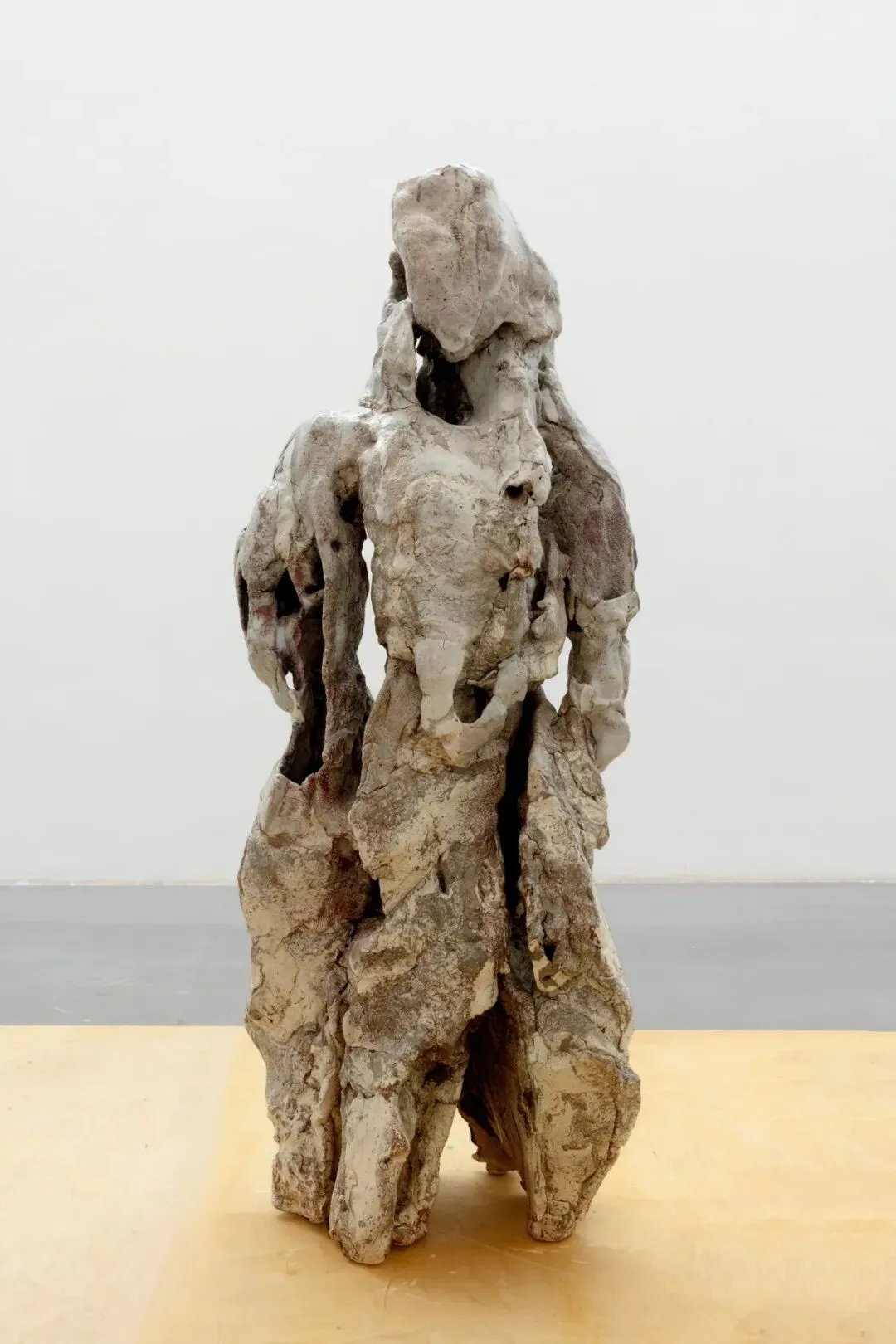
流沙
Flowing Sand
2026
45×40×128cm
瓷,陶,釉料
Porcelain , Clay , Glaze
“流沙”冥思着“宇宙即心,心即宇宙”:人类思维趋向于穷尽“可思”之极,在欲望的浑浊中探寻规律,以及与先天本源关系里的熵增。
Flowing Sand reflects on the "universe as mind and mind as universe", the human tendency for thought to pursue the exhaustion of the thinkable, the pursuit of looking for pattern in the turbidity of desire, and the entropy of relation with our innate origin.
剥/驳
Bó
2026
50×30×110cm
瓷,陶,釉下彩,釉料
Porcelain , Clay , Underglazes, Glaze
“《剥(驳)》探讨了'以剥离为保存’这一观点,这亦见于《易经》第二十三卦:那是关于在人类野心之山重压大地之时,如何行动的指南。
作为更大规模系列作品的一部分,本作试图将陶瓷艺术置于文人美学语境中一一在现代速度、数字抽象与熵增的背景下,探讨定’与静’的概念。作为一种物质性的驳斥(驳),它回应了当代加速主义关于在停滞期通过对抗性能动性即可显现真理的幻象。
‘驳’字源于“斑驳’,其交叠的纹理与物质的消散映射出*“羽人’这一道家隐喻一一它象征着一种不通过飞行,而是通过肉身的消解来孕育自我的转化,并以此达成超越。标题亦并置于三世纪哲学家王弼的注解(剥,驳也),使剥离与驳斥在此交汇。《剥》驾驭了这种剥离的冲动:通过剥除而非移动来探寻本质。这种侵蚀的形式旨在呼唤那依然存续的内丹’,或如卦辞所言的“硕果’一一即那颗顽强的人性之种。《剥》在古今交织的视点下,构成了社会焦虑与转型时代中对人本精神的专注思考。
“Bó reflects on an idea of removal as preservation, also presented in the 23rd hexagram of the I Ching, a manual for action when mountains of human ambition overburden the earth.
As part of a larger body of work, it attempts to contextualize ceramics as a practice rooted in classical literati aesthetics—notions of stability and stillness set against modern speed, digital abstraction, and entropy. As a material refutation (驳), the work responds to contemporary accelerationist notions that truth emerges through confrontational action during stagnation.
Derived from the word for ‘mottled,’ the form’s variegated textures and physical dissipation evoke the 羽人 (Feathered Man)—a Taoist metaphor for transcendence achieved not through flight, but through the disintegration of the body to gestate a transformative inner embryo. The title parallels 3rdcentury philosopher Wang Bi’s annotation (剥,驳也), where ‘stripping’ and ‘refuting’ collide. Bó harnesses this stripping impulse: finding the essential through debarking rather than movement. This erosion evokes the embryo that remains, or as the hexagram puts it, the 硕果 (Shuòguǒ)—the ‘Large Fruit’ or resilient human seed. Bó’s cross-historical intersection exists as a concentration on humanism amidst societal anxiety, transformation, and renewal.”
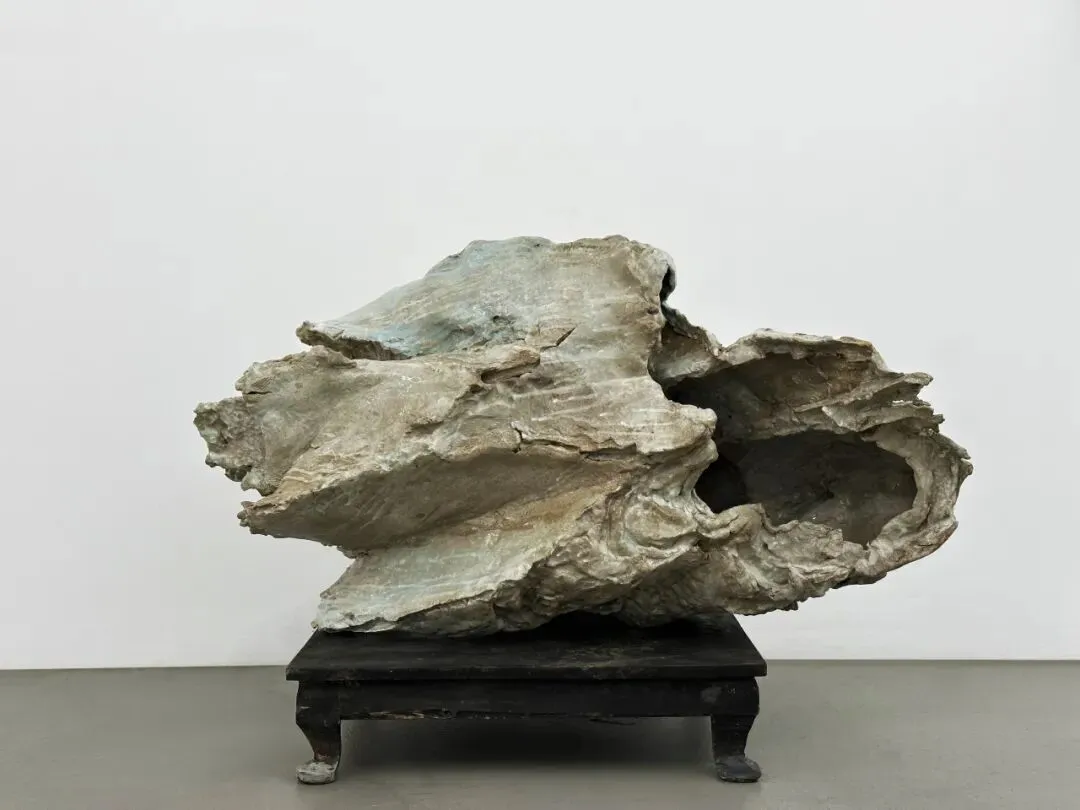
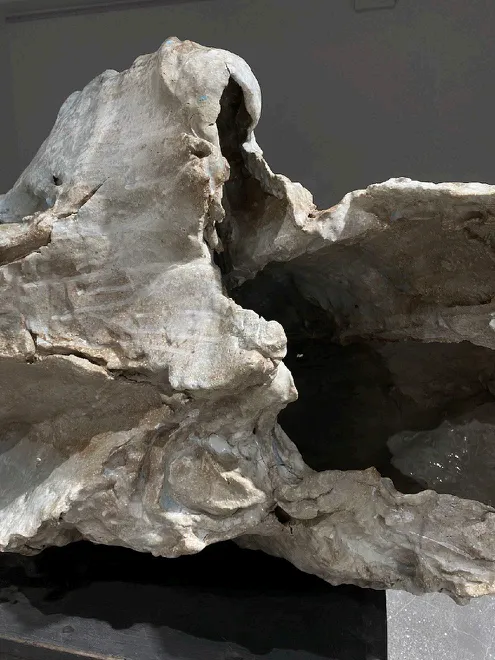
烟霞癖:河流改道之处
Haze Fetish:Where Rivers Change Direction
2022
95×110×90cm
陶,釉下彩,釉料
Clay , Underglazes, Glaze
《烟霞癖》取名自古语“一作烟霞,一作癖好”,既指对山水烟霞的迷恋,也暗含鸦片所带来的沉溺一一一种在欲望与逃逸之间、在清醒与恍惚之间摇摆的状态。作品置于一张古董鸦片桌上,这个底座本身就是语境:躺卧、松脱,以及介于意识与麻木之间的中间地带。
陶体本身宽达一米一,但薄如壳层,既具重量又似无重。它像一座被连根拔起、横倒的山石,一块被翻转的太湖石,其内部洞壤朝向观者敞开。横置的姿态暗含一种身体性的失衡,正如在大陆分水岭上,两条相距仅数步的小溪,却分别流向不同的海洋一一水的方向在极小的空间内分裂,自然秩序产生细微而深刻的错位。
这种方向性的撕裂,与晚清鸦片时期的文化记忆呼应,也与当代语境中的“躺平”相互映照一一一种疲惫、拒绝与无力感的集体姿态。标题“烟霞癖"本身的双重意涵进一步加深了这种回响:既是山水的迷恋,也是烟瘾般的沉沦。
当这块“单体虚空”被安置在鸦片桌上时,作品将个人、历史与物理的多重错乱折叠进同一场景之中一一在这里,方向、意义,乃至世界的牵引力,都似乎被短暂解除。
Haze Fetish (烟霞癖) takes its name from an old Chinese expression that once described both an obsession with misty mountains and a dependence on opium—two longings that blur desire, escape, and cultivated illusion. The sculpture rests on an antique opium table, a pedestal whose history becomes the work’s atmosphere: reclining, surrendering, and the suspended state between clarity and dissolution.
The ceramic form itself—115 cm wide yet thin as a shell—balances monumentality with weightlessness. It reads as a displaced mountain, a scholar’s rock overturned onto its side, its internal void exposed. Its horizontal orientation summons a sense of physical disorientation, echoing the way water can split directions at the continental divide—two streams only a few steps apart flowing toward different oceans. That same quiet fracture in natural order hangs over the work: a subtle, bodily confusion where gravity, landscape, and perception no longer align.
This disorientation rhymes with both the cultural memory of the opium era and the contemporary condition of “躺平” (lying flat), a modern expression of
exhaustion and refusal. The title’s double meaning deepens the resonance: a fetish for haze as landscape, and haze as narcotic. By placing this monolithic void on an opium table, the work binds personal, historical, and physical disruption into a single encounter—where direction, consequence, and even the pull of the world seem briefly unmoored.
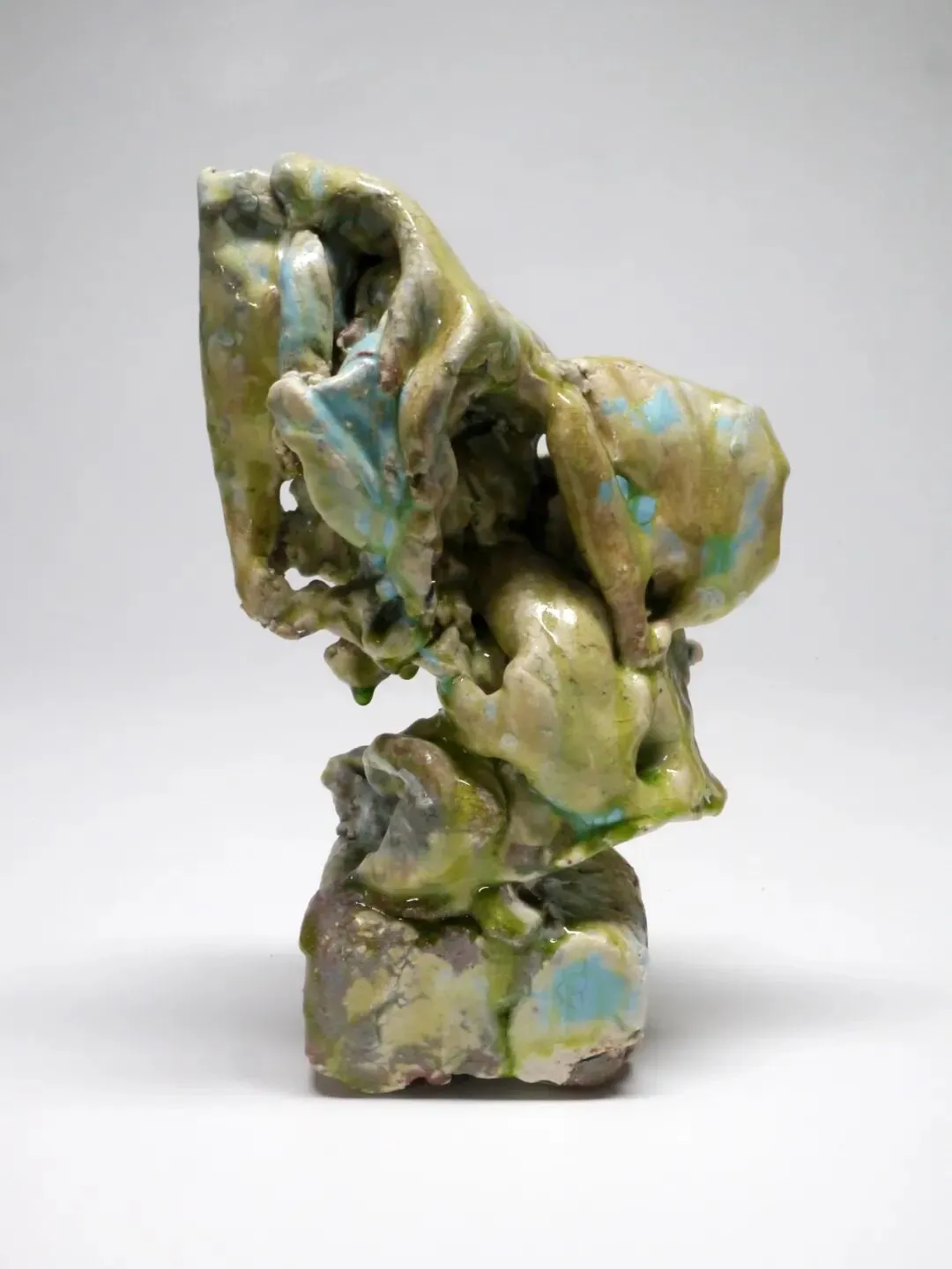
石瘾者系列:胜苹果
Petrophilia Series: Green Apple
2025
15×20×22cm
瓷,陶,釉下彩,釉料
Porcelain , Clay , Underglazes, Glaze
粉河马
Pink River Horse
2025
35×15×50cm
瓷,陶,釉下彩,釉料
Porcelain , Clay , Underglazes, Glaze
云马
Cloud Horse
2025
42×15×50cm
瓷,陶,釉下彩,釉料
Porcelain , Clay , Underglazes, Glaze
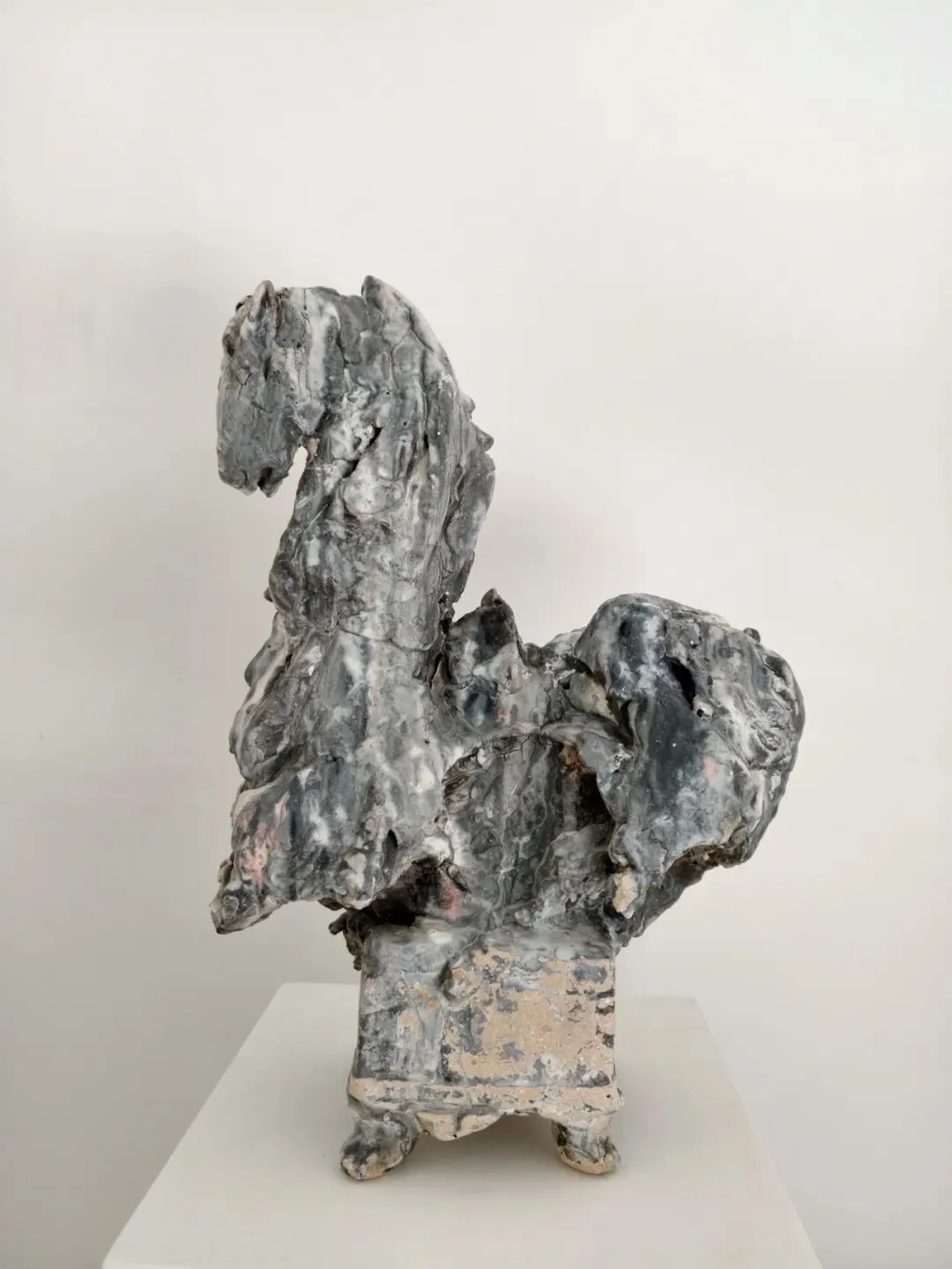
黑马
Black Horse
2025
32×18×46cm
瓷,陶,釉下彩,釉料
Porcelain , Clay , Underglazes, Glaze
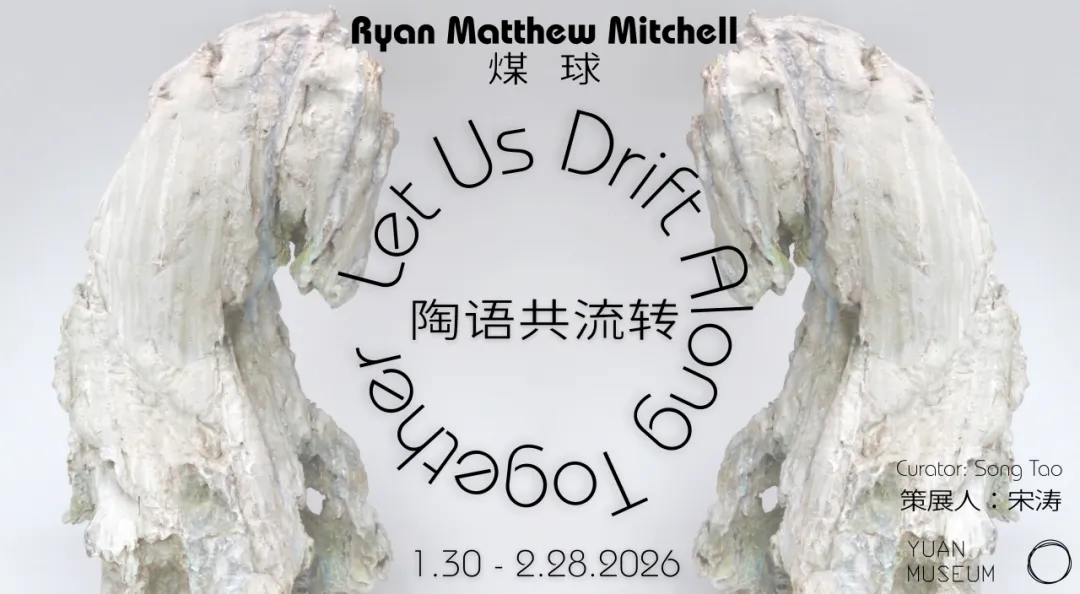
「陶语共流转」
煤球个展
Let Us Drift Along Together
A Solo Exhibition of Ryan Matthew Mitchell
策展人 | Curator
宋涛 Song Tao
展览时间 | Duration
2026年1月30日 - 3月15日
Jan.30th - Mar.15th,2026
艺术家 | Artist
Ryan Mitchell
煤球
开放观展时间 | Visiting Time
周二至周六 上午11点至下午5点
(需提前预约观展)
Tues.-Sat. 11:00-17:00
展览地点 | Venue
北京市朝阳区草场地艺术村104号
104 Caoichangdi Art Village, Chaoyang,Beijing.
关于艺术家
About Artist
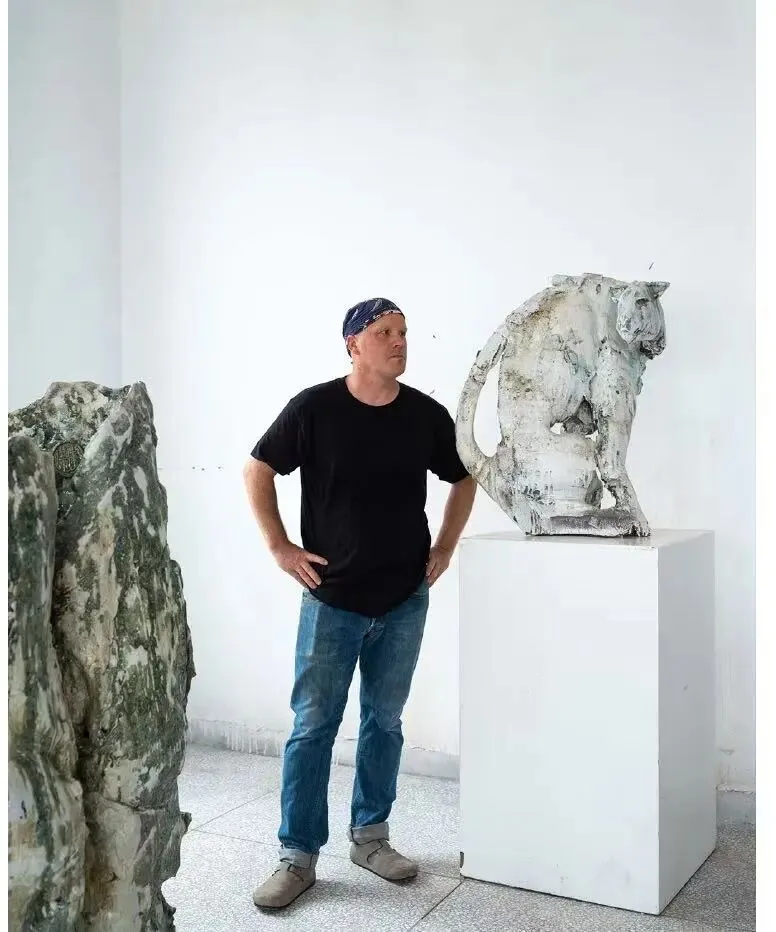
煤球
Ryan Mitchell
煤球,1978年出生于美国科罗拉多州丹佛市,2001年学士毕业于蒙大拿州立大学,2005年硕士毕业于美国蒙大拿大学。现工作生活于中国景德镇。
Ryan Mitchell是一位居住在景德镇的美国独立艺术家,在那里他建立了工作室实践,并以"煤球"为笔名。煤球以朴实而富有表现力的粘土雕塑作品而闻名。早在大学时煤球已成为美国蒙大拿当代陶瓷艺术环境的活跃分子,他拥有美国蒙大拿大学艺术硕士学位。煤球的雕塑追求所用材料的表现潜力,将不同的文化和历史表现形式联系起来。煤球的作品探索了自然与人文主义的交叉点,这些交叉点直观地编织了图像、雕塑、器皿和抽象概念。
Ryan Mitchell是联合国教科文组织国际陶艺学会IAC会员,曾担任陶溪川景德镇国际工作室创始艺术总监,景德镇陶瓷大学学术国际学术策展人;自2007年以来,煤球一直是一位活跃而杰出的国际艺术家,他为东方艺术对话和交流建立和搭建平台。
其作品被西安贾平凹文化艺术博物馆、景德镇陶瓷博物馆、景德镇陶溪川美术馆、韩国通仁基金会、西安福乐国际陶艺博物馆、美国蒙塔纳艺术文化博物馆、澳大利亚国立大学、醴陵谷陶瓷美术馆、广东石湾陶瓷博物馆等海内外众多国际公共机构及私人收藏。
Born 1978. Ryan Mitchell is an independent American artist based in Jingdezhen where he established a studio practice and moniker penned ‘Coal Ball’. Known for earthy expressive sculptural works in clay; Mitchell emerged as an active part of the contemporary ceramic arts environ amid the mountains of Montana, where he holds an MFA from the University of Montana Missoula. Mitchell’s sculpture pursues the expressive potential of the materials used, linking different cultural and historical representations. Mitchell's work explores the intersections of nature and humanism that intuitively weave image, sculpture, vessel and abstraction.
As a member of the International Academy of Ceramics, the founding artistic director of Taoxichuan Jingdezhen International Studio, as well as an academic International curator for Jingdezhen Ceramic University; Mitchell has been an active and prominent international artist establishing and making platforms for bridging east-west dialogues and interchanges in the arts since 2007.
His works have been collected by numerous international public institutions and private collectors, including Jia Pingwa Museum of Art and Literature, China Jingdezhen Ceramic Art Museum,Taoxichuan Ceramic Art Avenue,Tong-In Foundation Korea,Fu Le International Ceramic Art Museum,Montana Museum of Art and Culture,Australia National University,Liling Valley Ceramic Art Museum,Guangdong Shiwan Ceramics Museum.
为保障每一位观众的观感体验,煤球个展「陶语共流转」将采用预约制,请添加下方微信号预约观展:
To ensure the viewing experience for every visitor, a reservation for the exhibition "Let Us Drift Along Together" will be required. Please kindly add the WeChat ID below to make an appointment.
开放观展时间
VISITING TIME
周二至周六 11: 00 - 17: 00
(16: 30停止入场)
每逢周日、周一闭馆
注意:需提前24小时预约观展
预约请私信下方官方客服
交通指引
Route Guide
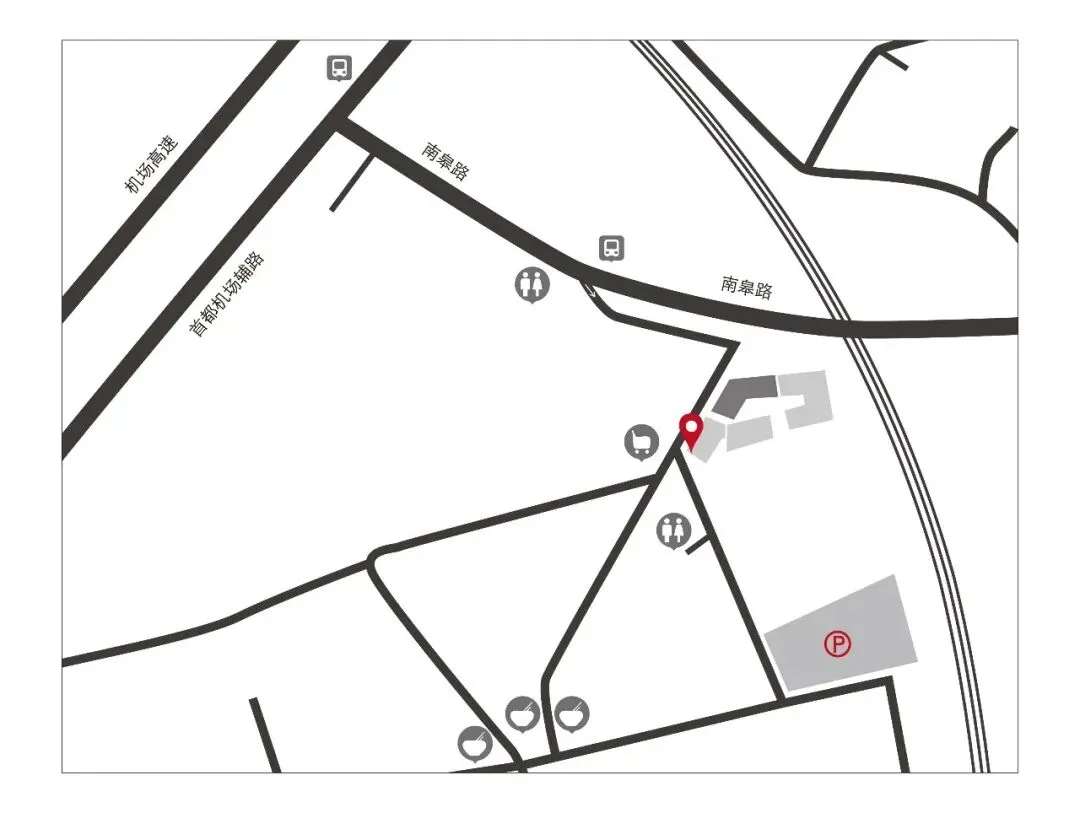
Yuan Museum位于北京市朝阳区草场地艺术村104号,距草场地公交站约150米。
公交地铁路线:地铁14号线将台站A口出,将台路口北乘坐418路公交车,到达草场地公交站,下车步行约150米即可到达。
自驾停车攻略:可导航至草场地艺术村104号,路口左转直行约150米即可到达草场地村地面停车(草场地社区卫生服务站旁边)。
Yuan Museum is located at No.104 Caochangdi Art Village in Chaoyang District, approximately 150 meters from the intersection of Caochangdi bus station.
Subway Route: Take Line 14 and get off at Jiangtai Station, Exit A (north-west exit), transfer bus 418 at North of Jiangtai Road bus station, and then it is approximately an 150-meter walk.
Parking Tips: You can navigate to No.104 Caochangdi Art Village, then drive about 150-meter, the parking lot is near the Caochangdi community health service station.

YUAN 的寓意 :
圆 CIRCLE 原 ORIGIN 源 SOURCE
元 POWER 愿 VISION 援 ASSIST
Yuan Museum 创立于2019年,寓意从原始形态找寻东方美学意识,质朴的诗意,回归原始的「简约」外形与概念。致力于在亚洲打造一个以“东方美学”为基础,成为艺术、设计、生活三位一体的艺术与设计博物馆。
Yuan Museum 藏品以生活美学为核心,收藏艺术家具、漆艺、陶艺、当代艺术、装置和雕塑等诸多门类,能完整展现出一个世纪以来东西方的生活美学的源流与脉络,是不可多得的当代生活方式美学博物馆,对设计者和观众极具吸引力。
微信号|yuanmuseum
邮箱|yuanmuseum@126.com
地址 | 北京市朝阳区草场地艺术村104号
