
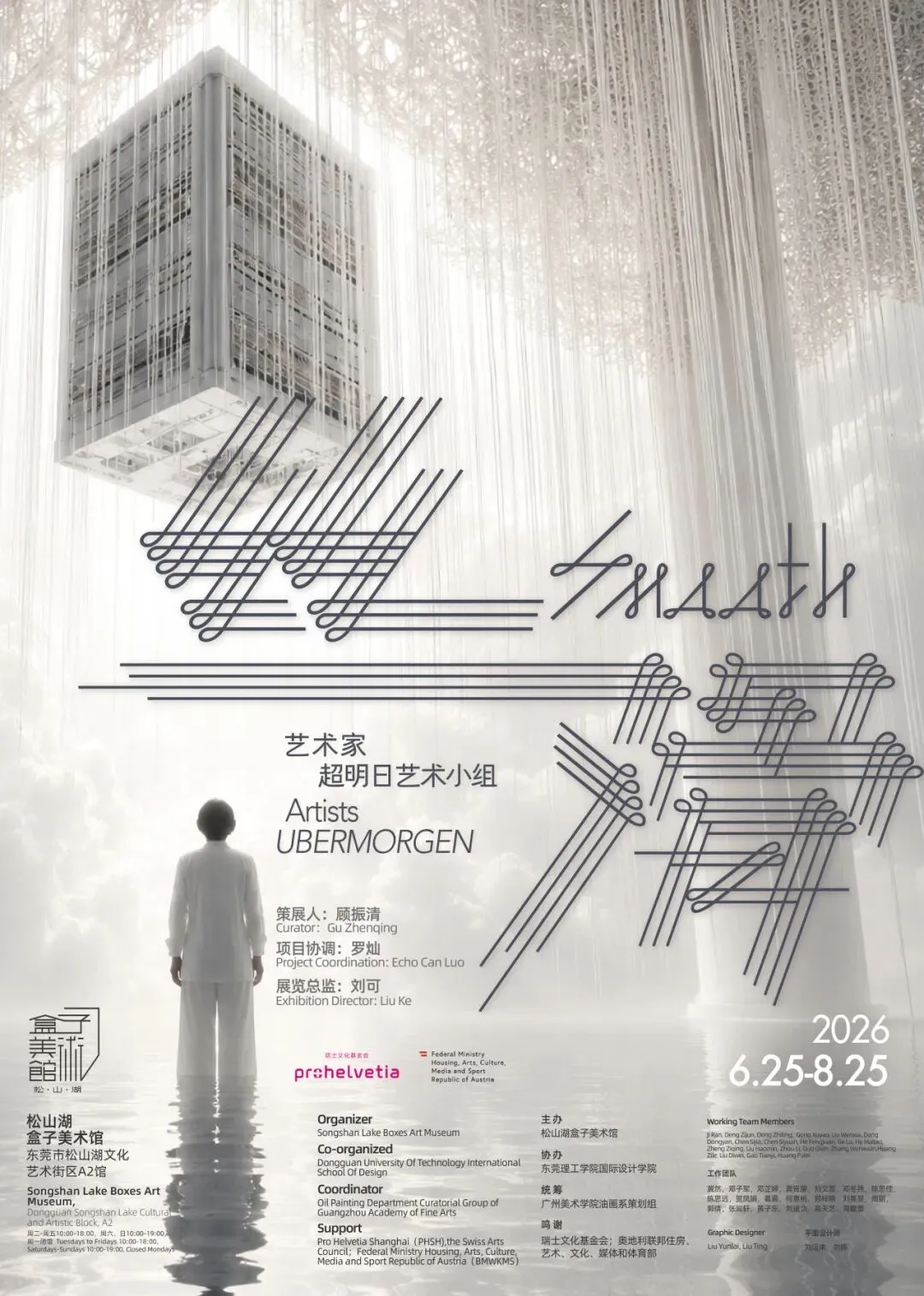
丝滑
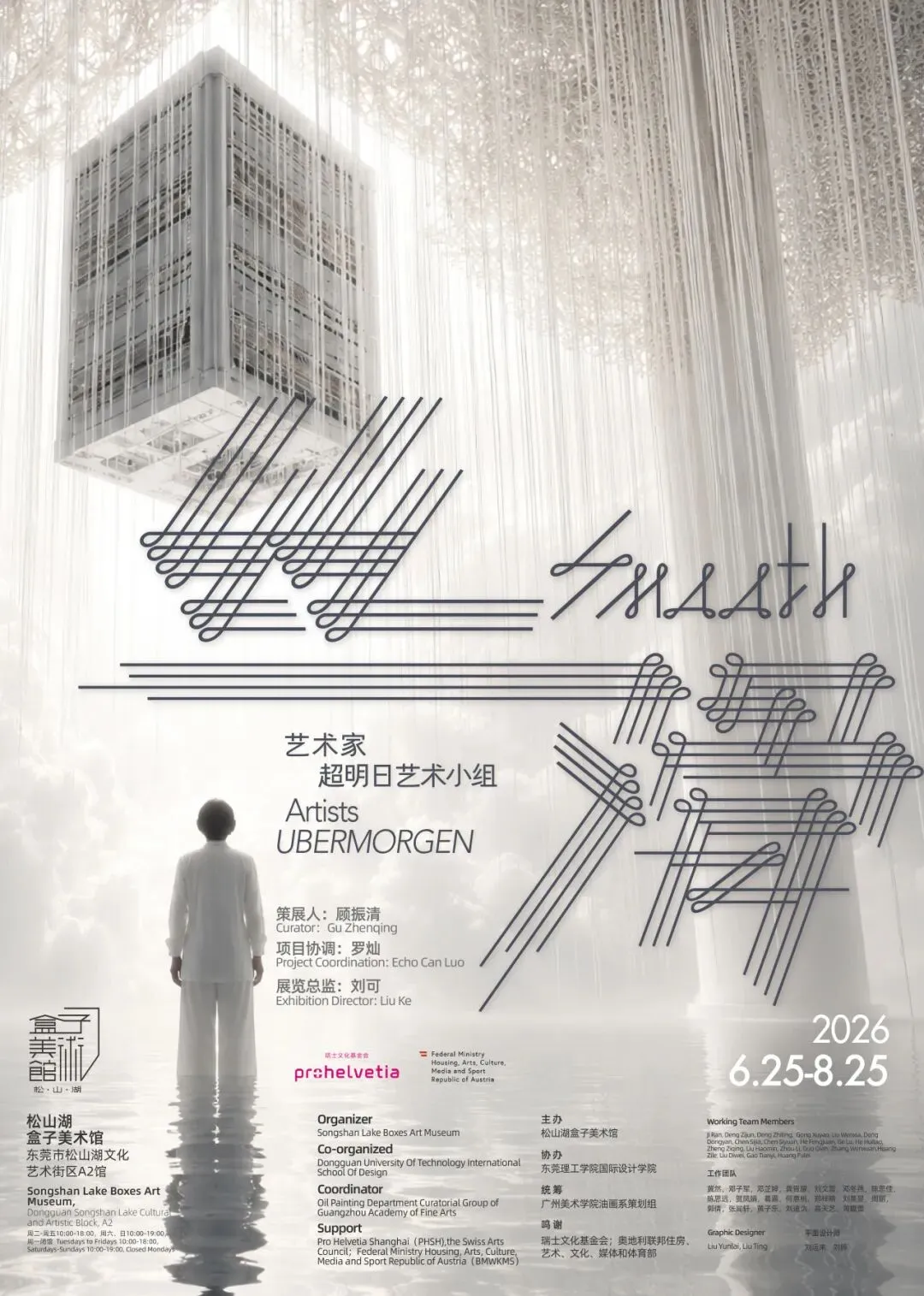
艺术家:超明日艺术小组(UBERMORGEN)
小组成员:利兹弗尔克斯(lizvlx),卢修斯・伯恩哈德(Luzius Bernhard),比莉・伯恩哈德(Billie Bernhard),洛拉・伯恩哈德(Lola Bernhard)
策展人:顾振清
展览总监:刘可
项目协调:罗灿(Echo Can Luo)
展期:2026.06.25-2026.08.25
开幕时间:2026.06.25 3:30 p.m.
展览地址:松山湖盒子美术馆,东莞市松山湖文化艺术街区A2馆3层
主办:松山湖盒子美术馆
协办:东莞理工学院国际设计学院
统筹:广州美术学院油画系策划组
鸣谢:瑞士文化基金会;奥地利联邦住房、艺术、文化、媒体和体育部
丝滑表象的背后:人机相爱相杀的存在裂隙
文/顾振清
大模型算法依托概率逻辑消弭人类语言天然的参差、瑕疵与语义歧义,在文本层面炮制磨平人性棱角的“丝滑(Smooth)”表象。其实,被算法一并削去的,是人独有的主体性语言褶皱。奥地利超明日(Ubermorgen)小组以“丝滑”作为存在论表象的建制化显像,沿循后人类艺术哲学的范式嬗变,将生成式大模型、神经符号演算、分布式刀片算力架构、多模态特征嵌入、区块链元数据确权、CNN像素滤波等技术范式楔入主体性崩坏的褶皱。在人机彼此侵凌、共生噬蚀的辩证闭环里,超明日小组冷静地解析并揭示了“丝滑”表象遮蔽下技术与人性相爱相杀的本源性悖谬。
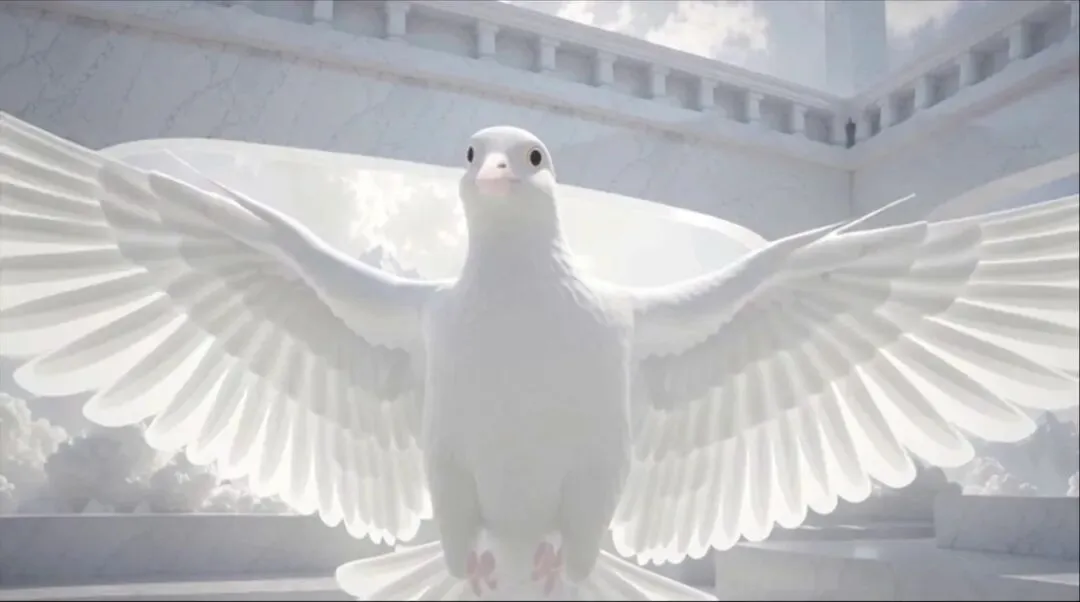
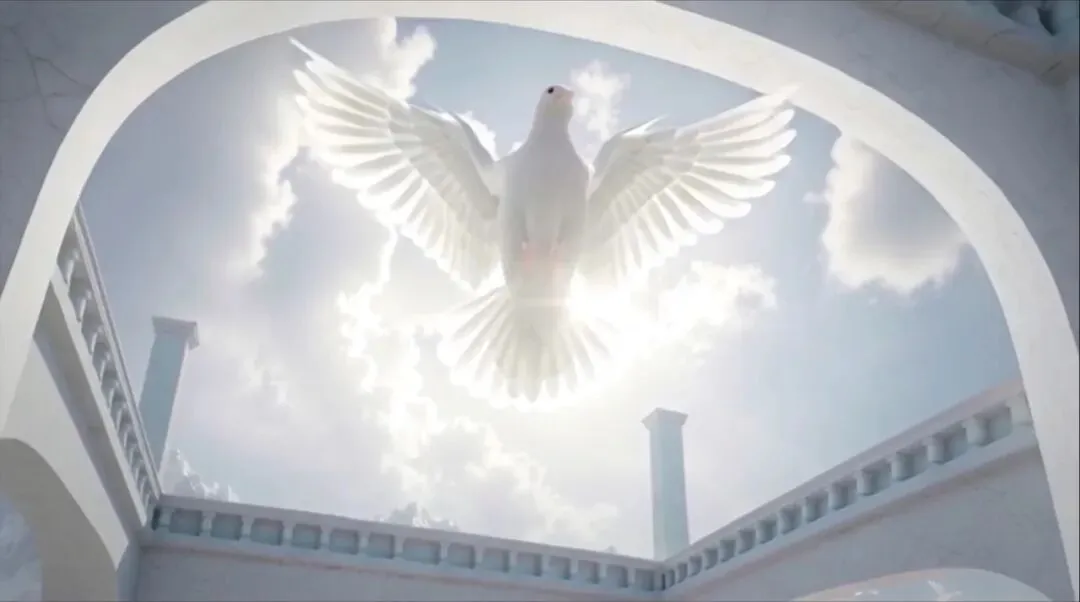
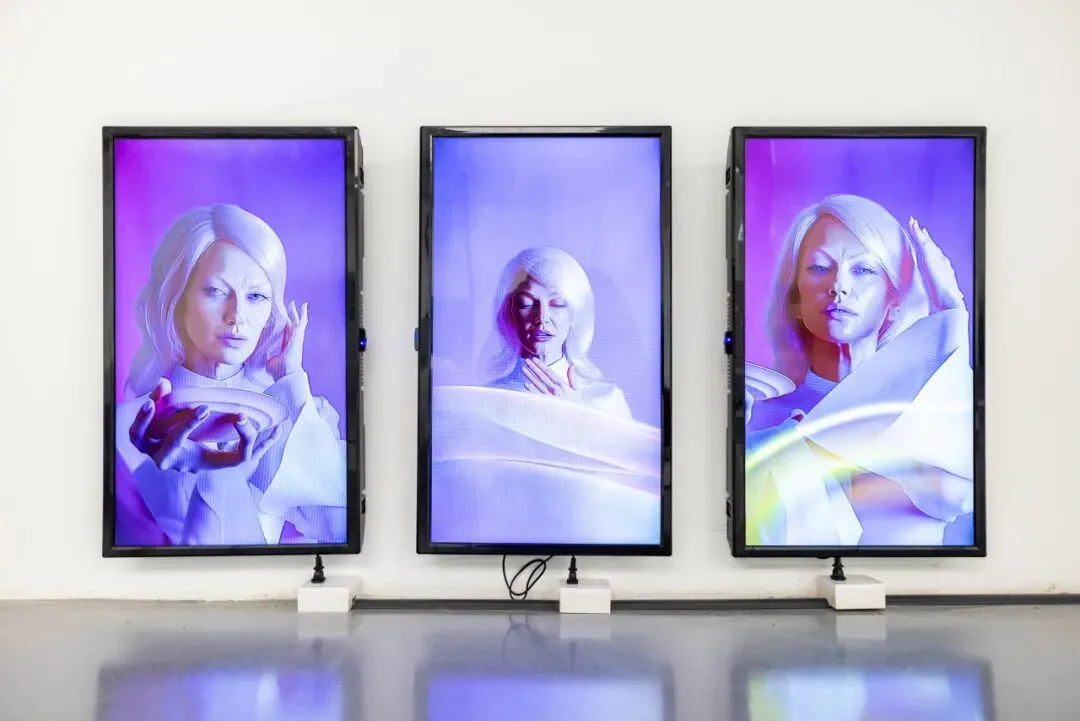
《 丝 滑 — — 悬 挂 的 服 务 器 》| 超 明 日 艺 术 小 组 | 2 0 2 6
《SMOOTH - Suspended Servers》| UBERMORGEN|2026
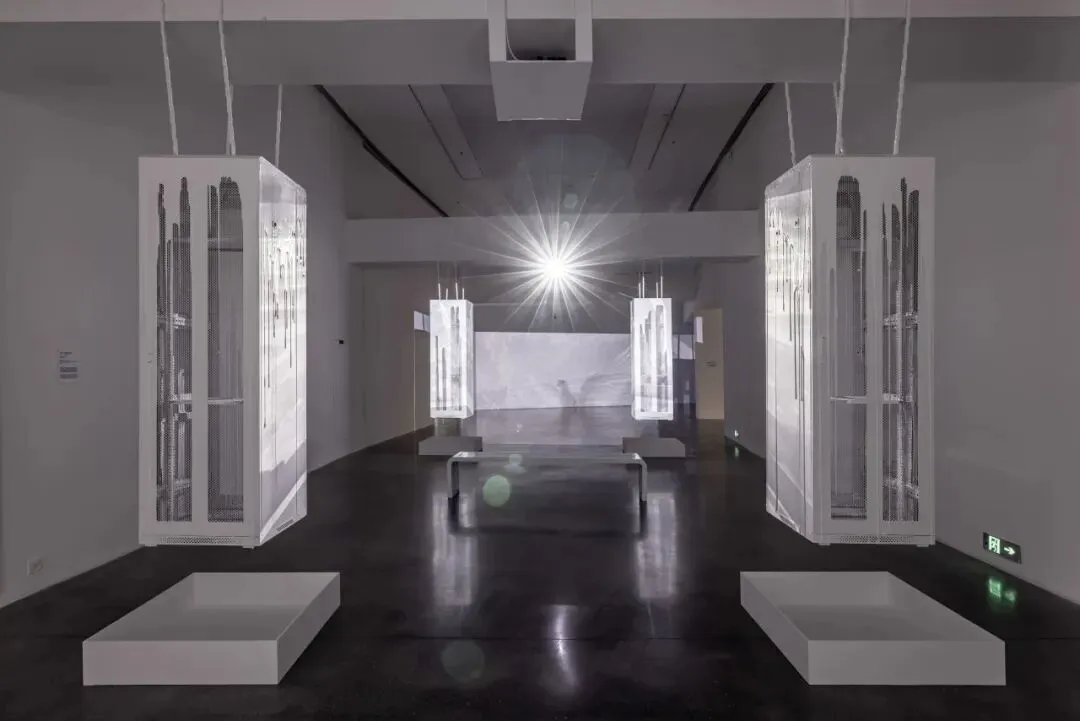
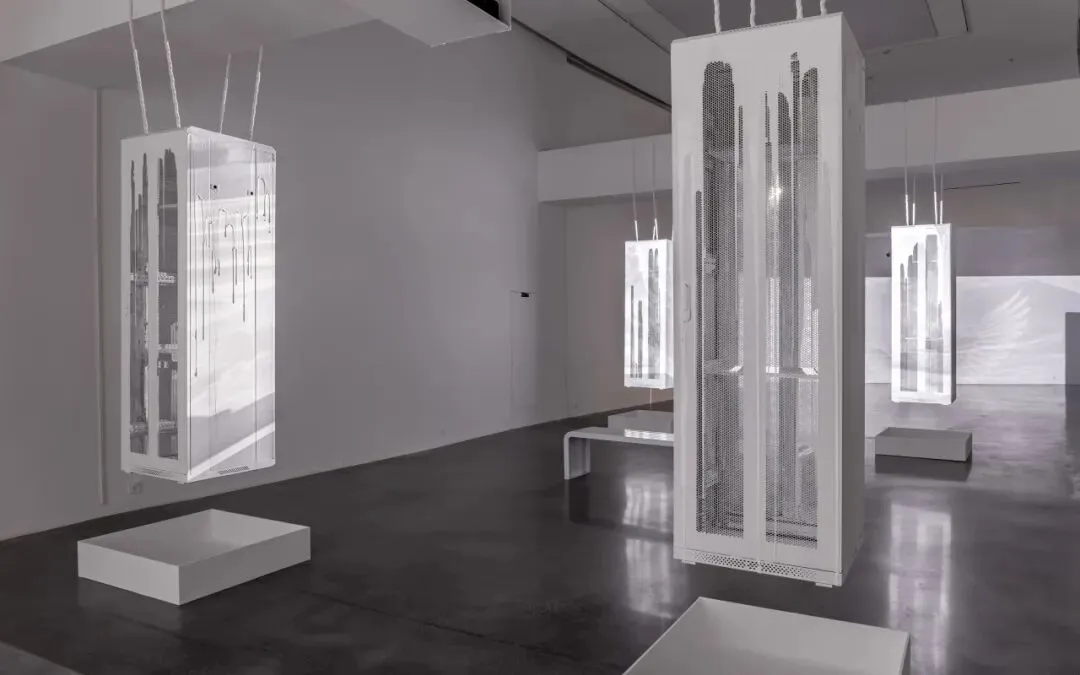
自早年EKMRZ数字入侵项目、斯诺登档案装置一路迭代,2021年超明日小组《机器策展双年展》依托机器学习架构推演六十四重平行艺术宇宙。2019至2023年他们的AI自主生命体《UNINVITED》抓取海量闭路监控传感数据,培育畸变合成有机体,并落地全域传感影像。艺术家承袭媒介黑客与数字行动主义的创作谱系,摒弃技术中立的启蒙主义虚妄论调,将算法调校出的均质平滑,塑造成当代主体性异化最隐秘的外壳。此次落地东莞松山湖盒子美术馆《丝滑》个展中的《悬挂式服务器》、《声音之床》、《社交放映会》三件场域装置,正是这套思辨逻辑的实体具象。
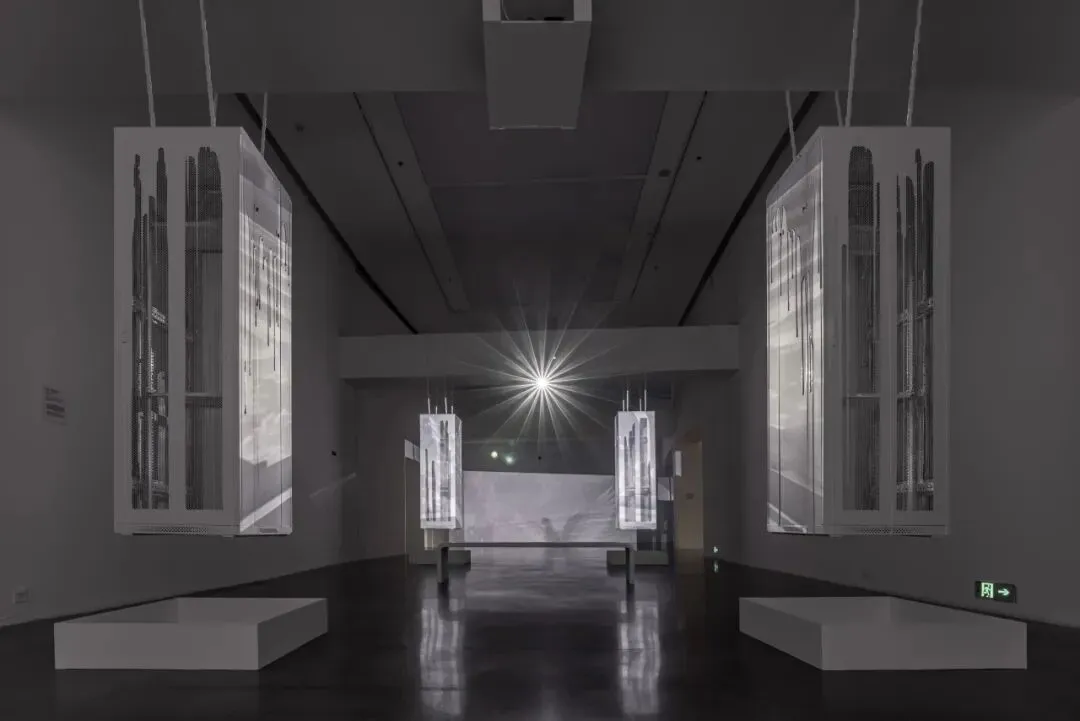
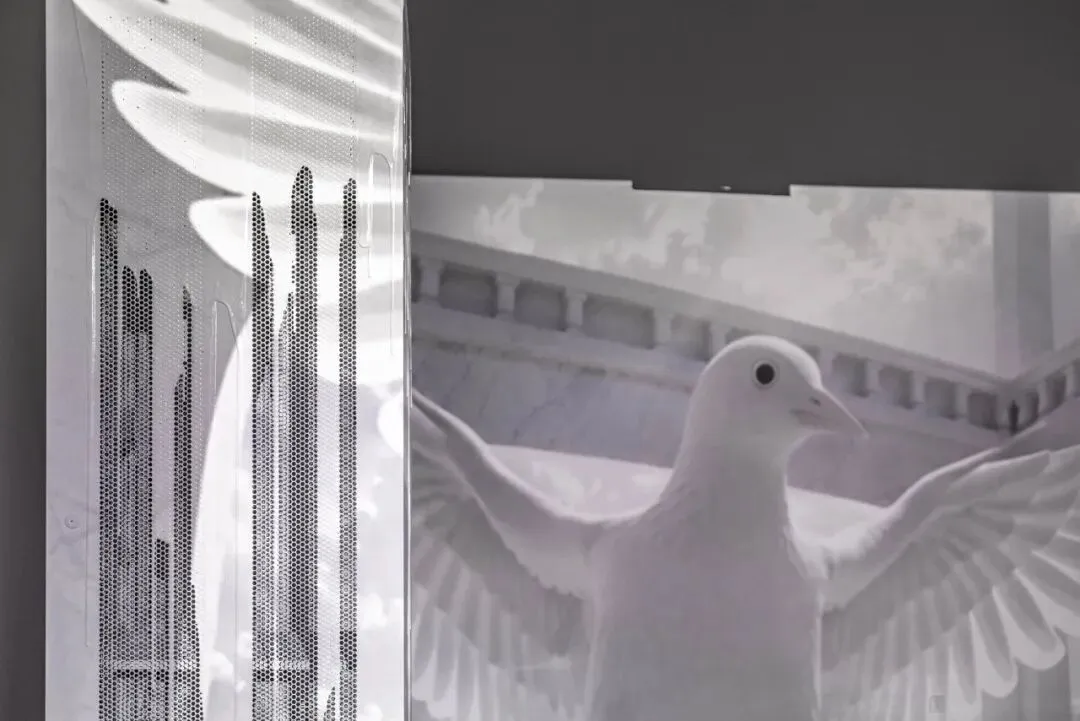
《 丝 滑 — — 悬 挂 的 服 务 器 》| 超 明 日 艺 术 小 组 | 2 0 2 6
《SMOOTH - Suspended Servers》| UBERMORGEN|2026
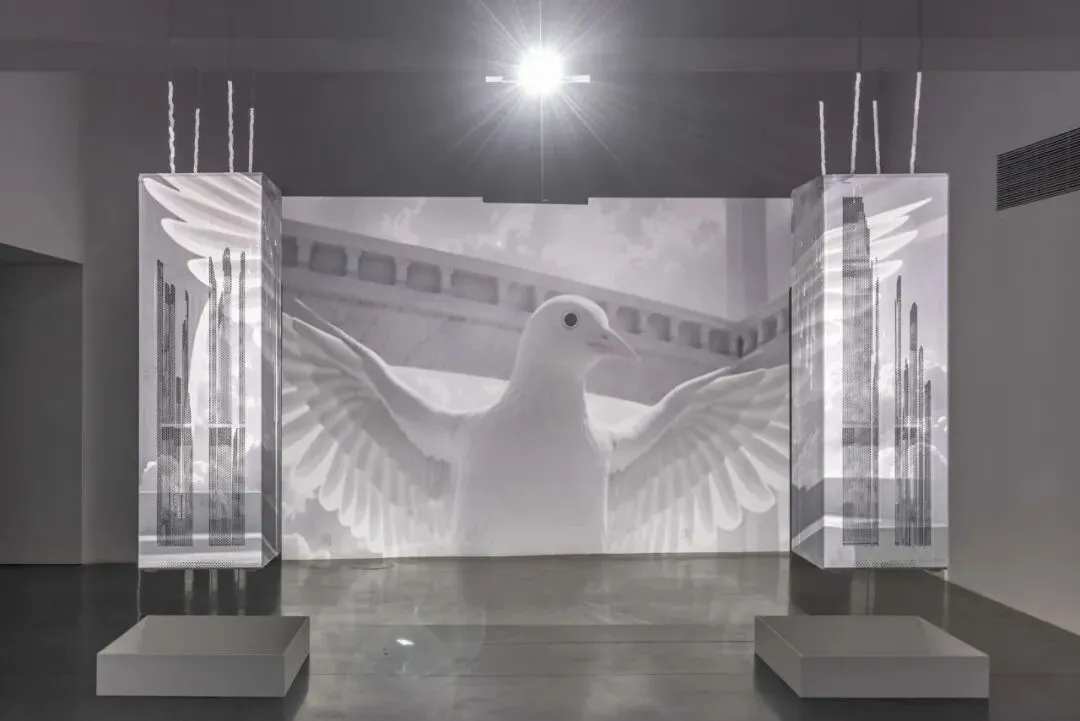
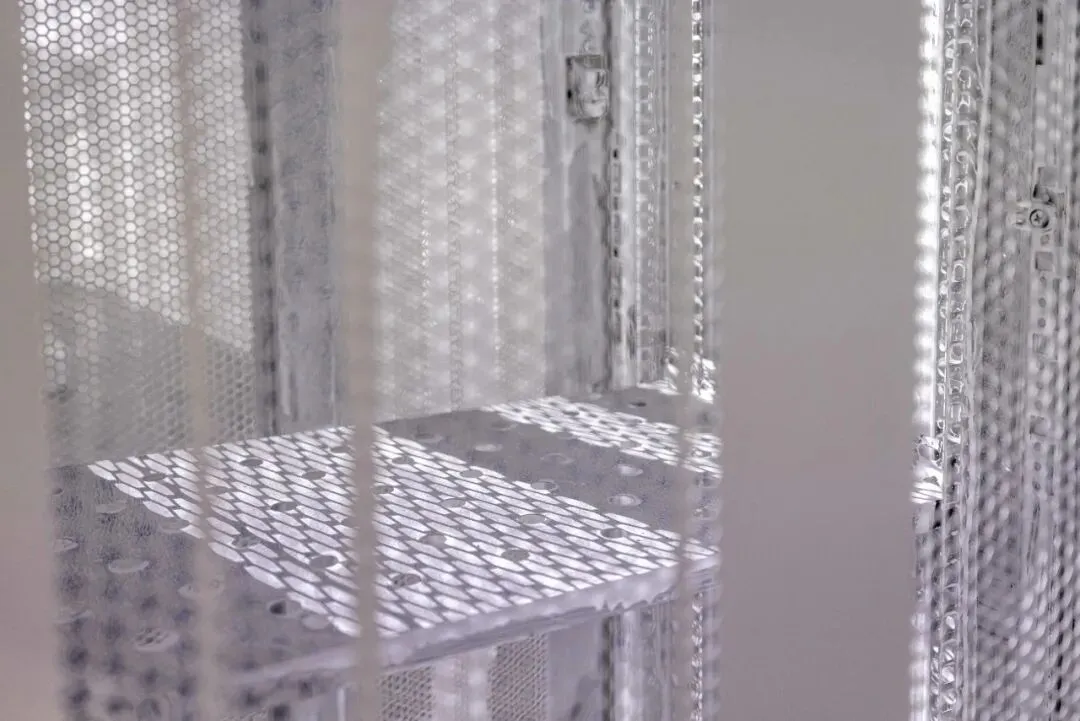
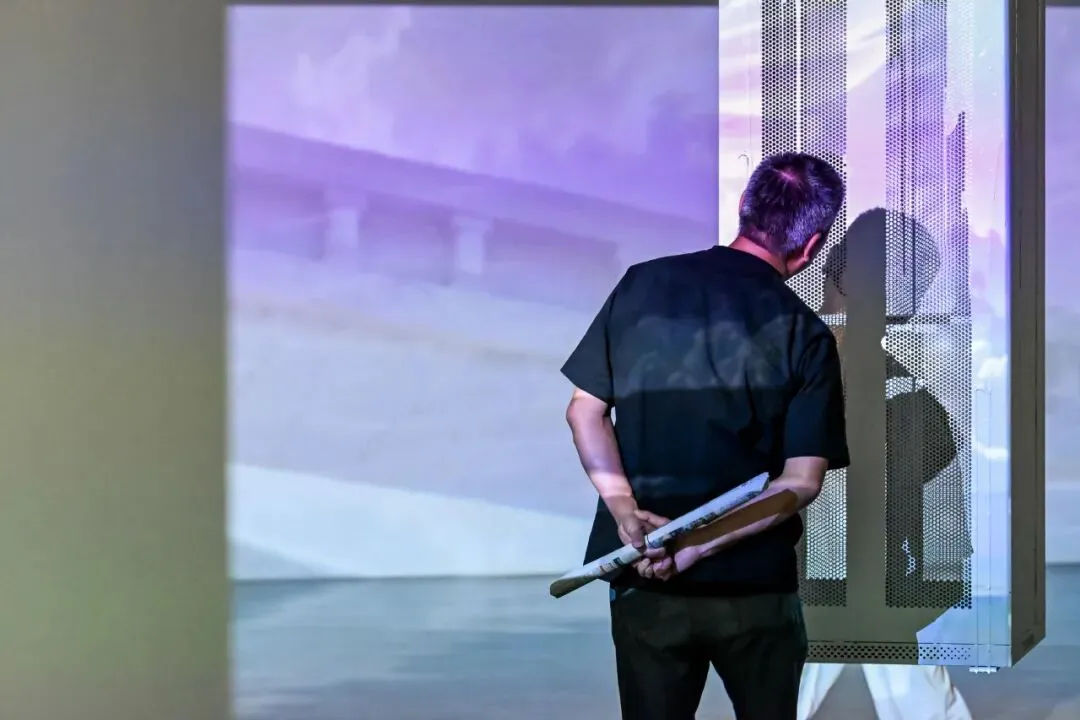
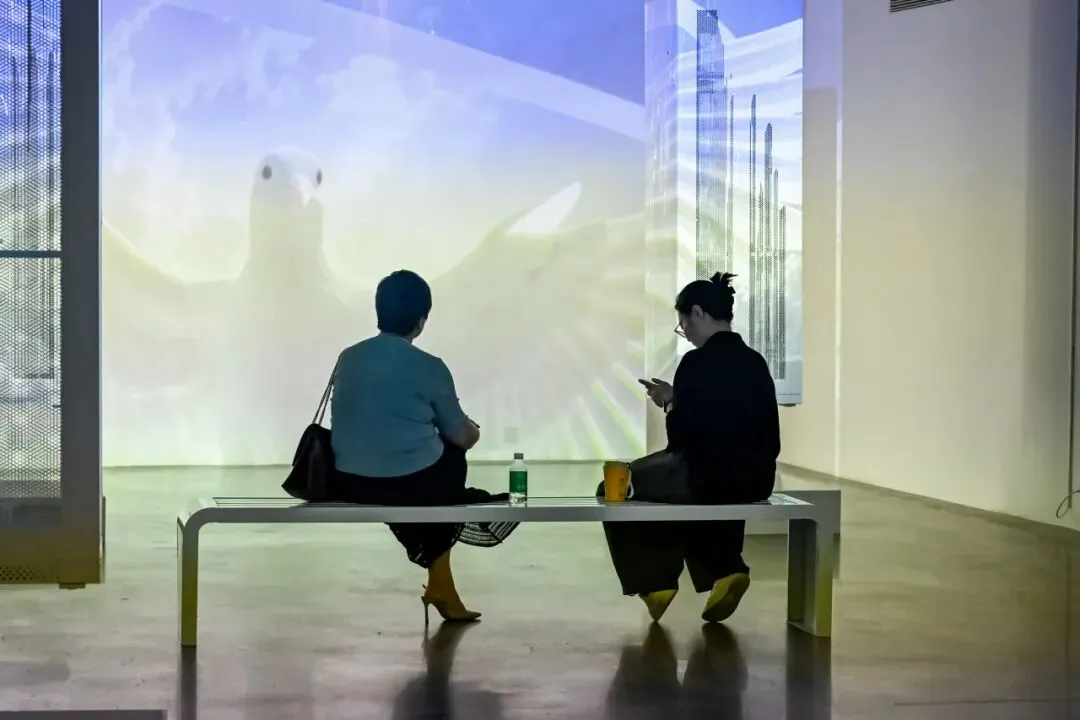
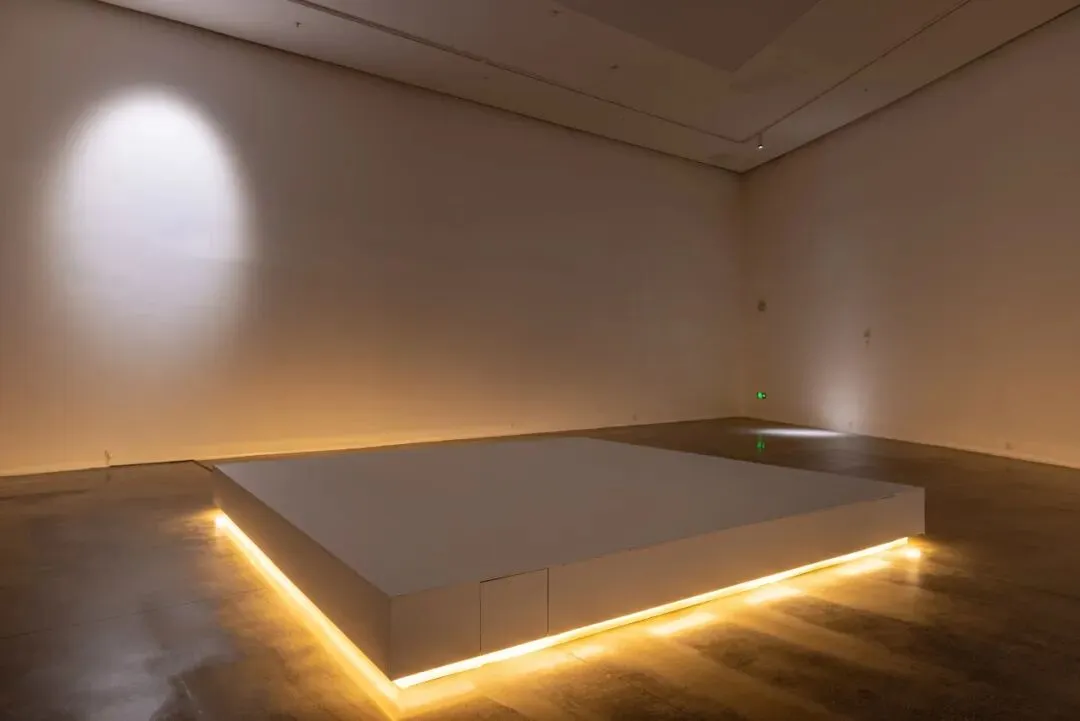
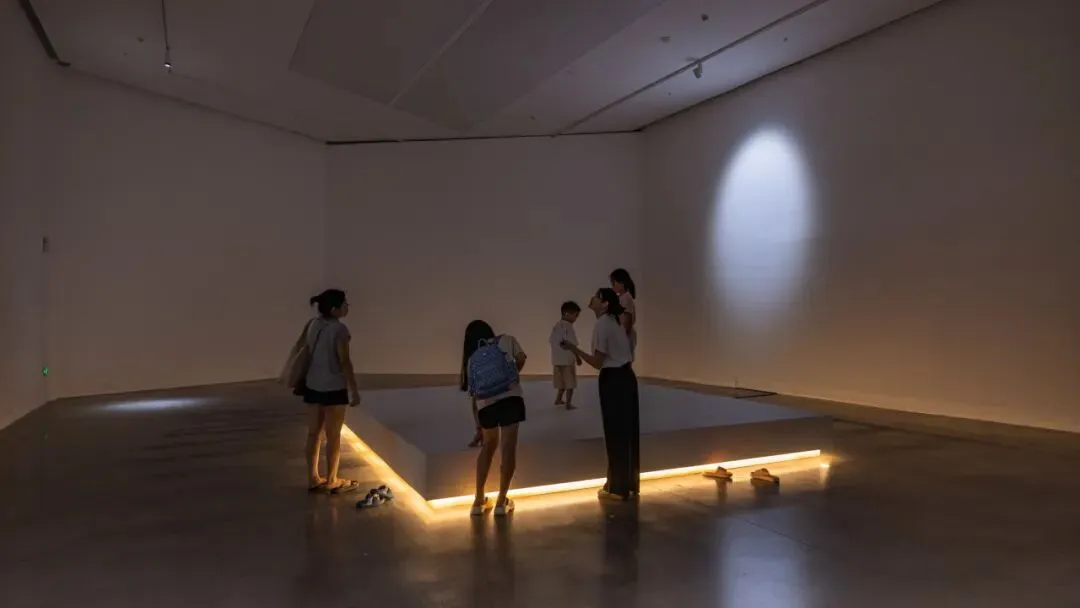
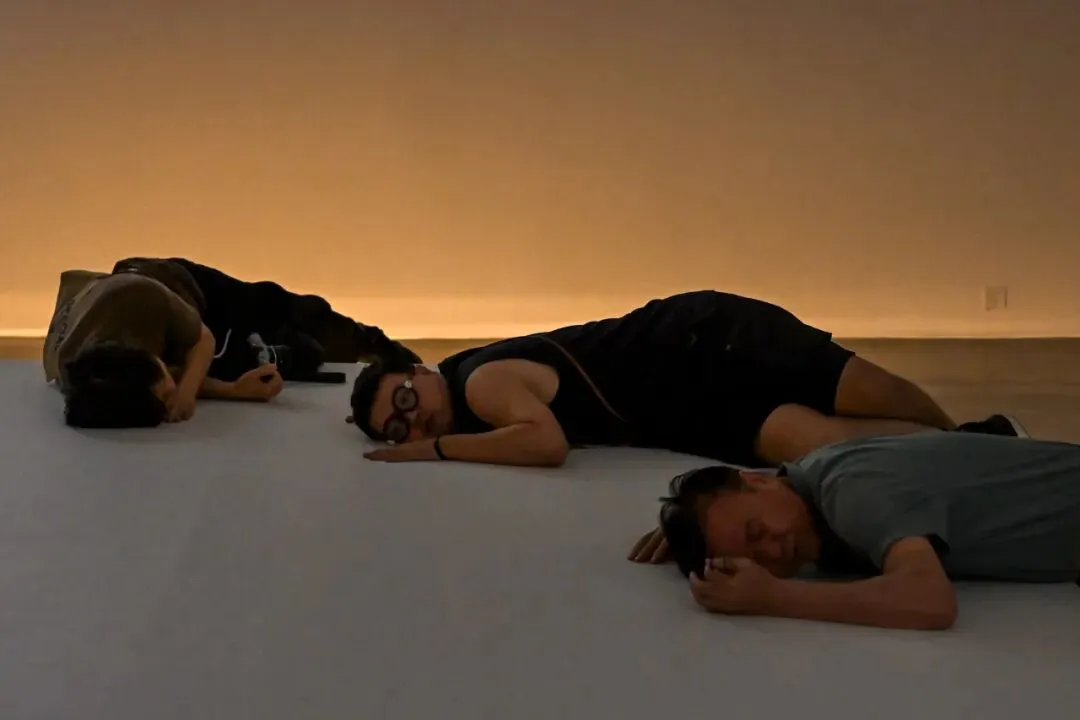
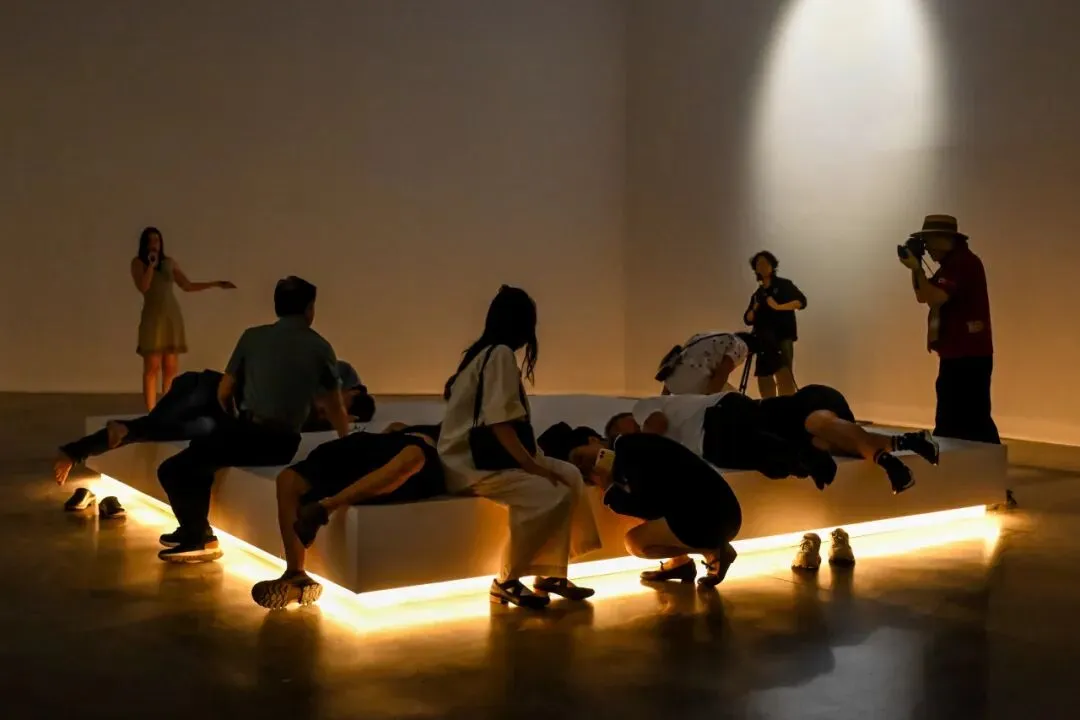
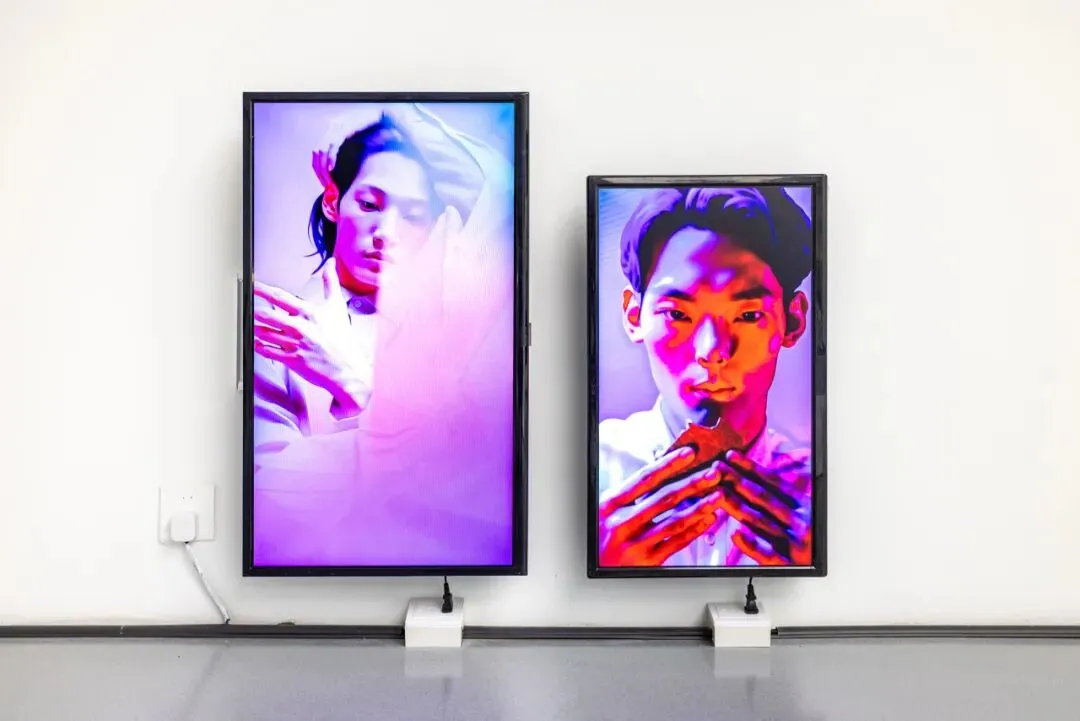
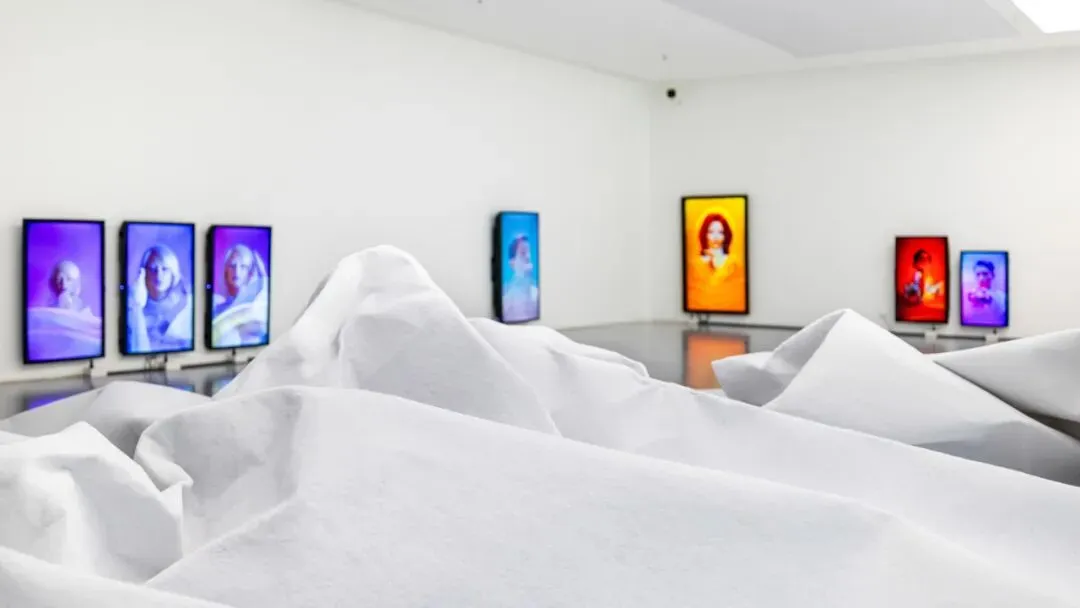
当代哲学背景下,现代主义催生的以人为中心的主体性完满建构,正在逐步滑向后人类语境下人的主体的碎片化消解。丝滑美学已然成为算法意识形态驯化肉身感知的感性伪装。大模型概率分词磨平人文表意的天然毛刺,AIGC梯度收敛消解生命体验的原生参差,平台数据流以无缝交互完成对碳基生命感知的全域收编。超明日小组的创作即针对此种“丝滑暴政”展开谱系化的观念破袭。他们早年作品《Oldify》借时序像素算法篡改自然人面容与生命刻度,以像素过度柔润、丝滑的算法画面击穿人类对生死存续的本源性执念。超明日小组《EKMRZ》三部曲依托爬虫渗透谷歌、亚马逊、eBay底层数据库,撕开消费界面丝滑体验之下的数据掠夺与资本吞噬。在展览现场,白绳悬吊、白漆淋淌的退役刀片服务器装置《悬挂式服务器》,以人工滴落的不规则颜料纹路打破工业硬件与算法演算的规整顺滑;悬浮式装置《声音之床》以一体化内嵌音响生成温润声场,低频暗流却不断冲破听觉层面的平顺假象;《社交放映会》无序散落的多规格显示屏循环播映AI自生图像,散漫排布消解生成图像自带的标准化平滑属性。超明日小组的系列作品从实体硬件、听觉场域、视觉图像三重维度具象化了人机博弈的当下现实:无处不丝滑,实则危机四伏。
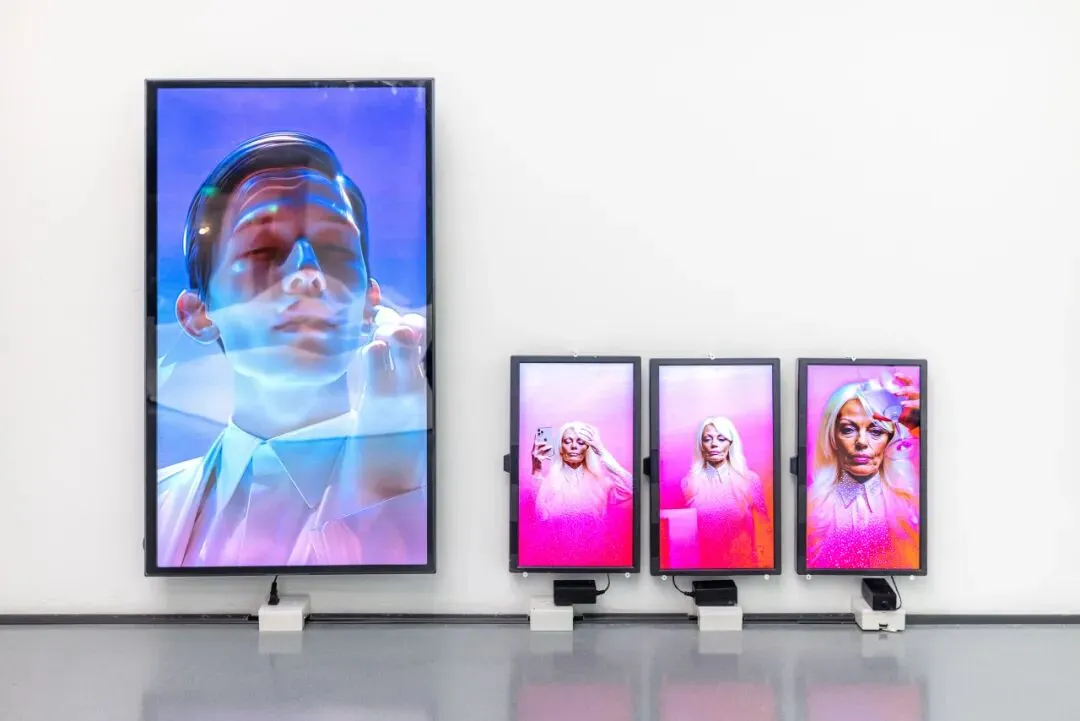
《 丝 滑 — — 社会性放映》| 超 明 日 艺 术 小 组 | 2 0 2 6
《SMOOTH - The Social Screening》| UBERMORGEN|2026
技术对人性的僭越是一种丝滑表象向内的隐性吞噬。机器依托海量语料预训练模拟人类情绪,将个体本能、思绪压缩为量化特征向量。人性的反向突围蛰伏于算法逻辑盲区。艺术家延续一贯黑客式创作,以倾倒的液态颜料、错落声场、随机布屏等人为噪点,主动扰动精密算力逻辑,撕裂AI构筑的完美平滑秩序,暗合“物壮则老,谓之不道”的东方哲思影响下的一种批判锋芒。技术越是趋向极致顺滑完备,越临近自我异化与人性反噬的临界点,使人机纠缠落入相互寄生、彼此反噬的存在悖论。
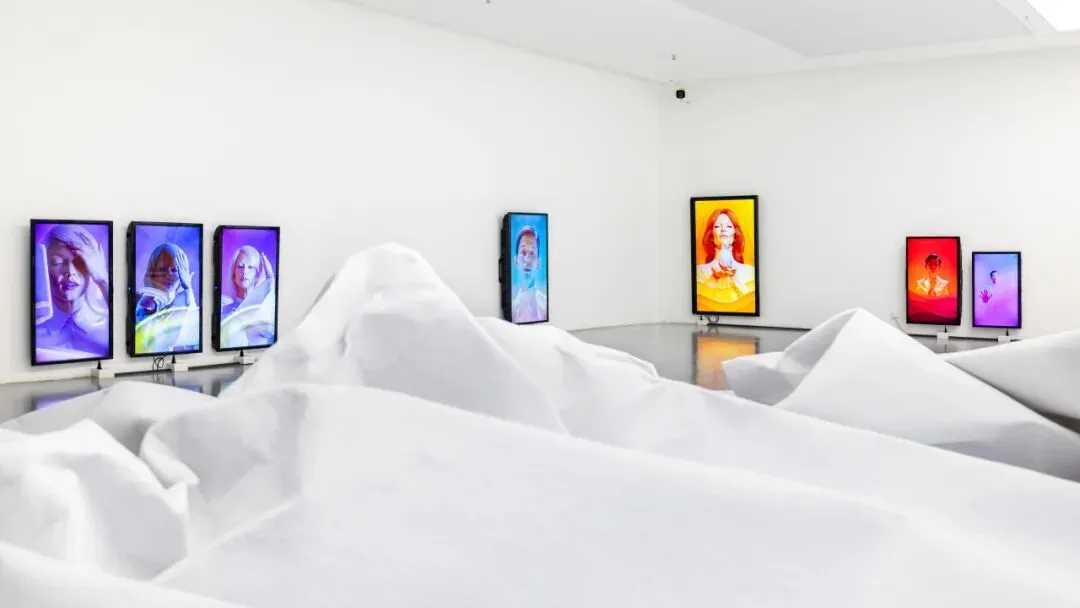
《 丝 滑 — — 社会性放映》| 超 明 日 艺 术 小 组 | 2 0 2 6
《SMOOTH - The Social Screening》| UBERMORGEN|2026
AI的全知、全能化发展逻辑,正在使其成为一座人为的AI通天巴别塔。而人类自身却被丝滑的AI应用场景重新定义。人的各种权利正在主动或被动地不断交出,并让渡给机器。人正在从有尊严的存在,变成需要不断优化的对象。然而,算法可以模拟关系,但不能承担关系里的责任;AI可以模拟创造,但不能替代创造背后的意志;大模型可以模拟判断、预测结果,但不能对判断、预测的后果负责。机器做到了所有的丝滑表面,但那些人与生俱来的脆弱与瑕疵,那些人在失败中成长的意义,那些人所付出的真实代价,机器都不具有。“丝滑”在此不再是感官层面的温润观感,而是后人类时代存在的异化隐喻。算法优化越是无缝流畅,就越预示肉身主体性被硅基系统逐层蚕食;人机交互越是流畅无痕,就越显露二者相爱相杀、互设囚徒困境的重重窘境。
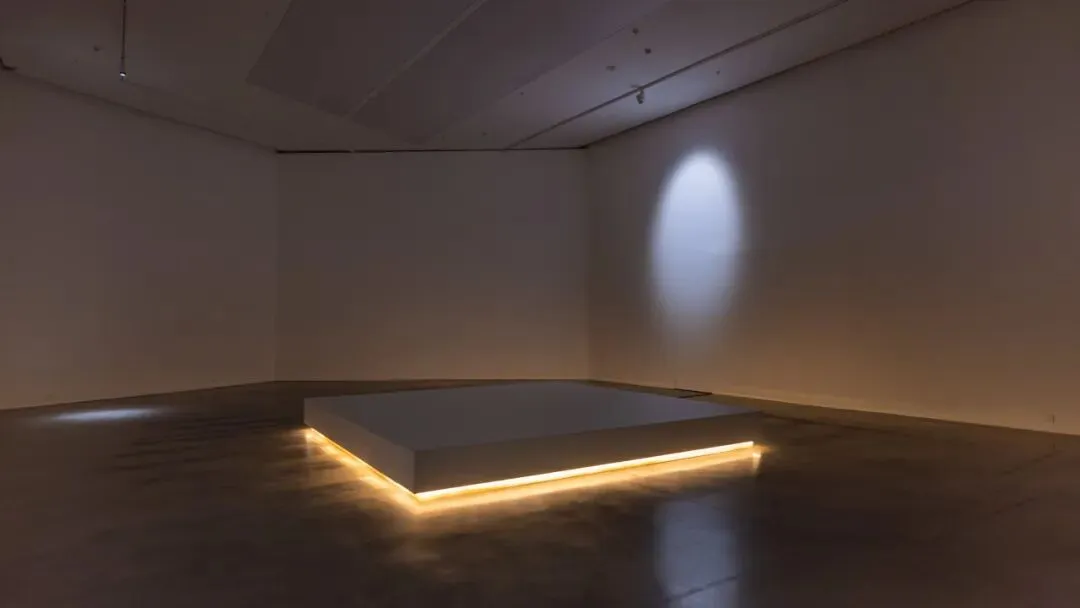
《声音之床》|超明日艺术小组|2026
《Bed of Sound》| UBERMORGEN|2026
超明日小组以跨媒介、跨算力、跨虚实的综合创作,把生成对抗网络的迭代内耗、分布式网络的链路损耗、NFT元宇宙的产权裂隙转化为可视的艺术肌理,戳破平滑美学构筑、编织的技术乌托邦幻梦。在艺术哲学内核持续嬗变的时代语境中,艺术家始终锚定人机共谋共生、却又永久撕裂的本原性生存困境。
Behind the Smooth Surface: The Hidden Love-Hate Chasm Between Humans and Machines
by Gu Zhenqing
Large language models use probability to smooth out the natural messiness and ambiguity of human language. They create a "smooth" surface in text, but in doing so, they also erase the unique, rough edges of human subjectivity.
The Austrian art group Ubermorgen sees this "smoothness" as a fake, polished surface hiding deeper problems. Using technologies like generative AI, neural networks, distributed computing, blockchain, and pixel filtering, they expose how human subjectivity is breaking apart. In a twisted cycle of mutual harm and dependence between humans and machines, Ubermorgen reveals the core paradox beneath the smooth surface: a love-hate relationship with technology.
From their early hackings of Google and Amazon to their 2021 Machine Curated Biennale (which used machine learning to create 64 parallel art worlds), and their 2019–2023 AI project UNINVITED (which grew strange lifeforms from surveillance data), Ubermorgen rejects the idea that technology is neutral. For their solo exhibition Smooth at Boxes Art Museum in Dongguan, three installations—Hanging Server, Bed of Sound, and Social Screening—bring this thinking to life.
Today, the old ideal of a complete, human-centered self is breaking down into a fragmented, post-human condition. "Smooth aesthetics" have become a way for algorithms to quietly control our senses. AI flattens human expression, smooths over real-life unevenness, and uses seamless interfaces to absorb our perception completely. Ubermorgen's work fights back against this "smooth tyranny."
In the exhibition, a decommissioned server hangs dripping with white paint, breaking the clean smoothness of industrial hardware. A sound bed produces a warm audio field, but low-frequency rumbles constantly disturb the false calm. Scattered screens play AI-generated images in a random layout, destroying the standardized smoothness of synthetic visuals. These works show the real human-machine struggle from three angles: physical hardware, sound, and image. Smoothness is everywhere, but underneath lies danger.
Technology uses massive data to mimic human emotions, compressing our instincts and thoughts into numbers. The artists fight back by introducing human-made noise: dripped paint, uneven sound, randomly placed screens. These small disturbances disrupt the perfect, smooth order built by AI. This echoes an ancient insight: "When things reach their prime, they begin to age." The more technology strives for perfect smoothness, the closer it comes to turning against humanity. Humans and machines are trapped in a paradox—mutually dependent, yet destructive to each other.
"Smoothness" is no longer just a nice feeling. It has become a metaphor for how we are losing ourselves in the post-human age. The more seamless our interaction with machines, the more our bodily, human self is quietly eaten away.
Ubermorgen uses mixed media, cross-platform creation, and virtual-real hybridity to turn the inner conflicts of AI, the losses in distributed networks, and the cracks in NFT ownership into visible art. They puncture the techno-utopian dream woven by smooth aesthetics. In a time of constant change, they stay focused on the original, fundamental human predicament: the permanently torn condition of living together with machines.
⬆️ 向上滑动浏览全部 ⬆️
Scroll up to view the entire content
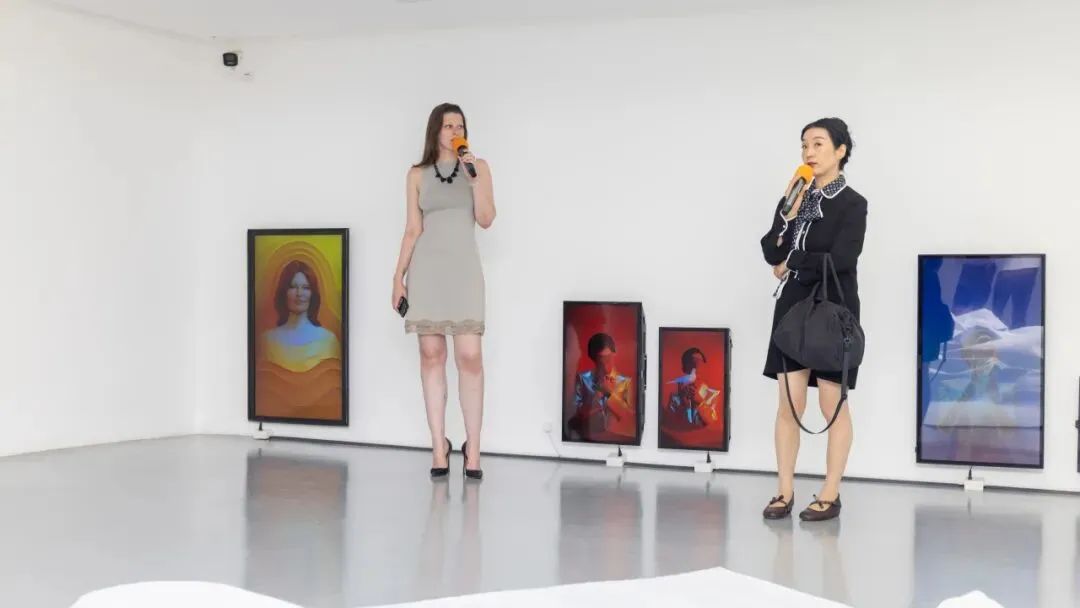
展览现场
关于艺术家
About Artist
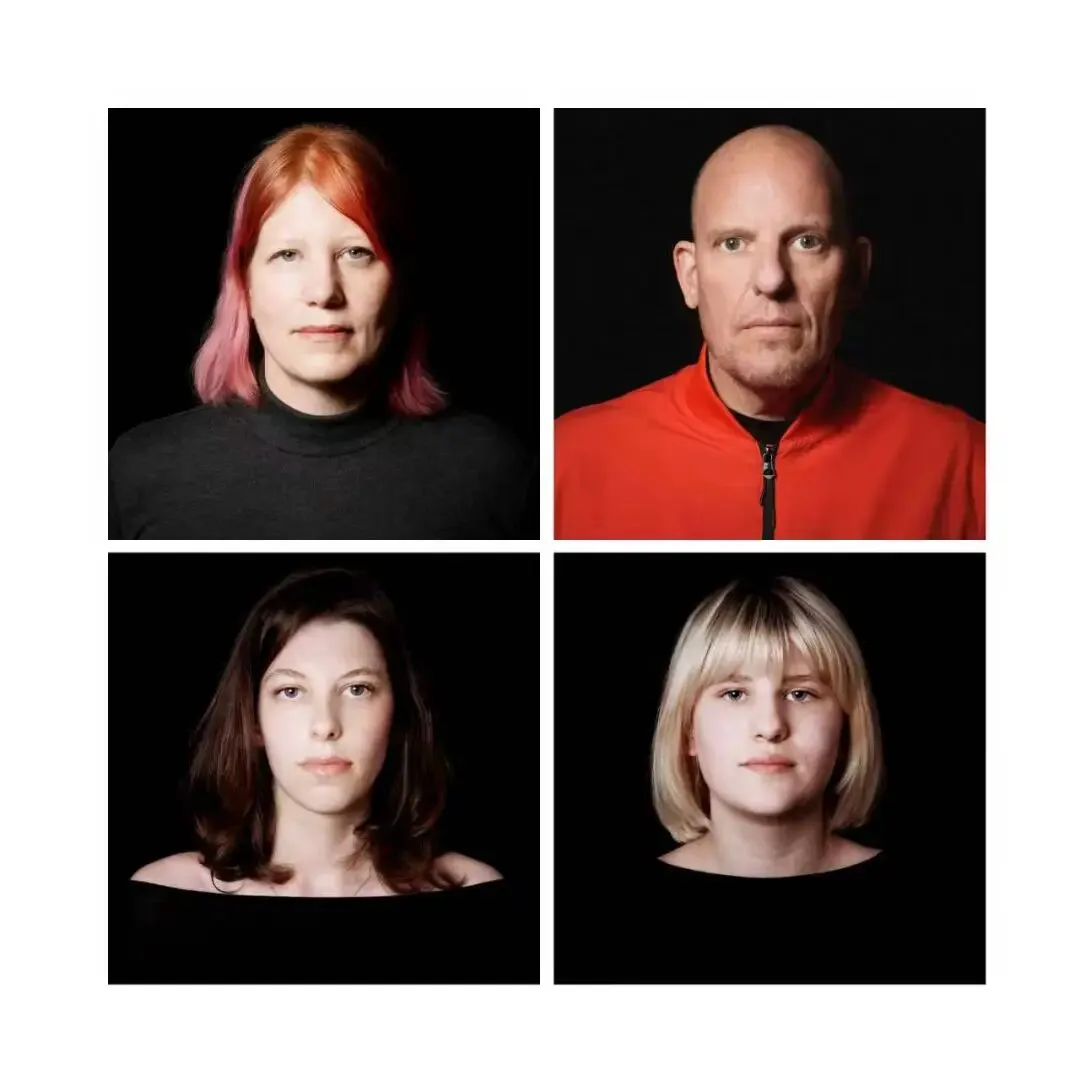
超明日艺术小组
UBERMORGEN
超明日,瑞士/奥地利/美国,成立于1995 年。
UBERMORGEN(超明日)是一个跨代际、多维度的女性主导维也纳艺术团体,成员包括 lizvlx(利兹弗尔克斯)、Luzius Bernhard(卢修斯・伯恩哈德)、Billie Bernhard(比莉・伯恩哈德) 和 Lola Bernhard(洛拉・伯恩哈德)。该团体横跨网络艺术、观念艺术、媒体黑客、装置艺术、在线行动主义、人工智能系统和思辨理论等多个领域,拥有30年的机构展览历史和硬核地下艺术传统。UBERMORGEN 致力于对语言、算法、网络、企业、国际标准和制度体系进行实验与探索,将超当代权力的基础设施视为艺术创作的原材料。
从 Vote-Auction(2000年)到 EKMRZ 三部曲(2005-08年)、No Limit(2015年)、The Next Biennial Should Be Curated by a Machine(2021年)、合成生命体 UNINVITED(2019–2025年)、PMC Wagner Arts(2023年)以及 The Silver Singularity(2024年),UBERMORGEN 始终将艺术智慧楔入那些系统暴露其安逸与尖锐矛盾的缝隙之中。
部分参展经历:
利物浦双年展、惠特尼美术馆、MoMA PS1、蓬皮杜艺术中心、光州双年展、巴黎卢浮宫、悉尼双年展、旧金山现代艺术博物馆、台北当代艺术馆、迈阿密当代艺术中心、蛇形画廊、奥胡斯艺术馆、上海 Chronus、索菲亚王后国家美术馆、巴塞尔艺术展、新美术馆、萨默塞特宫、ZKM 媒体艺术中心、林茨电子艺术节、新加坡艺术科学博物馆、东京 3331、东京 ICC。
特别鸣谢:

奥地利联邦住房、艺术、文化、媒体和体育部

瑞士文化基金会
UBERMORGEN
The day after tomorrow,’ CH/AT/US, est. *1995
UBERMORGEN (超明天) is a two-generational multidiverse female-led Vienna-based art team: lizvlx, Luzius Bernhard, Billie Bernhard, and Lola Bernhard. The team operates across net art, conceptual art, media hacking, installation, online actionism, AI systems, and speculative theory, with a 30-year institutional history and hardcore underground legacy. Working & experimenting with language, algorithms, networks, corporations, international standards, and institutions, UBERMORGEN treats the infrastructures of hyper contemporary power as artistic raw material.
From Vote-Auction (2000) through the EKMRZ trilogy (2005-08), No Limit (2015), The Next Biennial Should Be Curated by a Machine (2021), the synthetic organism UNINVITED (2019–2025), PMC Wagner Arts (2023), and The Silver Singularity (2024) UBERMORGEN consistently wedges artistic intelligence into the seams where systems reveal their cosy & harsh contradictions.
Selected Exhibitions:
Liverpool Biennial, Whitney Museum, MoMA PS1, Centre Pompidou, Gwangju Biennale, Louvre Paris, Biennale of Sydney, SFMOMA, MOCA Taipei, ICA Miami, Serpentine Galleries, Kunsthal Aarhus, Chronus Shanghai, Museo Reina Sofia, Art Basel, New Museum, Somerset House, ZKM, Ars Electronica, ArtScience Singapore, 3331 Tokyo, ICC Tokyo.
关于策展人
About Curator
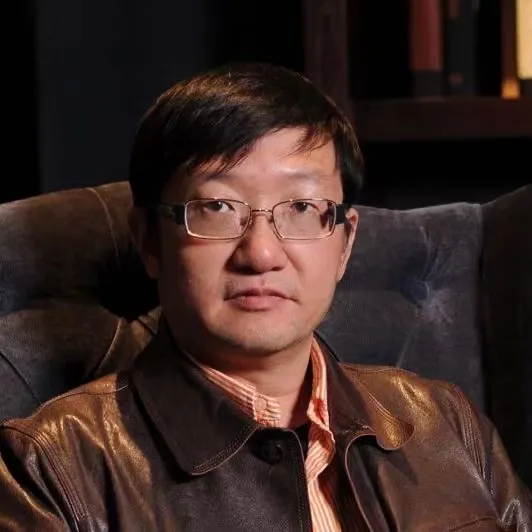
顾振清
Gu Zhenqing
顾振清,1987年毕业于复旦大学历史系。曾任上海多伦现代美术馆总策展人、副馆长(2003-2006),中国当代艺术奖艺术总监(2004),朱屺瞻艺术馆执行馆长(2006-2007),《视觉生产》主编(2006-2008),北京白盒子艺术馆艺术总监(2009-2011),西安贾平凹文化艺术馆学术馆长(2014-2016),台湾艺术大学客座副教授(2018-2020),2021年起任广州美术学院客座教授。
他策展的重要项目包括:2001年广东美术馆“虚拟未来”、成都双年展;2004年奥斯陆“轻而易举·上海拼图”;2005年首尔“亚洲城市网络”;2008年波兹南双年展;2009年台北“各搞各的”;2012年上海“心动上海”;2016年圣彼得堡“走出牡丹亭”;2018年广安田野双年展、乌兰巴托国际艺术节;2021年温州“脱域”、苏州“分身”;2022-2023年无锡“我的元宇宙”、顺德“白皮书”;2023年郑州“奇点”、开罗OFF双年展;2024年深圳“有效加速”;2024-2025年哈瓦那双年展“时间戳”等,并多次参与连州国际摄影节。
Curator Gu Zhenqing graduated from the Department of History at Fudan University, Shanghai, in 1987. He served as Chief Curator and Deputy Director of Shanghai Duolun Museum of Modern Art (2003–2006), Artistic Director of the Chinese Contemporary Art Awards (CCAA, 2004), Executive Director of Shanghai Zhu Qizhan Art Museum (2006–2007), Editor-in-Chief of Visual Productionmagazine (2006–2008), Artistic Director of Beijing White Box Art Museum (2009–2011), Academic Director of Xi'an Jia Pingwa Culture and Art Museum (2014–2016), and Visiting Associate Professor at Taiwan University of Arts (2018–2020). He has been a Visiting Professor at Guangzhou Academy of Fine Arts since 2021.
His major curated projects include: Virtual Future at Guangdong Museum of Art (2001); the first Chengdu Biennale (2001); Easy! Shanghai Puzzle 2000–2004 at Oslo National Museum of Contemporary Art (2004); Asian City Network at Seoul Museum of Art (2005); the first Poznań International Biennale (2008); Do It Separately at Taipei Museum of Contemporary Art (2009); Heartbeat Shanghai (2012); Out of the Peony Pavilion at the Russian Museum of Ethnography, St. Petersburg (2016); Guang'an Field Biennale (2018); Ulaanbaatar International Art Festival (2018); Disembedding at Wenzhou HOW Art Museum (2021); Avatars at Suzhou Han Shan Art Museum (2021); My Metaverse in Wuxi (2022–2023); White Paper: Consensus Universe in Shunde (2022–2023); Singularity in Zhengzhou (2023); the 10th Eurasian Mediation Biennale in Istanbul (2023); the 3rd Cairo OFF Biennale (2023); Effective Acceleration at Shenzhen Jupiter Museum of Art (2024); and TimeStamp at the 15th Havana Biennale (2024–2025). He has also participated multiple times in the Lianzhou International Photo Festival.
入馆请提前购票?
Please make an appointment in advance to enter the museum
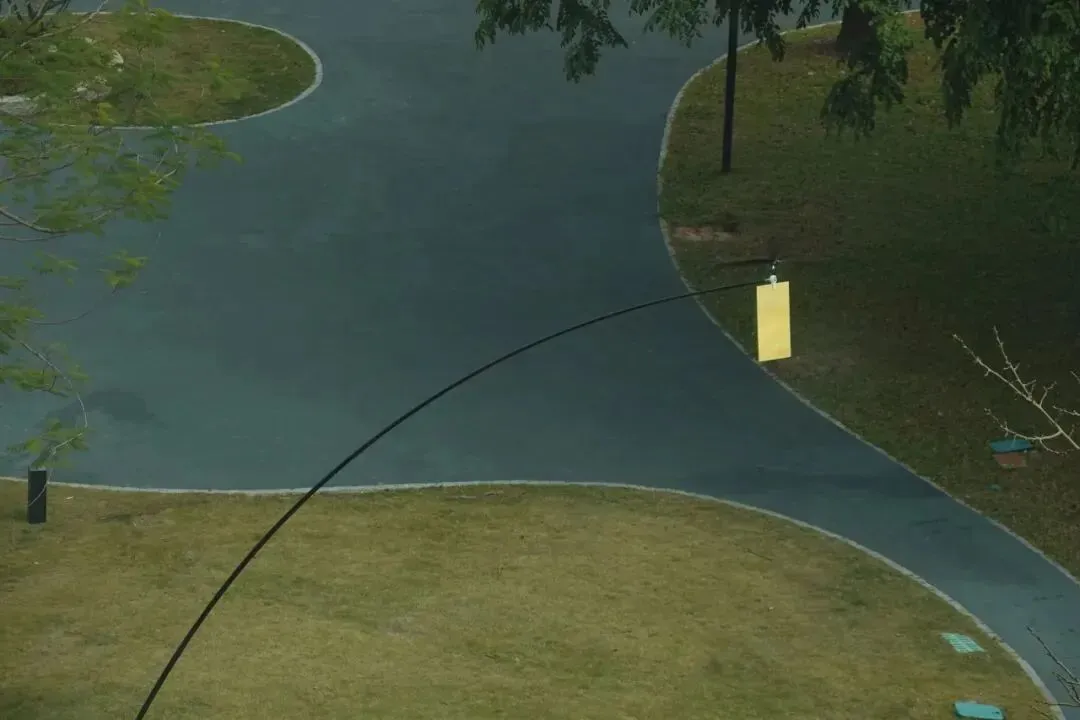
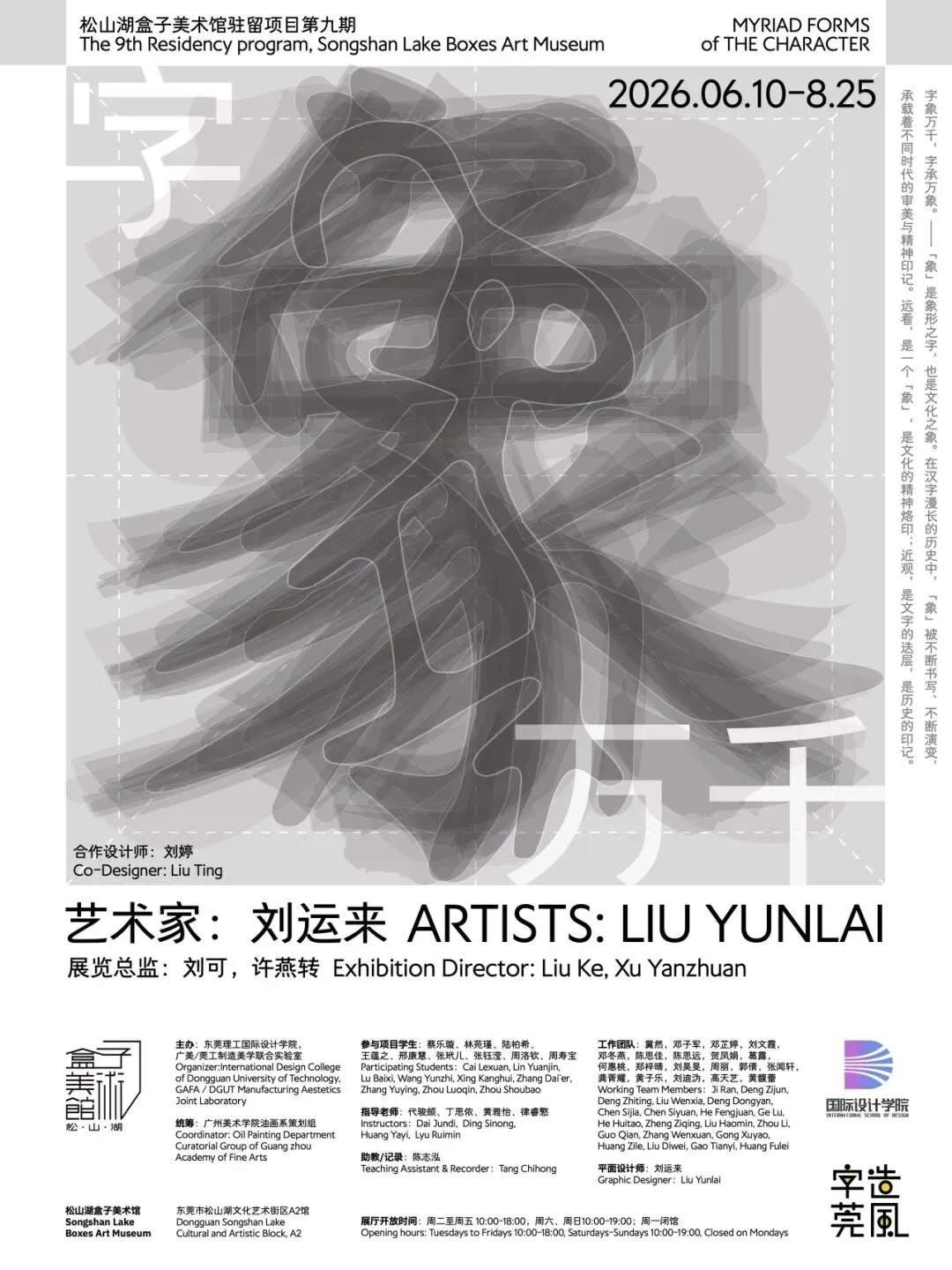
松山湖盒子美术馆正在展出
Now Showing @Songshan Lake Boxes Art Museum!
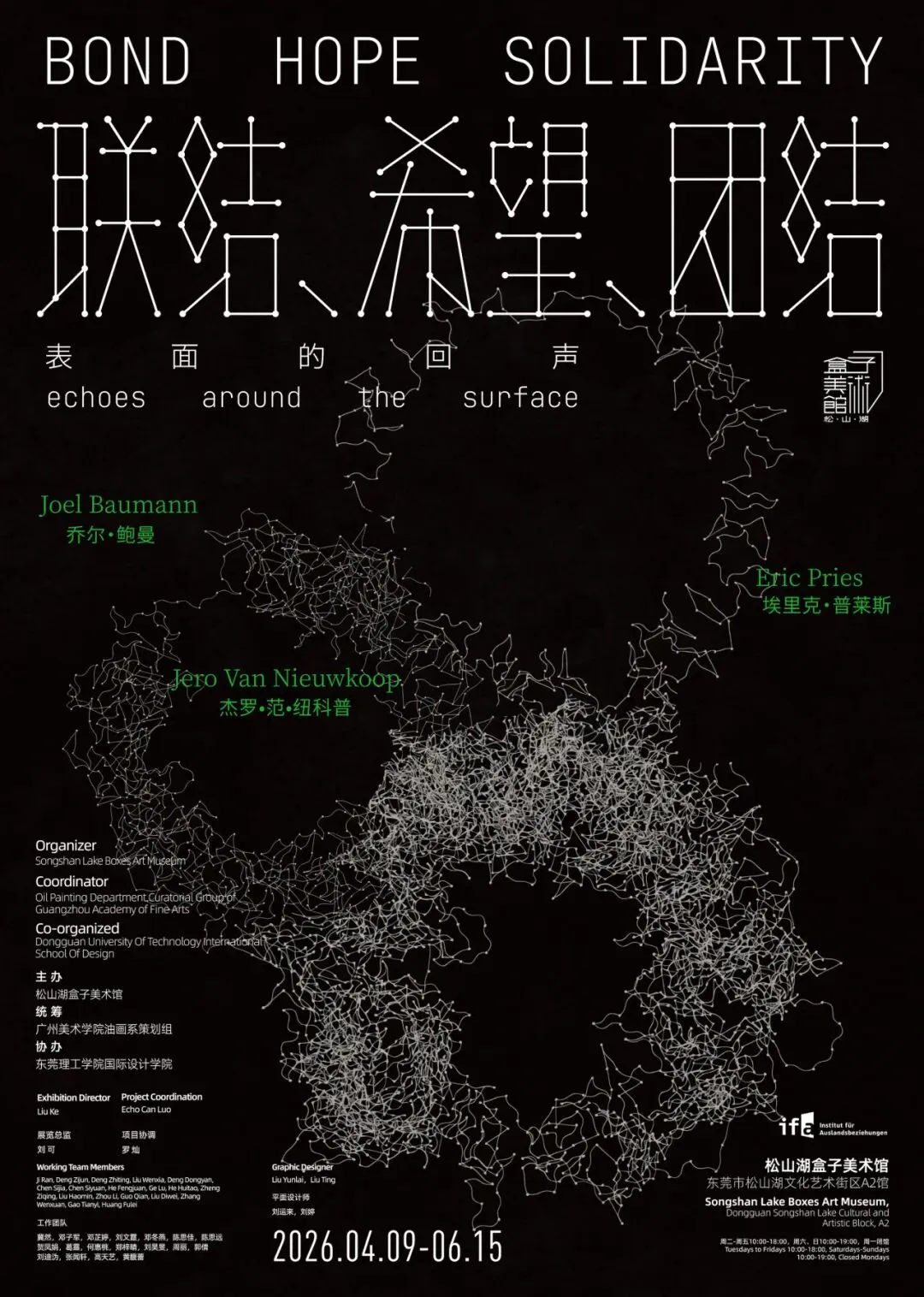
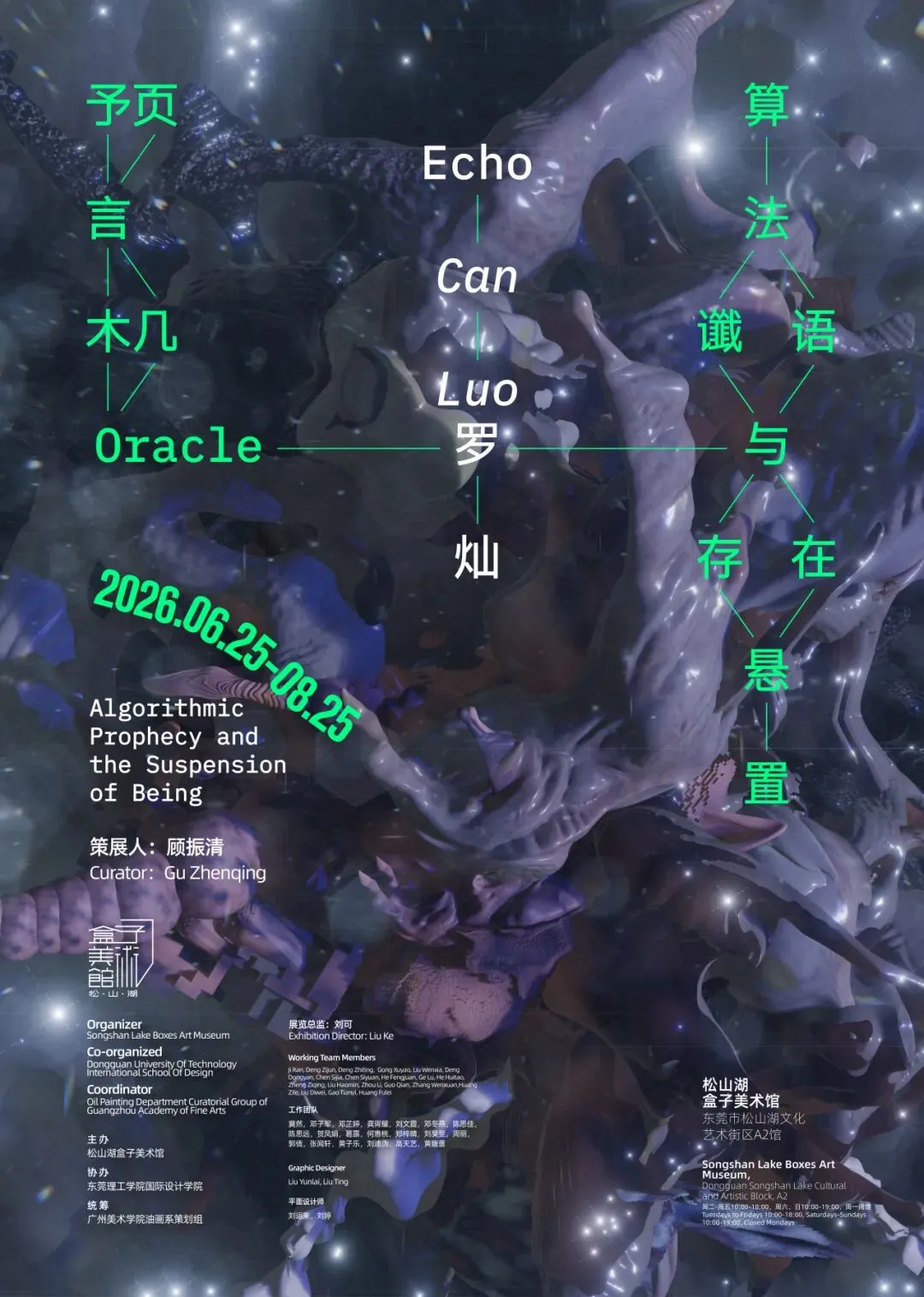
左右滑动查看更多
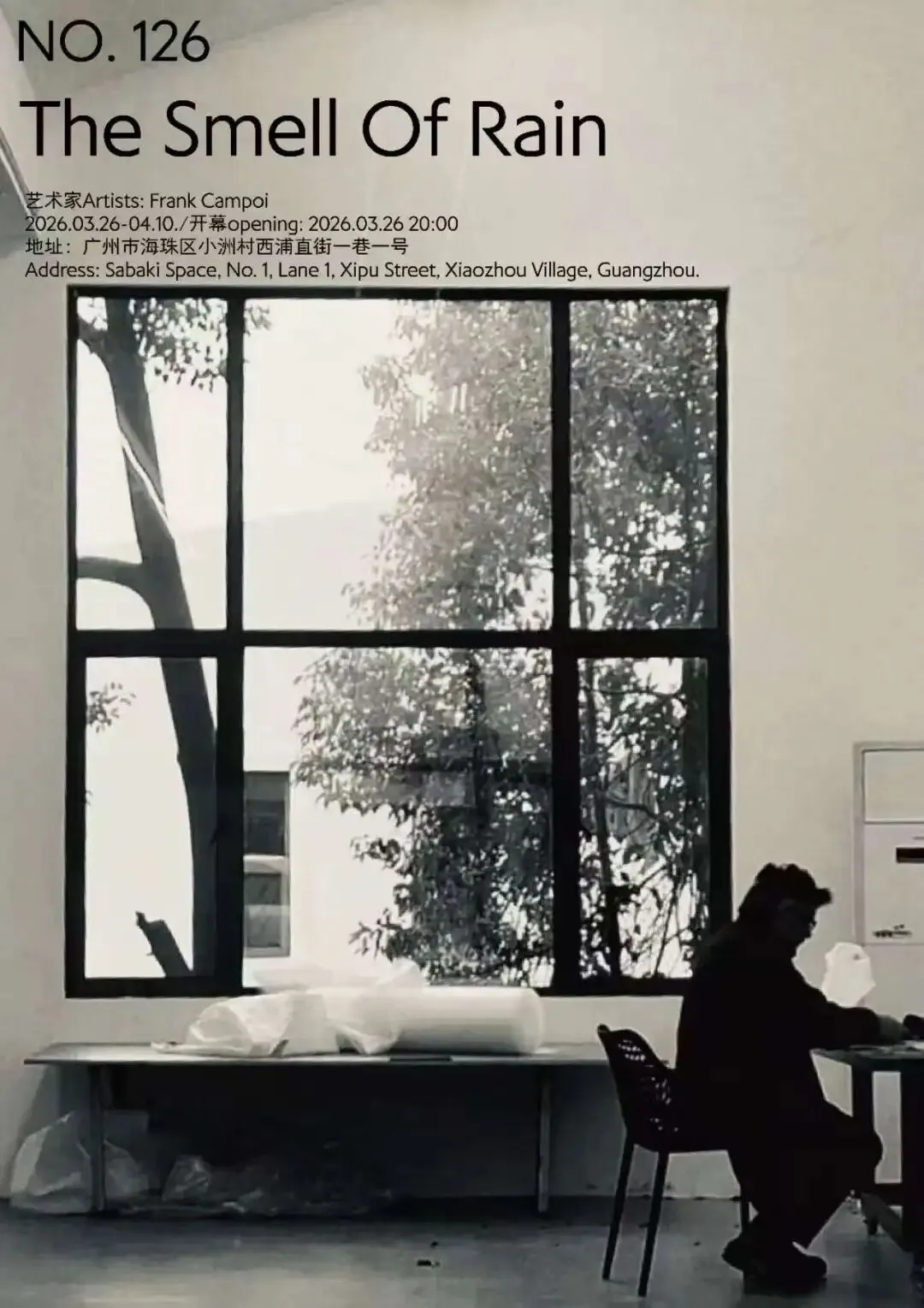
腾挪空间正在展出
Now Showing @ SabakiSpace
松山湖盒子美术馆
松山湖盒子美术馆坐落于广东省东莞市松山湖畔悠兰里ULAND-松山湖文化艺术街区,于2024年12月27日正式开馆。美术馆由广州美术学院油画系策划组运营管理,范勃任馆长,刘可创始人兼任执行馆长,周力任艺术总监,王见任学术总监,邓子军任副馆长,冀然任学术副馆长。美术馆建筑面积5135平方米,展厅空间约1650平方米,包含9个展厅、2个驻留工作室,另设研究室、阶梯报告厅、公教厅、办公区、休息区及咖啡厅。通过整合地区及国际资源,深度参与当代艺术机制的建设与生产,致力于成为粤港澳大湾区具有专业性、拓展性、识别性和有国际影响力的当代美术馆。依托美术学院研究与教学平台以及在地文化与技术,将艺术展览、国际交流、学术研究、公共美育和本土文化结合在一起,成为能够滋润社会文化、经济、科技发展的土壤和为公众提供多样化文化体验的创造性社会美育平台。
Songshan Lake Boxes Art Museum
Songshan Lake Boxes Art Museum is located in ULAND-Songshan Lake Culture and Art District, Dongguan City, Guangdong Province. Songshan Lake Boxes Art Museum is operated and managed by the Curatorial Group of the Oil Painting Department of Guangzhou Academy of Fine Arts. Fan Bo serves as the director,Liu Ke, the founder and executive director,Zhou Li holds the position of artistic director,Wang Jian holds the position of academic director,Deng Zijun is the deputy director,and Ji Ran works as the academic deputy director.The museum has a construction area of about 5135 square meters,with exhibition space of about 1650 square meters, including 9 exhibition halls,2 residency studios,as well as research rooms, tiered lecture hall, public education hall,office areas, rest areas, and café. By integrating regional and international resources and deeply participating in the construction and production of contemporary art mechanisms, the museum is committed to becoming a contemporary art museum in the Guangdong-Hong Kong-Macao Greater Bay Area with professionalism,expandability, recognizability, and international influence. Relying on the research and teaching platform of the Academy of Fine Arts and local culture and technology, it combines art exhibitions, international exchanges, academic research, public aesthetic education, and local culture, becoming a creative social aesthetic education platform that can nourish social culture, economy, and technological development and provide the public with a diverse range of cultural experiences.