
生存马戏
| Circus of Servival|
艺术家 Artist
王赫
地址 Address
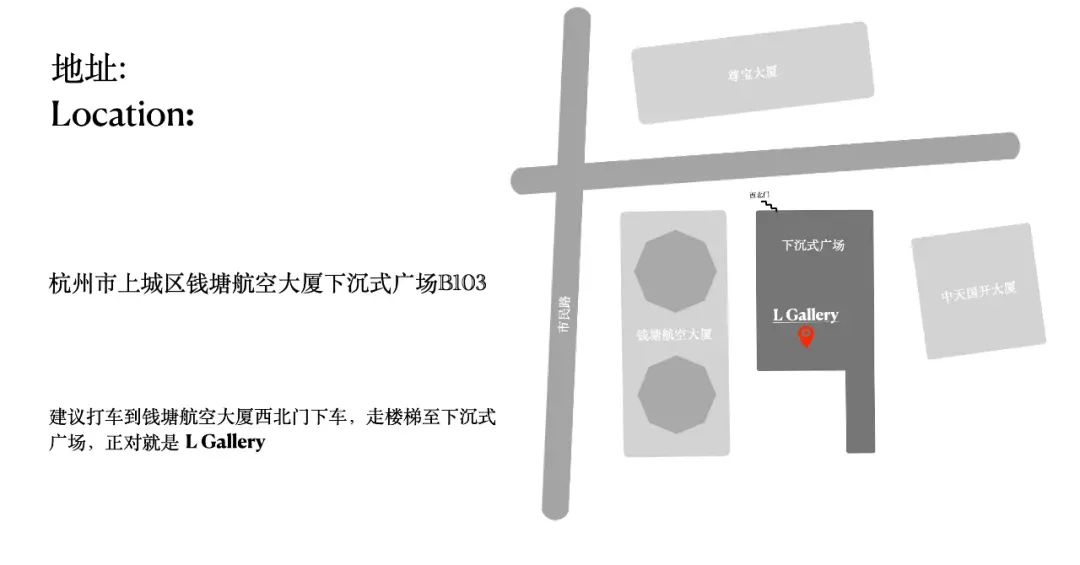
杭州市上城区钱塘航空大厦下沉式广场B103
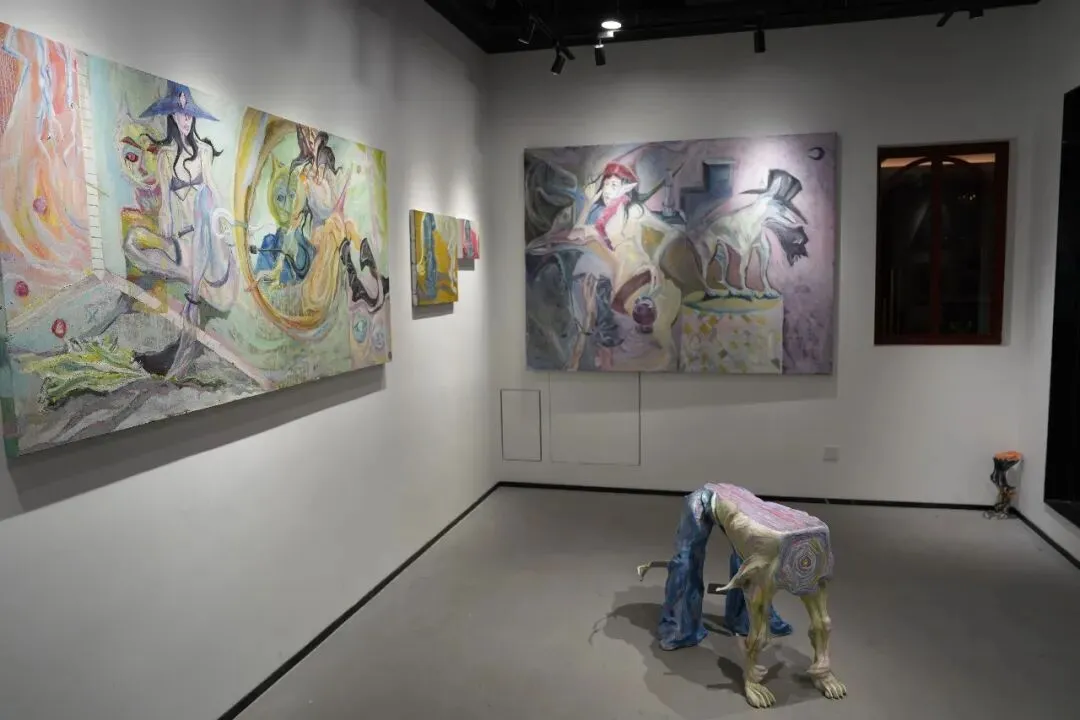
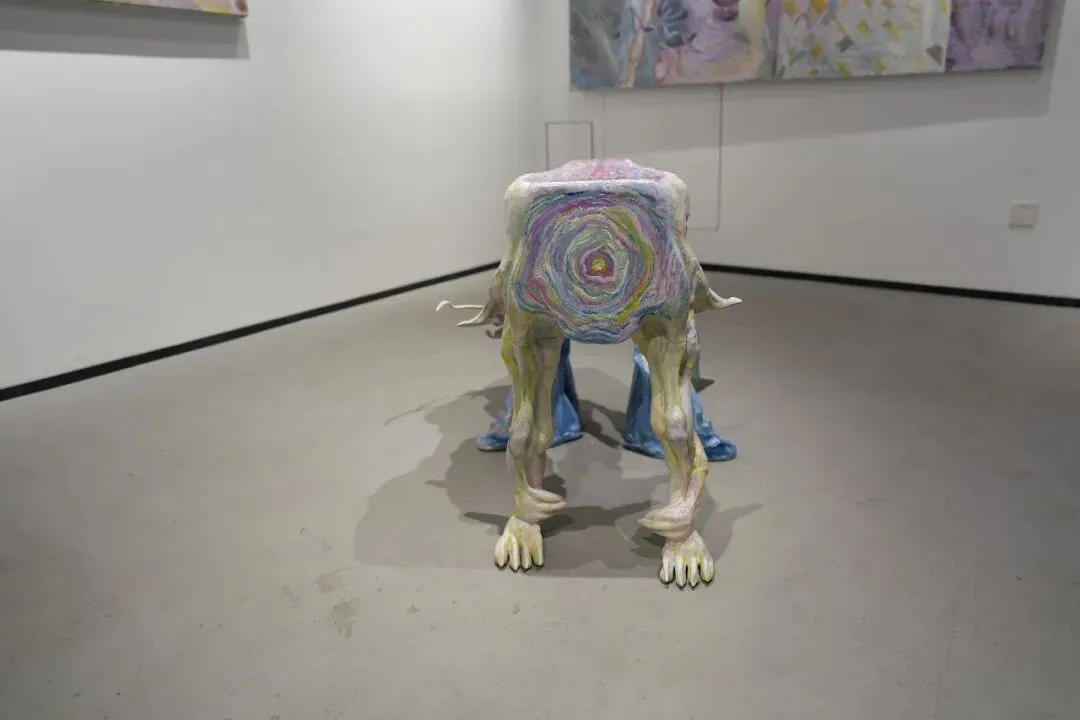
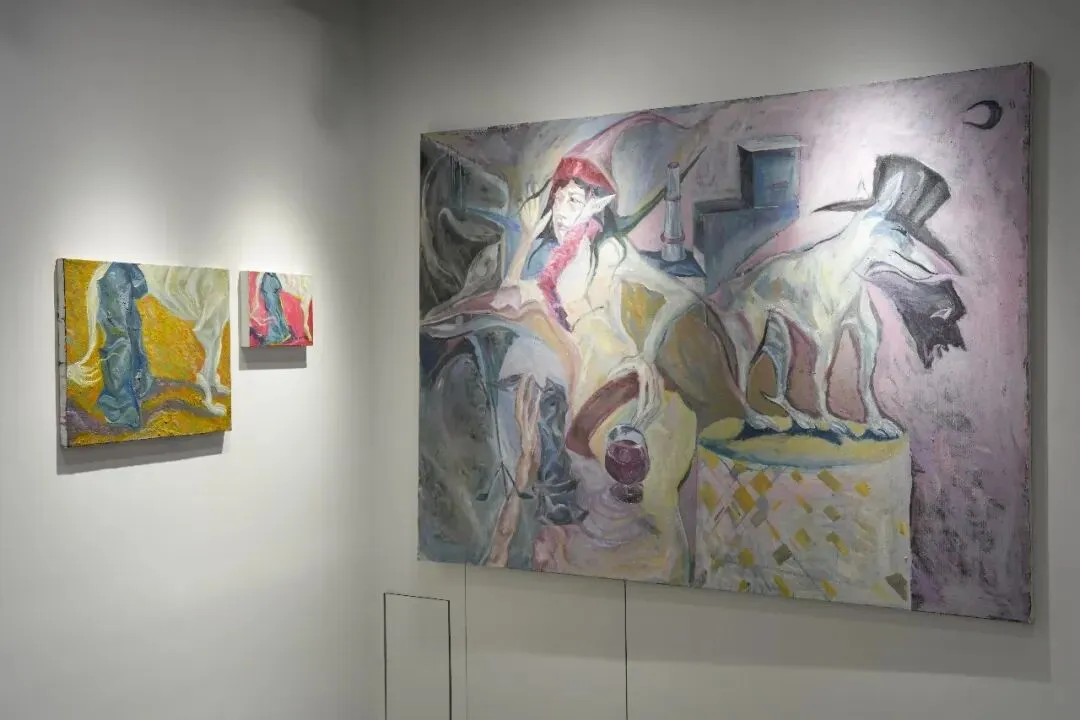
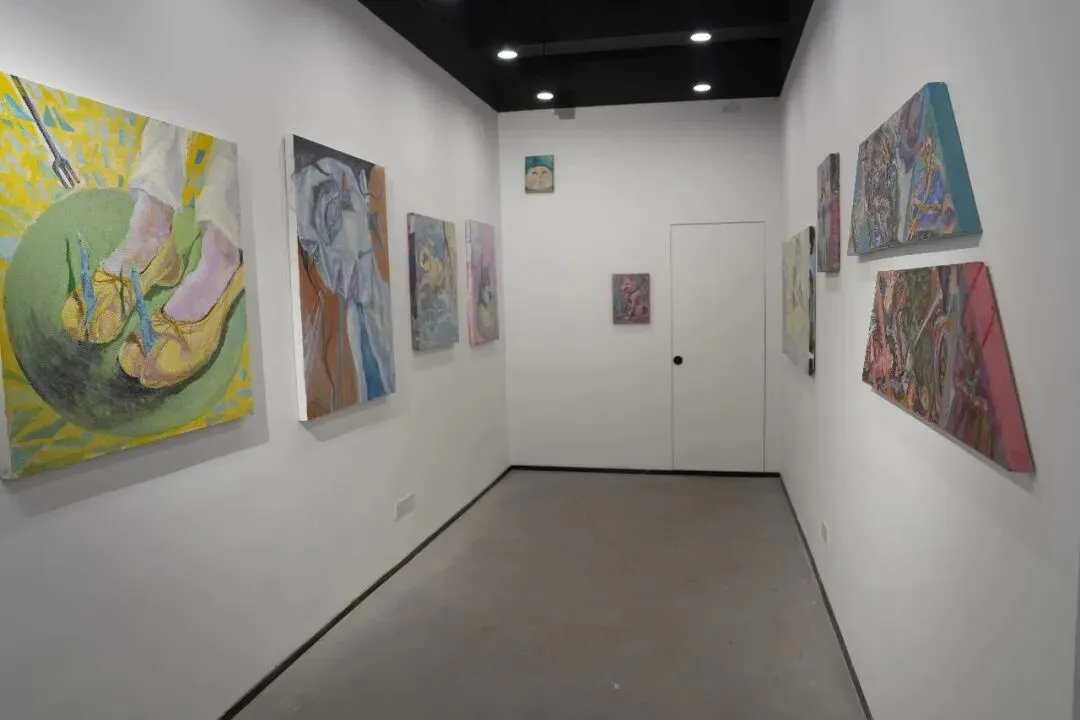
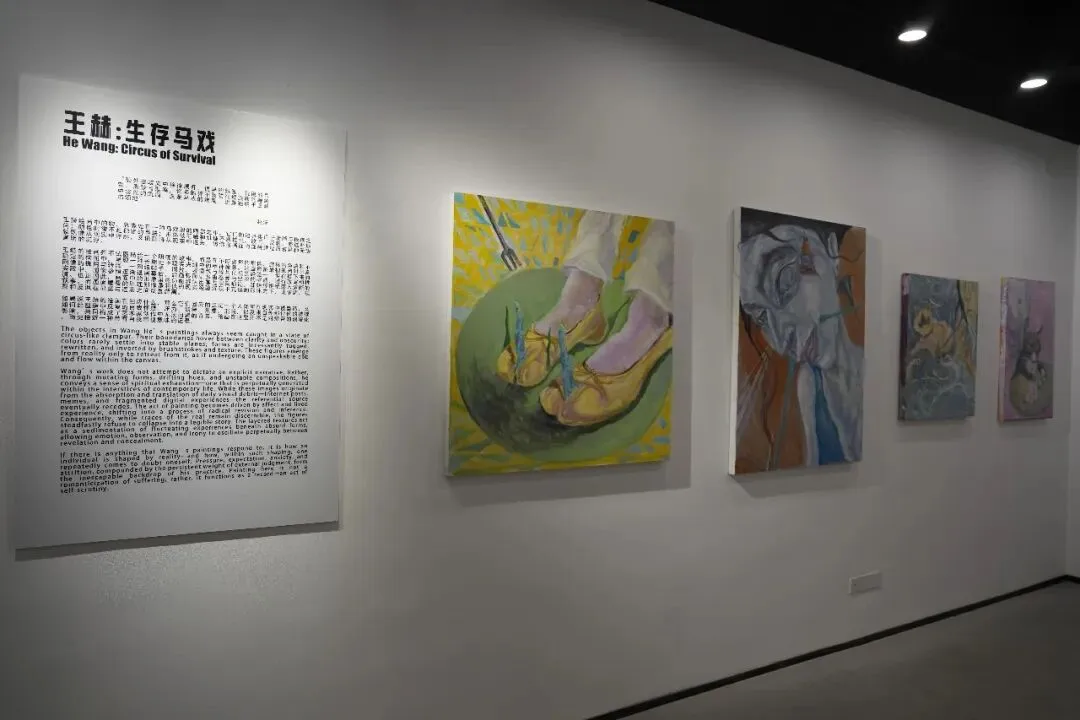
王赫绘画中的物,总像处在一种马戏般的喧嚣之中。它们的边界徘徊于清晰与模糊之间;颜色时常不是稳定的色块;形体被笔触和肌理不断拉扯、改写、反转。使这些形象既像从现实中浮起,又像即将从现实中退去,仿佛在画面内部持续经历着某种无法言明的沉浮。
王赫的绘画并不试图描绘一个明确的故事,而是在不断变形的形体、游移的色块和不稳定的构图中,呈现一种长期处于现实夹缝中的精神疲惫。这些形象最初来自对日常图像的挪用与转译——网络帖子、图片、表情包与碎片化视觉经验——但在接下来的实践中,图像参照逐渐退居幕后,绘画转而更多由感受与经验的驱动,进行改写和推演。也正因此,画面中的形象虽然仍能辨认出某些现实痕迹,却始终拒绝落入清晰的叙事。而画面层叠的肌理则像是起伏的现实经验沉积于荒诞的形体之下,让情绪、观察和反讽在显露与遮蔽之间反复游离。
如果说王赫的绘画在回应什么,那么它们回应的正是一个人如何在现实中被塑造,又如何此塑造中反复的自我怀疑。压力、期待、焦虑、消耗,以及来自外部评价的持续影响,共同构成了艺术家创作中无法回避的背景。绘画在这里并不是对痛苦的浪漫化,而更接近一种带有自我审视意味的记录。
额外在歧义中徐徐展开 诡异的氛围 荒诞的色彩 痛楚与悲鸣 诸多的猝不及防在螺旋般的缠绕中悠然的流淌 这是马戏的维度 更是独属于王赫的领地 —艺术家赵洋老师
The objects in Wang He’s paintings always seem caught in a state of circus-like clampur. Their boundaries hover between clarity and obscurity; colors rarely settle into stable planes; forms are incessantly tugged, rewritten, and inverted by brushstrokes and texture. These figures emerge from reality only to retreat from it, as if undergoing an unspeakable ebb and flow within the canvas.
Wang’s work does not attempt to dictate an explicit narrative. Rather, through mutating forms, drifting hues, and unstable compositions, he conveys a sense of spiritual exhaustion—one that is perpetually generated within the interstices of contemporary life. While these images originate from the absorption and translation of daily visual debris—internet posts, memes, and fragmented digital experiences—the referential source eventually recedes. The act of painting becomes driven by affect and lived experience, shifting into a process of radical revision and inference. Consequently, while traces of the real remain discernible, the figures steadfastly refuse to collapse into a legible story. The layered textures act as a sedimentation of fluctuating experiences beneath absurd forms, allowing emotion, observation, and irony to oscillateperpetually between revelation and concealment.
If there is anything that Wang’s paintings respond to, it is how an individual is shaped by reality—and how, within such shaping, one repeatedly comes to doubt oneself. Pressure, expectation, anxiety, and attrition, compounded by the persistent weight of external judgment, form the inescapable backdrop of his practice. Painting here is not a romanticization of suffering; rather, it functions as a record—an act of self-scrutiny.