
Milan, Italy
新米兰国际会展中心
The New Milan Trade Fair
在越来越多城市中,会展中心已不再只是展览和会议的容器。它们同时承载产业发布、商务交流、城市形象和公共活动,成为城市连接世界的重要平台。但规模越大,问题也越突出:如何避免会展中心只是一个巨大的“展馆集合”?
展览建筑的挑战,不只是面积和容量,而是如何在高效组织人流、物流和运营流线的同时,让超大尺度空间保持清晰、可达,并在展会之外继续服务城市公共生活。
Across many cities, trade fair venues are no longer just containers for exhibitions and conferences. They now support industry launches, business exchange, urban identity and public events, becoming key platforms through which cities connect with the world. Yet the larger they become, the more critical the question: how can a trade fair venue avoid becoming merely a vast collection of exhibition halls?
The challenge lies not only in area or capacity, but in organising visitor flows, logistics and operations efficiently, while keeping a large-scale space clear, accessible and capable of serving urban public life beyond event days.
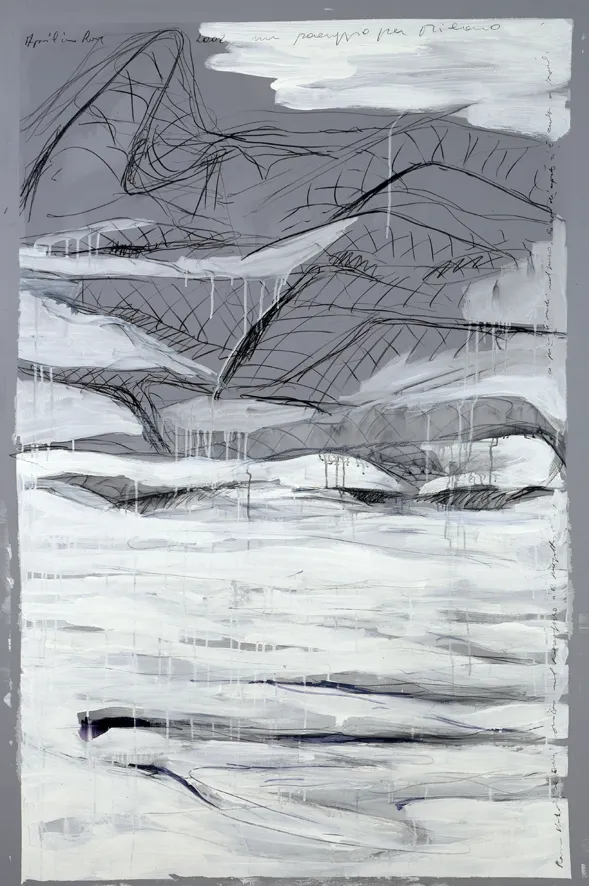
由Studio Fuksas设计的米兰新国际会展中心 Milan Trade Fair,正是回答「大型会展中心如何成为城市公共平」的代表性案例。
项目总建筑面积约100万平方米,由8个大型单层及双层展馆组成,展览空间约345,000平方米,另有约60,000平方米室外展览空间,并复合会议、服务、酒店、办公、商业、餐饮等功能。它不是一个单一的展馆建筑,而是一个被系统组织起来的城市级公共综合体。
Designed by Studio Fuksas, the Milan Trade Fair offers a representative response to the question of how a large trade fair venue can become a civic public platform.
With a gross floor area of approximately one million square metres, the project comprises eight large single-level and two-level pavilions, around 345,000 square metres of exhibition space, and an additional 60,000 square metres of outdoor exhibition areas. It also integrates conference, service, hotel, office, retail and catering functions. Rather than a single exhibition building, it operates as a carefully organised civic complex.

01
从“做大”到“组织”

From Scale to Structure
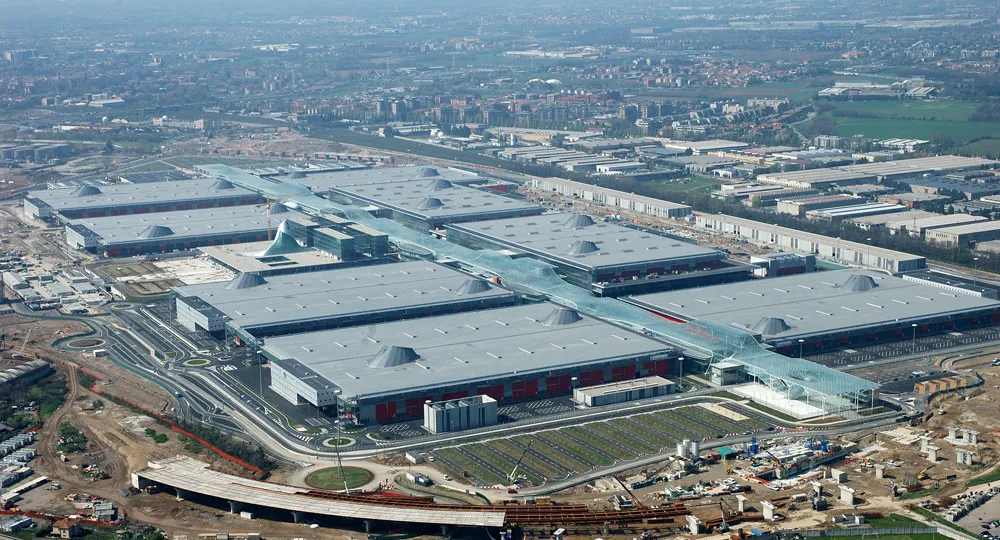
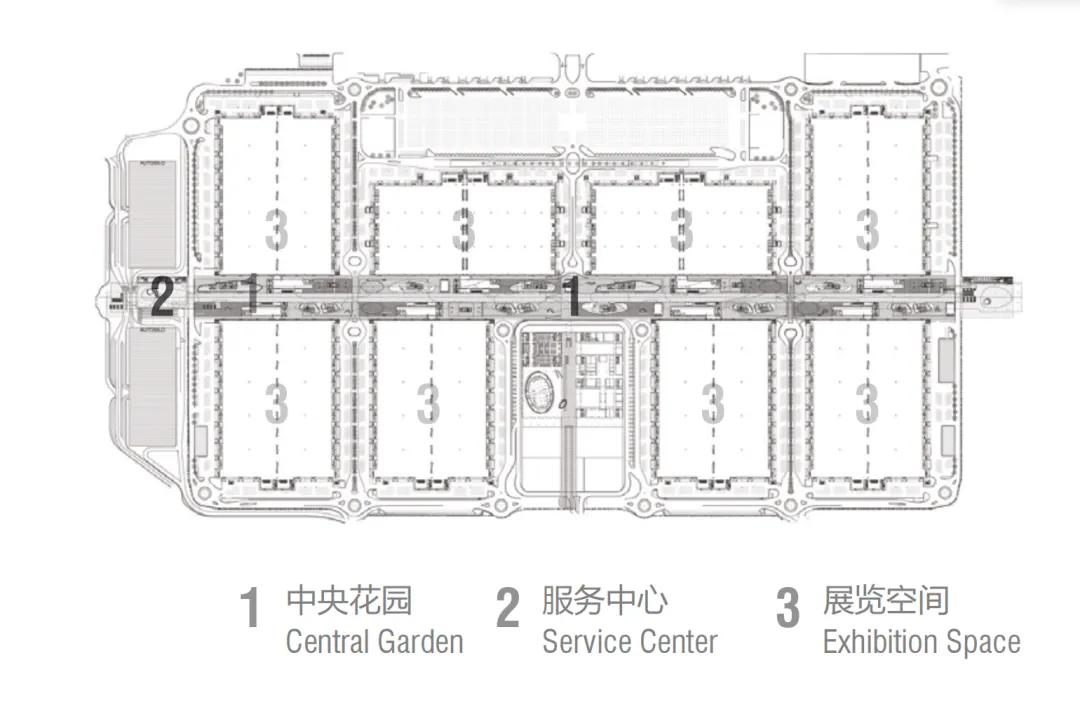
对于大型会展中心来说,真正的难点并不是把建筑做得足够大,而是如何让复杂的功能、高密度的人流和巨大的空间尺度被有效组织起来。许多会展中心容易形成平面上连续排布的展馆群:功能高效,却缺少识别;规模庞大,却容易让人迷失;建筑完整,却很难形成真正的公共体验。
For large trade fair venues, the real challenge is not simply to build at scale. It is to give structure to complex functions, intense flows of people and an exceptionally large spatial field. Many exhibition complexes tend to become a sequence of halls. They may be efficient, but often lack identity. They may be large, but difficult to navigate. They may be complete as buildings, yet limited as public places.
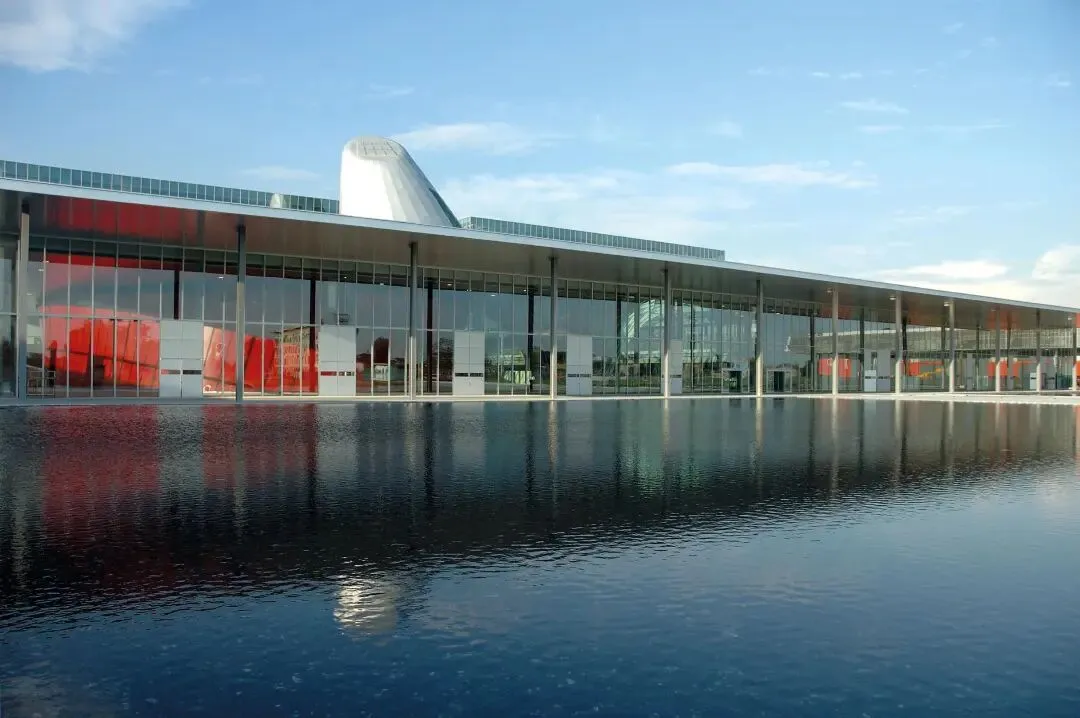
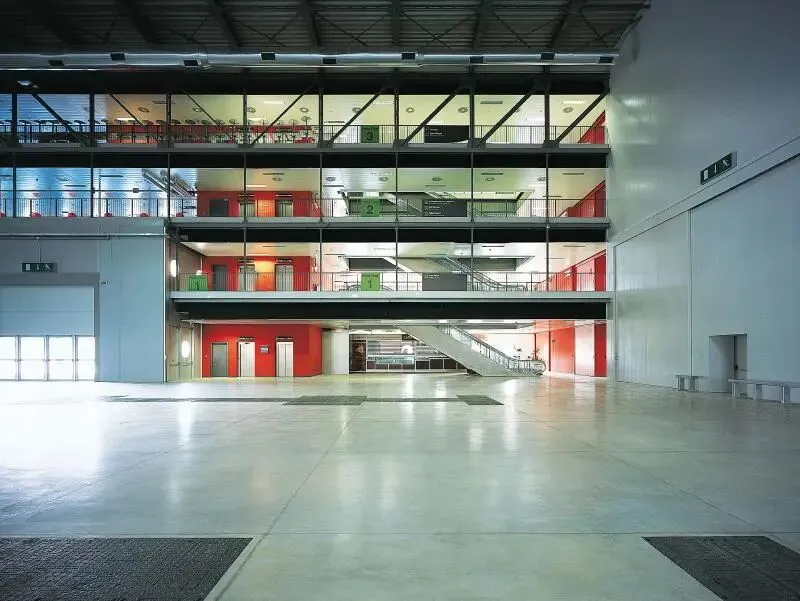
在米兰新国际会展中心中,Studio Fuksas的回应是建立一条清晰的中央轴线。它串联东西入口、展馆、会议中心、服务设施和公共活动空间,使整个项目不再是若干展馆的简单并置,而成为一个可以被行走、被辨认、被体验的连续空间。
At the Milan Trade Fair, Studio Fuksas responds through a clear central axis. It links the east and west entrances, exhibition halls, conference facilities, service areas and public spaces, transforming the complex from a series of buildings into a continuous and legible spatial experience.
02
“面纱”:
把交通空间转化为公共空间

The Sail:
Turning Circulation into Public Space
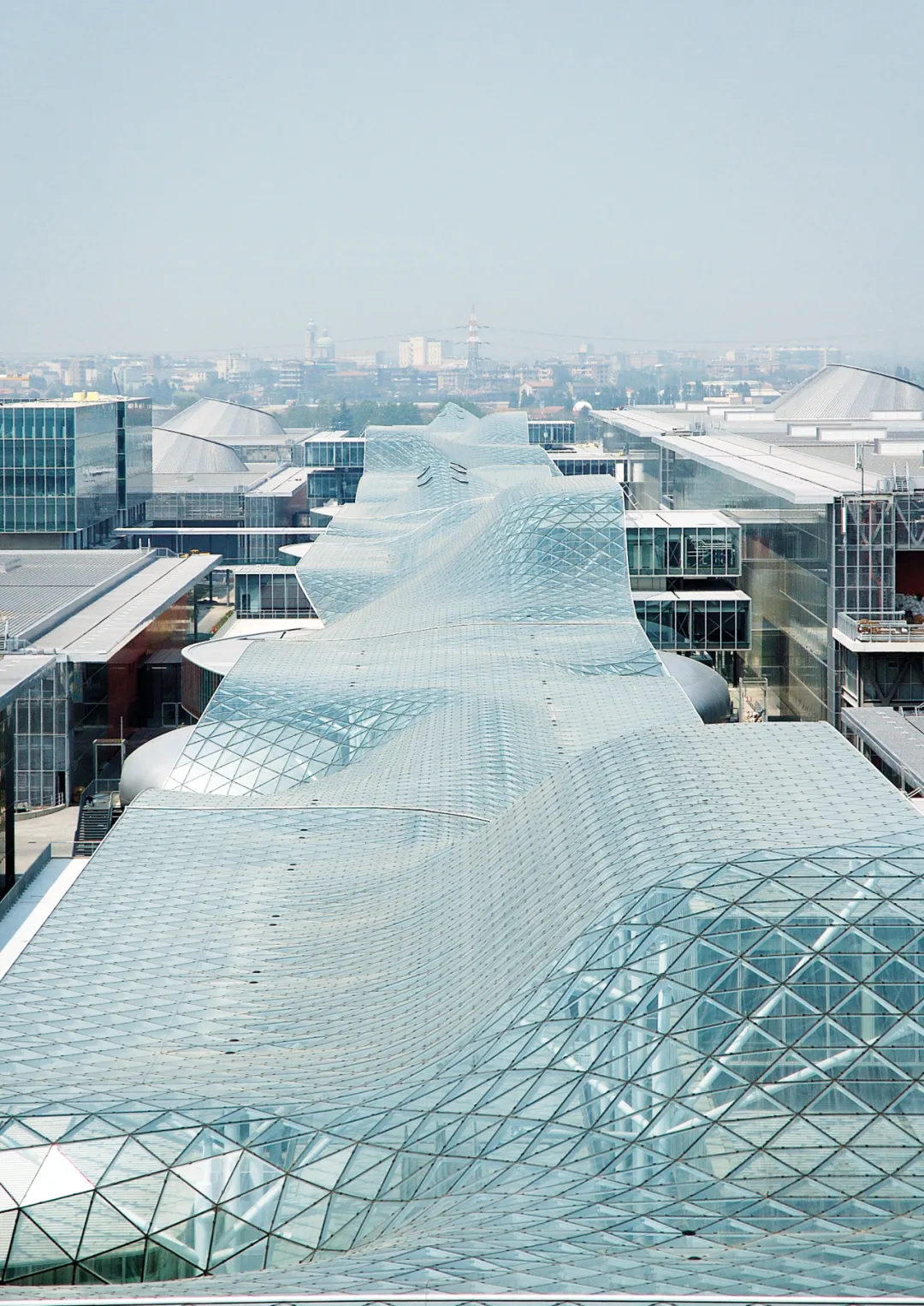
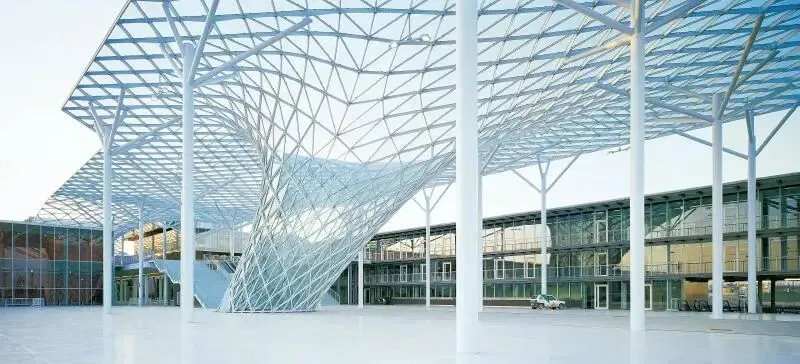
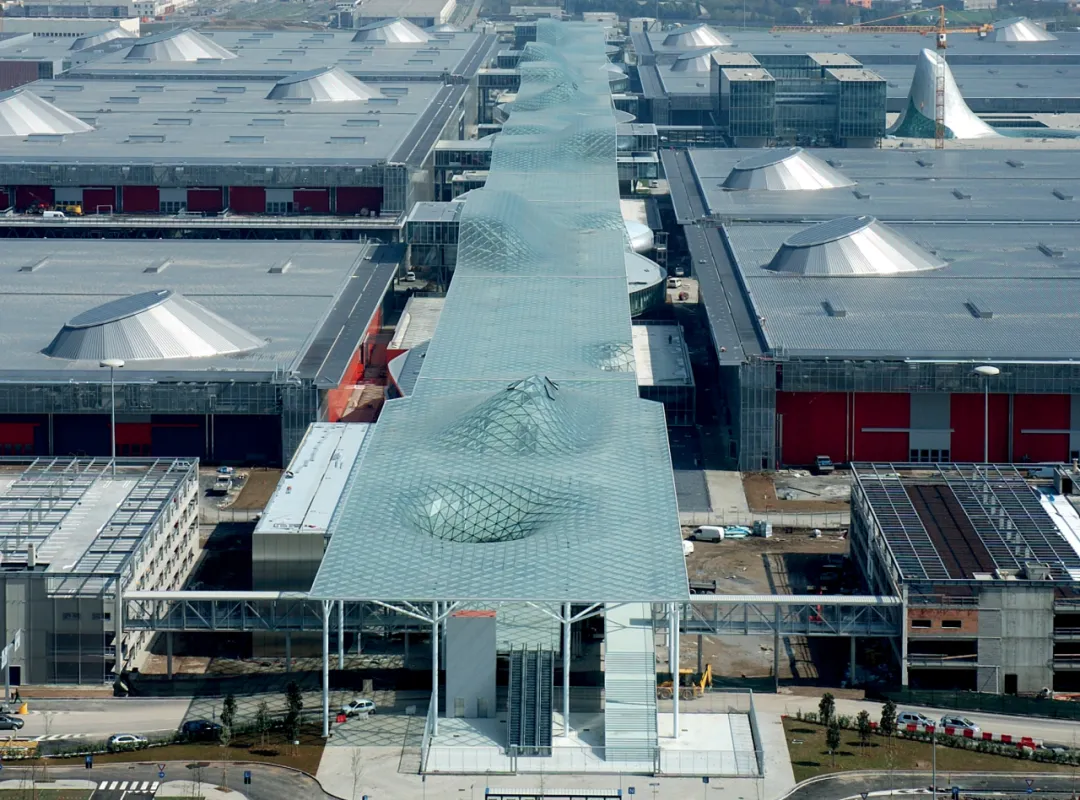
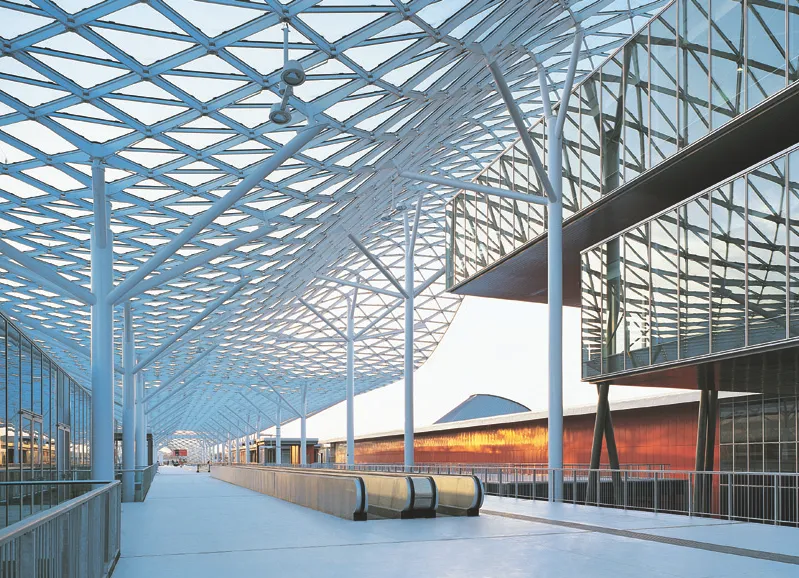
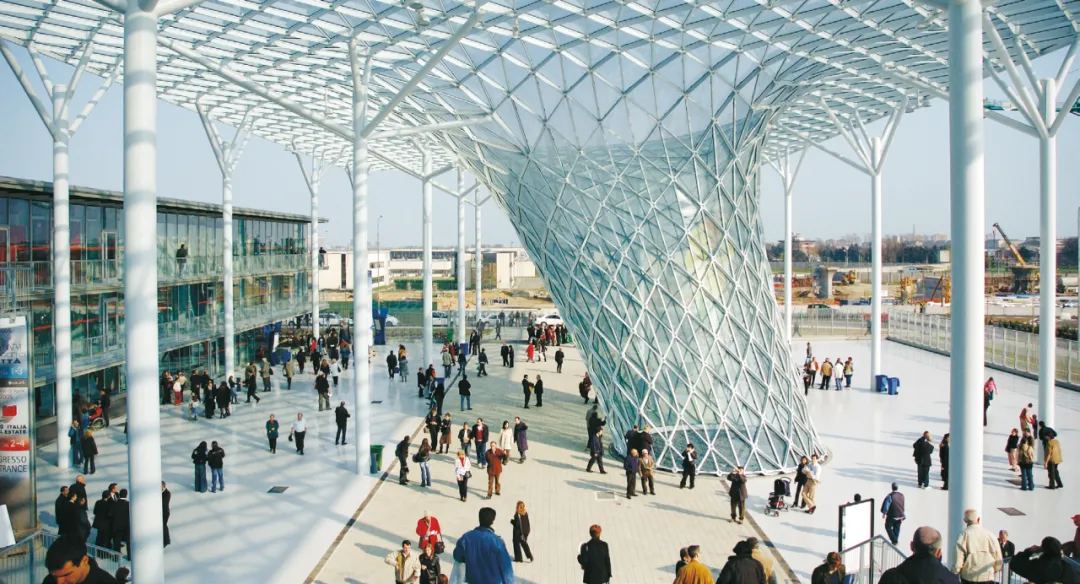
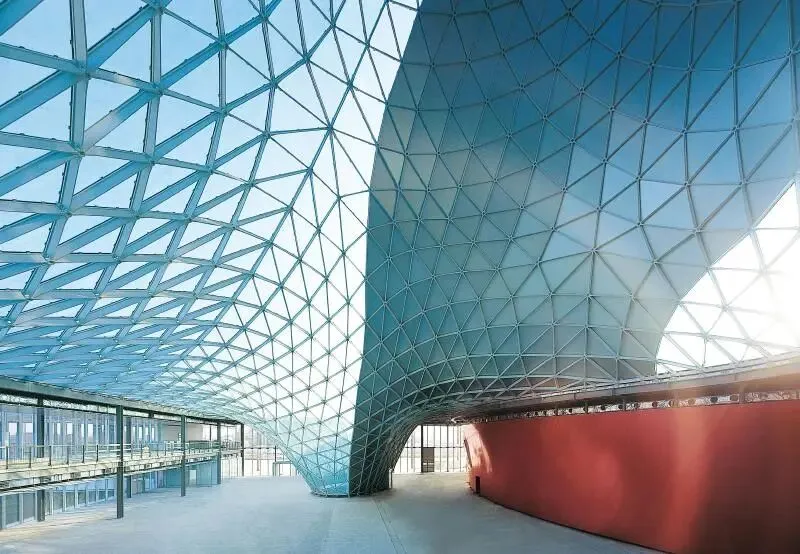
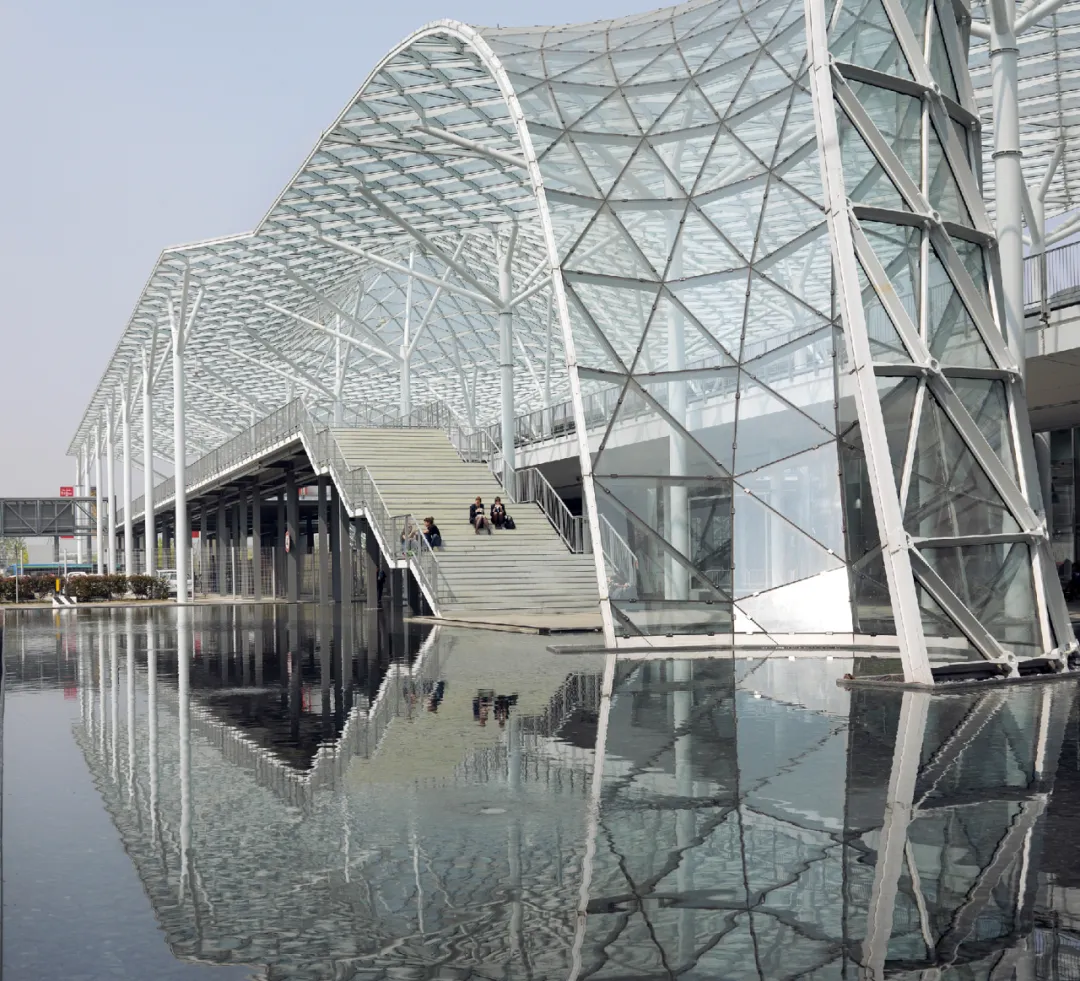
项目最具标志性的设计,是覆盖中央步行空间的巨大玻璃结构——“面纱”。
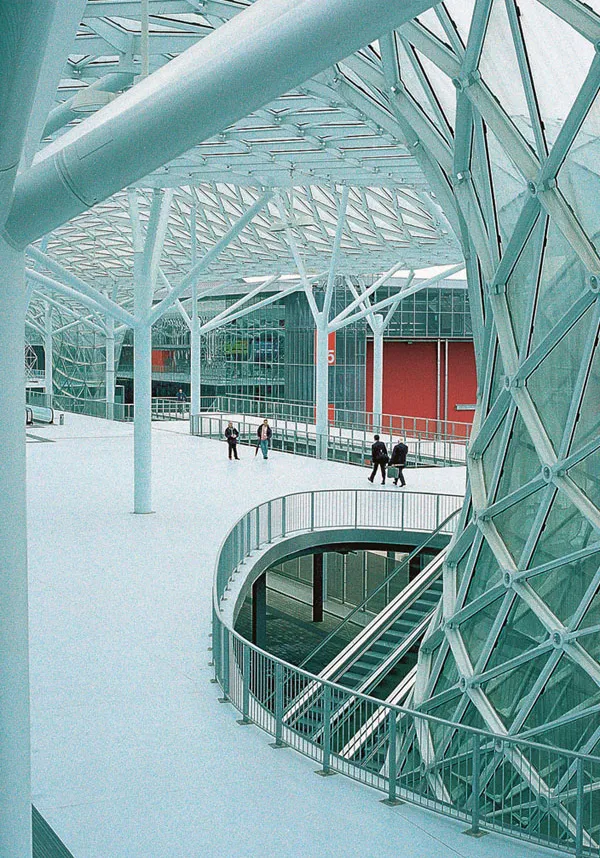
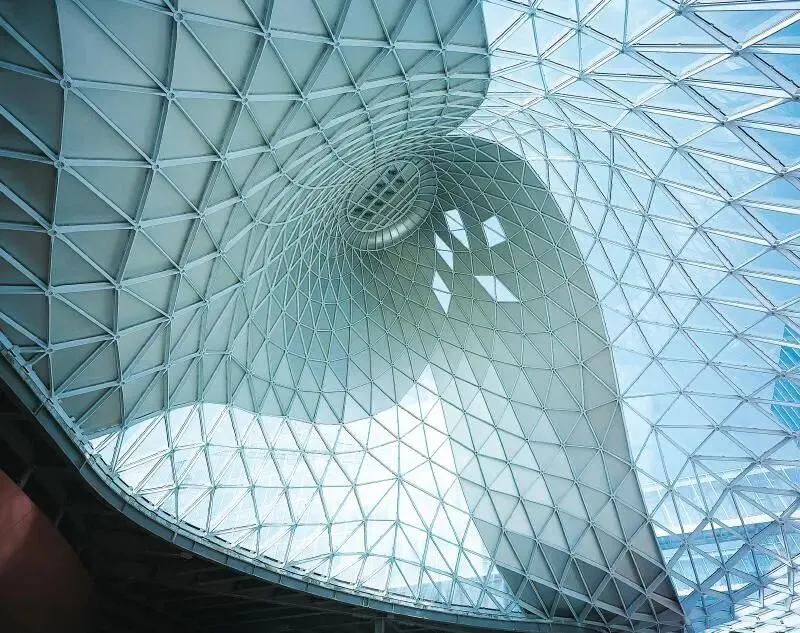
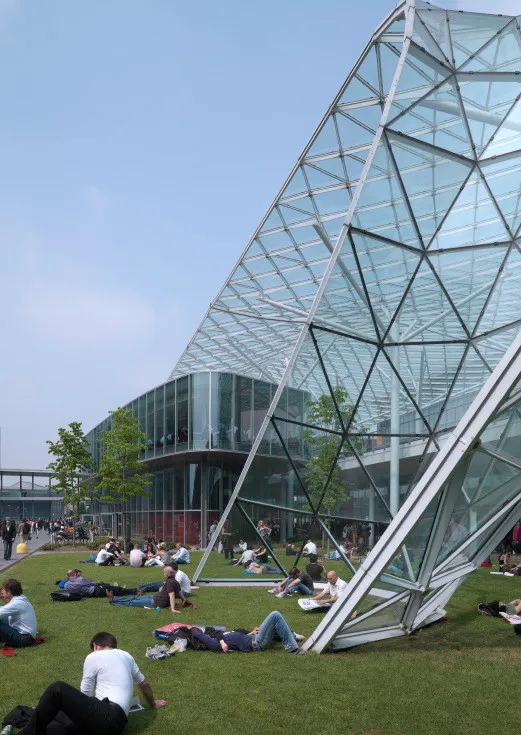
这条“面纱”长约1500米、宽32米,覆盖面积约47,000平方米。它沿中央轴线起伏变化,形成如波浪、沙丘、山脉和火山口般的空间形态,也回应了米兰周边阿尔卑斯山的自然景观。但它的价值并不只是视觉上的震撼。
The most recognisable element of the project is the vast glass structure covering the central pedestrian route: the “The Sail”.
Measuring approximately 1,500 metres in length and 32 metres in width, the Veil covers around 47,000 square metres. It rises and falls along the central axis, evoking waves, dunes, hills and craters, while also recalling the natural landscape of the Alps around Milan. Its value, however, is not only visual.
“面纱”首先是一条交通主轴,承担大型展会期间高密度人流的组织功能;同时,它也是一条公共街道,将展馆、会议、商业、服务和休憩空间连接起来。人在其中并不只是从一个展馆走向另一个展馆,也可以停留、等待、交流、观看和相遇。
这正是项目最具启发性的地方:它把原本容易被视为“过渡空间”的交通轴线,转化为整个会展中心中最重要的公共空间。
The Sail is first a circulation spine, managing dense visitor flows during major events. At the same time, it functions as a public street, connecting exhibition halls, conference spaces, retail, services and areas for rest. Visitors do not simply pass through it; they pause, meet, wait, look around and engage with the place.
This is one of the project’s most important lessons: circulation is not treated as leftover space, but as the main public space of the complex.
03
标志性,不只是造型

Identity Beyond Form
大型公共建筑常常被期待成为城市地标。但真正有生命力的地标,并不只是一个醒目的外观。
米兰新国际会展中心的“面纱”之所以成为经典,是因为它不是附加在建筑之上的装饰性符号,而是深度参与了项目的空间组织。
它是入口形象,也是导向系统;是屋面结构,也是公共街道;是建筑标识,也是人的活动场所。
Large public buildings are often expected to become landmarks. Yet a meaningful landmark is not created by form alone.
The Sail has become a defining element of the Milan Trade Fair because it is not an applied icon or a decorative gesture. It is embedded in the organisation of the project.
It is an entrance image and a wayfinding device; a roof structure and a public street; an architectural identity and a place of human activity.
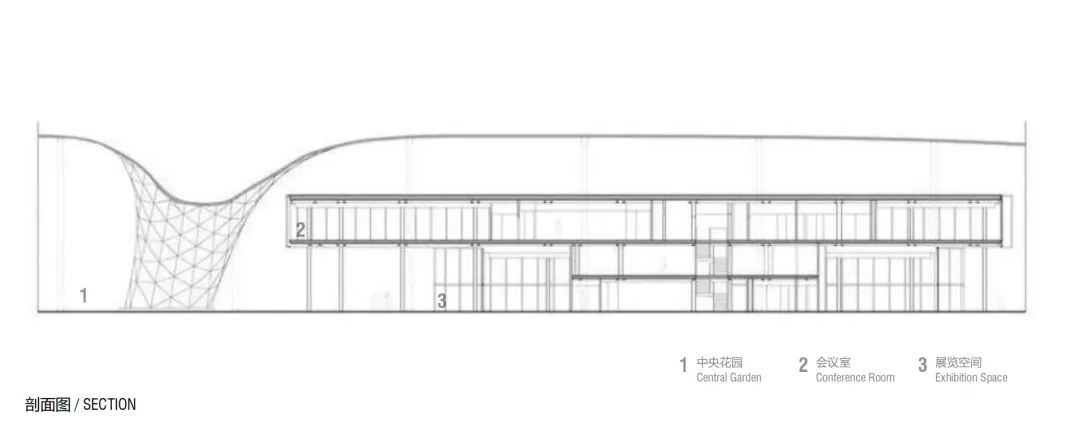
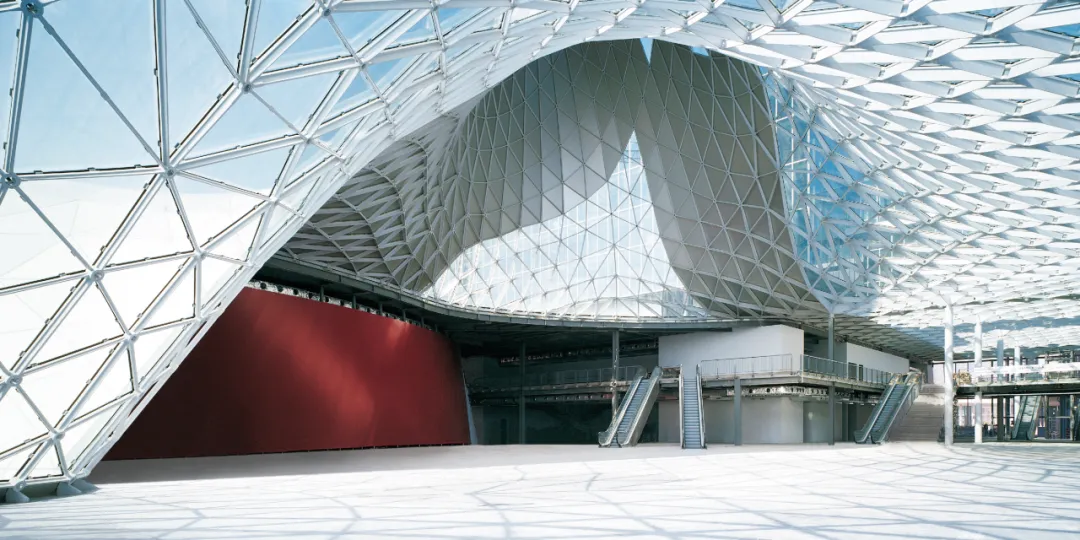
在主入口处,“面纱”以抛物线般的姿态俯冲至地面,形成极具戏剧性的服务中心。结构、光线、尺度和人流在这里交汇,使入口不再只是通向展馆的门厅,而成为整座会展中心最具记忆点的公共场景。
因此,这个项目所呈现的“标志性”,并不是孤立的形式表达,而是一套完整的空间组织方法:通过形式建立识别,通过流线提升效率,通过公共空间回应人的体验。
At the main entrance, the Sail descends dramatically to the ground in a parabolic movement, forming the iconic Service Centre. Structure, light, scale and movement converge here, turning the entrance from a simple foyer into one of the most memorable public moments of the project.
In this sense, the project’s identity is not an isolated formal expression, but a spatial strategy. It creates recognition through form, efficiency through circulation, and human experience through public space.
04
会展中心也应服务城市生活

A Venue That Also Serves the City
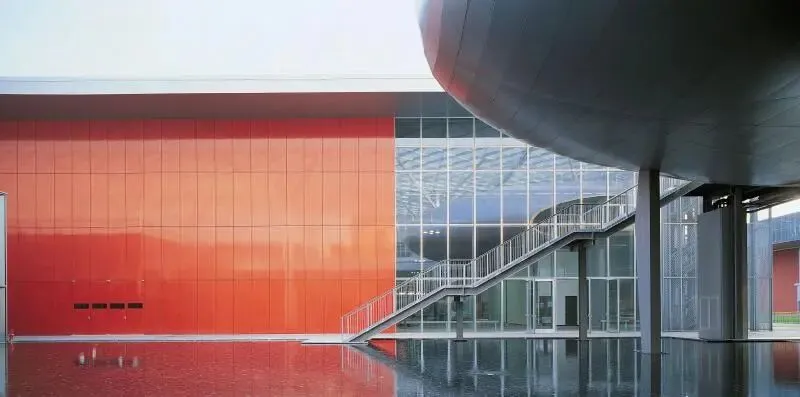
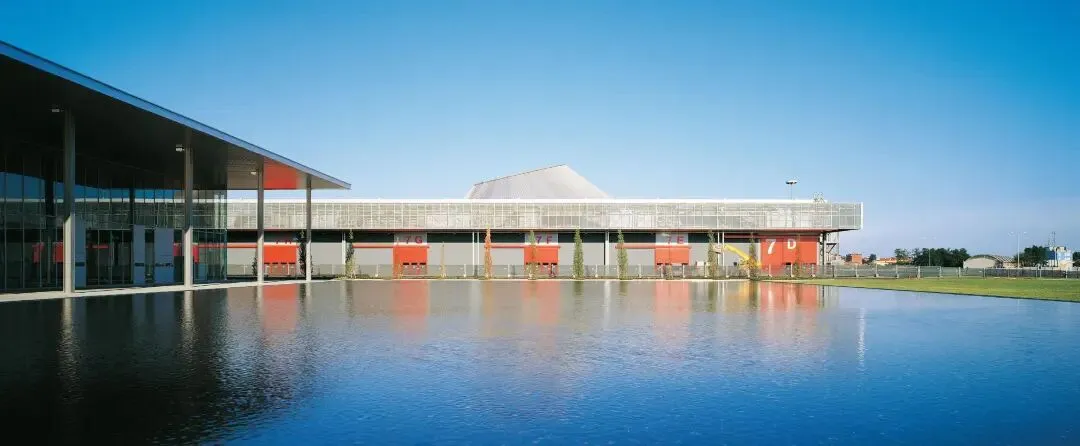
会展建筑还有一个常被忽视的问题:它与城市日常生活的关系。许多会展中心在展会期间人流密集、活动频繁,但在非展期则容易成为相对封闭的巨型设施。如何让会展中心在展会之外也与城市保持连接,是当代展览建筑必须面对的问题。
Another key issue is often overlooked: the relationship between trade fair venues and everyday urban life. Many exhibition centres are active during major events, but risk becoming isolated facilities outside event periods. A contemporary trade fair venue must therefore ask how it can remain connected to the city beyond the fair itself.
米兰新国际会展中心并没有把自己定义为孤立的展览机器。项目中设置会议中心、商业、餐饮、服务、办公和休闲空间,使其不仅可以承载展览,也可以容纳会议、商务、交流与日常活动。会议中心由10个大厅组成,共计约2600个席位,进一步强化了项目作为交流平台的功能。
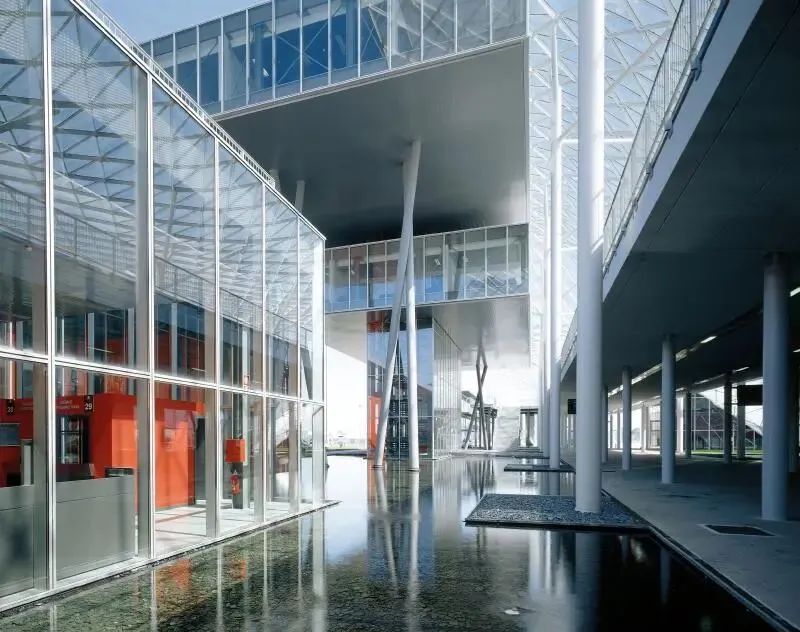
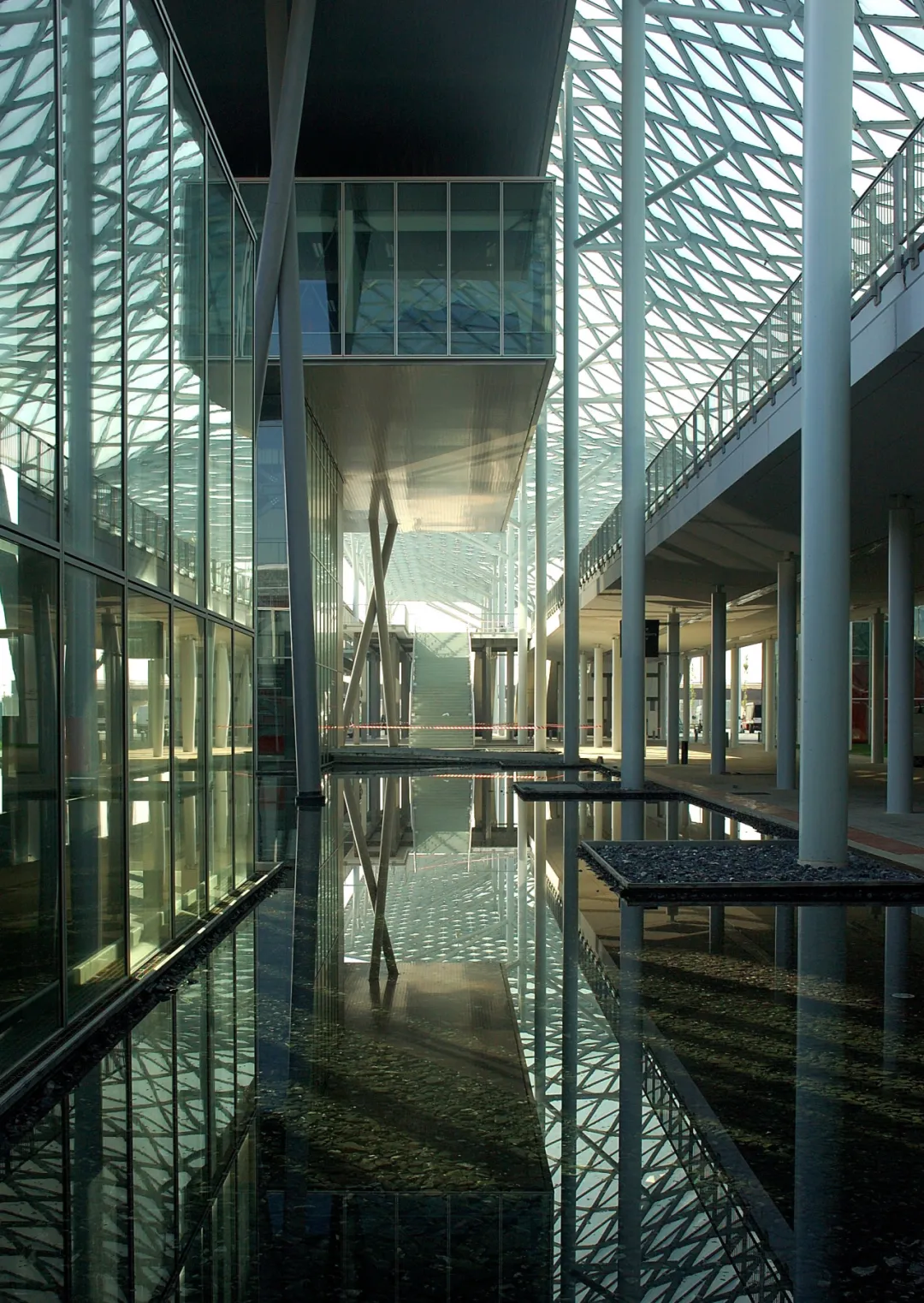
同时,项目通过绿色廊道连接周边公园,形成约180,000平方米的休闲空间。展馆、中央花园、水池、绿地和开放步行空间共同构成一个更开放的城市环境。
The Milan Trade Fair is not conceived as an isolated exhibition machine. With conference facilities, retail, catering, services, offices and leisure areas, it supports not only exhibitions, but also meetings, business exchange and everyday activity. Its conference centre includes ten halls with a total capacity of around 2,600 seats, reinforcing its role as a platform for dialogue and exchange.
The project also connects nearby parks through a green corridor, creating approximately 180,000 square metres of recreational space. Exhibition halls, gardens, water features, green areas and open pedestrian routes together form a more open urban environment.
今天重新阅读米兰新国际会展中心,意义不在于回顾一座经典建筑,而在于理解大型会展中心如何在规模、效率与公共体验之间取得平衡。
通过贯穿全场的“面纱”,Studio Fuksas将展馆、入口、会议、商业、服务和公共空间组织为一个连续整体,使超大尺度建筑获得清晰秩序、鲜明识别与人的尺度。
这也正是它至今仍具启发性的原因:一个优秀的会展中心,不只是展览发生的地方,更应成为城市连接产业、公众与世界的开放平台。
Reading the Milan Trade Fair today is not simply about revisiting a landmark project, but about understanding how a large trade fair venue can balance scale, efficiency and public experience.
Through the Sail, Studio Fuksas brings halls, entrances, conference spaces, retail, services and public areas into a coherent whole, giving a vast complex clarity, identity and a human scale.
This is why the project remains relevant today: a successful trade fair venue is not only a place for exhibitions, but an open platform connecting the city with industry, the public and the wider world.

PROJECT INFORMATION
项目信息
项目客户 Client
米兰会展基金会 Fondazione Fiera Milano
面积 GFA
1,000,000 sqm
功能 Programs
展览空间,会议中心,服务中心,
酒店,办公,商业,餐饮
Exhibition space, conference centre, service centre,
hotel, offices, retail and catering.
总承包商 Contractor
Astaldi SpA, Vianini SpA, Pizzarotti SpA
结构设计 Engineering
Mero GmbH & Co
钢结构顾问 Steel Structural Engineering
Icom Engineering, Ask Romain, Carpentieri d’Italia
幕墙顾问 Curtain Wall Engineering
Permasteelisa Spa
灯光设计 Lighting
Speirs & Major Associates


福克萨斯建筑设计事务所是一家国际建筑事务所,由马希米亚诺·福克萨斯和多丽安娜·福克萨斯夫妇领导,在罗马、巴黎、深圳及上海均设有办事处。过去50年间,事务所处理过各种类别的设计项目,从城市空间介入到机场,从博物馆到文化中心和音乐空间,从会议中心到办公室,从室内设计到设计收藏,通过项目累积的丰富经验,开发出创新的设计方法。事务所完成的设计项目超过600个,遍及欧洲、非洲、美国、亚洲和澳大利亚等地,获得众多国际奖项。
Studio Fuksas, led by Massimiliano and Doriana Fuksas, is one of the most outstanding international architectural firms in the world. Over the past 50 years, the company has developed an innovative approach through a strikingly wide variety of projects, ranging from urban interventions to airports, from museums to cultural centres and spaces for music, from convention centres to offices, from interiors to design collections. With headquarters in Roma, Paris, Shenzhen and Shanghai, and a staff of 170 professionals, the practice has completed more than 600 projects and has worked in Europe, Africa, America, Asia and Australia, receiving numerous international awards.
联络我们 CONTACT
深圳
shenzhen@fuksas.org
T +86 755 2991 0136
深圳市南山区香山东街华侨城创意文化园东部工业区 B-3 栋 302 号
上海
shanghai@fuksas.org
T +86 021 6408 6506
上海市徐汇区永嘉路385弄10号“ENJOY趣办@上勘1楼112室
