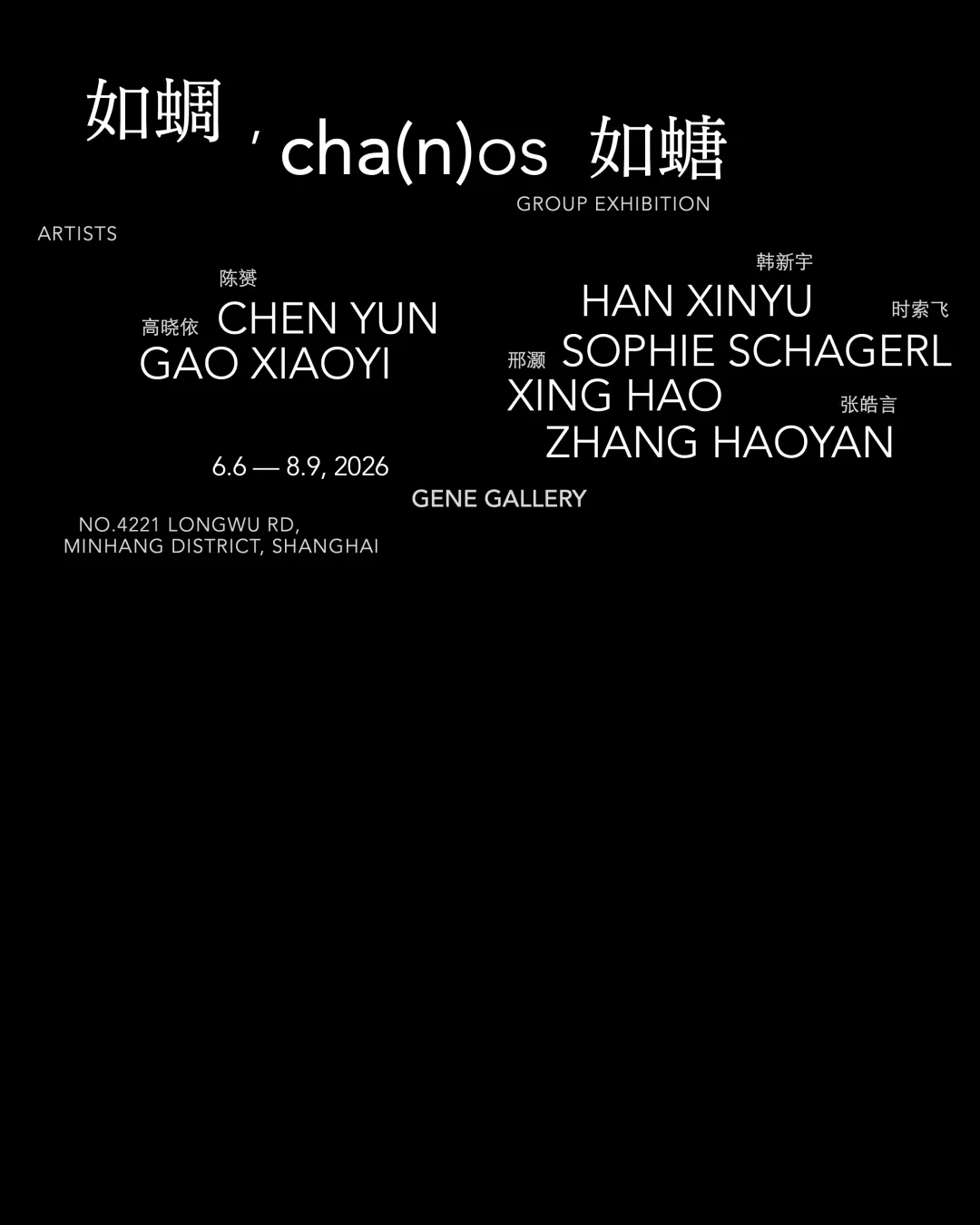
Scroll down for English
夏天的蝉鸣,总是从很深的地方传来。
泥土、根须、潮湿、黑暗,那具蛰伏的身体,在漫长的地下缓缓成形。攀上树干,裂开旧壳,迈入光中,刚刚显露的生命却早已接近尾声。
蝉鸣,不是从丰盈处歌唱,而是在将尽处留下唯一的绝句。它薄,却近于金属,近于裂帛,也近于某种在热中反复磨损的器物。它细碎,却不轻;微弱,却能持续漫延,漫过旧壳,漫过树皮,漫过正午被晒白的空气,也漫过语言可以抵达的边界。
一声散,一声起。
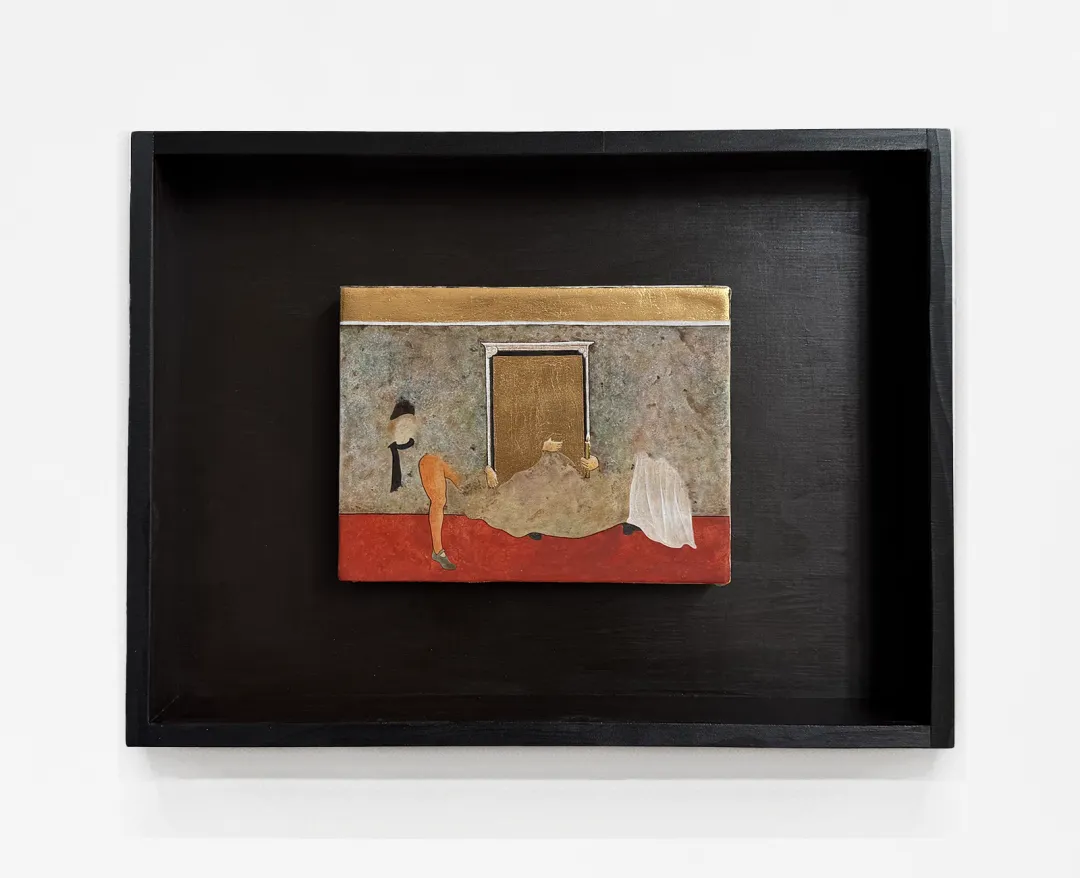
陈赟 Chen Yun, 虚位以待 A Place Reserved, 木板坦培拉 Tempera on wood, 15 x 20 cm, 2026
/ 陈赟
yin-yin
声音伏的很低,低到像还没有离开身体,低到像还没有被空气接住。
时间被封存在某道更古老的微光中,等待尚未成为等待,故事尚未成为故事,命运尚未成为命运。它们似乎并不急着落成话语,也不急着被谁听懂,只是一次次在意义泛起的边缘停住,像某种蛰伏的生命在壳内反复试探,一次次抵近破壳的边缘,又一次次被更幽微的气息收回。
它牵引着,将还没有成为声音的声音,留在柔软的空处,震颤着,迟缓而遥远。
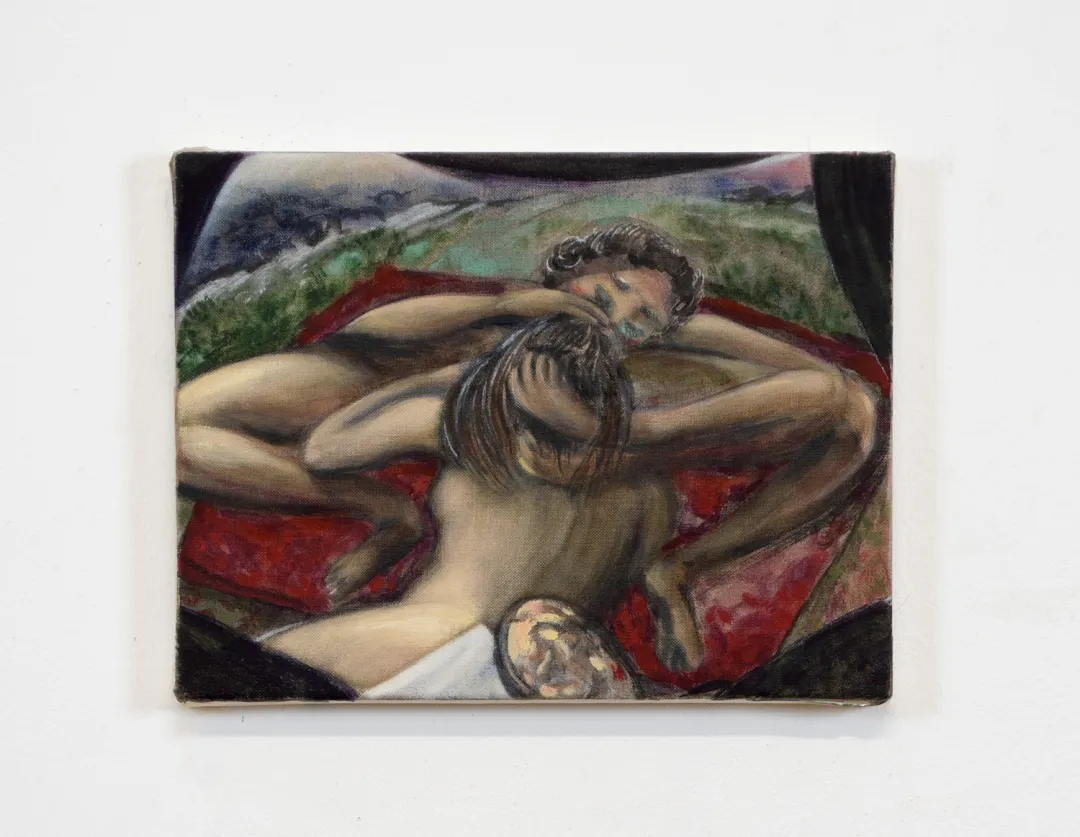
时索飞 Sophie Schagerl, Schmetterlinge, 布面油画 Oil on canvas, 23 x 30 cm, 2025
/ 时索飞
zirr zirr.
像是一根线在一套过于完整的日常语法里轻轻绷紧。
门锁说安全,灯说温暖,床说休息,帘幕说遮蔽,屏幕说陪伴,拖把说清洁。每一样物件都占据着正确的位置,合在一起,拼出一个刚好正确的“家”。那团身体把自己卷成一个迟疑的结,蜷缩在家居秩序的缝隙里,膝盖收拢,背脊拱起,像是一截尚未蜕净的软壳。
睡着,也醒着;未曾安居,也未曾出逃。那声低鸣很轻,很小,却仍在日常的骨架里撑出自己的形状,撑出了一点无法被整理的不安。
韩新宇 Han Xinyu, Mind Game, 亚麻布面油画 Oil on linen, 120 x 170 cm, 2024
/ 韩新宇
zii—
有点闷,像是血管里的暗流正缓慢升高。
它被边界划出方向,被薄膜过滤差异,被沉默的呼吸收住。那些好与坏、迷恋与厌倦、旁观与自问,并没有消失,只是退到了更深处,在阴影里继续寻找自己的流向。直到某处裂开,那一点水声很沉,像失控般撞向另一个存在。边界可以划出范围,却不能替水决定形状;制度可以管理流动,却不能把胸腔里的潮湿抽干。
只是片刻的冲动与偏离,随后又继续流动,细长,低伏,不肯停下。
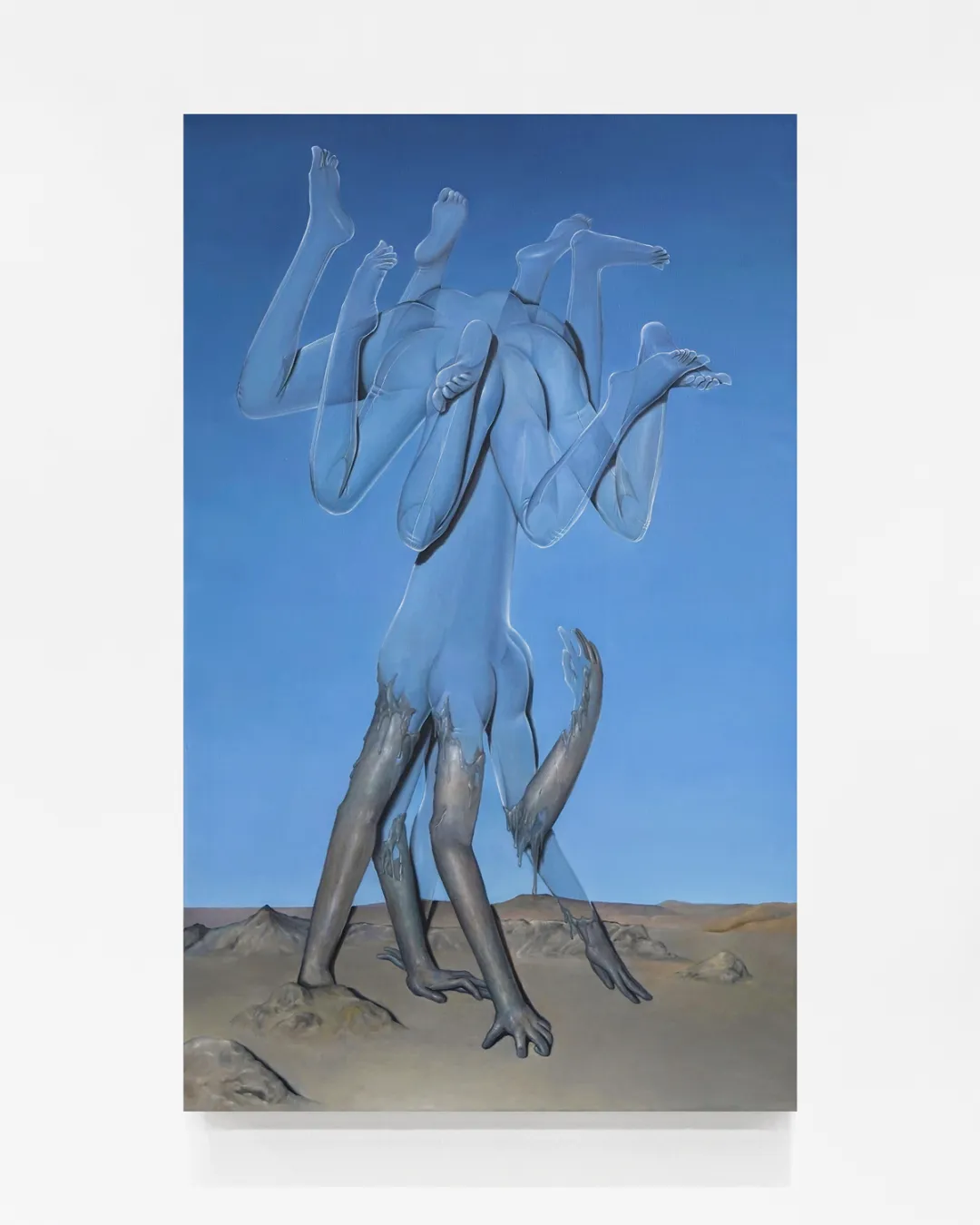
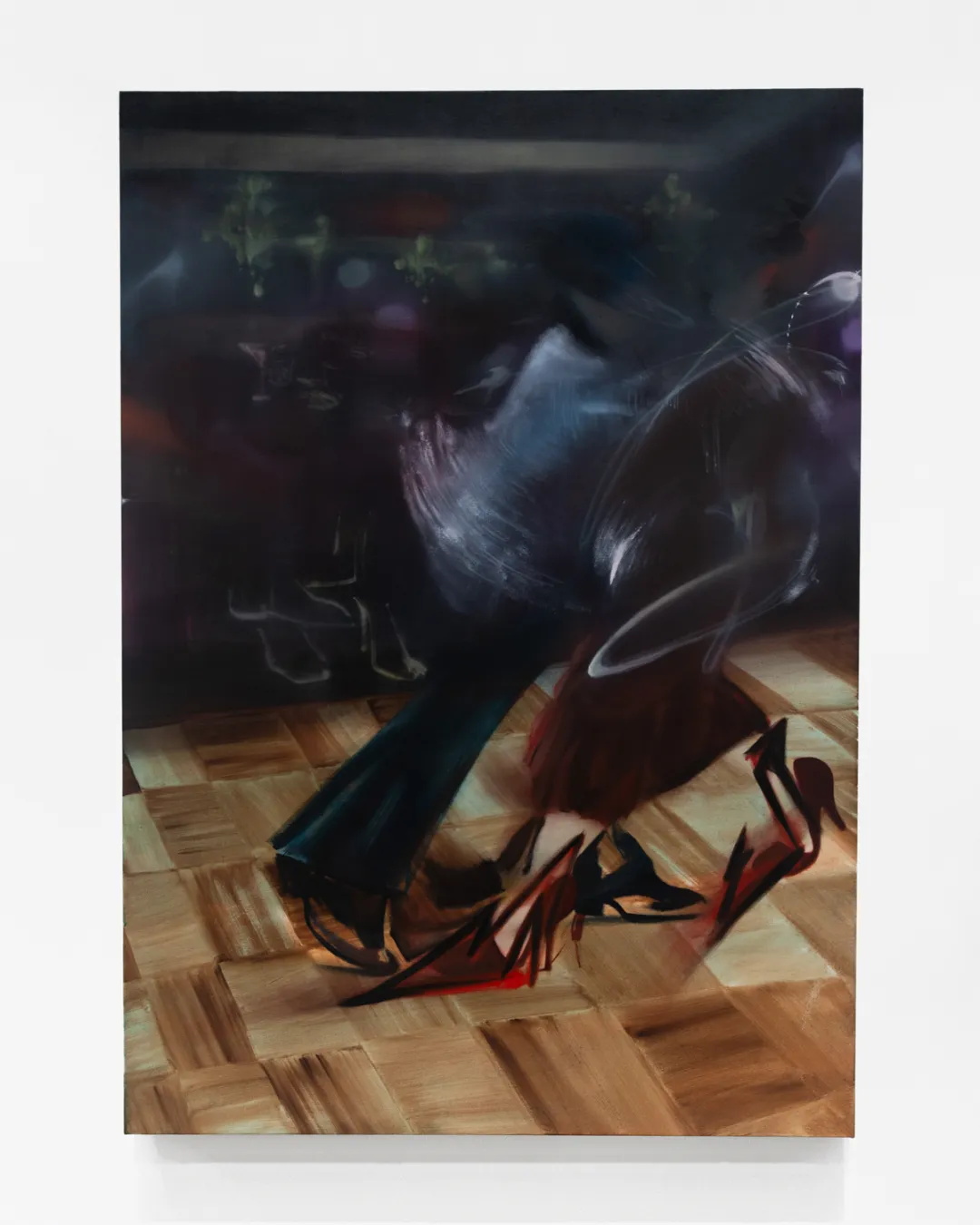
张皓言 Zhang Haoyan,Reinvent, 布面油画 Oil on canvas, 130 x 80 cm, 2024
/ 张皓言
zhi-zhi.
短,硬,像晒脆的甲壳刮过皮肤。
那具身体从帷幕、废墟、屏幕的阴影下一点点顶出,如同一个刚被召回的古老形象。肢体被拆开、增殖、再重新接合,以一种并不适合直立的姿态,在图像中暂时成形,却从未安于新的轮廓。表面越光滑,倒刺越明显;姿态越可辨认,脊背越不肯顺从。
不能交付的异质,无法回到原来的是,也不愿停在当下的像,只能在半角色、半皮囊、半新生之间,溢出短促而明亮的声响。
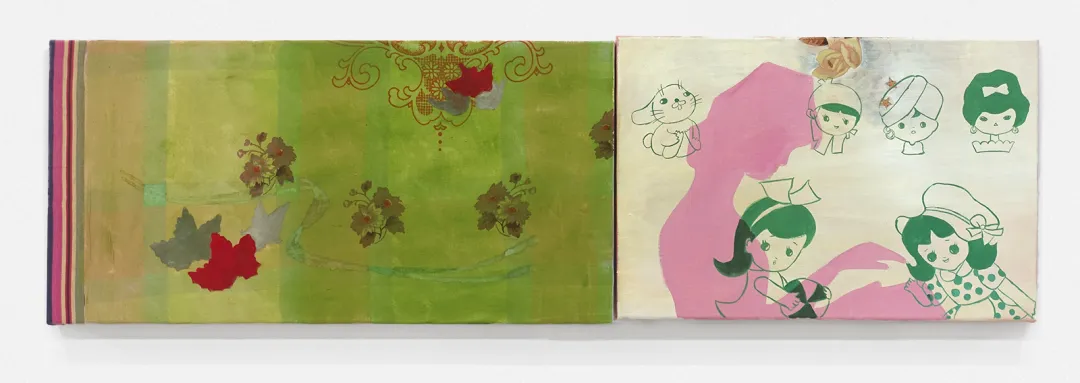
高晓依 Gao Xiaoyi, TBD, 油彩、布料 Oil colour and fabric canvas, 45 x 158 cm, 2026
/ 高晓依
ji…ji…
声音轻下来,也碎下来,像旧布里细小的针脚,在沉默里一点点松开。
一层薄膜在皮肤与梦之间微微起伏。它并不醒目,只是偶尔有鳞粉被蹭落,像从光洁的新生活里筛下的浮尘——太旧,太软,太不合时宜在许多无人言说的日子里,它贴过皮肤,压过睡眠,听过夜里的梦呓。纹路因时间褪色,缝线被呼吸撑开一角,却也因此留下它曾靠近过世界的痕迹。
耳边那一点微涩的余音,像旧梦的灰,迟迟不肯散去。
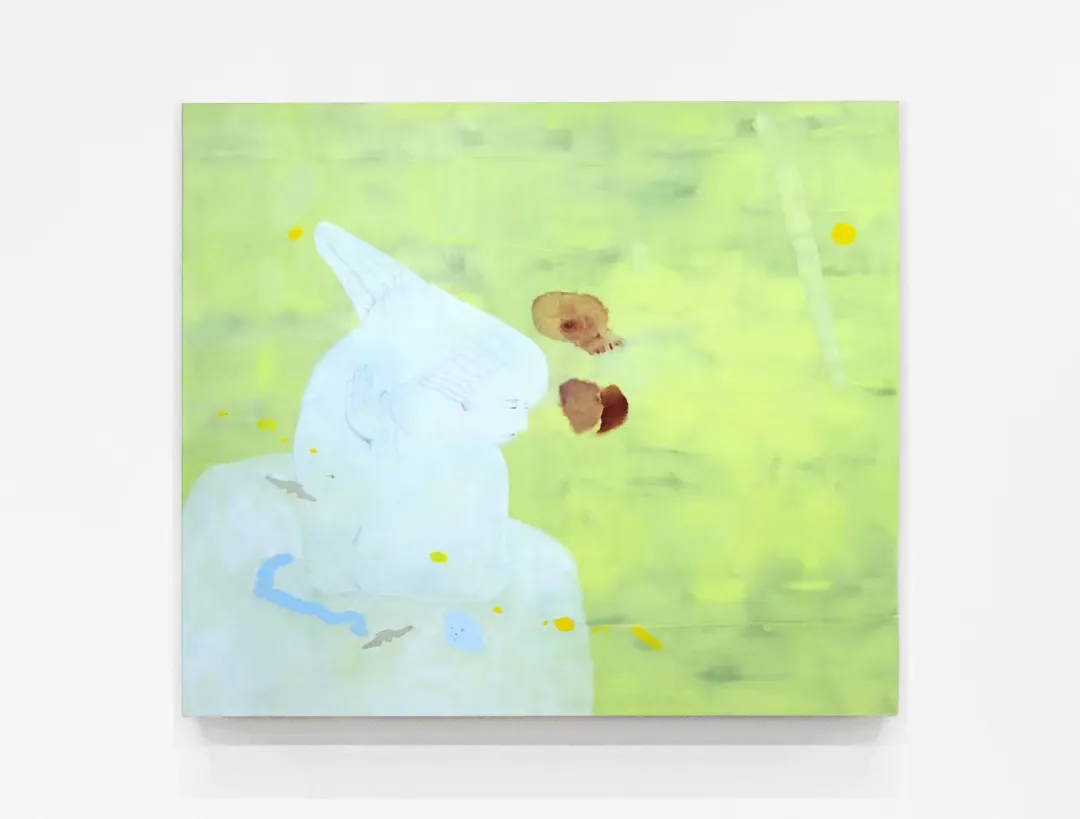
邢灏 Xing Hao, 旷野 Feild, 布面油画及油画棒 Oil and pigment stick on Canvas, 130 x 150 cm, 2025
/ 邢灏
zi-zaa
几个碎音彼此碰撞。
个人的无奈、命运的随机、历史的错位,似是在颤动中慢慢与翼上的斑纹重合。细微振动使整片空气开始失衡。某段记忆、某个时代、某道形体,似乎都有来历,却又在被指认的前一刻轻轻滑开。它们只是太重,重到现实那对薄翅无法真正承载、无法贴合。
它们飞过,却始终无法飞远;脱离,却始终拖着现实的阴影,在同一片光里悬浮、滑脱、失重、沉重。
一声散,一声起。
不是抵达,不是逃离,不是从此处去到别处,
只是在此处迟迟不能成为此处的时候,
在残酷和犹疑之间,发出证词。
或许太轻,太短,太容易消散。
可一声散,一声又起。
它们没有共同的谱,也没有共同的归处,
只在相近的热中彼此接上,成为一片无法撤去的空气。
虚处能容光,也能存声。那一点鸣叫,薄如烛火,却不肯熄灭。短如一夏,却反复返回。
如蜩,如螗。
The cicadas of summer always seem to call from some unfathomable depth.
From soil, from roots, from dampness, from dark, that dormant body slowly gathers itself through the long years underground. It climbs the trunk, splits its old shell, and steps into the light—yet the life only just revealed is already nearing its end.
The cicada’s cry is not a song born of fullness, but the single final verse it leaves at the edge of vanishing. Thin, almost metallic; almost like silk being torn; almost like some instrument worn down again and again in the heat. Fragmented, yet never weightless. Faint, yet it goes on spreading—past the abandoned husk, past the bark, past the noon air bleached white by the sun, and beyond the farthest boundary language can reach.
One cry scatters. Another begins.
/ CHEN YUN
yin-yin
The sound lies very low—so low it seems not yet to have left the body, so low it has not yet been caught by the air.
Time is sealed within some older glimmer, where waiting has not yet become waiting, where story has not yet become story, where fate has not yet become fate. None of them seems eager to settle into language, or to be understood by anyone. Again and again, they pause at the verge where meaning begins to rise, like some dormant life testing itself within the shell—drawing close, again and again, to the edge of breaking open, only to be drawn back each time by a breath still fainter, still more obscure.
It pulls, quietly, holding the sound that has not yet become sound in a soft hollow space—trembling, slow, and far away.
/ SOPHIE SCHAGERL
zirr zirr.
Like a thread drawn taut inside the too-complete grammar of the everyday.
The lock speaks of safety, the lamp of warmth, the bed of rest, the curtain of concealment, the screen of company, the mop of cleanliness. Each object occupies its proper place; together, they assemble a “home” that is exactly correct. That mass of body curls itself into a hesitant knot, huddled in the seams of domestic order—knees drawn in, spine arched, like a length of soft shell not yet fully shed.
Asleep, and also awake; never truly settled, yet never fled. That low hum is light, almost small, and still it presses its own shape into the skeleton of daily life, forcing out a slight unease that cannot be put away.
/ HAN XINYU
zii—
A little muffled, like a dark current in the veins slowly rising.
It is given direction by boundaries, its differences filtered through membranes, held in by the silent breath. Those things—good and bad, obsession and weariness, watching and self-questioning—have not disappeared; they have only retreated deeper, still searching in the shadows for their own course.
Until somewhere, something splits open. That small sound of water is heavy, as if striking another existence out of control. A boundary may mark a range, but it cannot decide the shape of water; an institution may govern its flow, but it cannot drain the dampness from the chest.
Only a moment of impulse and deviation—then it goes on flowing, slender, low-lying, unwilling to stop.
/ ZHANG HAOYAN
zhi-zhi
Short, hard—like a sun-brittled carapace scraping across skin.
That body pushes up, little by little, from beneath the shadows of curtains, ruins, screens, like an ancient figure newly summoned back. Its limbs have been dismantled, multiplied, then joined again; in a posture not quite made for standing upright, it takes temporary shape within the image, yet never settles into its new contour. The smoother the surface, the more visible the barbs; the more legible the pose, the more stubbornly the spine refuses to submit.
An undeliverable otherness, unable to return to what it once was and unwilling to remain in the image it now resembles, can only move between half-role, half-skin, half-newborn thing—spilling over into a sound brief and bright.
/ GAO XIAOYI
ji…ji…
The sound grows lighter, and breaks apart, like tiny stitches in old cloth, loosening little by little inside the silence.
A thin membrane rises and falls faintly between skin and dream. It does not draw the eye. Only now and then, a dusting of scales is rubbed away, like floating ash sifted from the smoothness of a new life—too old, too soft, too out of time.Through so many unspoken days, it has lain against the skin, pressed upon sleep, listened to the murmurs of dreams in the night. Its patterns have faded with time; its seams have been opened slightly by breath. Yet for that very reason, it keeps the trace of having once drawn close to the world.
That faint, slightly astringent aftersound beside the ear is like the ash of an old dream, slow to disperse.
/ XING HAO
zi-zaa
A few broken notes collide with one another.
Personal helplessness, the randomness of fate, the dislocation of history—all seem, in their trembling, to slowly merge with the markings on the wings.
A slight vibration begins to unbalance the whole field of air. Some fragment of memory, some age, some form seems to have an origin, yet slips away just before it can be named. They are simply too heavy—so heavy that reality’s thin pair of wings cannot truly bear them, cannot make them fit.
They fly past, yet can never fly far; they break away, yet always drag the shadow of reality behind them, suspended in the same sheet of light—slipping loose, losing weight, growing heavy.
One cry scatters. Another begins.
Not arrival, not escape, not a passage from here to elsewhere, but testimony given when here itself is slow to become here—between cruelty and hesitation.
Perhaps it is too light, too brief, too easily dispersed. And yet one cry scatters, and another rises. They share no common score, no common place of return. Only in a neighboring heat do they join one another, becoming a body of air that cannot be withdrawn.
The hollow can hold light; it can also keep sound. That small cry, thin as candle flame, refuses to go out. Brief as a summer, it returns again and again.
Like cicada.

ABOUT THE ARTISTS
陈赟 Chen Yun
陈赟,出生于福建福安,现生活并工作于北京。她成长于闽东穆阳镇,传统祠堂、庙宇、古民居与西式教堂、修院在此并存,形成独特的多元文化景观。这样的环境塑造了她对历史、空间与文化交汇的敏感感知,也成为其创作的重要源泉。受中世纪与文艺复兴时期教堂空间、壁画传统及其图像语言的启发,她将戏剧性的叙事趣味融入坦培拉材料的古典性与时间感之中。其作品并不局限于宗教信仰的表达,而是在个人经验、地方记忆与艺术史线索的交织中,持续探讨时间、空间、再现、历史与多元文化融合之间的关系。
Chen Yun was born in Fu’an, Fujian Province, and currently lives and works in Beijing. She grew up in Mu Yang, a town in eastern Fujian where traditional ancestral halls, temples, ancient residences, Western-style Catholic churches, and monasteries coexist, forming a distinctive multicultural landscape. This environment shaped her unique aesthetic sensibility and became an important source of her artistic practice. Influenced by the church spaces and fresco traditions of the Middle Ages and the Renaissance, Chen integrates dramatic elements into the classical quality and temporal texture inherent in tempera. Rather than centering solely on religious belief, her work unfolds through the interweaving of personal experience, local memory, and art-historical references, continuously exploring the relationships between time, space, history, and multicultural integration.
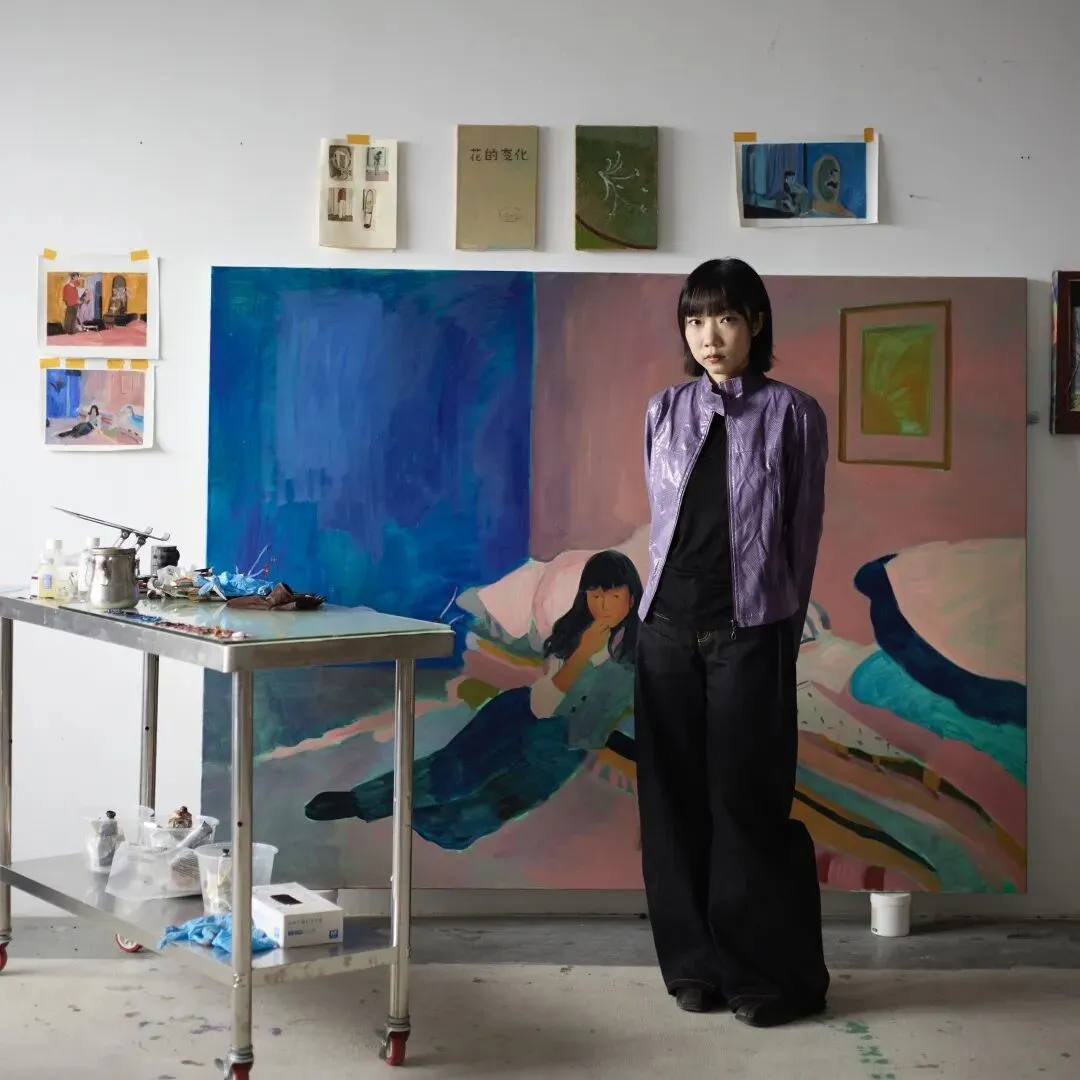
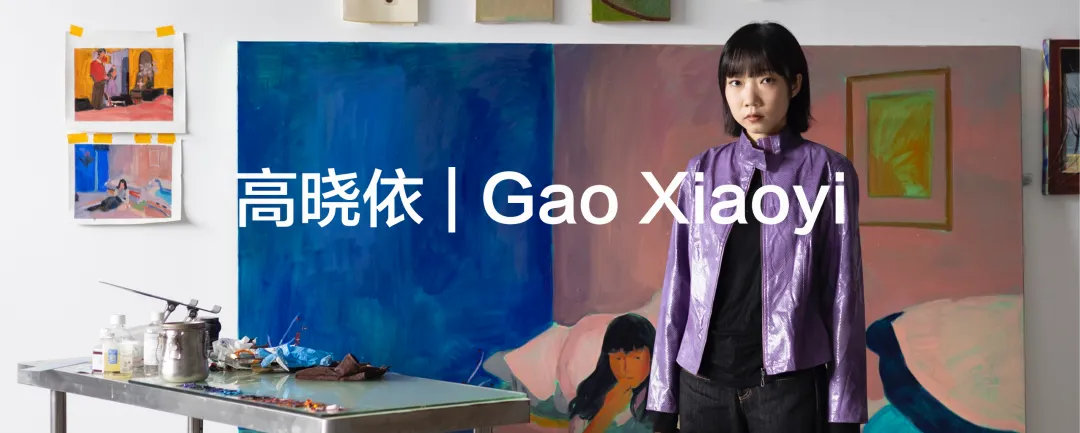
高晓依 Gao Xiaoyi
高晓依,华盛顿大学艺术学士、硕士学位。其作品融合对空间、时间、物体与记忆的奇特想象,尝试用绘画和材料表达记忆中难以言喻的画面和感觉。在创造过程中,通过将床单、衬衣、窗帘等日常材料与画布结合,高晓依刻意保留其特征,从而在画面上呈现出氤氲、模糊、粗糙的纹理。其作品中的“怀旧”不仅指对过去的怀念,也指向未来或时间的侧面,既融合了熟悉与亲密性,也保留了非理性和非现实等成分,这些成分源自其个人的幻想与记忆,以及文学、电影、历史等多维度。
Gao Xiaoyi holds a Bachelor’s and Master’s degree in Art from the University of Washington. Her work blends a distinctive imagination of space, time, objects, and memory, using painting and materials to express elusive images and sensations. In her creative process, she intentionally combines everyday materials—such as bed sheets, shirts, and curtains—with canvas, preserving their inherent characteristics to create hazy, blurred, and rough textures. Her use of "nostalgia" extends beyond longing for the past, reaching toward the future or the facets of time, merging familiarity and intimacy with irrational and surreal elements drawn from her personal fantasies and memories, as well as literature, film, and history.
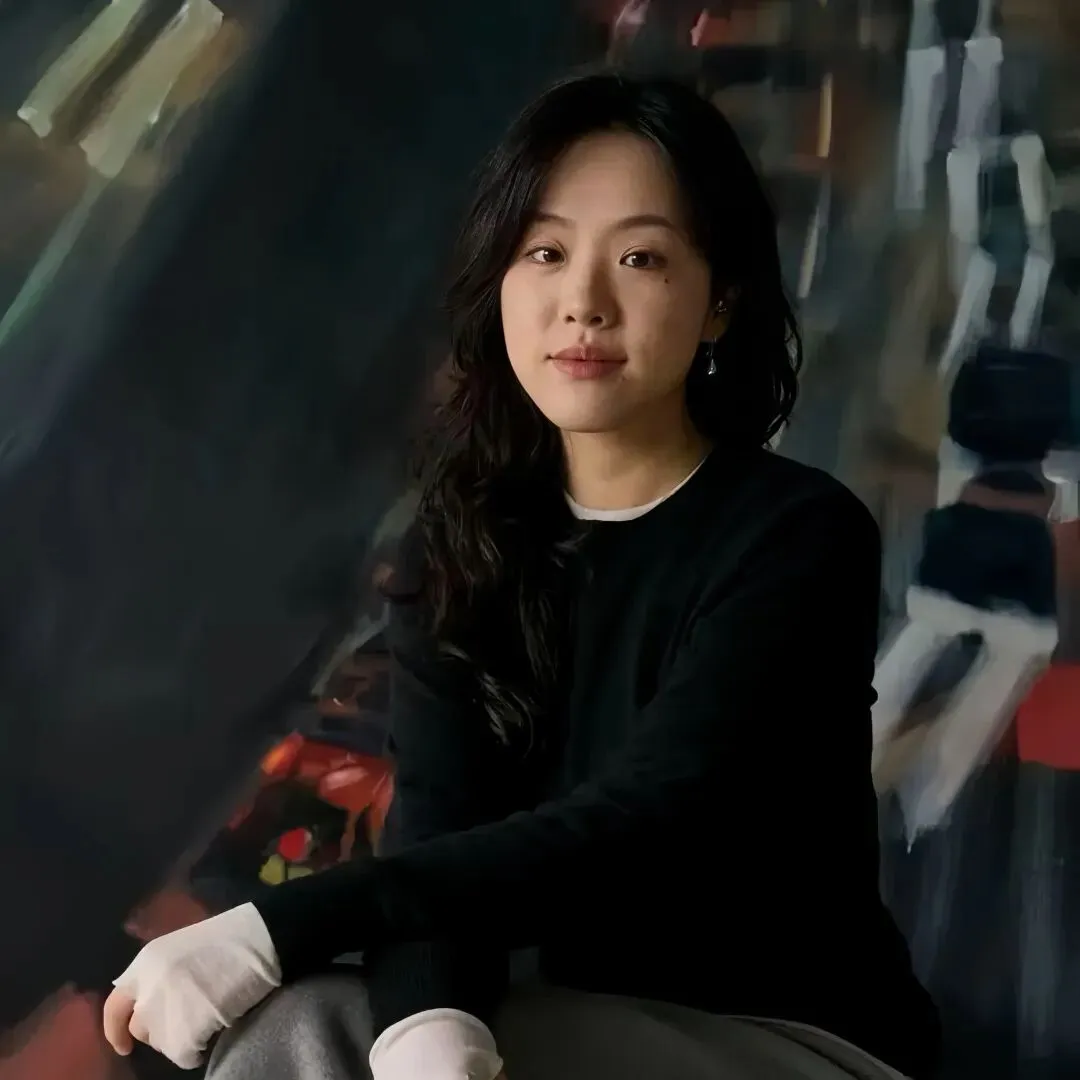
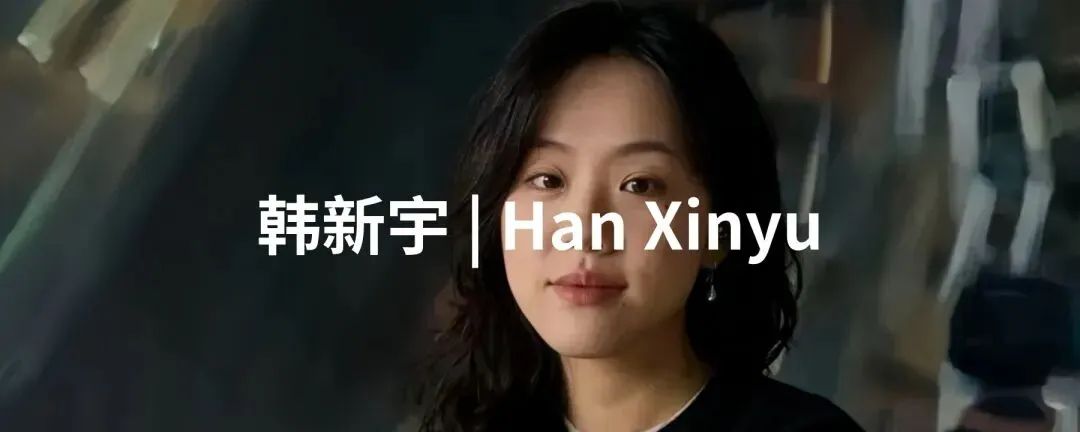
韩新宇 Han Xinyu
韩新宇,现居伦敦和上海,硕士毕业于斯莱德美术学院,本科毕业于纽约艺术学院。韩新宇致力于探索结构与情绪、静止与流动、记忆与时间之间的张力。受到文学与个人经验的启发,她通过层叠的笔触与⾊彩的动态变化延展时间,混乱与秩序、节奏与情绪彼此对抗⼜相互溶解,以此捕捉存在与消逝之间的瞬间。
Han Xinyu, born in 1998, is based between London and Shanghai. She holds an MFA from the UCL Slade School of Fine Arts and a BFA from the School of Visual Arts, New York. Han Xinyu's practice explores the tension between structure and emotion, stillness and movement, memory and time. Drawn from literature and personal experience, she extends time through layered brushwork and the dynamic interplay of color, capturing the fleeting moment between presence and disappearance, where chaos and order, rhythm and emotion, confront and dissolve into one another.
时索飞 Sophie Schagerl
时索飞是一位具有跨文化与跨语言背景的独立艺术家及翻译工作者,曾分别于维也纳、台北及北京学习中文、 德语语言文学与绘画。其艺术实践融合语言学、人文研究与视觉艺术等媒介,强调文本、符号、情绪与文化语境之间的关系。她的艺术视角往往带有明显的“异文化观察”特征,即通过外来者与在地经验之间的张力,重新理解身份、记忆与日常感知。她的艺术表达以语言经验与跨文化感知为基础, 不仅是语言转换,更涉及意义重构、语境迁移与文化解释,具有较强的文学性、 叙事性与观念性。
Shi Suofei is an independent artist and translator with a cross-cultural and multilingual background, having studied Chinese, German language and literature, and painting in Vienna, Taipei, and Beijing, respectively. Working across linguistics, humanistic inquiry, and visual art, her creative logic emphasises the relationships between text, symbol, emotion, and cultural context. Her artistic perspective carries a distinct quality of "cross-cultural observation" — rethinking identity, memory, and everyday perception through the tension between the outsider gaze and lived, local experience. Grounded in linguistic experience and cross-cultural sensibility, her artistic expression is not merely a conversion between languages, but an act of reconstructing meaning, marked by a strong literary, narrative, and conceptual character.
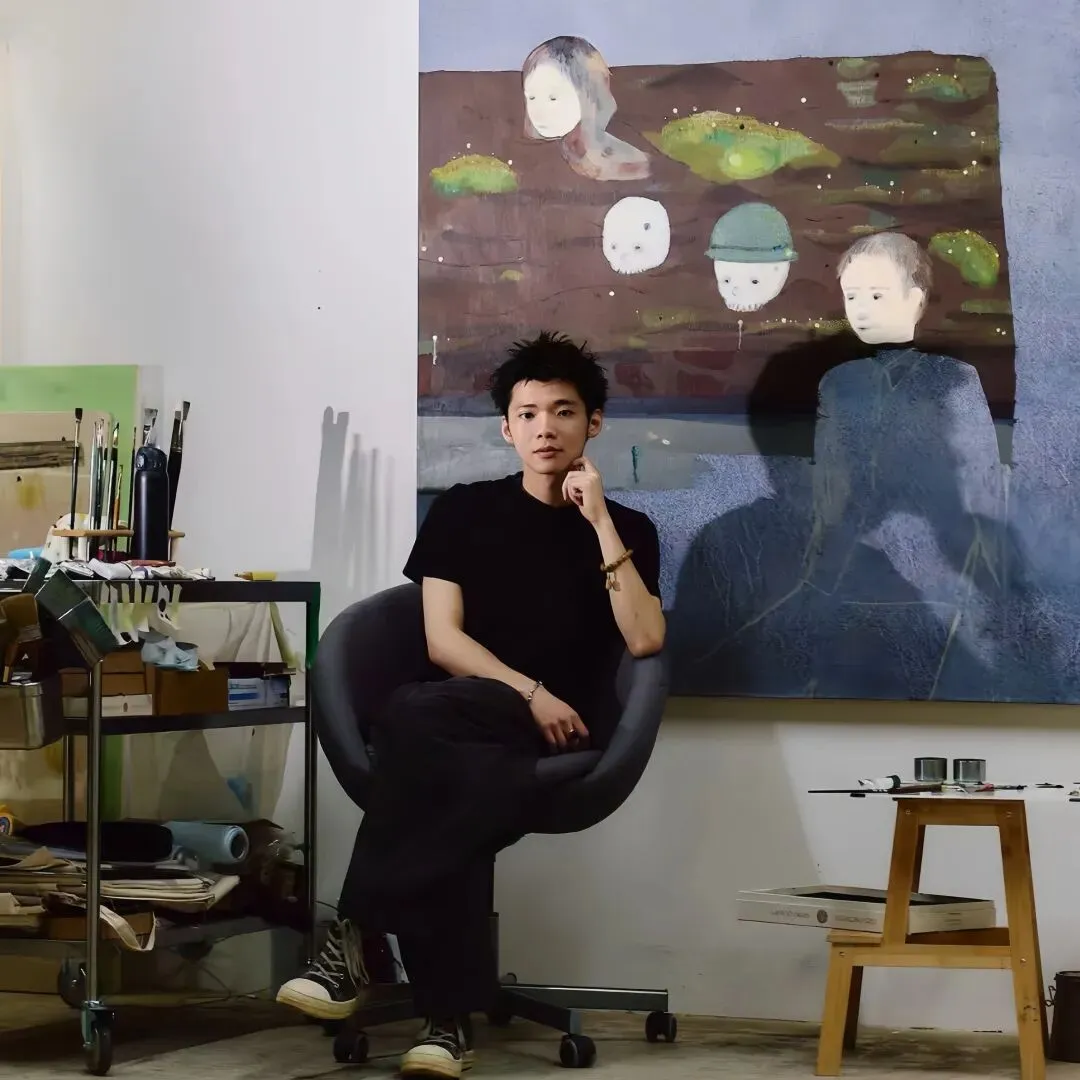
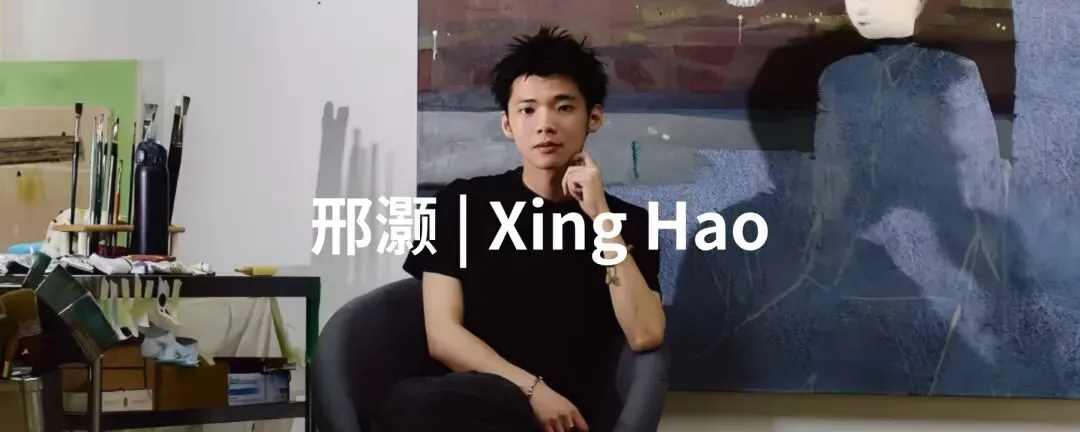
邢灏 Xing Hao
邢灏的作品通常涉及民俗、鬼故事、文学与个人回忆,通过“假托”的手法呈现一种替代性的现实。画面中的视觉符号与场景以怪异而童稚的方式组合,模糊的情绪与不明确的场景构成了其独特氛围。这种替代性现实由记忆与现实交织而成,也是他回望家族历史与社会变迁的方式。
Xing Hao’s works explore folklore, ghost stories, literature, and personal memories. Using a “pretext” technique, he presents an alternative reality where visual symbols and scenes combine in a strange, childlike way. Ambiguous emotions and vague settings create a unique atmosphere, reflecting both memory and reality, and allowing him to revisit family history and societal change.
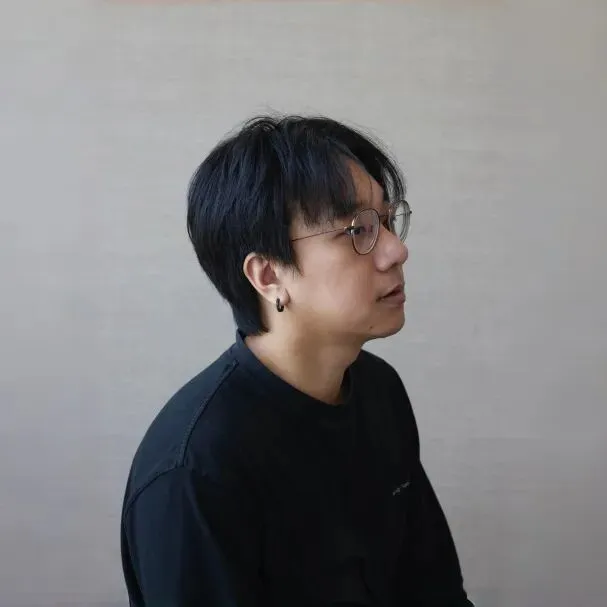
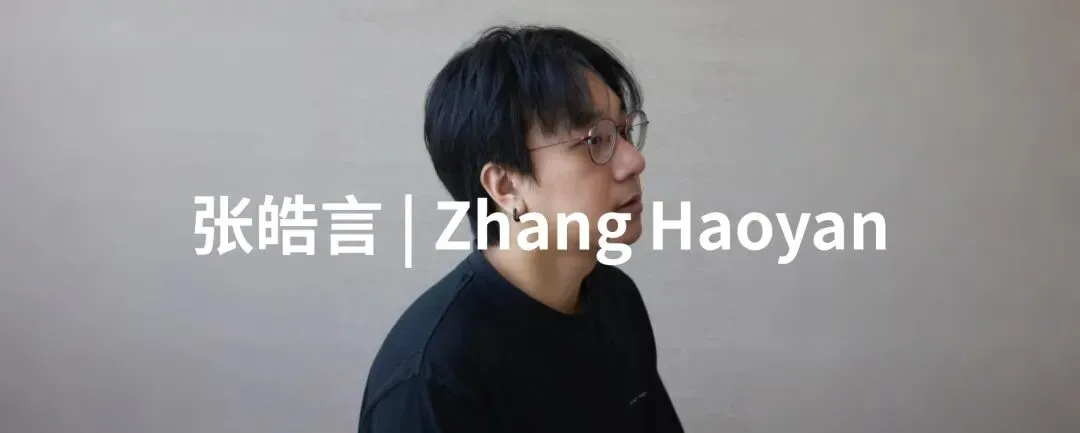
张皓言 Zhang Haoyan
张皓言,1996年出生于山东淄博,毕业于伦敦艺术大学纯艺术专业,现工作生活于上海。张皓言的创作涉及绘画、影像、写作等多重媒介,他通过对世界范围内不同时期的多重经典荧幕形象的考古,将艺术家个体经历、流行文化与全球化/去全球化的社会现实相杂糅,通过展现角色完整性,并借此创作对象还原至其同时期的社会情境中,以此让观者重临历史现场,也线性的将历史内容和个体记忆得以进一步的扩充和修补。
Zhang Haoyan was born in Zibo, Shandong Province, in 1996. He graduated from the University of Arts London in fine art. He works and lives in Shanghai nowadays. Zhang's creation involves multiple media such as painting, image and writing. Through the use of archaeological screen images, he carries out image concept painting and video writing, and revisits the social cause and effect of the role of IP in history and contemporary times.

MORE ABOUT THE ARTISTS
如需垂询作品
弥金往期展览