
文/ 李佳炫(Kahyun LEE)
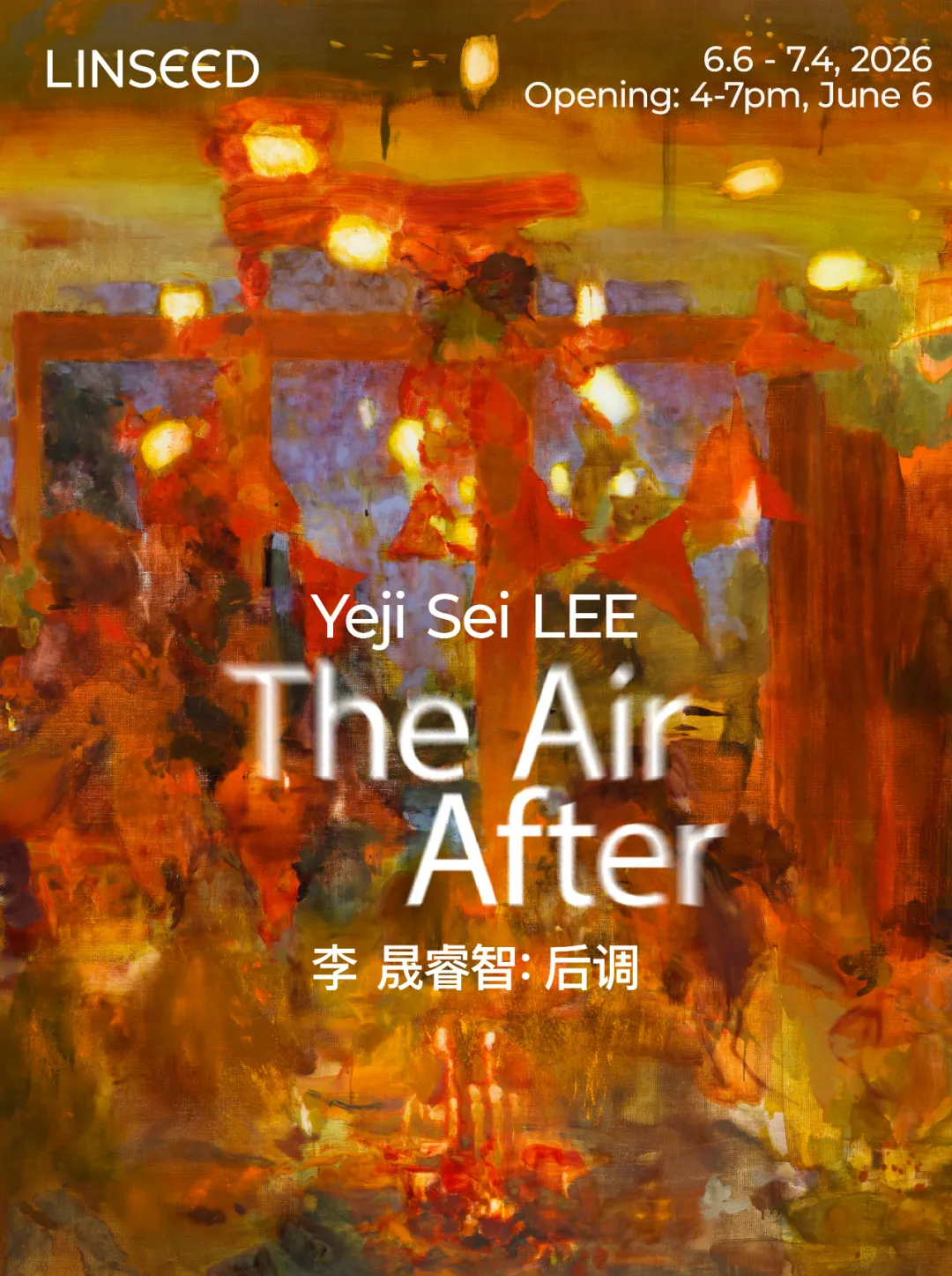
LINSEED欣然呈现韩裔日本艺术家李晟睿智(b.1995,东京)在画廊的首个个展“后调”。此次展览将带来艺术家于今年新创作的绘画,同时也将呈现一系列过往的布面和纸本创作。这些作品不但从视觉的维度去探寻一个场景所蕴含的内容,更从氛围的角度去感知——包括在场的空气、声音、湿度及一切徘徊于空间里,却又不被肉眼所即刻捕捉的无形之物。“后调”将于6月6日开幕,并持续至7月4日。
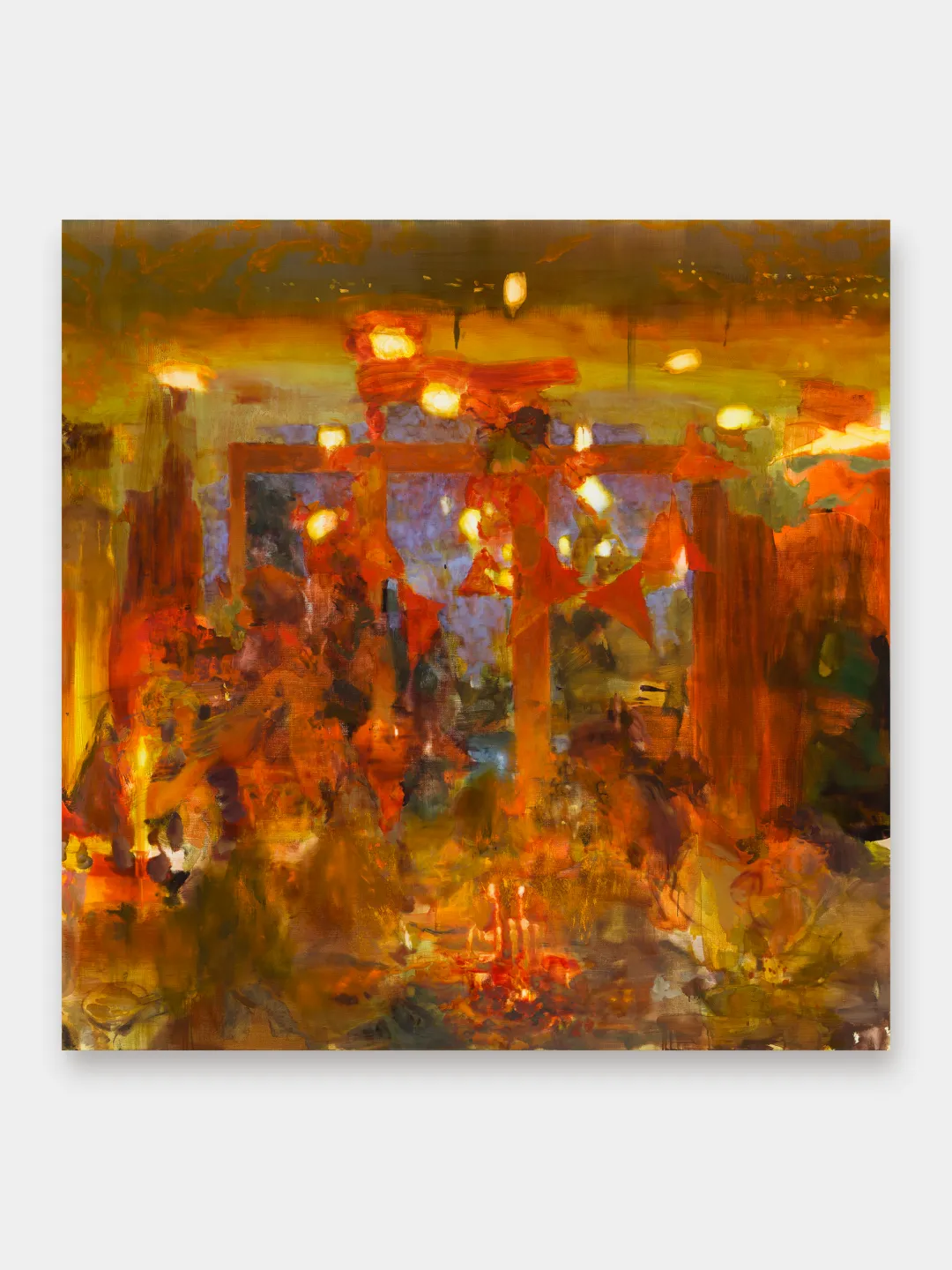
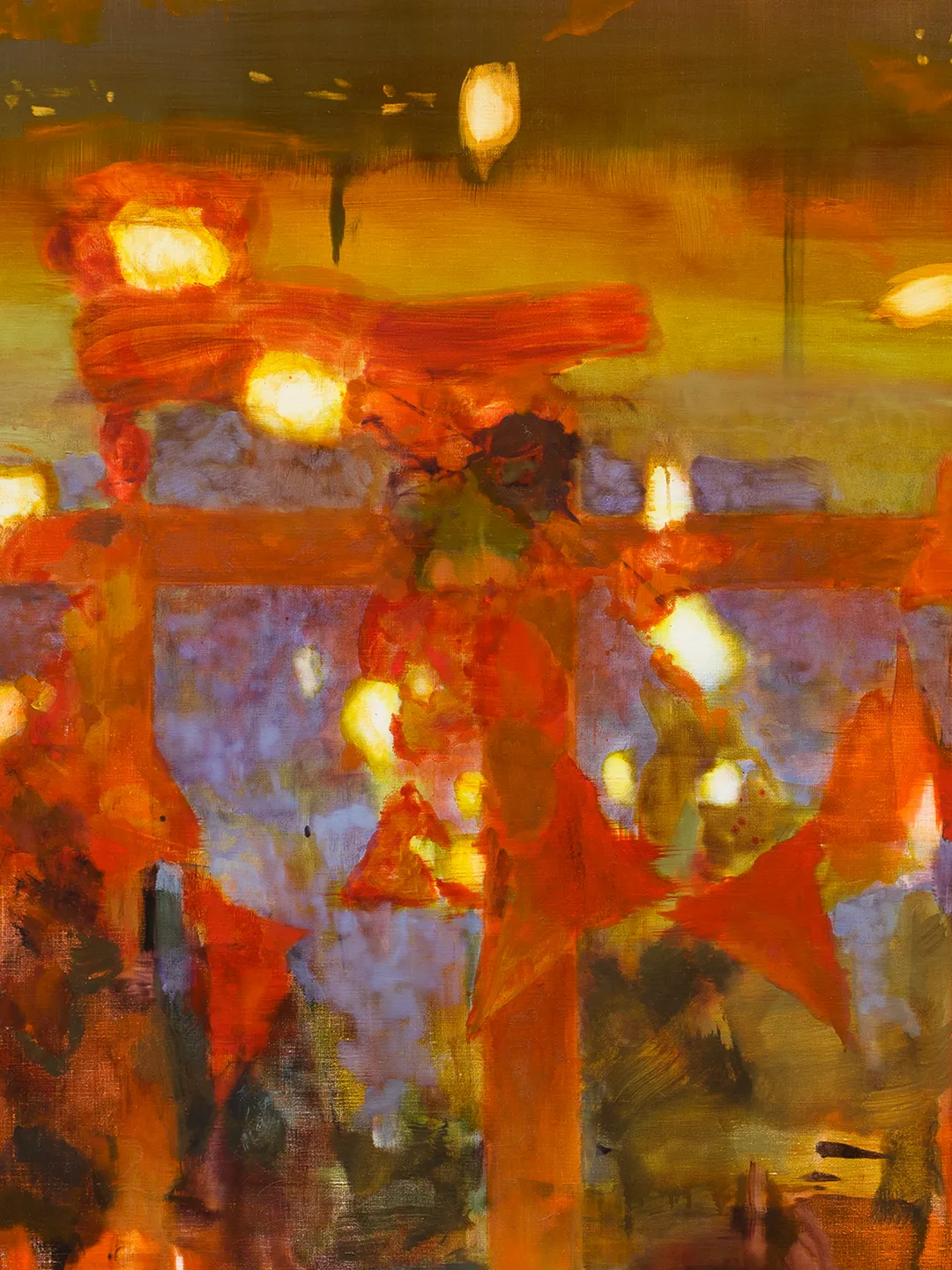
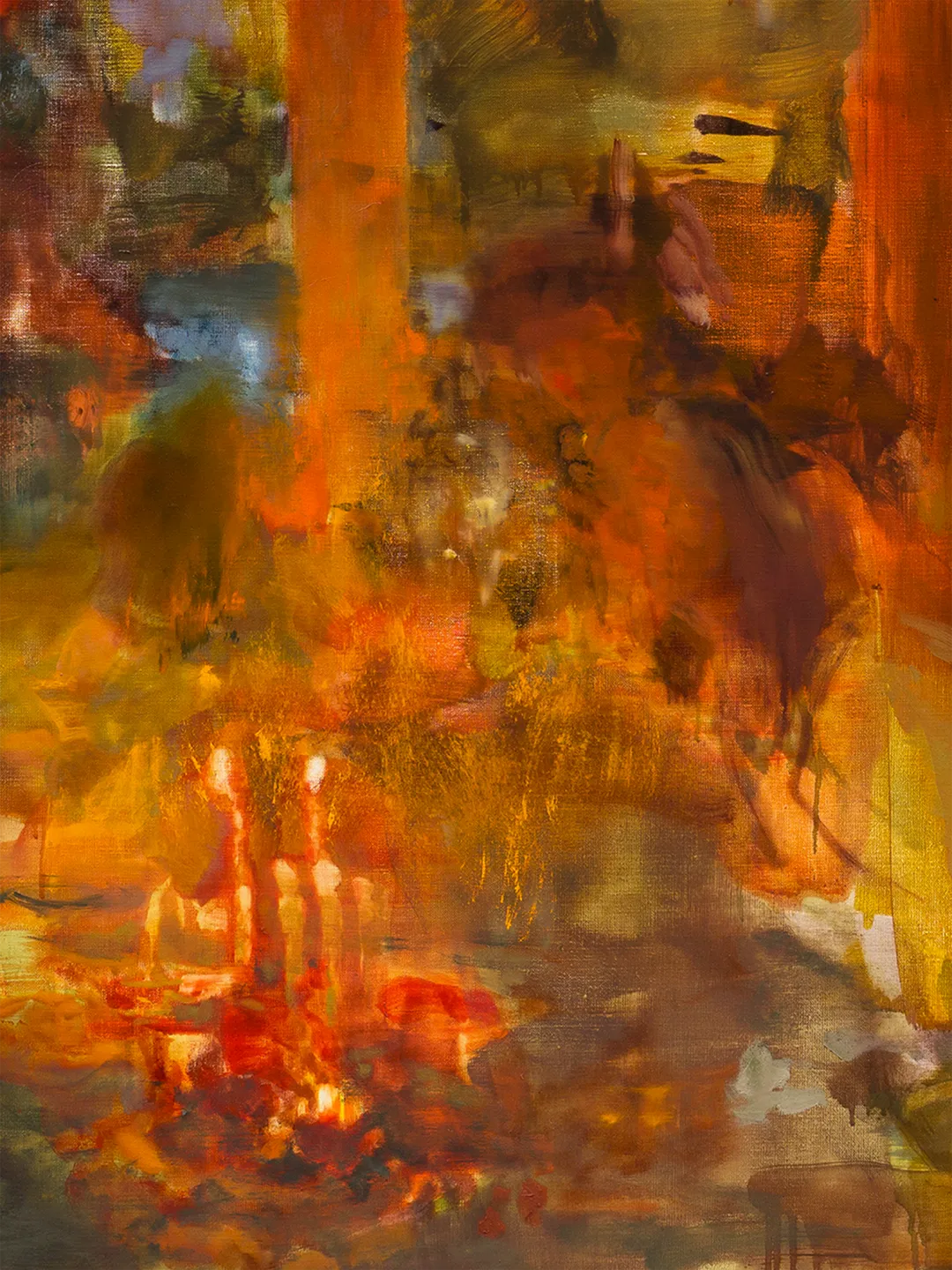
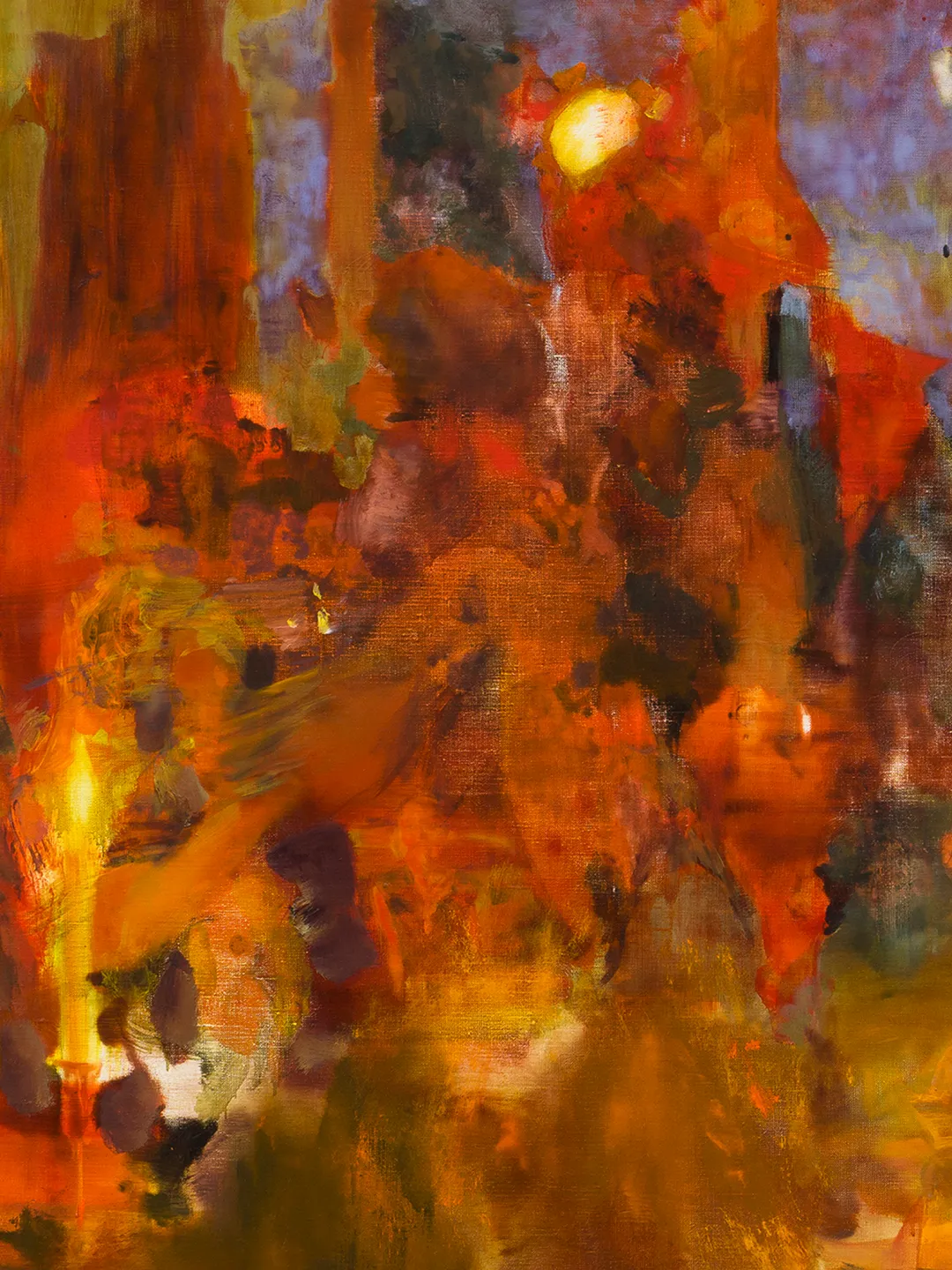
李晟睿智的绘画始终围绕着时间和记忆是如何融入空间中的氛围(atmosphere)而展开。当离开身体之后,气息中还残留了什么?空气又是如何唤起人们关于温度和亮度的记忆?艺术家持续描绘着桌边聚会的时刻,或是身体笼罩着仲夏阳光中的瞬间,还有市场中人群熙熙攘攘的场景……以抓住这些转瞬即逝的朦胧知觉。
在英文中,描述氛围的“atmosphere”一词,最早出现在对月亮的描述里。在约翰·威尔金斯(John Wilkins)于1638年出版的《发现月球中的世界》(The Discovery of a World in the Moone)中,他创造了“atmo-sphæra”一词,用以形容在月球周围的气体层——“一个由大量蒸腾的空气而构成的、紧紧围绕着月球本身的球体”1。从诞生之日开始,这个词指向的就不是物体本身,而是环绕在其周围、短暂且不可触及的表层。然而,最早从19世纪开始,“atmosphere”一词逐渐发生了语义上的转变,成为了描述场景中心理状态、道德或情绪的词汇。类似地,在日语中,表达氛围的“雰囲気 (fun'iki)”,最初也是一个于江户时代传入日本的科学术语,后面才渐渐演化为如今描述场景中微妙的情绪变化的词汇。沿着同样的路径,“氛围”从描述大气转向描述心理,从物理向感官的方向变化。
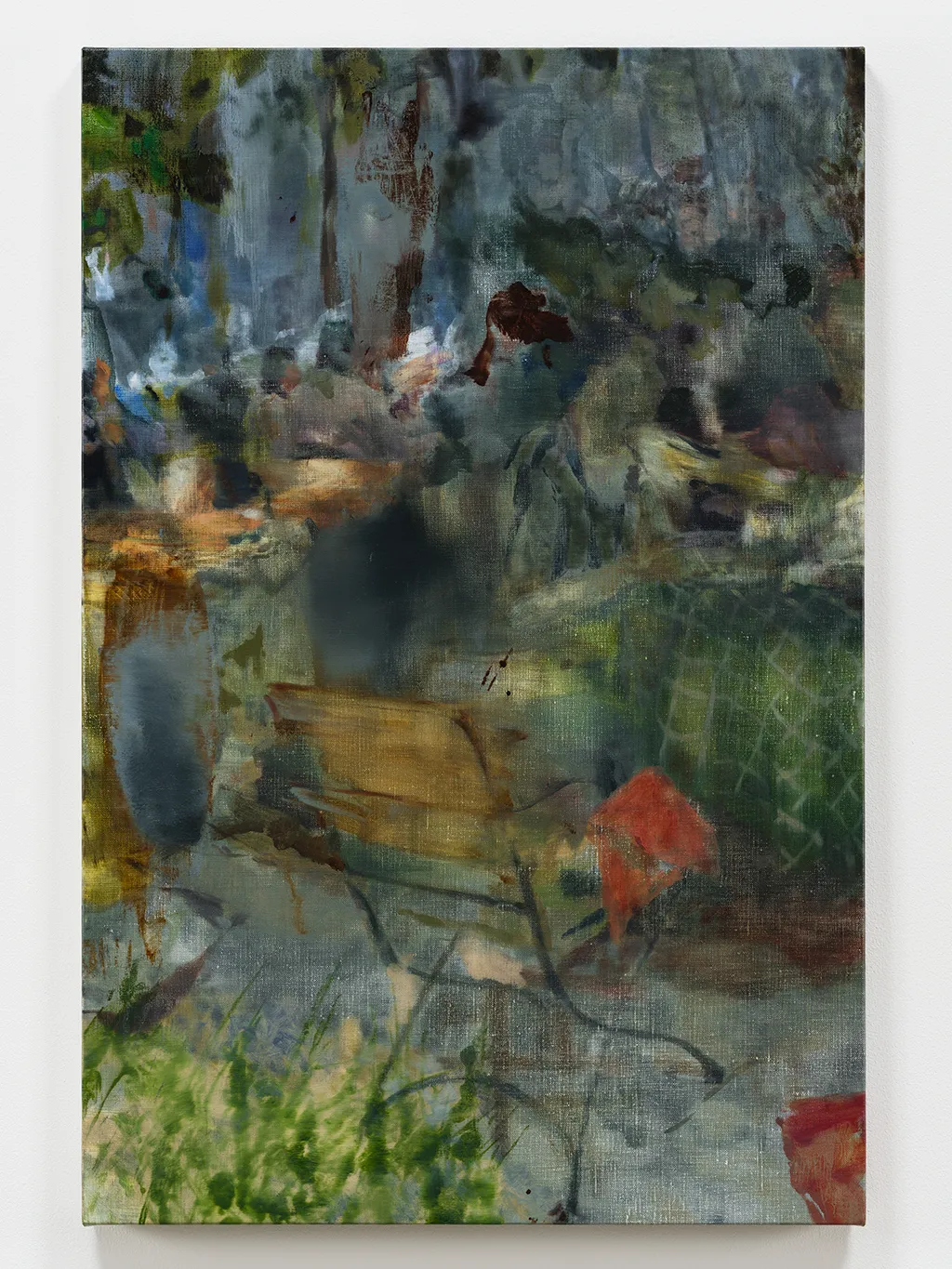
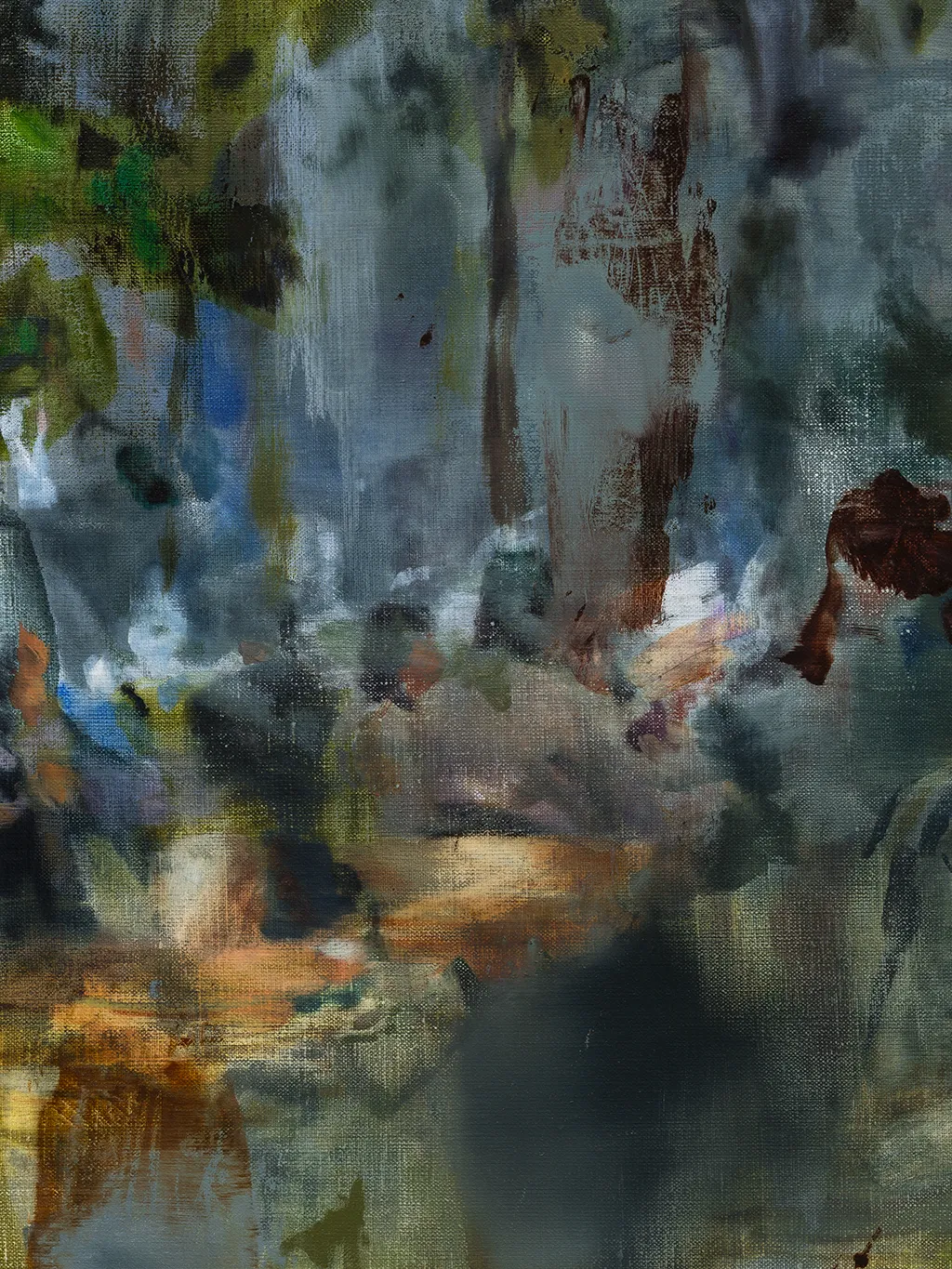
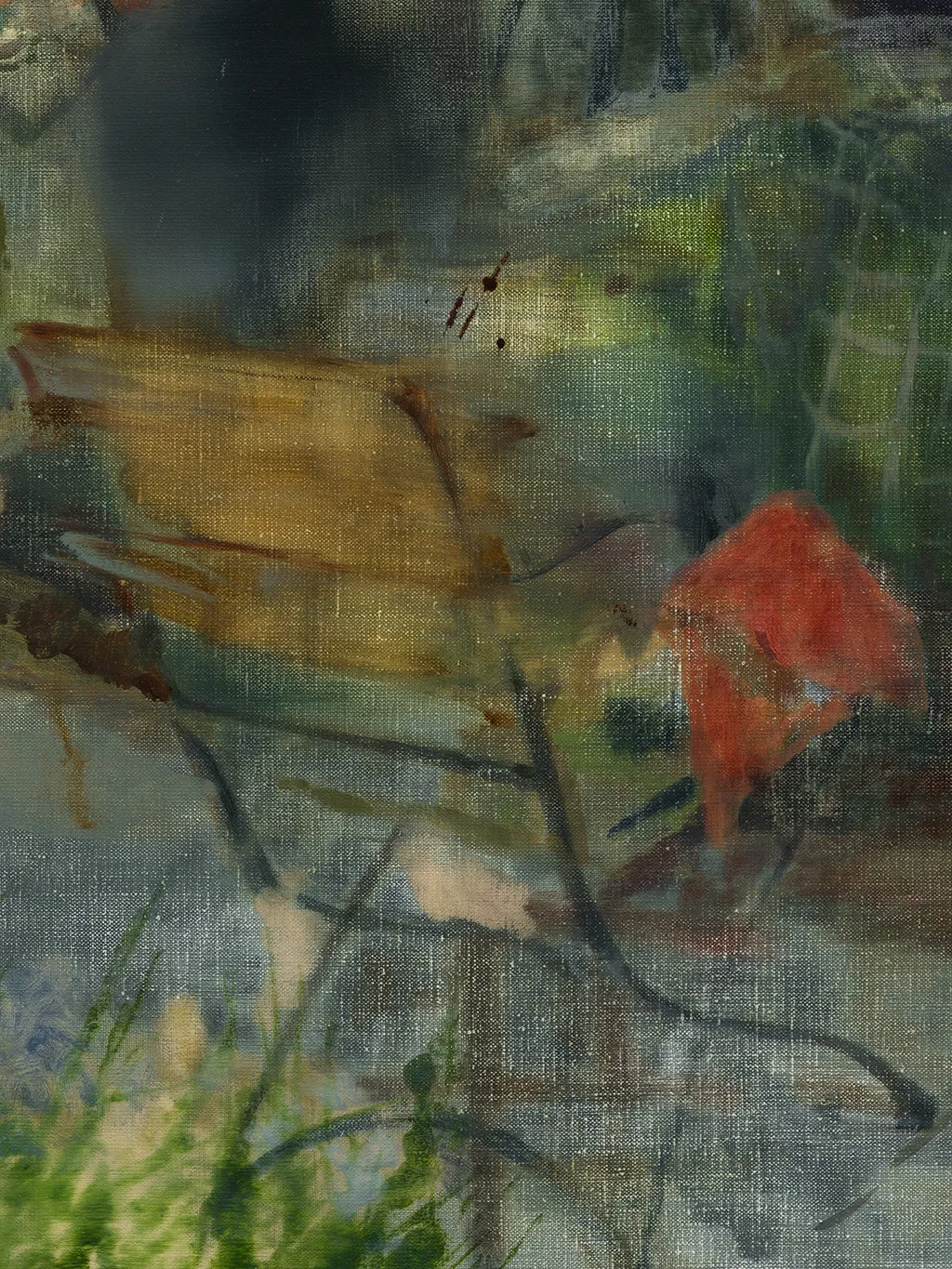
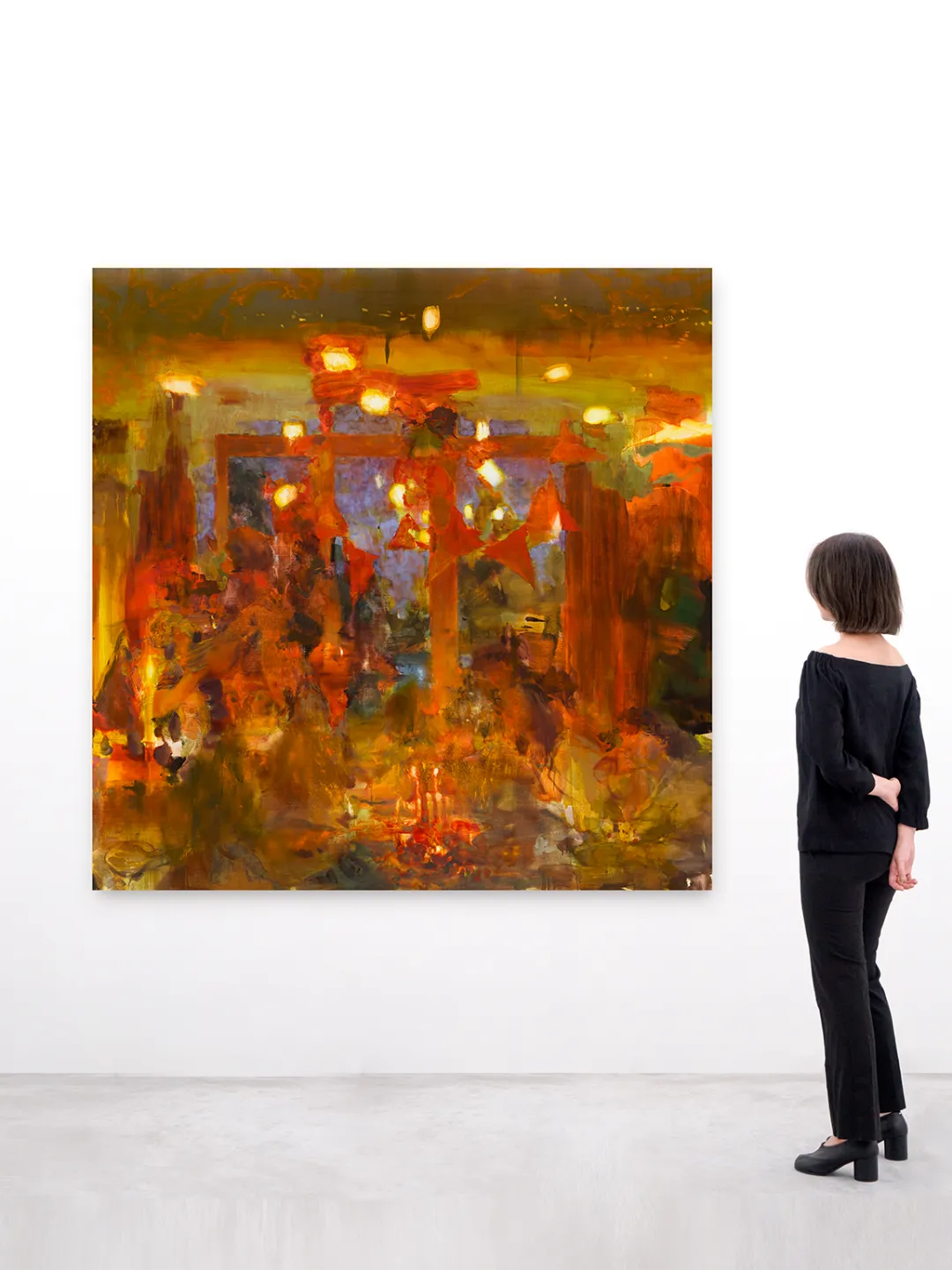
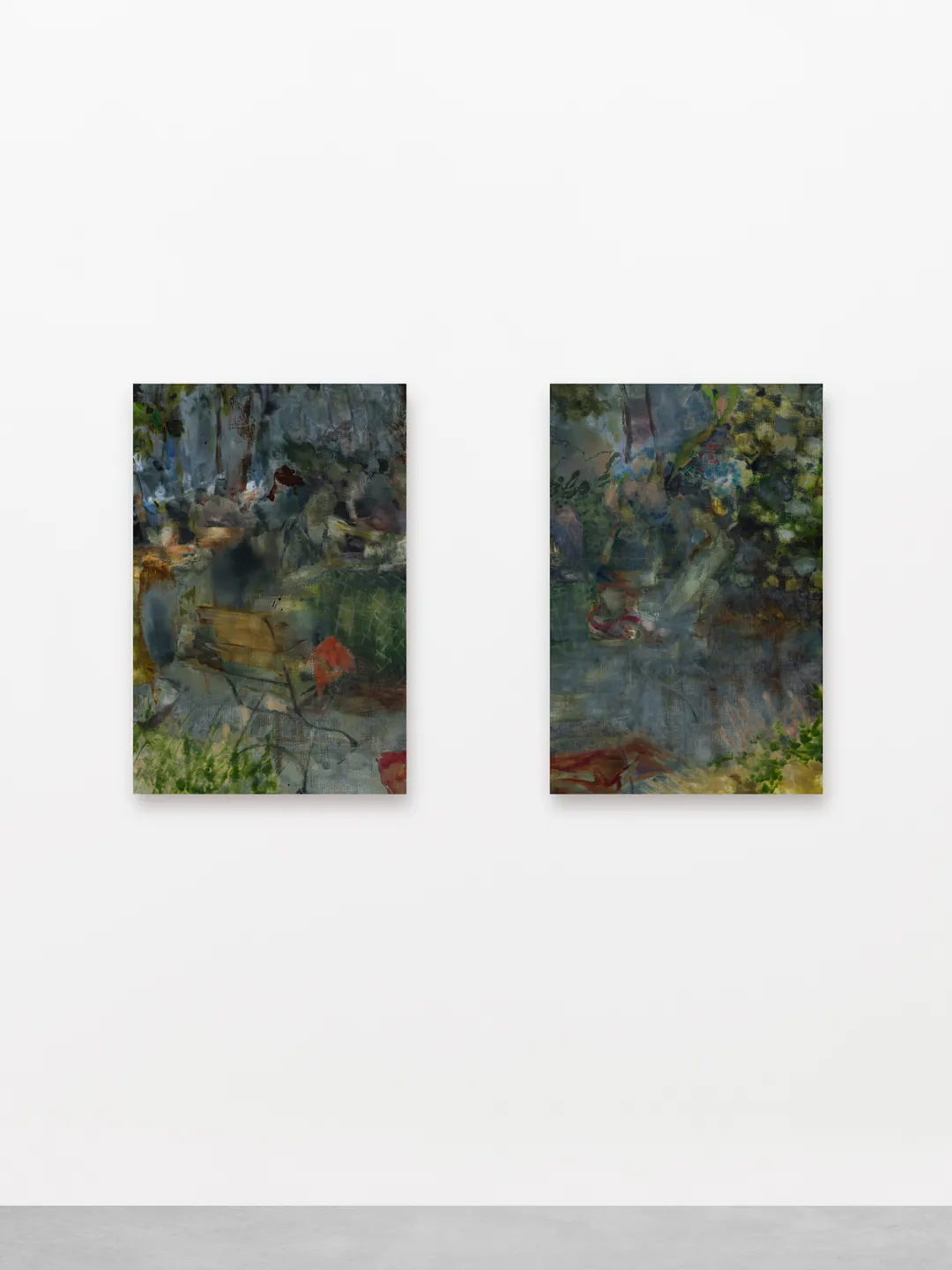
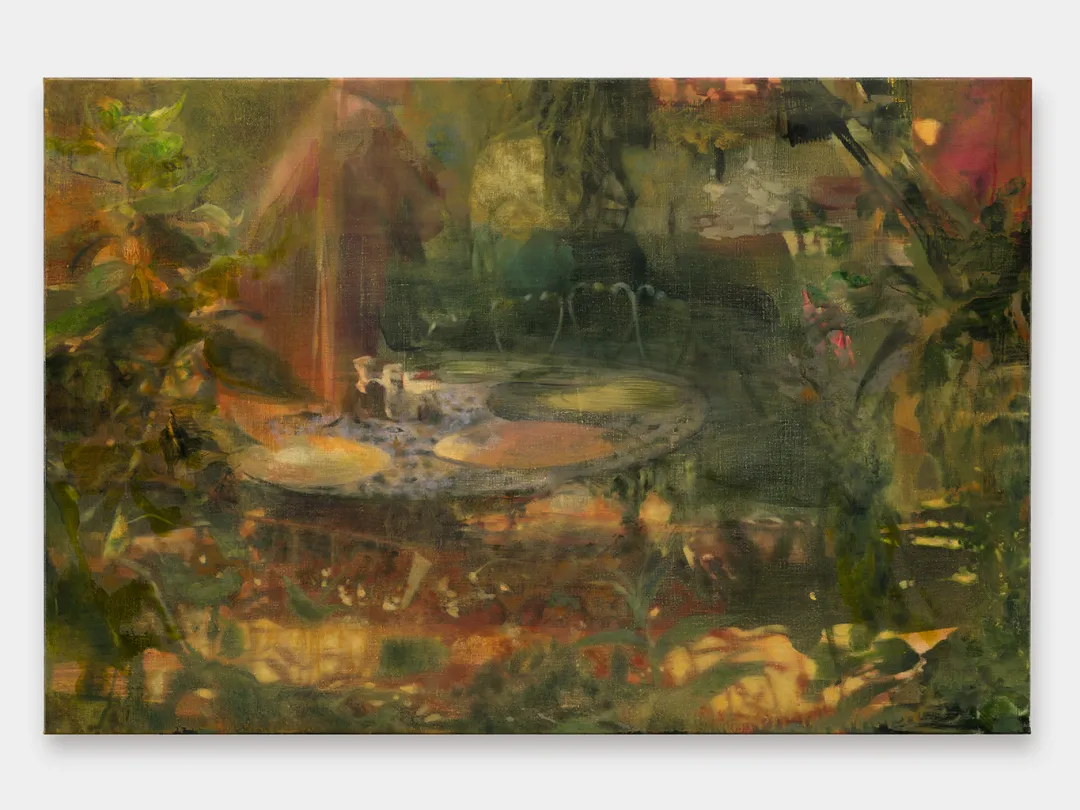
无题(夏日餐桌)Untitled (Summer Table), 2026
亚麻布面油画 Oil on linen
李晟睿智对于氛围在物理和情感意义上的敏感性,也源于她的个人经历。虽然出生在日本,李晟睿智的父母亲却都是韩国人,这也让她在成长的过程中常常有机会回到韩国——在釜山,这个南部的港口城市中,她追溯着母亲和祖母的足迹,她们都曾在历史悠久的海云台市场(Haeundae Market)中以贩售鱼类为生。李晟睿智记得那些充满节奏感、近乎于敲击乐一般的南方方言充斥着整个房间,这些语言虽然难以完全理解,却充满温度。在釜山的餐厅吃饭时所感到的疏离感,以及她母亲那始终不完全“日式”的家庭料理,让艺术家感受到一种中间性(in-betweenness)。在两种文化之间穿梭、在两种聚餐方式之间游移,那种悬置于两者之间的状态,使艺术家对空间中不可见之物的感知变得更加敏锐。
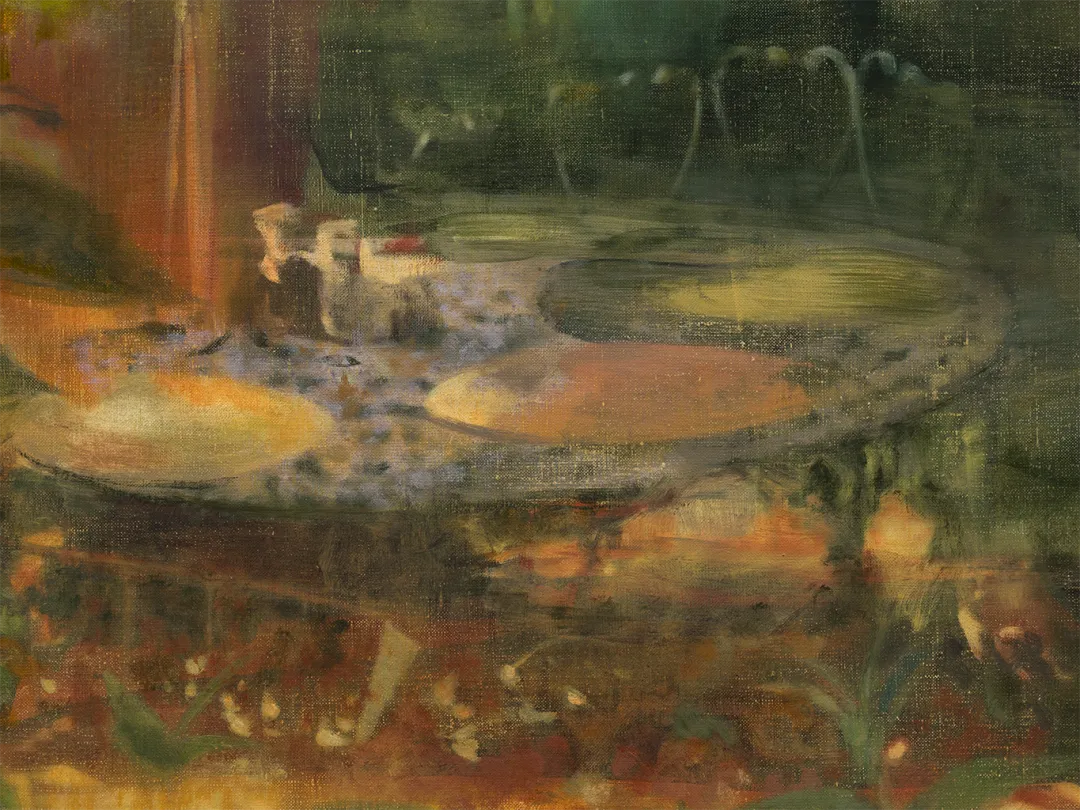
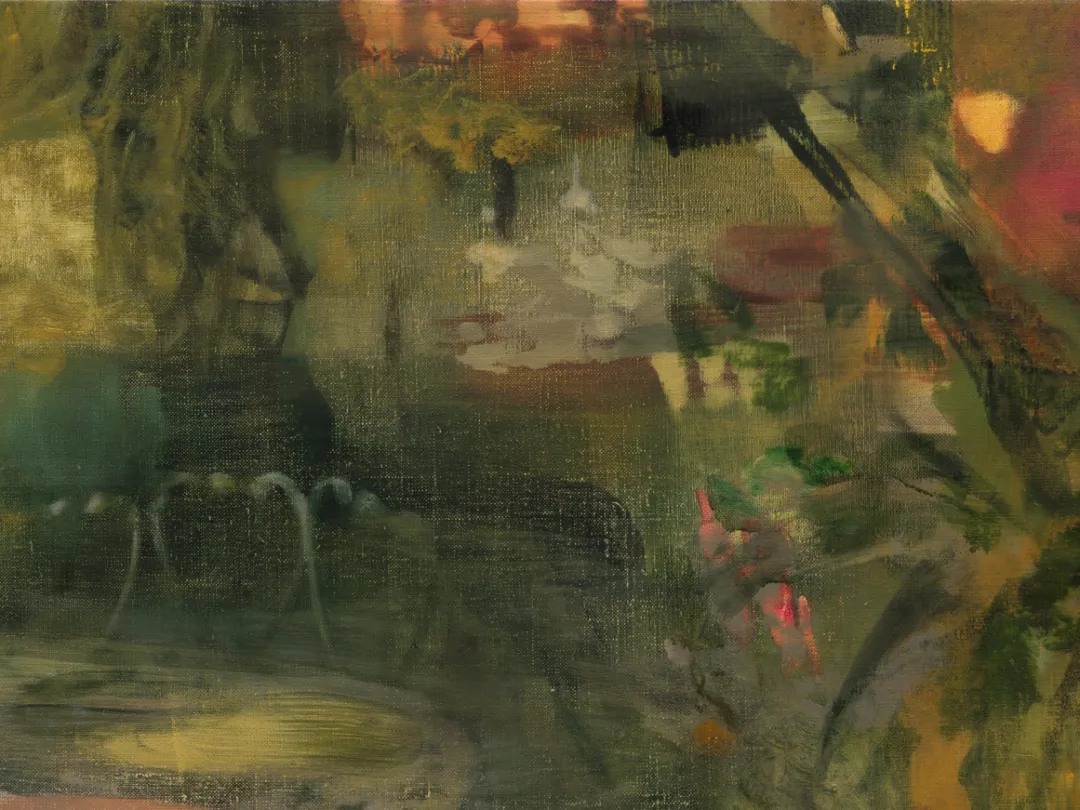
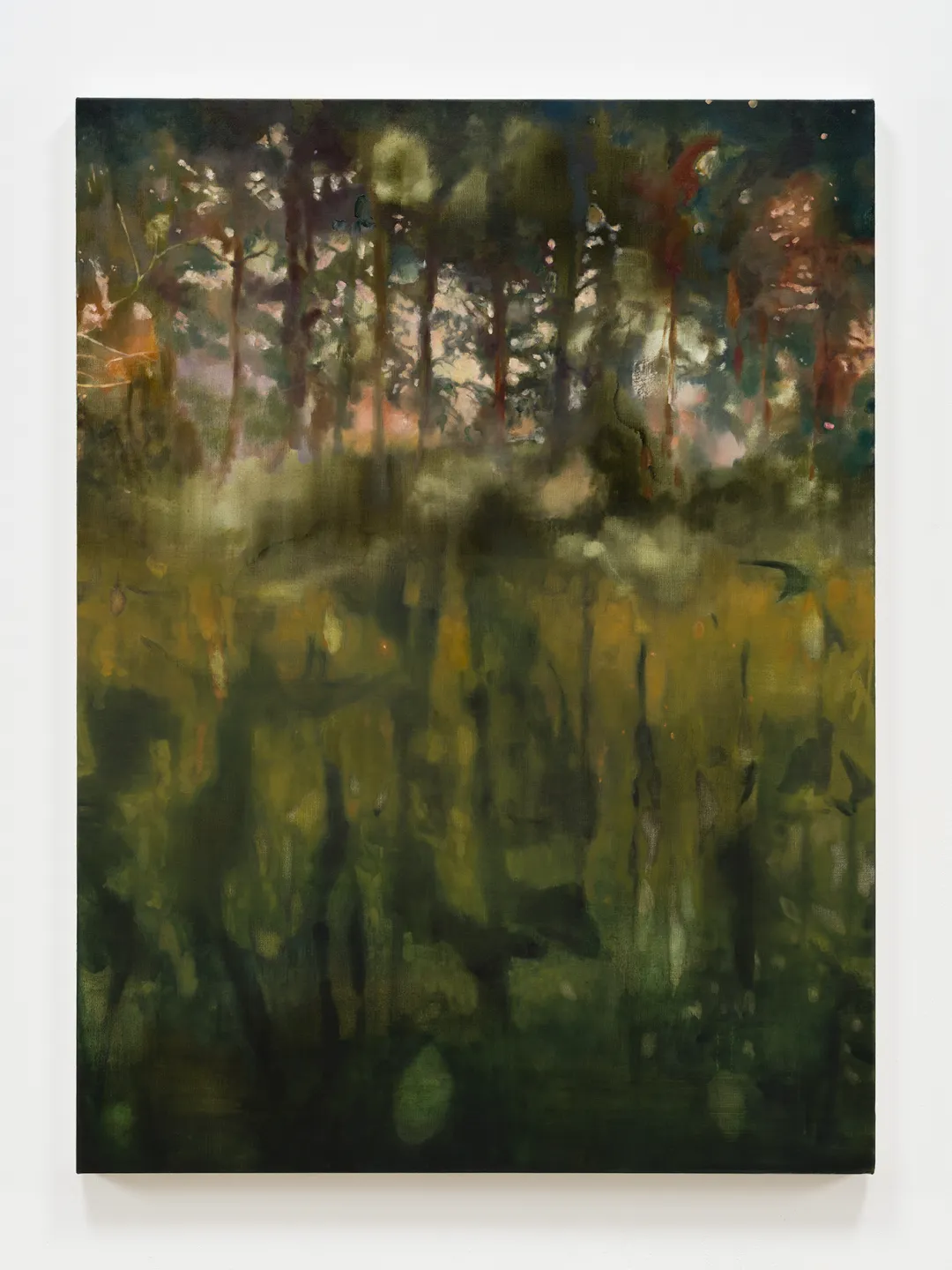
露台 Terrace, 2026
亚麻布面油画 Oil on linen
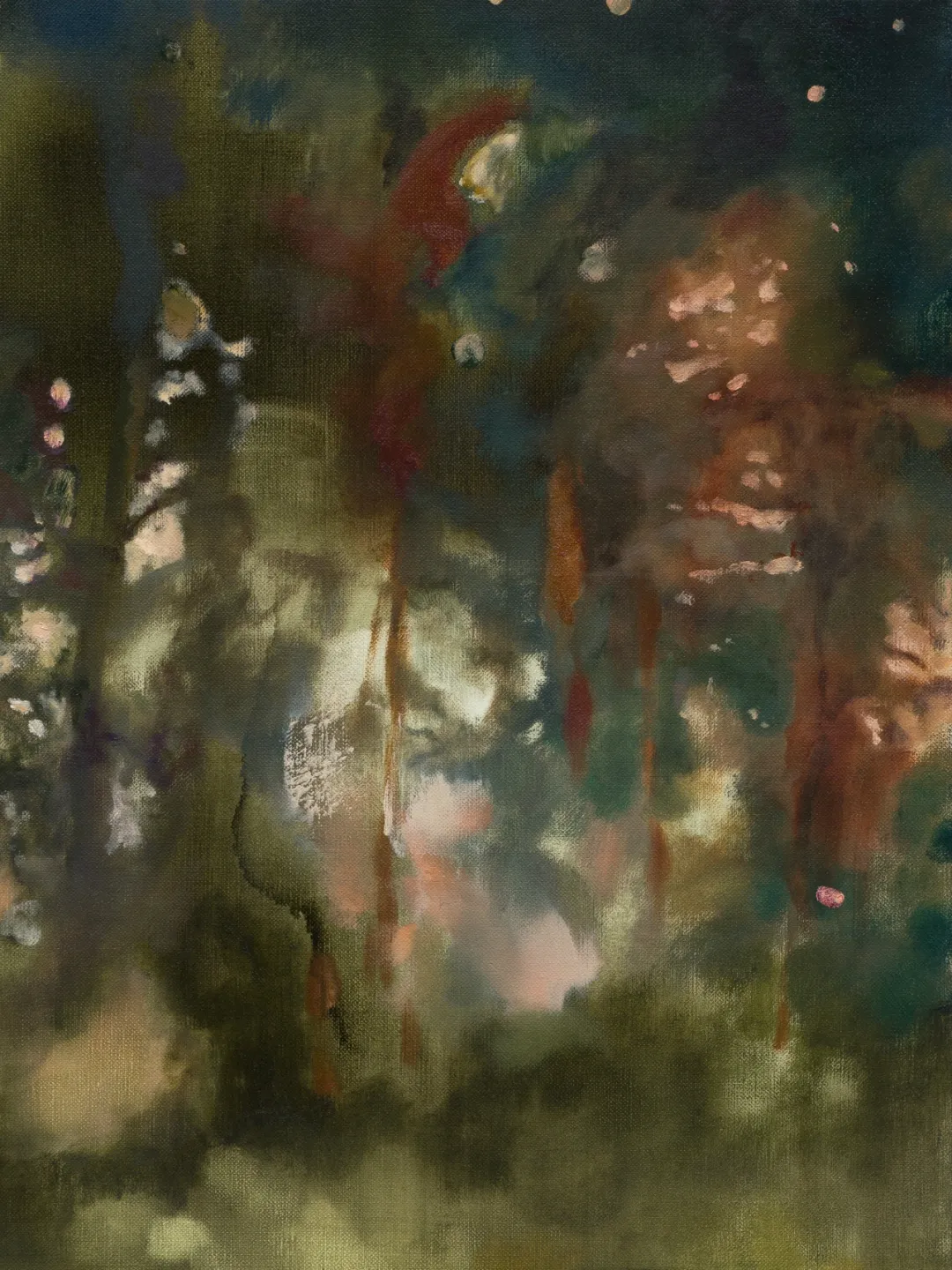
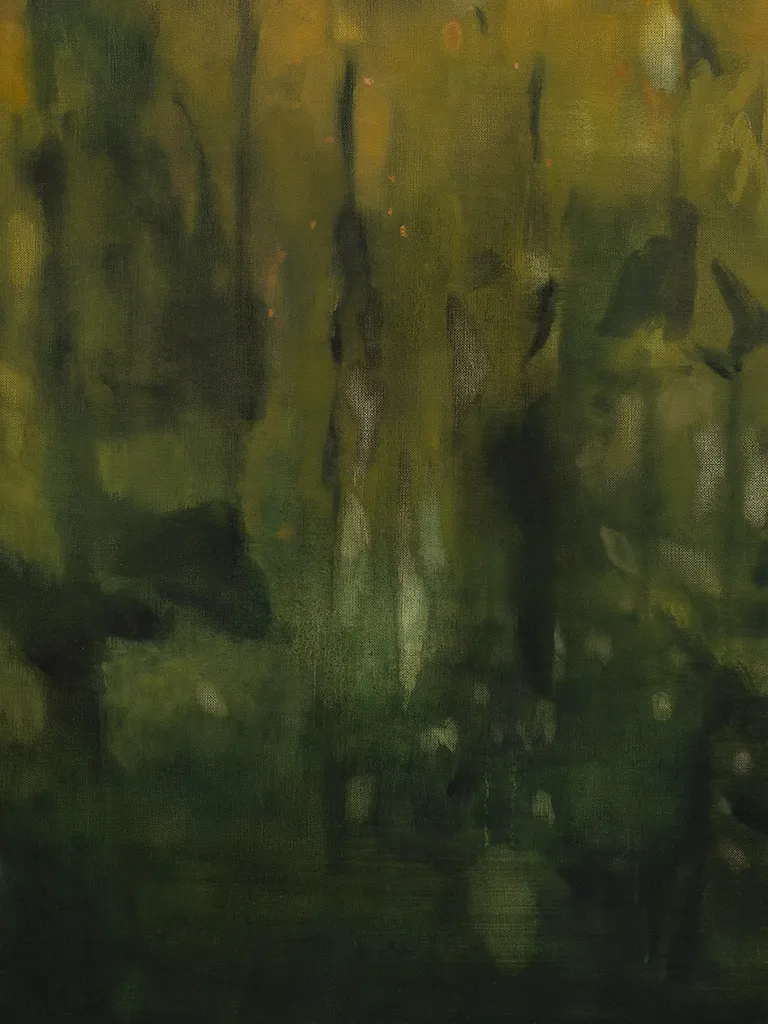
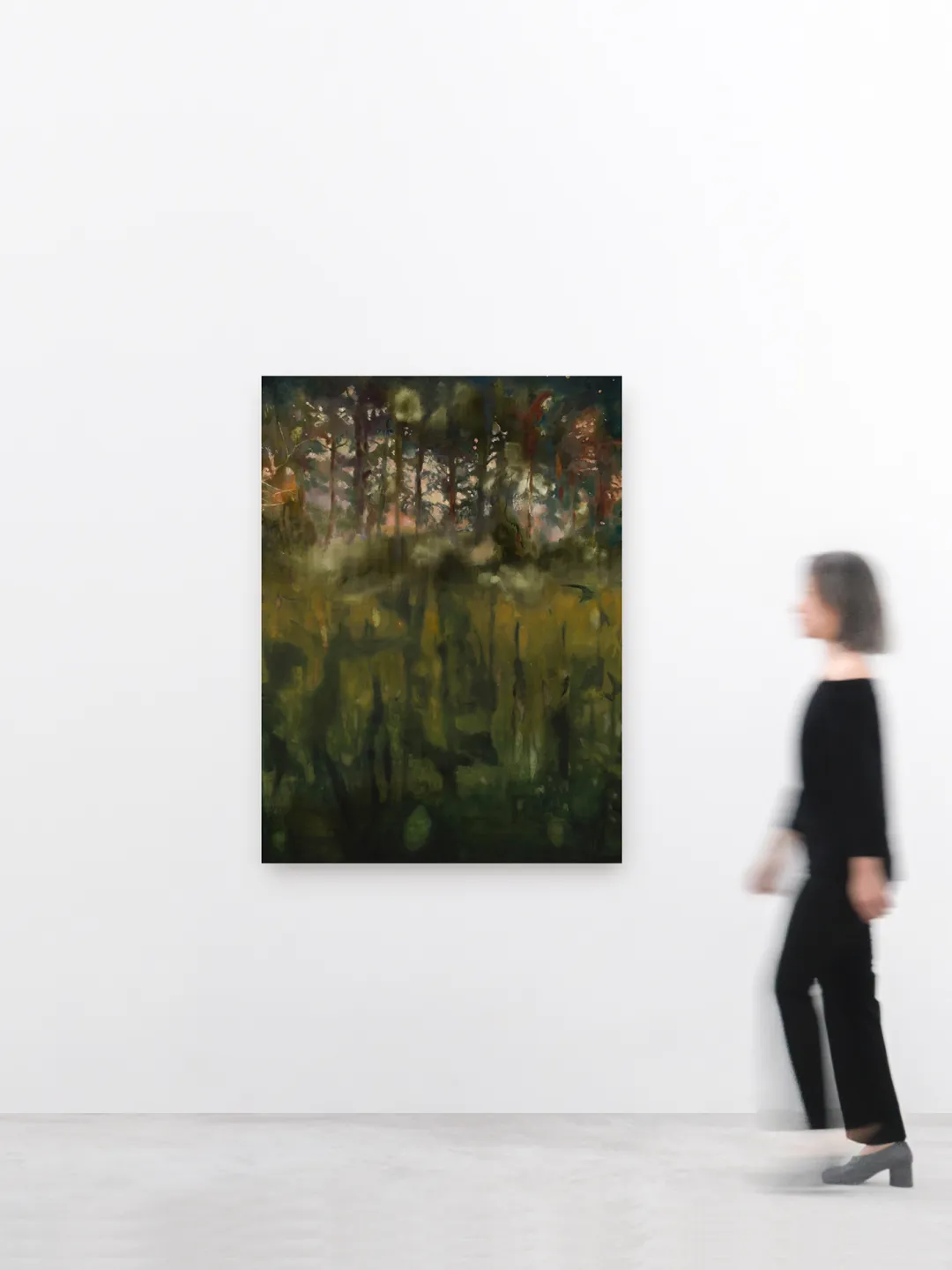
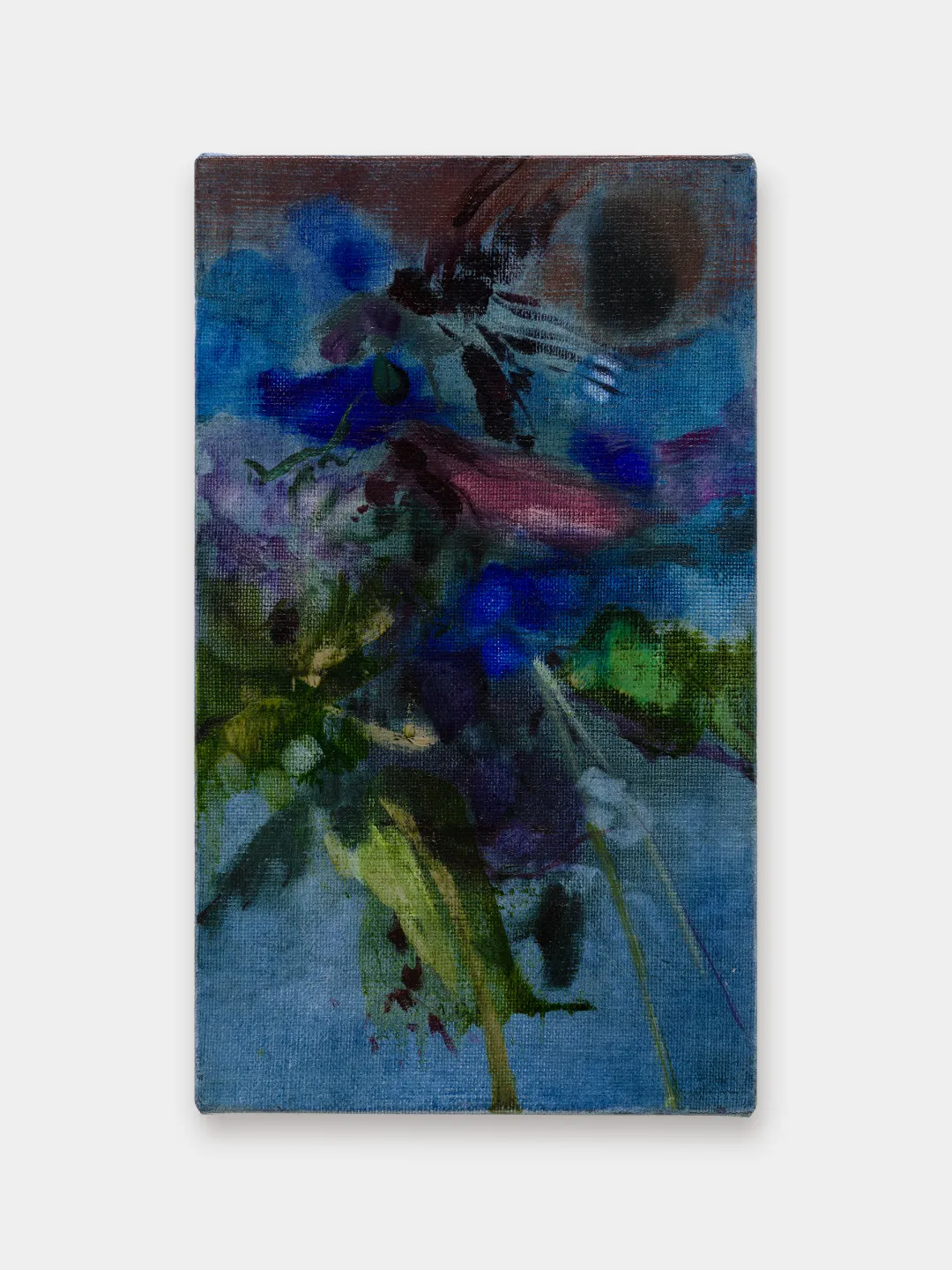
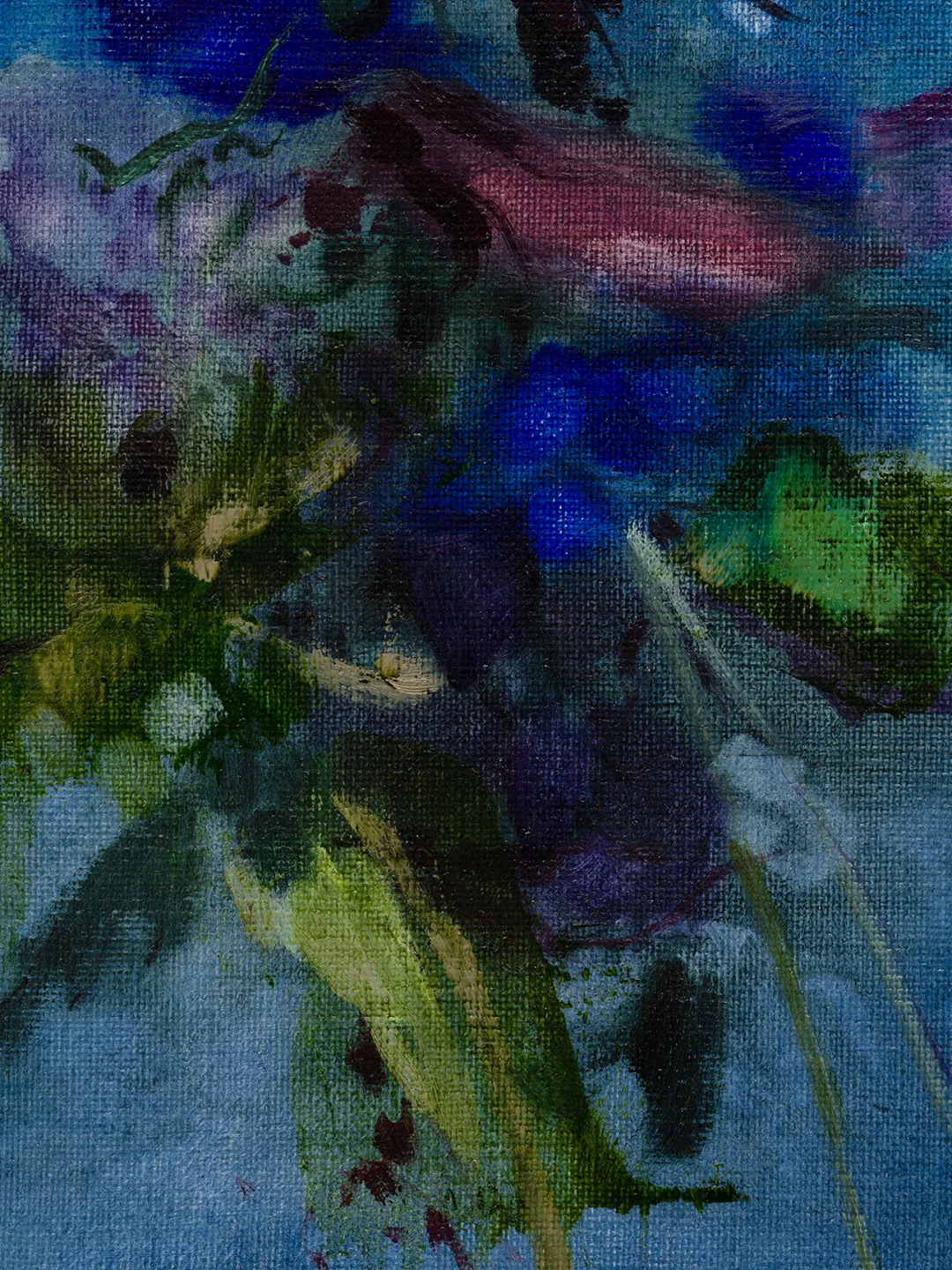
艺术家也将这种敏锐延续到层叠交织的绘画之上。李晟睿智用一层层细腻而连续的薄涂,营造出绘画的表层,让光得以从绘画的底部向外透出。画面上的颜料也互相消融——绿色溶解于黄昏般的蓝调中,琥珀色的温暖则沉淀在褐色的浓郁里。这些彼此晕染的层次,使画面似乎始终处于流动的状态中:人物仿佛正要离开座位,树叶微微颤动,烛火跳跃燃烧。画面表层本身也具备一种“氛围”,它并非通过线条勾勒而存在的,而是通过温度;也并非通过体块,而是通过痕迹。在描绘氛围的绘画历史上,气氛往往被视作人们观看的中间媒介,而李晟睿智却将其构建为一种可以用肌肤所感知的存在:湿度被布料所捕捉;小臂似乎能感受到午后太阳的温热;食物的腾腾热气轻拂过鼻尖。这些绘画并不是要求观者用眼睛去观看;而是要进入其中,去感受、生活,并被一次次反复经历。
1约翰·威尔金斯(John Wilkins)。《发现月球中的世界》(The Discovery of a World in the Moone),伦敦:E.G.印行,为迈克尔·斯帕克与爱德华·福雷斯特出版,1638年,第138页。
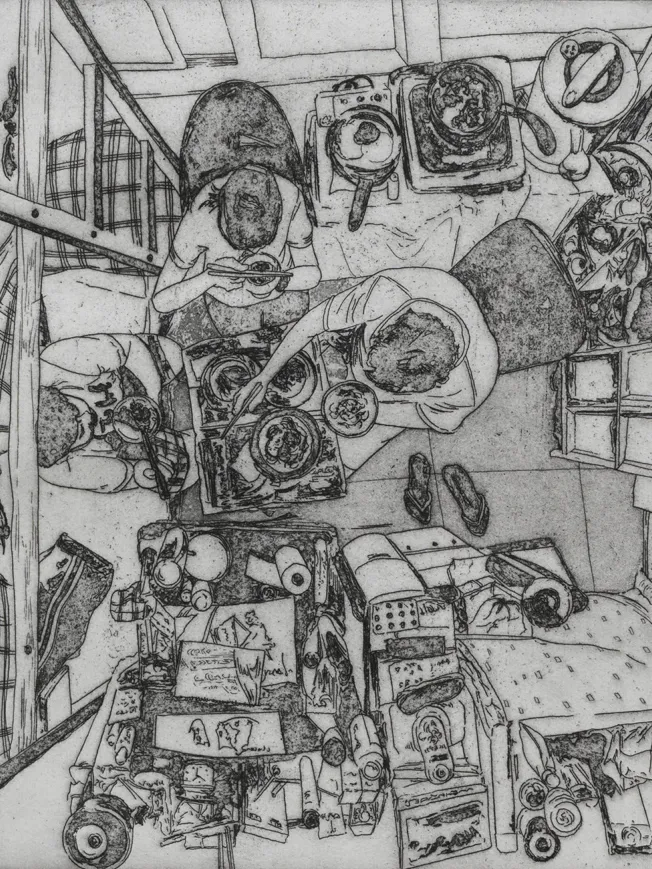
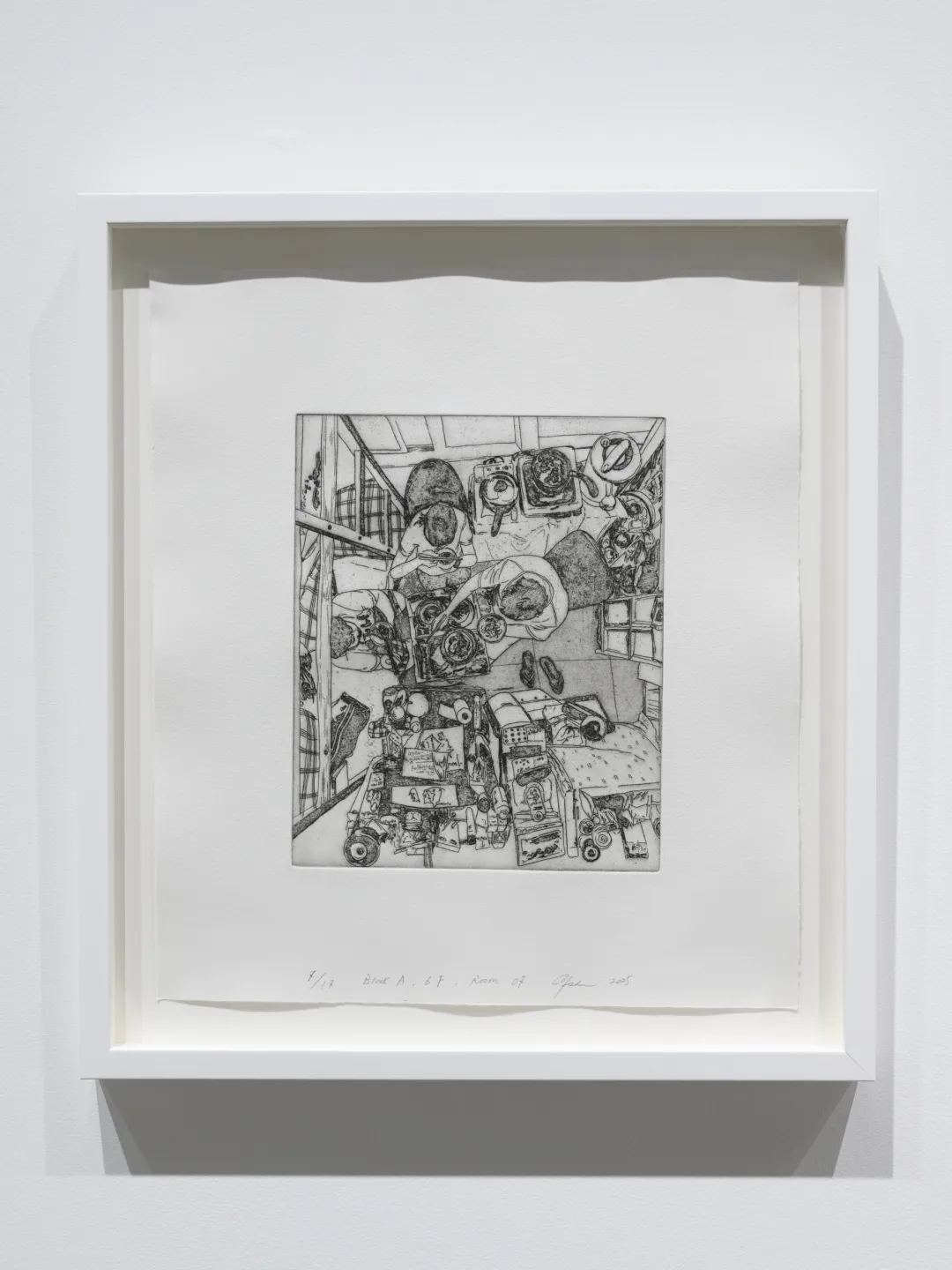
李晟睿智 Yeji Sei LEE
A栋6层07室 Block A, 6/F, Room 07,2025
纸上蚀刻版画 Etching on Paper
版数 Edition 13/17
44.5 × 40 cm(含框 with frame)
37.5 × 33 cm(画心 work pice)
*本文由常驻伦敦与首尔的独立策展人及研究者李佳炫(Kahyun LEE)撰写。她将策展视为一种批判性实践与另类知识生产形式,尤其关注制度结构、国家边界与身份认同如何形塑策展实践,进而构建东亚当代艺术的叙事框架。目前,她作为艺术与人文研究委员会资助的博士研究员,任职于伦敦皇家艺术学院与泰特现代美术馆。她曾为伦敦设计博物馆、釜山当代艺术博物馆策划多项展览与项目。
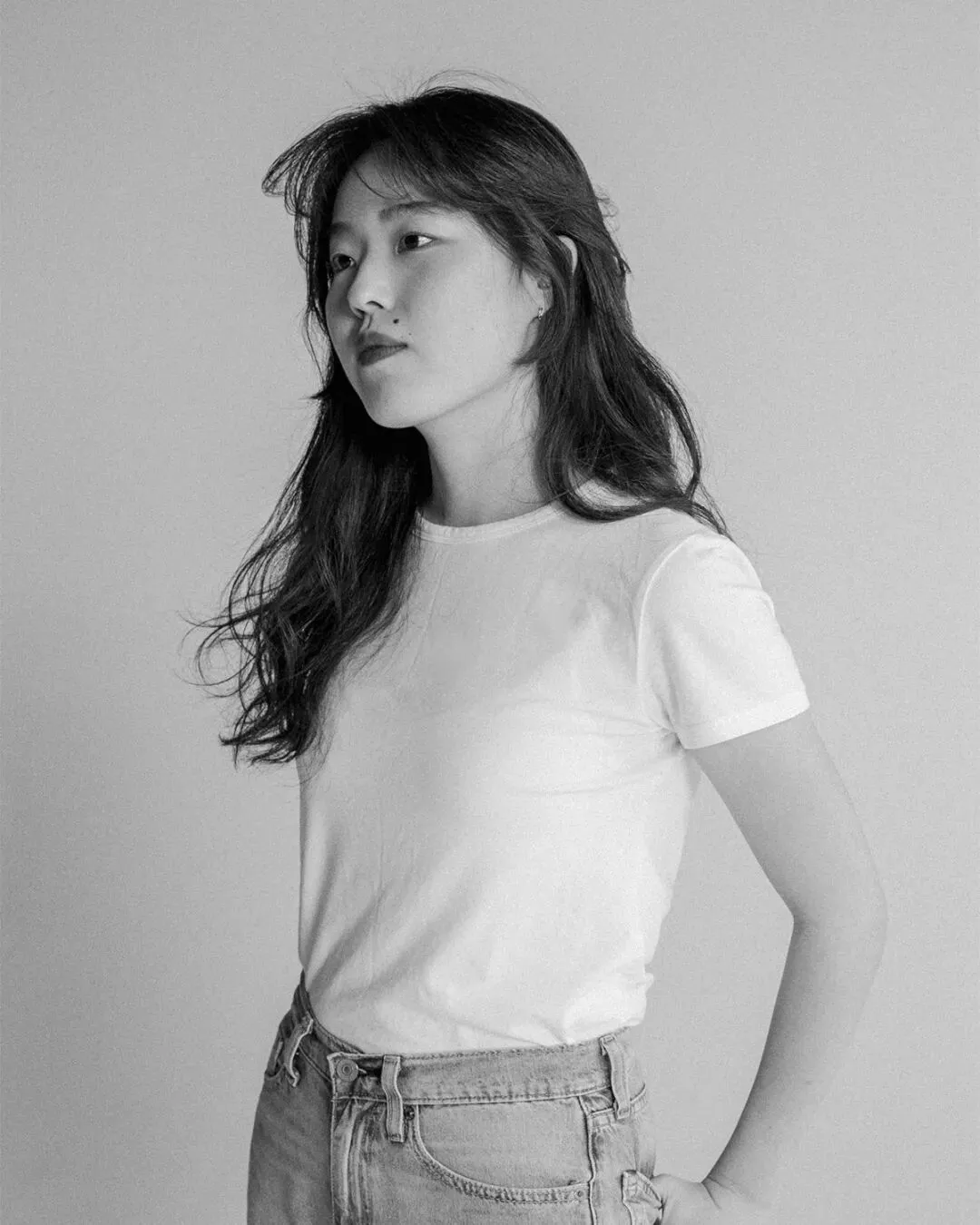
李晟睿智(Yeji Sei LEE)1995年出生于日本东京,分别于2020年和2024年获得东京艺术大学绘画学士和硕士学位,并于2021年至2022年在德国慕尼黑美术学院绘画专业学习获Diplom学位,目前生活和工作于东京。李的绘画实践常围绕身份、记忆、场所与具身经验展开,尤其关注空间如何保留人群生活中细微的痕迹:时间的重量、空气的质感,以及光的残留。艺术家并不试图捕捉固定的图像或具体的叙事,而是借由绘画材料自身的质感,生成一种氛围性的记忆。在她的创作中,绘画是一种使人、场所、时间之间那些未被言说的共振变得可见的方式。
其近期个展包括:“后调”,2026,LINSEED,上海;“Under the Light We Age”,2025,THE LOOP GALLERY,东京;“In vibrant hues, their voices laid”,2024,Everyday Mooonday Gallery,首尔;“Call me by my name”,2023,ZONAMACO,东京;“Geographica”, 2021,Courtyard HIROO,东京;“STAR GAZER”,2018,Bakurocho FACTORY,东京。其主要群展包括:“What a Painting Wants”,2025,THE LOOP GALLERY,东京;“Rai-Zen-Dā”,Kunsthalle Trier,德国特里尔;Art Award Tokyo Marunouchi,2024,Gyoko-dori Underground Gallery,东京;“Zwischen Gestern und Morgen”,2022,Museum Kurhaus Kleve,德国克莱夫;KUMA Exhibiton,2022,ANB Tokyo,东京;“CAPTURE”,2021,Rikka Gallery,东京;“singing gene”,2019,Ueno Geiyu Prize获奖展,东京艺术大学,东京;“Knock-Knock”,2019,s+arts Gallery,东京;“NI/O”,2019,3331 Arts Chiyoda,东京;“MAY NOT BE CITY”,2018,A-TOM艺术奖获奖展,Courtyard HIROO,东京。
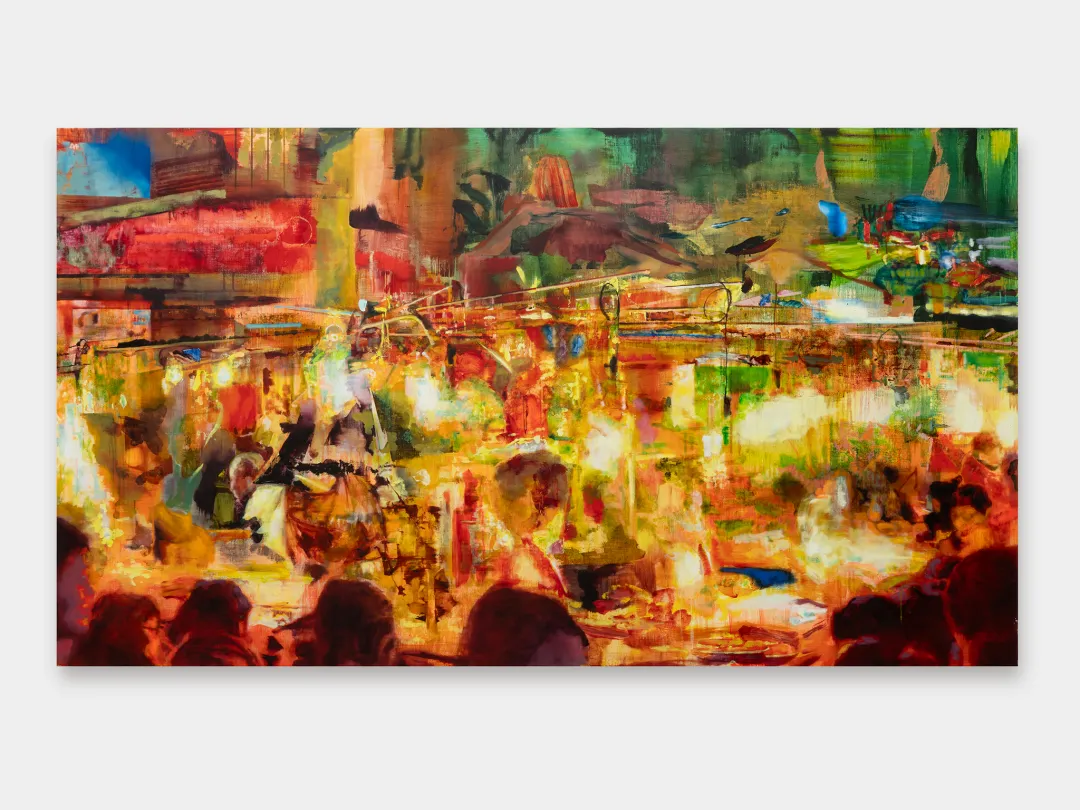
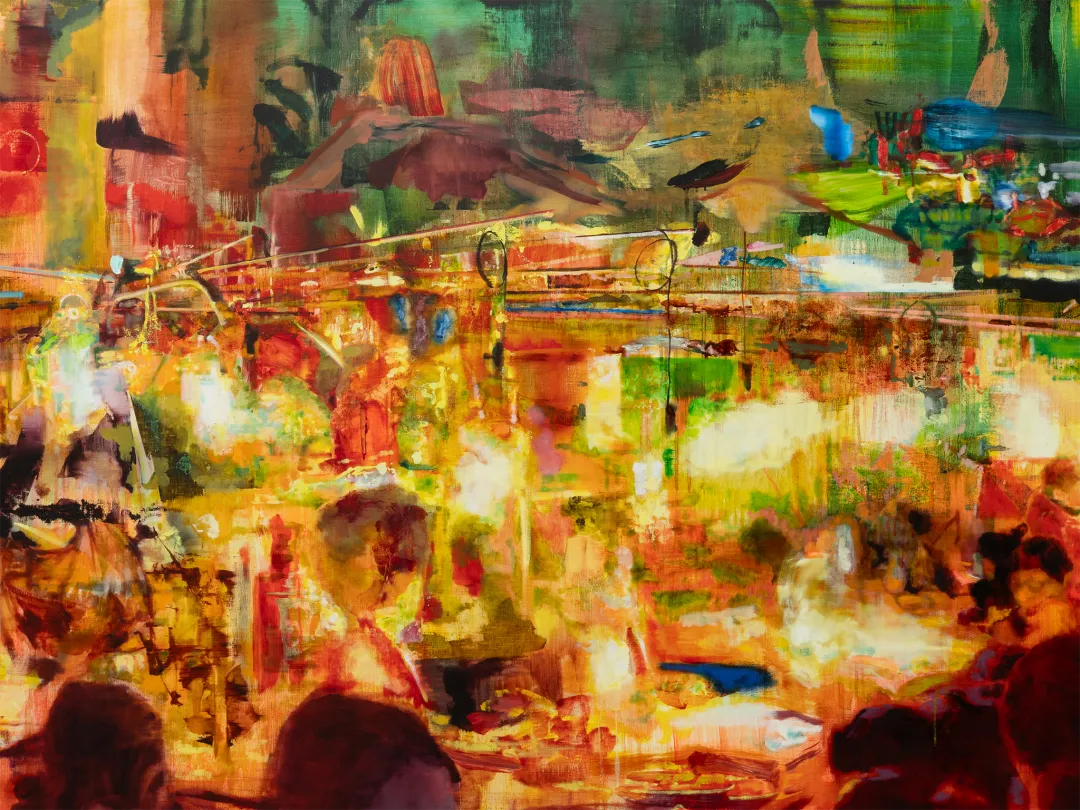
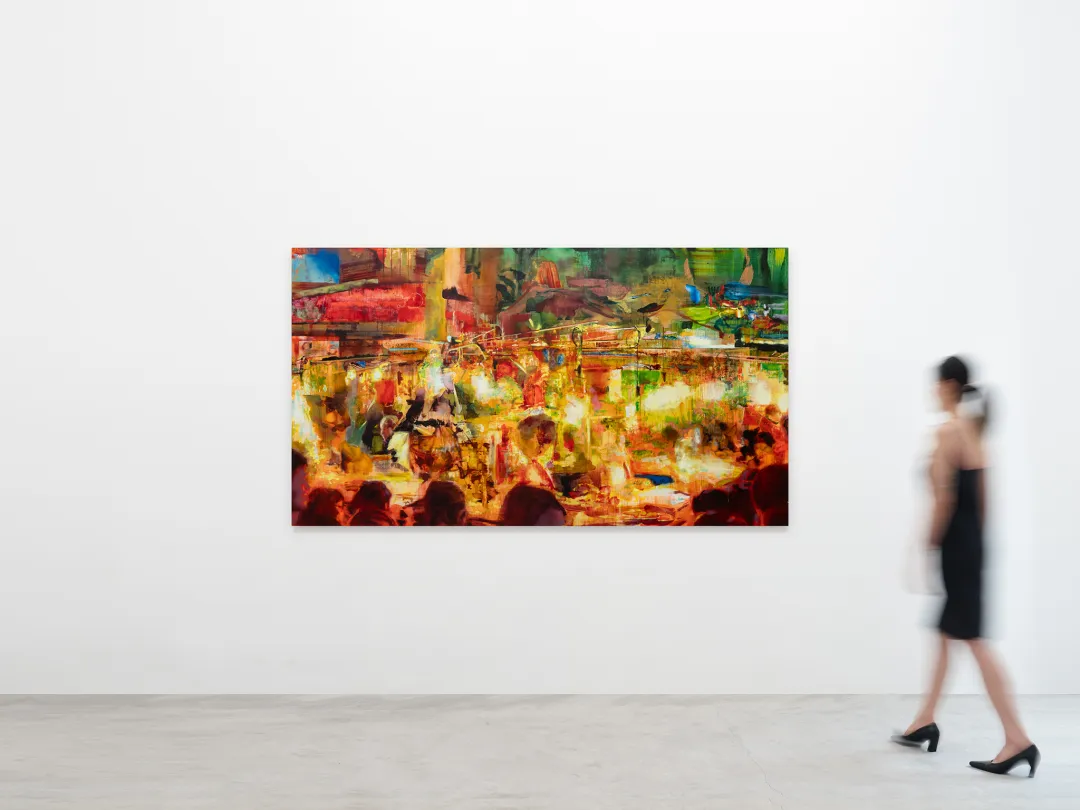
节律跳动 The Pulse,2024
Text by Kahyun LEE
LINSEED is pleased to presentThe Air After, a solo exhibition by Yeji Sei LEE (b. 1995, Tokyo, Japan), marking the artist’s first exhibition with the gallery. Bringing together new paintings created this year alongside earlier works on canvas and paper, the exhibition explores not only the visual dimensions of a scene, but also its atmosphere — the air, sounds, humidity, and other intangible traces that linger beyond what is immediately visible.The Air Afteropens on June 6, 2026 and runs through July 4.
Yeji Sei Lee’s paintings are preoccupied with how moments and memories become embedded in space’s atmosphere. What remains in the air after the bodies have moved on? How does the air recall memory through warmth and light? Lee repeatedly returns to moments of gathering around tables, bodies in the summer light, crowds in busy street markets.
The English word atmosphere makes its first recorded appearance in a description of the Moon. InThe Discovery of a World in the Moone (1638), John Wilkins coined atmo-sphæra for what he argued was the Moon's own gaseous envelope, “an orbe of grosse vaporous aire, immediately incompassing the body of the Moone.”1 From its inception, the word pointed to the ephemeral and unpalpable layer that wraps a body rather than the body itself. By the early nineteenth century, however, atmosphere had undergone a semantic shift, coming to describe the mental, moral and emotional surround of a scene. Similarly, the Japanese word for atmosphere, 雰囲気(fun'iki), entered the language as scientific terminology in the late Edo period, before acquiring its modern definition – the mood, the ambience, the emotion surrounding the situation. The word travelled the same trajectory, from air to affect, from the physical to the sensory.
The attentiveness to both physical condition and emotional residue in the atmosphere has its roots in Lee’s own experiences. Born in Japan to Korean parents, Lee grew up making returns to Busan, a harbour city on Korea's southern coast, retracing the movements of her mother and maternal grandmother, who sold fish at Haeundae Market. Lee recalls the rhythmical, almost percussive southern dialect filling the room, the sounds not fully understandable but loaded with warmth. From the distance felt in meals in Busan, and her mother’s cooking which, never felt fully Japanese, the artist speaks of in-betweenness. Navigating two cultures, two ways of eating together, the sense of being suspended between two, sharpened the artist’s sensitivity to what a space holds beyond the visible.
The artist’s sensitivity extends to dense layers of her paintings. Lee builds her surfaces through delicate, successive veils of paint, allowing light to seep through from beneath.Pigments bleed into one another across the canvas: greens dissolve into dusk blues, warm ambers into umbers.Bleeding shades hold forms in a state of perpetual motion, as figures seem to shift in their seats, leaves tremble, and candles continue burning.The surface itself becomes atmospheric, registering presence not by outline but by heat, not by form but by trace. Where the history of atmospheric paintings has often treated atmosphere as a medium through which we see, Lee constructs it as something felt by the skin: humidity caught on clothes, afternoon sun landing on a forearm, steam from hot food grazing the tip of the nose. The paintings do not ask to be looked at. They ask to be entered, felt, lived and relived.
1 Wilkins, John. The Discovery of a World in the Moone. London : Printed by E.G. for Michael Sparke and Edward Forrest, 1638, p.138.
*This article is written by Kahyun LEE, an independent curator and researcher based between London and Seoul. Her work frames curating as both a critical practice and a mode of alternative knowledge production, with a particular interest in how institutions, national borders, and identities shape curatorial practices and construct narratives around East Asian contemporary art. Currently, Lee is a doctoral researcher at the Royal College of Art London and Tate Modern supported by an Arts and Humanities Research Council-funded Collaborative Doctoral Partnership. She previously curated exhibitions and programs at the Museum of Contemporary Art Busan and the British Library.
Yeji Sei LEE was born in 1995 in Tokyo, and currently lives and works in Tokyo. She graduated from Tokyo University of the Arts, where she received her BFA in 2020 and MFA in Painting in 2024. From 2021 to 2022, she also studied Painting at the Akademie der Bildenden Künste München in Germany, receiving a Dipl. in Fine Arts. LEE’s practice often revolves around identity, memory, place, and embodied experience, with an interest in how spaces retain subtle traces of collective life: the weight of time, the texture of air, and the residue of light. Rather than capturing fixed images or specific narratives, the artist uses the materiality of paint to generate a kind of atmospheric memory. In her work, painting is a way to make visible the quiet, often unspoken interactions that occur between people, place, and time.
Her recent solo exhibitions: “The Air After”, 2026, LINSEED, Shanghai; “Under the Light We Age”, 2025, THE LOOP GALLERY, Tokyo; “In vibrant hues, their voices laid”, 2024, Everyday Mooonday Gallery, Seoul; “Call me by my name”, 2023, ZONAMACO,Tokyo; “Geographica”, 2021, Courtyard HIROO, Tokyo; “STAR GAZER”, 2018, Bakurocho FACTORY, Tokyo. Her select group exhibitions include: “What a Painting Wants”, 2025, THE LOOP GALLERY, Tokyo; “Rai-Zen-Dā”, Kunsthalle Trier, Trier, Germany; Art Award Tokyo Marunouchi, 2024, Gyoko-dori Underground Gallery, Tokyo; “Zwischen Gestern und Morgen”, 2022, Museum Kurhaus Kleve, Kleve, Germany; KUMA Exhibiton, 2022, ANB Tokyo, Tokyo; “CAPTURE”, 2021, Rikka Gallery, Tokyo; “singing gene”, 2019, Ueno Geiyu Prize Winner Show, Tokyo University of the Arts, Tokyo; “Knock-Knock”, 2019, s+arts Gallery, Tokyo; “NI/O”, 2019, 3331 Arts Chiyoda, Tokyo; “MAY NOT BE CITY", 2018, A-TOM Art Prize Winner Show, Courtyard HIROO, Tokyo.