
春眠不觉晓 Spring Awakening 2026
春⻛吹⼜⽣
Make and Remake to Make Anew
展期 Duration: 2026.3.20–4.20
开放时间 Opening hours: 周三 Wed–周日 Sun,10:00-18:00
地址 Location: 清影艺术空间,杭州市 紫荆花路2号 联合大厦A座 一单元301
Inna Art Space, 301 Unit 1 Tower A, Lianhe Building, No.2 Zijinghua Road, Hangzhou
策展团队:虞琼洁,华宏梁,梁青青
参展艺术家:edit by Edit.er,Herbr Lin,胡镇超,李维伊,廖波峰,卢涛,马仕睿,out.o studio,PaPa,邵年,童亦,王欲成,杨华乐,虞琼洁,赵宛青
合作印厂:杭州四色印刷有限公司
视频拍摄制作:陈懿
摄影:姜六六
展览现场 Installation View
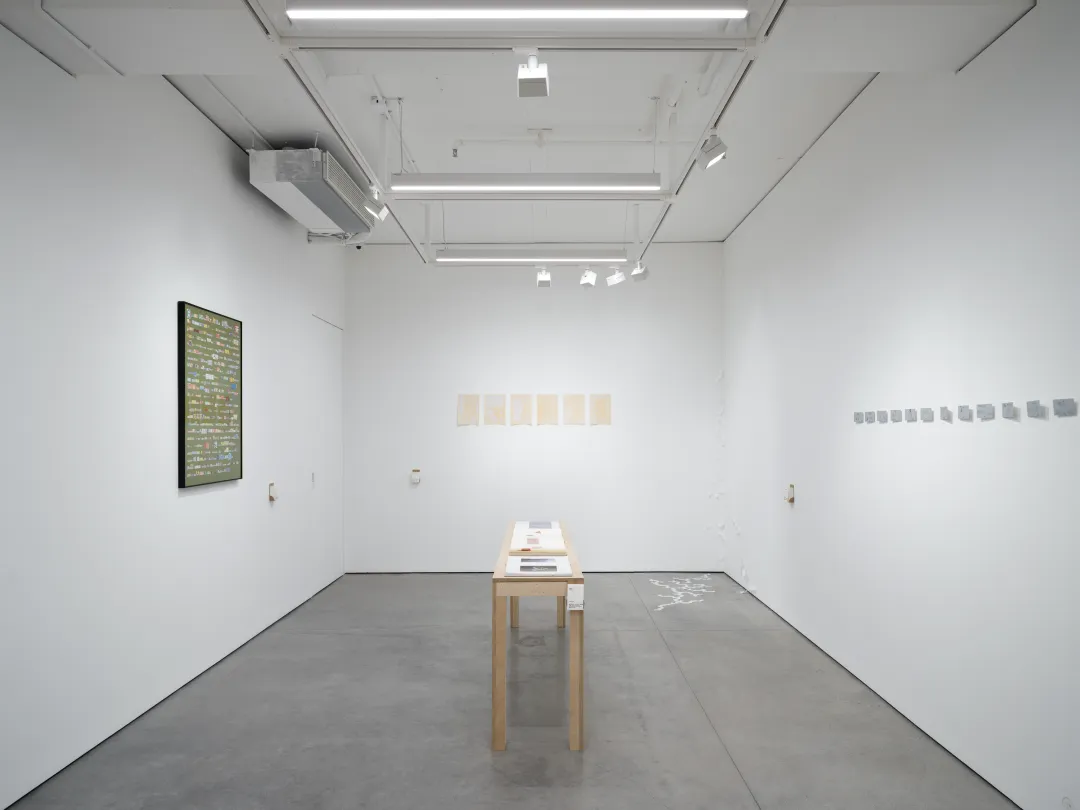
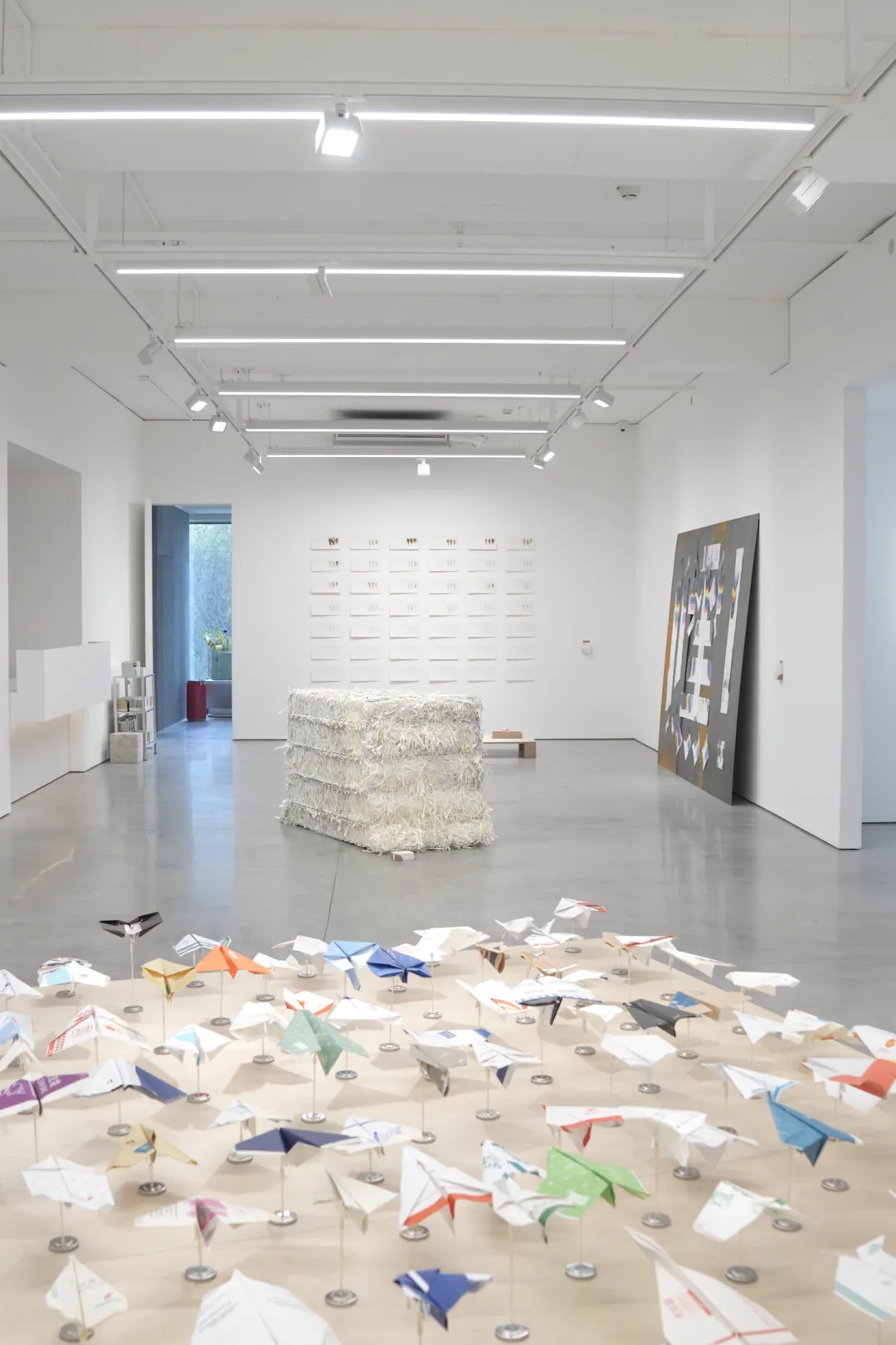
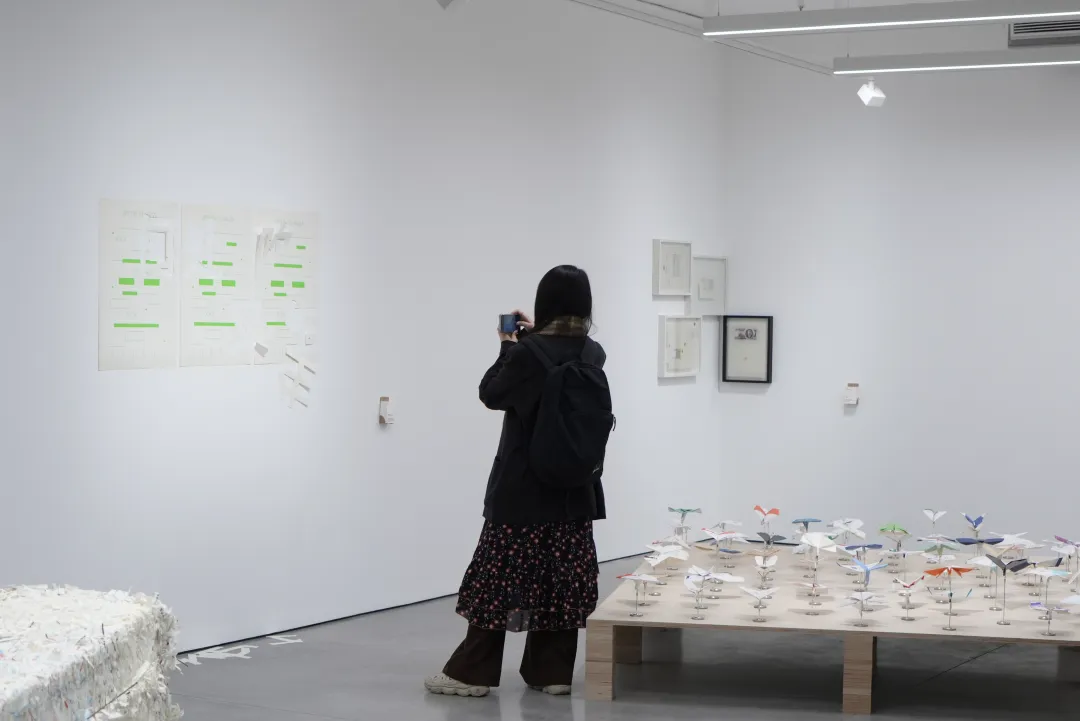
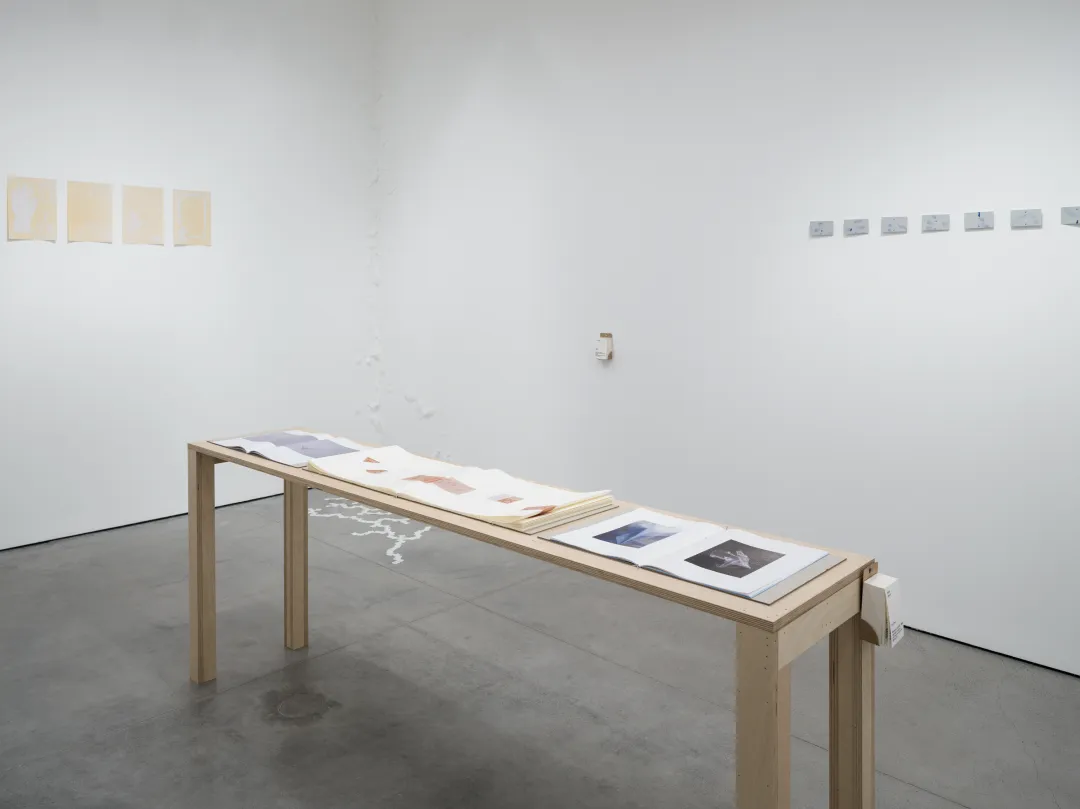
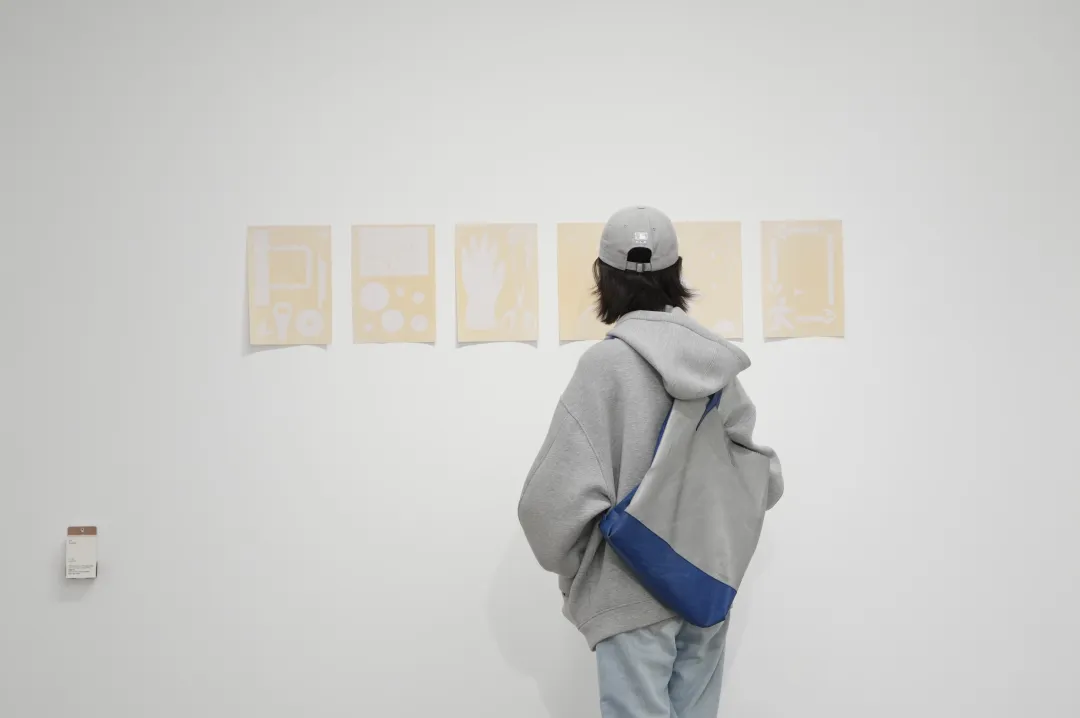
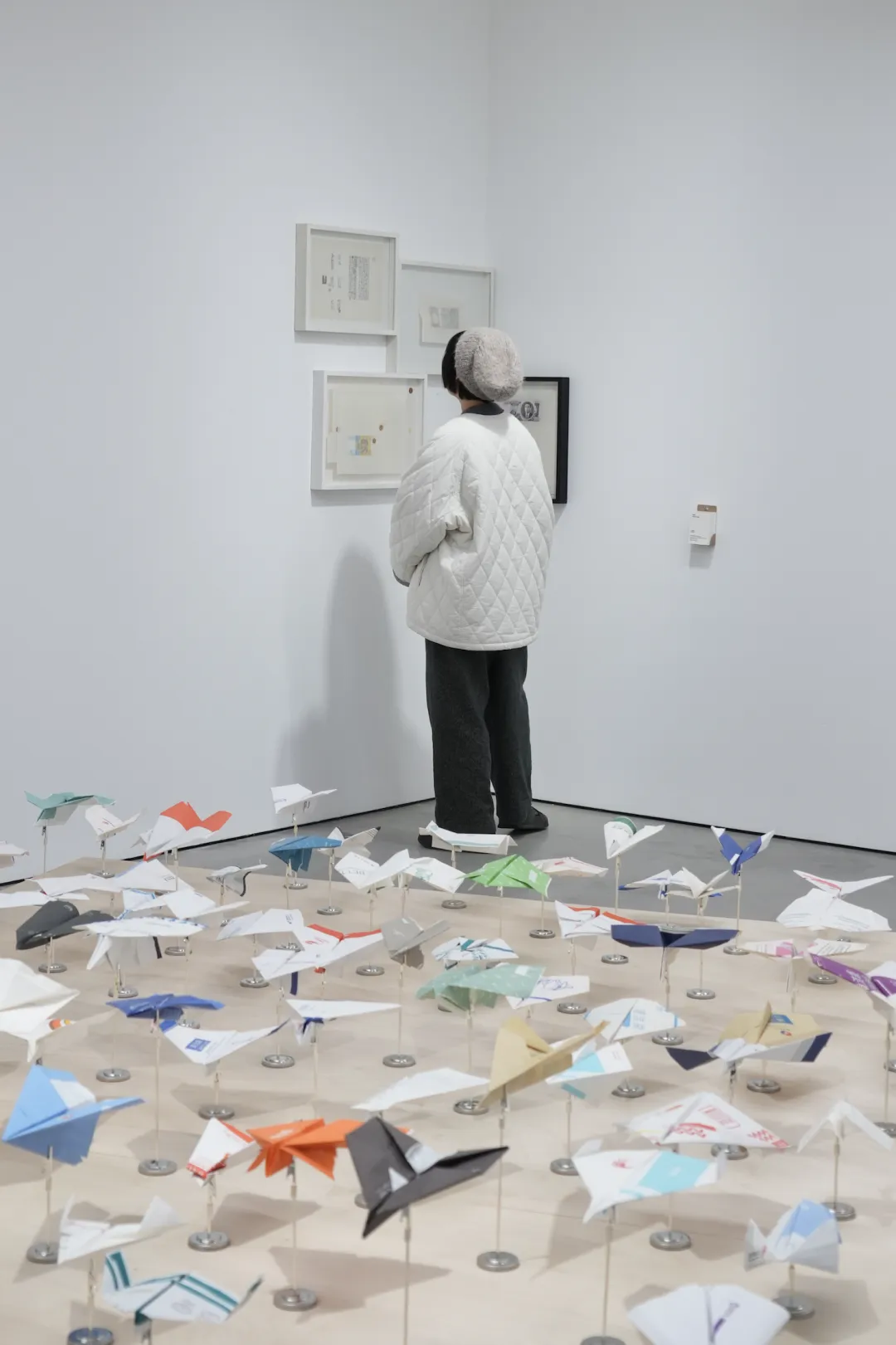
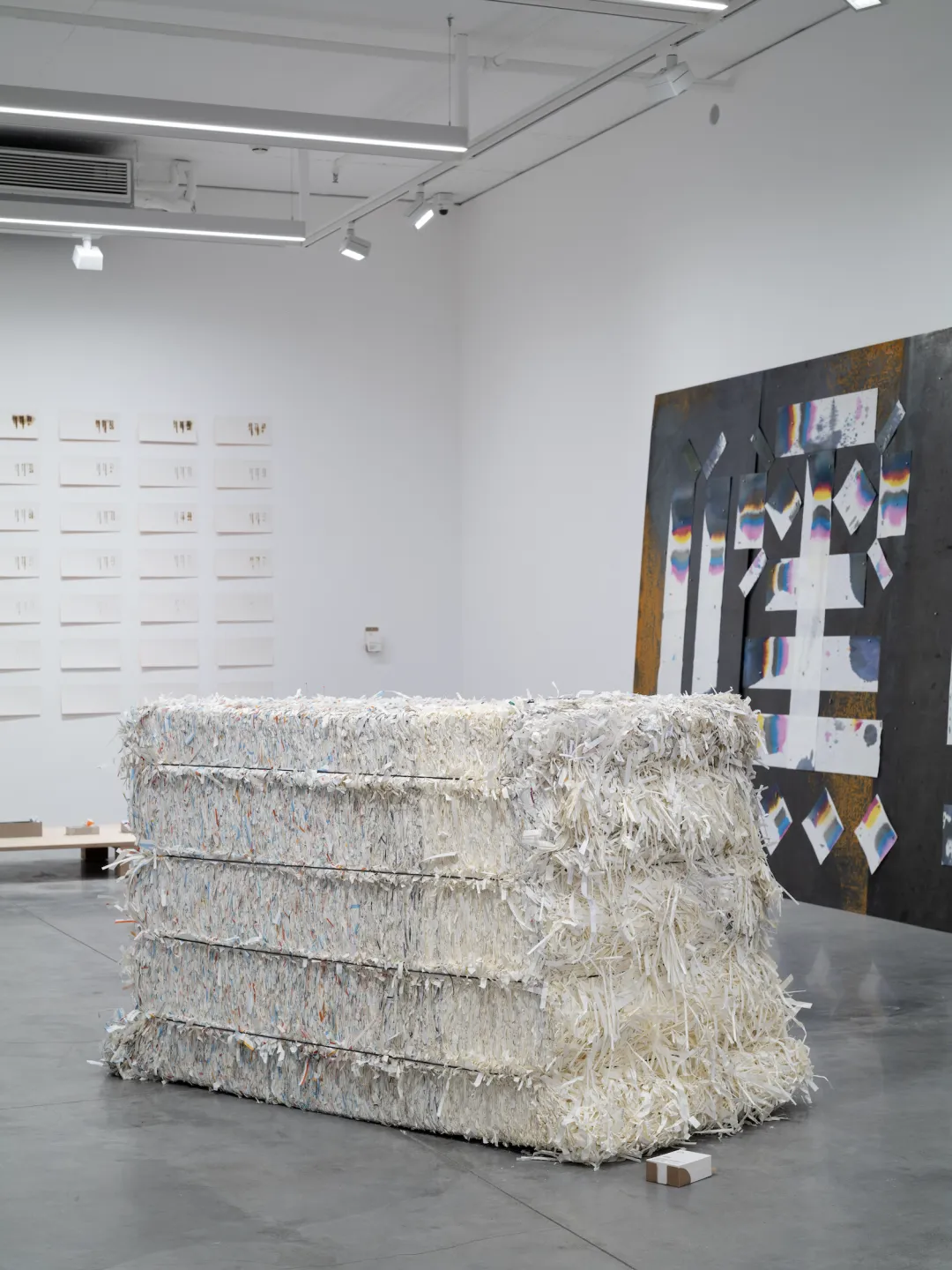
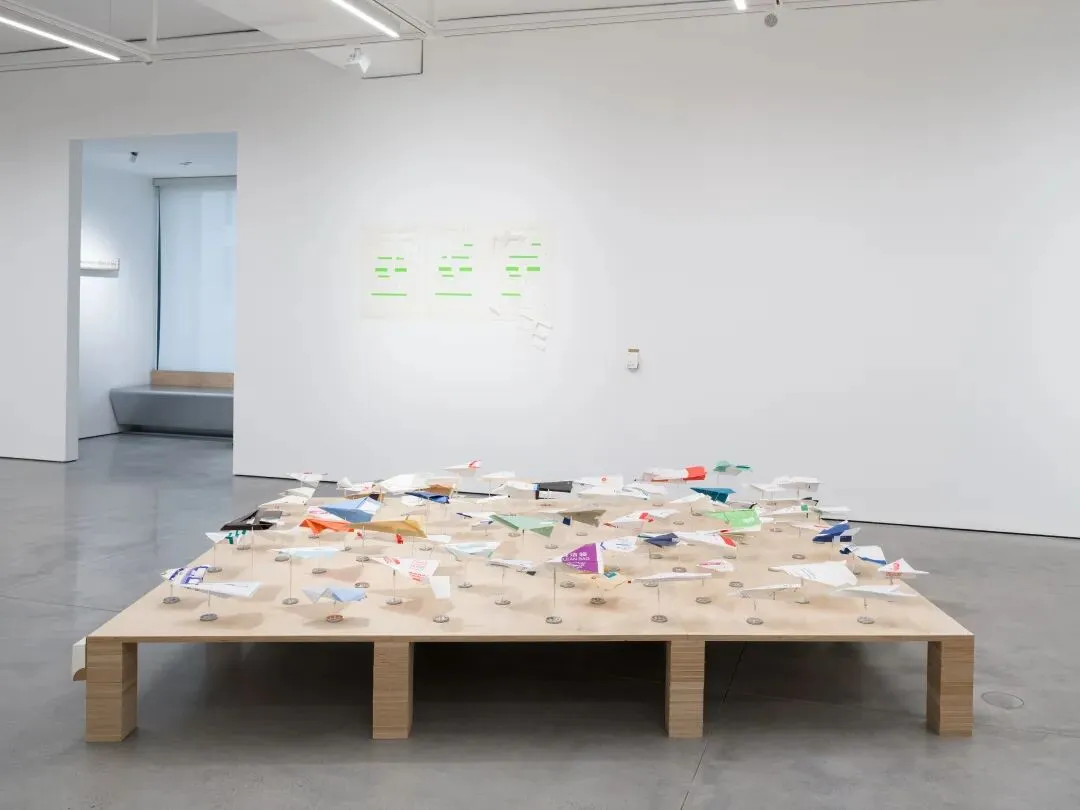
参展作品 Exhibited Works
摄影来自参展艺术家
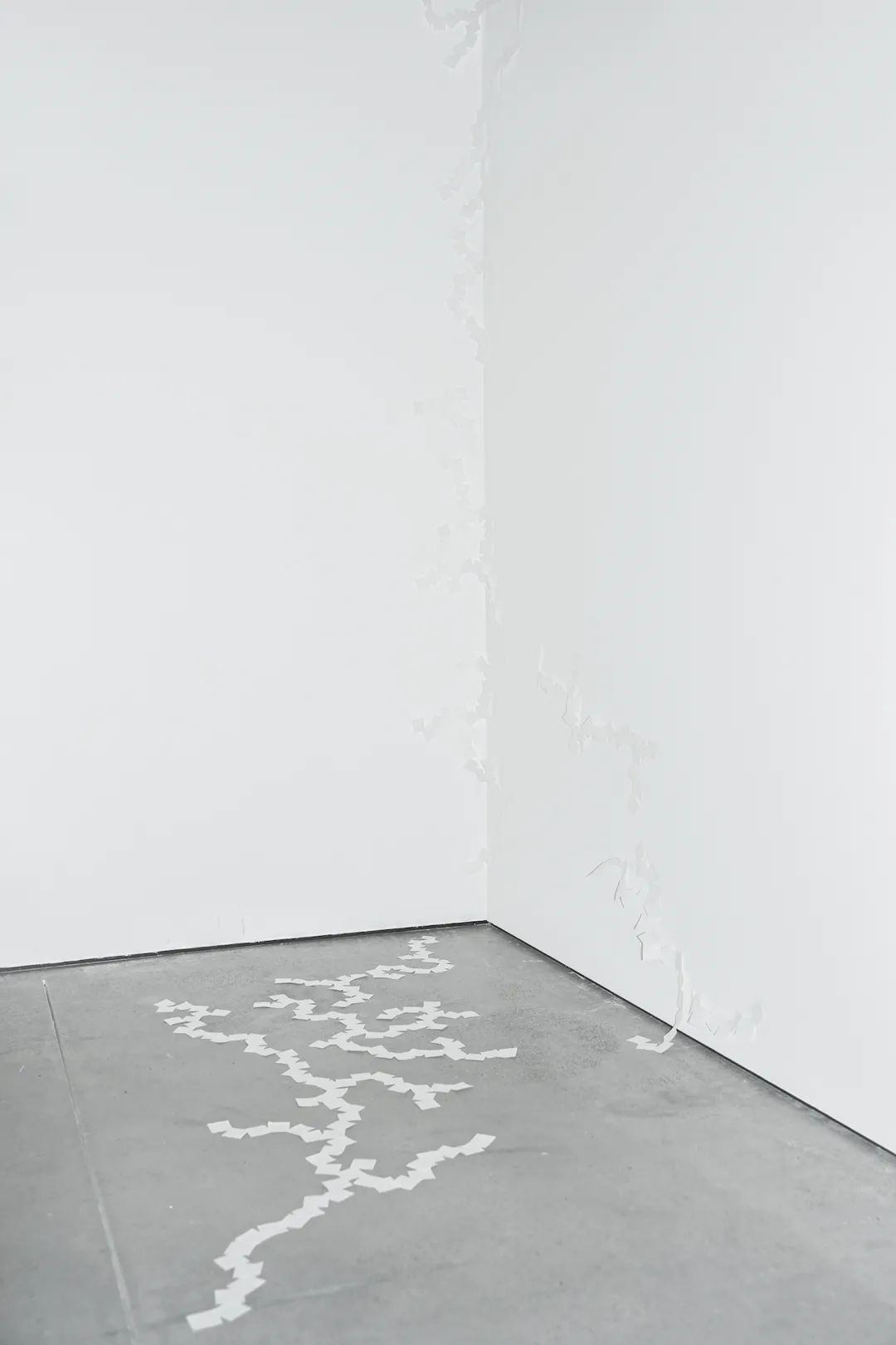
建筑折角的位置,外墙原本是一处无人在意的风景。夏季的某一天绿色从窗户跑进来,在毫不知情的时候墙上爬满了藤蔓,它们贴着一面墙,几乎成为了墙体的主角。最近,打开窗户往外看去,藤蔓又消失的无影无踪。仿佛从来没有出现过。
这些藤蔓从哪里来?什么时候会生长?什么时候又会消失不见?好像它的出现就是为了某一段时间,某一个适合生长的场所。
这样不起眼,匍匐在角落里,哪怕留意到也容易被遗忘的生存方式,或许正是它的主体性。
在思考“余料”这一主题的同时,我们也在思考创作如何与空间建立关系,它属于特定的空间、特定的周期,不是作为材料的附属品,而是有独立的生命曲线,继续延长、生长。
At the corner where the building turns, the exterior wall was once an unnoticed part of the landscape. One summer day, a patch of green appeared outside the window. Before anyone realized it, vines had spread across the wall, clinging to its surface and almost becoming the main presence of the façade. Recently, looking out of the same window again, the vines are gone, as if they had never been there.
Where did they come from, and when do they begin to grow? Their presence seems to belong only to a particular moment, and to a place where growth briefly becomes possible.
It belongs to a specific site and a particular cycle of time, following its own trajectory of life—extending and growing rather than functioning merely as a by-product of material.
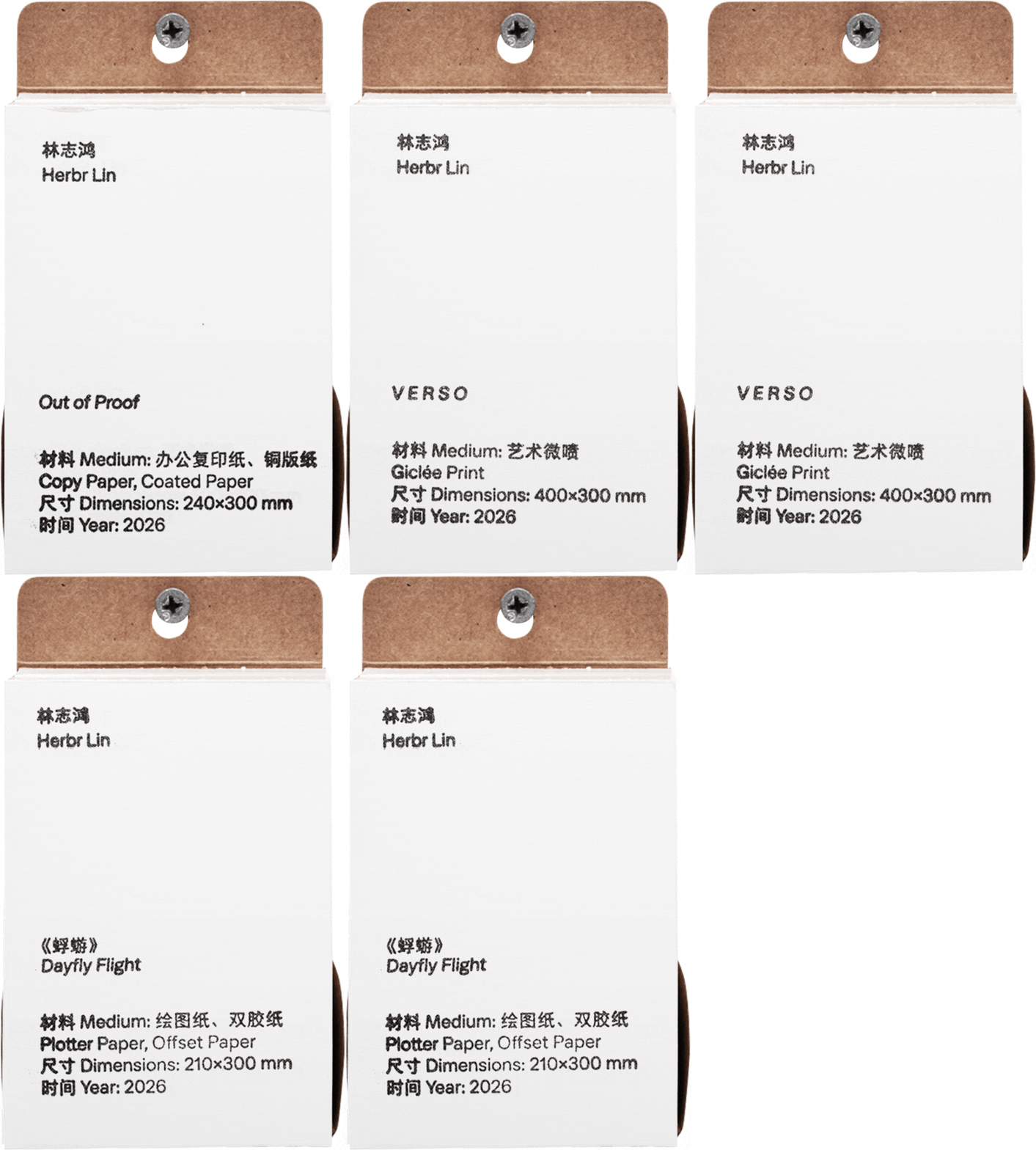
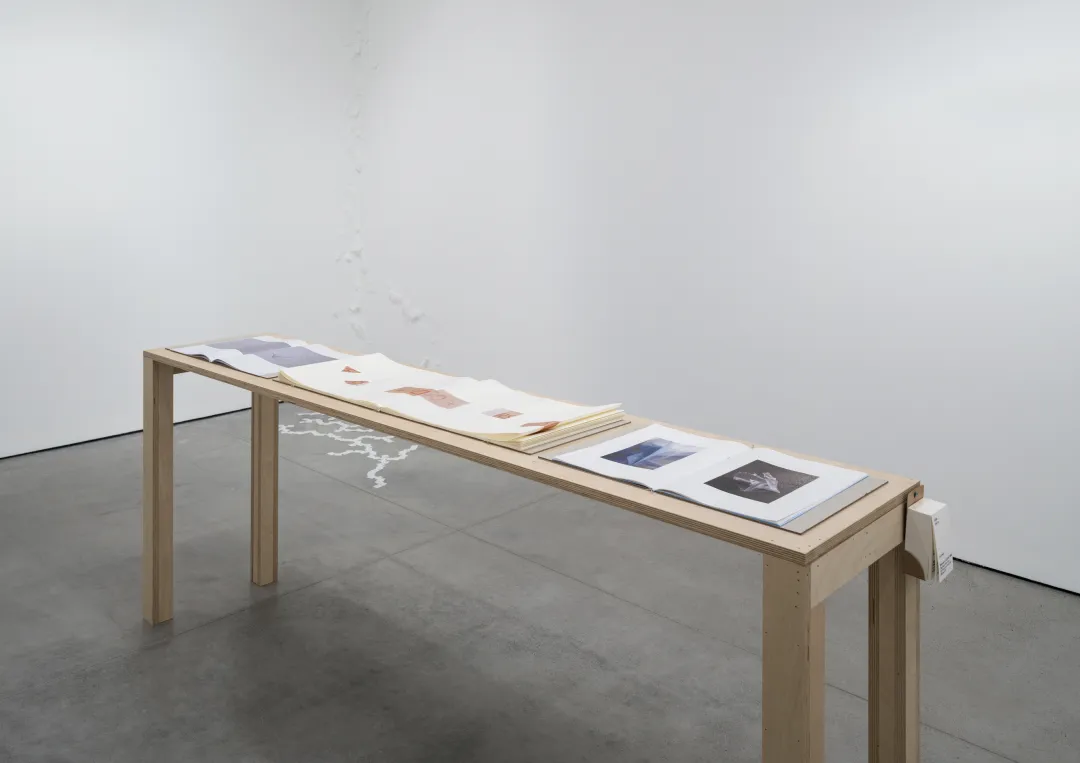
我试图通过三本艺术书,探讨余料的新生及其生命周期。
I attempt, through three art books, to explore the renewal and life cycle of leftover materials.
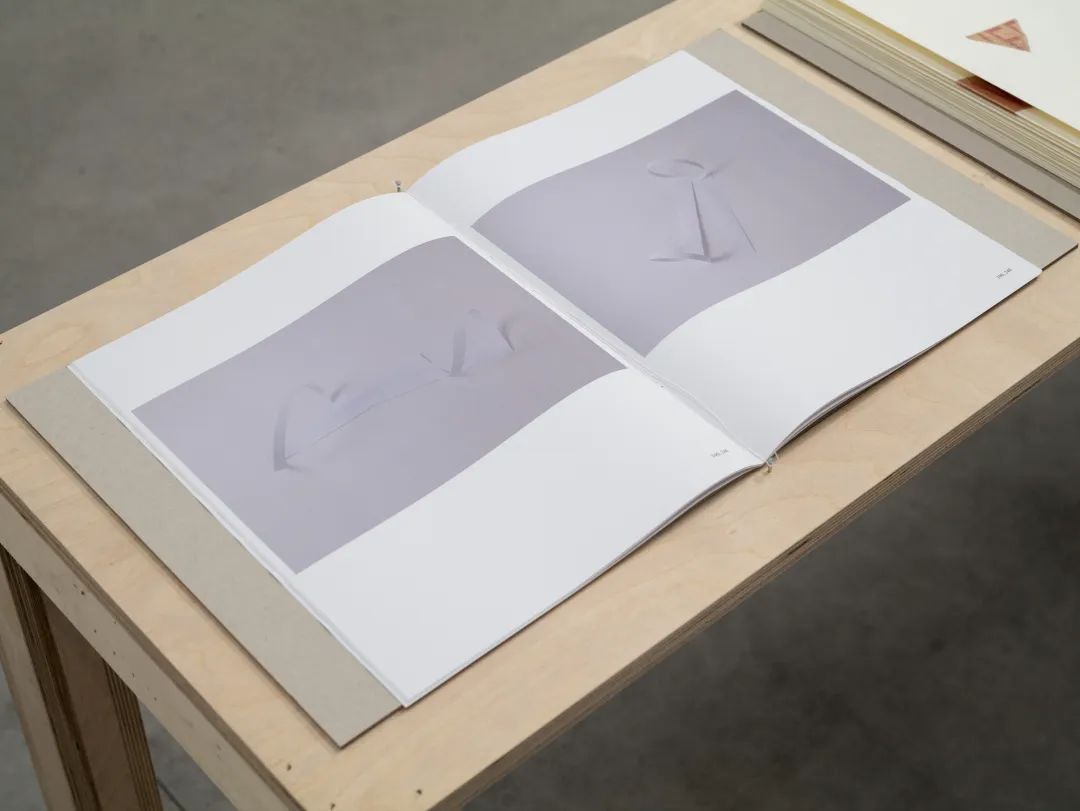
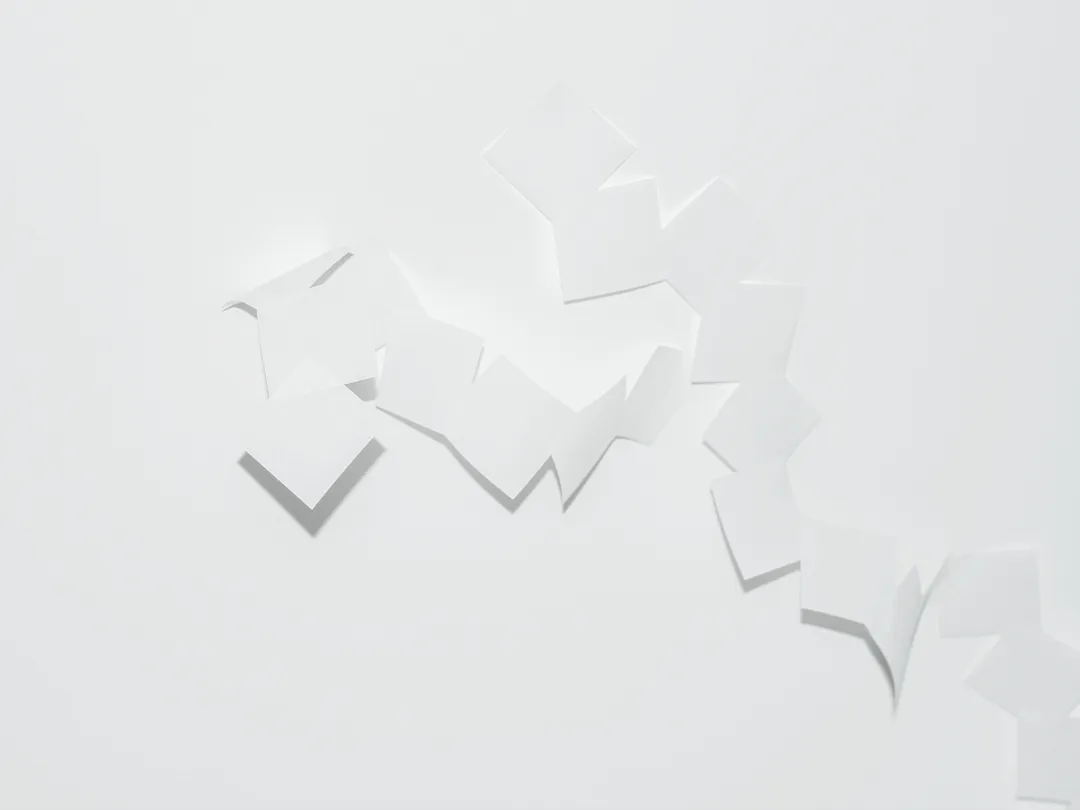
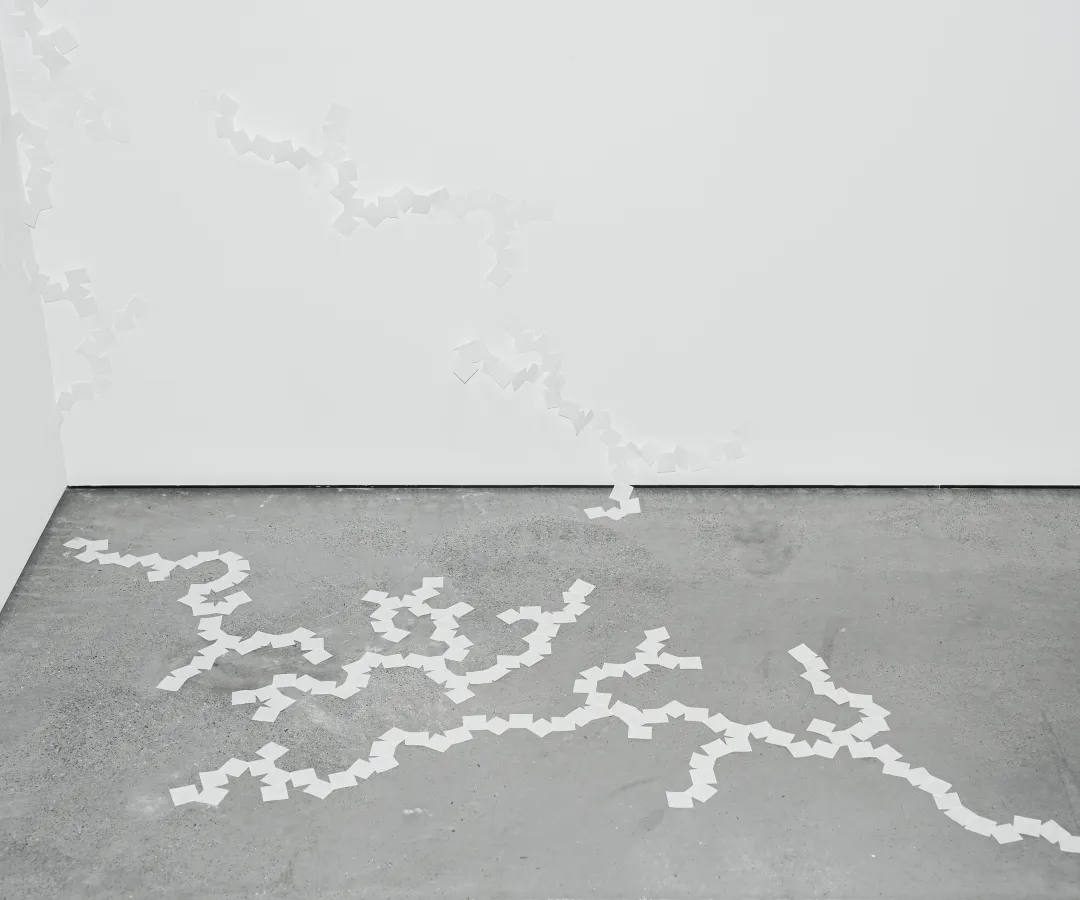
Out of Proof:以日常打样后裁切产生的纸张余料为材料,在纸张自身张力的基础上,通过简单造型,使其呈现出新的观感。平面镂空的部分,构成了一种不稳定的空间形态。
Out of Proof: This art book is composed of photographs capturing the state of paper offcuts produced during the trimming process after everyday proofing. Relying on the paper’s inherent tension, simple forms are introduced to create new visual experiences. The hollowed areas of the flat surface generate an unstable spatial configuration.
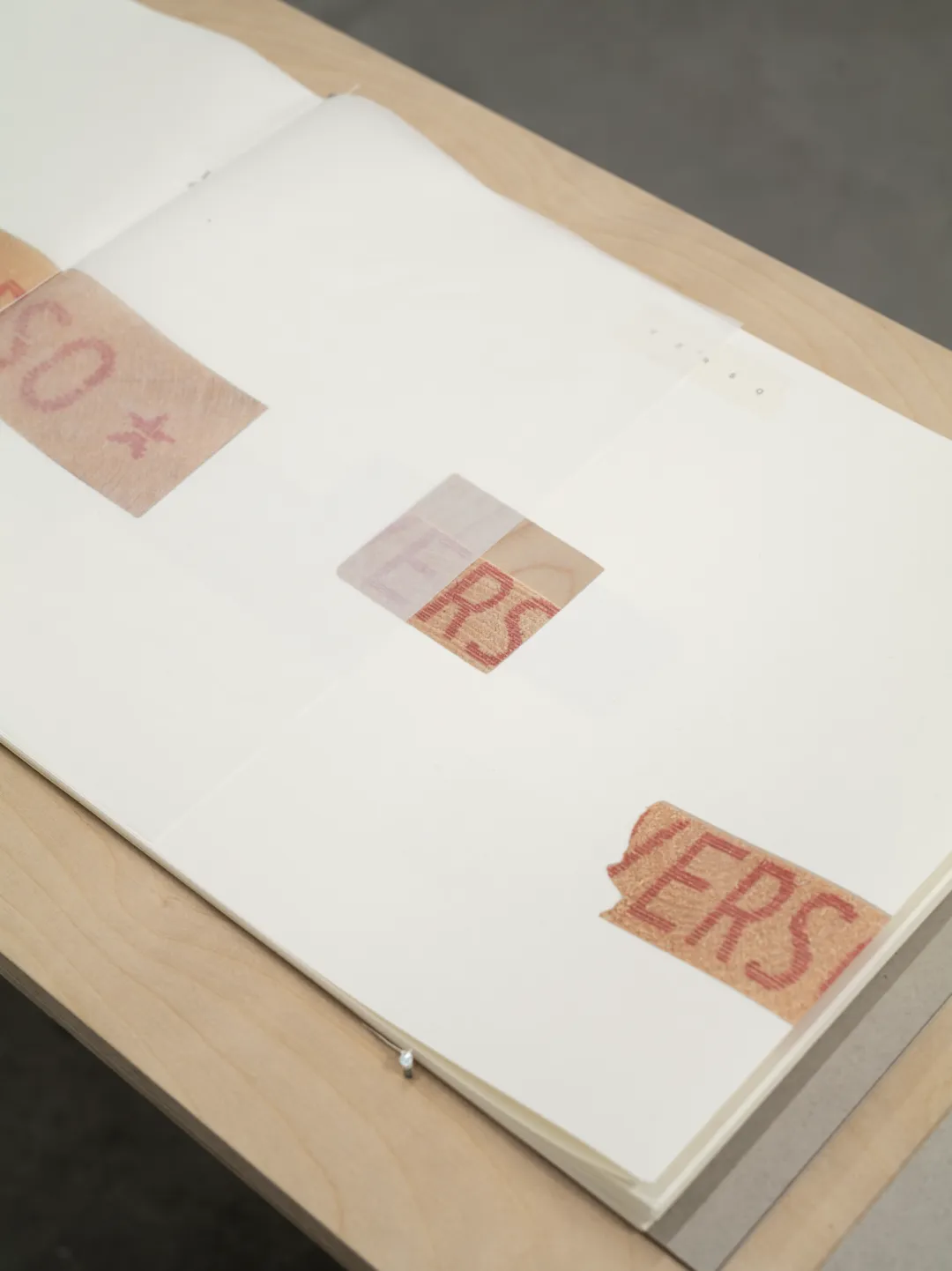
V E R S O:木料余料上的字标,因材料内部和外力施予的差异,生成形态不一的碎片。通过对这些碎片的编辑与排列,构建出往复与更迭的动态痕迹。
V E R S O: Letter markings on leftover wood pieces fracture into fragments of varying forms due to differences in the material’s internal structure and external forces applied to it. By editing and arranging these fragments, a dynamic trace of repetition and transformation is constructed.
V E R S O 缘起于许珂和第一芬兰松馆基于“木”与“纸”的思考与转译,Verso 既是芬兰松木的品牌名,也指代书本的“左页”或纸的“背面”。
V E R S O originates from the reflections and reinterpretation of “wood” and “paper” by Ke Xu and No.1 House of Finnish Pine. “Verso” is not only the brand name of Finnish pine, but also refers to the left-hand page of a book or the reverse side of a sheet of paper.
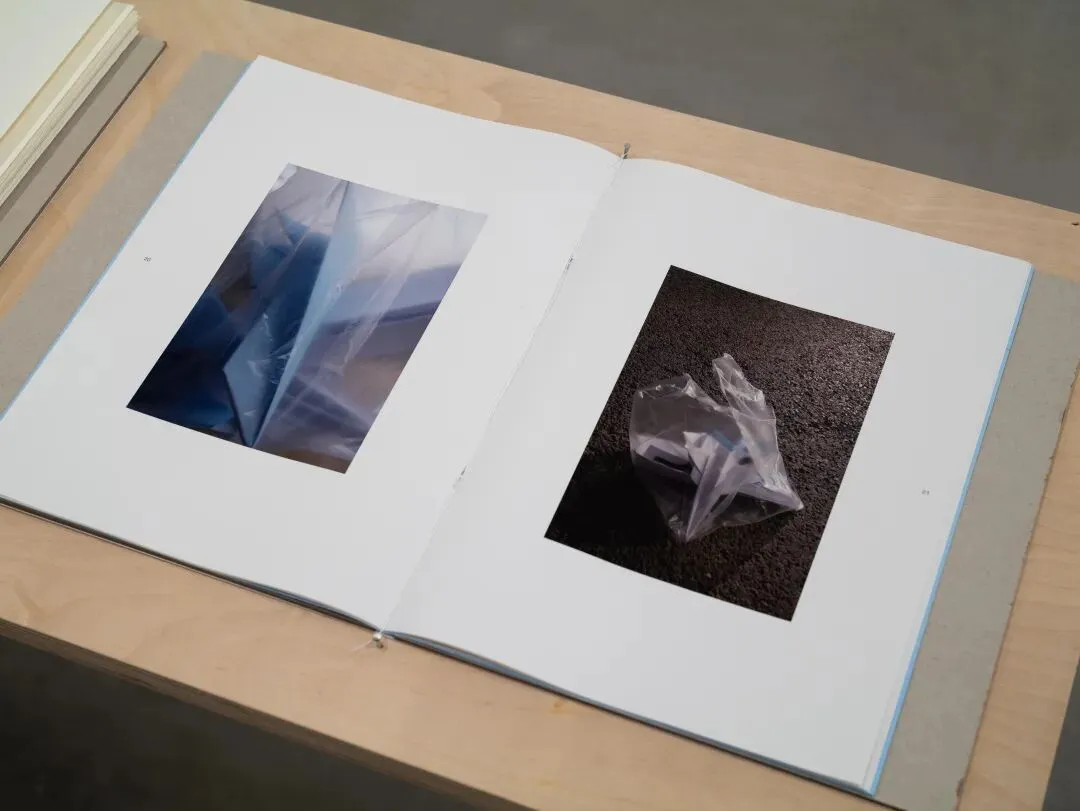
蜉蝣:将设计打样所用的工程纸折叠成纸飞机。纸飞机由我的外甥完成折叠,我记录下其飞行的过程。余料纸张折叠的层次,与纸飞机的飞行记录,共同完成对时间与瞬间的捕捉。
Dayfly Flight: Plotter paper used in design proofing are folded into paper planes. The paper planes are folded by my nephew, and I capture their flights. The layered folds of the leftover paper, together with the photos of the paper planes, capture both time and fleeting moments.
这些艺术书既是材料实验,也是对生产余料的一次重新书写。
These art books function both as material experiments and as are-inscription of production leftovers.
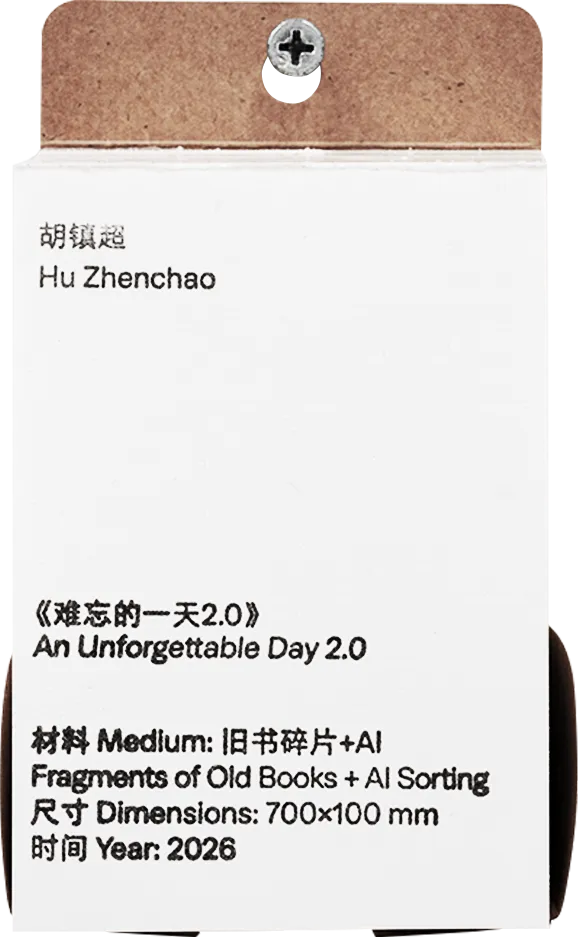
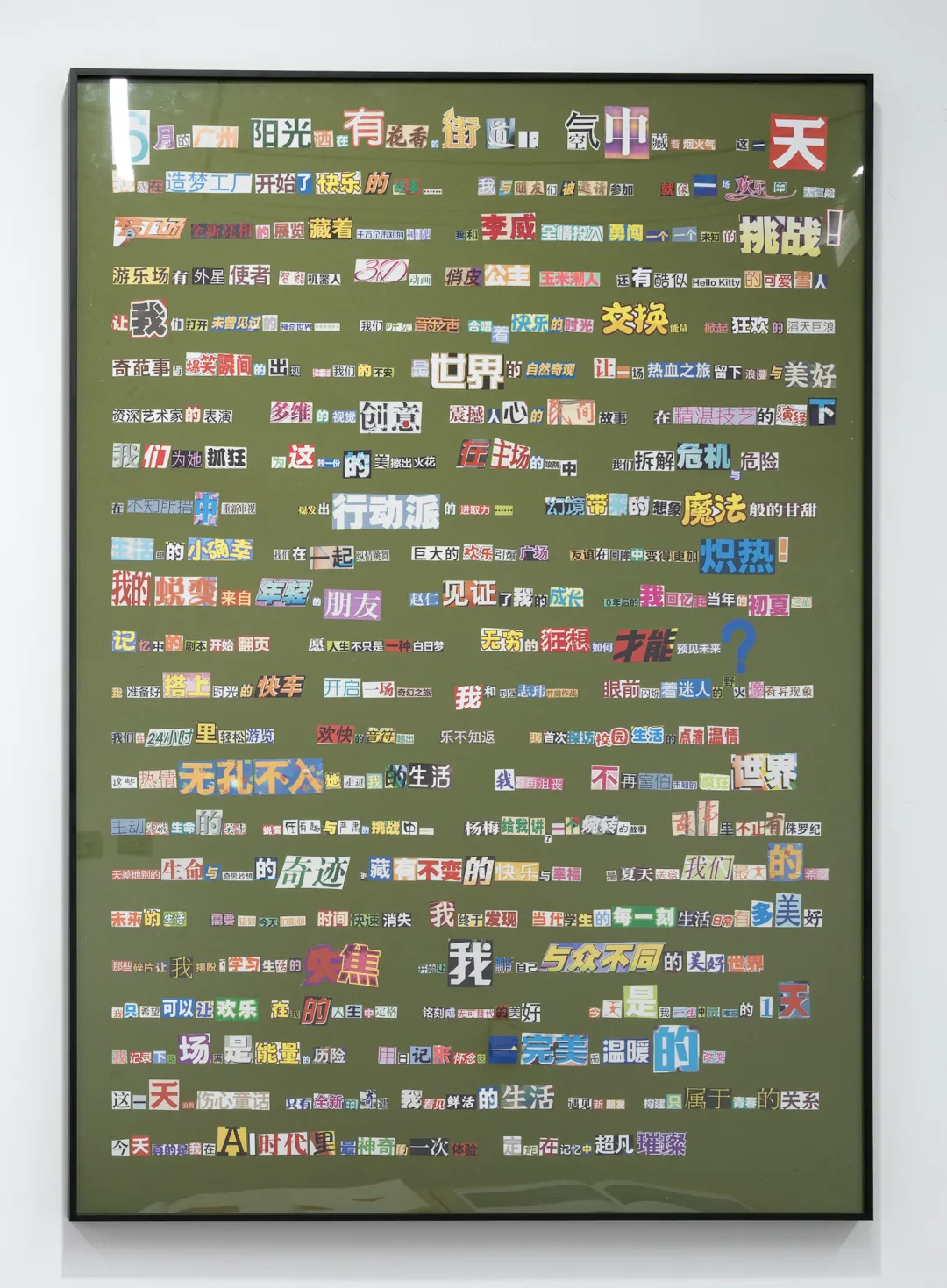
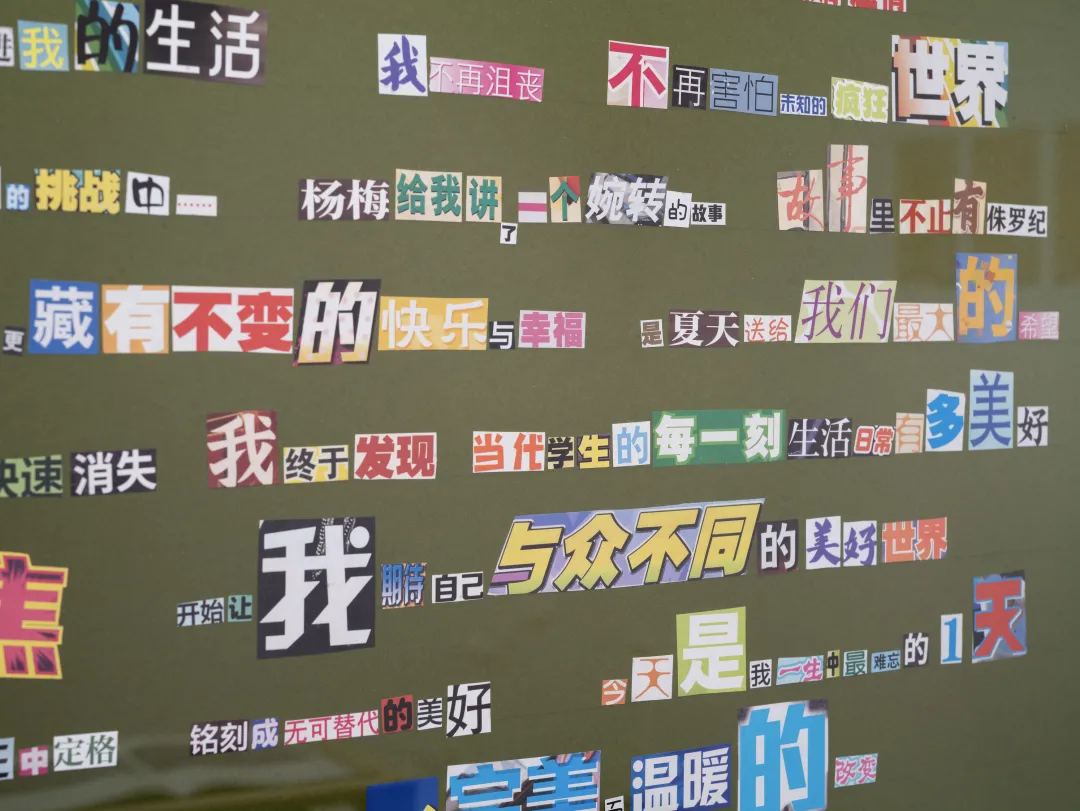
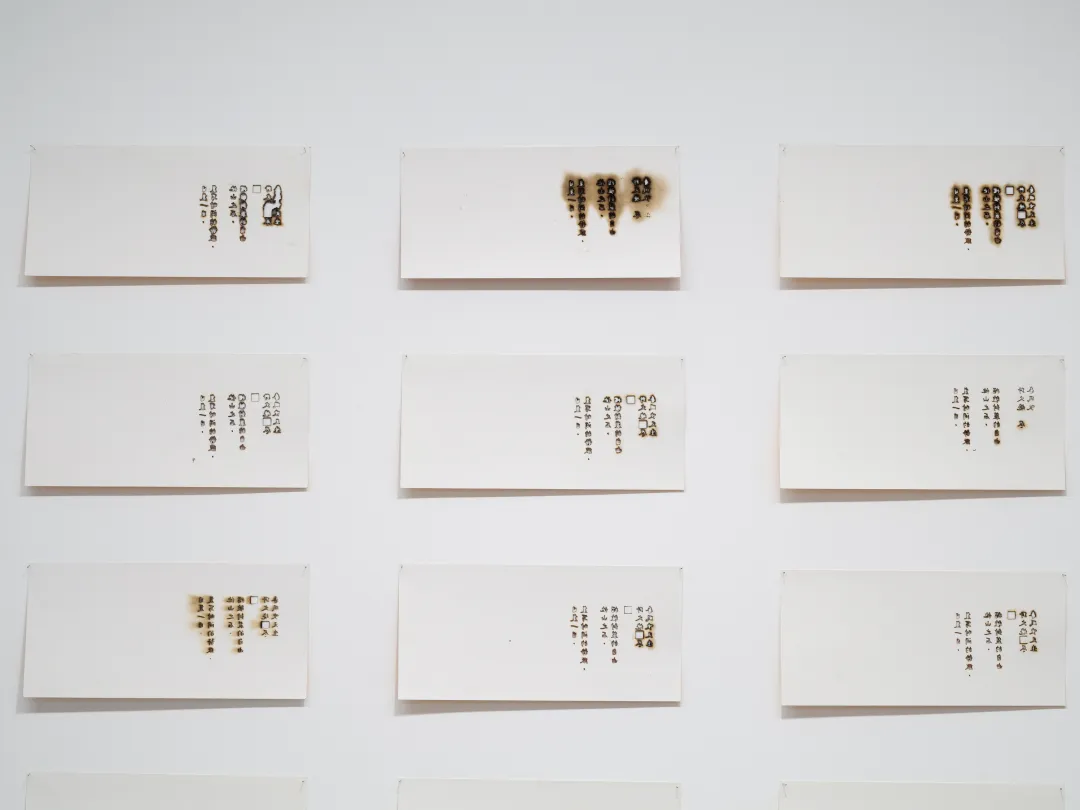
在印刷厂的角落,发现一堆蒙尘的杂志、企业刊物、产品说明书、菜谱……剪下这些曾被设计过的词汇,利用AI为它们从新排序,组合成一篇“新”的文章。
过往的意义随着时间消亡,AI让其焕发新春,但都似曾相识,循环往复。
In the corner of a printing factory, a pile of dusty magazines, corporate publications, product manuals, recipe books and other printed materials were discovered. Words that were once carefully designed are cut out and rearranged by AI to form a “new” text.
The original meanings fade with time, yet AI breathes new life into them, resulting in something familiar and cyclical.
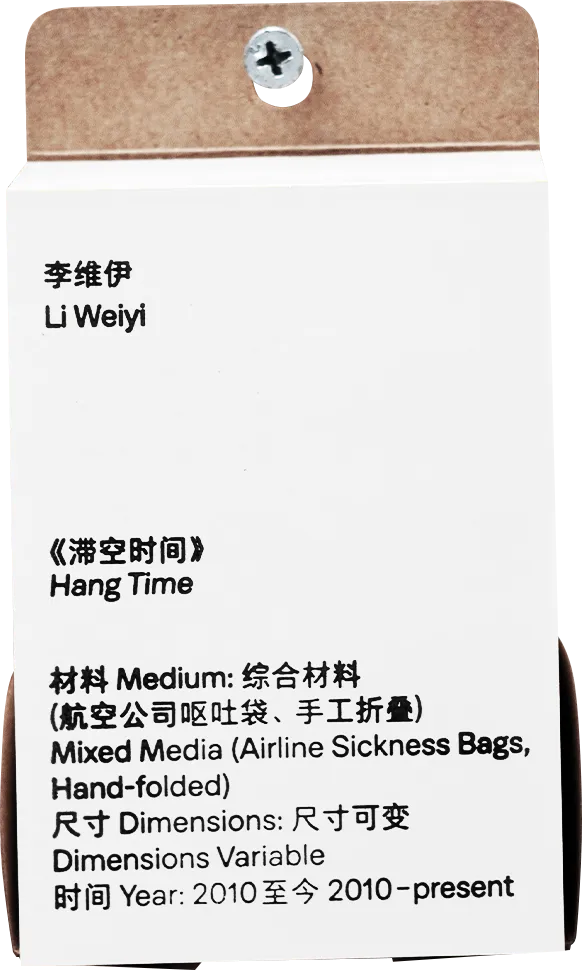
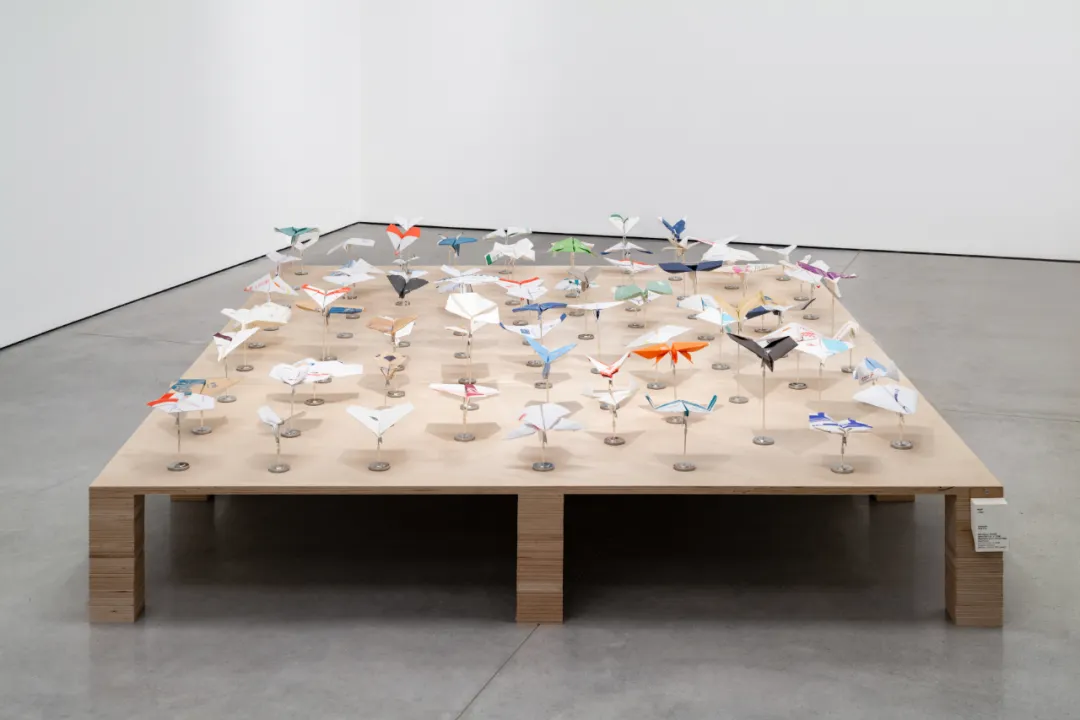
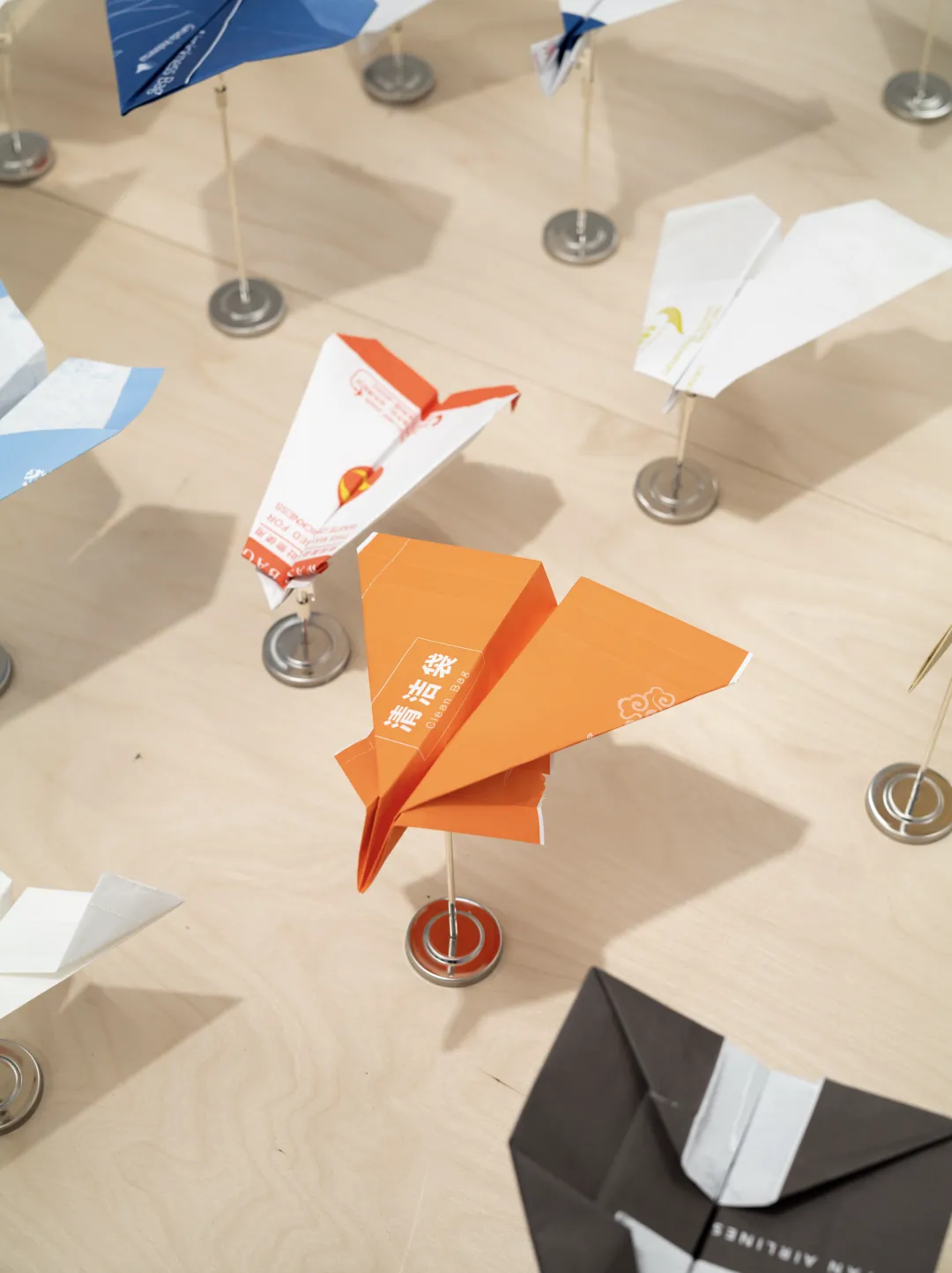
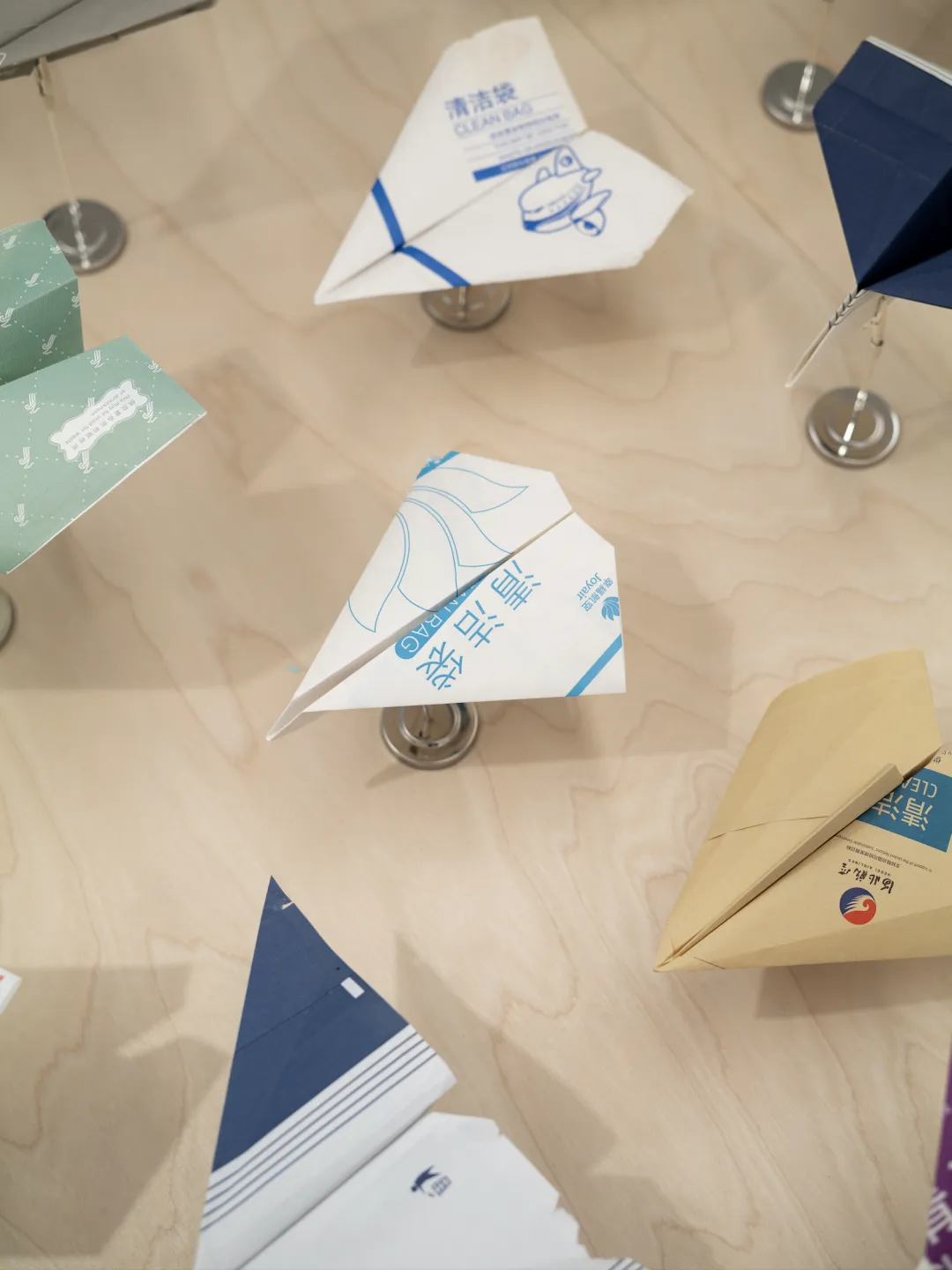
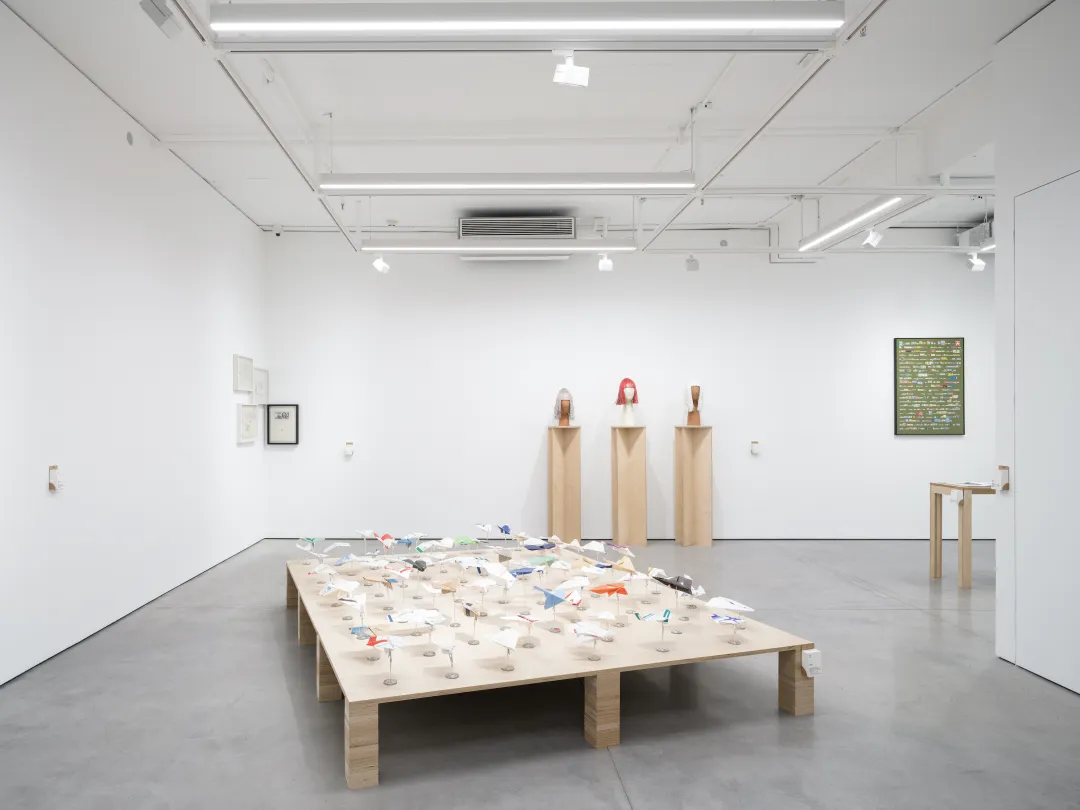
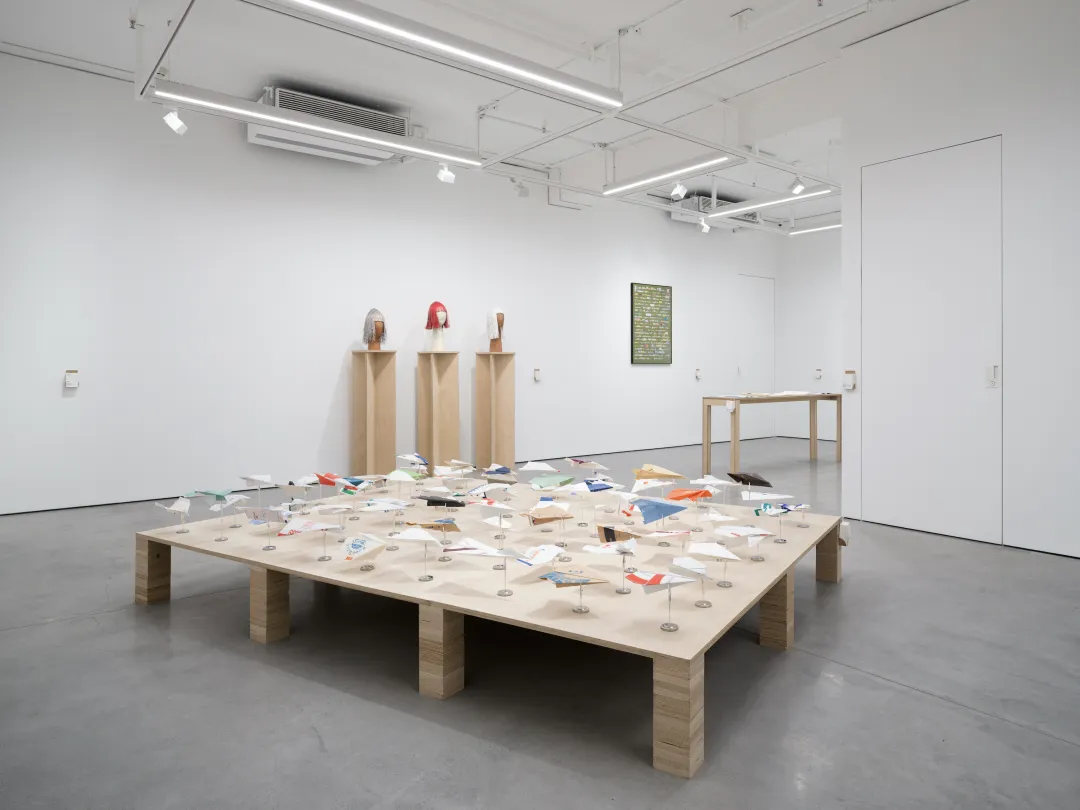
在纸飞机的游戏与竞赛中,「滞空时间」指的是飞行器在空中停留的时长——停留得越久,便被视为一次更好的飞行。在这件作品中,这个原本用于衡量飞行的术语,被转用来指向另一种停留:那些需要频繁差旅的劳动者,于飞行途中被滯留在机舱内的时间。
这段时间既被工作占用,又通常不被视为劳动本身。狭小而拥挤的经济舱内,人们缩紧身体,借助电影、购物手册中的数独,或短暂的睡眠,捱过这段无法中断的移动时间。艺术家正是在一次次飞行途中,借助翻折而下的小桌板,将航司发放给每一位乘客的呕吐袋折叠成纸飞机。在一种被迫停滞的状态中,制造出一个个极小尺度的飞行模型。
这样的情境下,折叠是一种顺理成章的动作。人们常会无意识地用手去折叠、撕扯或涂画随手可得的纸制品,以对抗无聊与等待。那些印着不同航司标识的呕吐袋,本是为高空中可能出现的不适而准备,在这里却被折叠成各自航司的「迷你飞行器」。当这些纸飞机被不断积累、并聚集呈现时,它们既构成了全球航空系统的缩影,也清楚地指出了一种被制度性忽略的剩余时间。
In the context of paper airplane games and competitions, ‘hang time’ refers to how long the airplane stays airborne—the longer the flight, the better it is deemed to be. In this project, however, the term is repurposed to signify a different kind of stay: the time spent by frequent business travellers confined inside aircraft cabins during their journeys.
This period is claimed by work yet rarely recognised as labour itself. Cramped in narrow economy-class seats, passengers hunch their bodies and endure the uninterrupted hours of transit with in-flight movies, Sudoku puzzles from shopping catalogues, or brief naps. It was precisely during such flights that the artist, using the fold-down tray table in front of them, transformed the airline-issued airsickness bags into paper airplanes. In a forced state of stasis, the artist created the most minimal flight models.
In such circumstances, folding becomes a logical act. People often unconsciously fold, tear, or doodle on whatever paper is at hand to combat boredom and waiting. Those airsickness bags, printed with different airline logos and originally prepared for potential discomfort at high altitudes, are here folded into ‘mini aircraft’ representing their respective airlines. As these paper airplanes accumulate and are presented collectively, they not only form a microcosm of the global aviation system but also clearly highlight a type of residual time that is systematically overlooked.
摄影来自参展艺术家
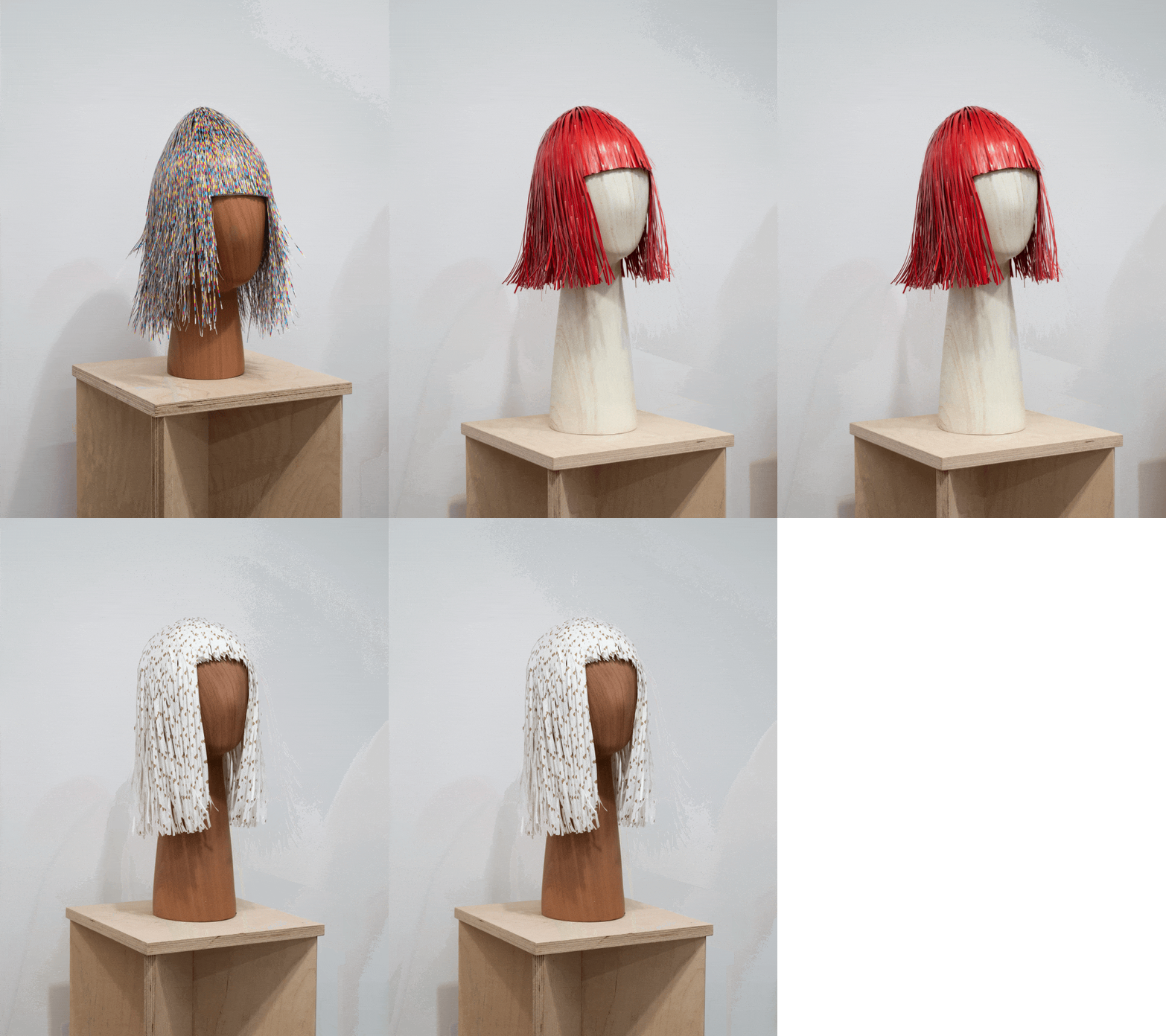
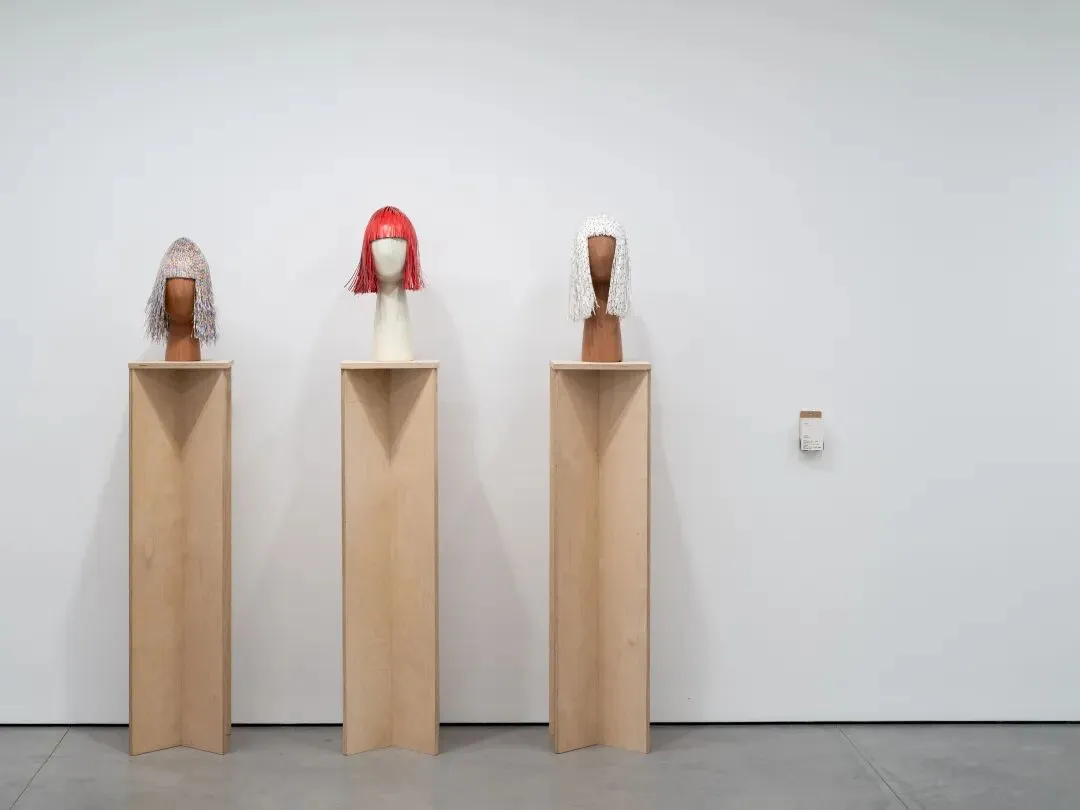
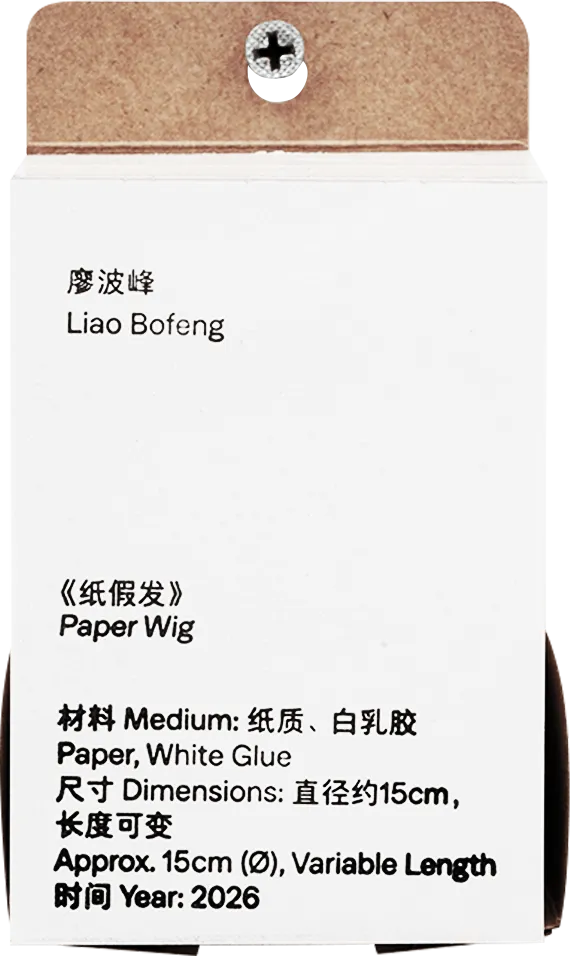
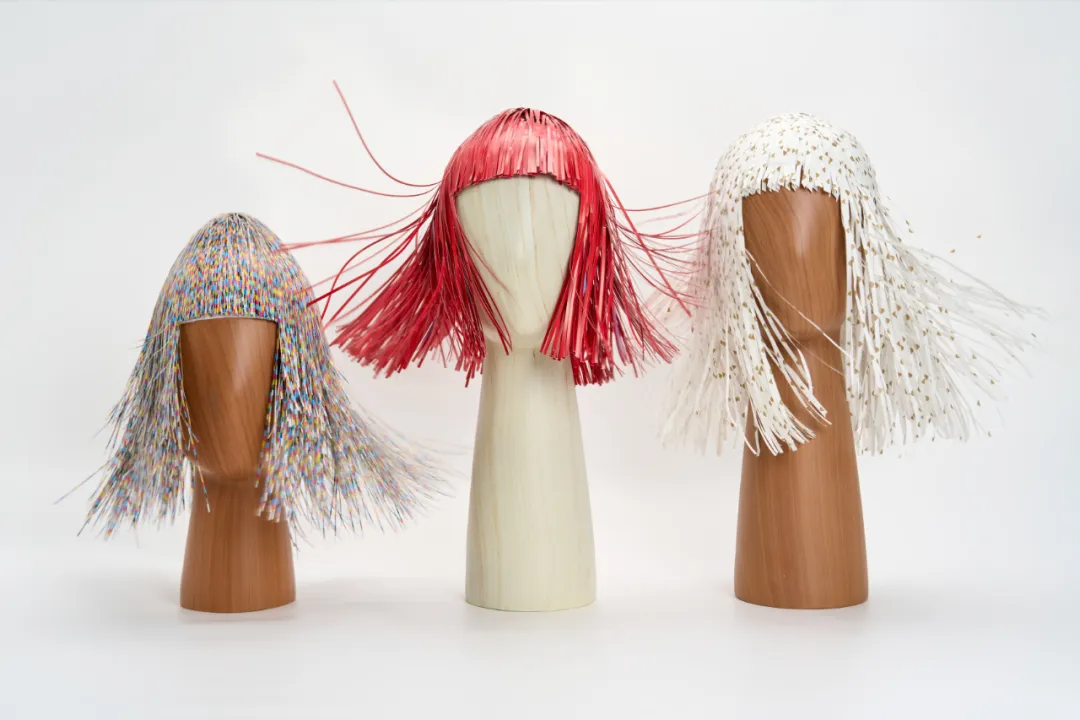
这些纸条,是印刷品在裁切工序后的“边角余料”。我将它们收集起来,用白乳胶一条条手工粘合、叠加,制成一顶假发。由此,工业裁切后的“废纸条”与日常梳妆的“发条”产生了一次幽默的关联。每一次裁切,纸条的粗细、纹样都充满随机性,正如每个人的发丝都独一无二。这不仅是对废弃物的重塑,更是对标准化生产之外,那些“意外之美”的致敬。
These paper strips are the “leftovers” from printing trims.I collected them, layering and bonding each strip by hand with white glue to form a wig. Here, the discarded “paper strips” playfully connect to the idea of “hairsprings.”Every trim yields strips of varying widths and patterns, much like our unique strands of hair. This piece is not just a re-creation of waste, but a tribute to the unexpected beauty beyond standardized production.
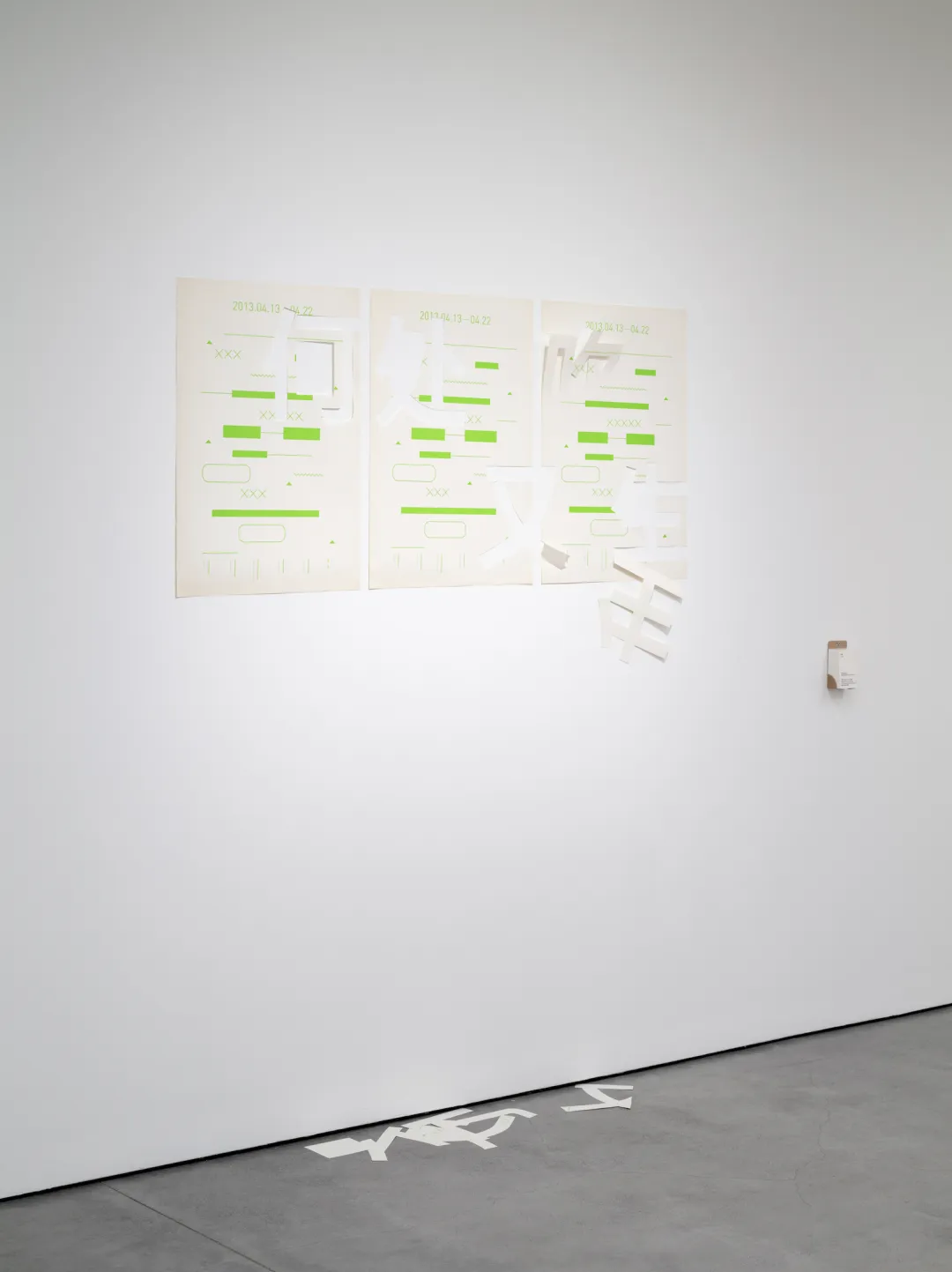
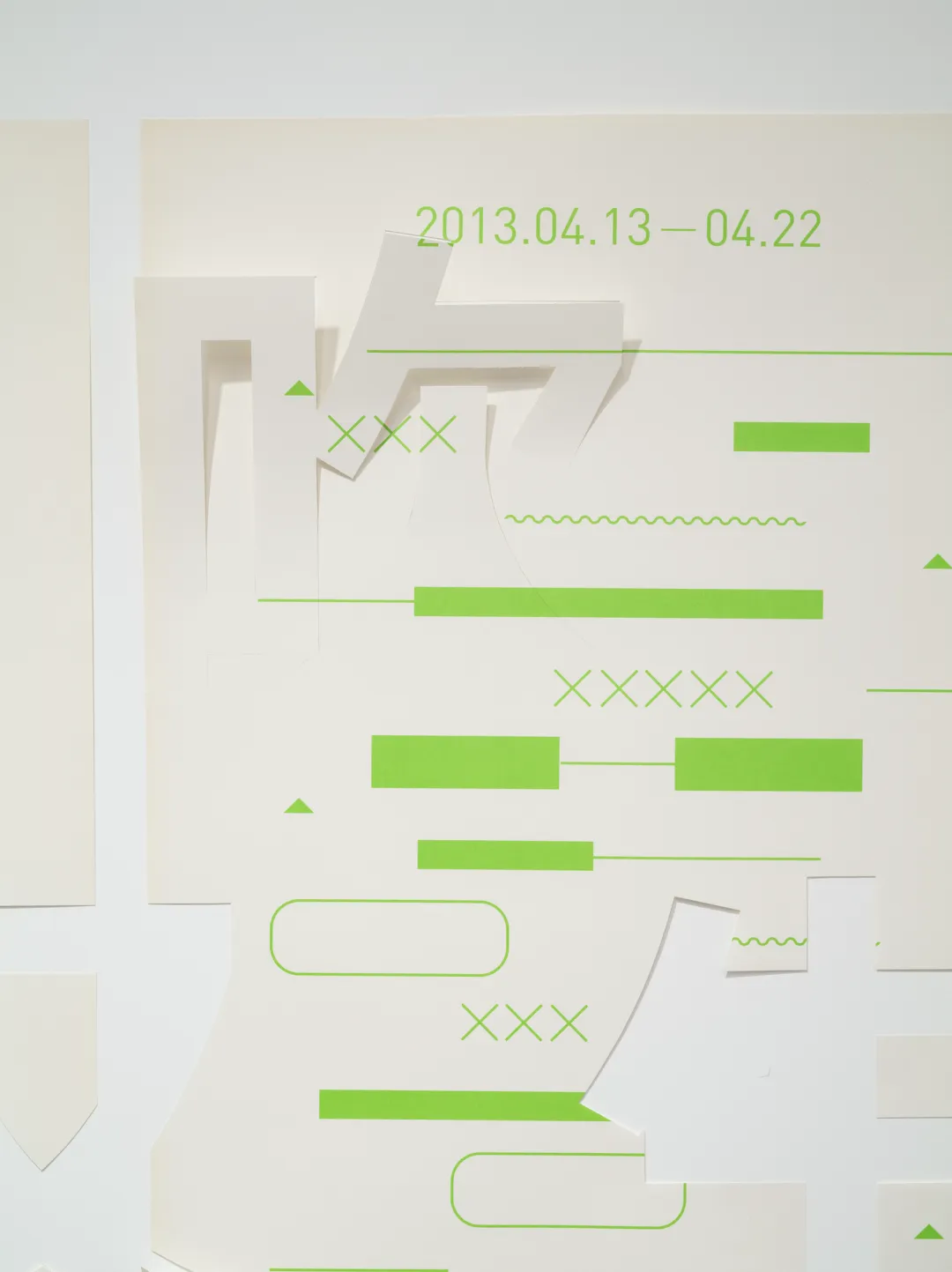
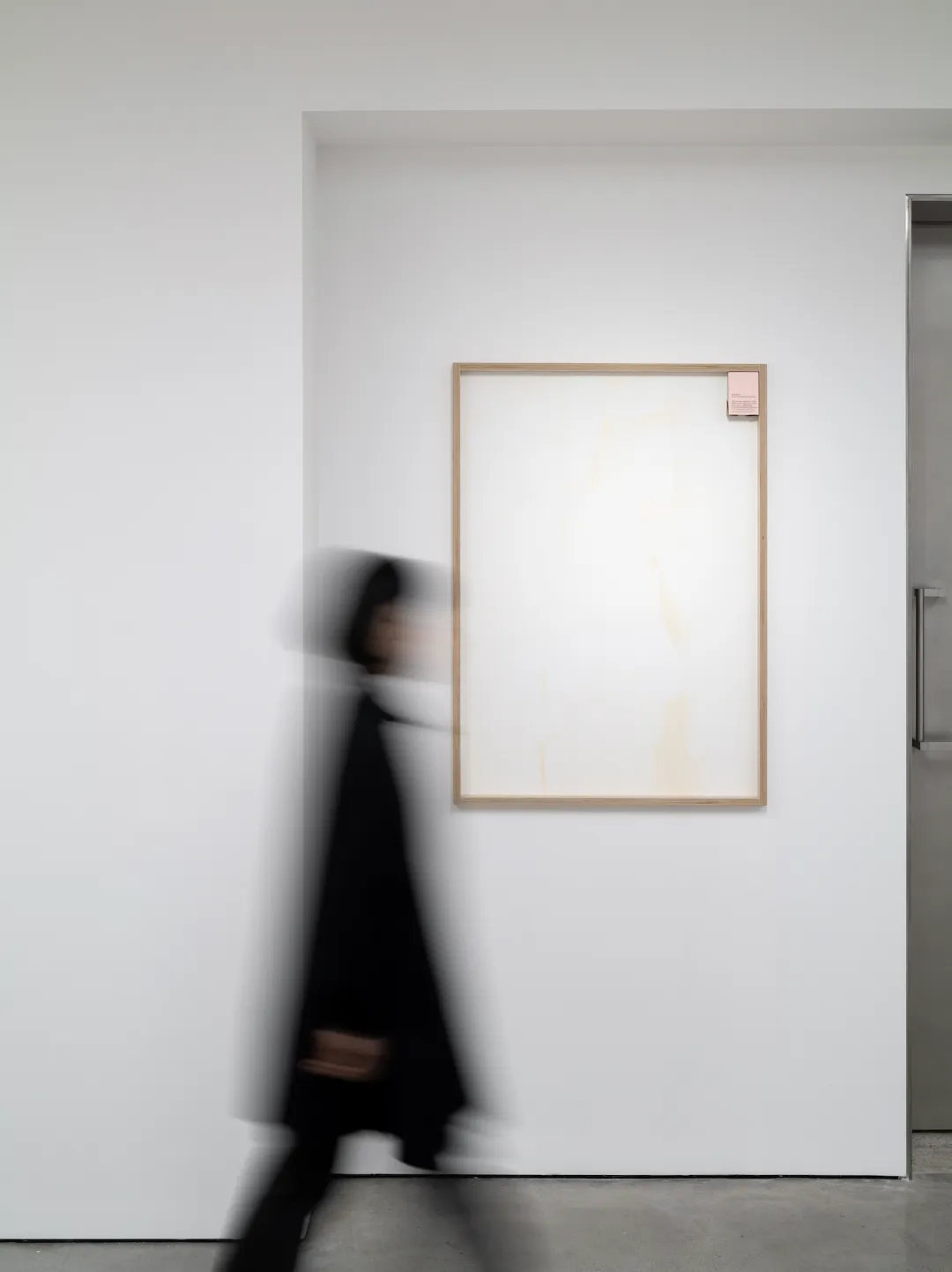
将上一季的“春风”(2013)过后的海报底纸再度操刀吹拂,于是生成了第二季。
The poster base paper used for the previous season Daily Color (2013) was revisited and reworked, thus giving birth to the second season.
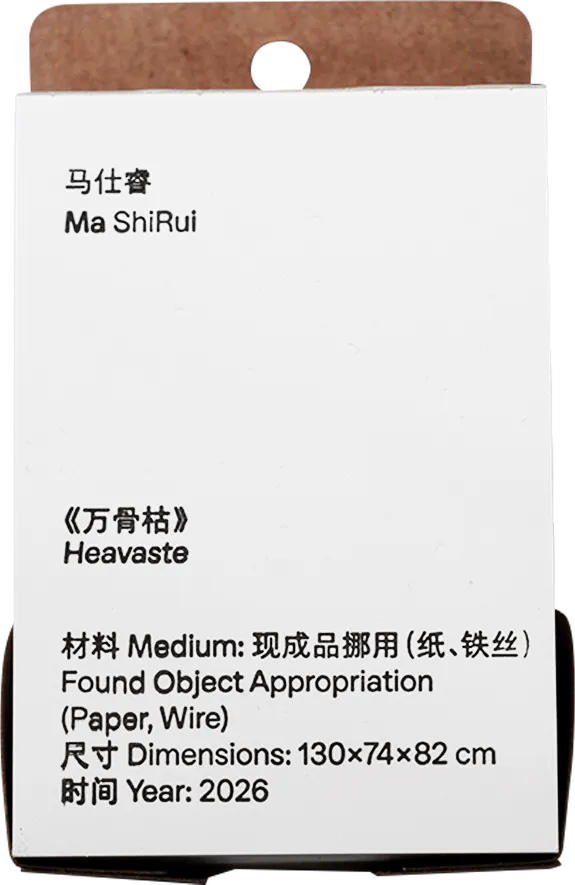
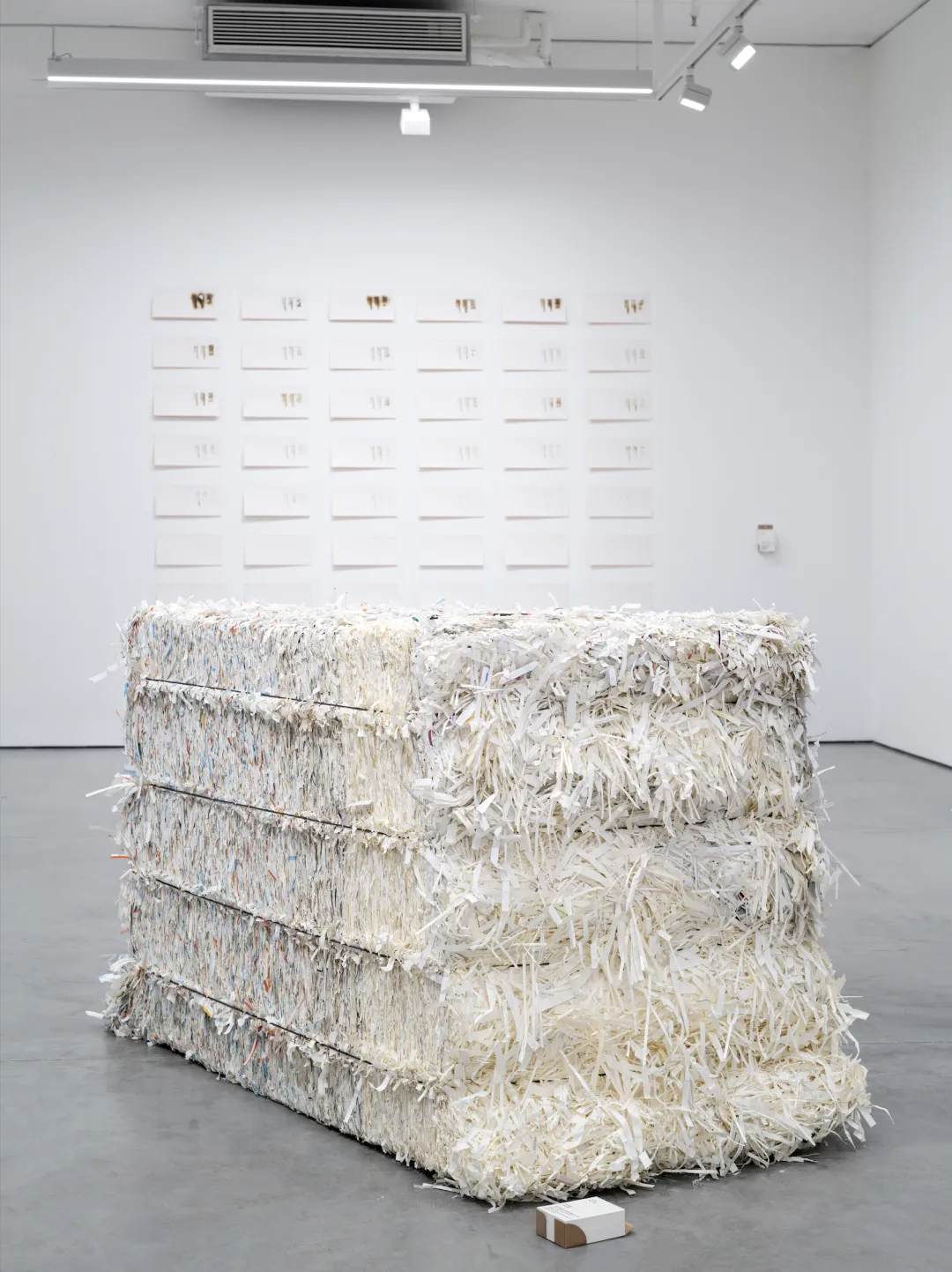
我曾经在东京银座二丁目的小巷里见到过一间小小的印刷厂,我怀疑那里或许只能承接一些凸版印刷的工作。即便如此,在一座现代化都市的核心商圈内能保存一间以机器生产的印刷工厂,还是令我觉得十分魔幻。
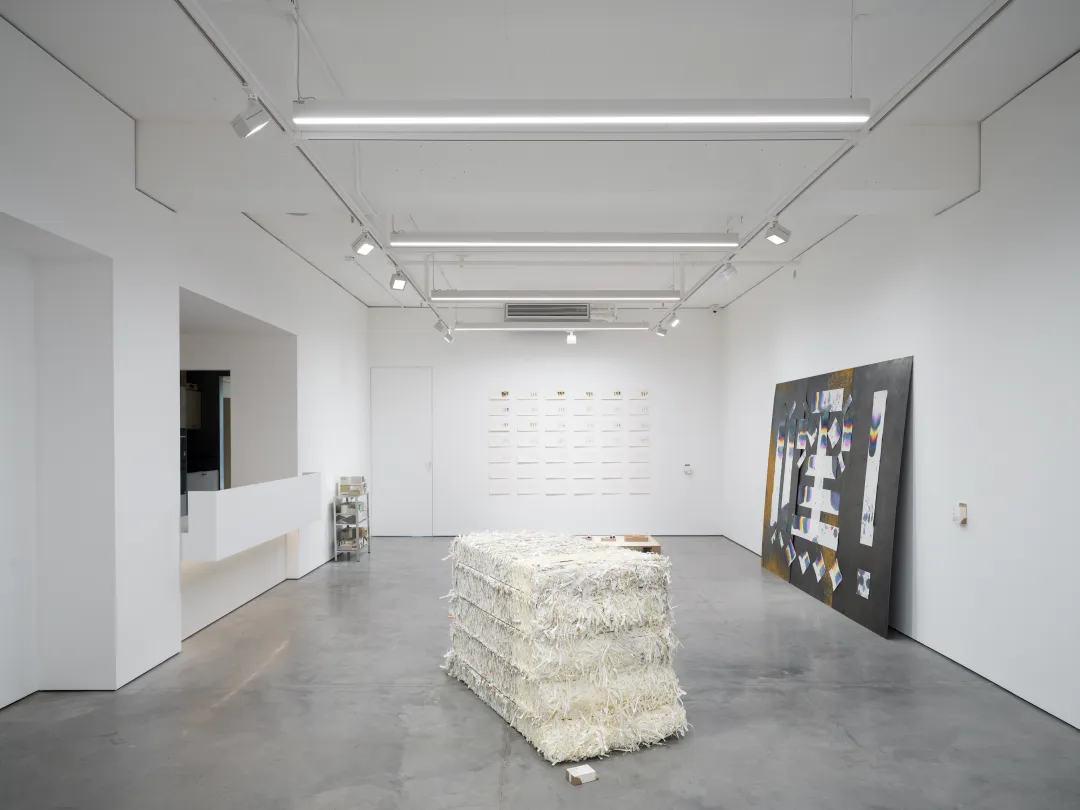
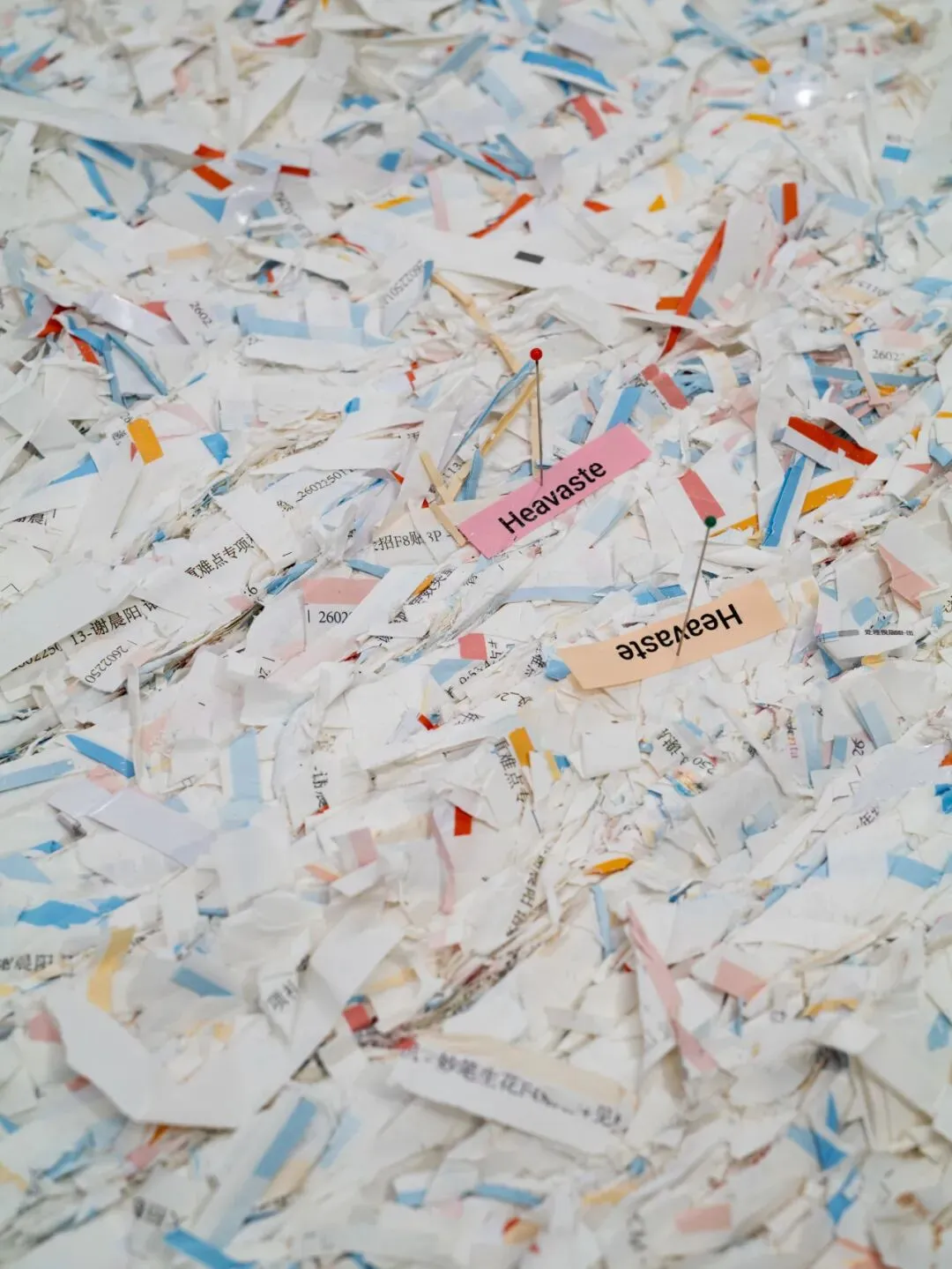
现代化的印厂早已配置了大量机械化的环保装置。在 SD (T) P 的车间上空,常见到直径半米左右的管道,这些管道将不同环节裁切下来的纸边依靠风力抽吸至车间外的一个小厂棚,在这里,机械装置直接将纸碎挤压成块,等待统一回收。这些纸碎形成的立方体有着随机生成、却又极具特征的表面肌理,每一个单元的重量在 400 公斤左右 —— 沉重而又静谧,拥有着与帕特农神庙石柱般的史诗感和悲剧色彩。当我看到这些堆积的纸块时,我推翻了之前的所有想法,我只想把它们带到展览的现场。
这个行为将会撬动它的命运:在作为生产材料进入印刷车间后,它们在生产过程中因工艺的需要被取舍、裁切,然后被统一收集并贩卖回造纸厂,再度被打散重制为纸浆,等待又一次成为纸张。
展示它,便是在这个循环中插入了一个多余的环节,让这些原本应该隐匿在印刷成品背后循环的角色,走上一个被注视的舞台,然后再度回到这个完整、合理、高效的运转体系中,继续默默无闻的轮回。我觉得这么做的意义,或许就是找到这样一个机会,让我们看一眼这个隐喻。
如果碰巧命运使然,也许它们之中又会有丝丝毫毫被运回到 SD (T) P 的机台上,那么下一次,它们是会成为成品,留存在某件印刷品中,还是再次被裁切掉呢?
I once came across a small printing house tucked away in an alley in Ginza 2-chome, Tokyo. I suspected it might only take on letterpress work. Even so, to preserve a machine-operated printing factory in the heart of a modern metropolis felt utterly surreal to me.
Modern printing plants are already equipped with extensive mechanised environmental systems. Above the workshop floor at SD(T)P, half-metre-diameter pipes are a common sight. These pipes suck the trimmings cut at various stages by air pressure to a small shed outside the workshop, where mechanical devices compress the paper scraps into blocks, awaiting unified recycling.The cubes formed by these paper scraps possess surface textures that are randomly generated yet highly distinctive. Each unit weighs around 400 kilograms – heavy and silent, endowed with an epic and tragic quality comparable to the stone columns of the Parthenon.When I saw these stacked paper blocks, I abandoned all my previous ideas. I only wanted to bring them to the exhibition space.
This act will alter their fate:Having entered the printing workshop as raw material, they are selected and cut according to process requirements during production, then collected and sold back to paper mills, broken down and remade into pulp, waiting to become paper once again.
To exhibit them is to insert an unnecessary moment into this cycle – to bring these figures, which ought to circulate unseen behind the finished prints, onto a stage where they are observed, before returning once more to this complete, rational, and efficient system, continuing their anonymous cycle.I believe the significance of doing so may simply be to seize an opportunity for us to glimpse this metaphor.
If fate so wills it, perhaps a tiny fraction of them will be transported back to the presses at SD(T)P.Then next time – will they become finished pieces, preserved in some printed work, or will they be cut away again?
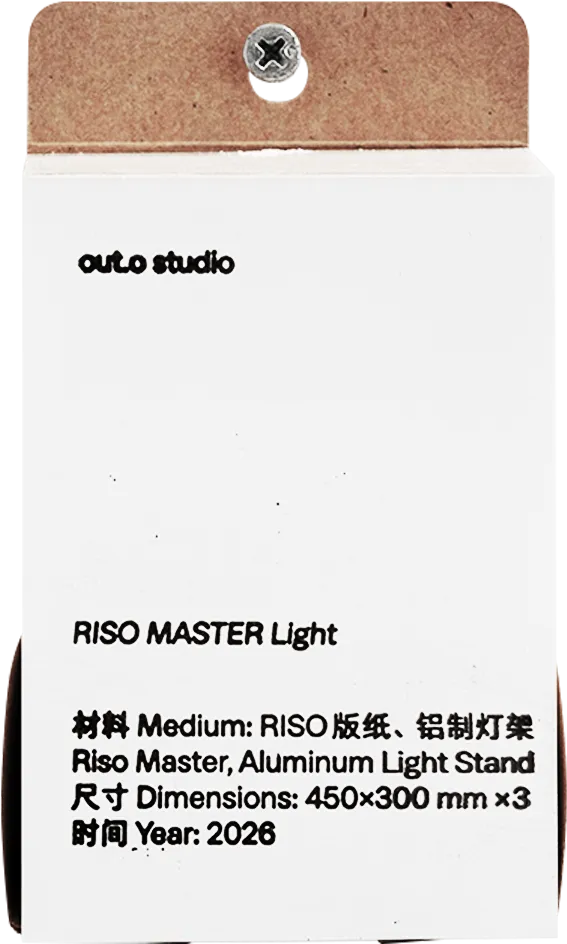
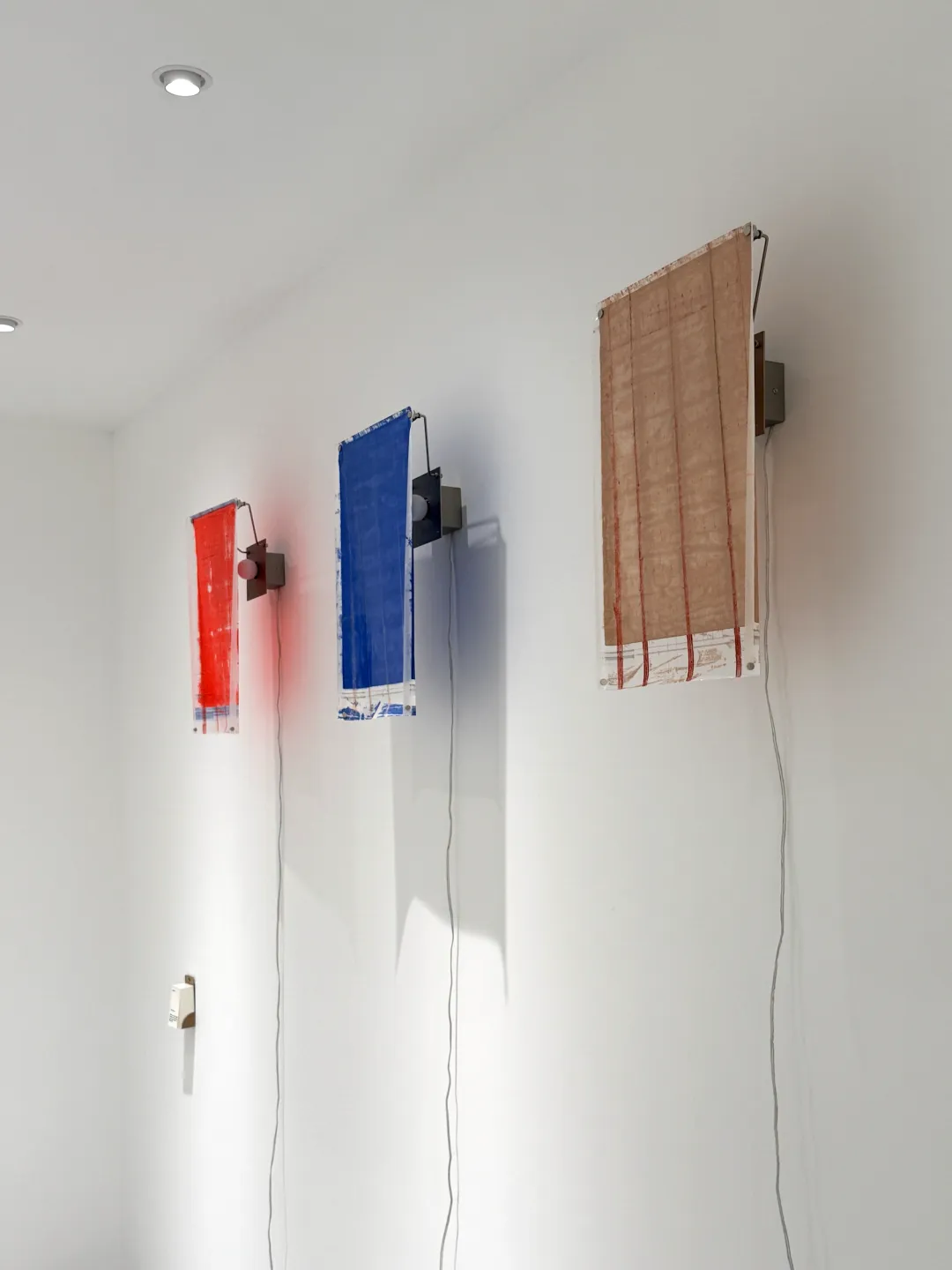
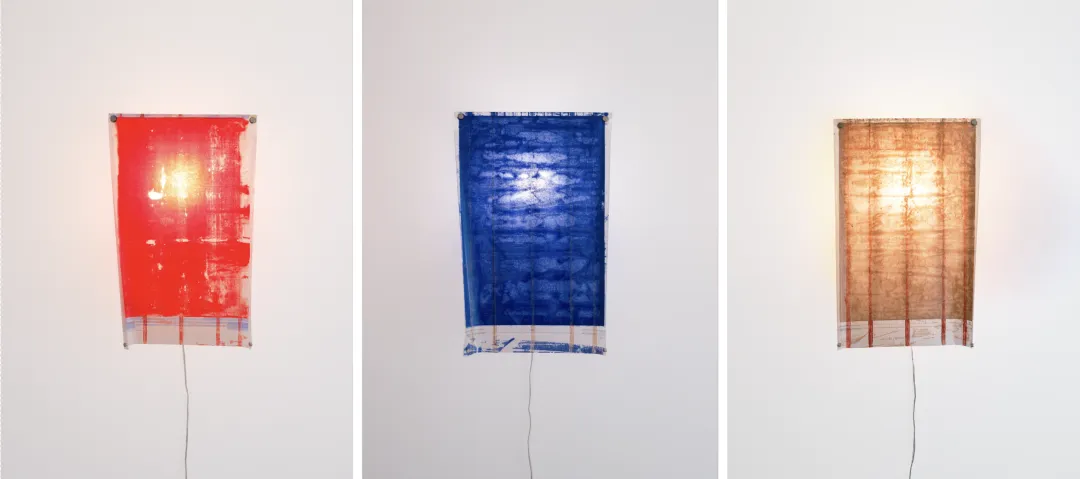
RISO 版纸(Master Paper)是一个短暂而关键的媒介,脆弱而坚韧。印刷完成后被废弃的版纸,在垃圾盒内堆叠、挤压、摩擦,油墨交融间形成未经设计的偶然类扎染肌理。我们想保留这份原生痕迹,让它在光线中显形,“忽视”成为主角。
RISO master paper is a transient yet vital medium, fragile yet resilient.After printing, the discarded masters pile, press and rub against one another in waste containers.As ink blends and bleeds, unplanned, accidental tie-dye-like textures emerge.We wish to preserve these raw traces, letting them appear in the light— and turn what was “overlooked” into the protagonist.
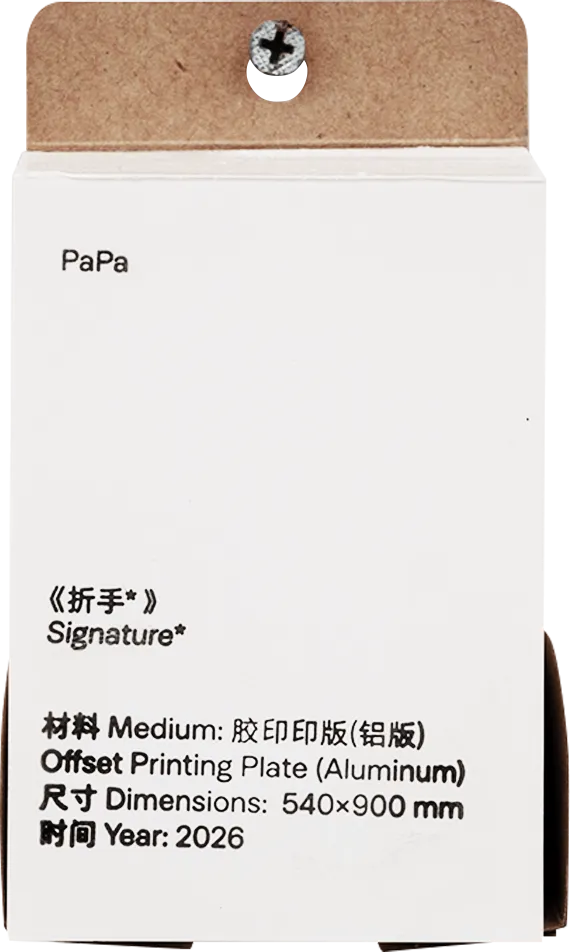
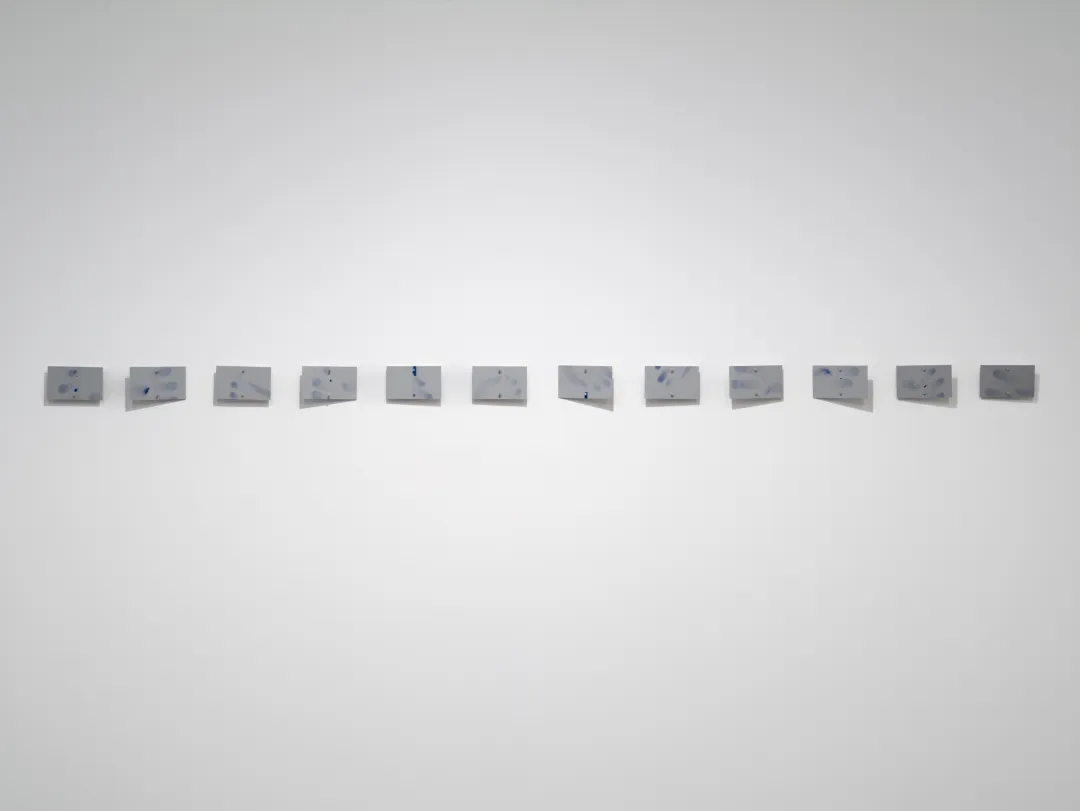
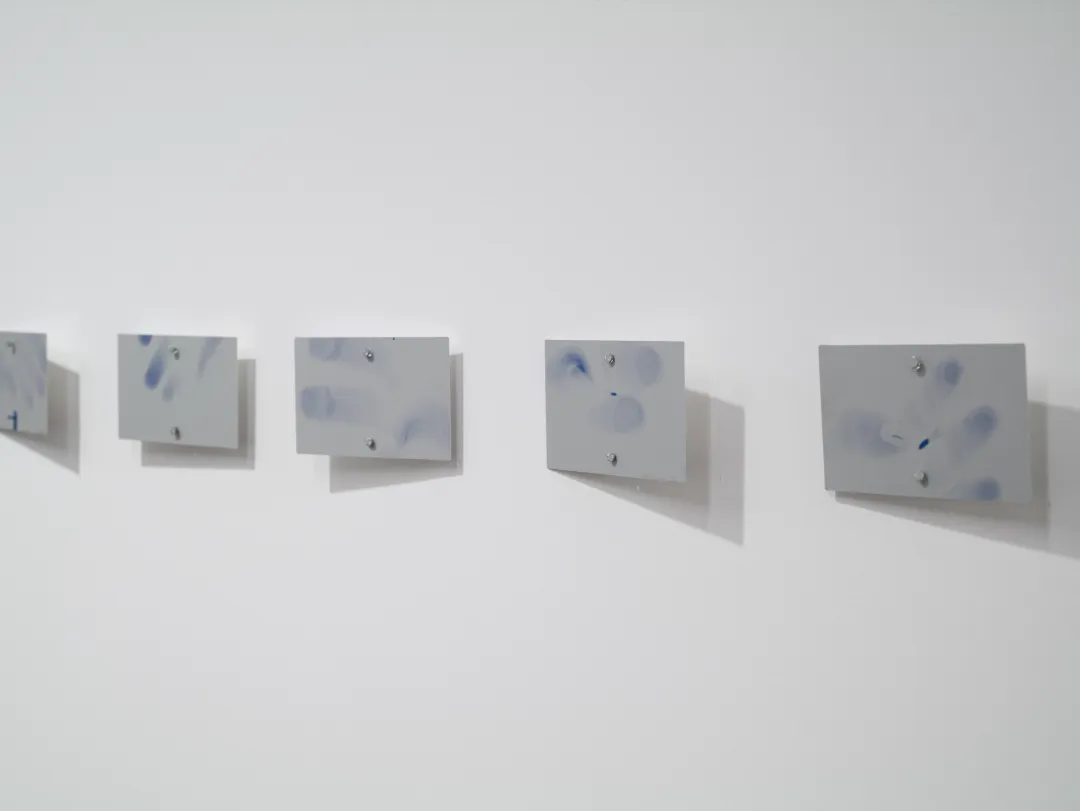
胶印印版(铝版)应该可以算是印刷生产线上最临时也最完整的余料。作为意义信息附着的转印平面,作用生产是一次性的,用完即弃;作为回收废料,熔炼回结构元素,又在更广泛的工业循环中如幽灵般离散长存。
印刷车间里,业务经理、制版师、车间工人的手,是游离在庞大机器周围的劳动残影,只有指纹在铝板上留下瞬间印记——在这里,幽灵般的劳动和作为余料的铝版都被暂时留存。如果说这是一次“创作”,这是谁的创作?在新的价值转移中,剩余劳动是否可见?而下一次的回收转移,它又将参与怎样的劳动过程?
*
在印刷术语中,“折手”是指一张大印张经过一次或多次折叠后,形成的一个可独立装订的折页单元。它以“手”为尺度,计量一系列的工艺操作行为。其对应的西文为“Signature”,原意多指签署、识别。在印刷流程中是指在每一叠折页单元上所标注的识别记号,以辨认其所属的组别与顺序。它更侧重的是确认/识别机制和责任归属。
The offset printing plates (aluminum) could be considered the most temporary yet most complete remains within the printing production line. As transfer surface, it is effectively single-use, its role ending once the image is printed. As recyclable metal, however, it continues to circulate, re-entering industrial production in other forms.
Inside the printing workshop, the hands of account managers, plate makers, and press operators appear as ghost images of labor surrounding the massive machinery. Only fingerprints leave momentary marks on the aluminum plates. Here, ghostly labor and the soon-to-be-discarded plates are temporarily retained together. If this work could be considered a “creation,” whose creation is it? Within this new transfer of value, can surplus labor become visible? And in its next cycle of recycling, what form of labor will it participate in?
*
“Signature,” in its general sense, refers to signing or identification. In printing, it denotes the mark placed on each folded unit to indicate its sequence within a gathering—an index of recognition and responsibility within the production process. Its Chinese counterpart, zhe shou (折手), literally “fold” (折) and “hand” (手), refers to a printed sheet folded one or multiple times into an independent binding unit, measured by the scale of the human hand and shaped through repeated manual operations.
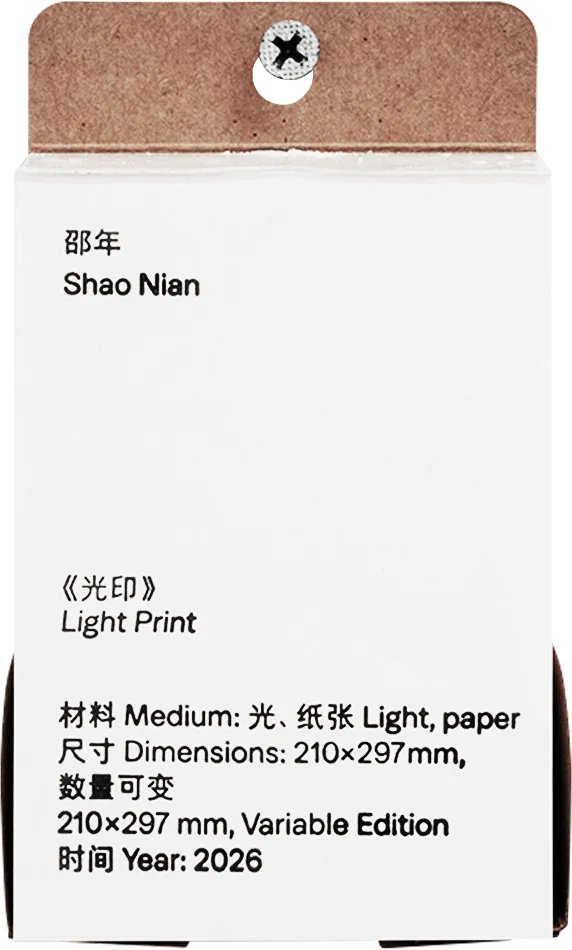
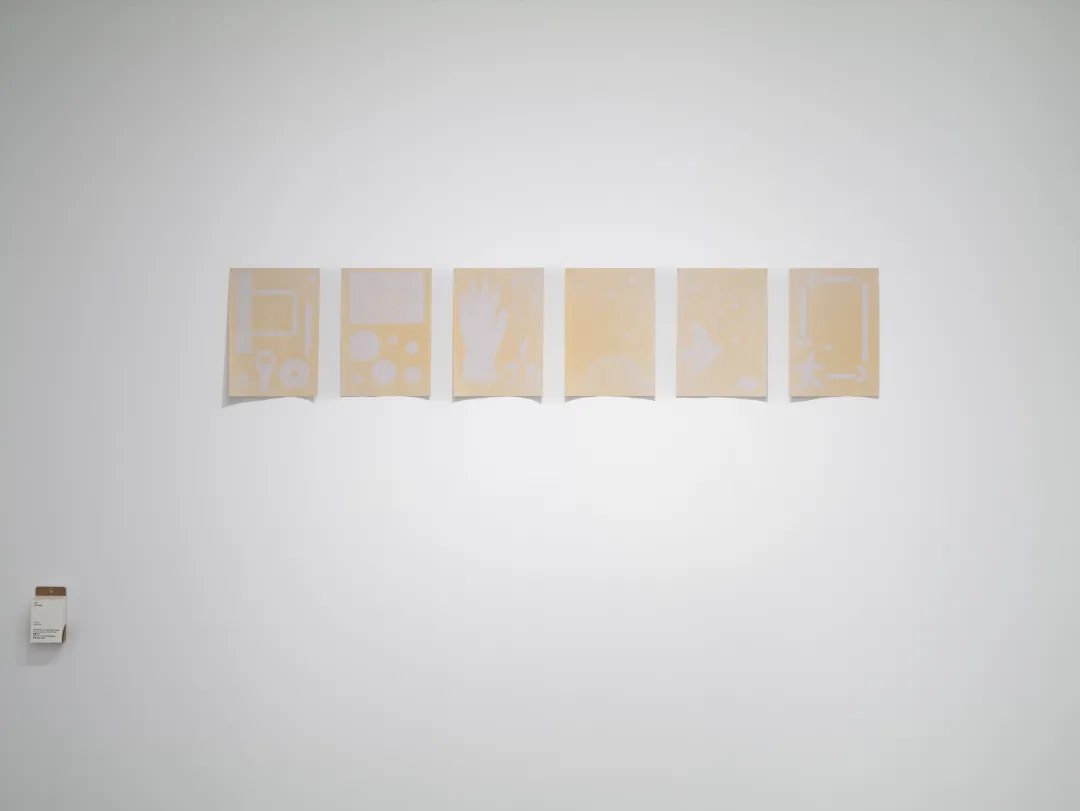
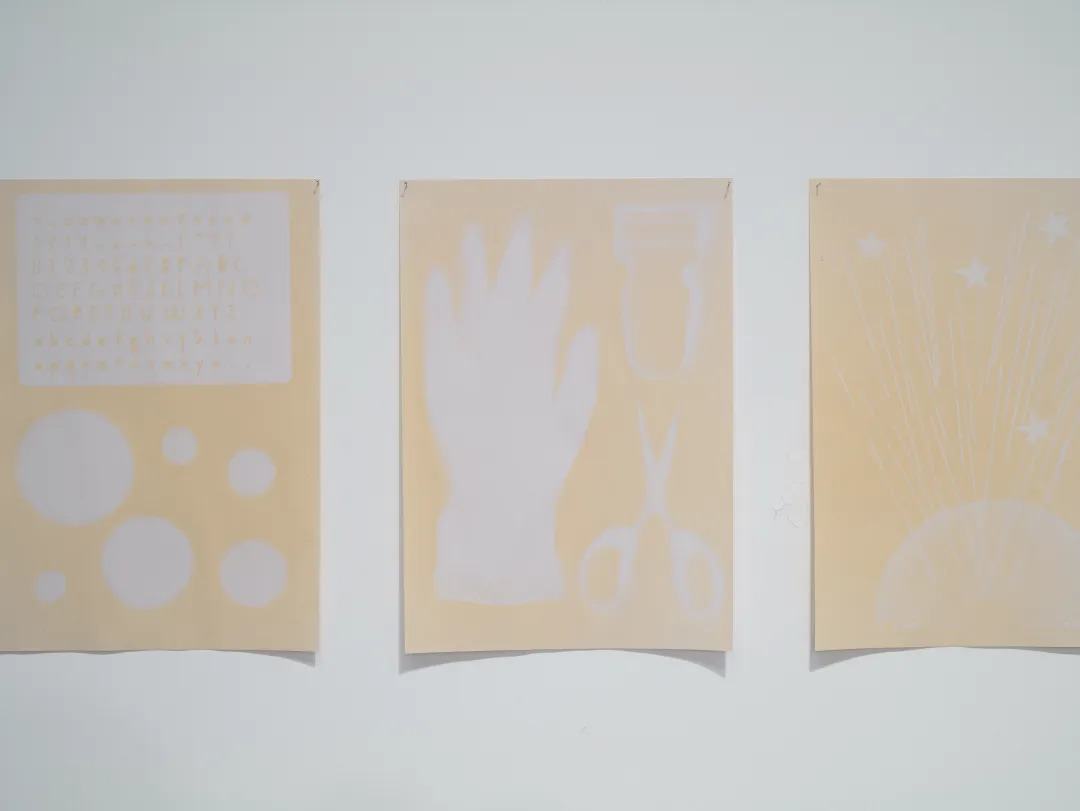
以光为印刷媒介,让时间在纸上显影。
Light as the printing medium, allowing time to develop on paper.
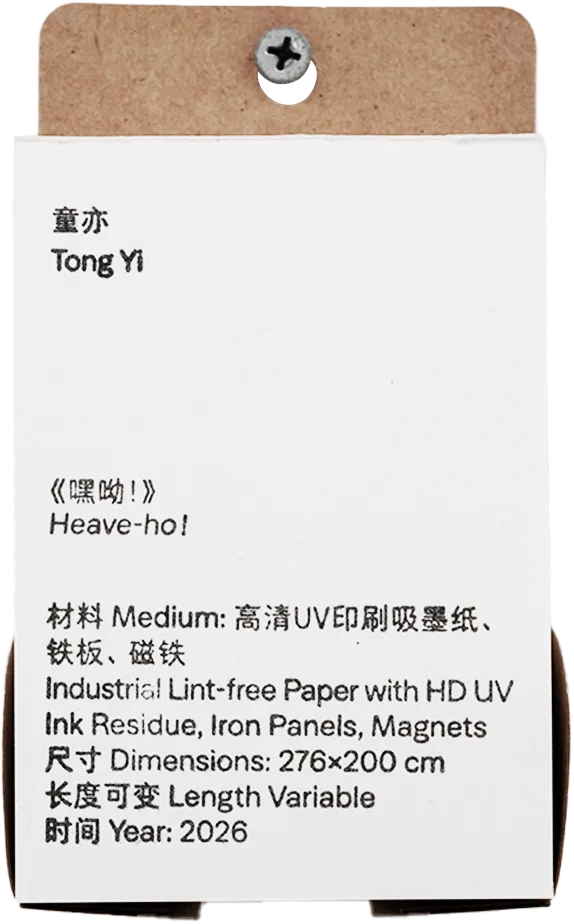
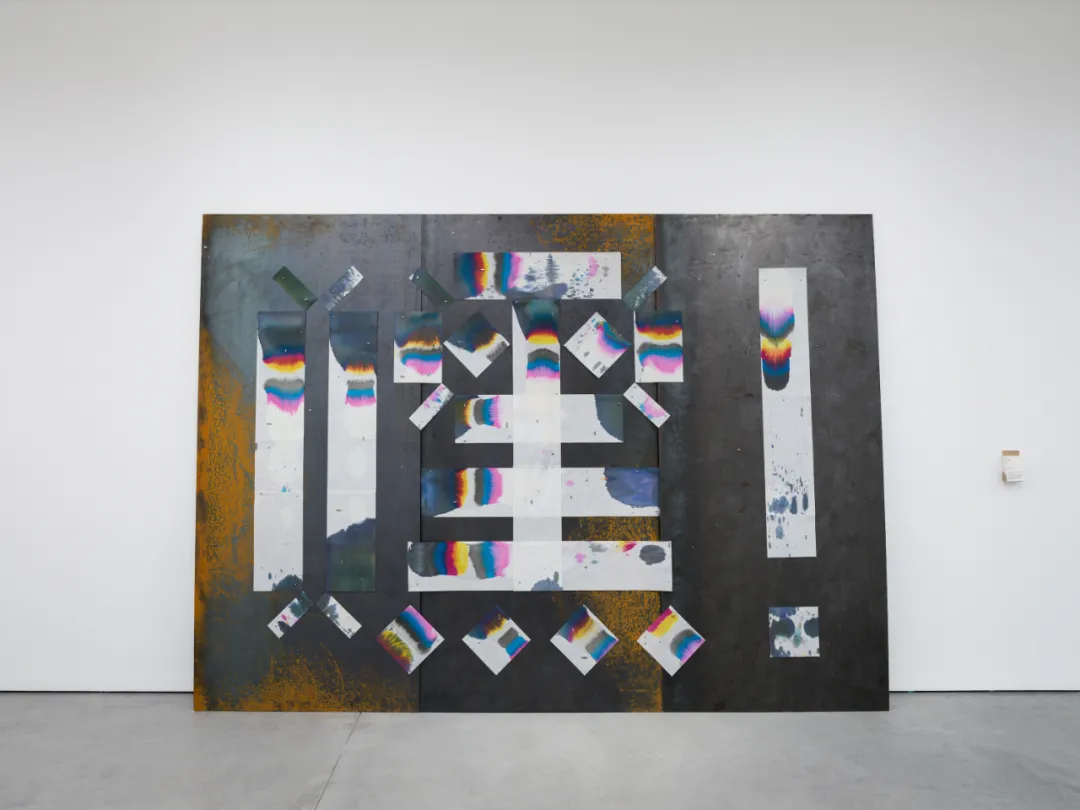
“嘿!”与“嘿呦!”源自早期长江三峡纤夫协力拖船时的劳动号子。这些拟声词发自身体,用以统一发力的节奏,同时也模拟劳作时的呼吸与喘息声。
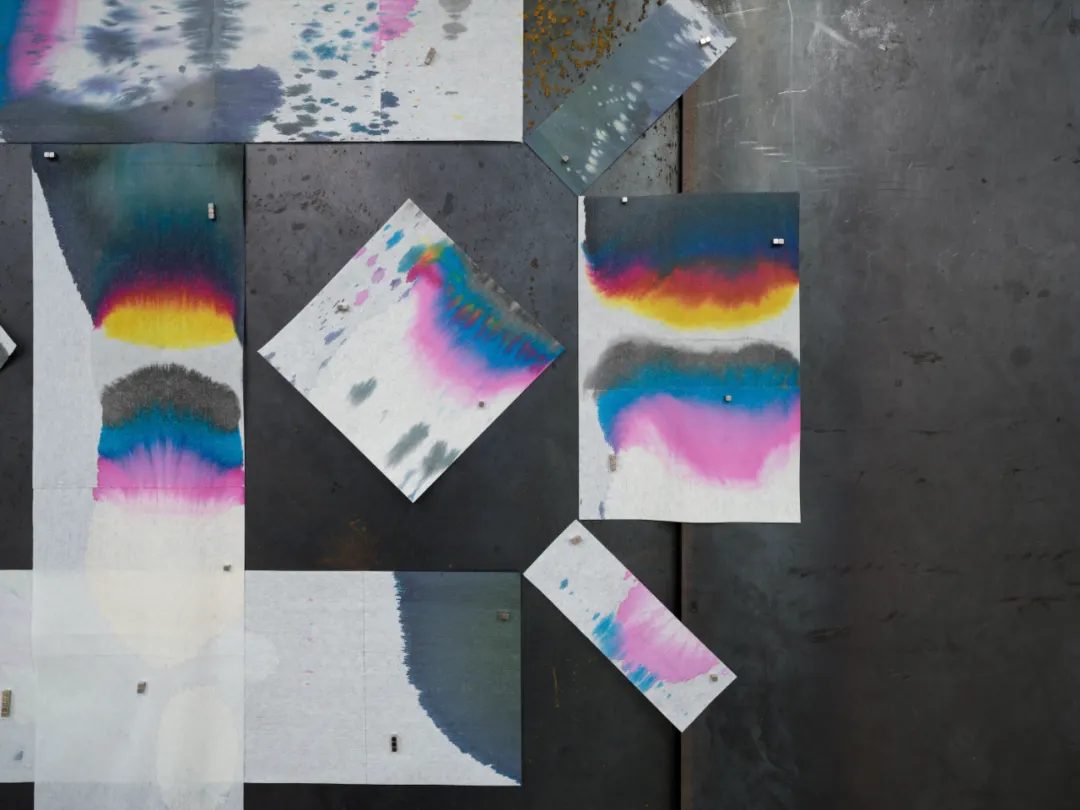
工业无尘纸常用于承接高清UV印刷机运行过程中滴落的残墨。通常在当天印刷任务完成后,这些纸张便会被摘取并丢弃。由于每天印刷内容不同,青(C)、品红(M)、黄(Y)、黑(K)以不同比重滴落,并在纸纤维中自然晕染,形成深浅交织的色斑与纹理,在视觉上呈现出近似羽毛或翼状的细密层次。这些变化的、无意识生成的墨迹,为高度自动化的生产过程赋予了一种微妙的叙事性——它们既是多余的墨水,也仿佛机器在持续运转中留下的“汗水”。
在大约一个月的时间里,这些布满油墨的无尘纸被持续收集并标记日期。随后将纸条裁切成不同长度,按照汉字笔画的书写顺序,以磁铁固定在旧铁板上,拼接成“嘿!”。
“Hei!” and “Heave-ho!” originate from the labor chants (haozi) once used by trackers hauling boats along the Yangtze River in the Three Gorges. These onomatopoeic sounds emerge from the body, synchronizing collective exertion while echoing the rhythm of breath and the raw physical strain of manual toil.
Industrial lint-free wipes are commonly used to absorb residual ink dripping from high-resolution UV printers during operation, and are typically discarded after each day’s production. Because printing tasks vary, Cyan (C), Magenta (M), Yellow (Y), and Black (K) inks fall in different proportions and naturally diffuse through the fibers, forming interwoven stains and delicate textures. Visually, these marks form intricate, feather-like or wing-shaped patterns. These shifting, unconsciously generated traces lend a subtle narrative to an otherwise highly automated process: they are not merely excess ink, but manifest as the “sweat” of a machine in continuous operation.
Over the course of a month, these ink-covered wipes were collected and dated. The strips were then cut into different lengths and, following the stroke order of the Chinese character, fixed with magnets onto an old iron plate to assemble the character “嘿!”.
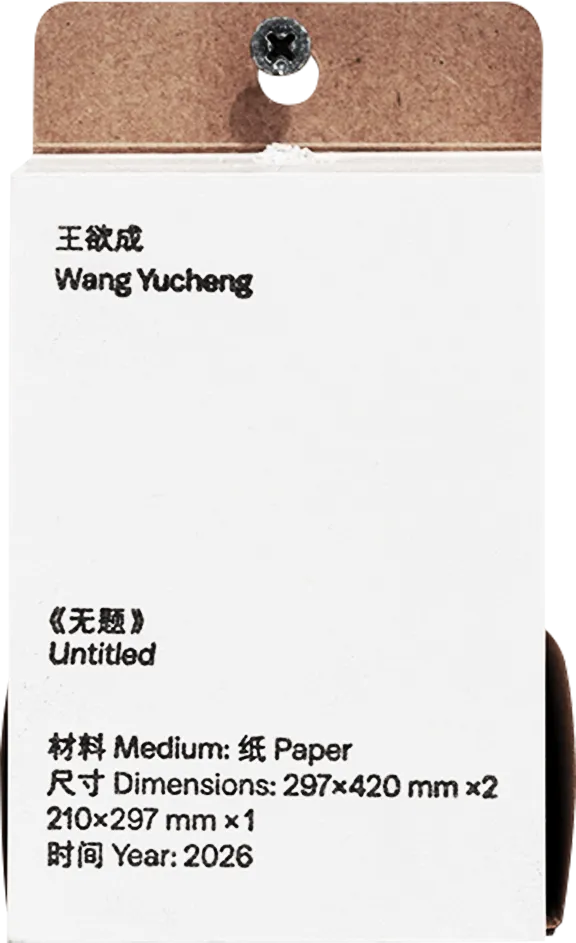
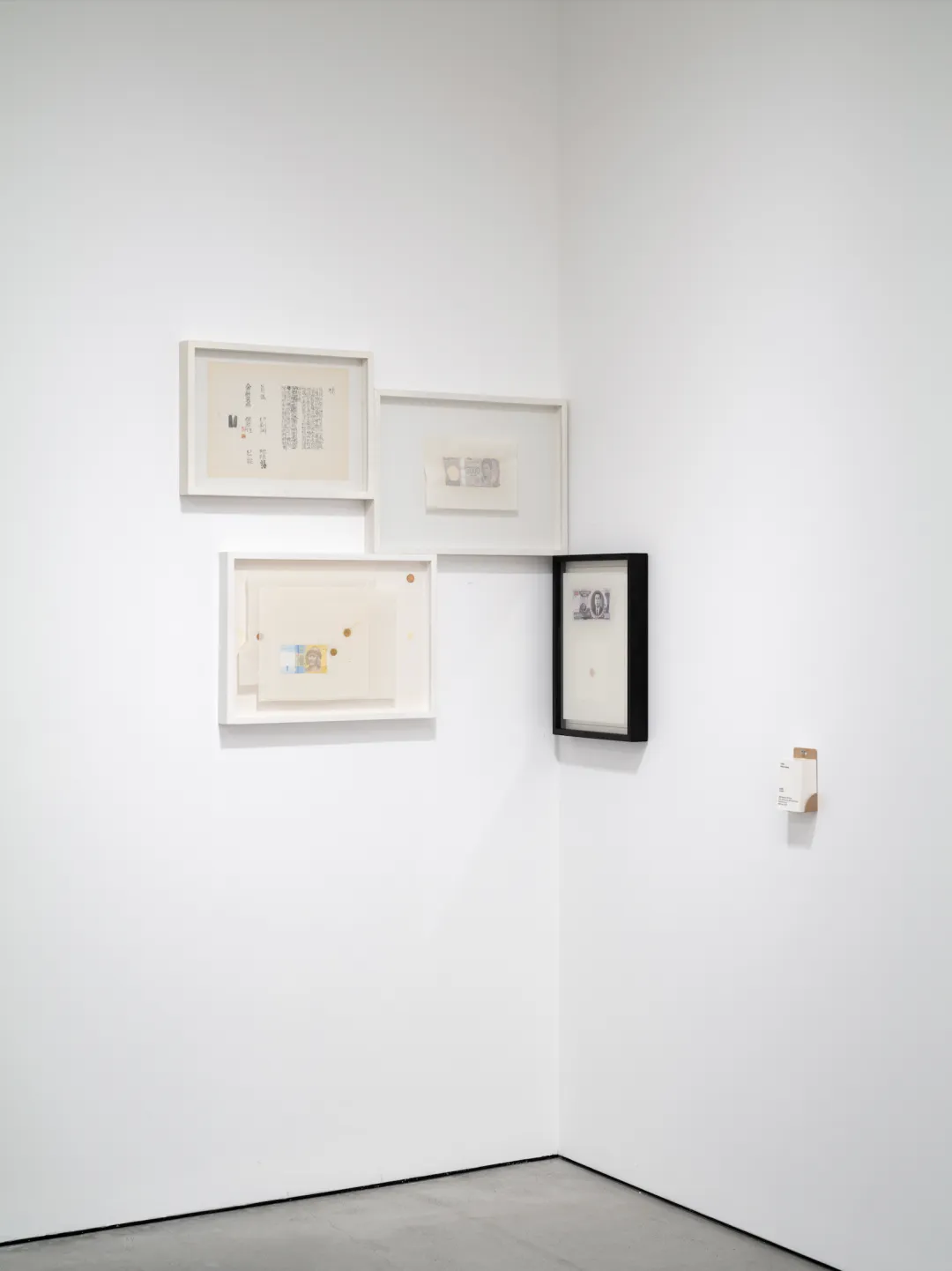
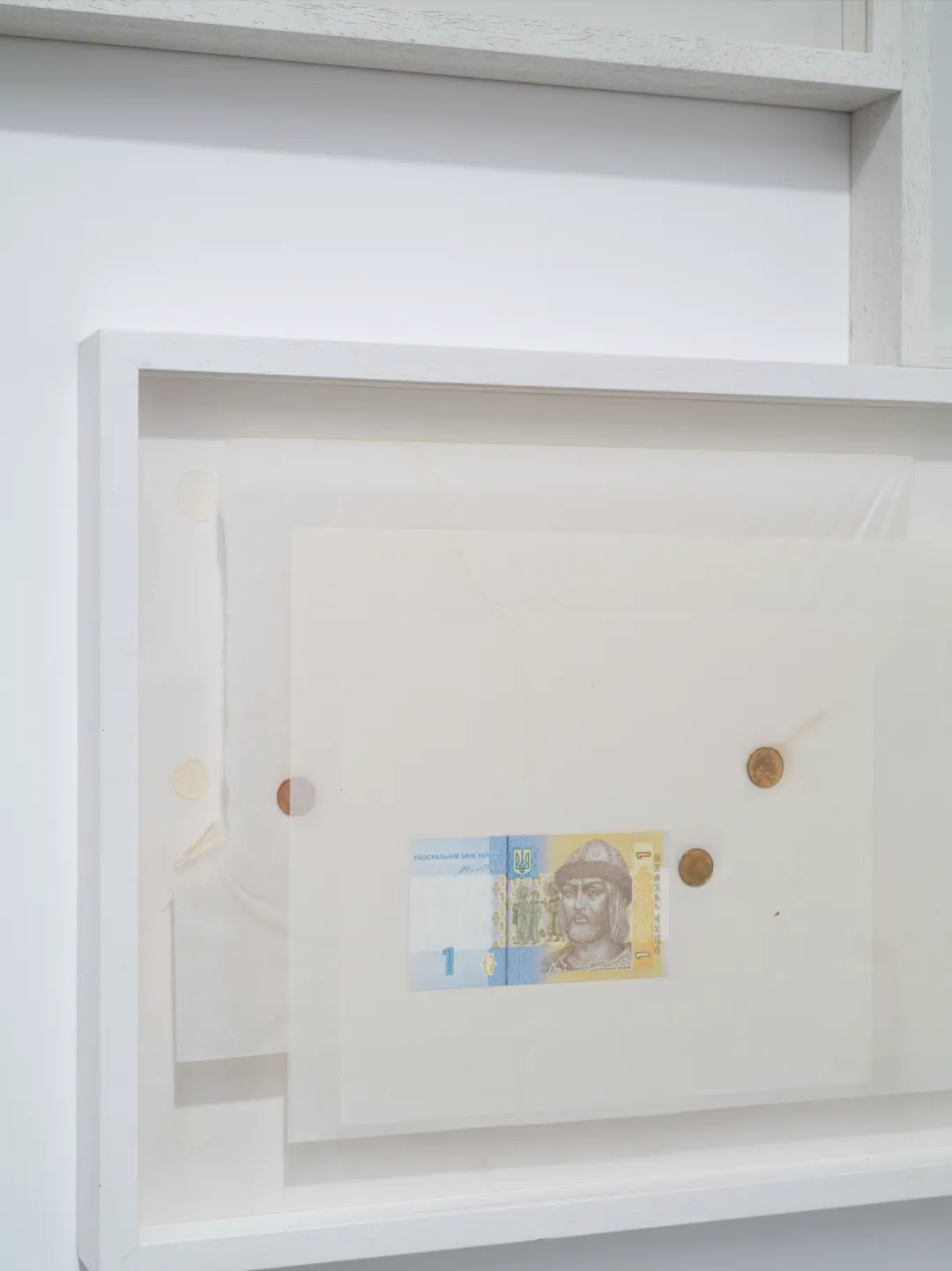
传统纸币的物质性美学代表的是工业时代的信任实体,它通过物理上的极致复杂来确立价值;而未来非物理性货币代表的是数字时代的信任协议,它通过数学上的极致严谨来确立价值。
两者关系的变化,本质上我们从“眼见为实”转向“逻辑为实”。我们失去的是指尖的触感,但获得的是一种超越物理限制的、关于价值的纯粹想象。
The material aesthetics of traditional paper currency represent the trust entity of the industrial age, establishing value through extreme physical complexity. In contrast, future non-physical currency represents the trust protocol of the digital age, establishing value through extreme mathematical rigor.
The change in the relationship between the two is essentially a shift from "seeing is believing" to "logic is believing." What we lose is the tactile sensation at our fingertips, but what we gain is a pure imagination of value that transcends physical limitations.
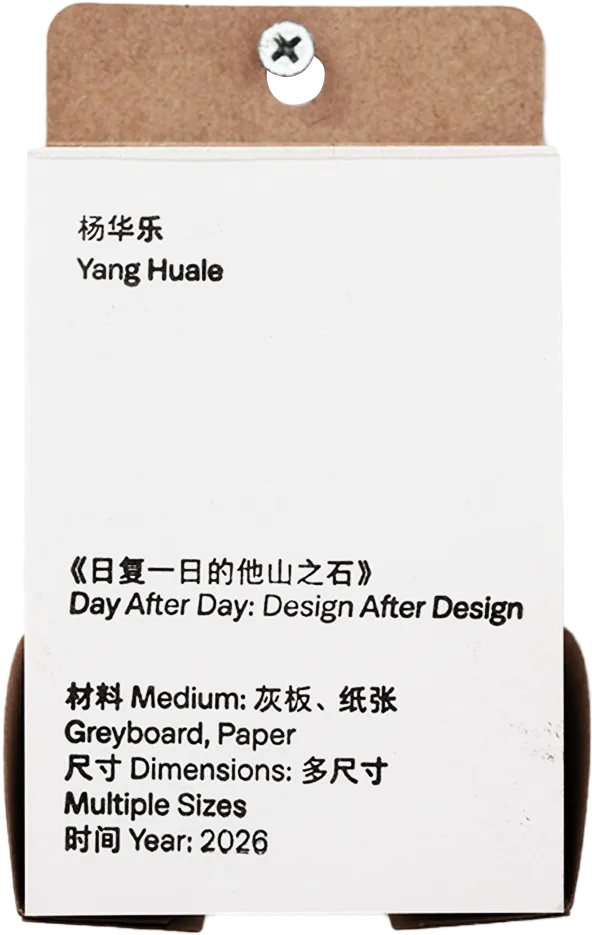
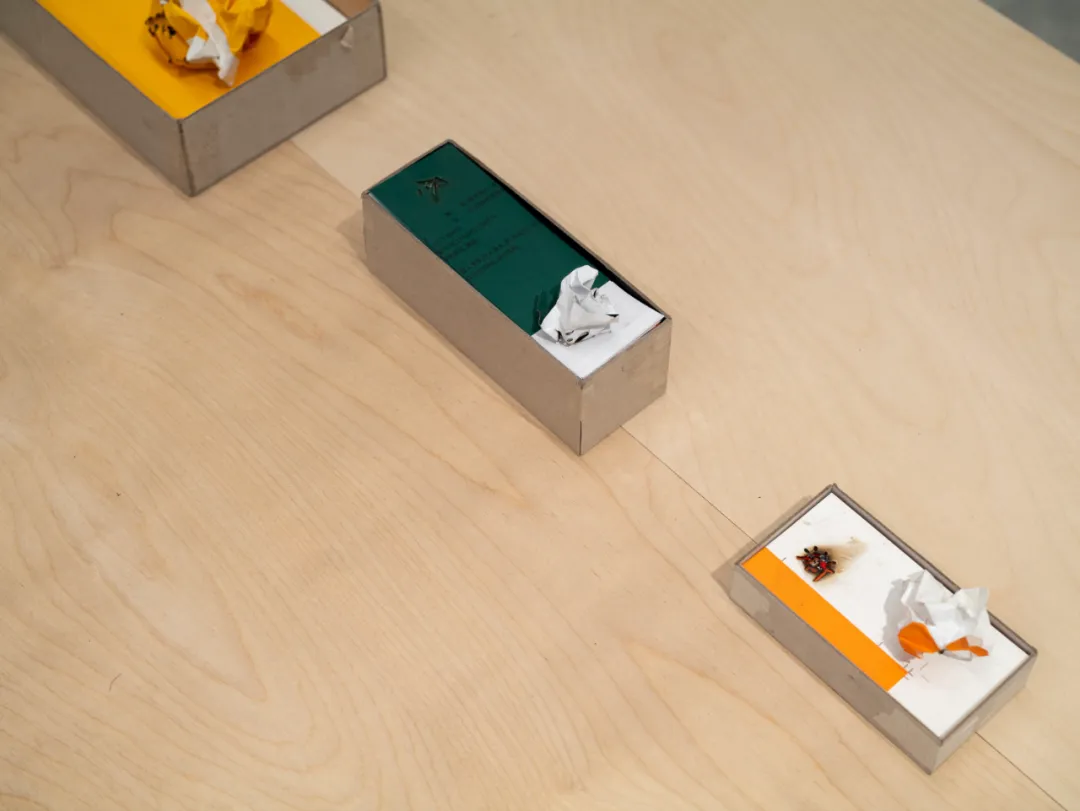
《日复一日的他山之石》是一件从包装材料本身出发的反向设计实验。作品选取茶叶礼盒生产过程中被剩余或废弃的裱纸材料,通过重新整理与揉捻,将这些曾经用于“装饰外表”的纸张反向堆叠进灰板结构之中,使其从表层回到内部。
在传统礼品包装的生产逻辑中,特种纸、烫金与复杂工艺常被用来构建一种被默认的“东方感”视觉外壳。然而这些精致的结构在完成礼赠之后,往往很快被拆解或丢弃。作品试图从这一短暂而被忽视的生命周期出发,对包装设计中过度装饰与风格惯性的表达提出反思。
工艺上,文字通过激光烫字的方式逐层向下穿透材料,仿佛一种持续发生的时间行为。随着层层叠加的纸张被压入结构之中,文字的痕迹逐渐深入材料内部,如同滴水穿石般不断抵达未知的深度。
与此同时,以每天的时间为单位,每一张纸在进入结构之前都被反复揉捻,使其形成类似石块的体量,并在层层叠加中形成某种微型景观。这种由纸张构成的“他山之石”,既回应了东方山石的意象,也暗示了材料在时间中的沉积。
作品以“日复一日”作为时间维度的隐喻:重复的动作、叠加的材料与逐渐深入的工艺,共同构成一种缓慢下沉的过程。而“他山之石”则成为来自材料内部的回应,在看似被塑造的结构之中,追问着某种不被完全定义的自由禅思。
Day After Day: Design After Design is a reverse design experiment that begins with packaging materials themselves. The work uses leftover wrapping papers collected from the production of tea gift boxes. Papers once used to decorate the exterior are crumpled, reorganized, and restacked inside a greyboard structure, reversing their role from surface ornament to internal substance.
In conventional gift packaging, specialty papers and elaborate finishes are often used to construct a familiar “Oriental” aesthetic. Yet these carefully crafted packages usually have a short lifespan—once the gift is opened, they are quickly dismantled or discarded. By returning these materials to the inside, the work reflects on this overlooked lifecycle and questions the decorative conventions embedded in packaging design.
Through repeated gestures, layered materials, and laser-stamped text gradually penetrating the structure, the work records a slow accumulation of time—day after day, design after design.
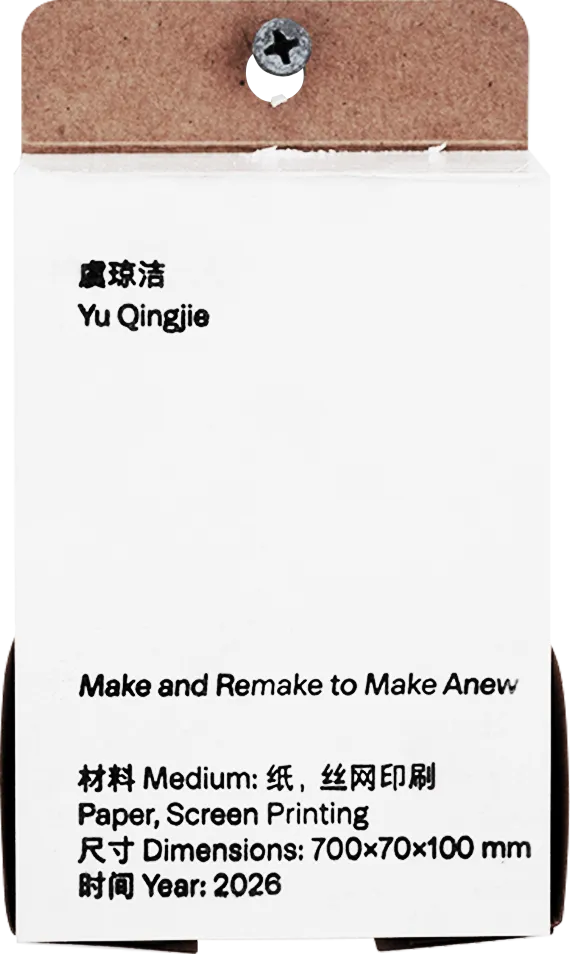
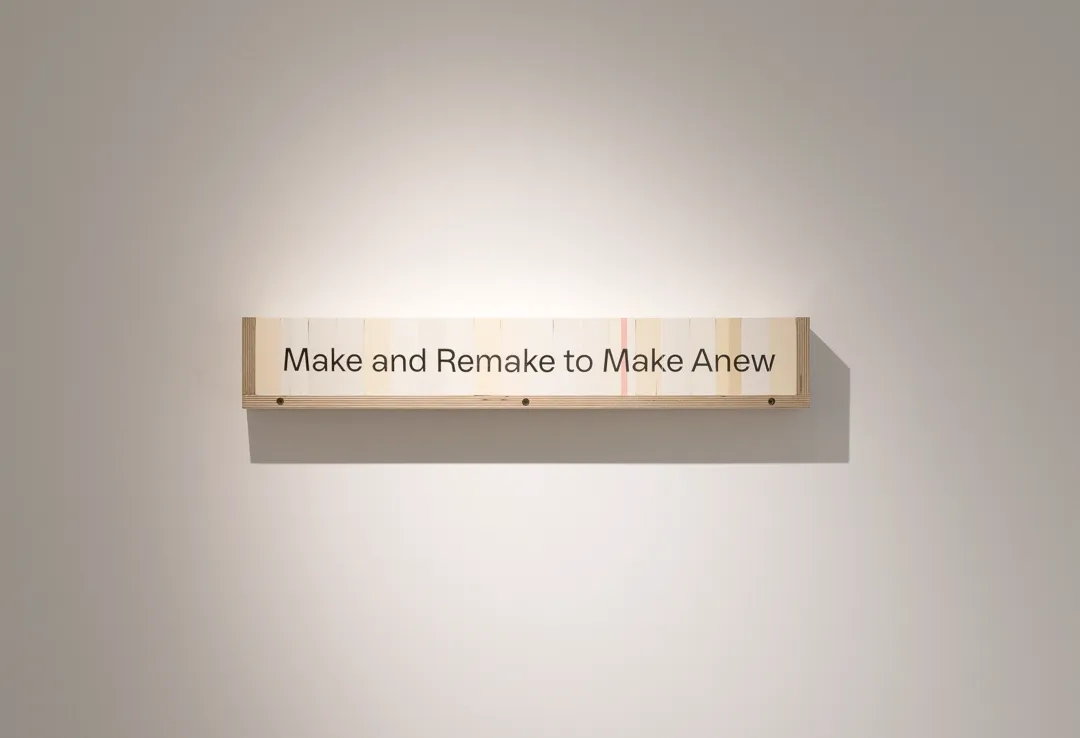
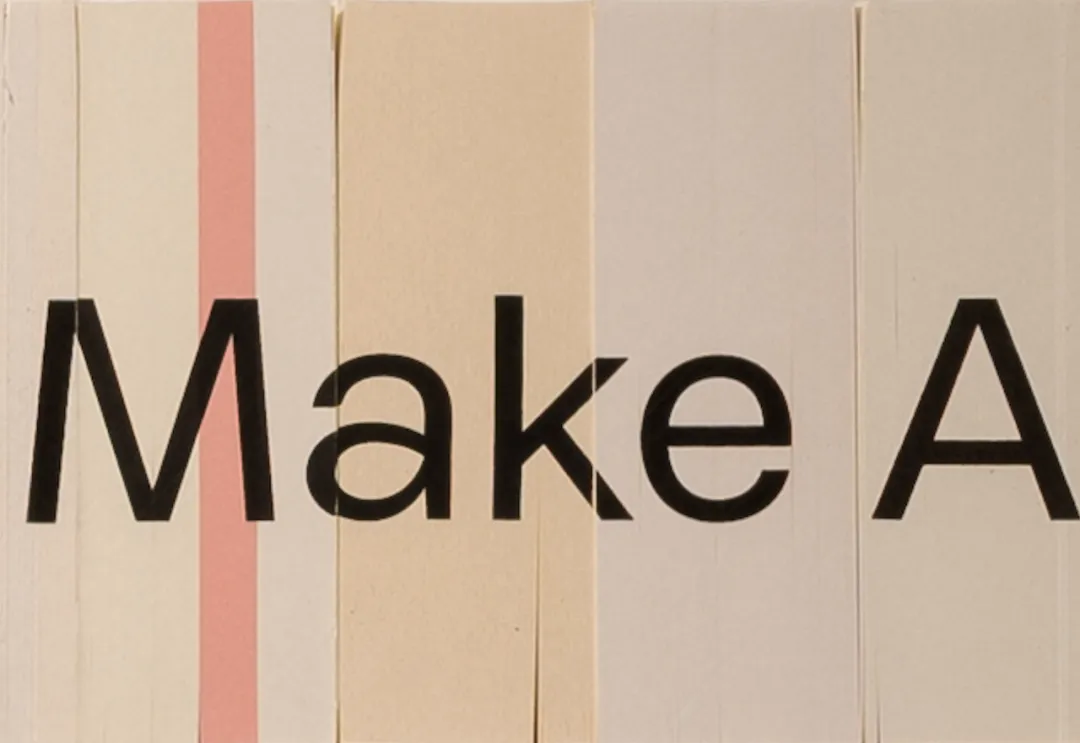
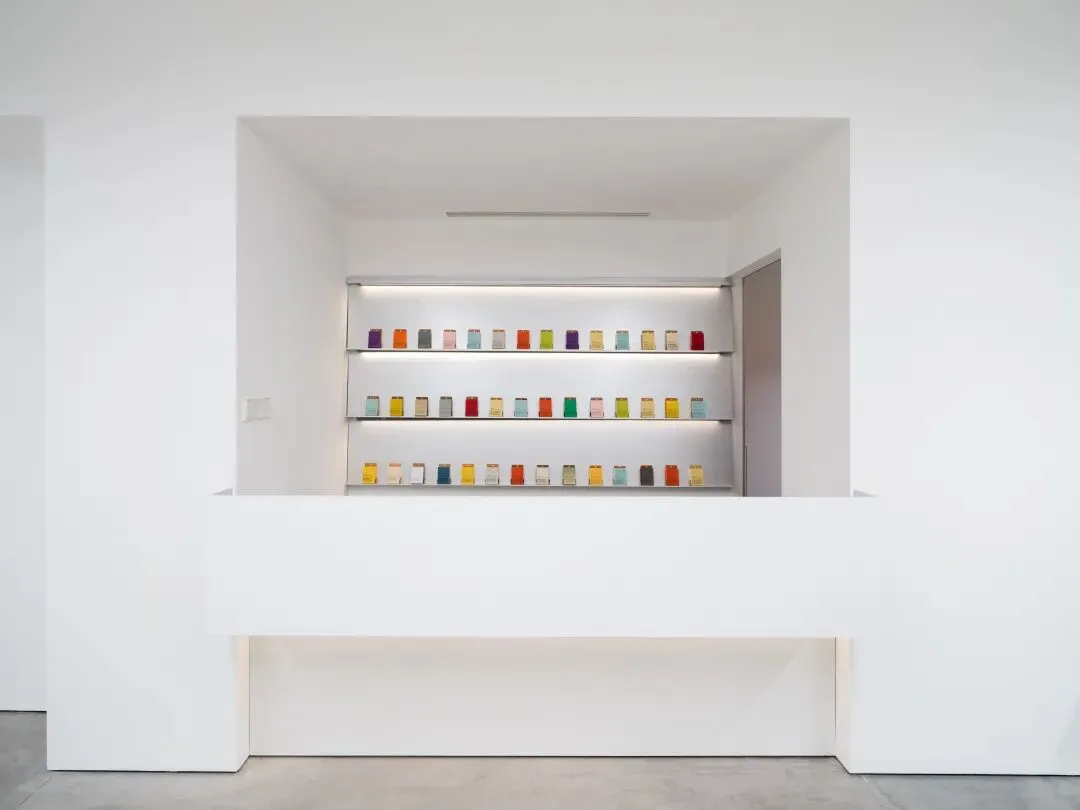
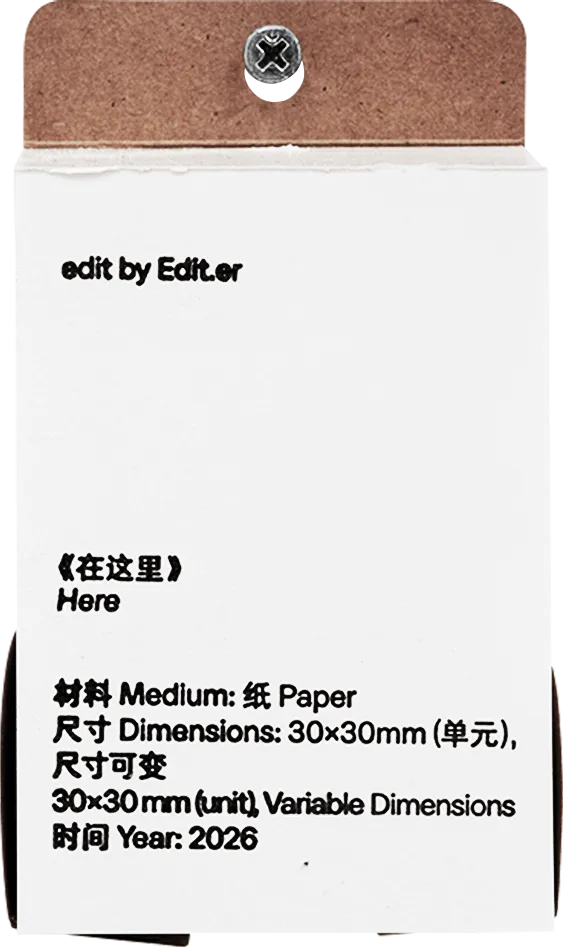
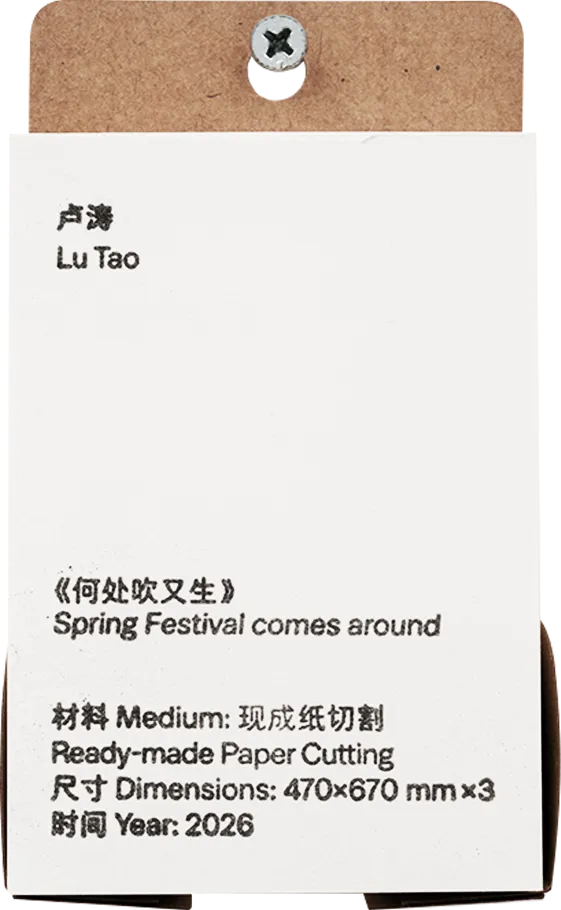
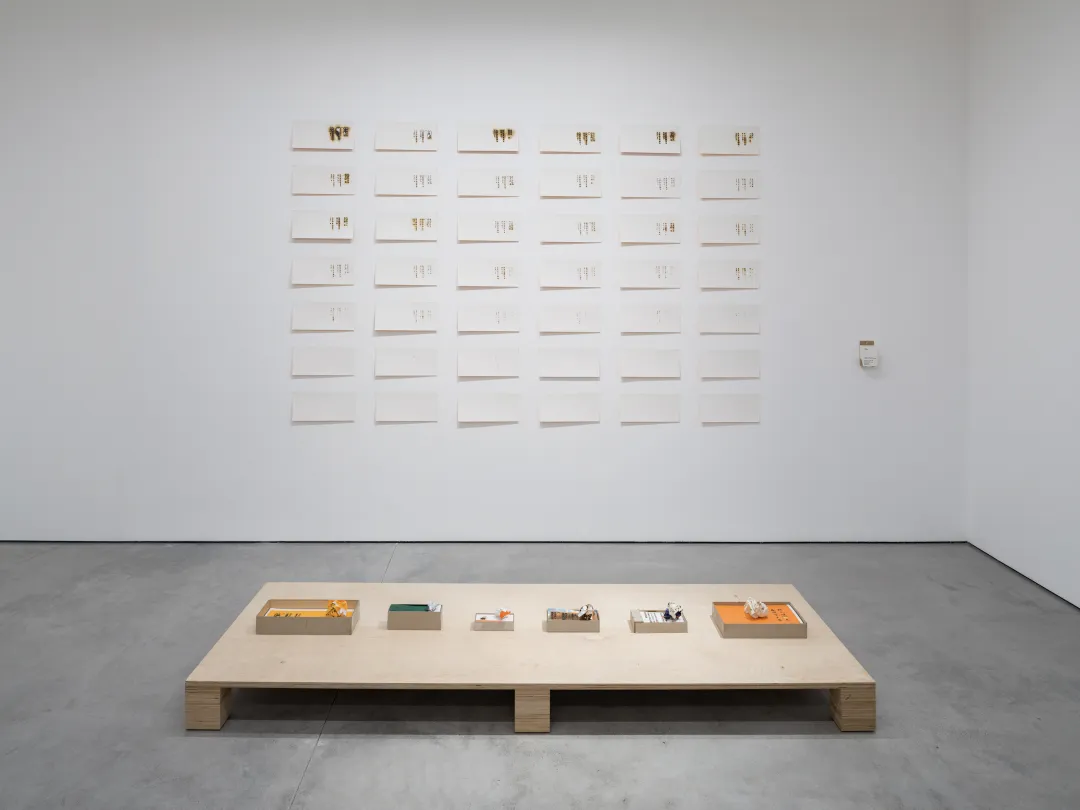
作品引用“Make and Remake to Make Anew”,该语句由策展人 João Fernandes 对艺术家 Ulises Carrión 创作方法的提炼。
引文被丝网印制在印厂剩余纸张制成的便签本上,使原本被遗留的材料在重新组织中被激活,成为再次生成的载体,从事物的终结之处重新开始叙述。
在这里,语言被视为作品的发生方式,而非其说明。
The work references “Make and Remake to Make Anew,” a phrase through which curator João Fernandes articulated the artistic method of Ulises Carrión.
The quotation is screen-printed onto a memo pad made from leftover paper collected from a printing house, activating what was once discarded as production surplus and turning it into a site for renewed generation, from which narration begins again at the point of ending.
Here, language is treated as the condition of the work rather than its description.
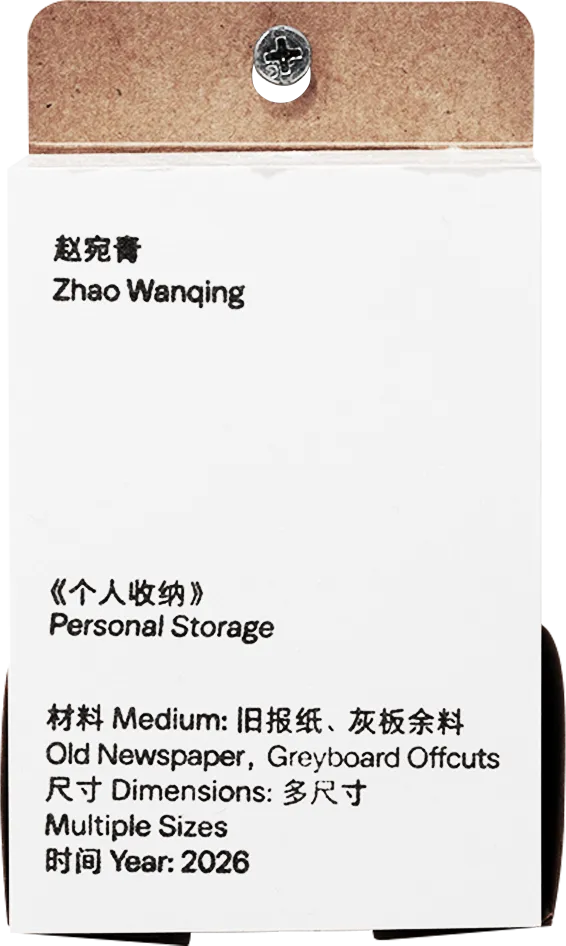
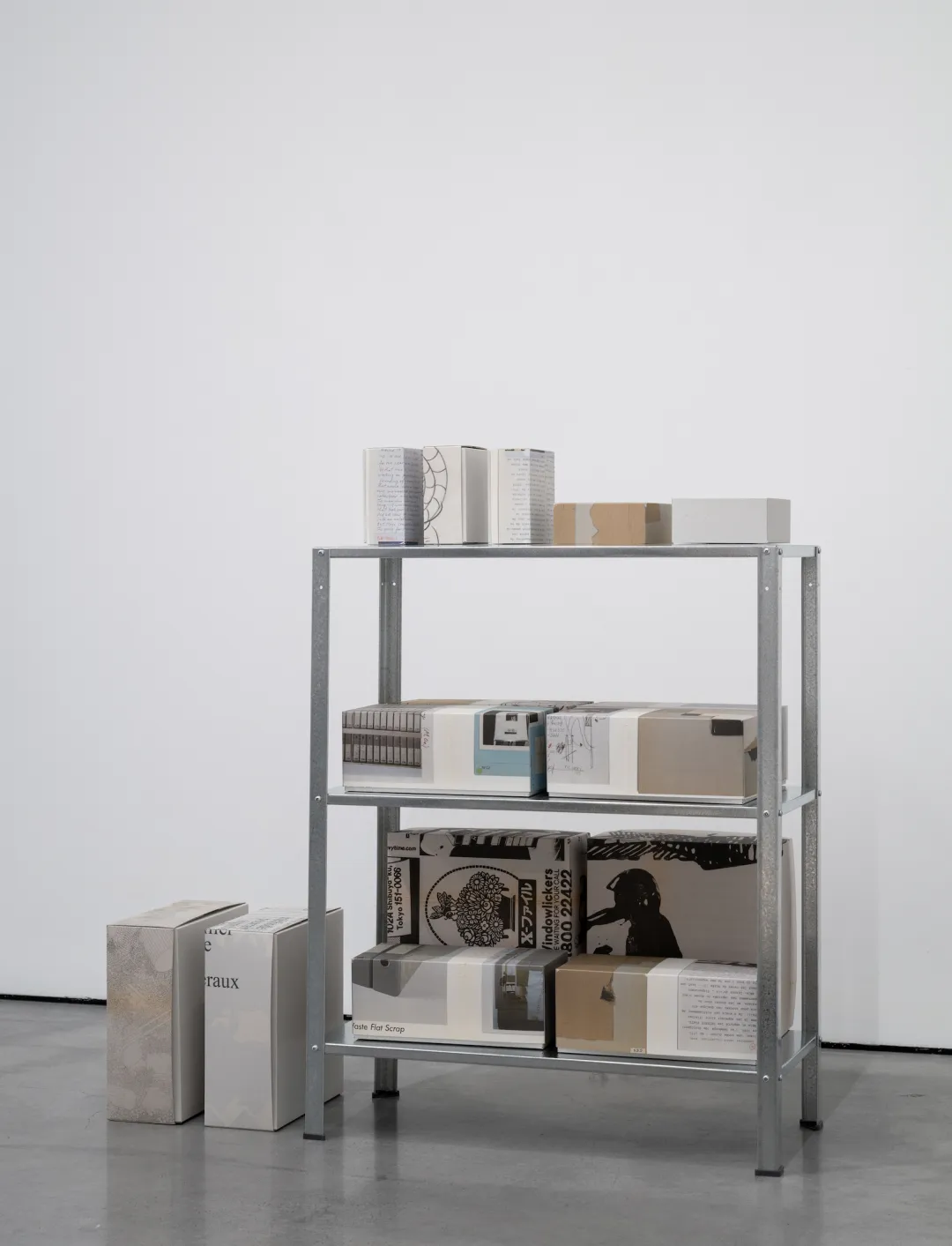
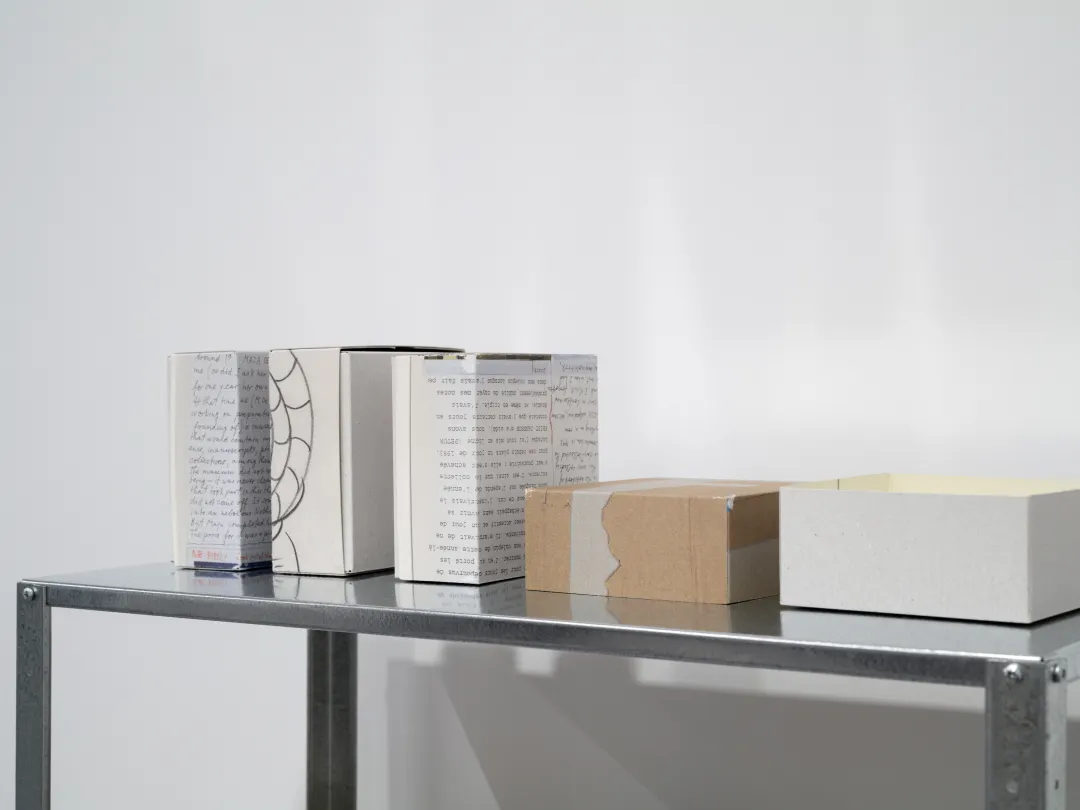
这些材料来自我过去收集的纸张碎片,它们本身未必指向特定内容。
收纳盒是秩序的一种形态,微小、私人的选择与排列在其中呈现。
These materials are fragments of paper I collected in the past, without pointing to any particular content.
Storage boxes present a form of order, where small, personal choices and arrangements quietly unfold within it.
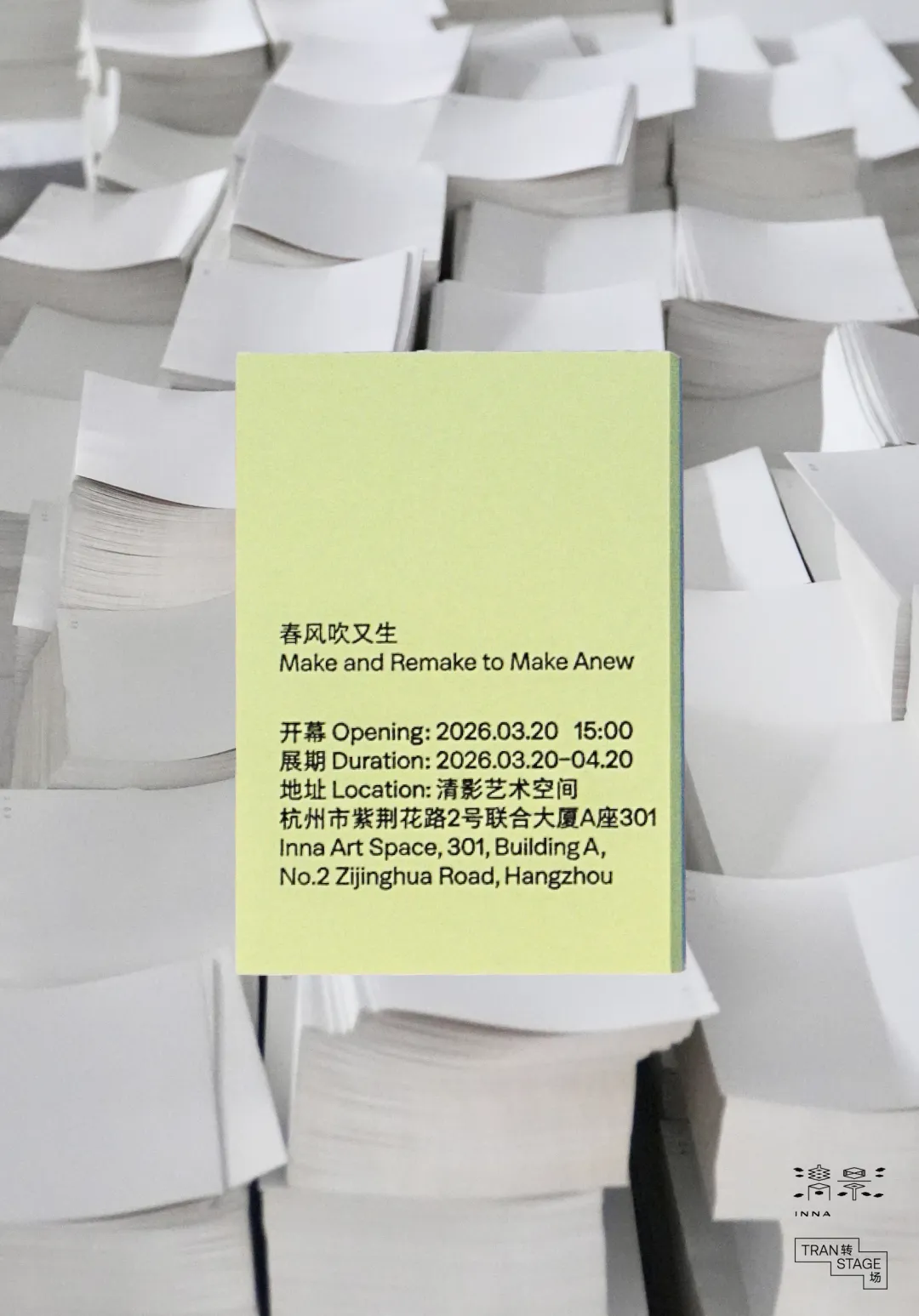
请点击海报,阅读展览新闻稿 Please click the poster for press release
春眠不觉晓 Spring Awakening
「春眠不觉晓」是清影(INNA)自 2021 年发起的年度项目。每年春天,一位艺术家、策展人或合作机构提出一个开放议题,邀请不同创作者共同参与,在对话与实践中形成一次围绕主题的呈现。
自 2021 年以来,项目议题不断延展,涉及创作状态、文化身份、性别叙事与生态意识,逐渐成为清影持续推进的春季项目。
Spring Awakening is INNA’s annual program, initiated in 2021. Each spring, an artist, curator, or partner organization proposes an open theme, inviting different practitioners to participate in a presentation shaped through dialogue and practice.
Since 2021, the program has continued to expand, engaging questions of artistic process, cultural identity, gender narratives, and ecological awareness, and has gradually become an ongoing spring program at INNA.
年度主题
2021 HAPPY HOUR
发起:陈栋帆、刘呗宁
2022 春卷儿
发起:宋瑶
2024 躺下重睡
发起:三角洲
2025 新月新娘
发起:全荣花(与 1979 画廊合作)
2026 春风吹又生
发起:Transtage 转场
Annual Themes
2021 HAPPY HOUR
Initiated by Chen Dongfan and Liu Beining
2022 Spring Rolls
Initiated by Song Yao
2024 Lie Down and Sleep Again
Initiated by Deltainst
2025 Feng Hanting: New Moon Bride
Initiated by Jeon Younghwa, in collaboration with Gallery 1979
2026 Make and Remake to Make Anew
Initiated by Transtage

Transtage 是由 Transwhite Studio 开设的独立空间。
Transtage 转场,开启视角的转动、引发思维的转换、实践身份的转化。是一个包含展览、开放阅读、工作坊的开放场所。
Transtage is an independent space presented by Transwhite Studio.
Transtage interchanges perception, triggers the conversion of thinking, and fulfills the transformation of identity.Transtage is a space open for exhibitions,library and workshops.

微信 Wechat:

Web: innart.org
Email: info@innart.org
instagram: @innaartspace
小红书:清影艺术空间
