绿行者之心
Green Wanderer's Heart
艺术家:杜蒙,范崇赫,Xanthe Burdett,一文
Artist: Du Meng, Fan Chonghe, Xanthe Burdett, Yi Wen
策展人:曹娅妮
Curator: Cao Yani
2026.3.7 - 2026.4.12
心之所在、心之所向即是归处,在自然中穿行者终将把心归于自然。
杜蒙的向往自然之心是时光流淌中在一点一滴、一停一留之间漫缓汇集而成的。这是个始于观察,迸发于一次偶然碰撞的过程。对于自小生长在城市的杜蒙来说,自然仿佛从某一次的“看见”开始,便涌入了她的生活。自此,其间的斑斓、嘈嘈、柔韧与粗粝就渐渐占据了她的眼、耳、手和心,而她也完全不介意这种后知后觉的包裹,相反溺于其中。
像被风轻推后背,杜蒙开始将枝叶、雨滴、水流、飞鸟和虫鸣或镶嵌,或烙印,或蚀刻,或附着在玻璃之上。是以她每一件作品的制作,都似一次生态捕捉,凝留下最触动她的自然的样子。而烧制后,与玻璃本身融为一体的是她作为创作者至珍的感受与回忆,在微光下闪闪发亮。
因而哪怕流光似水,杜蒙也能将时间冻结于光中。
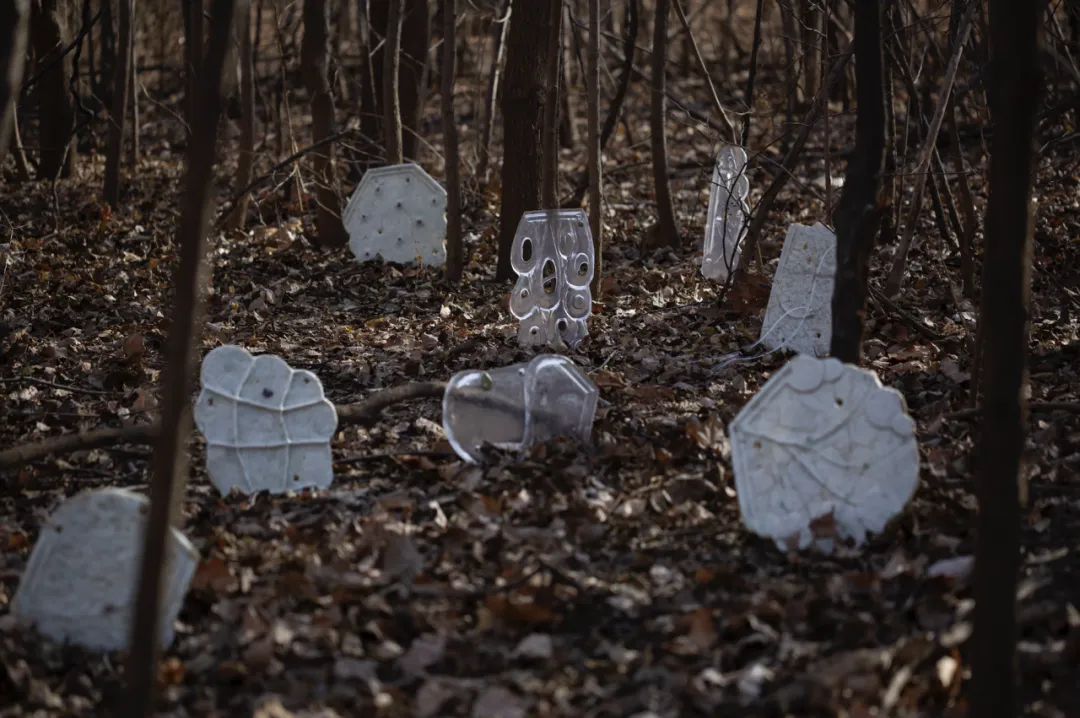
杜蒙 《漂流于林间,沉默于山谷》系列作品
1.玻璃并不是一种很常见的创作材料,你为什么选择它作为你的主要创作方向呢?
我在2010年留学时从视觉传达转到了玻璃与玻璃雕塑专业(当时我们系叫School for American Craft,但这几年因为生源持续下降,已经并入了工业设计。)当时除了一些“巧合”的缘由,最主要的原因之一是我不想再面对电脑作图了。记得大三那年的毕业季7号楼有一晚突然停电,整栋楼随即发出了因没有及时保存丢失文件的哀嚎。那一刻我就觉得软件是个让我特别没有安全感的东西,直到现在我依然这么觉得(可能更甚)。所以在申请研究生的时候,我就想选一个可以动手制作的专业,我想能实际触摸材料,这样比较令人心安。大学毕业以后,我在旅行时在美术馆里看到了不同艺术家用玻璃做的作品,这段经历对我后来的专业选择影响还挺大的。玻璃这个材料对我来说充满神秘感又有些危险,让我对它的制作过程充满好奇,而谁会不喜欢晶莹剔透的东西呢?于是我就这样开启了玻璃专业的修行。一开始其实学得还挺曲折的,可能你已经从我其他的一些采访里看到了我第一年的种种经历。那会儿的心态尽管有点难评,但其实也挺单纯的,有点像是玩游戏攒技能点,希望自己可以尽快攒够点数level up,把草图一点点实现出来是件很有成就感的事。
玻璃这个材料从原材料的选择:比如frit(玻璃颗粒), powder(玻璃粉), cane(玻璃细棒), sheet glass(平板玻璃), billet(玻璃块料), bar(玻璃粗棒)等等,到制作方式的选择:比如kiln-casting(窑铸),blowing(吹制), flame-working(灯工), stain glass(彩色镶嵌)等等,有千万种排列组合,而不同的制作路径得到的作品气质差异性会非常大。所以在不断的经验积累中,我也逐渐找到了适合自己创作的语言和方法。比如我会更喜欢玻璃半透明的状态,拙一点的质感,以及与时间和光发生的关系。我觉得这个材料跟我的性格很像。有记忆,有反差,在环境里可以做个隐身的小透明,也可以在不经意的时候发出一点光芒。
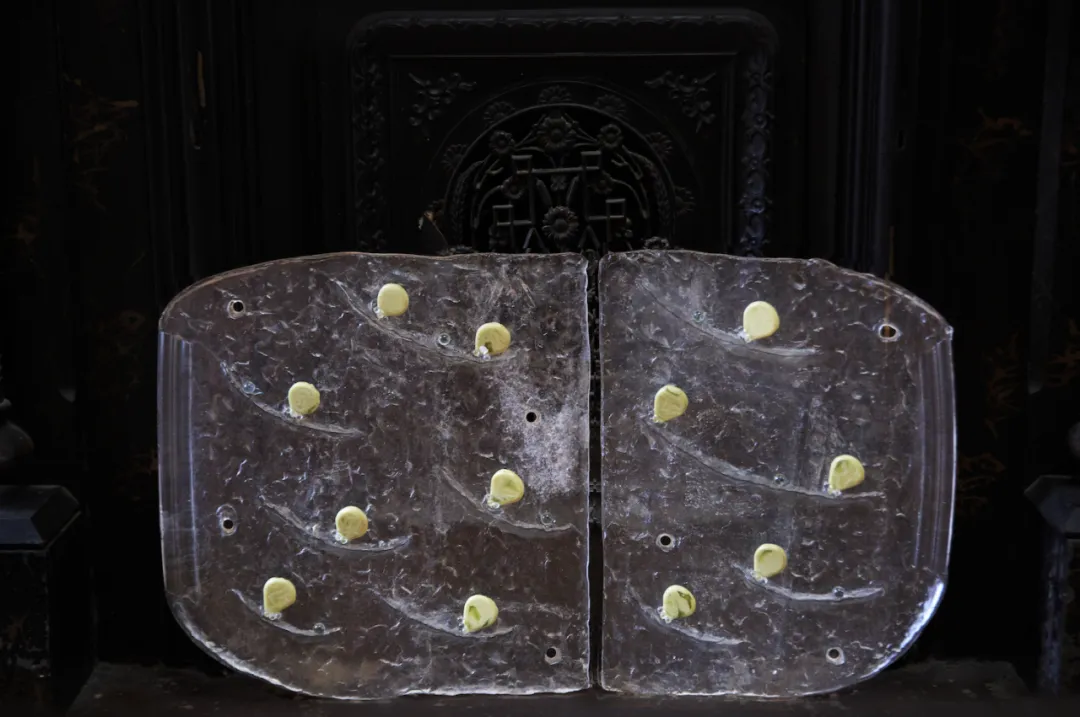
漂流于林间,沉默于山谷 之二
Drift Through the Forest, Silence In the Valley No.02,
2022, 回收玻璃, 茶,
左40x42x3.5cm,右33x43x3.5cm
2.除了创作材料上的统一外,你这十年创作生涯的脉络是由什么串联起来的呢?是某种叙事方式?还是对某一个话题或对象的特别关注?你是如何将其与雕塑这种形式以及玻璃这种材料有效地融合在一起的?
我觉得我创作的思路一直比较偏叙事性,也许跟我本科读视觉传达多少有点关系。比如当时上排版和书籍设计的课,其实都是在学习一种“编辑”的思路:图片和文字之间的关系,“看”的方式等,这在之后的创作中给我的帮助还挺大的。现在我依然保留了这样的思考习惯,每次做个展时我都会觉得自己在设计一本书,从前言到尾声,每一个章节缓缓展开。我从不认为因为自己学的是玻璃专业,所以一定要用玻璃,或者首先要想着用玻璃的哪种工艺方法来做。而是用创作主题去找适合的表达形式,玻璃也不一定要永远做主角,有的时候可能整件作品里只有一点点是玻璃,甚至没有人们印象里那么晶莹剔透,但它一样成立。
每次创作的时候,我都会反问自己用玻璃做这件作品的合理性。从玻璃原材料选择,到制作方式,还有最后的finishing(收尾)的方法,这些是否跟这件作品想表达的内容和语言是统一的?我觉得这对我来说是非常重要的一件事。
我的创作主题一直随着我的生活环境在变化,身边的人和事带给我的感触都会汇聚成每一次创作的出发点。从特别个人化的内容,到逐渐去探讨更广泛的生活环境,再到自然环境。这跟我的经历和兴趣都有非常直接的联系,所以回看以前的作品对我来说也是一份很宝贵的记录。我不太喜欢一直重复做同样的主题,每次开始新系列的时候都想着如何突破一下以往的创作(也是我给自己定的一个要求),这样可以一直让自己有新鲜感。但其实在所有的作品里都有类似的线索在相互牵引着,比如光、时间,转瞬即逝的事物,还有人与人、人与自然相处时打动我的那些瞬间。
3.你的作品大部分都与自然、植物相关,它们是如何成为你的创作灵感或主题的? 在你看来,植物/自然与人类的文化和社会有着怎样的关系?
我大概是疫情时期在家那会儿开始认真养植物、观察植物的。后来发现它们真的太有意思了(比人有意思多了哈哈哈),从植物到昆虫,再到最近入坑的观鸟,每次出门和出差的时候都觉得眼睛和耳朵要忙不过来了,天上地下的看来看去。自从爱上自然观察以来,我突然觉得自己生活的城市里里有一份平行地图,可以看到很多以前完全不会注意的角落,也可以在不同季节收集到不同的景观。以前会觉得北京的冬天秃秃的最不好看,现在反而会觉得是个观察树型和小鸟的好时节,也会更加期待春天的万物复苏。
其实我想做植物主题很久了,但又觉得直接描绘花花草草或做植物造型的雕塑作品缺了点什么,就这样思路卡了很久。直到去年我在清理花盆里杂草的时候手指被草秆上的倒刺扎伤,这个触感突然让我联想到自己和玻璃相处时的状态——那种不经意的“反抗”——也是这样一个契机,让我终于能把自己这些年的观察慢慢带入到创作中。
我对植物的生存智慧很感兴趣,特别是站在一棵已经存在于这个星球上千年的树种面前时,那一刻我会觉得世界的边际是无穷尽的,人类是特别渺小的。在观察中我也重新发现了很多原来不曾留意过的植物与人类社会交织的点。比如我现在很喜欢看城市里人们在窗台上养的植物,尤其是到南方城市的时候,感觉露台上的植物都要顺着阳台流淌到街道里了,非常壮观,也非常能体现出每个城市的气质。以前在电影或文学作品中读到一些植物的描绘,我有时不太能明白作者想表达的情绪,但现在如果真正长时间地观察过这株植物的生长、凋零、休眠或死亡,才会明白那些背后的思绪。
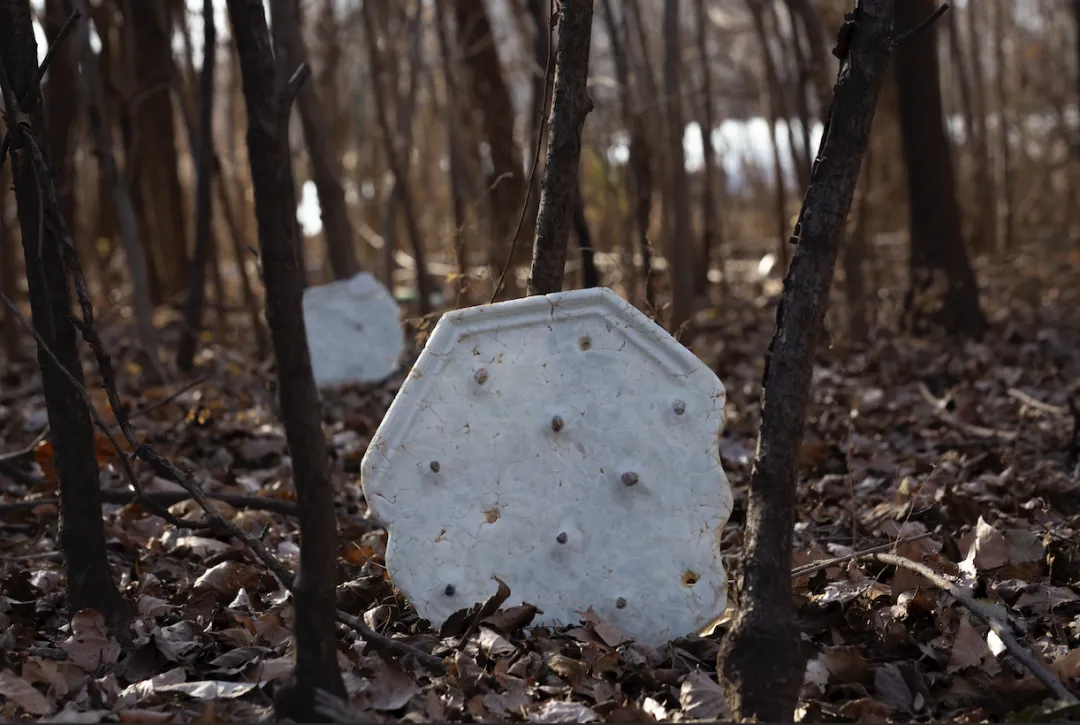
漂流于林间,沉默于山谷 之四
Drift Through the Forest, Silence In the Valley No.04,
2022, 回收玻璃, 茶, 石头, 41x46.5x3cm
4.可以以《漂流于林间,沉默于山谷》这组作品为例,简述一下它的制作过程吗?
每一件作品都有一小段画框的边缘,我先把这个画框边的模具位置定好以后,再慢慢开始捏泥稿。我没有画草图,基本上我会根据当天的状态,以及身边捡到的素材(树枝,石子)来一点点铺开整个泥稿的造型。
泥稿完成后会直接翻制成耐火石膏模具,泥稿取出来,晾干。同时准备玻璃瓶子,把瓶子都洗干净,砸碎后准备填入耐火石膏。
入窑烧制,因为是平板开口模具,所以时间相对不会太久,这一组作品基本上3-4天(每件)可以退火出窑了。
拆掉耐火石膏以后开始冷加工打磨,我会尽量保留玻璃的原始质感,所以精细打磨的时候会格外小心处理。打磨完成后就可以拿回自己的工作室做后续的finishing(收尾)步骤。
Finishing(收尾)主要是茶染会花比较久的时间,刷上茶水后晾干,擦去一些,再继续重复这个操作很多次,直到颜色和细节满意。之后会再补充一些作品表面的细节(粘透明玻璃珠和绿色玻璃片),最后再上一层liquid luster(玻璃上光液)作为颜色的保护。
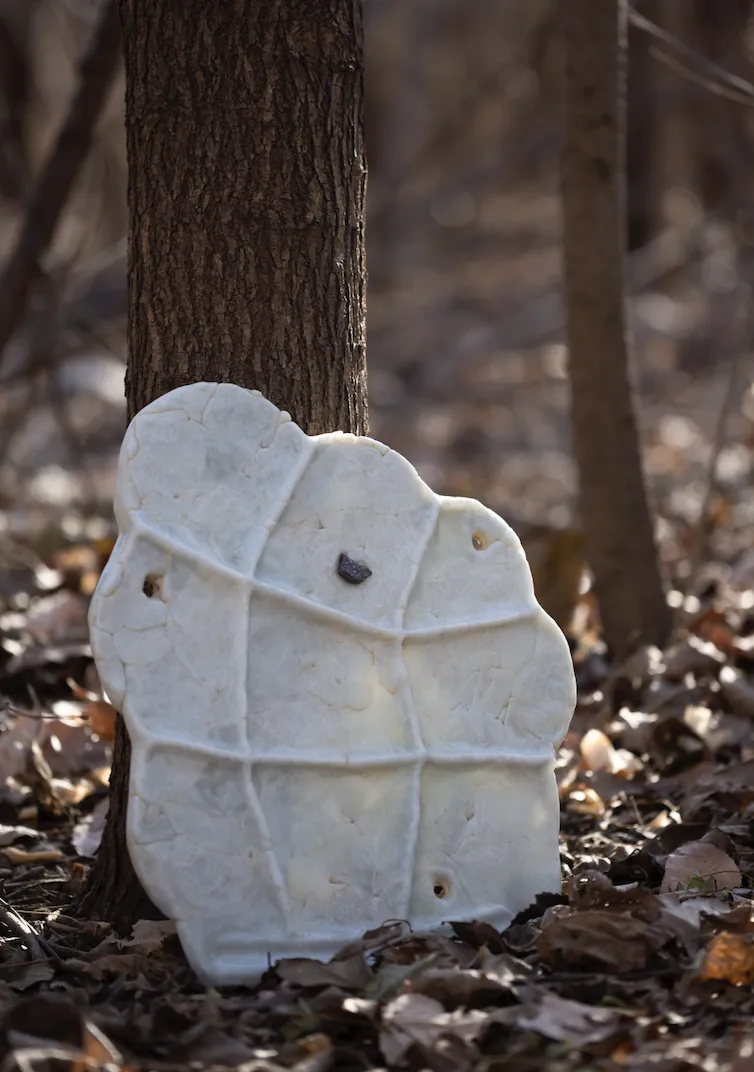
漂流于林间,沉默于山谷 之六
Drift Through the Forest, Silence In the Valley No.06,
2022, 回收玻璃, 茶, 石头, 35x37.5x2cm
5.我注意到你的作品(由于其材质的特殊性)总是会与光线产生关系,在创作之初你就已经将光线纳入考量了吗?如何保证这种存在变量的元素在展示空间内达到最好的视觉效果呢?
是的,我觉得这是跟玻璃材料共事的一个工作习惯。玻璃的透明程度,光影的变化,这些在创作初期就会有一个基本的判断,在制作过程中也经常会发现一些意外惊喜,这些都会对作品最终的呈现起到推动的作用。我在工作室里安装了射灯,所以每次做测试的时候都会先看看在自然光和室内光下作品的不同效果。这样对于之后展览时候空间里如何安排都有帮助~
文/曹娅妮
对话/曹娅妮、杜蒙
Where the heart lies, where the heart yearns, that is home.
Those who wander through nature shall ultimately return their hearts to nature.
Du Meng’s longing for nature has been slowly accumulated over the flow of time, through every small moment and every pause. This is a process that begins with observation and erupts from an accidental encounter. For Du Meng, who grew up in the city, nature seemed to have poured into her life from a certain moment of “seeing.” From then on, its richness, noise, softness, and roughness gradually occupied her eyes, ears, hands, and heart, and she did not resist this belated immersion; on the contrary, she indulged in it.As if gently pushed forward by the wind, Du Meng began to inlay, imprint, etch, or attach branches, raindrops, flowing water, birds, and insect sounds onto glass. Therefore, the making of each of her works resembles an ecological capture, preserving the forms of nature that move her most. After fusing, what merges with the glass itself are her most precious feelings and memories as a creator, shimmering under light.
Thus, even though time flows like water, Du Meng is able to freeze time within light.1. Glass is not a very common material for artistic creation. Why did you choose it as your main direction?In 2010, while studying abroad, I switched from Visual Communication to Glass and Glass Sculpture (at that time, our department was called the School for American Craft, but in recent years it has been merged into Industrial Design due to declining enrollment). Besides some “coincidental” reasons, one of the main reasons was that I did not want to face computer-based design anymore. I remember that during my third year, one night there was a sudden power outage in Building 7, and the entire building immediately filled with cries because files were lost due to not being saved in time. At that moment, I felt that the software made me very insecure, and I still feel this way now (perhaps even more so). Therefore, when applying for graduate school, I wanted to choose a major that allowed hands-on making; I wanted to touch materials, which felt more reassuring physically.After graduating from university, I saw glass works by various artists in museums during my travels, and this experience significantly influenced my later major choice. Glass, as a material, feels mysterious and somewhat dangerous to me, which makes me curious about its making process. Who wouldn’t like something crystal clear? Thus, I began my journey in the field of glass.At the beginning, the learning process was quite difficult. You may have already seen some of my first-year experiences in other interviews. At that time, my mindset was somewhat hard to evaluate, but it was actually quite simple: like accumulating skill points in a game. I hoped to gather enough points to level up quickly, and turning sketches into reality little by little was a very fulfilling experience.Regarding glass as a material, from the selection of raw materials such as frit (glass granules), powder, cane (glass rods), sheet glass, billet (glass blocks), and bar (thick glass rods), to the choice of techniques such as kiln-casting, blowing, flame-working, and stained glass, there are countless combinations. Different production paths lead to works with very different qualities. Therefore, through continuous accumulation of experience, I gradually found a language and method suitable for my own creation. For example, I prefer the semi-transparent state of glass, a slightly clumsy texture, and its relationship with time and light. I feel that this material is very similar to my personality. It has memory and contrast; within an environment, it can remain a subtle, almost invisible presence, or unexpectedly emit a bit of light.2. Besides the consistency in material, what connects your creative practice over the past ten years? Is it a certain narrative method, or a particular focus on a topic or subject? How do you effectively integrate this with sculpture as a form and glass as a material?My creative thinking has always been narrative, shaped by my undergraduate studies in visual communication. For example, in courses such as layout and book design, we were essentially learning a way of “editing”: the relationship between images and text, and ways of seeing. This has been very helpful for my later creations. I still retain this habit of thinking; every time I do a solo exhibition, I feel like I am designing a book, with each chapter gradually unfolding from the introduction to the conclusion. I never think that because I studied glass, I must use glass, or that I should first think about which glass technique to use. Instead, I use the work's theme to find the appropriate form of expression. Glass does not always have to be the main element; sometimes, only a small part of the work is glass, or it may not appear as crystal clear as people expect, but it still works.Each time I create, I ask myself whether it is reasonable to use glass for this work. From the selection of raw materials to the production method, and to the final finishing, I consider whether these are consistent with the content and language of the work. I think this is very important.My creative themes have always changed along with my living environment. The people and events around me gather into the starting point of each creation. From very personal content, to gradually exploring broader living environments, and then to the natural environment. This is directly related to my experiences and interests, so looking back at previous works is also a valuable record for me.I do not like to work on the same theme repeatedly. Every time I start a new series, I think about how to build on previous works (this is also a requirement I set for myself) so I can always maintain a sense of freshness. However, there are similar threads running through all my works, such as light, time, fleeting things, and the moments that move me in relationships between people and between humans and nature.3. Most of your works are related to nature and plants. How did they become your inspiration or theme? In your view, what is the relationship between plants/nature and human culture and society?I probably started taking plants seriously and observing them during the pandemic, when I was at home. Later, I found them extremely interesting (more interesting than people, haha). From plants to insects, and recently to birdwatching, every time I go out or travel, I feel that my eyes and ears are too busy, constantly observing everything around me.Since falling in love with observing nature, I suddenly felt that there is a parallel map within the city I live in. I can see many corners that I would never have noticed before, and I can collect different landscapes in different seasons. I used to think Beijing looked bare and unattractive in winter, but now I find it a good time to observe tree forms and birds, and I look forward even more to spring's revival.In fact, I had wanted to work on plant themes for a long time, but I felt that directly depicting flowers and plants or making plant-shaped sculptures lacked something, so I was stuck for a long time. Until last year, when I was clearing weeds from a flowerpot and a thorn pricked my finger, that tactile sensation suddenly reminded me of my relationship with glass—the kind of unintentional “resistance.” This became an opportunity that finally allowed me to bring my years of observation into my work.I am very interested in the survival wisdom of plants. Especially when standing in front of a species that has existed on this planet for thousands of years, I feel that the world's boundaries are endless and that humans are very small. Through observation, I have also rediscovered many connections between plants and human society that I had not noticed before.For example, I now enjoy observing plants growing on city windowsills. Especially in southern cities, it feels as if plants on terraces are flowing down into the streets, which is very spectacular and also reflects each city's character. In the past, when I read descriptions of plants in films or literature, I sometimes could not fully understand the emotions conveyed. But now, after long-term observation of a plant’s growth, withering, dormancy, or death, I can better understand the thoughts behind those descriptions.4. Could you briefly describe the production process of the series “Drift Through the Forest, Silence In the Valley”?Each work has a small section of a frame edge. After determining the mould position for the frame edge, I begin shaping the clay. I do not draw sketches; instead, I gradually build the form based on my state that day and the materials I collect nearby, such as branches and stones.After the clay model is completed, it is cast into a refractory plaster mould. The clay is removed and dried. At the same time, I prepare glass bottles, clean them, crush them, and prepare to fill them into the mould.The mould is then fired in the kiln. Since it is an open flat mould, the process does not take very long. Each piece in this series takes about 3–4 days to complete annealing and be removed from the kiln.After removing the plaster, I begin cold working and polishing. I try to retain the glass’s original texture, so I handle the fine polishing very carefully. After polishing, the work is taken back to the studio for finishing.The finishing process mainly involves tea staining, which takes a long time. I apply tea, let it dry, wipe away parts of it, and repeat this process many times until I am satisfied with the colour and details. Then I add surface details (such as attaching transparent glass beads and green glass pieces), and finally apply a layer of liquid luster as protection.5. I noticed that your works always interact with light due to the nature of the material. Do you consider light from the beginning? How do you ensure the best visual effect in exhibition spaces?Yes, I think this is a working habit that comes with using glass. The transparency of glass and the changes in light and shadow are considered from the early stages. During the making process, unexpected effects often arise and help shape the final presentation. I have spotlights installed in my studio, so I test the works under both natural and artificial light. This helps me plan how the works will be presented in exhibition spaces. Text: Cao Yani Q&A: Cao Yani and Du Meng展览现场
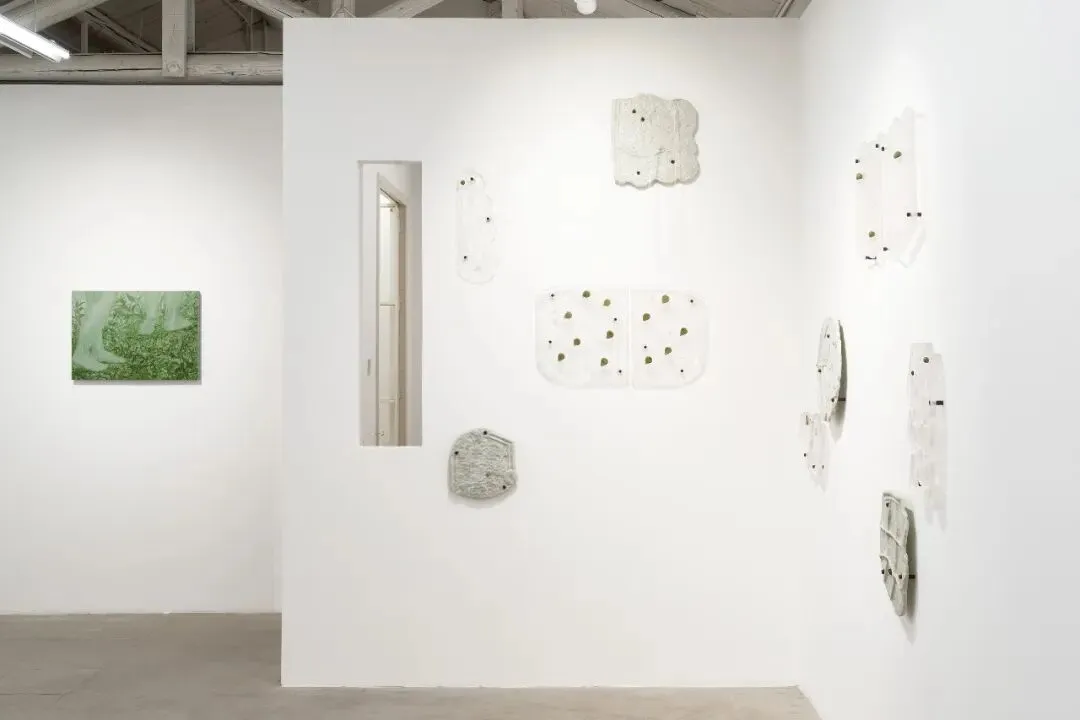
Installation View
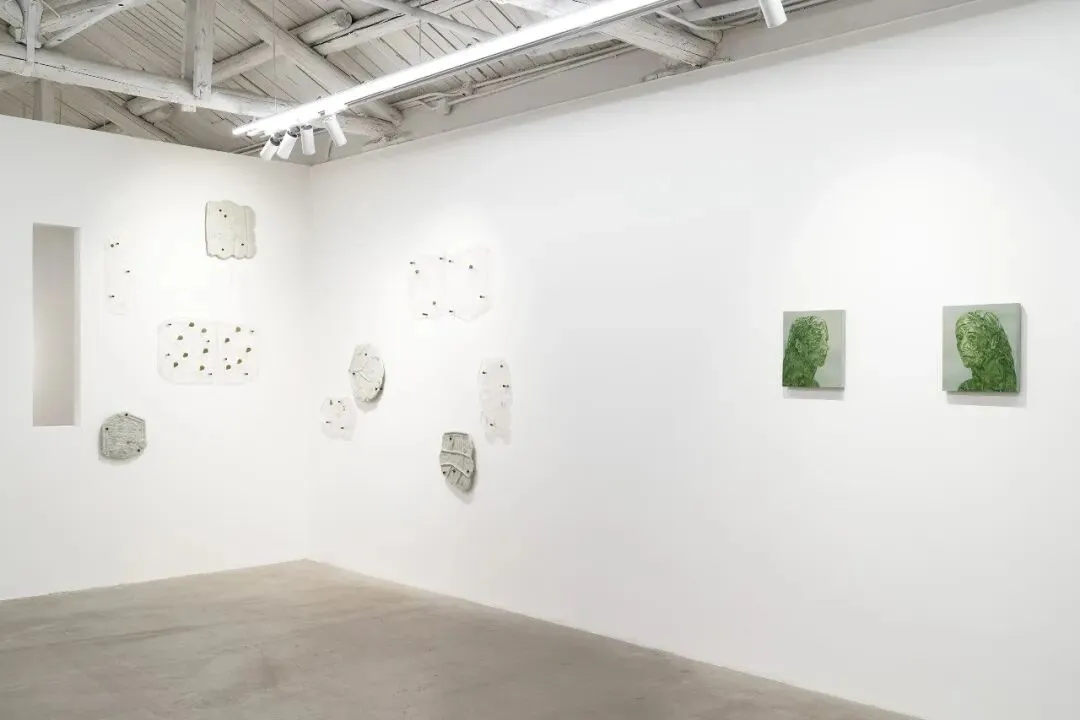
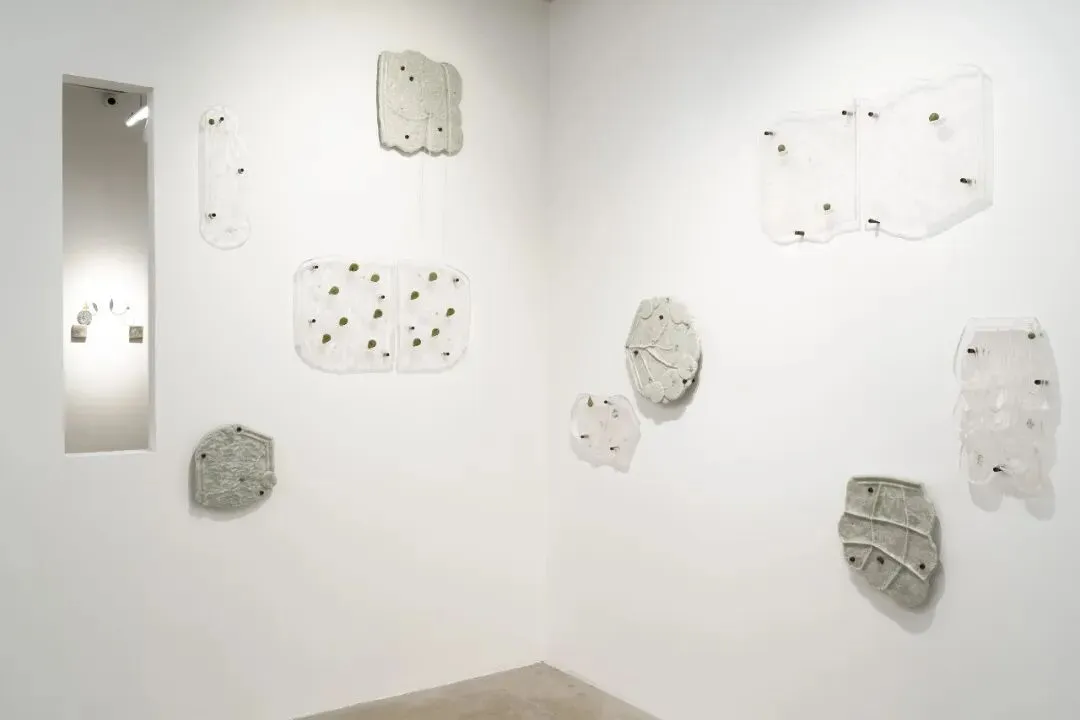
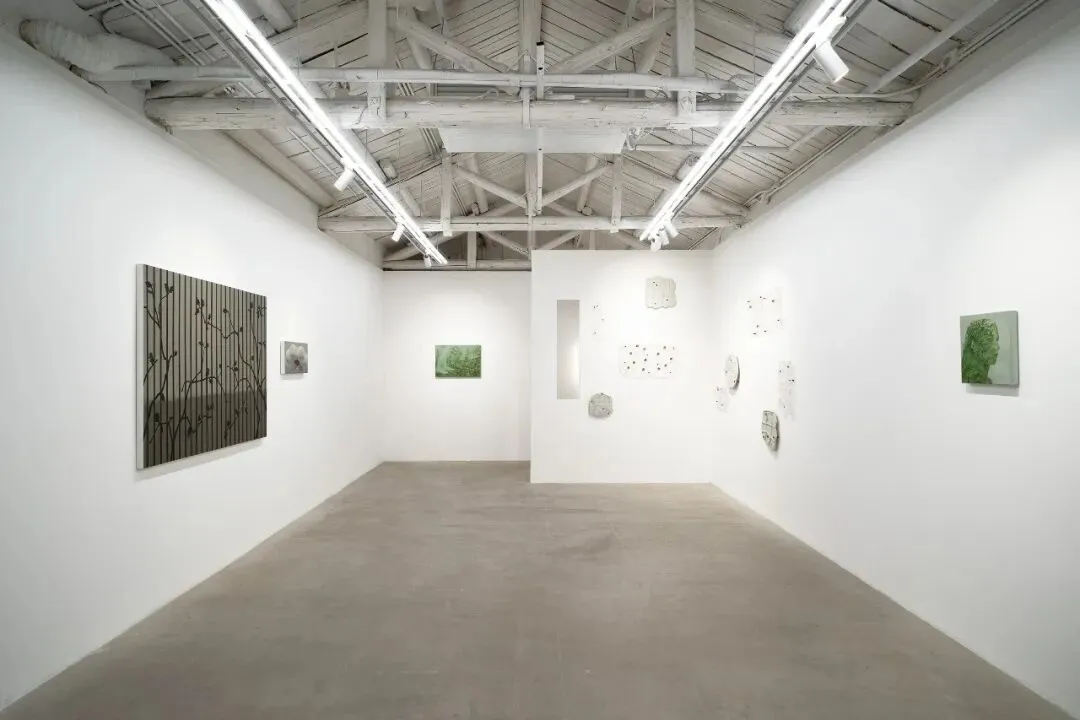
关于艺术家
About the Artist
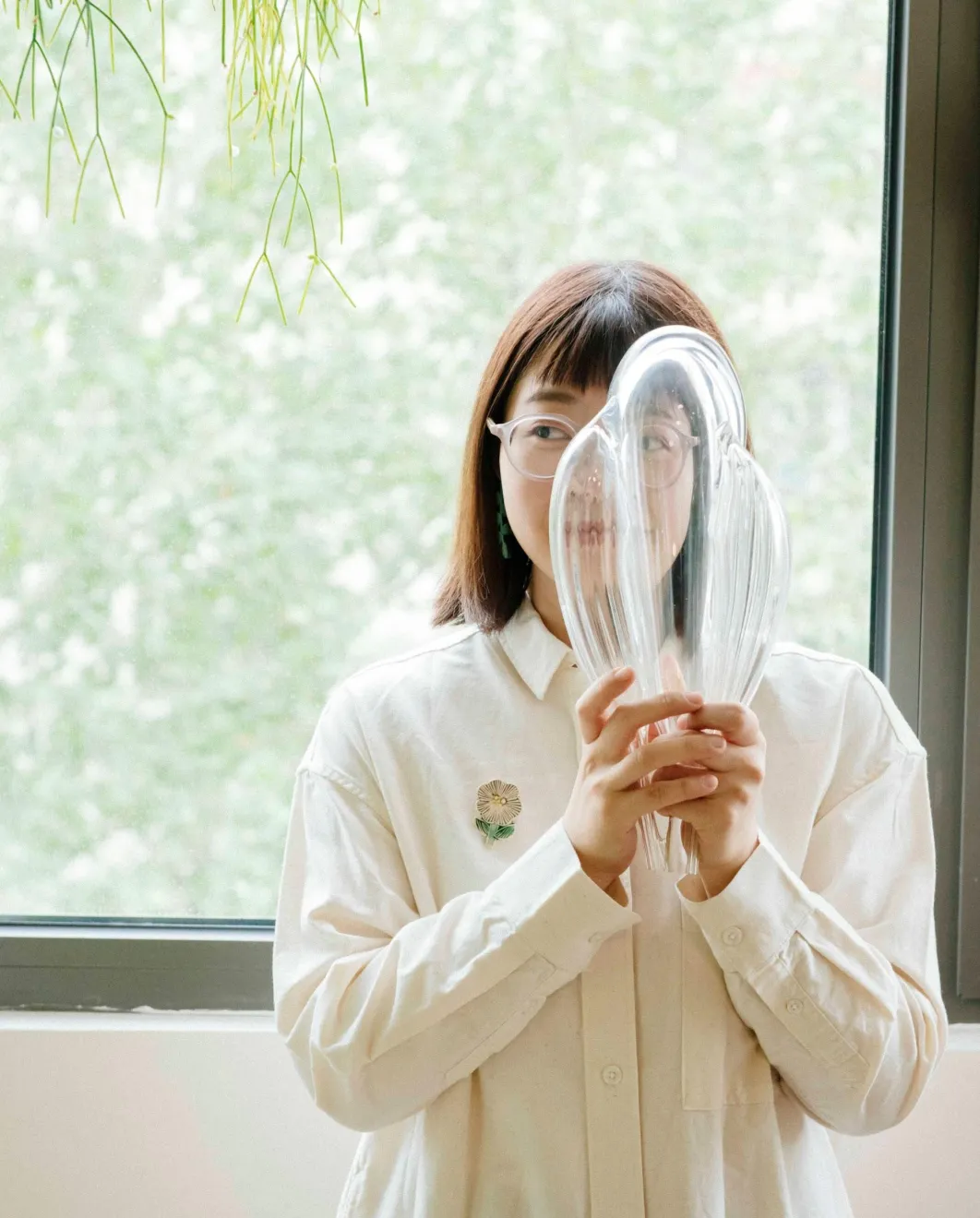
杜蒙/Du Meng
出生于1986年。2008年本科毕业于中央美术学院设计学院。2013年毕业于美国罗切斯特理工大学玻璃专业,目前工作和生活在北京。
杜蒙始终关注对记忆的保存与记录,以免它们随时间的流逝而消退。凭借能够从故事中提取意义的天生敏感性,杜蒙展现记忆衰变的过程,呈现它们如何从潜意识里缓慢消失,变为纪念记忆本身的一种方式。她将速写和插画手法融入到对玻璃的表层处理及图像制作工艺之中,并加入来自个体经验的现成品,以此再现她不愿丢失的,来自特定时空之下的乡愁跟记忆。
个展
2025 我在森林,迟一点到,否画廊(美国纽约州纽约)
2024 跃上水泥花坛,摩天轮画廊(中国深圳)
2023 白日之影,暗夜之影,否画廊(美国纽约州布鲁克林)
2022 高地回声,启皓北京中庭 (中国北京)
2019 烬,否画廊 (美国纽约州布鲁克林)
2018 间,上海玻璃博物馆(中国上海)
2016 退火,否画廊(美国纽约州布鲁克林)
2013 念,RIT NTID Gallery(美国纽约州罗切斯特)
群展
2025 多维:中国当代工作室工艺,维多利亚与阿尔伯特美术馆(英国伦敦)
2024 走近,走进,Lens Gallery(中国北京)
2023 暂停键-否画廊创立十周年纪念展览,否画廊 (美国纽约)
茶知道茶知道,摩天轮画廊 (中国深圳)
2022 我的花还没有名字,上海玻璃博物馆(中国上海)
地面飞行,空中降落——玻璃艺术展,可见光艺术空间 (中国上海)
向内而生——窗内的风景:当代艺术与设计,之谷(中国北京)
遇见•预见——中国当代艺术藏家推荐展,博尔德艺术空间(中国北京)
艺久弥新,否画廊(美国纽约)
2021 物之初艺术展,松美术馆 策划,梵几颐堤港店(中国北京)
海克尔,白垩纪与倭瓜自然科学艺术展,爱马思艺术中心(中国北京)
寻找隐匿的天才:薇薇安 ・迈尔,今日美术馆2号馆(中国北京)
2020 炙热元素,安云艺术设计中心(中国深圳)
2019 四种夏天,金杜艺术中心(中国北京)
2019 Mind the Gap, 特拉华当代美术馆(美国特拉华州威明顿市)
2018 仰观俯察:2018国际艺术与设计邀请展,上海宝山国际民间艺术博览馆 (中国上海)
2017 艺术北京,否画廊(中国北京)
2016 日本金泽国际玻璃大展(日本金泽)
三,Gallery R(美国纽约州罗切斯特)
碰撞/裂变 当代玻璃艺术学术展,天元玻璃艺术节2016玻璃&冰雪主题活动,怀来天元玻璃艺术馆 (中国怀来)
IGLASS,阆风画廊(中国上海)
2015 In-visibilia, Gallery 1975(美国纽约州罗切斯特)
2014 Young & Loving!, S12 Gallery(挪威俾尔根)
4&1,University Gallery(美国纽约州罗切斯特)
未期待的图景,Gallery R(美国纽约州罗切斯特)
2013 2013上海艺术设计展,上海设计博物馆(中国上海)
2012 RIT美国国家工艺系研究生展-创作的过程,Gallery R(美国纽约州罗切斯特)
2009 ICOGRADA世界平面设计大会中央美术学院优秀毕业生作品展,中央美术学院美术馆(中国北京)
驻场项目
2020 驻地艺术家项目,日本濑户国际陶瓷与玻璃艺术交流中心(爱知县,日本)
2019 驻地艺术家项目,日本爱知教育大学,玻璃专业 (爱知县,日本)
2017 驻地艺术家项目,日本爱知教育大学,玻璃专业(爱知县,日本)
2013-2016 驻地艺术家项目,美国罗切斯特理工学院,美国国家工艺系,玻璃专业(美国纽约州罗切斯特)
出版及报道
2020 “这也是我自己的心情写照——总得抓住点什么,哪怕只是一株假草|杜蒙 一席第807位讲者”,一席YiXi,2020年11月16日,插图
“天涯若⽐邻 — 北美抗疫线上慈善拍卖会7⽉8⽇开拍!”,艺术中国,2020年7月8日,插图.
“用玻璃讲故事”,《北京晚报》, 方非,2020年7月9日:09,插图.
“小瘾隐于市”, 《时尚COSMOPOLITAN》,2020年7月,插图.
“专访 | 艺术家杜蒙,玻璃艺术的别样美学”,倍儿艺术,徐天楚,2020年1月23日,插图.
2019 “Embers and Ambers 碳烬与琥珀”,艺术中国,何雨,2019年12月18日,插图.
“杜蒙:玻璃是一种有温度的材料”(否画廊展评),Vogue中国,水母,2019年12月刊,插图.
“‘间隙 | Mind the Gap’中国/华人女性艺术家展将在特拉华当代艺术馆展出”,艺术中国,2019年11月14日,插图.
“杜蒙:用玻璃讲故事的艺术家”,新华社, 宋美黎,任超,2019年11月12日,插图.
“沉静之美!85后北京女孩,将玻璃变成艺术品,讲述有温度的故事,获得国际大奖”,人民日报文创微信公众号,2019年11月4日,插图.
“85后北京姑娘,斩获被日本垄断30多年的大奖,成中国第一人”,一条,周树婷,2019年9月21日,插图.
“与这四位艺术家一起畅想‘四种夏天’”,环球网,2019年8月8日,插图.
2018 ”玻璃的语言”,NeoCha, 陈元,2017年5月17日,插图.
“KEEP IT GLASSY. 要做玻璃女孩吗?坚硬又脆弱、隐晦又透明、温柔又坚定”,黑书,2018年10月14日,插图.
“珍盘知味”,Wallpaper卷宗,2018年1月&2月合刊,插图.
2017 “融入生活的艺术——2017艺术北京否画廊西堤联合开展”,艺术中国,2017年5月2日,插图.
2016 ”The Spoiler's Hand”, Melissa, Chapman,第十二期
“杜蒙:玻璃凝固了乡愁”,城里城外,廖汉斯,2016年8月
杜蒙:退火(展览画册),美国纽约否画廊2016
2015 “玻璃旧事”,中华手工,谢凯,2015年9月刊
“遇见杜蒙,感受玻璃的温度”,2015年6月
“Glass Tiger Meng Du.” Art House Press,Cordaro, Cordell,第六期
“New Glass Review”第三十六期,美国康宁玻璃博物馆收录
流变,2015年青岛当代玻璃艺术展艺术家作品集
奖项
2018 第47届国际玻璃艺术大会新锐艺术家,国际玻璃艺术大会(意大利威尼斯)
2016 奖励奖,2016年日本金泽国际玻璃大展(日本金泽)
2014 第43届玻璃艺术大会国际学生展览三等奖,Palmer House(美国伊利诺伊州芝加哥)
2012 第42届玻璃艺术大会国际学生展览三等奖,SeaGate会展中心(美国俄亥俄州托利多)
关于策展人
About the Curator
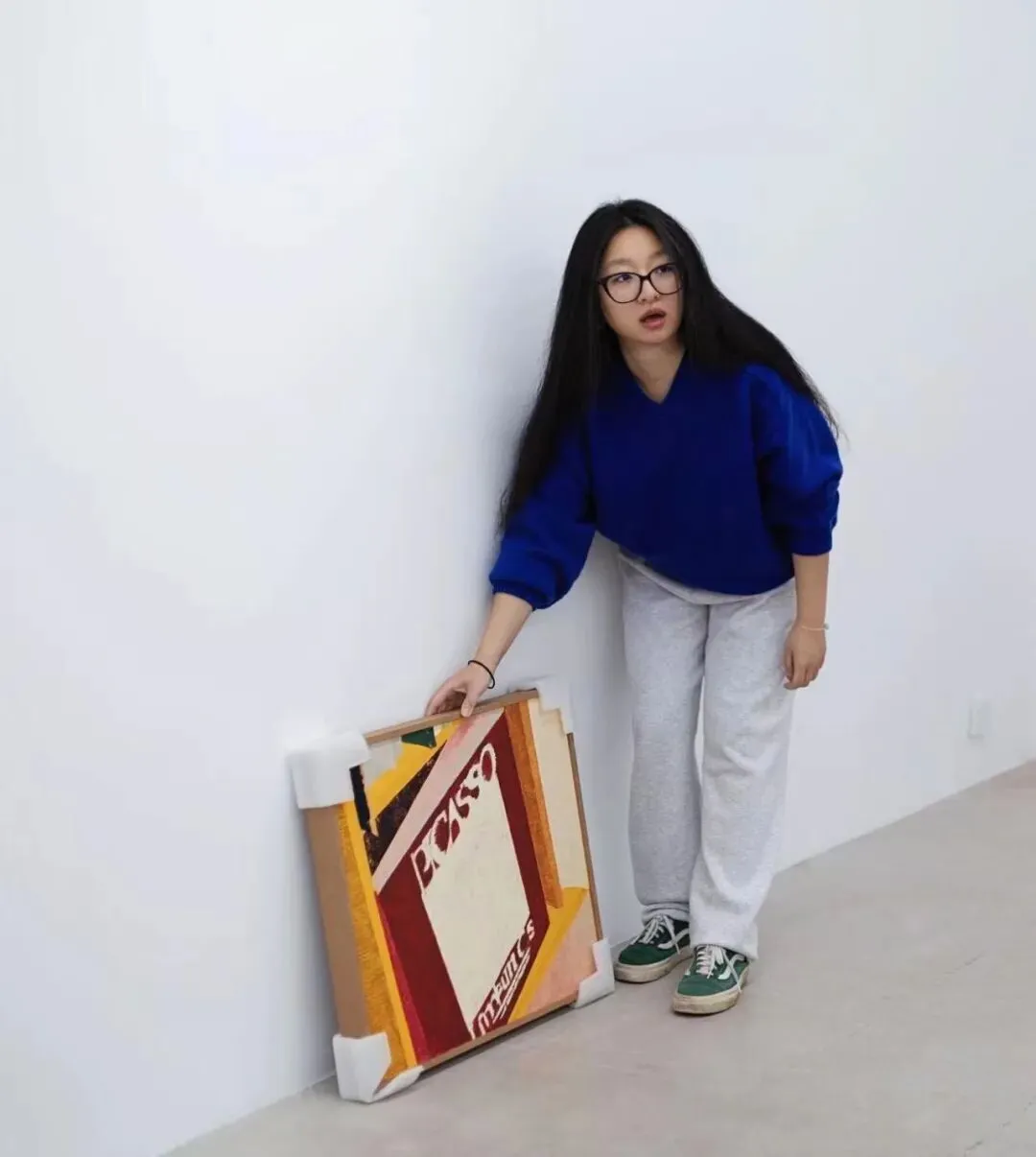
曹娅妮 / Cao Yani
1990年生于北京。独立策展人,艺术家。2012年毕业于中央美术学院;2013年毕业于伦敦艺术大学。曾任PLATESPACE主理人及策展人。主要关注年轻艺术家实验性实践,语境式与结构性空间叙事。
作品垂询请邮件至
info@double2gallery.com
更多内容
Read More
特别鸣谢
Brand Appreciation