

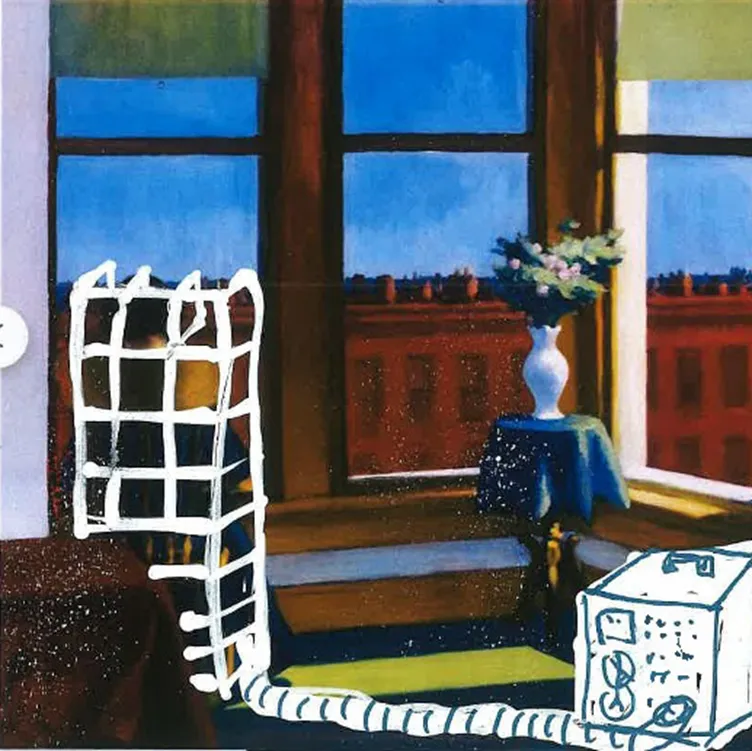
在当代建筑语境中,视觉几乎主导了一切——从渲染图到建成环境本身,建筑日益以“图像”的形式被观看和消费。然而,“看”这一行为本身却很少被反思:视觉究竟如何参与空间的建构与理解?本研究由教授Daein Cheong提出假设并构建概念框架:如果感知如同新生儿般,仅依赖最基础的视觉机制——没有经验、没有判断——建筑将呈现出怎样的状态?他将这种观看方式称为“epoché eye”。通过模拟一种去除既有认知结构的纯视觉体验,本项目尝试重新思考建筑如何被感知,并进一步与认知科学、神经科学等领域展开跨学科对话,探索视觉、感知与建筑之间更深层的关联。
In contemporary architectural discourse, vision dominates nearly everything—from renderings to the built environment itself. Architecture is increasingly viewed and consumed as image. Yet the act of seeing itself is rarely questioned: how does vision participate in the construction and understanding of space? This research was initiated by Professor Daein Cheongthrough a hypothesis framed within a conceptual narrative: if perception operated like that of a newborn—relying solely on fundamental visual mechanisms, without experience or judgment—what form of architecture would emerge? He termed this mode of perception the “epoché eye.” By simulating a form of vision stripped of prior cognitive frameworks, the project reconsiders how architecture is perceived and opens interdisciplinary dialogue with cognitive science and neuroscience, exploring deeper relationships between vision, perception, and spatial experience.
SpF|理论与档案的建立
Rethinking Sight in Architecture: Theory, History, and Archiving
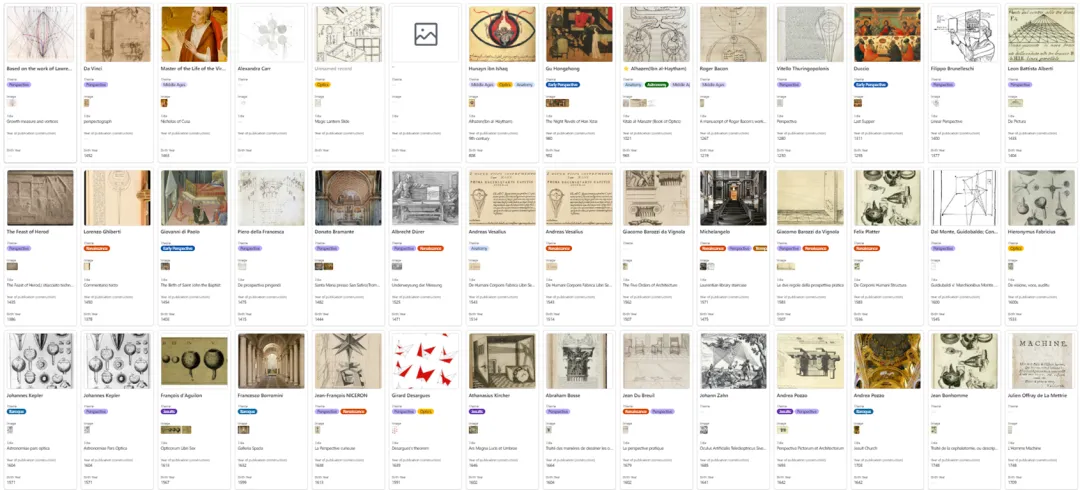
在项目初期,研究团队在指导下系统性整理并归档了与“视觉”相关的理论与历史材料,涵盖哲学、建筑史与认知科学等领域。这些文献与案例被整理至Airtable数据库中,逐步构建起一个关于视觉与空间关系的数字档案体系。这一阶段为理解视觉在建筑中的作用奠定了理论基础,并为后续从抽象研究向实验实践的转化提供了方法支撑。
In the early phase, the research team systematically organized and archived theoretical and historical materials related to vision, drawing from philosophy, architectural history, and cognitive science. These sources were documented in Airtable, forming a growing digital archive on the relationship between sight and space. This phase established the theoretical foundation for understanding vision as an architectural operation and supported the subsequent transition from abstract research to experimental practice.
Representation|从“看见图像”到“理解观看”
ARCH 2304 REPRESENTATION 4: Inventing Representation Tools
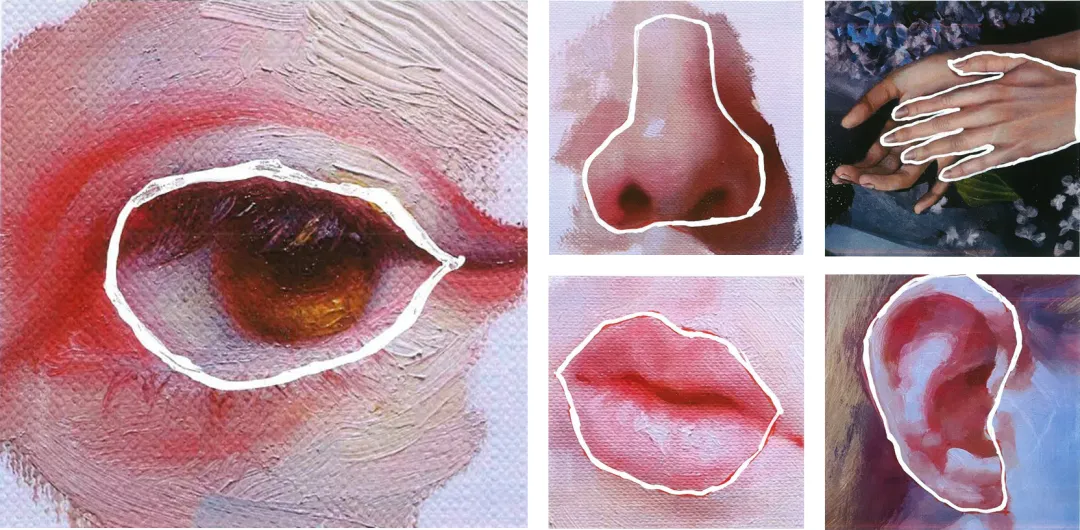
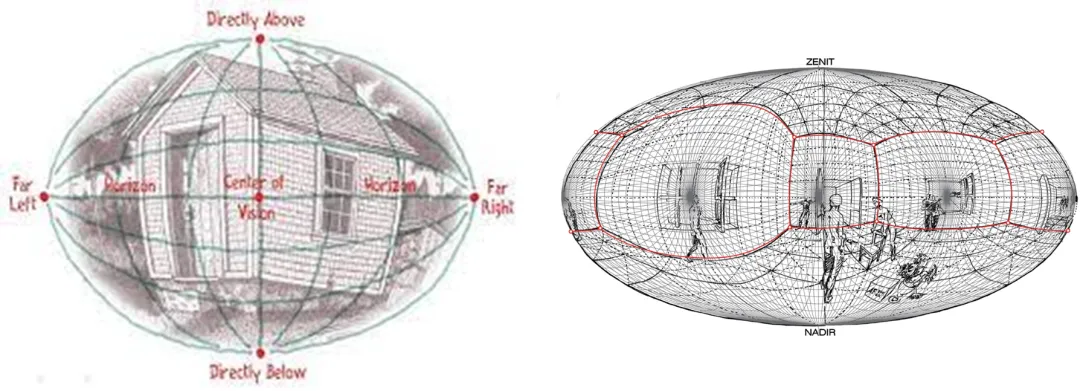
随着理论框架逐步清晰,项目进入实验阶段。其中反复被提出的问题是:人们是否真正理解“看”这一行为本身?建筑实践中通常依赖相机记录与表达空间,但研究表明,“眼睛”与“相机”并不等同。相机仅捕捉图像,而人眼则持续参与空间的感知、判断与意义建构。因此,关于视觉的研究需回溯至人类视觉系统本身的生理机制与认知过程。该阶段的研究聚焦于双眼视觉的工作方式,包括左右眼图像在视交叉处的整合机制,以及这一过程如何在大脑中形成具有深度感的整体视野。同时,这一机制也限制了个体在同一时间内可获取的空间信息量。基于这些认知,研究进一步探索了不同于传统线性透视的表达方式,并开展了曲线透视(Curvilinear Perspective)的实验。这一投影模式更接近人眼真实的观看体验,也为建筑表达提供了新的方法路径。上述研究最终转译为一种实验性观看装置——Spherical Projection Machine。该装置从概念构建、形式推演到制作与测试,均作为研究工具使用,旨在使观者进入“epoché eye” 所指向的观看状态,在暂时悬置既有经验的前提下重新感知空间。
As the theoretical framework became clearer, the project moved into an experimental phase. A recurring question emerged: do people truly understand what it means to see? In architectural practice, cameras are commonly used to document and represent space. However, research indicates that the camera and the human eye are fundamentally different. A camera merely captures images, whereas the human visual system continuously participates in perception, judgment, and meaning-making. Consequently, research on vision must return to the physiological and cognitive mechanisms of human sight. This phase focused on binocular vision, including how images from the left and right eyes are integrated at the optic chiasm and processed into a unified visual field with depth perception in the brain. This mechanism simultaneously constrains the amount of spatial information available at any given moment. Based on these findings, and under Daein’s guidance, the research explored representational modes beyond linear perspective and conducted experiments with curvilinear projection, which more closely approximates real human visual experience and offers alternative methods for architectural representation. These investigations were ultimately translated into an experimental viewing device—the Spherical Projection Machine. The device, developed through conceptual design, formal testing, and fabrication, functions not as a theoretical proposition but as a research instrument that enables viewers to enter the “epoché eye” mode of perception, temporarily suspending prior experience to re-perceive space.
SRD|阶段性展示与反馈
Interim Review and Presentation
基于前期研究与实验成果,项目以3 分钟口头报告(3-min Oral Presentation Slides)的形式在 SRD 中集中呈现,内容涵盖视觉机制、透视实验与装置概念,并获得优秀口头报告展示奖。这一阶段进一步验证了研究成果的表达逻辑,也为后续展览呈现提供了经验支持。
Building on earlier research and experimentation, the project was presented at the SRD in a 3-minute oral presentation format, addressing visual mechanisms, perspective experiments, and the conceptual development of the device. The presentation received the Outstanding Oral Presentation Award. This stage further tested the clarity of the research framework and provided experience for subsequent exhibition presentation.
Exhibition|无视差
Without Parallax
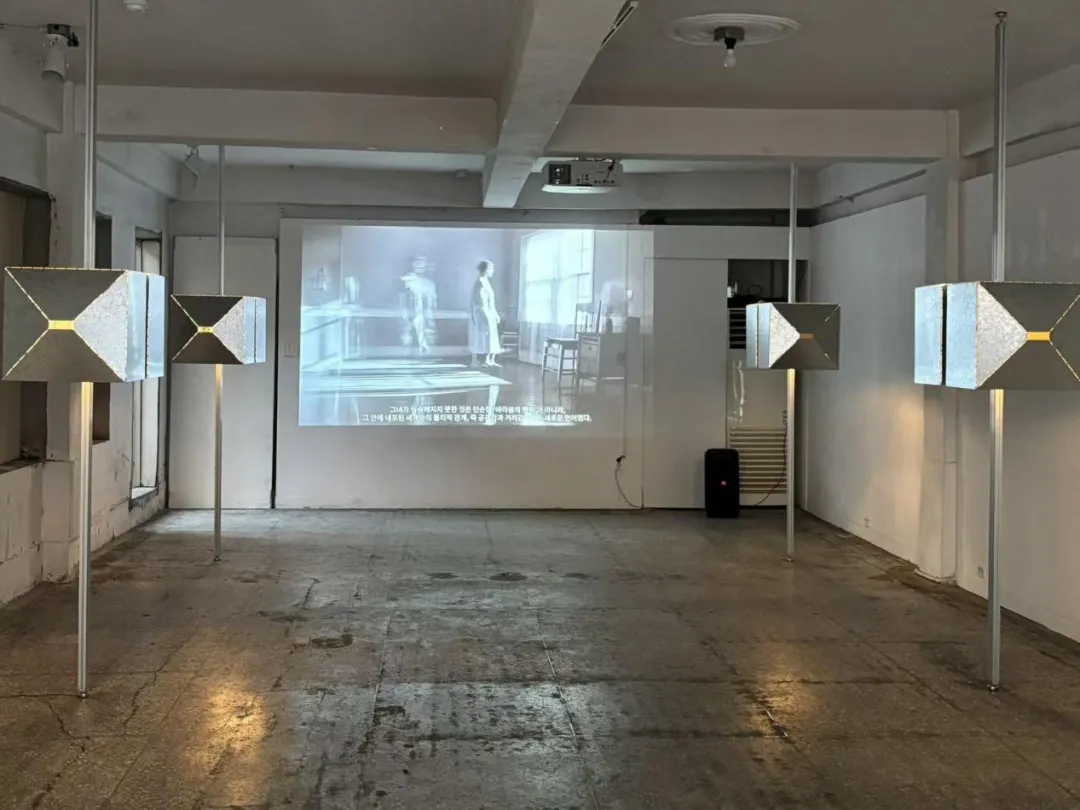
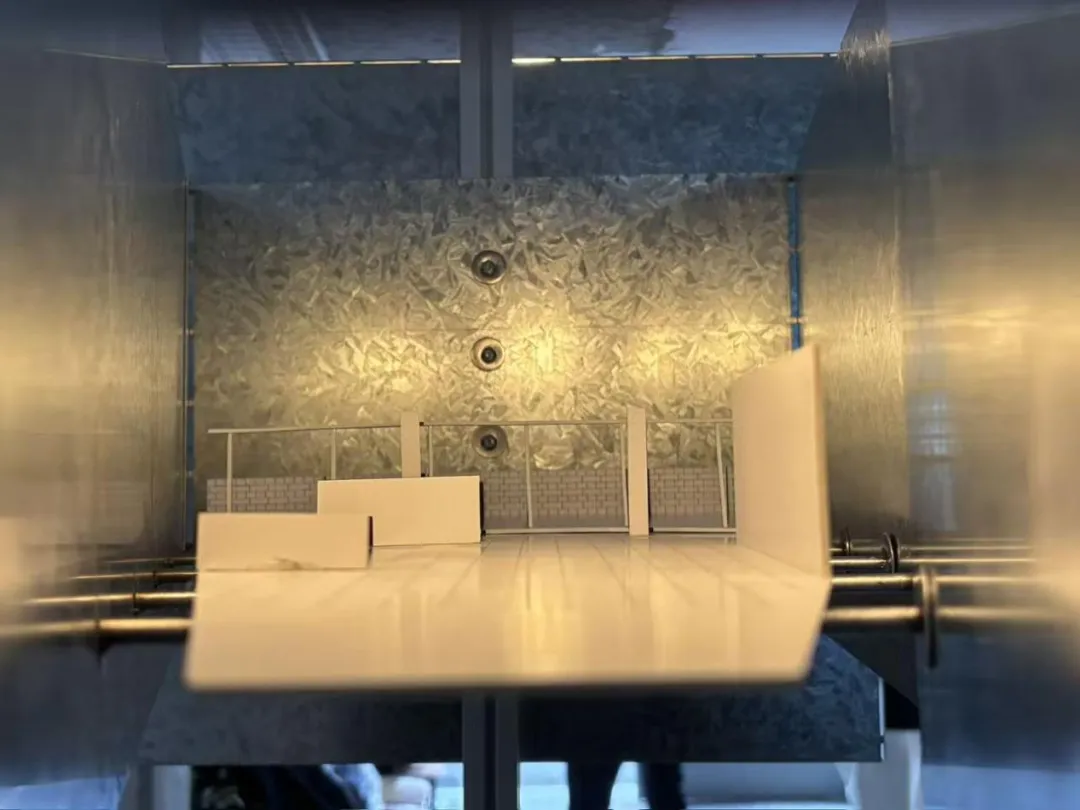
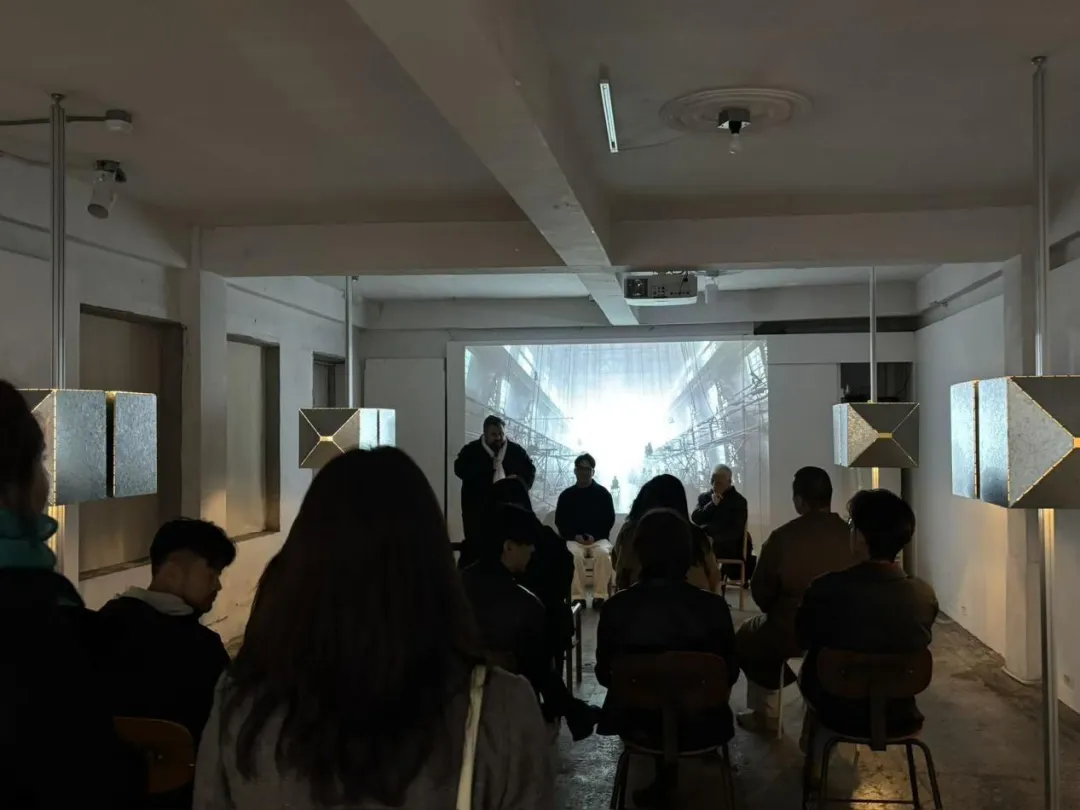
研究最终以展览Without Parallax的形式呈现在首尔。整体展览通过一系列内部发光的铝合金盒子进行呈现。观众需要透过盒子上的小孔观看其中的图像与模型,这种观看方式本身也成为展览体验的一部分。在展览筹备阶段,整个团队花费了一到两个月的时间进行装置与模型的手作制作,将研究内容转译为可被展示的实体形式。同时,基于研究中的虚构故事背景,我们还协助制作了一部使用AI生成的短片电影,用影像的方式整体讲述研究的脉络。展览空间位于首尔街道一侧,是一处历史较久的画廊。狭长的展厅中,影片投影在空间中央,两侧依次排列着八个铝合金展示盒,分别呈现图像与模型。开展当天,教授Daein邀请了多位韩国当地的建筑师与相关从业者参与。其中包括他与建筑系执行主任Vincent Peu Duvallon在SPACE事务所工作时期的同事。Vincent在开场致辞中感谢了大家对教授Daein的支持与帮助,也表达了对其长期研究工作的认可。随后,教授与一位长期研究建筑视觉议题的首尔学者展开访谈,围绕视觉、感知与建筑进行深入讨论。活动结束后,大家在画廊后院继续交流,这种轻松而开放的氛围,也成为这次展览最深刻的记忆之一。
The research ultimately culminated in an exhibition titled Without Parallax, presented in Seoul. The exhibition was displayed through a series of internally illuminated aluminum boxes. Viewers were required to look through small apertures in the boxes to observe the images and models inside, making the act of viewing itself an integral part of the exhibition experience. During the preparation phase, The entire team spent one to two months on the manual production of the device and the model to translate the research into physical, exhibition-ready forms. At the same time, drawing on the project’s fictional narrative framework, we also contributed to the production of a short AI-generated film that conveyed the overall trajectory of the research through moving images. The exhibition space was located along a street in Seoul, housed in a long-established gallery. Within the narrow, elongated interior, the film was projected at the center of the space, while eight aluminum display boxes were arranged sequentially along both sides, presenting images and models. On the opening day, Professor Daein invited several local architects and professionals from Korea, including former colleagues from his time working at SPACE Architects with Executive Director of the School of Public Architecture Vincent Peu Duvallon. In his opening remarks, Vincent expressed gratitude for the support and encouragement given to Professor Daein, and acknowledged his long-term research contributions. This was followed by a conversation between my professor and a Seoul-based scholar who has long studied architectural vision, engaging in an in-depth discussion on vision, perception, and architecture. After the event, the discussion continued informally in the gallery’s backyard. This relaxed and open atmosphere became one of the most vivid and lasting memories of the exhibition.
结语|关于“看”的一次重新学习
Conclusion: Relearning How to See
从理论研究到实验装置,再到展览呈现,该项目构成了一次关于视觉如何塑造空间认知的系统性探索。研究表明,视觉并非中性或理所当然的能力,而是一种由身体、生理机制与经验共同建构的感知过程。当装置从课堂进入公共展览空间,并被不同背景的观众以多样方式观看与解读时,研究、设计与感知之间的关联得以具体呈现。本项目进一步指出,对“看”的研究不仅属于建筑表达本身,也可作为理解空间、身体与世界关系的一种方法论路径。
From theoretical inquiry to experimental apparatus and finally exhibition, the project constitutes a systematic investigation into how vision shapes spatial cognition. It demonstrates that vision is not a neutral or self-evident act, but a perceptual process constructed through bodily, physiological, and experiential conditions.As the apparatus moved from the classroom into a public exhibition space and was interpreted by audiences from diverse backgrounds, the connection between research, design, and perception became tangible. The project thus suggests that the study of seeing extends beyond architectural representation and can serve as a methodological approach to understanding relationships between space, the body, and the world.

出品|温州肯恩大学迈克尔格雷夫斯建筑与设计学院
文字|Xufan Xi
图片|Daein Cheong, Yousub Song, Xufan Xi
编辑|Yiqi Chen
审核|Vincent Peu Duvallon, Bobbie
