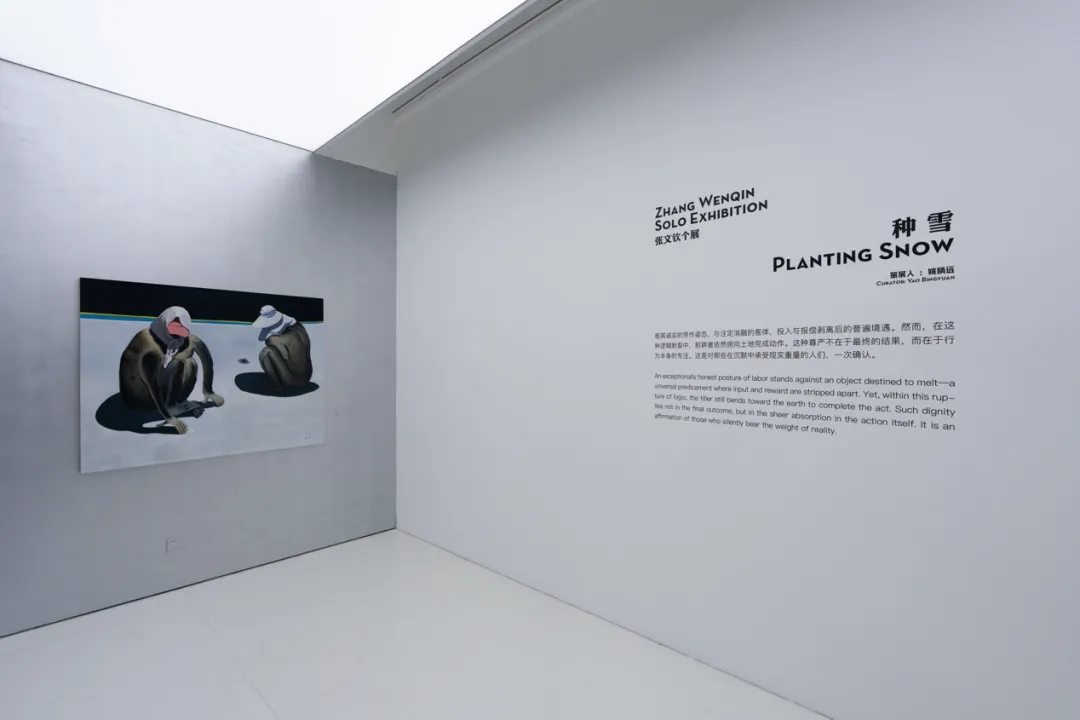
张文钦 :种雪
Zhang Wenqin :Planting Snow
艺术家 Artist|张文钦 Zhang Wenqin
策展人 Curator|姚柄远 Yao Bingyuan
展期 Date|2026.01.10-2026.03.01
文/李战豪
在张文钦《种雪》个展的现场,《雪地里蹲着两只豺狼》是一幅很特殊的作品,艺术家简练地勾勒出赤裸似兽、冠戴似人的劳动者,在冰原上劳作。平面简约的画面,让视觉集中在“劳作者”的姿态上。虽然这里不会给出令人满意的注解,但却是艺术家关照现实的一种写真:“僵化和冥顽造就了劳而无获的因果”。
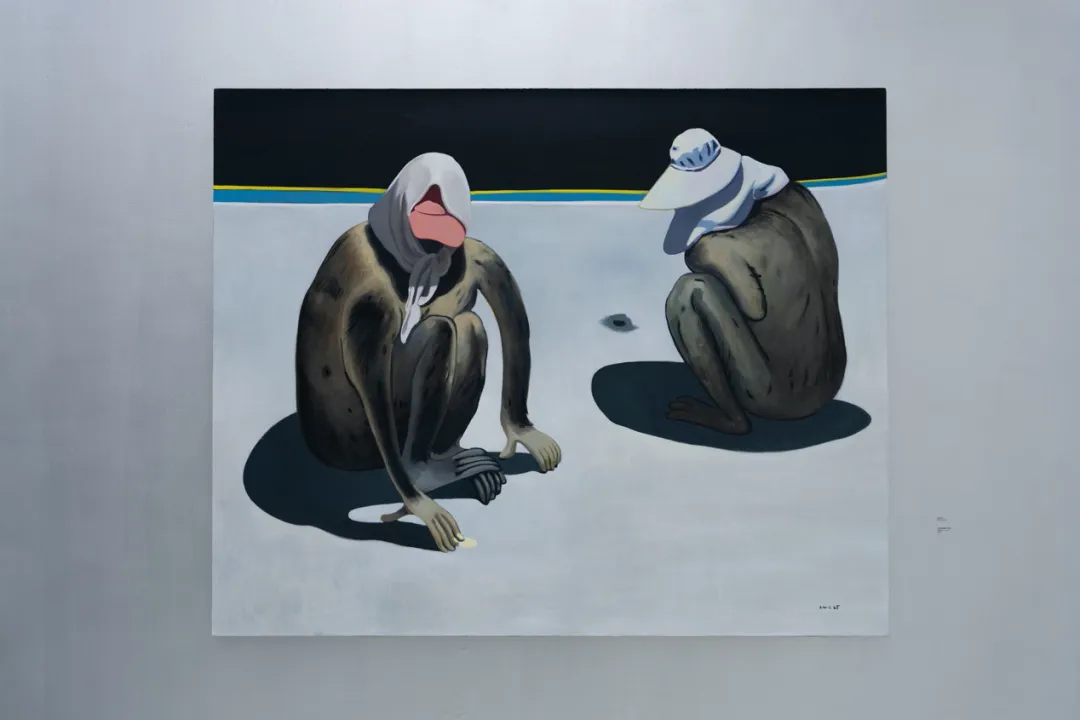 雪地里蹲着两只豺狼 布面油画 160x130cm 2025
“乡土中国”,奠基于传统的农业经济之上。今日中国沧桑巨变,但传统农耕劳动者因其具有显著的排他性和封闭性,依然是时代“差序格局”中的结构性壁垒。
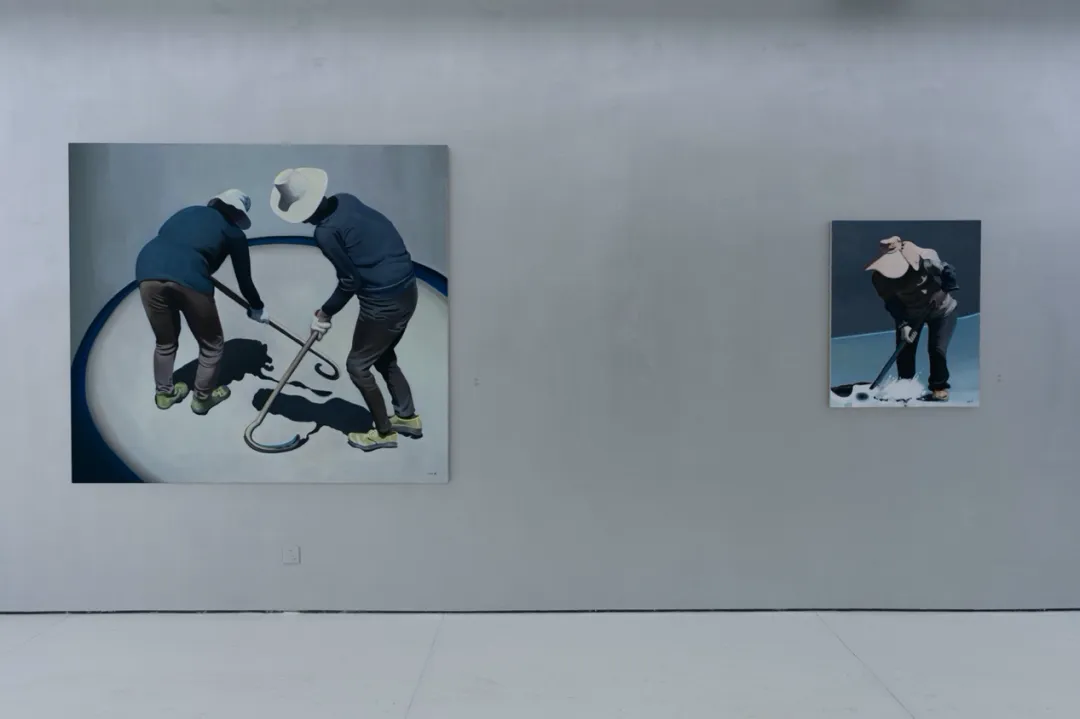 种雪202504 布面油画 200x180cm 2025(左一)
铲雪的人 布面油画 120x100cm 2025(右一)
在当下缤纷的视觉艺术试验场里,张文钦摒弃了戏剧性高潮与即兴表达,转而构建其擅长的朴素、内敛的 “奇幻”。这种非超现实、象征主义的“奇幻”,是习见的关于人的戏谑式隐喻。在《种雪 202504》、《铲雪的人》作品中,劳动者的范式姿态和扭曲的工具之间形成一种相互消解的关系,反复回应“有力”与“无果”的中心叙事。这是艺术家通过绘画向消费社会和世俗抗衡无力后的自嘲。其画面冷峻的色调背景,圆弧形的分割结构,更加底衬出这种“无果”自嘲的氛围。
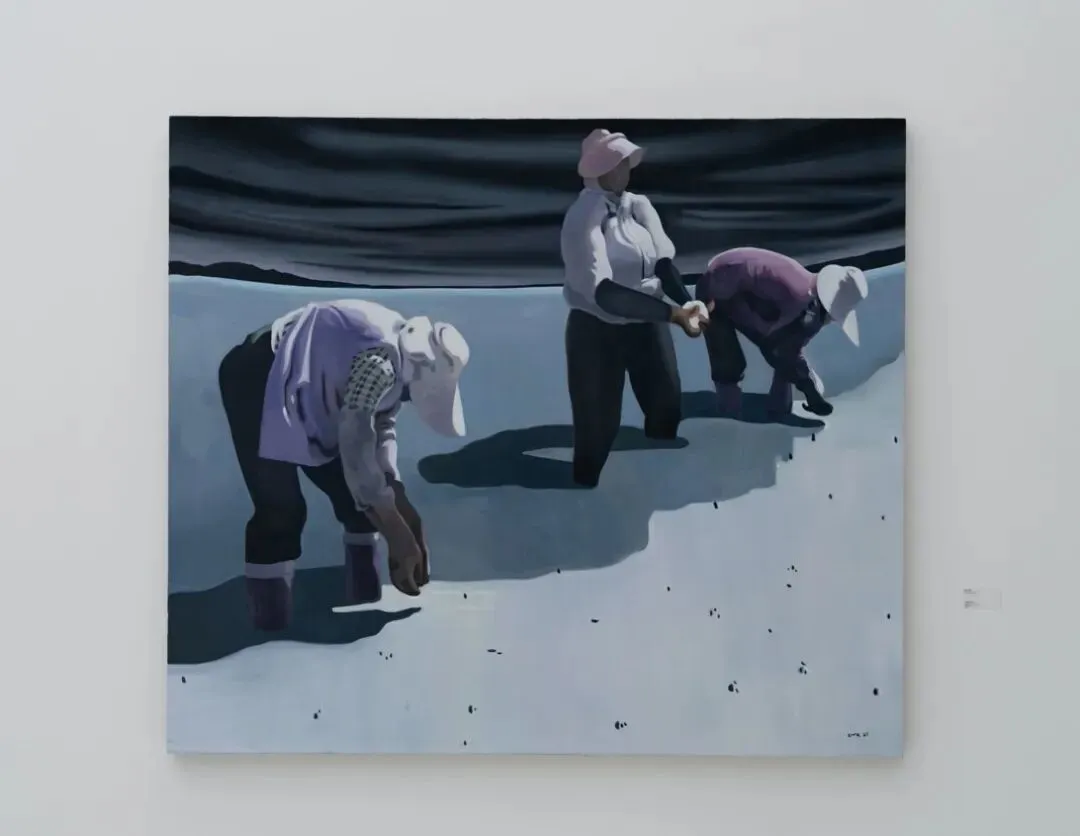 种雪202501 布面油画 130x150cm 2025
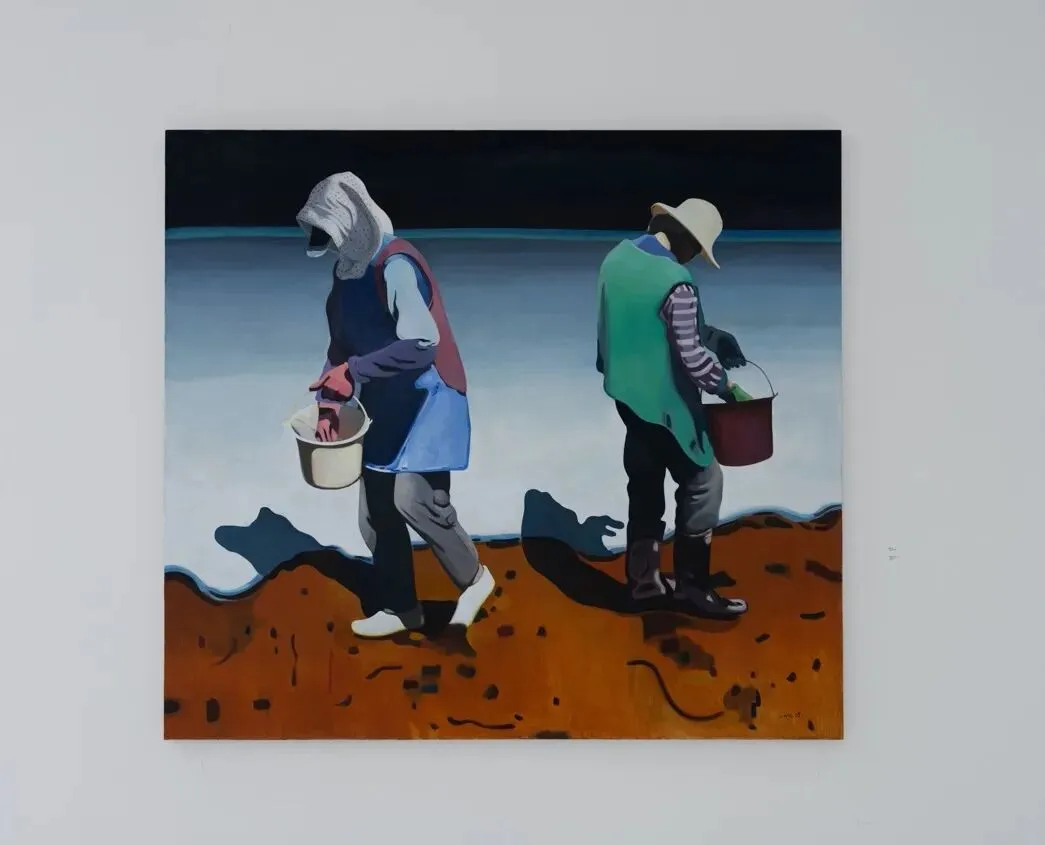
在《种雪》个展的作品中,观者不难发现,劳动者的服饰多是夏日的穿着,而劳动场景却是冬日的景象,这种“两重天”的画面效果,成为了这次展览里的视觉线索。这对于“当下经验”肯定是冲突的,但又明显是经过反复推敲与提炼后的结果,在模糊了南与北、冷与暖的某种不自知的隐性指向中,呼应出的是艺术家由南及北的成长历程——那种不安定的物质世界和令人向往的精神世界的紊乱与冲突。
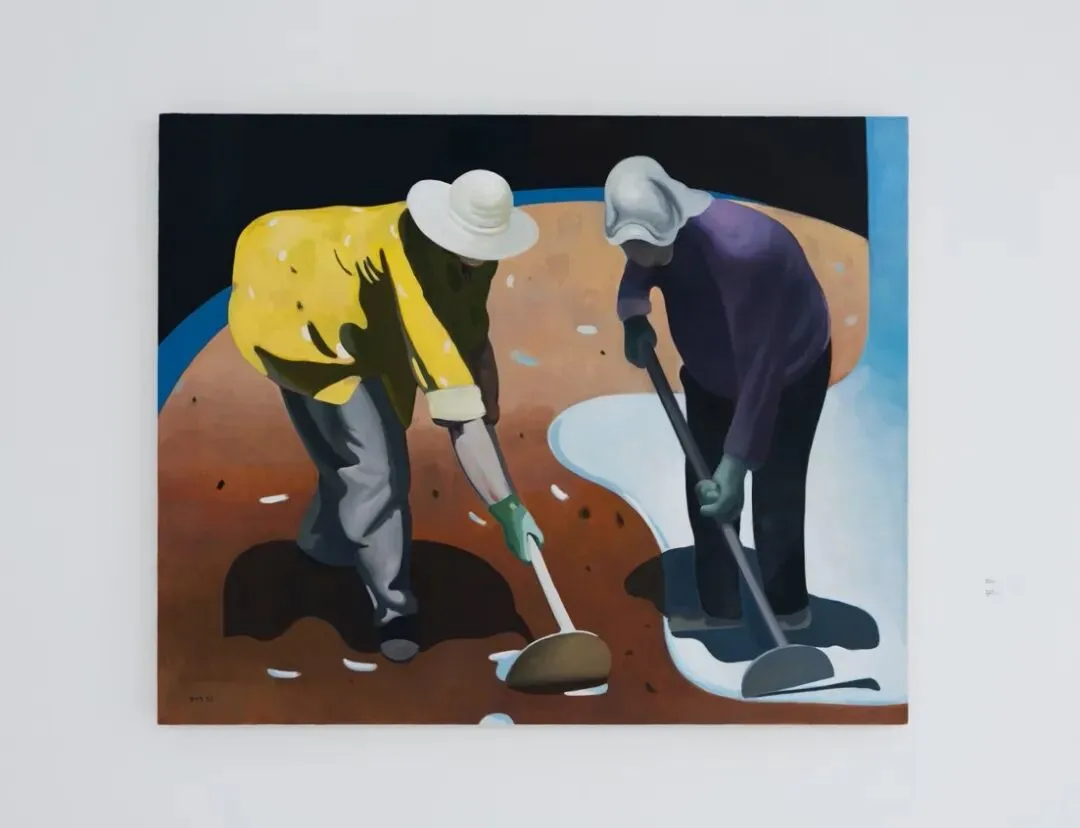
两个月牙铲 布面油画 130x160cm 2025
云南的红土地,光照明媚的时空,单衣劳作的人们,本应是一幅美好的画卷。艺术家却刻意描绘成至暗时空下的荒寒景象,画面的尽头幽暗的令人窒息。艺术家“两重天”的对比处理手法,实际是人面对无法抵挡的力量时之无助,时光珍贵与生命焦虑间的浪漫式的恐惧。
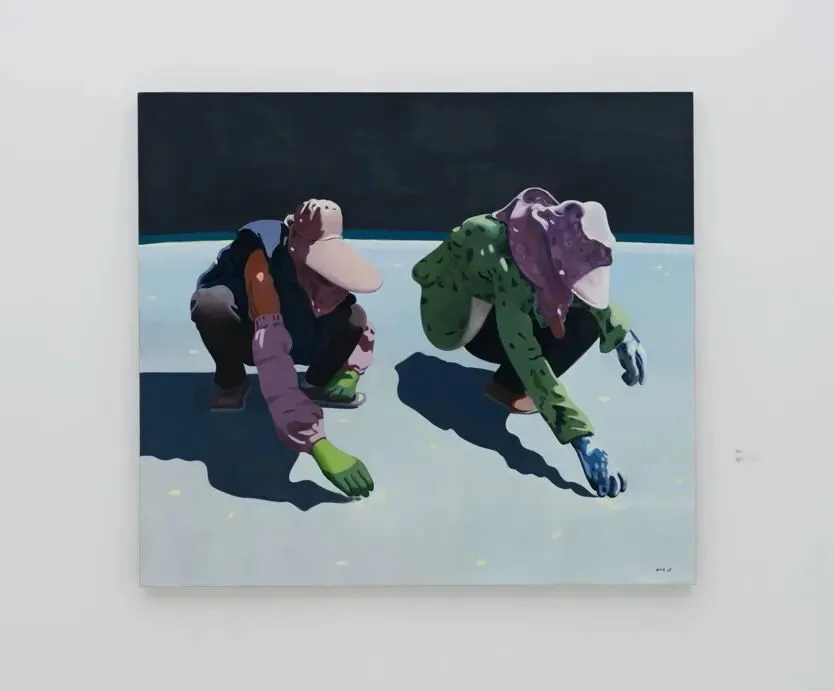
种雪 202503 / 布面油画 / 180x160cm / 2025
继艺术家《反身拟态》个展后的,张文钦最新的绘画创作把对“雪”的描绘转向了劳作的人,这是他艺术创作新的锚点。作为出生于云南的白族人,他将自己对白族劳动者的观察和理解融入到创作中,这些在主流叙事里未能言说的生命体验,在其自身的创作语境里,以一种祥和而又矛盾的姿态,呈现在画面中。
Text by Li Zhanhao
At the exhibition site of Zhang Wenqin’s solo show Planting Snow, Two Jackals Squatting in the Snowfieldstands out as a particularly distinctive work. With restrained and economical lines, the artist depicts laborers who appear beast-like in their nakedness yet human-like in their crowned heads, working across an icy plain. The composition is markedly flat and minimal, directing the viewer’s attention toward the posture of labor itself. Although the work does not offer a comforting or definitive interpretation, it functions as a documentary gesture of the artist’s engagement with reality: “rigidity and stubbornness give rise to the causality of labor without harvest.”
“Rural China” is historically rooted in a traditional agricultural economy. While contemporary China has undergone dramatic transformation, agricultural laborers—owing to the exclusivity and closed nature of their production structures—remain a structural barrier within the hierarchical social order characterized by differential networks of relationships.
Within today’s visually saturated experimental art landscape, Zhang Wenqin abandons theatrical climaxes and improvisational expression, instead constructing a subdued and restrained form of “fantasy” that has become his signature. This fantasy is neither surrealist nor symbolic in the conventional sense; rather, it operates as a familiar, ironic metaphor of the human condition. In works such as Planting Snow 202504and The Snow Shoveler, the standardized postures of laborers and their distorted tools form a mutually dissolving relationship, repeatedly echoing the central narrative of “force without result.” This becomes a self-mocking response by the artist, articulated through painting, to the powerlessness of resisting consumer society and secular reality. The cold tonal palette and the arc-shaped compositional divisions further intensify this atmosphere of barren irony and unproductive exertion.
Throughout the exhibition, viewers may notice a recurring visual paradox: laborers are dressed in summer clothing while the scenes they inhabit are wintry landscapes. This “double climate” effect forms a key visual thread of the exhibition. Although it conflicts with everyday experience, it is clearly the result of deliberate refinement and conceptual distillation. By blurring implicit distinctions between south and north, warmth and cold, the works resonate with the artist’s own trajectory of growing up between southern and northern China—revealing the tension and disorder between an unstable material world and a longed-for spiritual realm.
Yunnan’s red earth, luminous daylight, and lightly clothed laborers would traditionally compose a scene of pastoral beauty. Yet the artist deliberately transforms this imagery into a desolate landscape set within a darkened temporal space, where the distant horizon feels oppressively obscure. This strategy of juxtaposition ultimately reflects human helplessness in the face of overwhelming forces, as well as a romanticized fear arising from the collision between the preciousness of time and the anxiety of existence.
Following his previous solo exhibition Reflexive Mimicry, Zhang Wenqin’s latest body of work shifts the motif of “snow” toward the figure of the laborer, marking a new anchor point in his artistic practice. Born into the Bai ethnic community in Yunnan, he integrates his observations and understanding of Bai laborers into his visual language. These lived experiences—often absent from dominant narratives—emerge within his personal artistic framework in a state that is simultaneously serene and contradictory.
关于艺术家
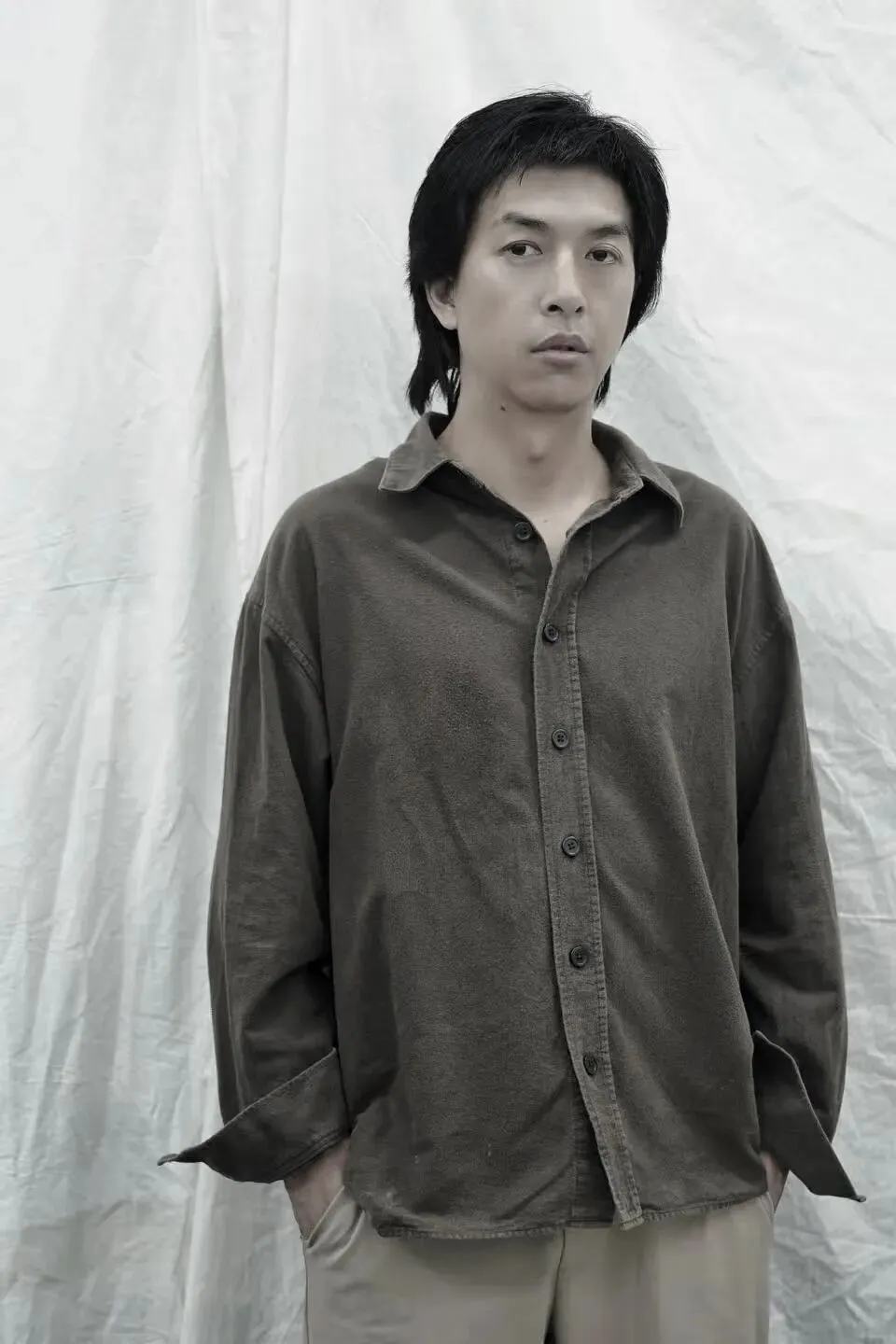
张文钦1988年出生于云南大理,毕业于广西艺术学院、中央美术学院。现工作生活于北京。
Zhang Wenqin was born in Dali, Yunnan, in 1988. He graduated from the Guangxi Arts University and the Central Academy of Fine Arts. He currently lives and works in Beijing.