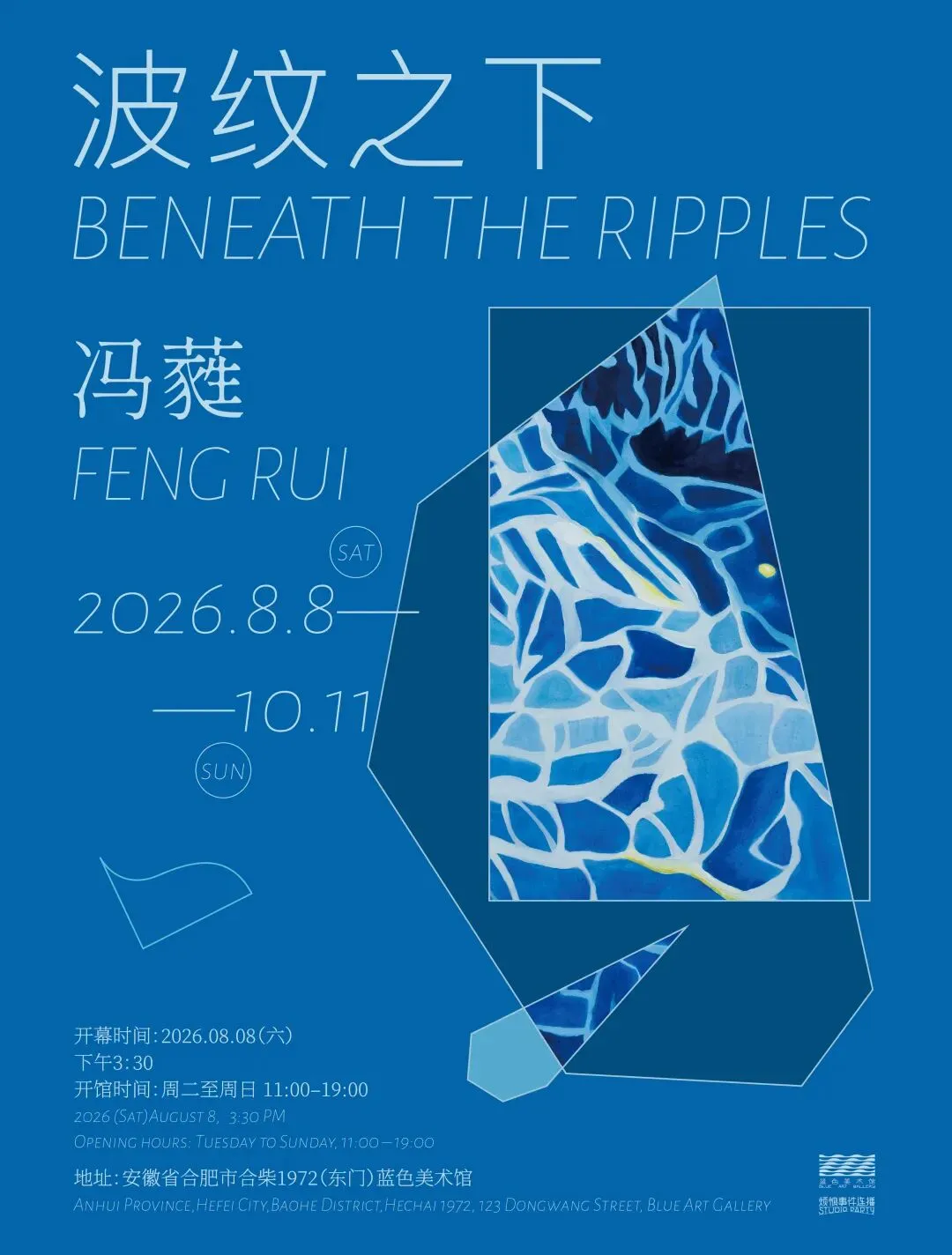
蓝色美术馆将于2026年8月8日推出艺术家冯蕤个展「波纹之下」。
Blue Art Gallery is proud to announce the upcoming solo exhibition Beneath the Ripples by artist Feng Rui, opening on August 8, 2026.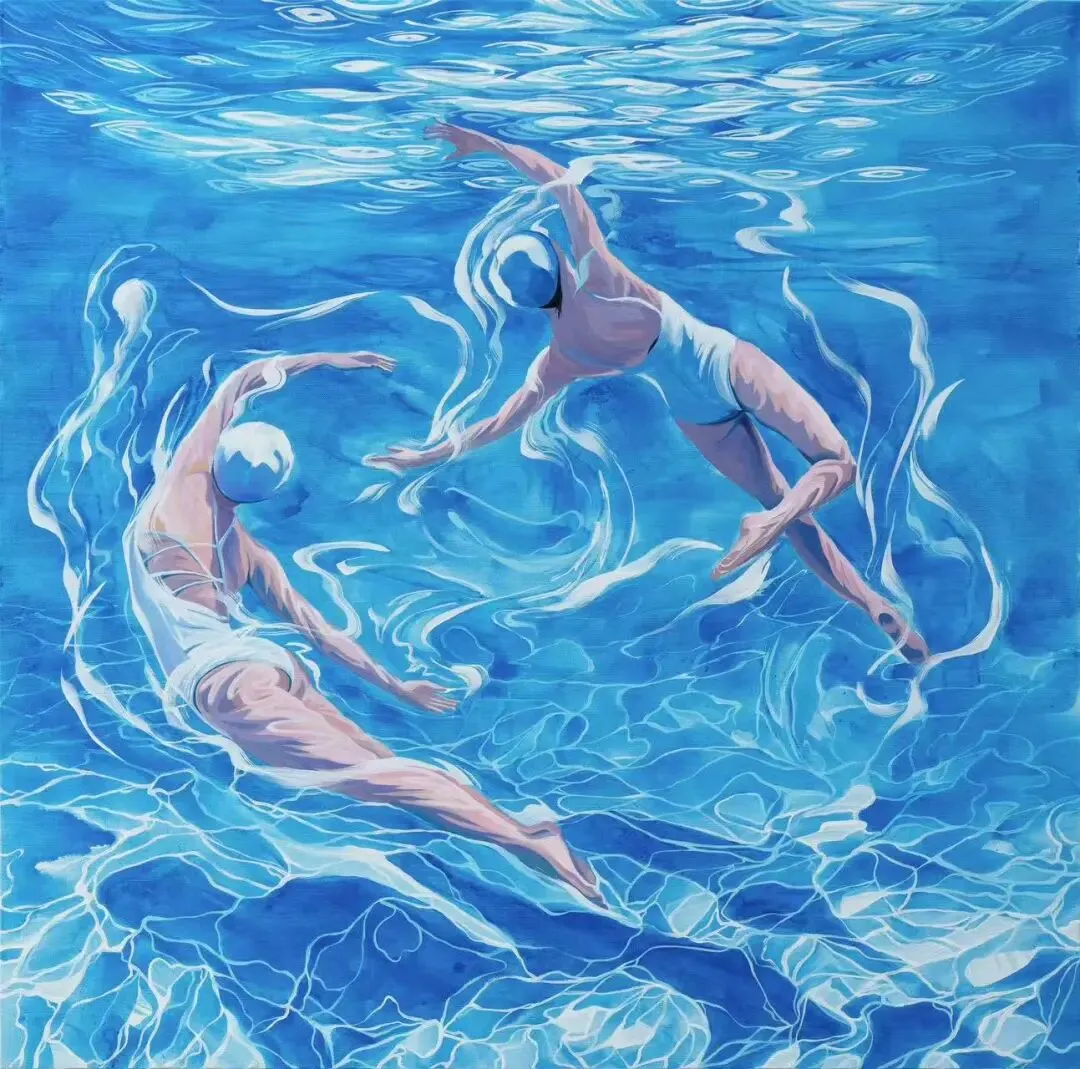
艺术家|Artist
冯蕤 FENG RUI
展览日期|Duration
2026.08.08(六)-2026.10.11(日)
August 8, 2026 (Sat) - October 11, 2026 (Sun)
开幕时间|Opening
2026.08.08(六)下午3:30
August 8, 2026 (Sat) 3:30 PM展览地点|Venue
安徽省合肥市包河区合柴1972(东门)东望街123号
蓝色美术馆;
Blue Art Gallery, 123 Dongwang Street,
Hechai 1972, Baohe District, Hefei City, Anhui Province.
开馆时间|Time
周二至周日11:00-19:00
Tuesday——Sunday,11:00AM-7:00PM
海报视觉设计|Poster Visual Design
烦恼事件联播设计工作室:Studio party
我们通常站在水面之外观看水。看它反光、流动、起伏、透明;看它映照天空、城市与人的脸。但进入水中以后,世界会变得不同。身体的负重感减轻,动作放慢,轮廓松动,声音被隔开,身体不再像在陆地上那样稳定而确定。
冯蕤的绘画,正发生在这样的时刻。她笔下的水并非自然风景,也不是纯粹的视觉图像。水更像一种持续作用于身体和意识的力量:它包裹人,也遮蔽人:它使人暂时失去方向,也让人重新感受到呼吸、重量、边界与存在。在早期的"水中人"与"生之如舟"系列中,人物仍然清晰地存在于画面之中。她们背对观者、浮于水面、停留在植物、河流、船与暗涌之间。身体没有被直接展示,而是在水纹、光线与色彩的遮蔽中保留距离。这里的背影并不是神秘,而是一种不愿被轻易定义的自我保护。
而在后来的"波纹"与"水形人漪"等作品中,人物开始逐渐隐退。水面本身成为了画面的主角:层叠的蓝色、弯曲的线条、被切割的光、不断扩散的漩涡与涟漪,构成一种既安静又不稳定的视觉场域。水不再只是人物所在的背景,而成为一种心理结构,一种关于记忆、情绪、时间与关系的抽象形态。
在这里,水既是外部环境,也是内在感受;既是柔软的保护层,也是无形的压力;既能让身体漂浮,也能让人感到下沉。冯蕤以明亮、浓烈而带有流动感的色彩,描绘出一种与现实保持距离的观看方式。她并不急于给出答案,而是让人物、波纹、光线与空白共同构成一种持续发生的状态。这是一种不喧哗的抵抗。它不以冲突作为姿态,而以停留、漂浮、回避、沉默、呼吸与重新感知自己作为力量。水面之下,身体并未消失;相反,它正在以另一种更缓慢、更敏锐、更坚定的方式,重新成为自己。
We usually observe water from outside its surface—watching it reflect, flow, ripple, and shimmer; seeing it mirror the sky, cities, and human faces. But once we enter the water, the world becomes different. Gravity lessens, movements slow down, outlines blur, sounds are muffled, and the body no longer feels as stable and definite as it does on land.
Feng Rui's painting is taking place at such a moment. The water in her work is not a natural landscape, nor merely a visual image. Rather, it acts as a force continuously affecting the body and consciousness: it envelops and obscures; it temporarily disorients, yet also allows one to rediscover breath, weight, boundaries, and presence. In her earlier series "People in Water" and "Life as a Boat," figures remain clearly present within the composition. They face away from the viewer, floating on the surface, suspended among plants, rivers, boats, and undercurrents. The bodies are not directly shown but kept at a distance through ripples, light, and color. These back views are not mysterious, but rather a form of self-protection—refusing easy definition.
In later works such as "Ripple" and "Water Form: Human Ripple," figures gradually recede into the background. The water surface itself becomes the central subject of the composition: layered blues, curved lines, fragmented light, and ever-expanding whirlpools and ripples create a visual field that is both serene and unstable. Water ceases to be merely a backdrop for human presence; it transforms into a psychological structure—an abstract form embodying memory, emotion, time, and relationships.
Here, water is both the external environment and an inner sensation; it is a soft protective layer as well as an invisible pressure; it can make the body float, yet also evoke a sense of sinking. Feng Rui employs bright, intense, and fluid colors to depict a mode of observation that remains distanced from reality. She does not rush to provide answers, but instead allows figures, ripples, light, and emptiness to coalesce into a continuously unfolding state. This is a quiet resistance—one that does not assert itself through conflict, but through lingering, floating, evading, silence, breathing, and re-experiencing oneself. Beneath the surface, the body does not vanish; rather, it is slowly, more acutely, and resolutely becoming itself again.
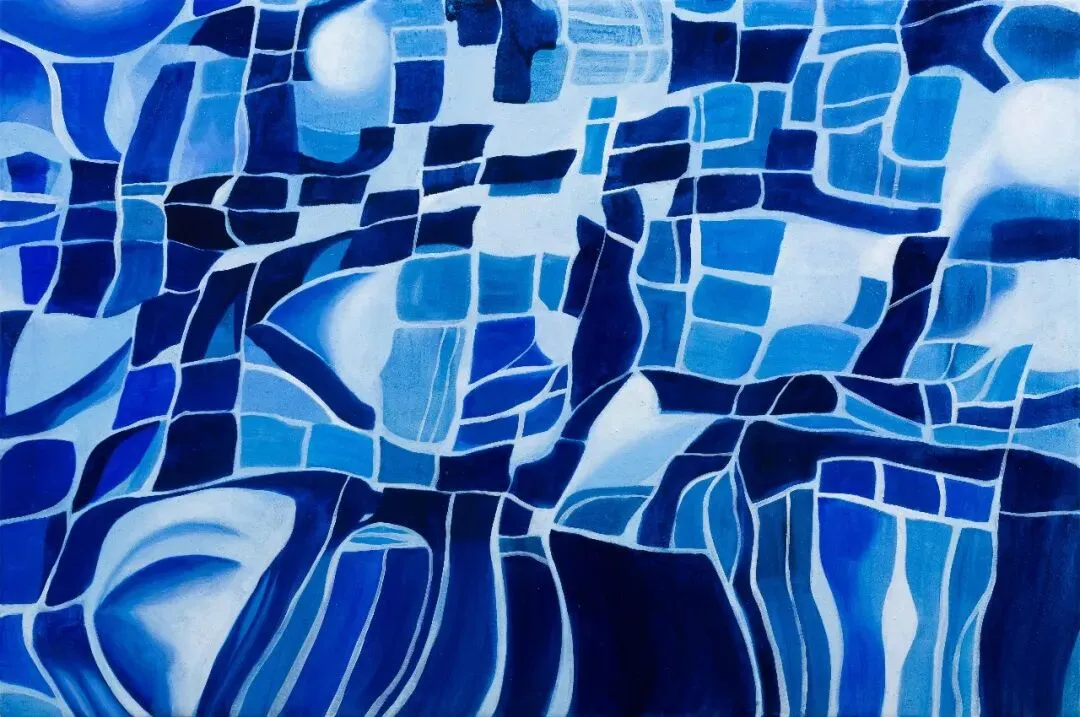
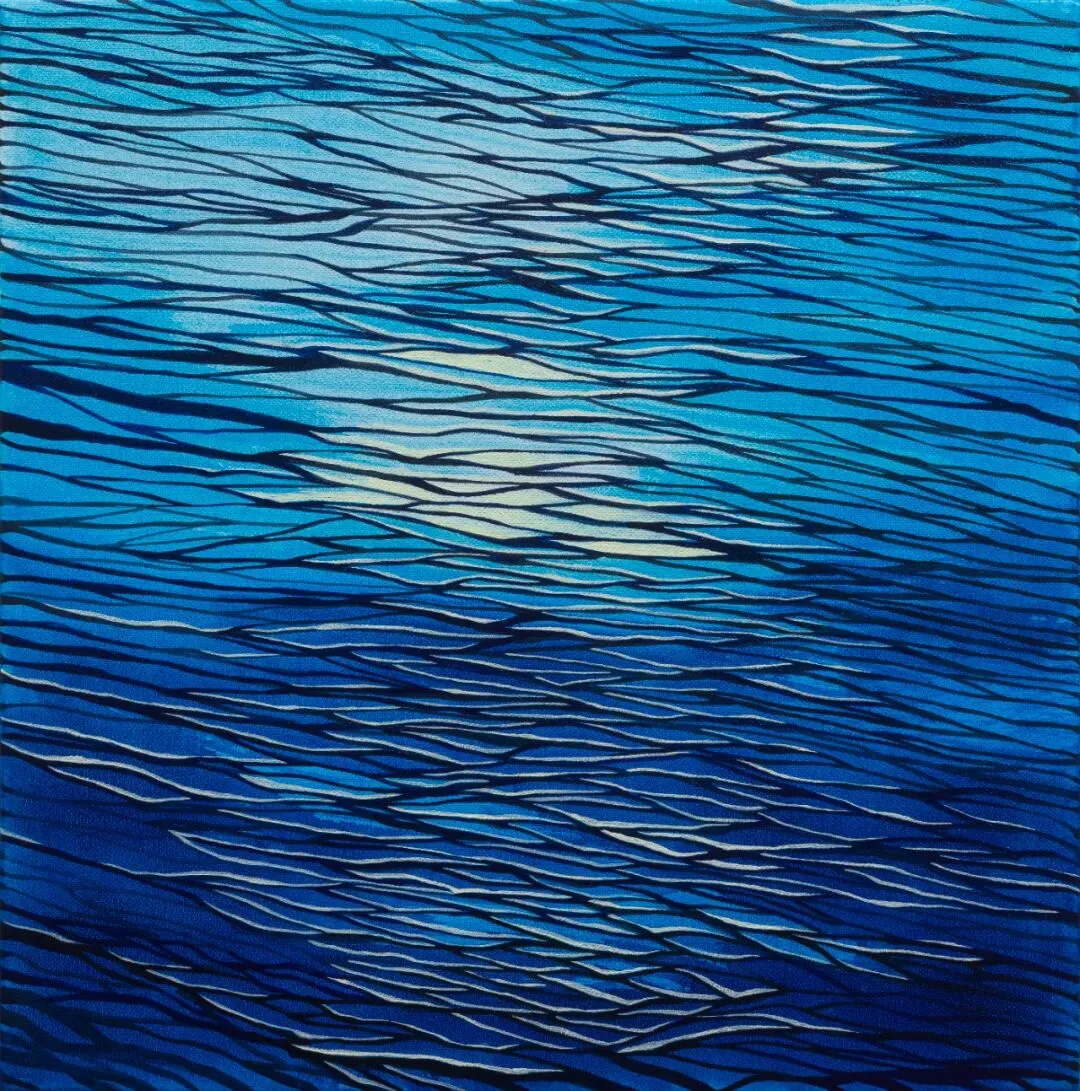
《熵蓝1》_木板油画_60x40cm_2025
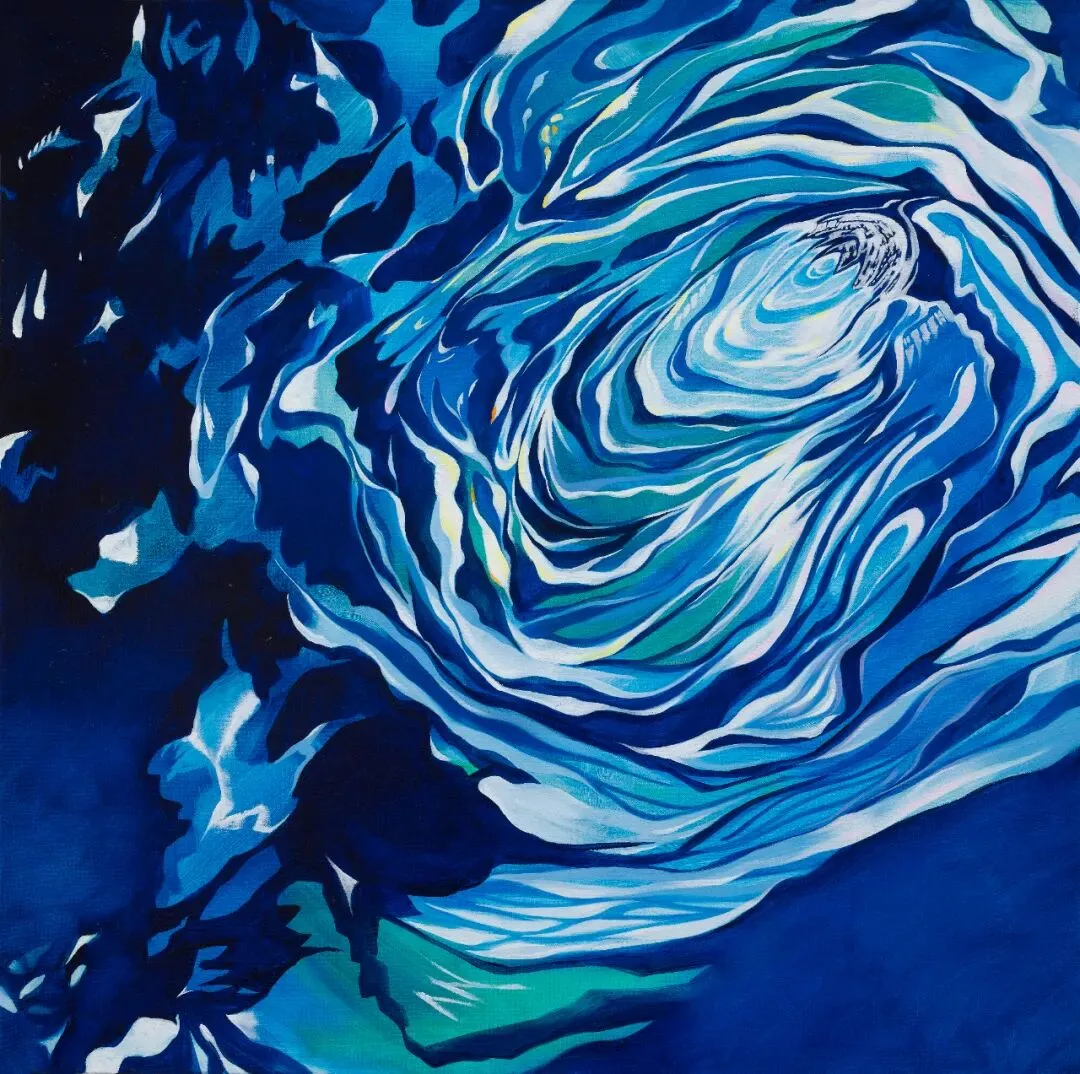
《沧溟回澜》_布面油画_80x80cm_2025
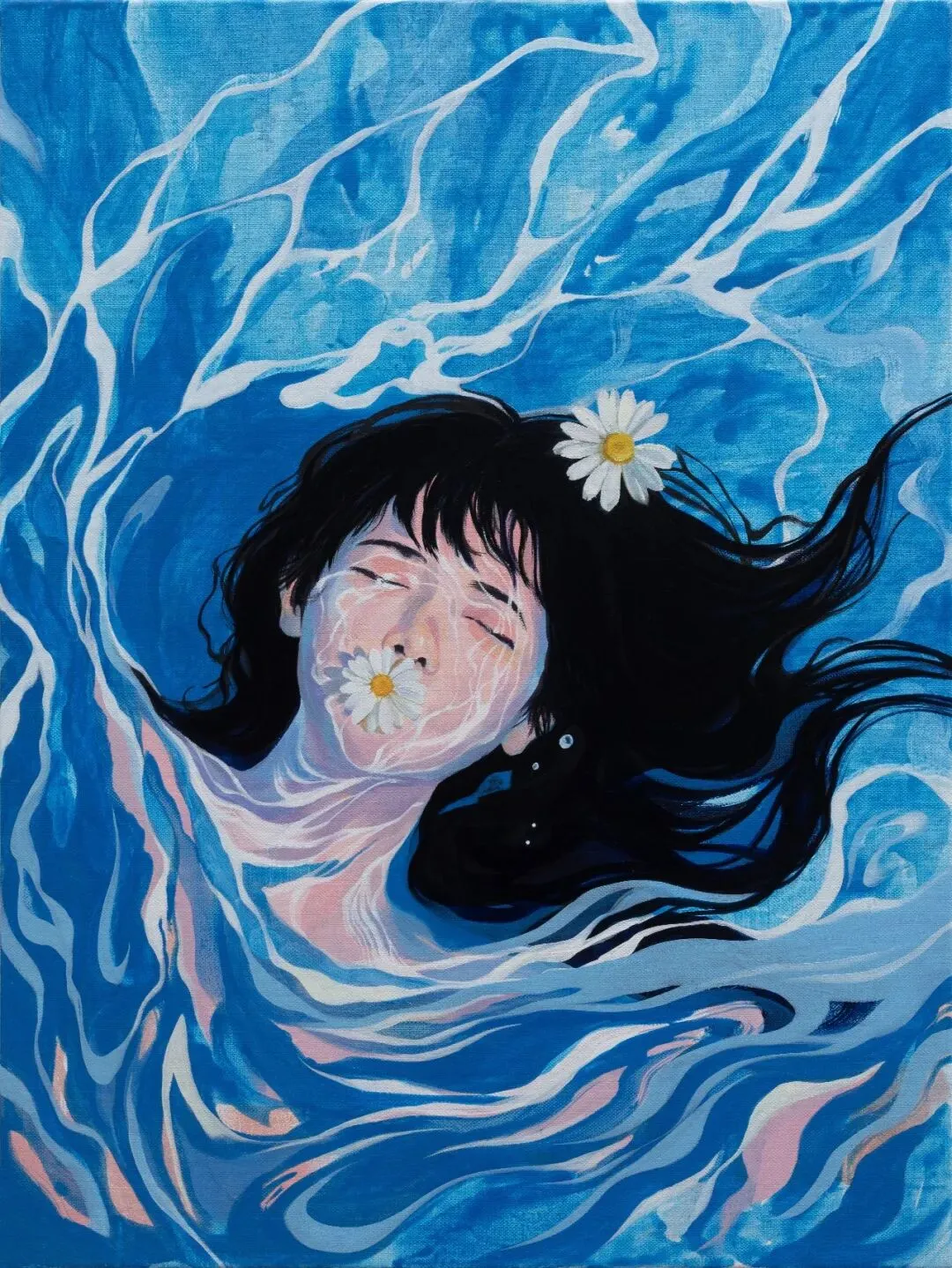
《水蚀之花》_布面油画_60x80cm_2026
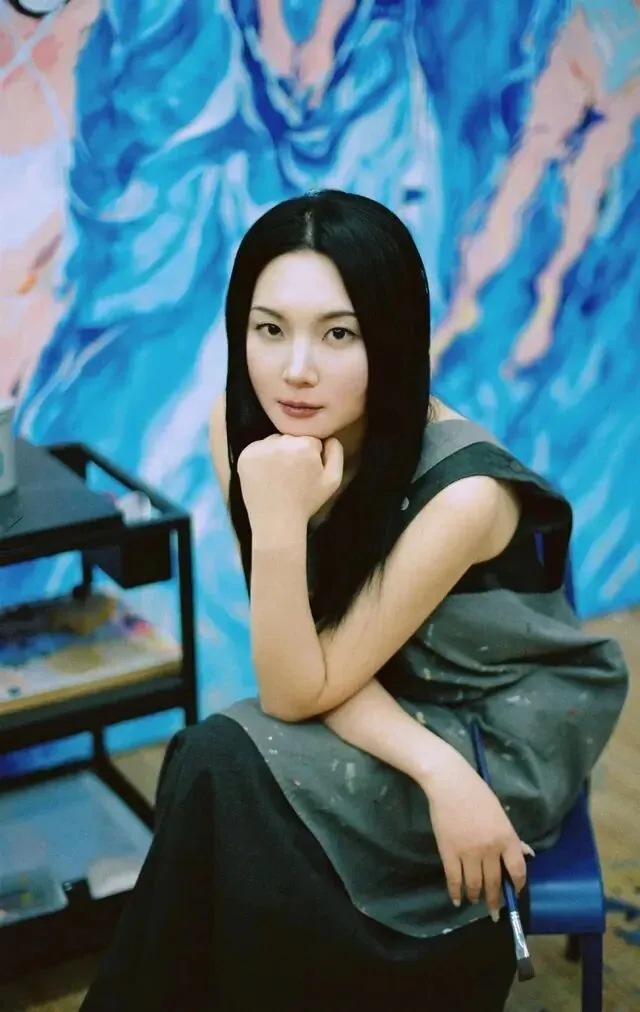
FENG RUI 冯蕤,1994生于河南郑州,现工作生活于北京。
冯蕤的创作长期围绕水中的女性身体展开,但她关心的不完全是水中人物的美感本身,而是身体如何从被观看的位置,转向自身的触感、呼吸和边界。水对冯蕤来说不是背景,也不只是一个象征。它来自具体的身体经验:人在水中仿佛失去重量,动作变慢,皮肤被光线和波纹分割,呼吸、温度和压力都会变得异常清晰。进入水中以后,面孔、身份和日常关系被暂时推远,身体开始以另一种方式存在。画面中的人物常常以背影出现。背影不是单纯为了制造神秘感,也不是单纯的孤独姿态。它更像一个边界:人物可以被看见,却不完全交出自己。正面意味着面孔、表情、判断和回应,而背影中断了这种直接进入。她们不以正面形象回应外界,而是在转身、漂浮、下沉或停留中,保留一处无法被直接抵达的内部。
冯蕤关注的是从“被观看的身体”到“自我感知的身体”的转变。这与一种更隐性的女性经验有关:身体常常被要求得体、安静、可被评价,却又不能过分暴露或过分表达。因此,自我感知不是一个抽象概念,而是让身体从外貌和身份中退开,重新回到皮肤、背部、肩颈、湿发、呼吸和停顿之中。这种转变通过具体的绘画语言发生。水纹打断身体的完整轮廓,使人物在清晰与消散之间反复移动;冷蓝、灰绿、粉白和肤色相互渗透,让身体既浮现又被遮蔽;透明的水面、覆盖的色层和局部的模糊,使观看停留在迟疑之中。她希望画面保留一种未完成的可见性:她在那里,但仍有一部分始终不被交出。
水对冯蕤而言不是单纯的疗愈意象。它可以保护身体,也可能吞没身体;它让人获得短暂的自由,也制造失重、窒息和消失的可能。正是这种矛盾,使画面中的安静不只是柔美,而带有潜在的不安。沉默既可能是脆弱,也可能是一种保持自身的方式。
冯蕤希望自己的绘画最终抵达的,不是激烈的反抗姿态,而是一种更内在、更持续的僵持。她们似乎正在重新拥有身体,也可能只是在消散之前短暂地保留自身。水、背影与女性身体共同构成了她的图像系统,也构成了她持续推进的创作命题。FENG RUI (b. 1994, Zhengzhou, Henan) lives and works in Beijing.
Feng Rui’s practice has long centered on the female body in water. Yet her focus extends beyond mere aesthetics; she is concerned with how the body shifts from being an object of the gaze to a site of its own tactile sensation, breath, and boundaries. For Feng, water is neither a mere backdrop nor a simple symbol. It stems from a visceral physical experience: in water, the body feels almost weightless in water,movements slow down, and the skin is fractured by light and ripples. Breathing, temperature, and pressure become acutely distinct. Once submerged, faces, identities, and everyday social ties are temporarily pushed aside, allowing the body to exist in an entirely different manner.
Figures in her paintings are frequently depicted from behind. This is not merely to evoke mystery or to convey a simple posture of isolation. Rather, it acts as a boundary: the figure can be seen, yet it does not fully surrender itself. A frontal view implies a face, expressions, judgment, and a willingness to respond; the back, however, interrupts this direct engagement. Instead of confronting the outside world face-to-face, these figures preserve an inaccessible interiority through turning away, floating, sinking, or simply pausing.
Feng explores the transition from the "body as an object of the gaze" to the "body as a site of self-perception." This relates to a more subtle female experience: the body is often expected to be proper, quiet, and open to evaluation, yet never overly exposed or expressive. Therefore, self-perception is not an abstract concept here; it is the act of withdrawing the body from the constraints of appearance and identity, returning it to the skin, the back, the neck and shoulders, wet hair, breath, and moments of stillness.
This transition is realized through a specific painterly language. Water ripples interrupt the complete contours of the body, causing the figures to oscillate between clarity and dissolution. Cold blues, grey-greens, pearly whites, and flesh tones intermingle, allowing the body to simultaneously emerge and recede. Transparent water surfaces, layered pigments, and localized blurriness keep the viewer in a state of hesitation. She wishes for the paintings to retain an unresolved visibility: the figures are present, yet a part of them remains forever unyielding.
For Feng, water is not merely a trope of healing. It can protect the body, but it can also engulf it; it offers fleeting freedom, yet brings the threat of weightlessness, asphyxiation, and disappearance. It is precisely this contradiction that infuses the tranquility in her paintings with an underlying unease. Silence can be a sign of vulnerability, but it can also be a means of self-preservation.
Ultimately, Feng Rui hopes her paintings do not culminate in a stance of fierce rebellion, but rather in a more internal, sustained standoff. Her figures seem to be reclaiming their bodies, or perhaps merely holding onto themselves for a brief moment before they dissolve. Water, the back-turned figure, and the female body collectively form her visual vocabulary, as well as the ongoing thematic core of her artistic practice.
教育背景
2022丨毕业于中央美术学院油画系,获硕士学位,师从喻红;
2019丨毕业于中央美术学院油画系,获学士学位;
2015丨毕业于中央美术学院附中;
展览经历
2026
夏⽇迟迟:冯蕤、张⾬萌、赵绚三⼈展,上空间,北京;
洄游:冯蕤个⼈项⽬,⼜⽣空间,北京;
碧⽔微澜:冯蕤个⼈单元项⽬,竞园⽂化中⼼,北京;
2025
微光闪烁,XGallery未知空间,⼤连;
第六届北京城市艺术博览会,王府半岛酒店,北京;
褶皱⾥的光,利星⾏⽂化艺术中⼼,北京;
苏河皓司变形记,苏河皓司,上海;
2024
URBAN BREAK艺术博览会,江南国际会展中⼼,⾸尔,韩国;
波澜之⼼:冯蕤个展,UArt Center采艺术中⼼,上海;
Color Full满艺术展,王府半岛酒店,北京;
釜⼭BAMA艺术博览会2024,釜⼭展览会议中⼼,釜⼭,韩国;
智慧之眼:当代⼥性艺术展,⾦鸡湖美术馆,苏州;
2023
⼴州魔灯当代艺术博览会,南丰国际会展中⼼,⼴州;
让艺术⾛红:⻘年艺术家作品展,王府半岛酒店,北京;
ART021上海廿⼀当代艺术博览会,上海展览中⼼,上海;
蓄锐:虚构浪漫层次,⾦⻓安⼤厦,北京;
夏⽇多巴胺当代艺术展,新国贸饭店,北京;
JINGART艺览北京2023,北京展览馆,北京;
送你⼀朵⻩玫瑰,未来味觉实验室,北京;
她的三次⽅:邱琳、鞠瑶、冯蕤作品联展,⾹港中央图书馆,⾹港;
2022
ART021上海廿⼀当代艺术博览会,上海展览中⼼,上海;
西岸博览会⼩红书⻘年艺术家特展,油罐艺术公园,上海;
北京艺术毕业⽣成⻓计划,利星⾏⽂化艺术中⼼,北京;
第五届毕业歌2022夏季展,⽅圆美术馆,北京;
⼩红书艺术新星⾸⻜ 毕业展,TX淮海年轻⼒中⼼,上海;
博洛尼整体家装艺术单年展,博洛尼万平体验馆,北京;
JINGART艺览北京线上单元,北京;
2021
第⼆届⼴州当代艺术博览会,保利世贸博览馆,⼴州;
2020
Chinese New Generation 10 Female Artists Exhibition,安德森当代美术馆,纽约,美国;
2019
中国新⽣代⼥性艺术家精品展,普林斯顿神圣空间画廊,普林斯顿,美国;
项目经历
2023参与荷风艺术基金会拉萨驻留项目,在当地进行艺术创作和展览活动;
2021参与电影《雄狮少年》艺术海报设计项目,创作海报并展览拍卖2021参与“嫣然基金会”爱的回响艺术家项目,设计并创作医院壁画;
2021主持“峥爱基金会”儿童慈善画展项目,负责公益画展的策展和宣传设计;
关 注 我 们
微博 | @蓝色美术馆
微信 | blueartgallery
小红书 | @蓝色美术馆
投稿(合作)邮箱 | blueartgallery@163.com
蓝 色 艺 术 商 店