

7月17日至20日,2026世界人工智能大会(WAIC)在上海举行。1100余家企业参展,3000余项展品集中亮相,超过300款产品实现全球首发。
相比大模型和机器人又取得了哪些突破,本届大会释放出的两个信号更值得制造业关注:一是AI加速进入工业现场,二是AI安全与全球治理被提升到新的高度。
两者看似一个谈技术,一个谈规则,实际上正在走向同一个交点:生产线。
From July 17 to 20, the 2026 World Artificial Intelligence Conference (WAIC) was held in Shanghai. More than 1,100 companies exhibited, over 3,000 exhibits were on display, and more than 300 products made their global debut.
Beyond the breakthroughs in large models and robotics, two signals from this year's event deserve more attention from the manufacturing sector: first, AI is accelerating into real industrial settings; second, AI safety and global governance have been elevated to a new level.
One is about technology, the other about rules. They are converging on the same destination: the production line.
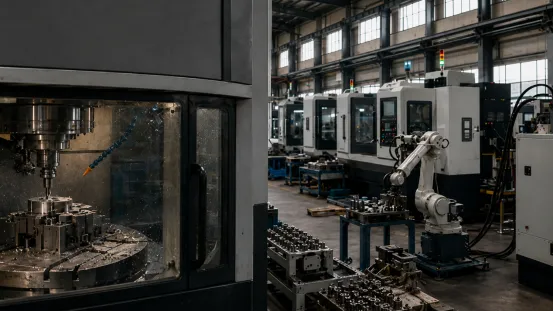
AI开始从“能说”走向“能做”
过去,人们对AI最直观的感受,是它能回答问题、生成文字和图片。现在,AI正与5G、工业互联网和边缘计算结合,进入钢铁、电网、矿山、汽车制造等场景,用于安全预警、视觉质检、设备运维和生产调度。
对制造业来说,衡量AI价值的标准也随之改变。
企业不再只关心模型有多聪明,更关心它能否识别设备异常、预测刀具磨损、发现质量变化,并在复杂的生产条件下给出可信判断。
但AI真正进入生产线,靠的不只是模型本身。
传感器采集设备状态,5G和工业互联网传输数据,边缘计算完成低时延处理,AI分析数据并输出判断,控制系统再把结果反馈给设备。只有整条链路被打通,AI才能从展示屏走进生产现场。
AI Is Moving from "Talking the Talk" to "Walking the Walk"
In the past, most people experienced AI as something that could answer questions, generate text, and create images. Now, combined with 5G, the industrial internet, and edge computing, AI is entering steel plants, power grids, mines, and automotive factories — handling safety alerts, visual quality inspection, equipment maintenance, and production scheduling.
For manufacturing, the measure of AI's value is changing along with it.
Companies no longer only care about how clever a model is. They care more about whether it can identify equipment anomalies, predict tool wear, spot quality drift, and deliver trustworthy judgments under complex production conditions.
But bringing AI truly onto the production line takes more than the model itself.
Sensors collect machine states. 5G and industrial internet carry the data. Edge computing handles low-latency processing. AI analyzes the data and outputs decisions. And the control system feeds results back to the equipment. Only when this entire chain is connected can AI move from the demo screen to the factory floor.
AI越接近设备,治理越重要
聊天机器人回答错误,用户可以重新提问。但在工厂里,AI的一次误判可能造成设备停机、产品报废,甚至引发安全事故。
当AI开始参与工艺调整和设备控制,治理就会变成一系列具体问题:
生产数据属于谁?企业的核心工艺能否进入外部模型?AI的判断能否解释和追溯?系统误判造成损失,责任由谁承担?哪些决策可以交给AI,哪些必须保留人工确认?
这些问题不解决,AI就很难进入核心生产环节。
因此,本届WAIC强调AI安全、全球治理以及弥合“智能鸿沟”,并不是远离产业的宏观议题。AI进入的场景越关键,越需要明确数据边界、安全标准和责任机制。
国家层面的政策导向,也正在回应这一趋势。
2026年发布的《“人工智能+制造”专项行动实施意见》提出,到2027年,推动3—5个通用大模型在制造业深度应用,打造100个工业领域高质量数据集,推广500个典型应用场景,选树1000家标杆企业,并持续提升工业AI安全治理能力。
这意味着,工业AI不仅要用得上,还要安全、可靠、可追溯。
he Closer AI Gets to Equipment, the More Governance Matters
A chatbot gives a wrong answer, and the user simply asks again. But on a factory floor, a single wrong call by AI can shut down a machine, scrap a product, or even cause a safety incident.
Once AI starts participating in process adjustments and machine control, governance turns into a series of very concrete questions:
Who owns the production data? Can a company's core process know-how be fed into an external model? Can AI's decisions be explained and traced? If a misjudgment causes a loss, who bears the responsibility? Which decisions can be handed to AI, and which must always require human confirmation?
Without answering these questions, AI will struggle to enter core production processes.
That's why this year's WAIC emphasis on AI safety, global governance, and bridging the "intelligence divide" is not some distant macro topic. The more critical the application, the more urgently clear data boundaries, safety standards, and accountability mechanisms are needed.
National policy is also responding to this trend.
The "AI + Manufacturing" Special Action Guideline released in 2026 sets clear targets for 2027: drive deep application of 3–5 general-purpose large models in manufacturing, create 100 high-quality industrial datasets, promote 500 typical application scenarios, select 1,000 benchmark enterprises, and continuously strengthen industrial AI safety governance capabilities.
The message is clear: industrial AI must be not only usable, but safe, reliable, and traceable.
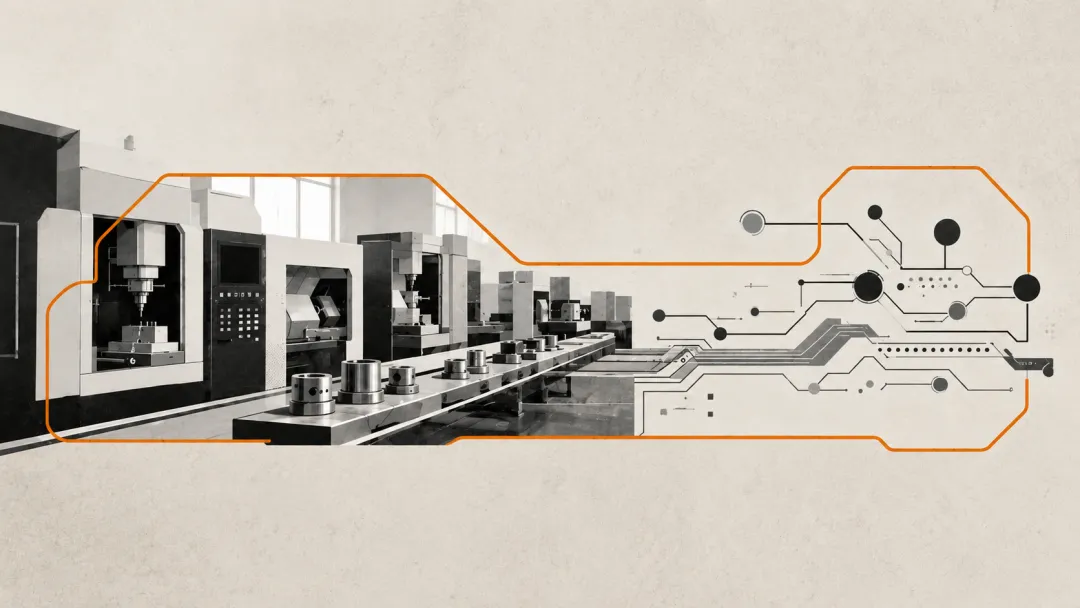
对雷刀超声而言,AI要真正理解加工过程
对于机床与精密加工企业而言,这种变化同样正在发生。
主轴负载、超声振动、刀具磨损、加工温度和工件质量,如果彼此割裂,只能用于事后分析;
如果通过工业网络连接,并与工艺模型和设备控制结合,就有机会提前识别异常、辅助调整参数。
这也是雷刀超声从数字超声机床的实际应用,进一步走向分数阶智能工厂布局的重要方向。
通过连接高频振动、刀具状态、设备负载和加工质量等数据,雷刀超声正在为加工过程建立感知、分析与反馈的闭环,让AI从看见设备进一步走向理解加工,为更加稳定、高质量的加工过程提供支撑。
For LEI USM, AI Must Truly Understand the Machining Process
The same shift is underway for machine tool and precision machining companies.
Data on spindle load, ultrasonic vibration, tool wear, machining temperature, and workpiece quality — if kept disconnected from one another, can only be used for after-the-fact analysis.
But when linked through industrial networks and combined with process models and machine control, that data creates an opportunity to spot abnormalities early and assist in adjusting parameters in real time.
This is a key direction for LEI USM as it moves from the real-world application of digital ultrasonic machine tools toward the Fractional-Order Smart Factory roadmap.
By connecting data on high-frequency vibration, tool condition, machine load, and machining quality, LEI USM is building a closed loop of sensing, analysis, and feedback for the machining process — allowing AI to go from seeing the equipment to truly understanding the cut, and providing the foundation for a more stable, higher-quality machining process.
写在最后
未来,AI的竞争不会只停留在模型参数。
真正的竞争,在于它能否进入真实生产现场,理解真实工况,解决真实问题,并在安全、可靠的前提下持续创造价值。
对于制造业来说,生产线既是AI能力的考场,也是AI治理最终的落点。
(欢迎带料试切,眼见为实。)
A Final Word
In the future, the AI race will not be defined by model parameters alone.
The real competition will be about whether AI can step onto the real production floor, understand real working conditions, solve real problems, and keep delivering value — safely and reliably.
For manufacturing, the production line is both the ultimate test of AI's capabilities and the final destination for AI governance.
(Bring your materials. See it for yourself.)
