

左右滑动以切换中英文

Swipe between Chinese and English
六年级的古诗谱成了曲,七年级的电流走过了时钟,八年级的孩子沿着运河一路向北提问。
面具、曼陀罗、拼贴画、动画、App、台灯……在中学初段“跨学科、艺术及设计展”上,同学们通过“三条道路”展示了学习的殊途同归:是寻找答案,更是提出追问。
Part 01.
跨学科:需要多少种学科的透镜,
才能接近一个真实的世界?
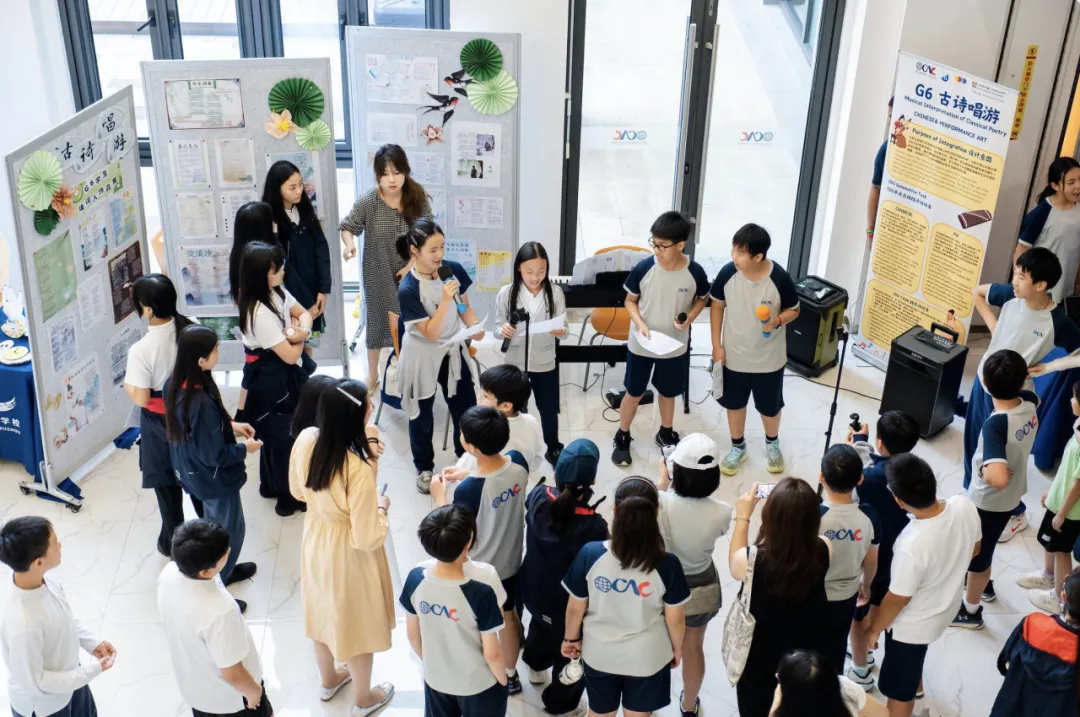
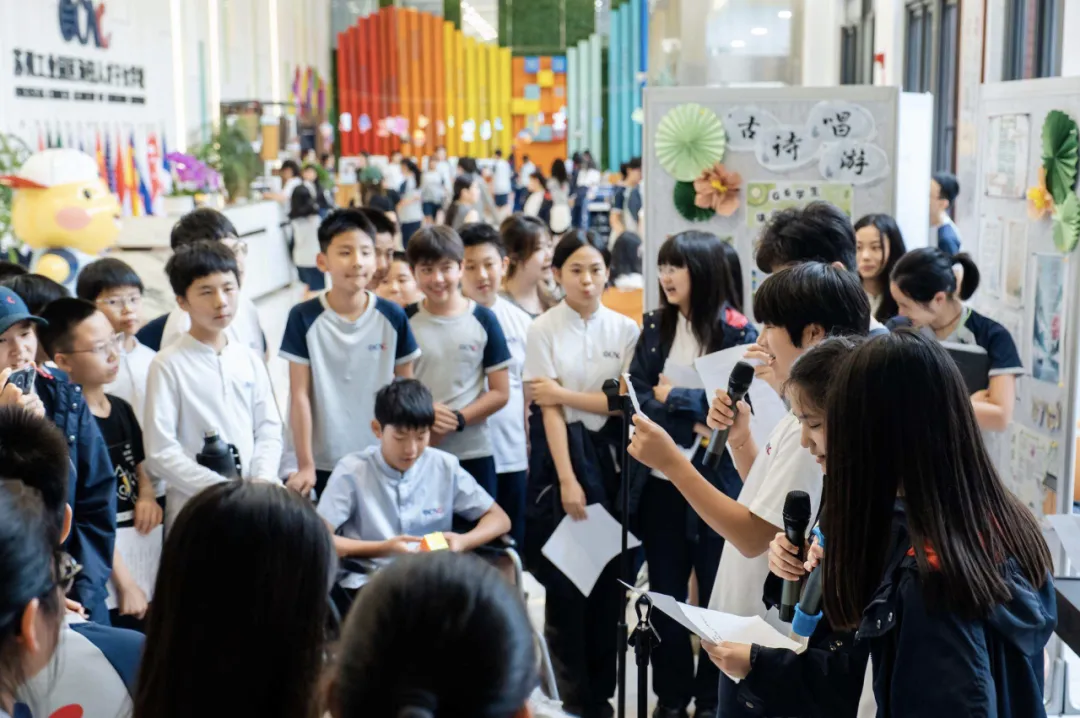
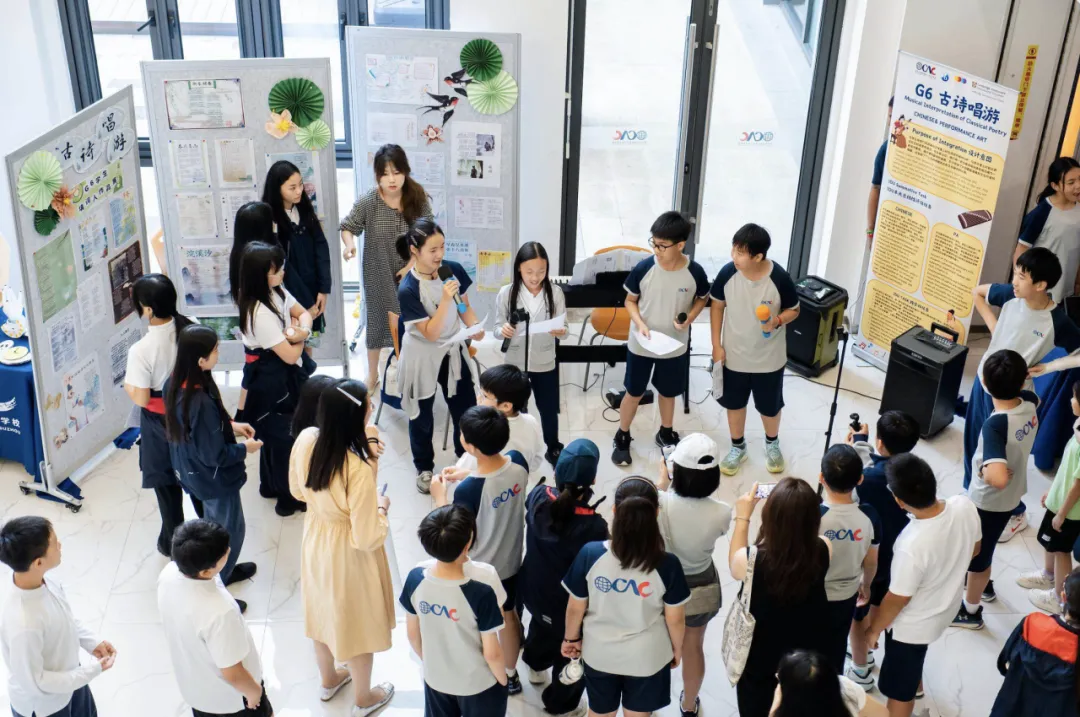
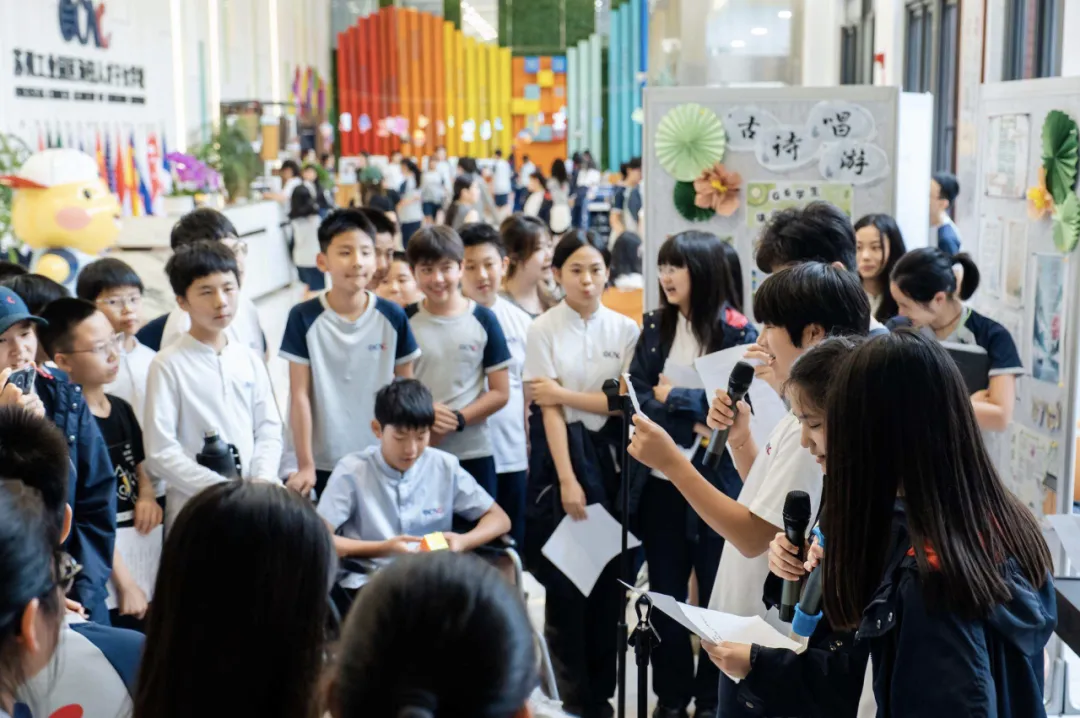
《采薇》《卜算子·送鲍浩然之浙东》《早春呈水部张十八员外》……六年级的学生将三首古诗改编成了歌,直接在成果展上唱了出来。
语文课上,他们拆解意象、情感、留白:诗人站在哪里说这句话?隔着千年,他想让谁听见?音乐课上,他们反复比对曲目,斟酌节奏与旋律,一遍遍唱到每一个字都落在它该在的情绪里。
这不是语文加音乐,这是MYP跨学科单元(IDU)。两个学科以概念为纽带交汇——古诗从纸面站起来,变成可以被听见的表达。学生做的,不是“学了两门课”,而是在学科之间发现新的理解。
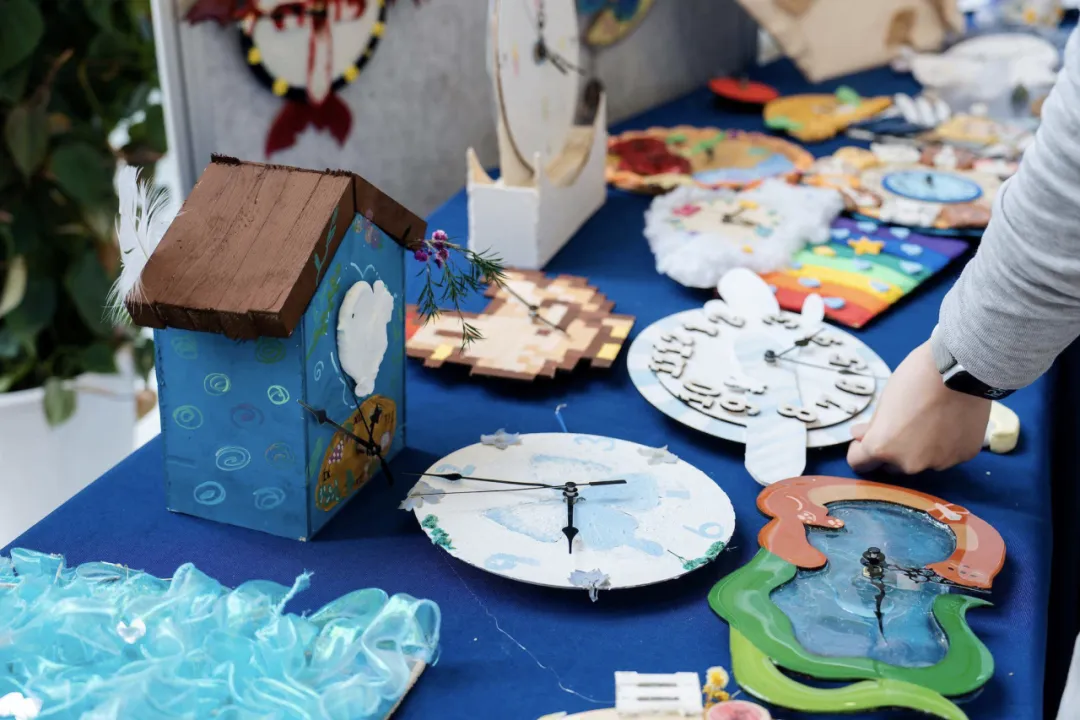
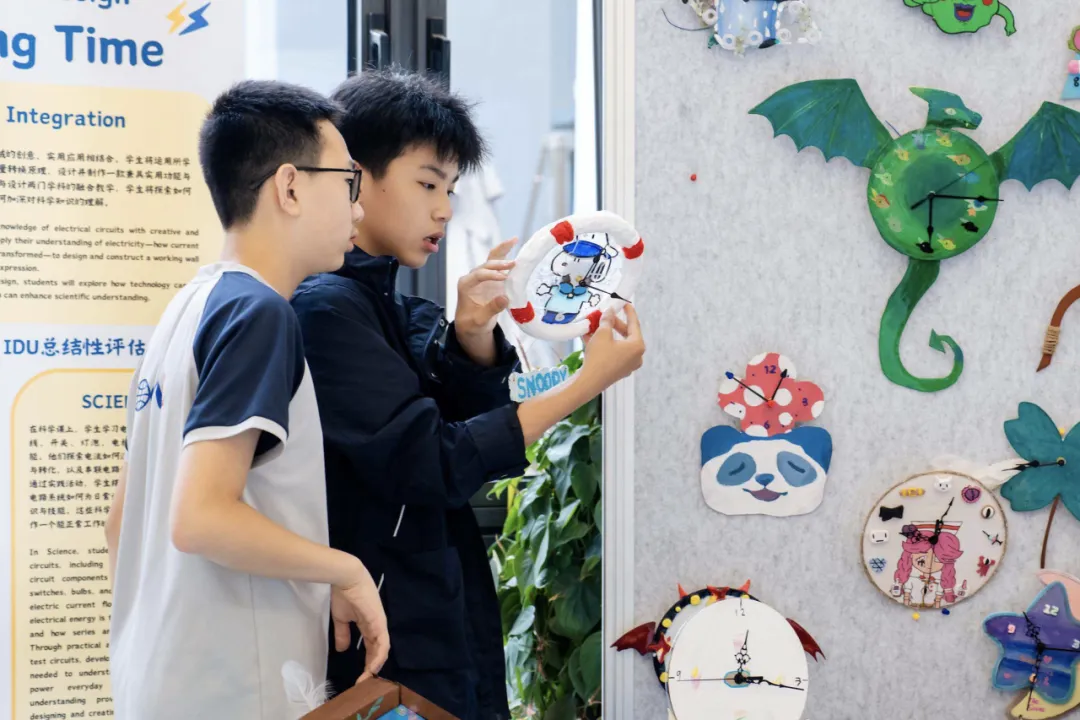
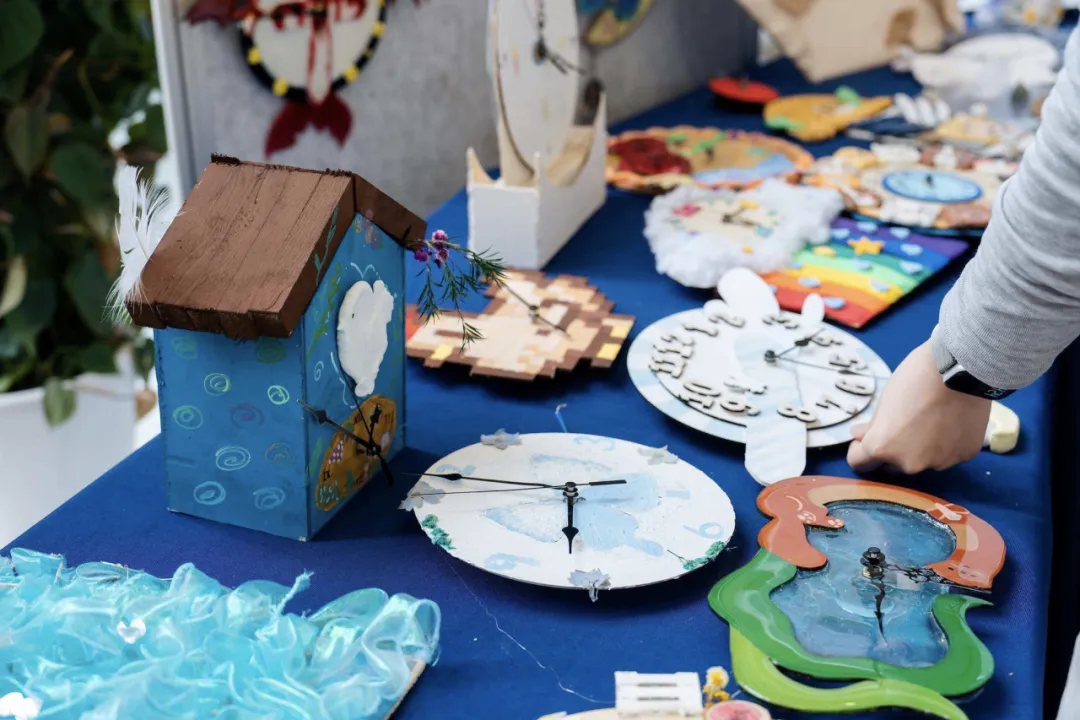
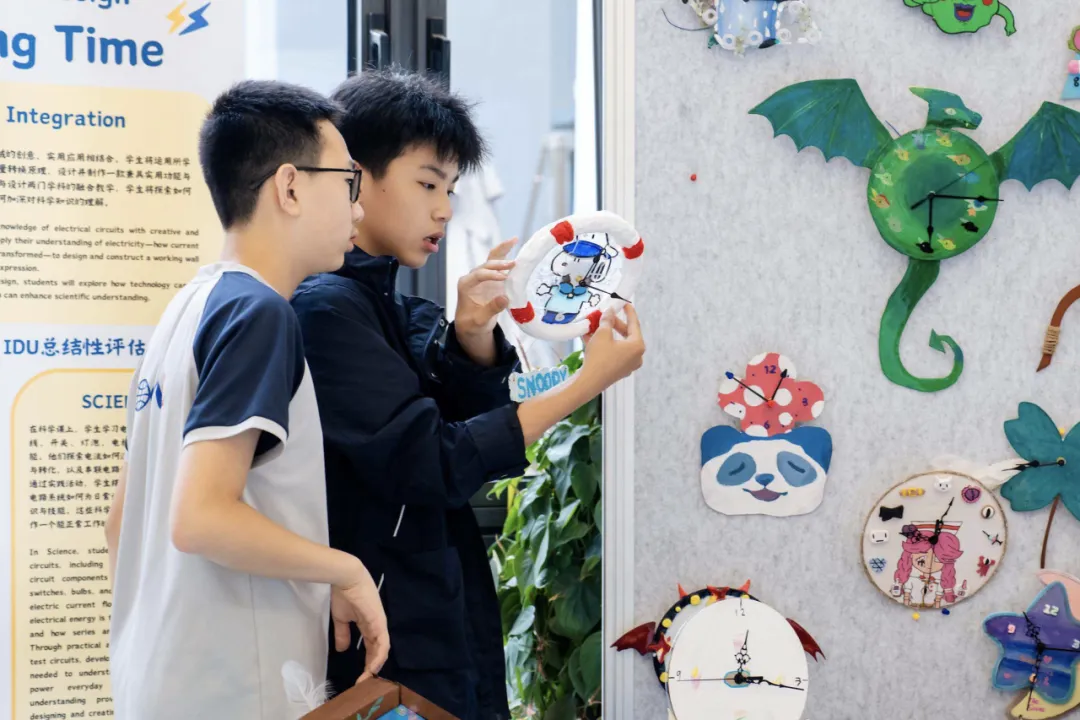
七年级的展台上摆着时钟。黏土捏出十二只小狗环绕钟面,鸟屋造型藏着表盘,蘑菇伞盖下卧着一只安睡的小动物……
科学负责“对”,设计负责“美”。学生在物理课理解电路原理,在设计课构思外观。当“对”遇上“美”,跨学科最好的模样,就在这一件件小小的时钟里。
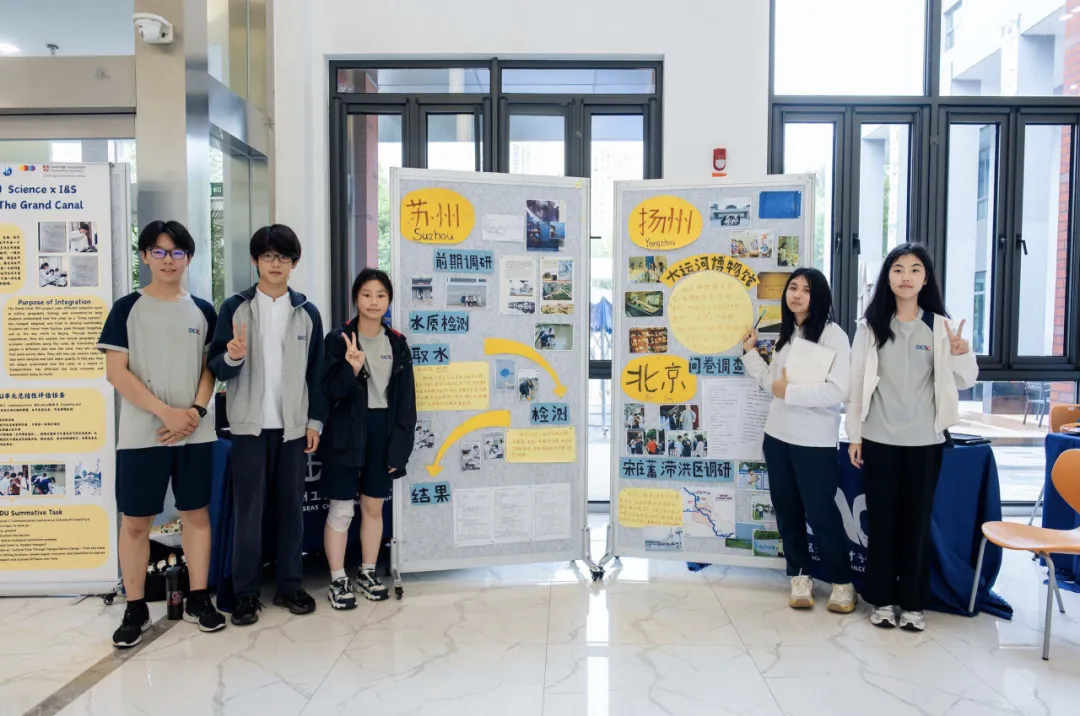
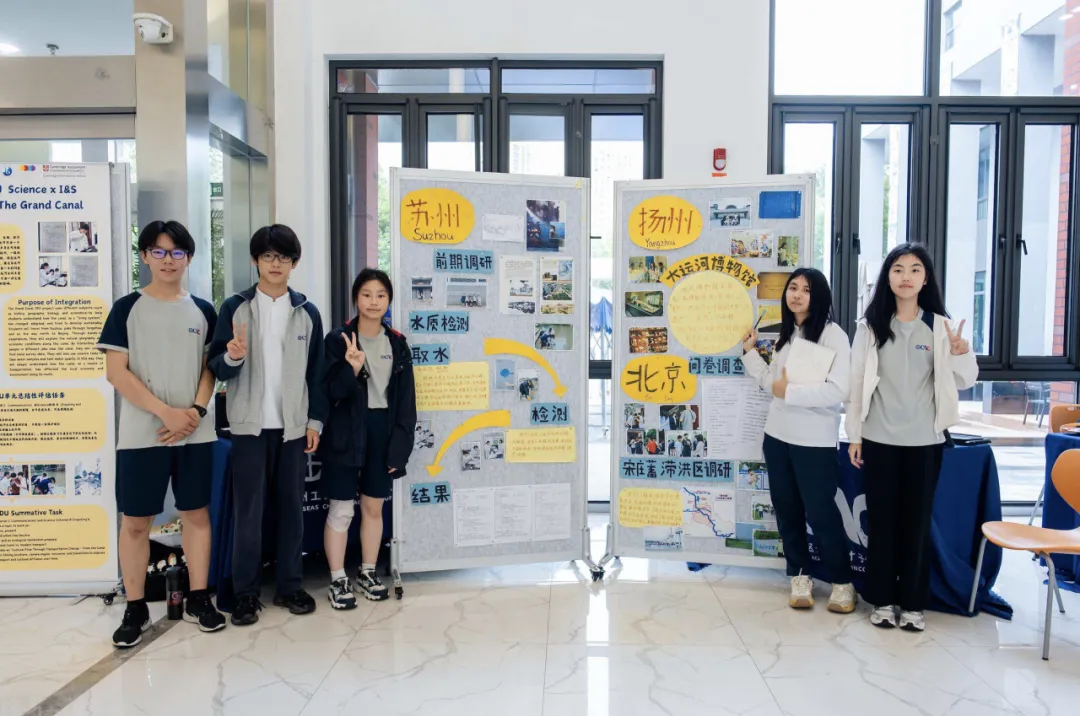
八年级的展板最长——因为他们走了一段长长的路:从苏州出发,经扬州,一路向北到北京。
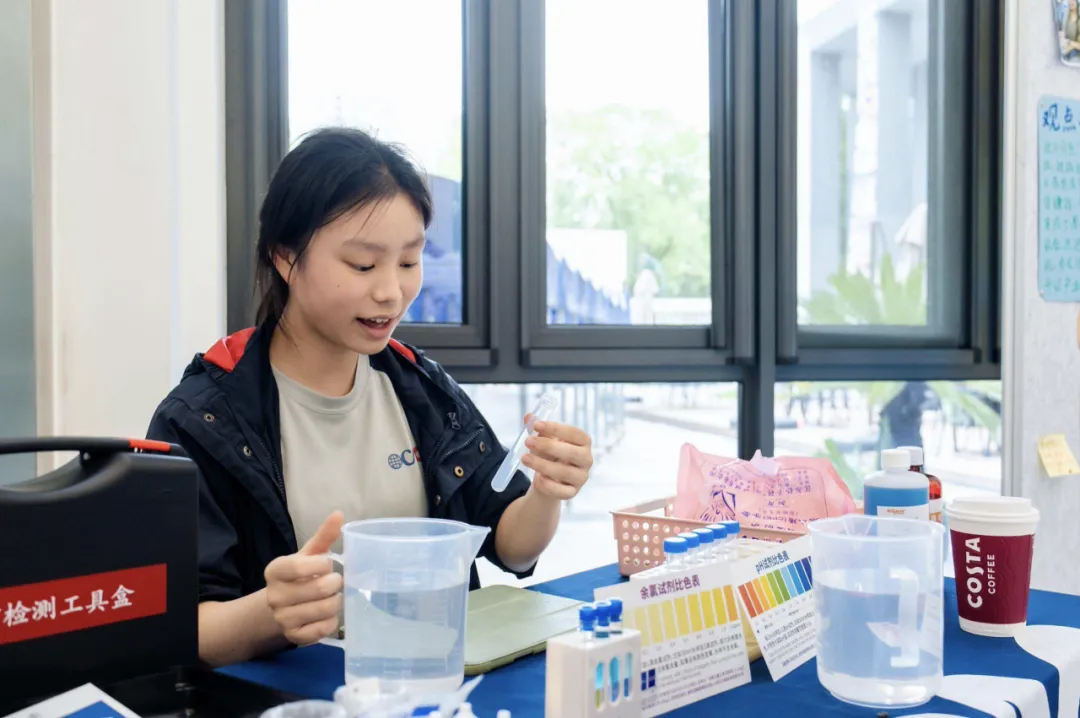
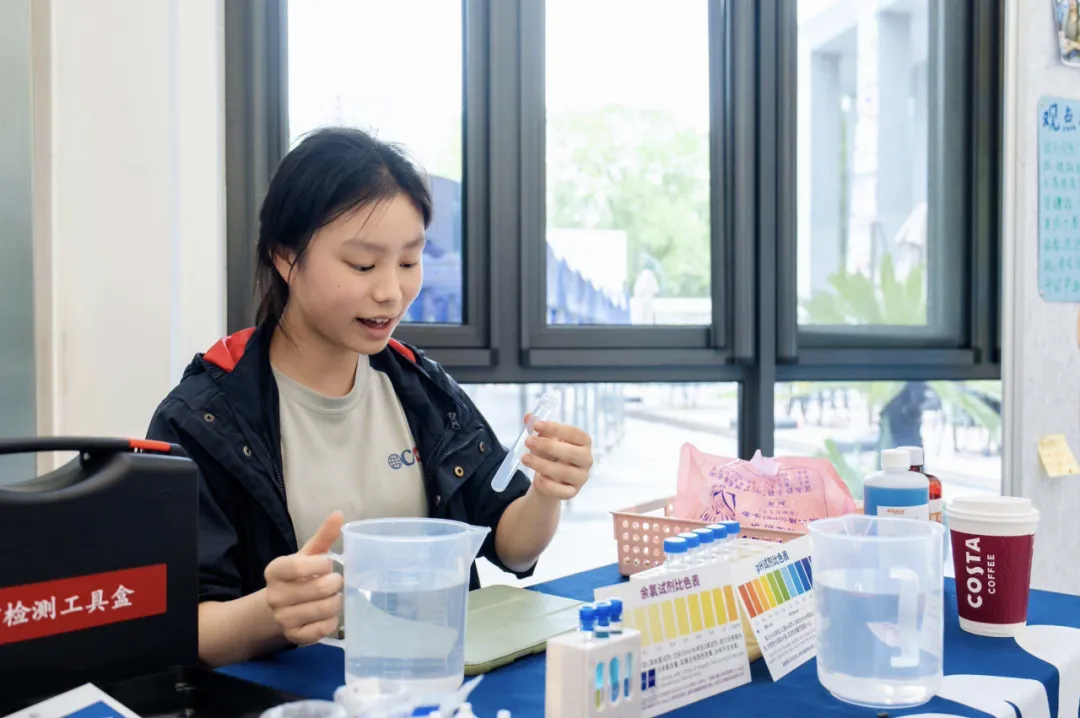
地理与科学是探究主线。他们观察运河沿岸地貌,采集水样检测水质,分析交通变迁如何影响城市兴衰——历史与经济的视角自然嵌入其中。
三个年级,三种跨法。六年级跨出了旋律,七年级跨出了作品,八年级跨出了视野。MYP跨学科的核心正在于此:不只用眼睛看世界,更用不同学科的透镜去理解世界,再把自己的理解做成作品,重新交付给世界。
Part 02.
艺术:技巧与表达,哪个更重要?
如果说跨学科展区回答的是“知识能做什么”,艺术展区回答的是“我能表达什么”。
六年级的孩子,一年走了四条路。波普艺术让他们用色彩和大众符号说话;犀牛盗猎拼贴让他们用艺术表达立场;情感面具把情绪捏成三维形状;疗愈曼陀罗用重复的几何图案让心静下来。
从流行文化到社会议题,从向外表达到向内探索——四步走完,同一双手,开始用不同方式说自己。
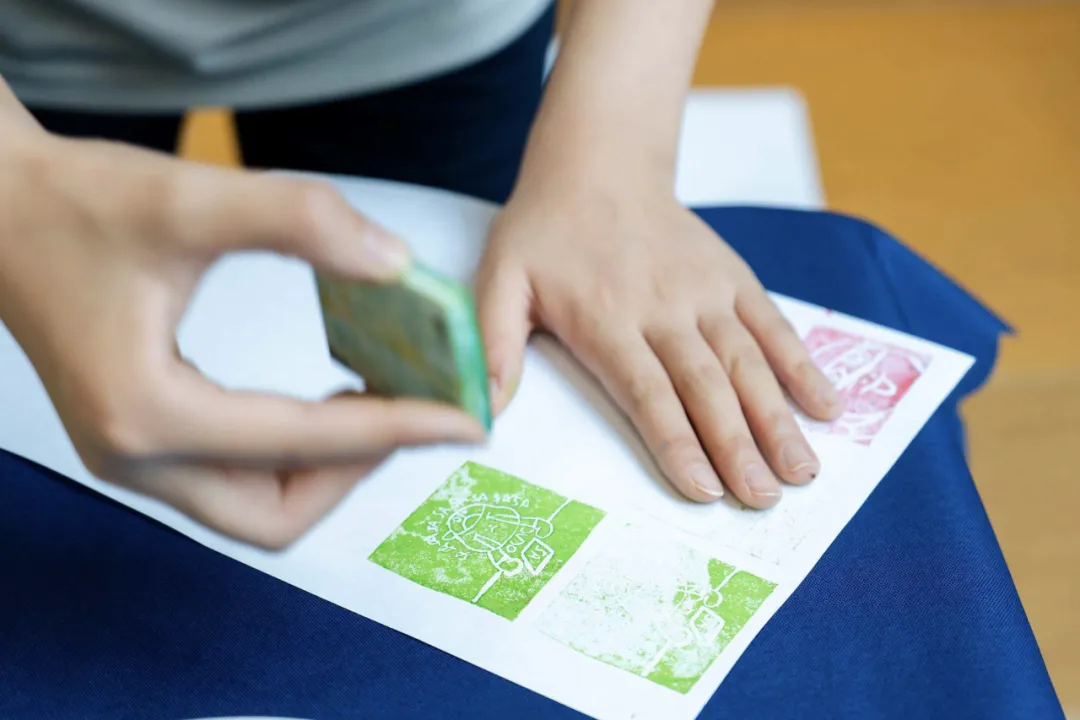
七年级的展墙上,拼贴、水油分离、点彩、版画并列陈列。主题不同——环保、传统文化、艺术流派——但每一幅作品都经过了反复尝试。修改的痕迹留在画面上,也留在时间里。
八年级的孩子走得更深。音乐感受、抽象表现、身份认同——他们用色彩和材料说话,不追问“像不像”,只追问“我想说什么”。
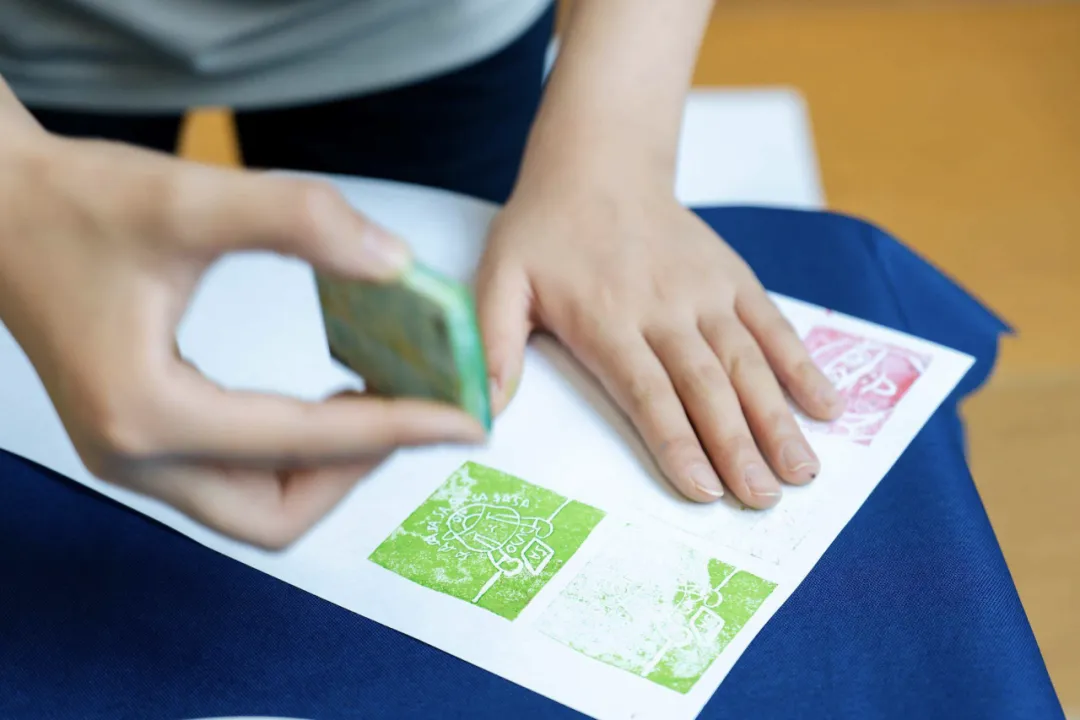
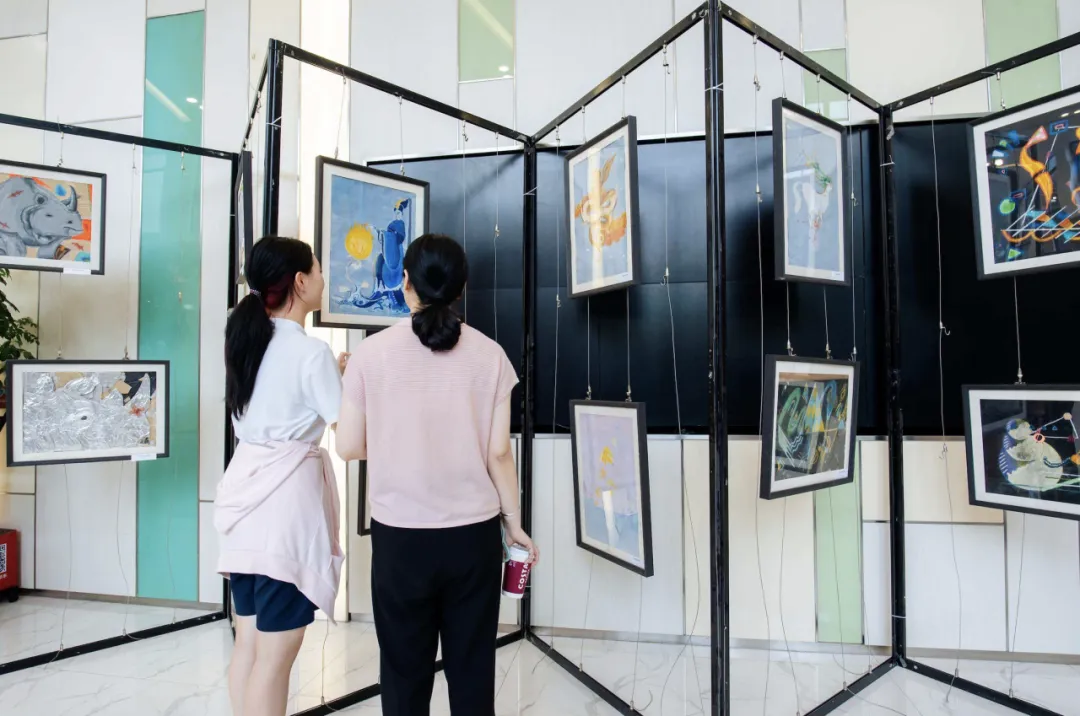
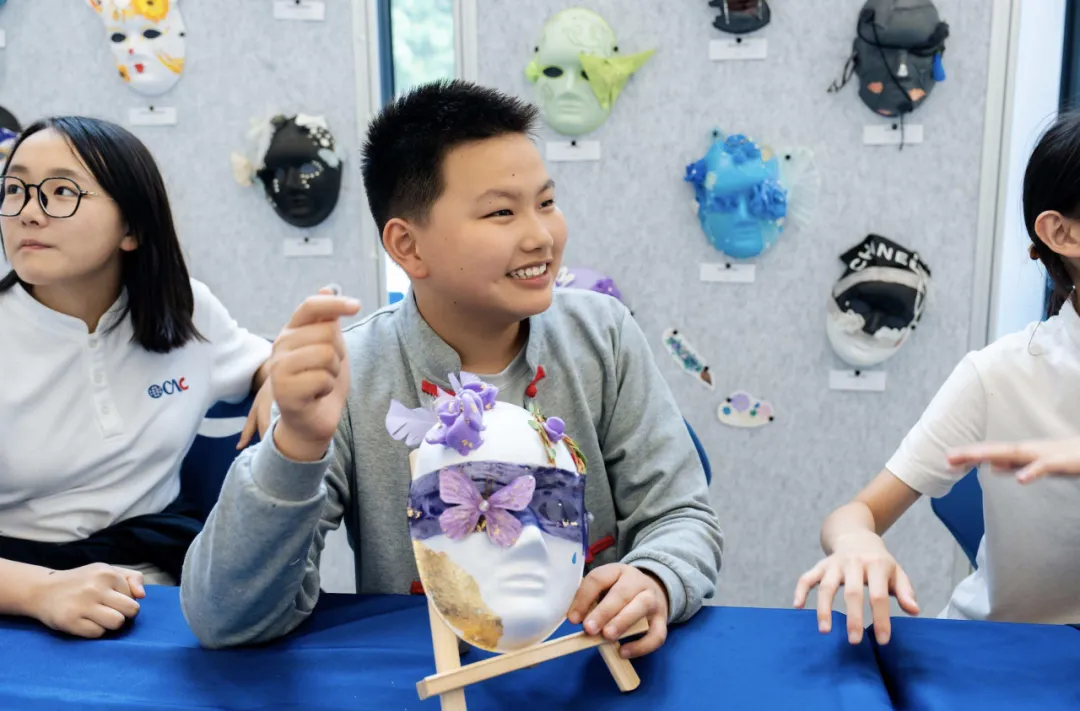
MYP艺术强调视觉传达:艺术不是技巧的炫耀,是用视觉语言思考、感受、讲述。当你站在这些作品前,你看见的是思考的轨迹,是情绪的浓度,是一个十三四岁的孩子努力让“说不出的”被看见。
Part 03.
设计:一个想法要经过多少次推倒重来,才能真正站稳?
设计的起点,不是好看,是好用。
六年级的孩子做了一个垃圾分类动画。用Gravit Designer软件,从形状、路径、色彩、图层开始,一路做到自己的App界面概念。一个学生说,他改了很多版,因为第一版“不好用”。
MYP设计循环中的迭代,让学生反复经历“原型—测试—修改”的过程。他们学会的不是某个软件,而是一种面对问题的方式。
八年级的展品更沉。他们做了一盏灯——不是随便一盏灯,是一盏试图让人产生某种情绪的灯。光线、形态、材料——每一个选择都有理由。
旁边是食品卡车创业设计:品牌形象、目标市场、顾客体验,从食物到视觉,从概念到落地,全套方案依次展开。
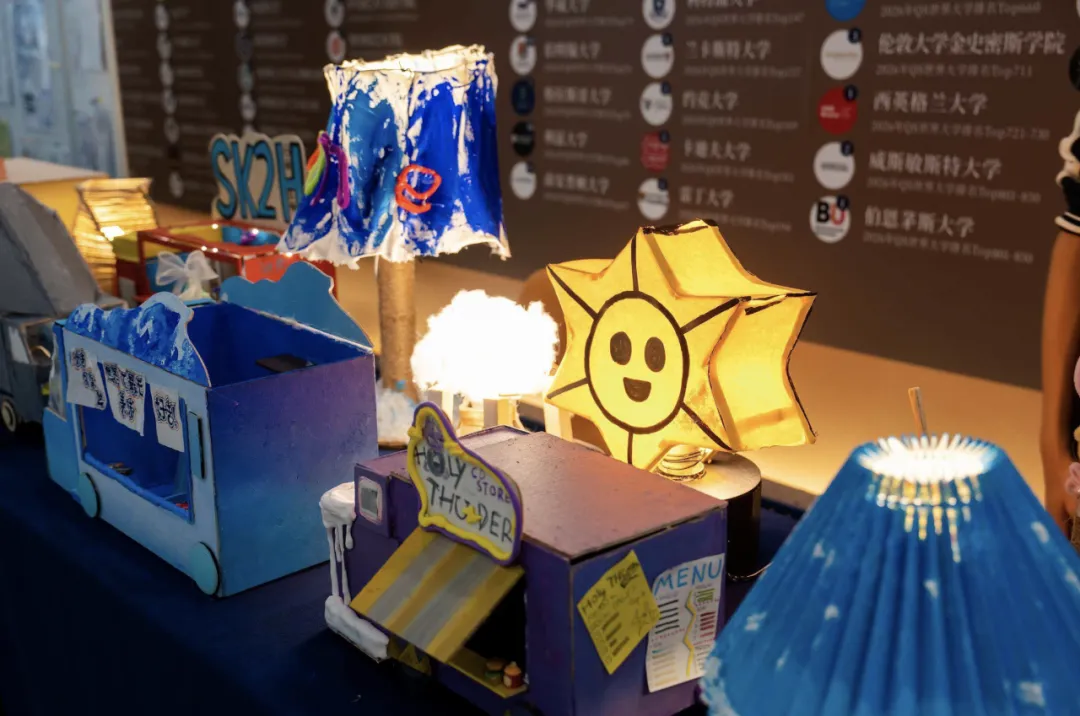
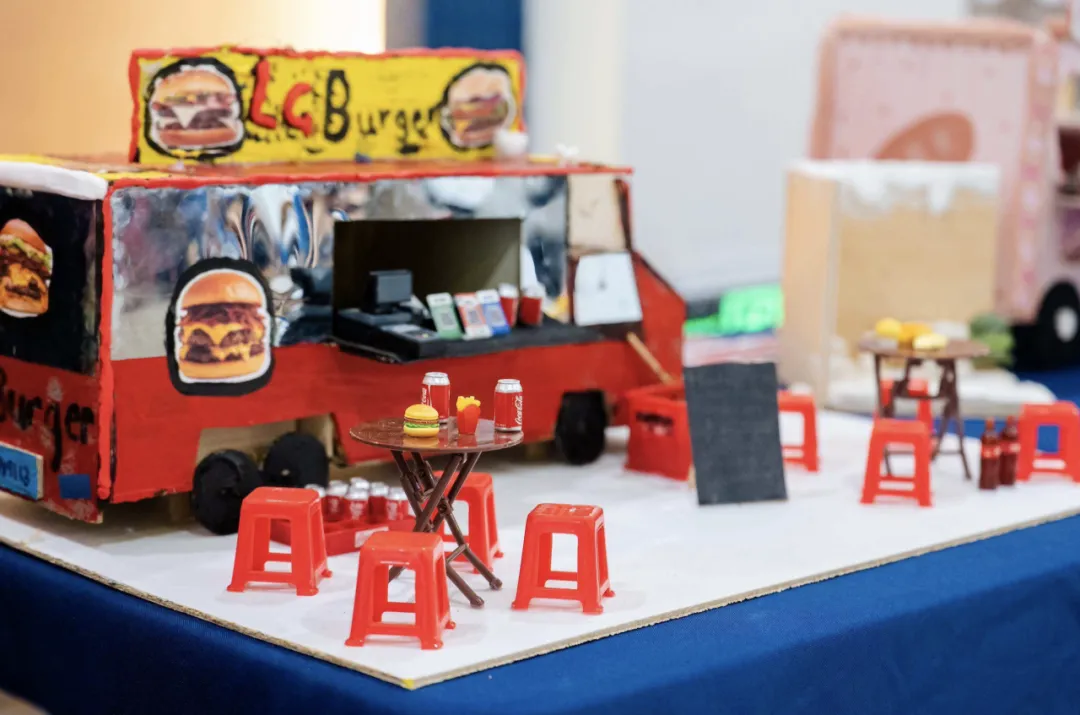
设计展区最打动人的,不是完成度,而是它们共同传递的信息:想法变成现实之前,要先摔几次跤。 这正是MYP设计的核心精神——在真实情境中行动,在失败中调整,在迭代中接近完美。
每件作品都在代替它的主人提出各种追问:
古人的情感,可以用今天的旋律重新讲述吗?
电流只能照亮,不能表达吗?
一条河,除了是河,还能是什么?
那些看不见的情绪,可以被人看见吗?
一个想法,在落地前要经过多少次迭代?
……
最好的学习成果,大概就是源源不断的追问。
Grade 6 students set ancient poems to music, Grade 7 electrical currents powered custom clocks, and Grade 8 students asked questions all the way north along the Grand Canal.
Masks, mandalas, collages, animations, apps, lamps... At the Lower Secondary Interdisciplinary, Arts, and Design Exhibition, students showed through "three pathways" that all learning leads to the same destination: it’s about finding answers, but even more about asking questions.
Part 01.
Interdisciplinary Learning: How many disciplinary lenses do we need to understand the real world?
Cai Wei, Bu Suan Zi (Farewell to Bao Haoran), Early Spring: To Zhang Ji, the Eighteenth Secretary of the Water Department... Grade 6 students adapted three ancient Chinese poems into songs and performed them live at the exhibition.
In Chinese class, they unpacked imagery, emotions, and white space: Where was the poet standing when they said this? Who did they want to hear them across a thousand years? In Music class, they compared melodies, refined rhythm and tune, singing over and over until every single word captured the right emotion.
This isn't just Chinese plus Music; this is an MYP Interdisciplinary Unit (IDU). Linked by shared concepts, the two subjects met—bringing ancient poetry off the page into an audible expression. Instead of just "taking two classes," students discovered new understandings between disciplines.
Clocks lined the Grade 7 display tables. Twelve clay puppies encircled a clock face, a birdhouse hid a dial, and a sleeping little animal rested under a mushroom cap...
Science ensures it works; Design makes it beautiful. Students understood circuit principles in Physics and brainstormed looks in Design. When functionality meets aesthetics, the best version of interdisciplinary learning comes to life in these little clocks.
Grade 8 had the longest display boards—because they traveled a long way: starting from Suzhou, passing through Yangzhou, and heading all the way north to Beijing.
Geography and Science formed the main lines of inquiry. They observed landscapes along the Grand Canal, collected water samples for quality testing, and analyzed how transportation shifts impact the rise and fall of cities—naturally weaving in historical and economic perspectives.
Three grades, three ways of connecting. Grade 6 created melody, Grade 7 created tangible products, and Grade 8 expanded their horizons. This is the core of MYP interdisciplinary learning: not just looking at the world, but using different disciplinary lenses to understand it, and then giving back to the world through their own creations.
Part 02.
Arts: Technique or Expression—Which Matters More?
If the Interdisciplinary section answers "What can knowledge do?", the Arts section answers "What can I express?"
Grade 6 kids explored four pathways over the year. Pop art let them speak through colors and popular symbols; rhino poaching collages let them voice their stance through art; emotional masks molded feelings into 3D shapes; and healing mandalas used repetitive geometric patterns to calm the mind.
From popular culture to social issues, from outward expression to inward exploration—through these four steps, the same hands learned to express themselves in completely different ways.
On the Grade 7 exhibition walls, collages, oil-water resistance, pointillism, and printmaking were displayed side by side. The themes varied—environmental protection, traditional culture, art movements—but every piece went through endless trials. The marks of revision remain on the canvas, and in time.
Grade 8 students went even deeper. Musical perception, abstract expression, and identity—they spoke through colors and materials, never asking "Does it look real?" but only "What do I want to say?"
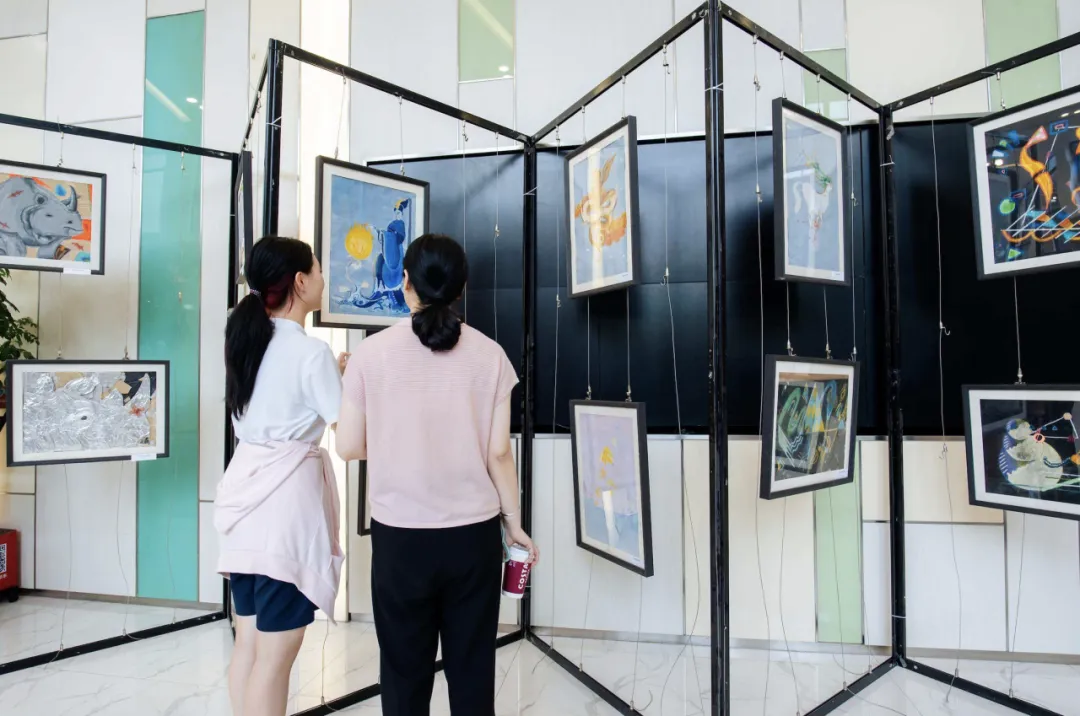
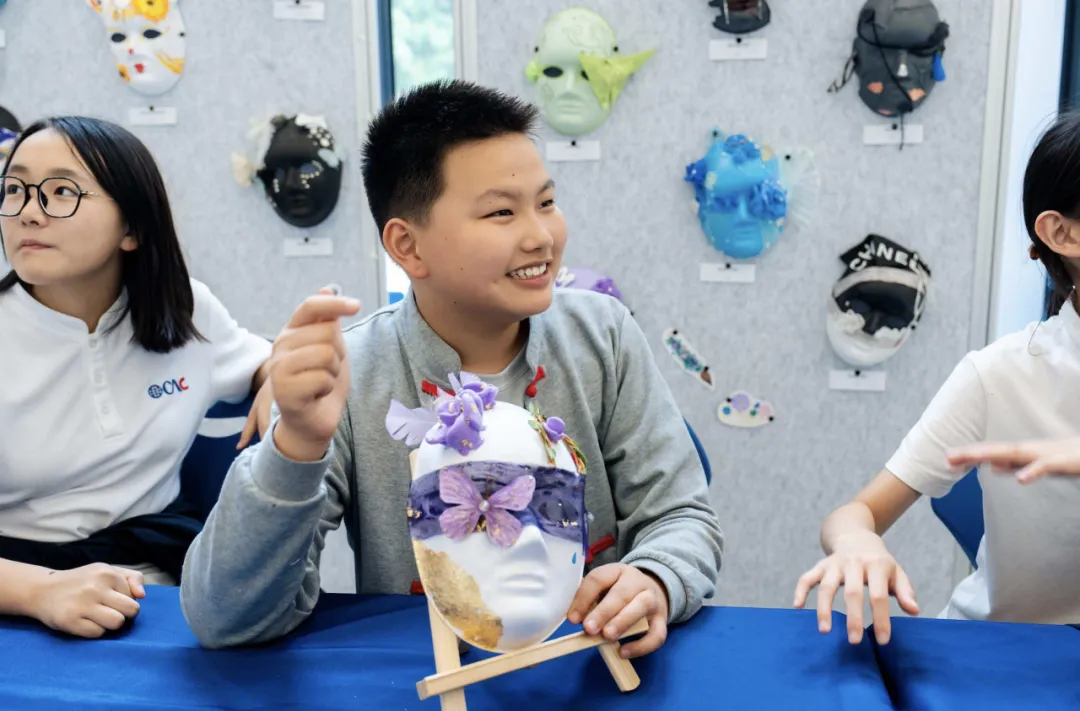
MYP Arts emphasizes visual communication: art is not a showcase of technique, but a way to think, feel, and tell stories through visual language. Standing in front of these works, you see the tracks of thought, the depth of emotion, and a 13- or 14-year-old trying to make the unsayable visible.
Part 03.
Design: How many times must an idea be rebuilt before it truly stands?
Design isn't just about looking good—it's about working well.
Grade 6 kids created a waste sorting animation. Using Gravit Designer software, they started with shapes, paths, colors, and layers, working all the way up to their own app interface concepts. One student mentioned he revised it many times because the first version "just didn't work well."
Iteration within the MYP Design Cycle allows students to repeatedly experience the "prototype-test-modify" process. What they learned wasn't just a specific software, but a way to face problems.
Grade 8 exhibits carried more weight. They designed lamps—not just any lamp, but ones intended to evoke specific emotions. Lighting, shape, material—every choice had a purpose.
Right next to them were food truck business designs: brand identity, target markets, and customer experience. From the food to the visuals, from concept to reality, full business plans unfolded one by one.
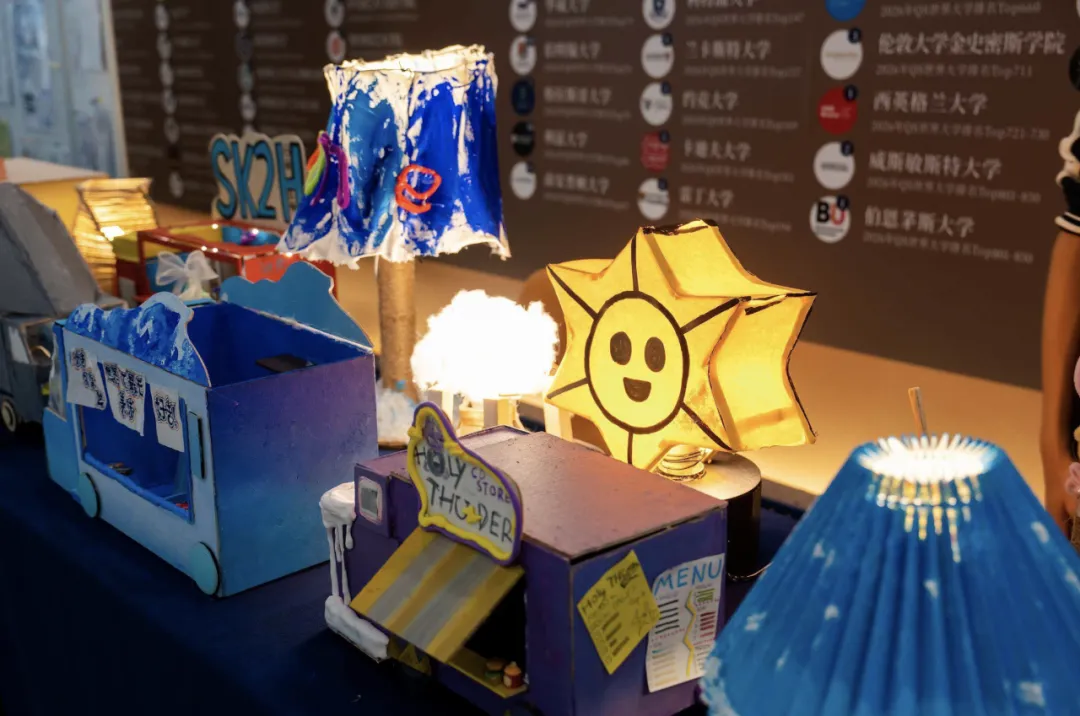
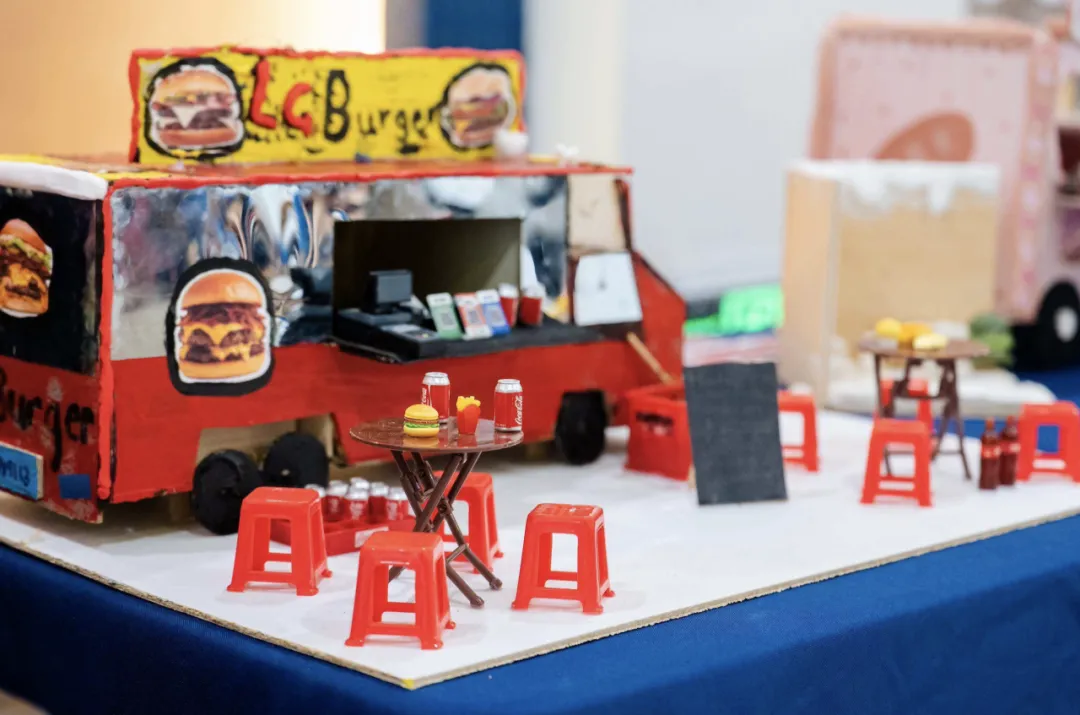
The most moving part of the Design section wasn't how polished the final products were, but the message they shared: before an idea becomes reality, you have to fall a few times. This is the core spirit of MYP Design—taking action in real-world contexts, adjusting through failure, and approaching perfection through iteration.
Every piece stands in for its creator to ask deeper questions:
· Can ancient emotions be retold through today's melodies?
· Can electrical currents only illuminate, or can they also express?
· What can a river be, besides just a river?
· Can invisible emotions be made visible?
· How many iterations must an idea go through before it comes to life?
· ...
Perhaps the finest learning outcomes are simply these endless, unfolding questions.

左右滑动以切换中英文

Swipe between Chinese and English