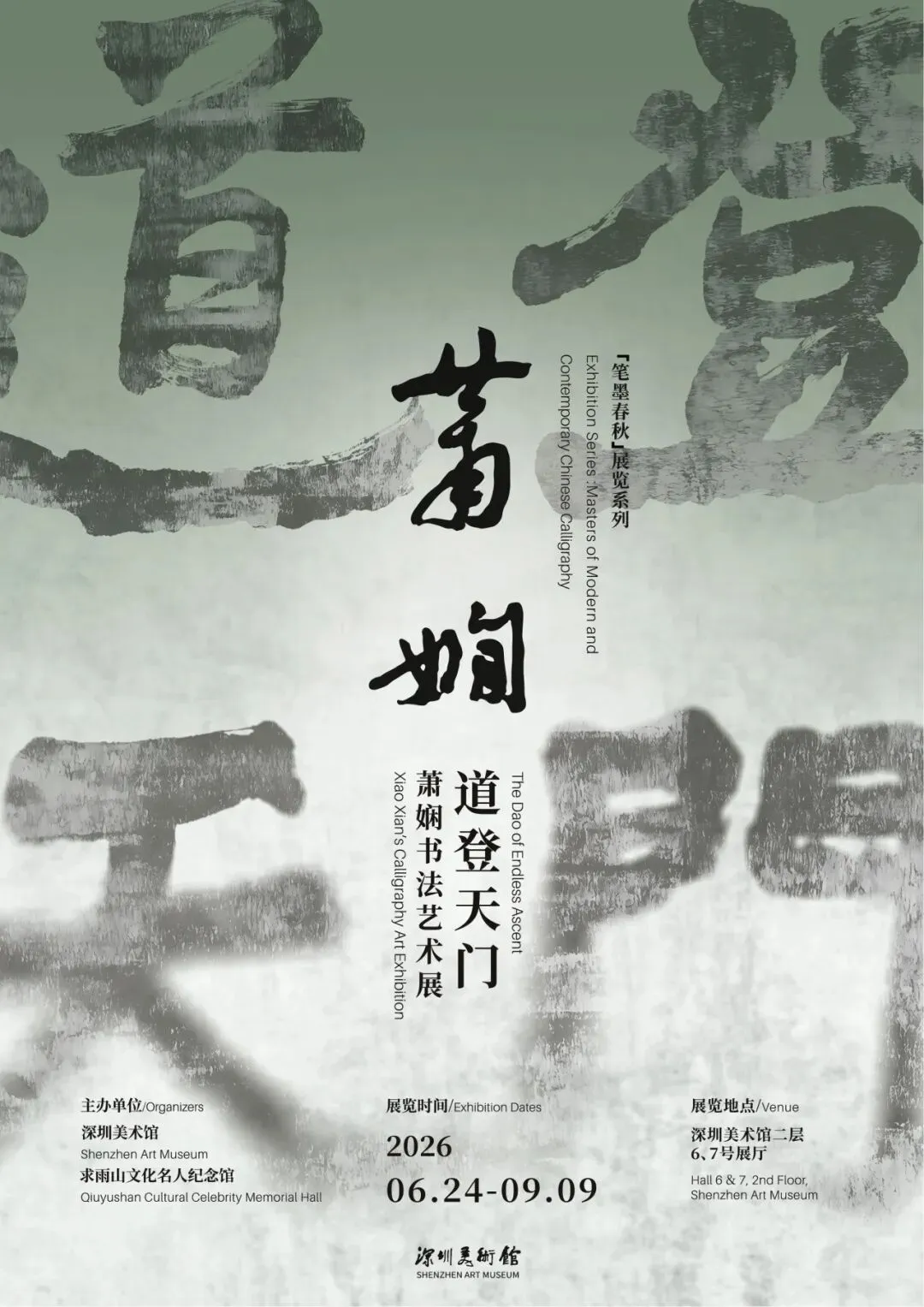
笔墨春秋:中国现当代书法名家展览系列
Exhibition Series:
Masters of Modern and Contemporary Chinese Calligraphy
道登天门
萧娴书法艺术展
The Dao of Endless Ascent
Xiao Xian's Calligraphy Art Exhibition
展览时间
2026年6月24日–2026年9月9日
Exhibition Dates
June 24–September 9, 2026
展览地点
深圳美术馆二层6、7号展厅
Venue
Hall 6 & 7, 2nd Floor, Shenzhen Art Museum
主办单位
深圳美术馆 求雨山文化名人纪念馆
Organizers
Shenzhen Art Museum
Qiuyushan Cultural Celebrity Memorial Hall
前言
在文化自信日益彰显、文明交流互鉴持续深化的当下,深圳美术馆立足城市开放包容的特质,以本土艺术为基,融汇中华优秀传统文化,推动国际交流。通过展览收藏、学术研究和公共美育,让艺术持续赋能城市精神文明建设。
新馆启幕以来,深圳美术馆推出重要学术工程“经典永流传展览系列”(中国近现代书画大家展览系列),呈现了齐白石、黄宾虹、陶博吾艺术研究展。为进一步丰富中国书画艺术脉络的梳理,深圳美术馆全新打造了“笔墨春秋:中国现当代书法名家展览系列”,聚焦现当代书法大家、名家,展示现当代书法的风貌,发掘其独特的精神价值。作为该系列的开篇,我们隆重推出20世纪最具代表性的女书法家、碑学大家萧娴先生的个展。
萧娴(1902-1997),贵州贵阳人,出身书香门第,父亲萧铁珊是著名南社社员,工诗文书画。萧娴幼承庭训,先后随父定居广州、上海,13岁在广州大胆落笔丈二榜书,名震书坛,后拜入康有为门下。一生历经战乱漂泊,始终潜心笔墨、为人刚正坦荡,后与林散之、胡小石、高二适并称 “金陵四家” 。萧娴受康有为影响,尊崇北碑,以“三石”(《石鼓文》《石门颂》《石门铭》)为经,碑派书学思想为纬,构筑自身的艺术世界。她的书法以篆、隶、行楷见长,尤擅擘窠大字,书风雄强厚拙、豪迈阳刚。康师曾题诗赞其曰:“笄女萧娴写散盘,雄深苍浑此才难。应惊长老咸避舍,卫管重来主坫坛。”于右任赞其“卫管复生,茂漪再世。女书家中,实罕其匹。”
“道登天门”是萧娴晚年的代表作。展览以此为主题,借指萧老书艺所达之高远境界,亦彰显其毕生笔耕砚田、永攀艺术高峰的不懈精神。本次展览由深圳美术馆和求雨山文化名人纪念馆联合主办,从求雨山文化名人纪念馆百余件萧娴馆藏中精选了50件/套精品及珍贵文献进行展示。展览分为三个版块,“大笔豪情”“文心造化”“石中见我”,倾力呈现萧娴在书法领域的深厚造诣及其心性、艺境,丰富女性书家的个案研究,更旨在透过萧老大气磅礴的书写,于当代书坛大力弘扬“正大气象”。
萧娴平生爱游历,以天地山川铸笔力,耄耋之年曾赴深圳,留墨湾区。今其书作再临鹏城,让我们在萧老的浩然书风中,品书学内涵、见人格风采。深圳美术馆将继续与国内重要博物馆、美术馆和名家馆携手合作,推出更多现当代书画名家精品展,愿观众徜徉笔墨之间,感受中华优秀传统文化的时代生机。
深圳美术馆 求雨山文化名人纪念馆
2026年6月
Preface
At a time when cultural confidence is on the rise and cross-cultural dialogue is deepening, Shenzhen Art Museum draws on the city's open and inclusive spirit. We ground ourselves in local art, embrace the finest of China's cultural traditions, and pursue international exchange. Through our exhibitions, collections, research, and public education, we make art a lasting force for the city's cultural and spiritual vitality.
Since the opening of its new premises, Shenzhen Art Museum has launched a major academic initiative, the Classics Endure Exhibition Series: Masters of Modern Chinese Painting and Calligraphy, which has already featured research exhibitions on Qi Baishi, Huang Binhong, and Tao Bowu. To further expand the framework of Chinese painting and calligraphy, the Museum has established the Exhibition Series: Masters of Modern and Contemporary Chinese Calligraphy. This series focuses on leading calligraphers of the modern and contemporary era, presenting the breadth of their work and uncovering its distinctive spiritual values. As the inaugural exhibition of this series, we are honored to present a solo exhibition of Xiao Xian, the most representative female calligrapher of the 20th century and a master of the stele school.
Xiao Xian (1902–1997) was born in Guiyang, Guizhou Province, into a scholarly family. Her father, Xiao Tieshan, was a prominent member of Nanshe (the Southern Society) and excelled in poetry, calligraphy, and painting. Raised under her father's guidance, she moved with him first to Guangzhou and later to Shanghai. At the age of 13 in Guangzhou, she boldly executed a twelve-foot banner in large-character calligraphy, which resounded throughout the calligraphy world. Later, she became a disciple of Kang Youwei. Despite a life of war and displacement, she remained devoted to her art and carried herself with integrity and openness. In her later years, together with Lin Sanzhi, Hu Xiaoshi, and Gao Ershi, she came to be known as one of the “Jinling four.” Influenced by Kang Youwei, Xiao Xian revered the Northern stele tradition. She built her artistic world by taking the “Three Stones”, the Stone Drum Inscriptions, the Ode to Stone Gate, and the Inscription at Stone Gate, as the warp and the stele school's theoretical framework as the weft. She excelled in seal script, clerical script, and running script, and was especially accomplished at large-character calligraphy. Her style is vigorous, unadorned, and bold, with a grandeur that transcends gender. Kang Youwei once praised her in a poem, “Young Xiao Xian writes the San Family Plate. Such profound, vigorous, and archaic brilliance is hard to find. Elder masters should step aside in awe, for Wei Shuo and Guan Daosheng have returned to rule the altar of calligraphy.” Yu Youren also lauded her “A revival of Wei Shuo and Guan Daosheng, a reincarnation of Lady Wei. Among female calligraphers, she truly has few equals.”
“The Dao of Endless Ascent” is a masterpiece from Xiao Xian’s late years. The exhibition takes its title from this work, a title that speaks to the heights she reached in her art and to a lifetime spent at the inkstone, always climbing toward the summit. This exhibition is a collaboration between Shenzhen Art Museum and the Qiuyushan Cultural Celebrity Memorial Hall. From the Memorial Hall’s collection of more than one hundred works by Xiao Xian, we have selected fifty exceptional pieces and rare documents for display. The exhibition unfolds in three sections “Monumental Vision and Heroic Spirit,” “Nurtured by Culture and Nature,” and “The Self Revealed in Stone.” Together, they reveal the depth of Xiao Xian’s calligraphic achievement, her inner life, and her artistic vision, adding a vital chapter to the study of female calligraphers. Above all, through the power and sweep of her brush, this exhibition calls for a “majestically grand spirit” in the calligraphy world of our time.
Xiao Xian loved to travel throughout her life. She forged her brush strength from the mountains and rivers. In her later years, she visited Shenzhen and left behind calligraphic works in the Greater Bay Area. Now her art revisits Shenzhen, inviting us to read the depth of her scholarship and to see her true character through the expansive power of her writing. Shenzhen Art Museum will continue to work closely with major museums and memorial halls across China to bring more fine exhibitions of modern and contemporary painting and calligraphy masters to the public. We hope visitors will wander among brush and ink and feel the living spirit of China’s great cultural traditions in our own time.
Shenzhen Art Museum
Qiuyushan Cultural Celebrity Memorial Hall
June 2026
部分作品欣赏
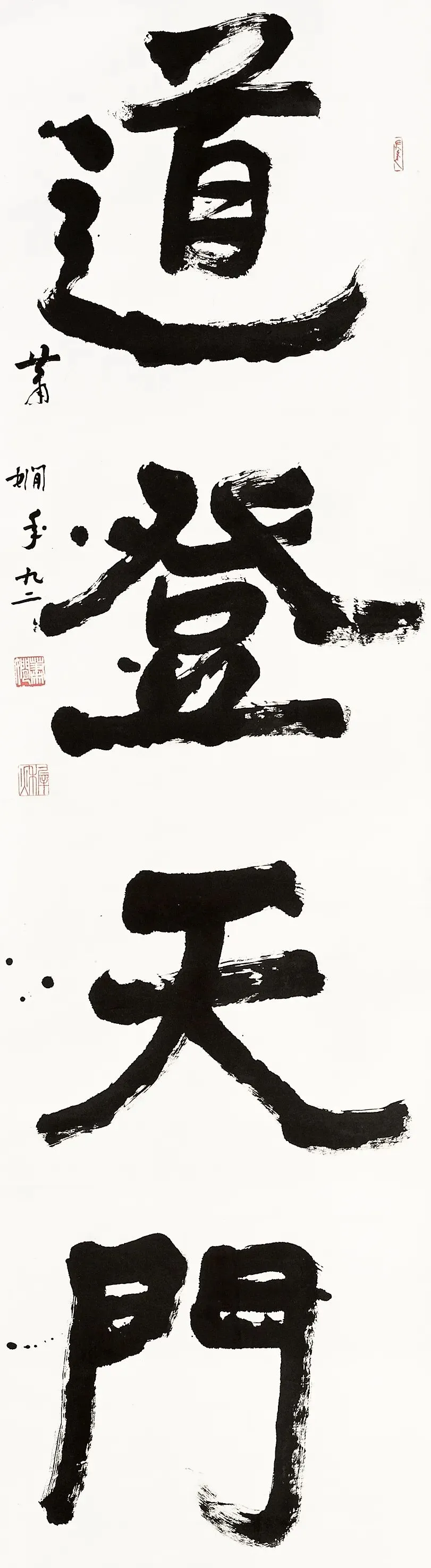
道登天门
1993年 行书立轴 300cm×87cm
释文:道登天门
萧娴年九二
钤印:长年(朱文) 萧娴(白文) 稚秋(朱文)
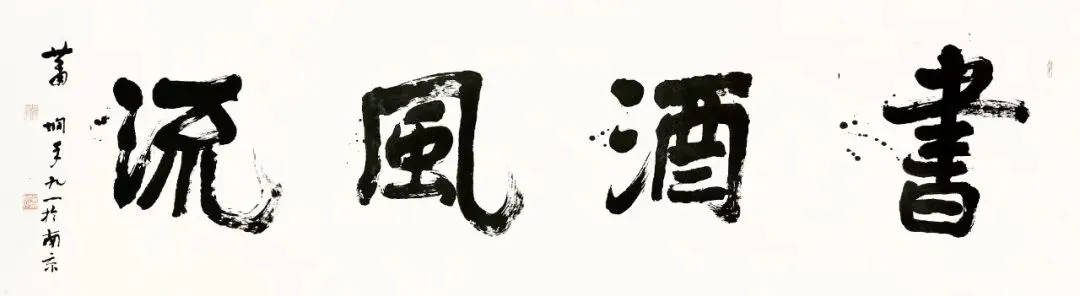
书酒风流
1992年 行书横轴 413cm×122cm
释文:书酒风流
萧娴年九一于南京
钤印:长年(朱文) 稚秋(朱文) 萧娴(白文)
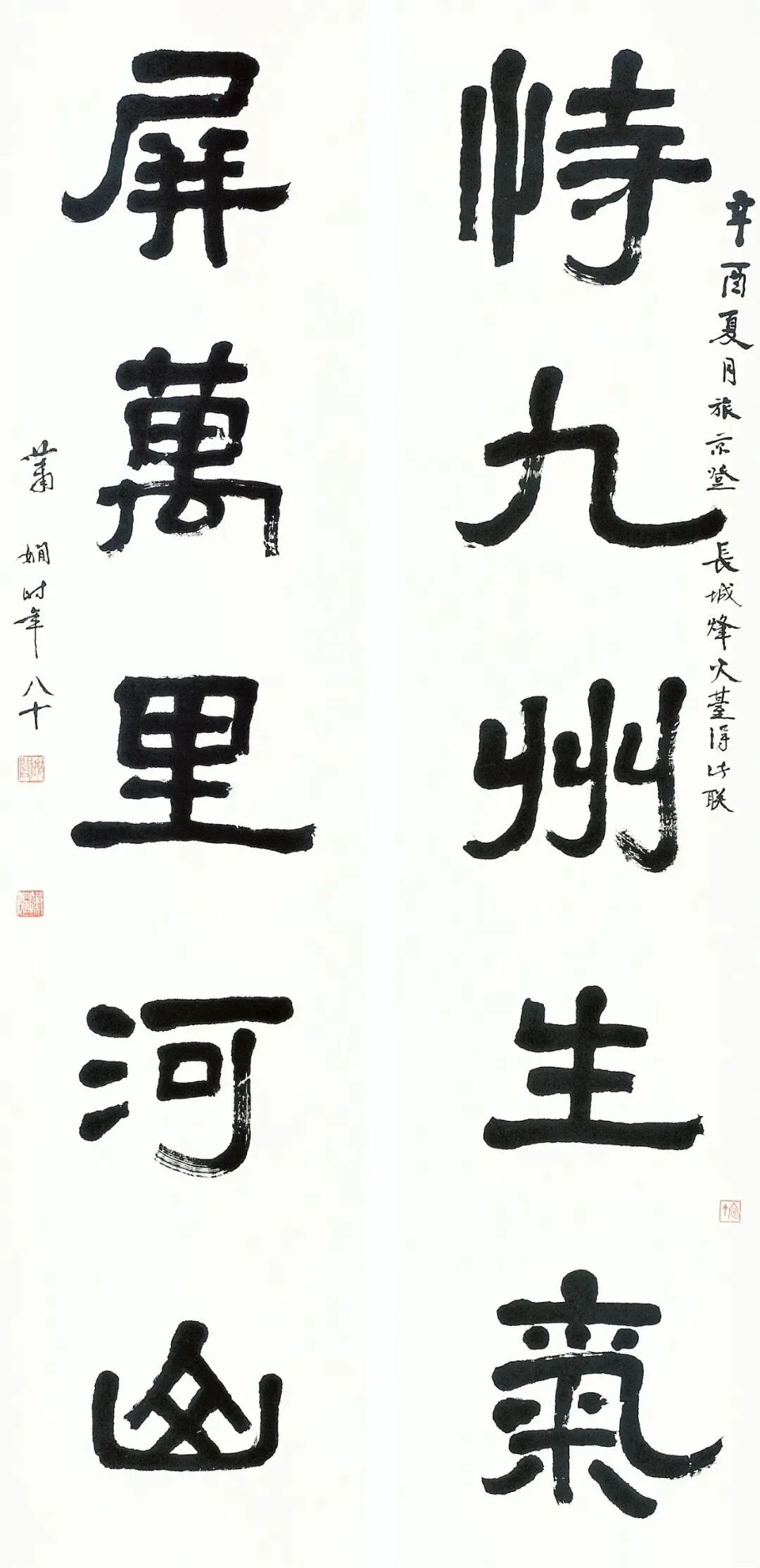
恃九、屏万联
1981年 隶书五言联 177cm×45cm×2
释文:恃九州生气,屏万里河山。
辛酉夏月旅京登长城烽火台得此联,萧娴时年八十。
钤印:庖丁(朱文) 蜕阁(朱文) 萧娴(白文)
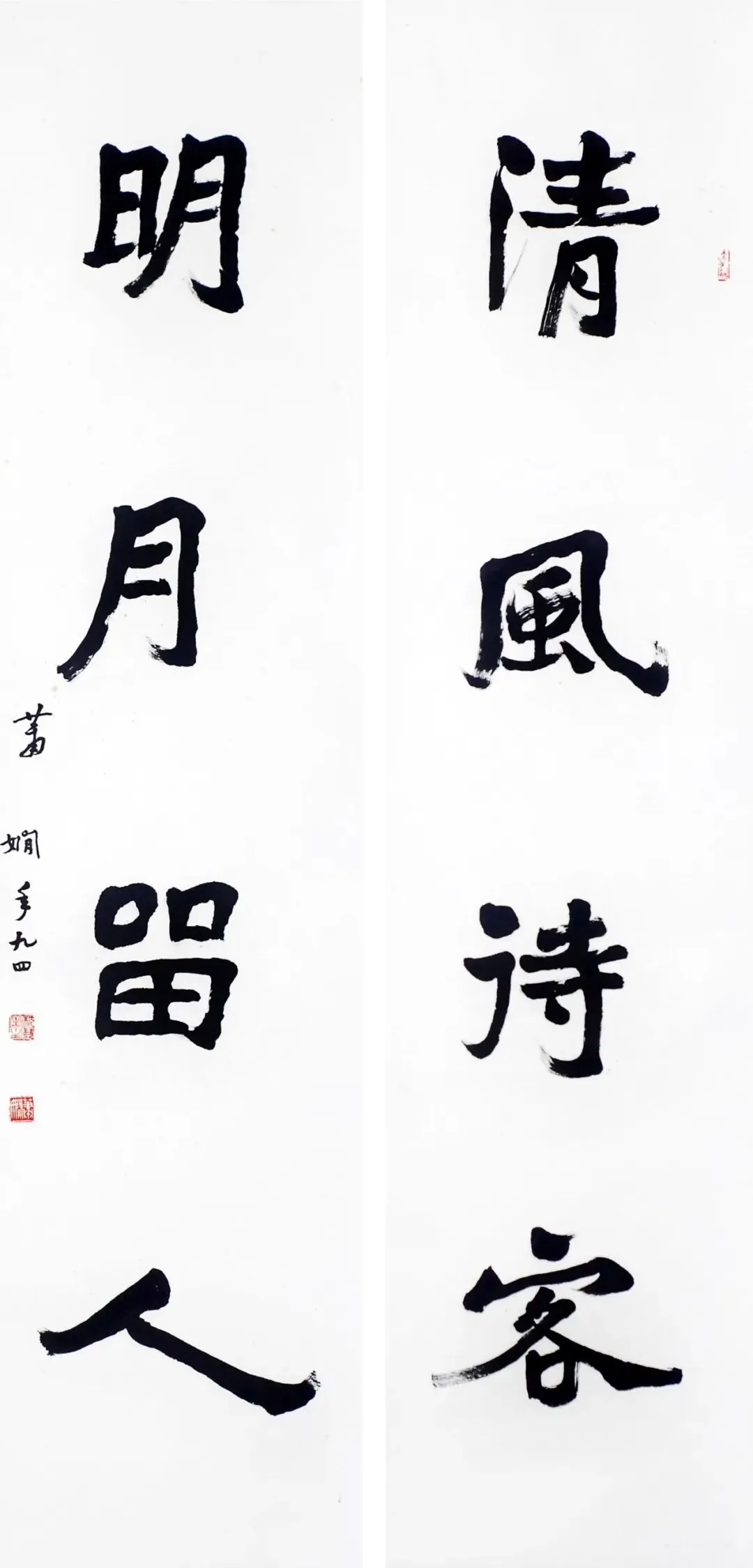
清风、明月联
1995年 行书四言联 136.5cm×33cm×2
释文:清风待客,明月留人。
萧娴年九四
钤印:大寿(朱文) 枕琴室主(朱文) 萧娴(白文)
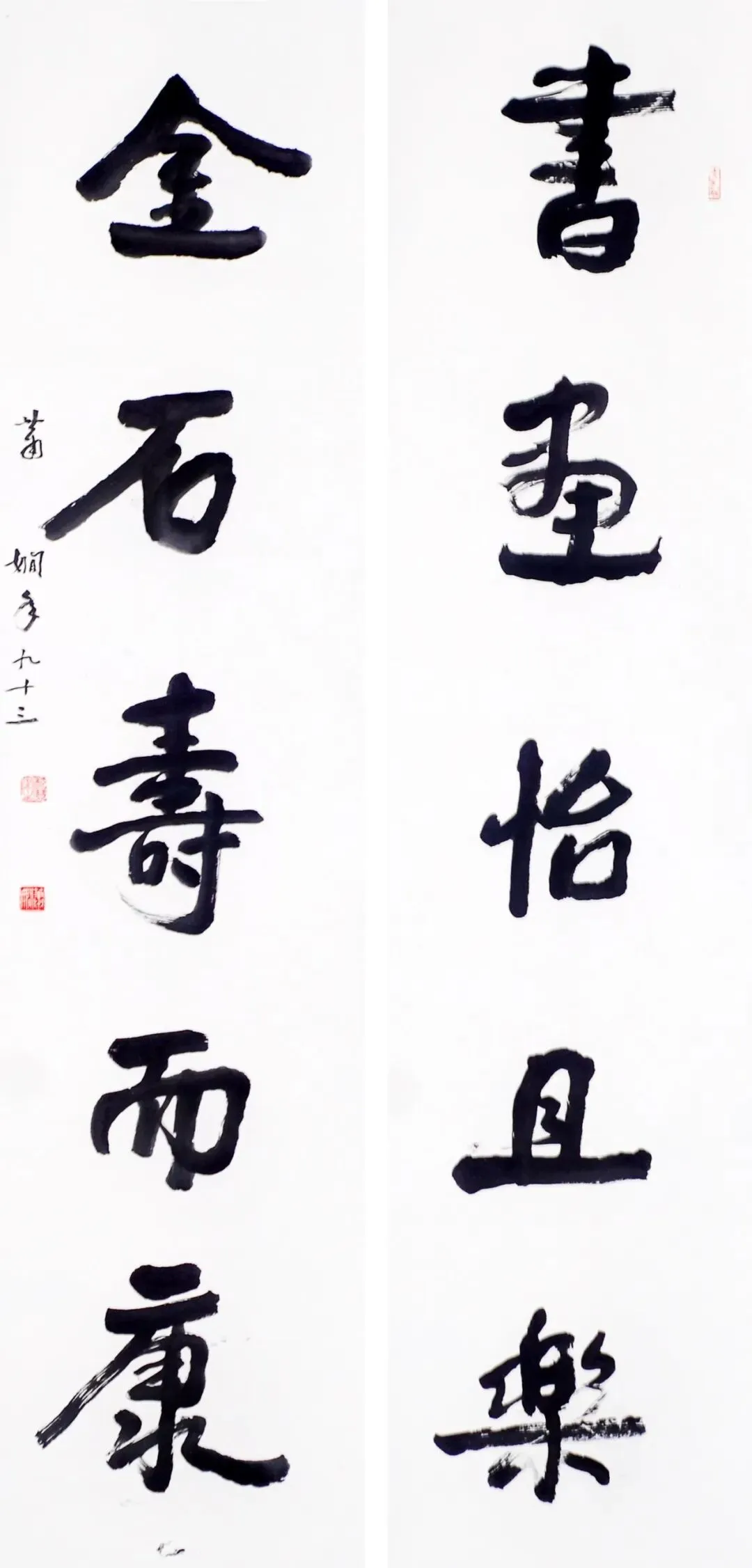
书画、金石联
1994年 行书五言联 136cm×33cm×2
释文:书画怡且乐,金石寿而康。
萧娴年九十三
钤印:大寿(朱文) 枕琴室主(朱文) 萧娴(白文)
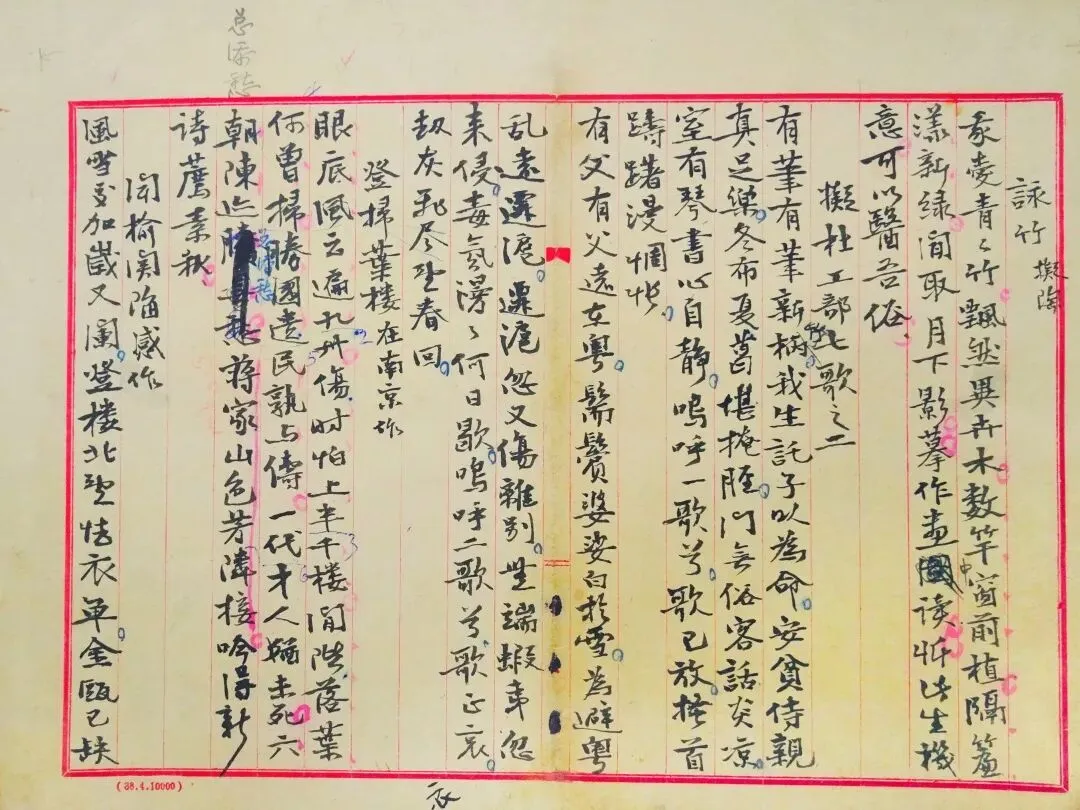
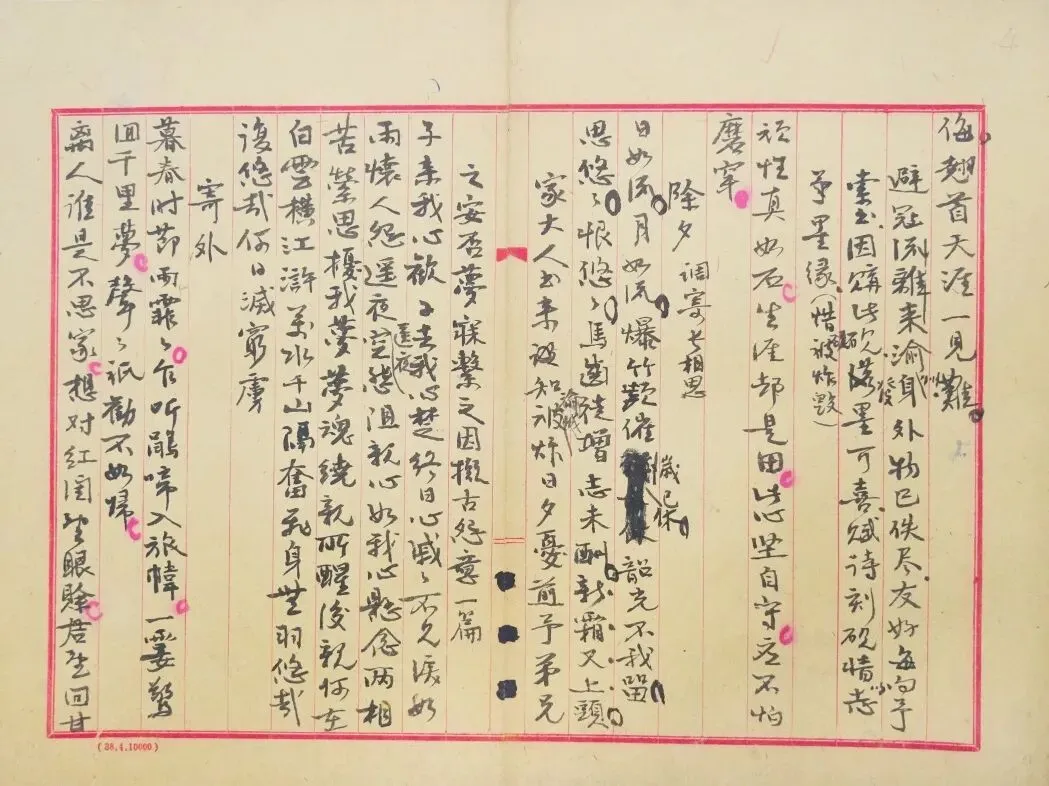
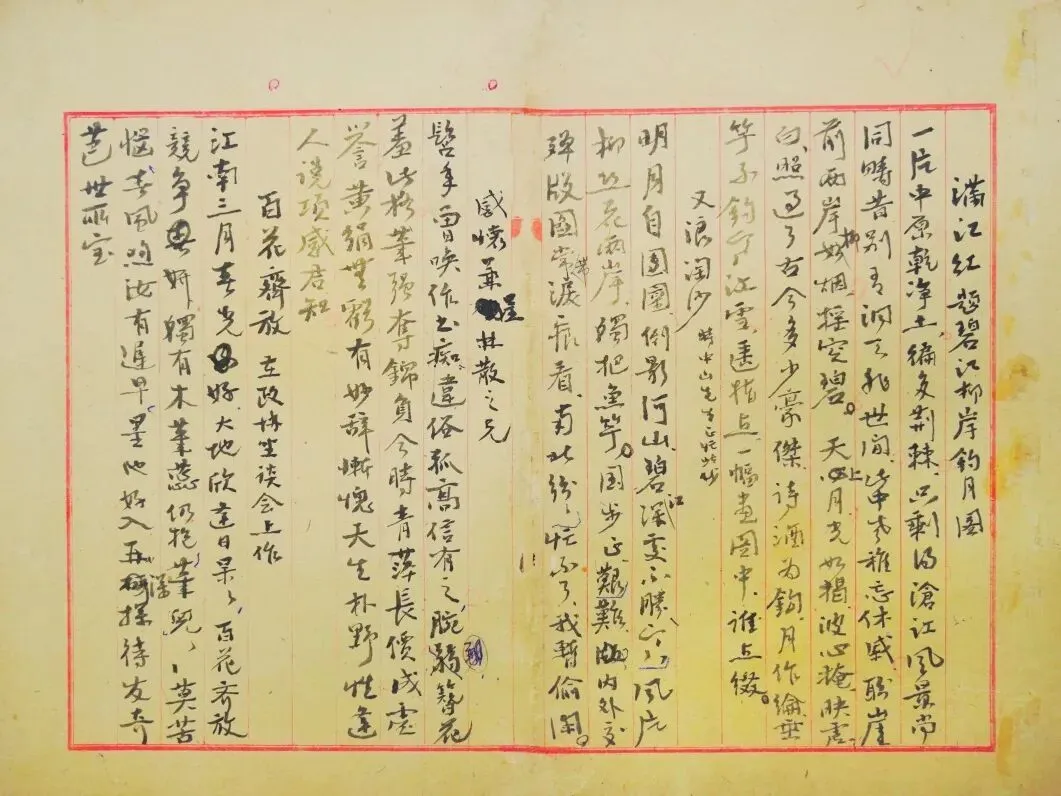
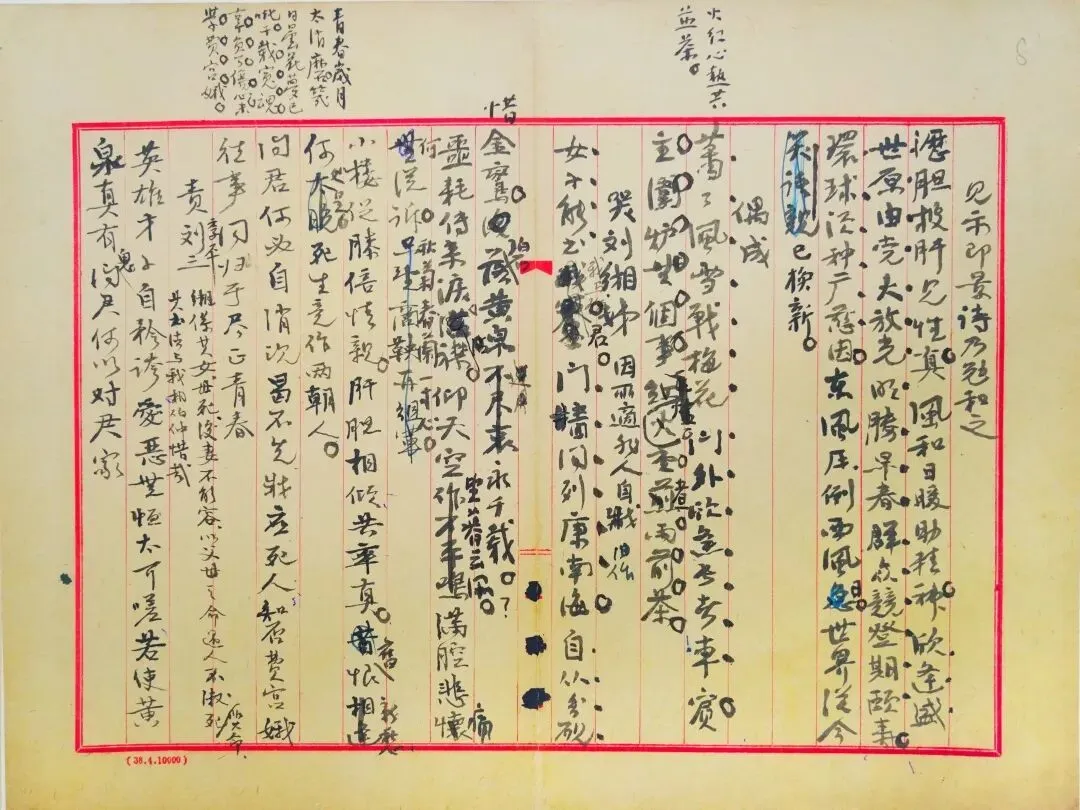
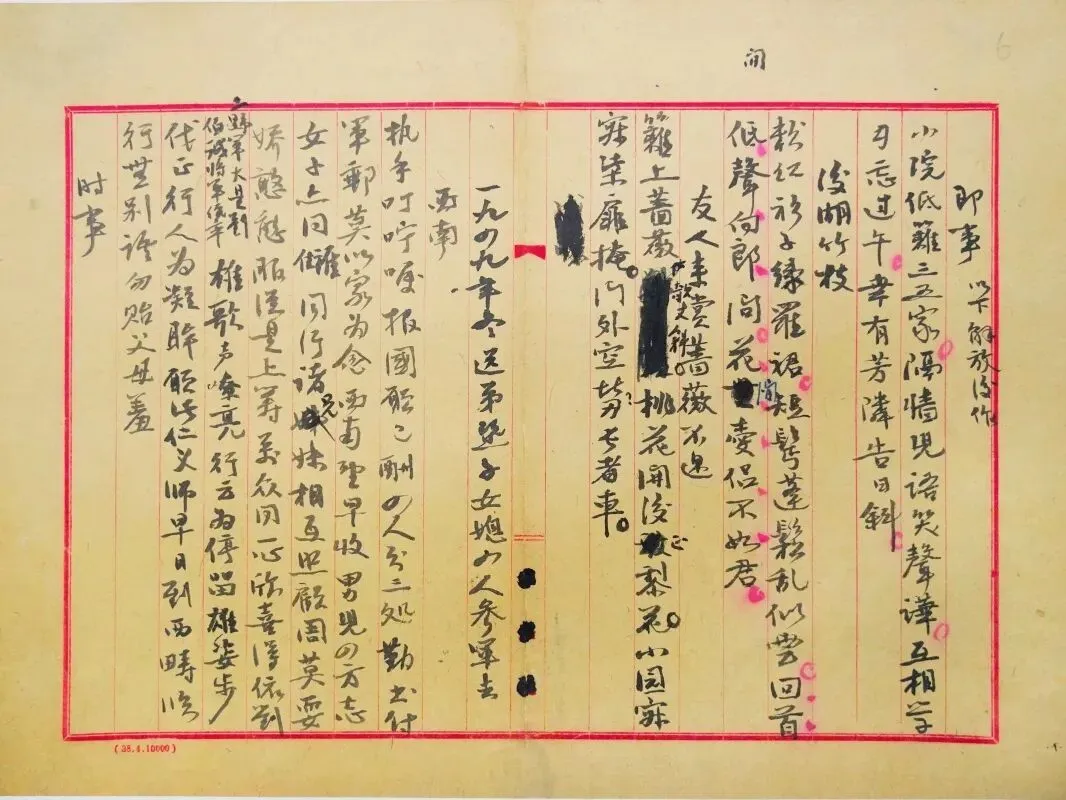
(左右滑动查看图片)
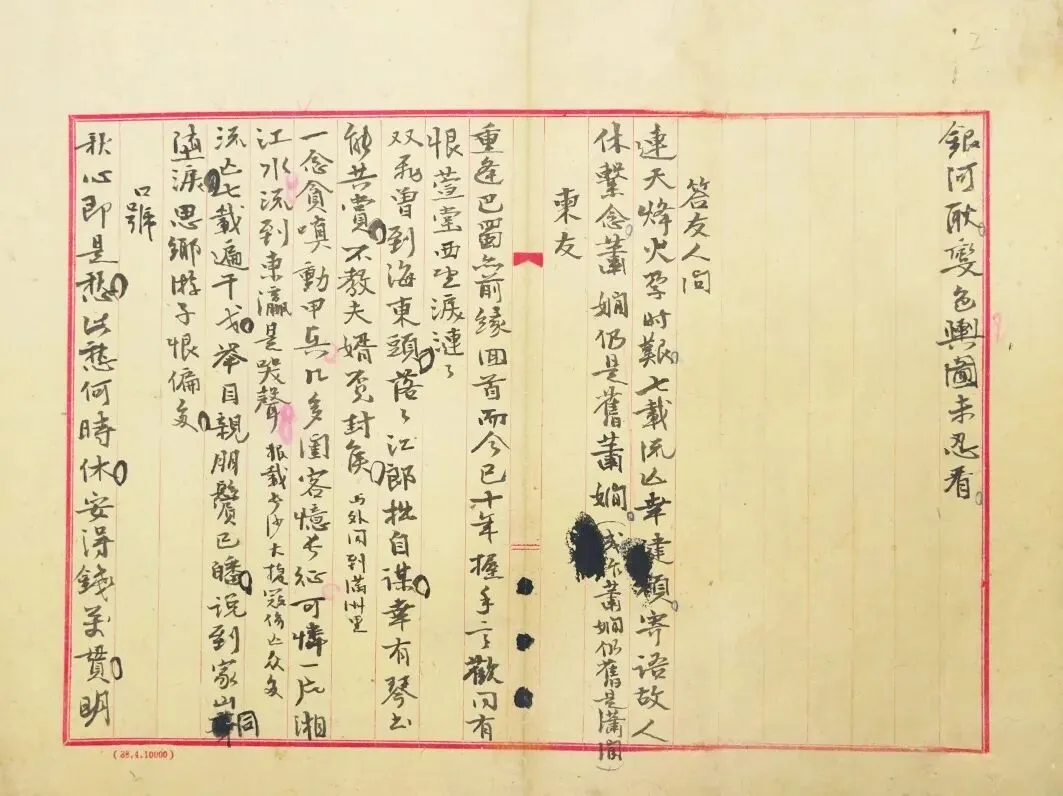
《劫余草》
抗战时期 诗稿 35cm×27cm×18
释文(略)
艺术家简介
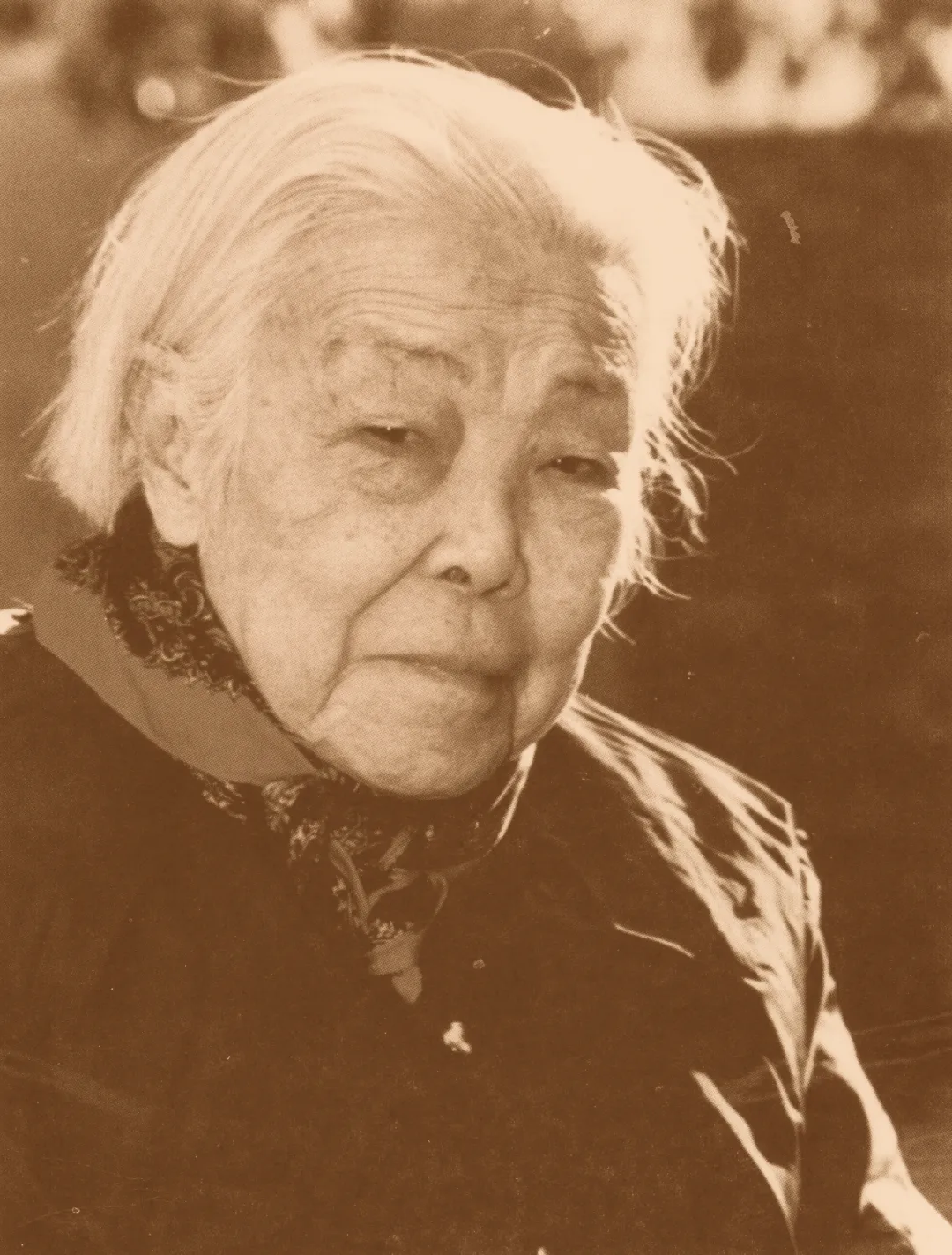
萧娴先生(1902—1997),字稚秋,号蜕阁、枕琴室主。贵州贵阳人,父亲萧铁珊是著名南社社员。13岁便写得一手好邓隶,曾有“粤海神童”之称。萧娴青年时代好交游,善饮、胆大,为人落拓不羁。北伐时,萧娴曾在广东参加了宋庆龄女士举办的慰劳会,以自己所书字幅义卖得千元,悉数襄赞国民革命。20岁时,萧娴随父移居上海,拜康有为为师。康先生见到萧娴13岁时所书《散氏盘》铭文后,欣然赠诗云:“笄女萧娴写散盘,雄深苍浑此才难。应惊长老咸避舍,卫管重来主坫坛。”萧娴中年历经战乱颠沛,辗转多地,生活清贫却坚守书艺,晚年定居南京,82岁被破格录用为国家干部,安排在江苏省美术馆从事专业创作,90岁加入中国共产党。
萧娴早年崇尚碑学,深得北派三昧。篆学邓石如,得其朴厚;后习石鼓、籀文,益为高古;隶法《石门颂》;行书得力于《石门铭》,更从汉魏其他诸碑如张迁、华山庙、爨龙颜、郑文公等,汲取神髓,互为表里。中年遍历西南名山大川,后定居于六朝古都南京,平生瞩目自然,留情景物,故日月精华,山川奇气,洋溢笔端。淋漓见波涛之迹,奇拔得山岳之险。特擅擘窠大字,风云入怀,得意挥洒。纷披雄浑,每有“提笔四顾天地窄”之慨。为书之道,关乎性情,通乎造化。萧书以温厚为形体,恣逸为气神,自成面目,影响当代。
Artist Biography
Xiao Xian (1902–1997), courtesy name Zhiqiu, also known as Tuige and Master of the Zhenqin Studio, was a native of Guiyang, Guizhou Province. Her father, Xiao Tieshan, was a prominent member of Nanshe (the Southern Society). At just 13, she had already mastered Deng Shiru’s clerical script, earning the title “Child Prodigy of Guangdong.” In her youth, Xiao Xian was sociable, bold, and uninhibited, with a great capacity for drinking. During the Northern Expedition, she joined a comfort and support gathering organized by Soong Ching-ling in Guangdong, where she auctioned her own calligraphy works, raising a thousand yuan, which she donated in full to the cause of the Nationalist Revolution. At 20, Xiao Xian moved with her father to Shanghai and became a disciple of Kang Youwei. Upon seeing the inscription of the San Family Plate (San Shi Pan) that Xiao Xian had written at 13, Kang Youwei was so moved that he composed a poem in her honor “Young Xiao Xian writes the San Family Plate. Such profound, vigorous, and archaic brilliance is hard to find. Elder masters should step aside in awe, for Wei Shuo and Guan Daosheng have returned to rule the altar of calligraphy.” In her middle years, Xiao Xian endured the turmoil of war, wandering from place to place. Despite living in poverty, she remained devoted to the art of calligraphy. In her later years, she settled in Nanjing. At 82, she was exceptionally appointed as a national official and assigned to the Jiangsu Provincial Art Museum for professional artistic creation. At 90, she joined the Chinese Communist Party.
In her early years, Xiao Xian revered the stele school of calligraphy, attaining the true essence of the Northern style. She studied seal script under Deng Shiru, absorbing the solid and unadorned quality of his style; later she turned to the Stone Drum Inscriptions and Zhouwen (Large Seal Script), which gave her work an even more archaic and refined elegance. Her clerical script followed the Ode to Stone Gate. Her running script drew strength from the Inscription at Stone Gate. She also absorbed the spiritual essence of other Han and Wei steles, such as the Zhang Qian Stele, Hua Shan Temple Stele, Cuan Longyan Stele, and Zheng Wengong Stele, allowing different styles to interweave and complement one another.
In her middle years, she traveled extensively through the famous mountains and great rivers of Southwest China. Later, she settled in Nanjing, the ancient capital of the Six Dynasties. Throughout her life, she paid close attention to nature and found deep joy in its landscapes. As a result, the essence of the sun and moon and the vital energy of mountains and rivers filled the tip of her brush. Her writing vividly captured the momentum of surging waves and tides, while its bold and upright character conveyed the precipitous grandeur of mountain peaks.
She was especially accomplished at large-character calligraphy. When she wrote, it seemed as if wind and clouds rushed into her heart, and she wielded her brush with complete freedom and ease. Her calligraphy was powerful and unrestrained, often evoking the feeling that “once she raised her brush and looked around, heaven and earth suddenly felt too narrow.” The art of calligraphy is about one's inner disposition and spirit, and it resonates with the transformations of nature. Xiao Xian's calligraphy takes gentleness as its form and exuberance as its spirit and energy. She developed a distinctive style of her own and left a profound influence on the contemporary era.
总策划
朱建军
展览总监
王新妮 王子蚺
策展人
王子蚺
执行策展人
田露思 袁瑜斐

点击长按识别图中二维码
参与深圳美术馆问卷调查