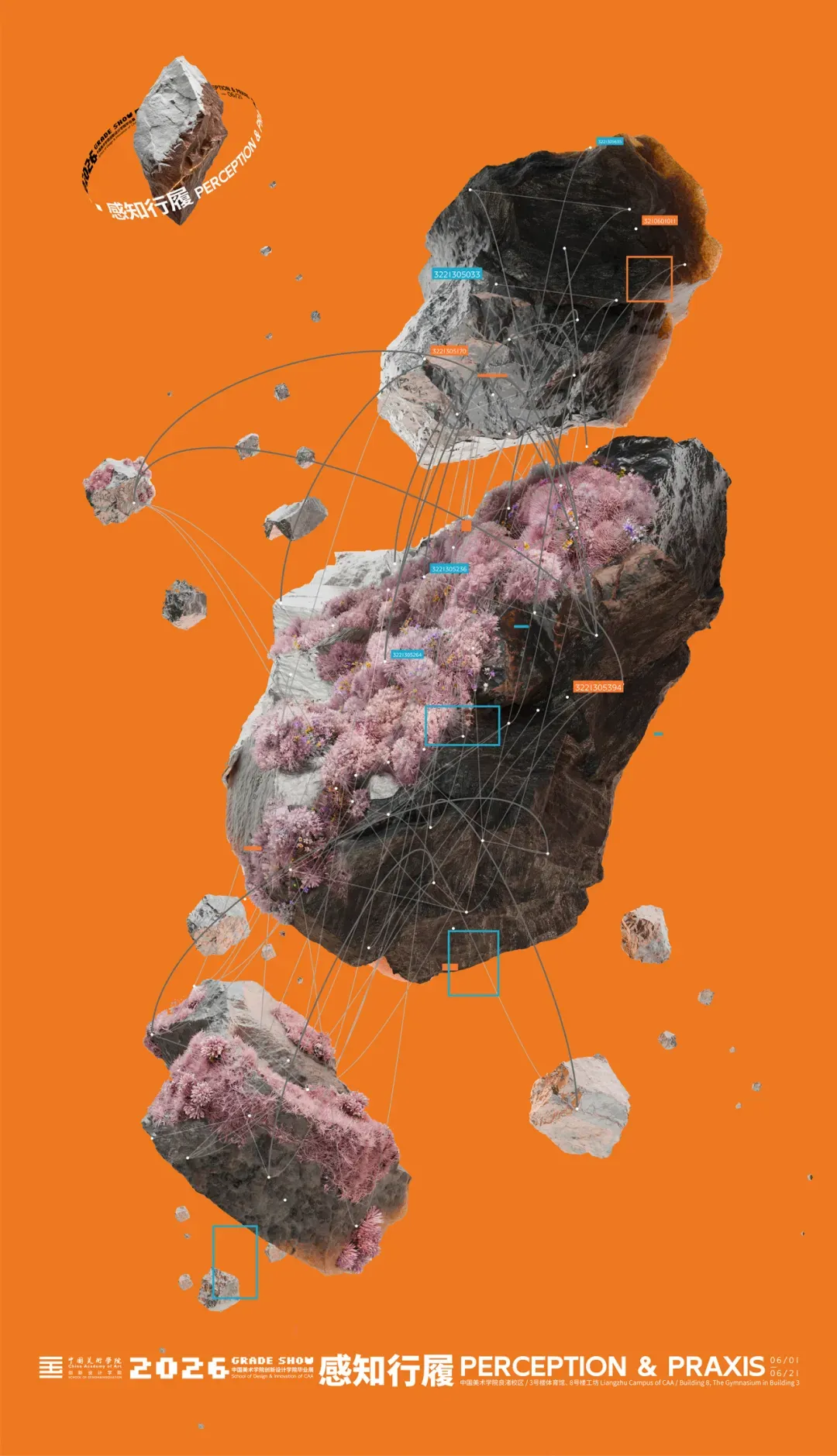
感知行履 | 壮游
中国美术学院创新设计学院
2026毕业展
展览时间
2026年6月1日-6月21日
展览地点
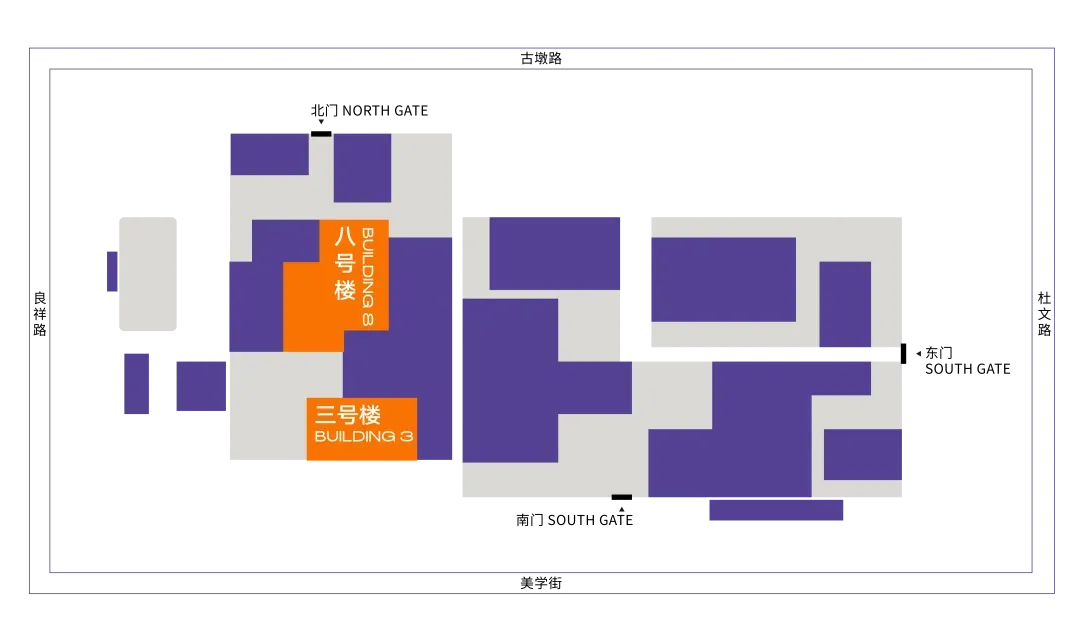
中国美术学院良渚校区
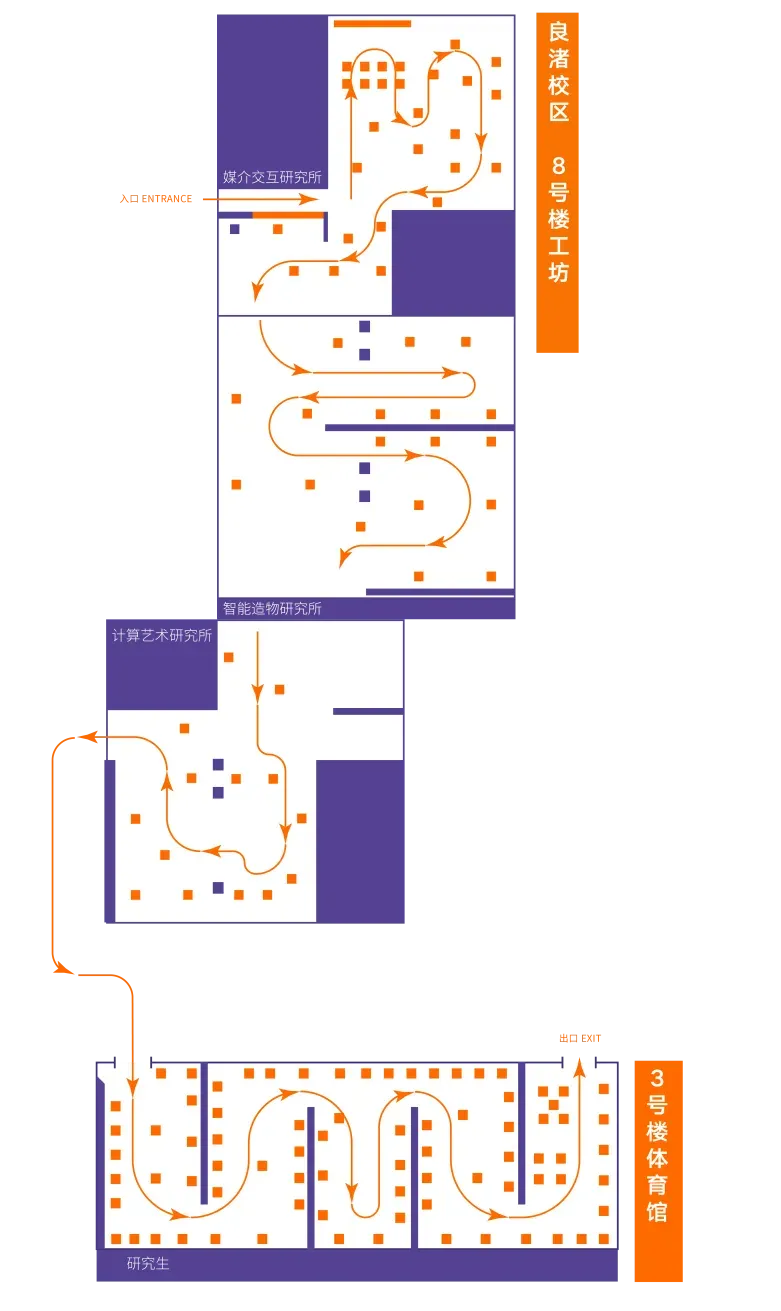
8号楼工坊、3号楼体育馆
展览主题
感知行履
Perception and Praxis
自鸿蒙初开,“感知”即为生命与世界建立关系的原初方式。多模态智能的一次次迭代,不断延续和拓展了感知的维度和广度。从身体觉察到逻辑推演,从视觉形态到听觉节奏,所有认知行为皆根植于“感知”的行动。
当多模态智能不断拓展感知边界,生成式AI解析着越来越精微的数据隐秘规律,VR构建沉浸场景突破更多的物理限制,生物传感将情绪转化更为精确的量化信号,我们不得不将认知重新锚定于人之本体。行走、触摸、倾听,都是对感知的验证与修正。行动与感知相互反馈,形成“感知-行履-认知”的闭环。这场“行履”,情感与理性交织其中,成为生命向上的姿态。人与人的共情理解,人与物的诗意互动,人与自然的可持续共生——认知网络中再无孤立个体,每一步行履都在为集体认知地图增添着新的坐标。
毕业展是一场“壮游”式认知远征。创新设计学院毕业生以感知为启点,将生态危机、文化传承、社会议题转化为可交互作品。艺术赋予情感深度,技术实现抽象具表。观众在互动中完成认知更新,创作者则在感知行履中实现自我。
壮游所及,终归感知的尺度;行履所至,乃为认知之历。
From the earliest stirrings of being, perception has constituted the primary condition through which life enters into relation with the world. The successive evolution of multimodal intelligence has not replaced this condition, but rather extended its scope and sensitivity—from corporeal awareness to abstract reasoning, from the articulation of visual form to the cadence of sound. Cognition, in all its manifestations, remains grounded in acts of perceiving.
Yet as contemporary technologies continue to stretch the limits of perception—generative AI discerning ever more intricate patterns within data, virtual reality reconfiguring the bounds of spatial experience, and biosensing rendering affect into measurable signals—there emerges a renewed imperative to re-situate cognition within the lived body. To walk, to touch, to listen: these are not merely actions, but ongoing calibrations of perception itself. In this reciprocal movement, perception and praxis form a dynamic circuit—one that gives rise to cognition as an emergent process rather than a fixed state. Within this unfolding, emotion and reason are not opposed, but interwoven, shaping a mode of being oriented toward growth. Empathy among individuals, poetic attunement between humans and objects, and the pursuit of ecological coexistence collectively reconfigure cognition as a distributed and relational field, in which each act of praxis inscribes new coordinates upon a shared cartography of understanding.
The graduation exhibition unfolds as a “Grand Tour” of cognition—an exploratory passage rather than a static display. Beginning from perception, students of the School of Innovation Design translate ecological concerns, cultural memory, and social inquiry into interactive forms. Here, art deepens affective resonance, while technology renders the intangible perceptible. Through participation, audiences engage in acts of cognitive renewal; through praxis, creators articulate their own trajectories of becoming.
What the Grand Tour ultimately traverses is the measure of perception; where praxis arrives becomes the lived itinerary of cognition.
展区介绍
展览预告
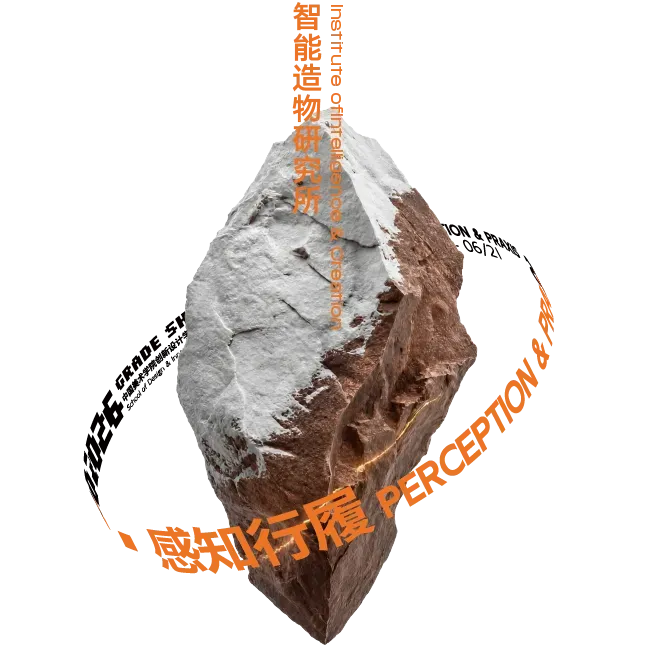
智能造物研究所
Institute of Intelligence & Creation
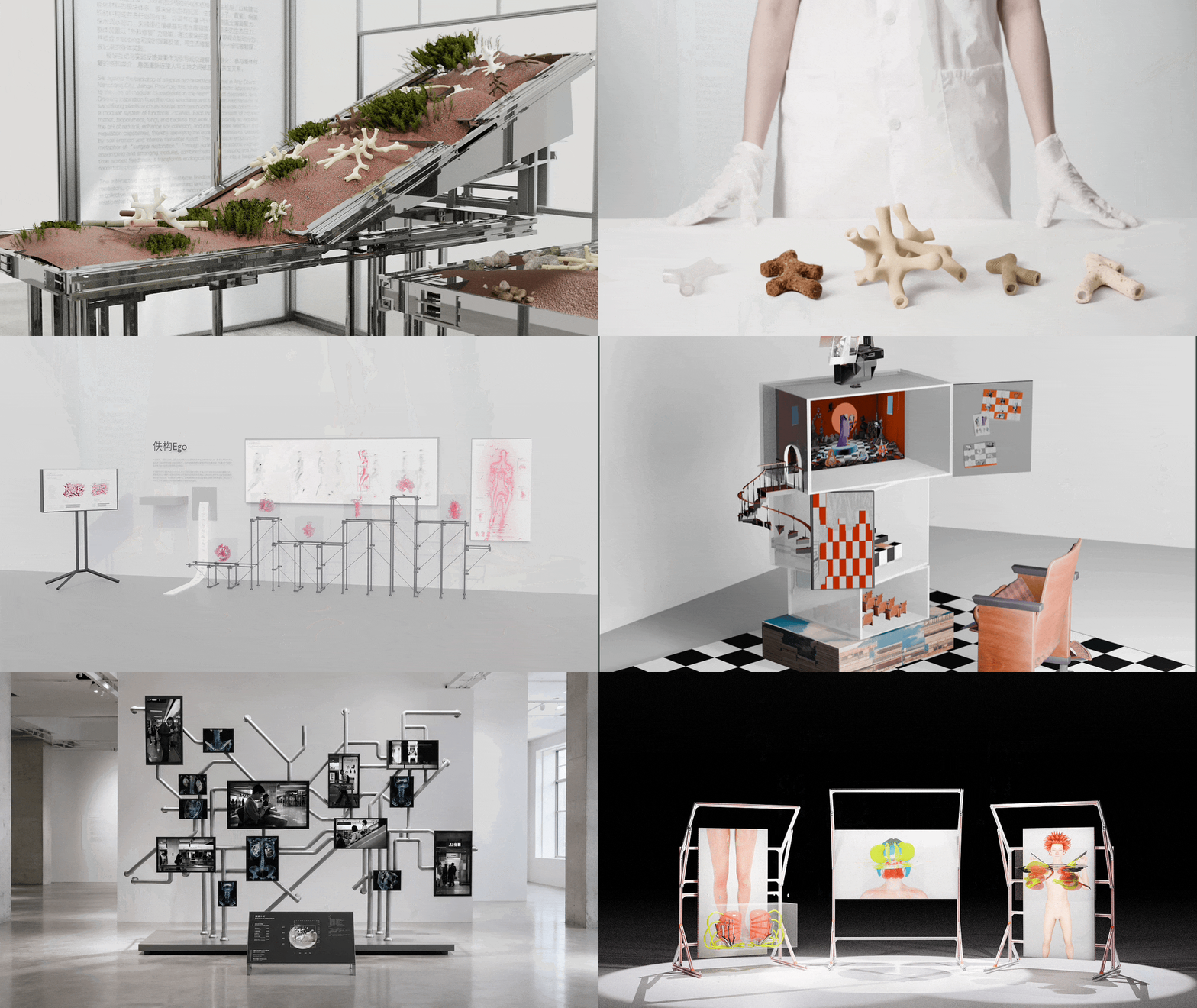
生物设计工作室
智能具身工作室

媒介交互研究所
Institute of Media & Interaction Design
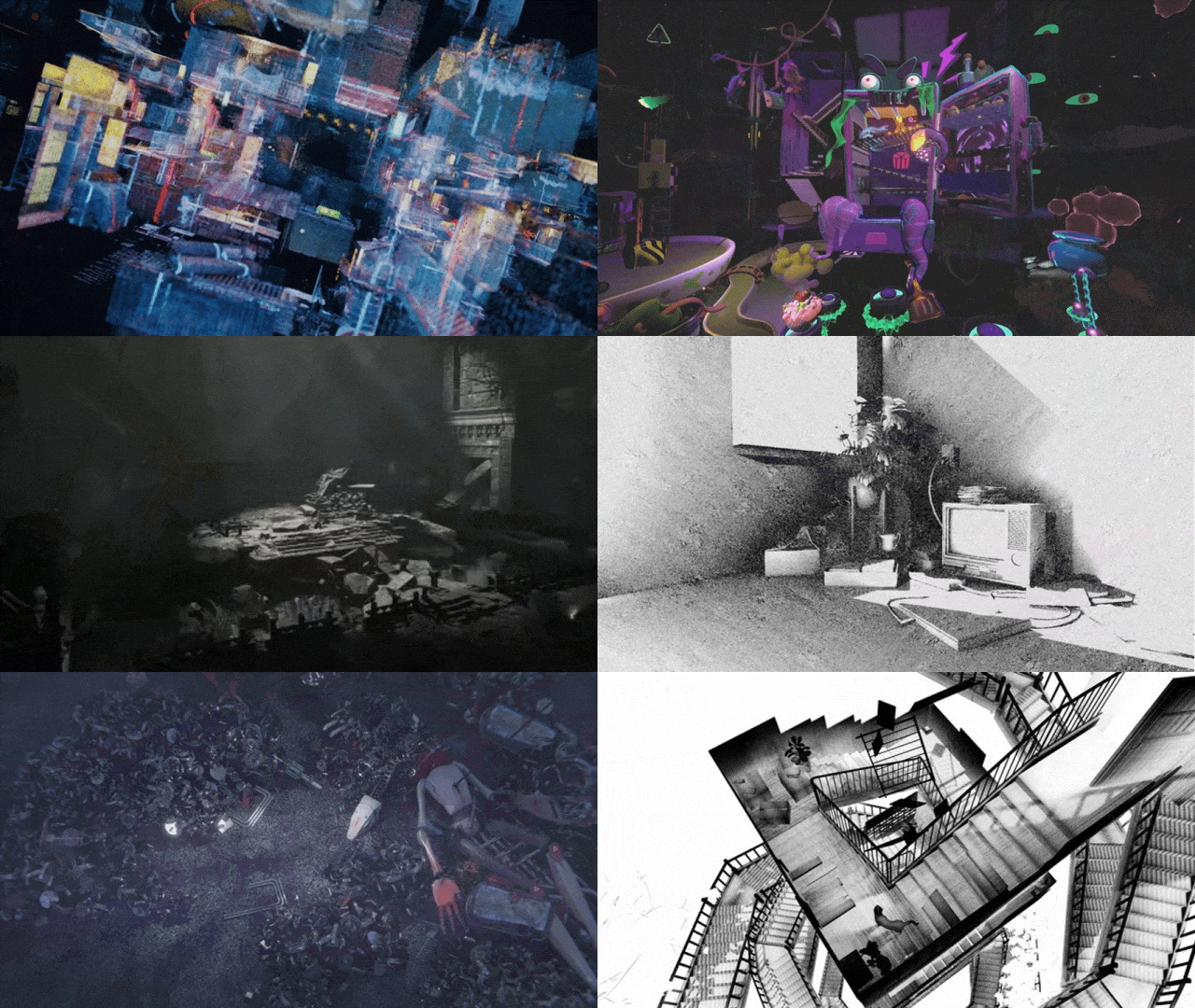
超视觉工作室
数娱开发工作室
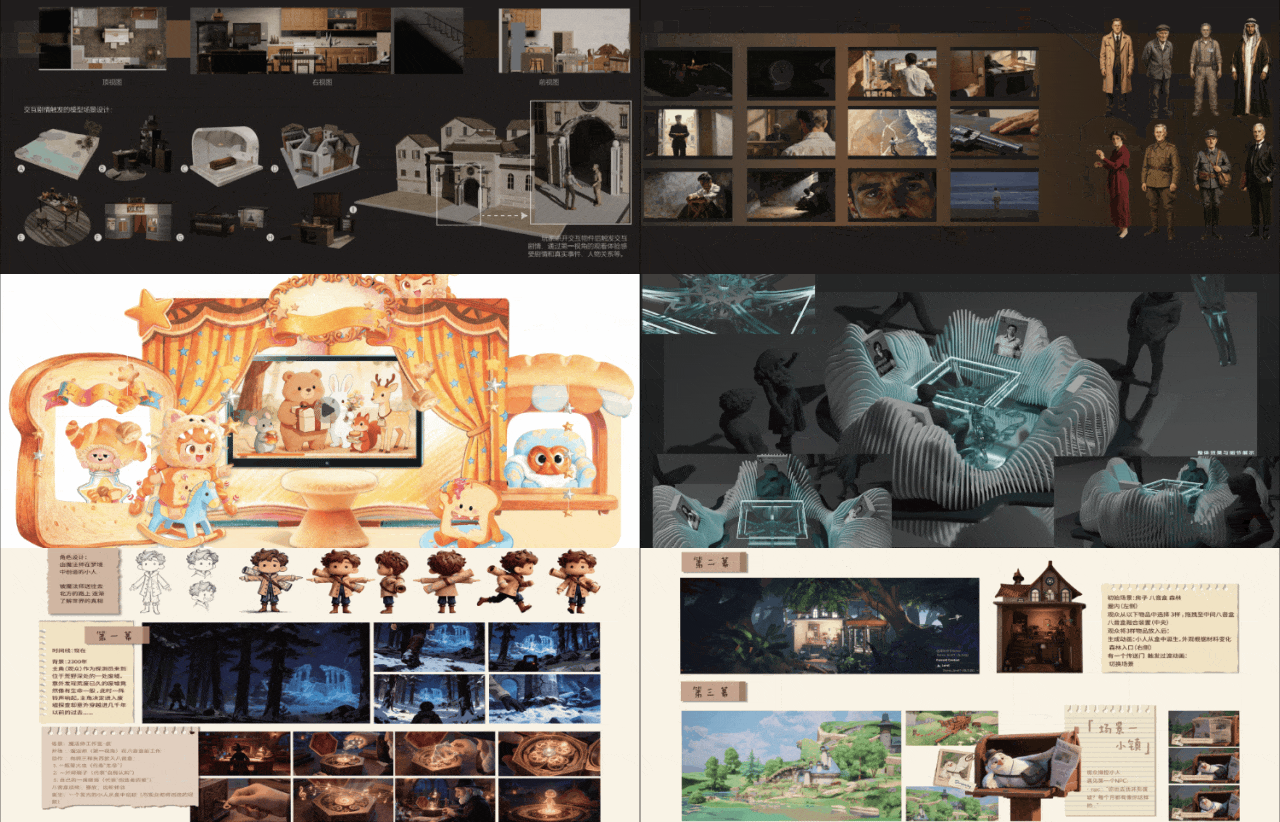
数字展演工作室
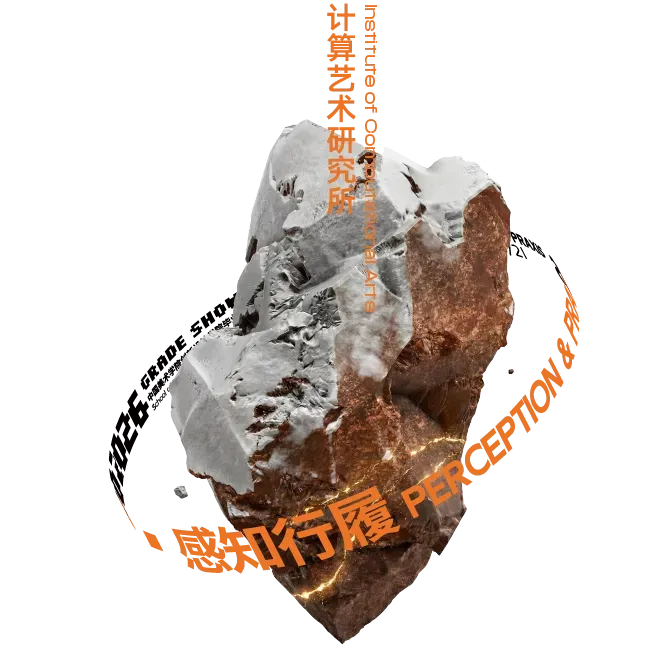
计算艺术研究所
Institute of Computational Arts
复杂系统工作室
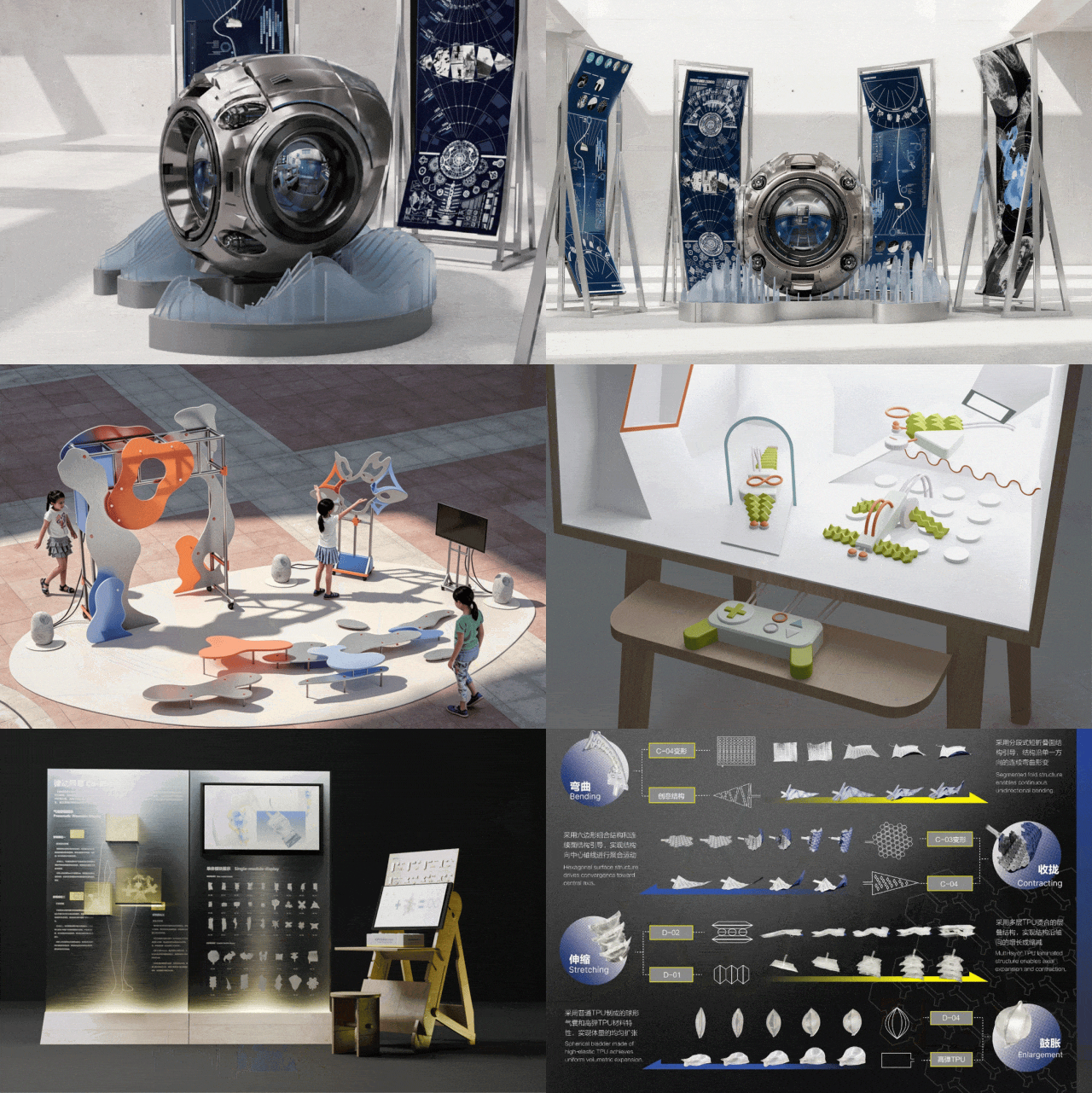
机动设计工作室
硕博研究生
Postgraduate
创新设计学院研究生以“着眼艺科融合,推动跨界教学,培育创新人才,重建设计人文”为指导思想,以培养具有人文思想底蕴、创新思维能力、艺术与科技综合素养,同时兼具开阔国际视野和深切本土关怀的复合型、高层次设计人才为目标。在全球视野下,立足中国本土设计语境,重构数字时代的设计人才培养目标——以艺术、科技、社会的联动教学为核心,以跨学科、国际化、实验性的研究院所项目为重点,使其能够综合运用多学科、跨领域的知识和技能,面向当下和未来的社会需求进行创新设计的研究和实践。
指导老师
(按姓氏笔画排序)
于朕·马川·王咪·卞京·方晓风·尹娆·卢晨·卢泳如·向逸·刘墨·邴寅·李轶军·吴屹·吴小华·陈天翼·陈炜博·陈梦阳·林村·杭间·周博·於阗·胡晓琛·项建恒·段卫斌·俞同舟·俞佳迪·姜珺·袁由敏·徐振庭·顾文甲·郭奇·郭磊·黄晓望·曹锦炎·韩绪·程斌·端木琦·潘海天·山中一宏·篠原規行
展览预约
中国美术学院各校区毕业展预约须知:
入馆方式:
平台1:支付宝小程序
方式1:支付宝小程序“中国美术学院访客预约”-游客预约-访客完善信息-完成
平台2:微信公众号
方式2:微信公众号“中国美术学院”-服务-进校预约-访客完善信息-完成
中国美术学院·良渚展区
开放时间:6月1日-6月21日(9:30-16:30)
学院介绍
创新设计学院
School of Design and Innovation
创新设计学院作为中国美术学院设计学科拓展的前沿阵地,在“中华文明源发地”和“数字经济最前线”的良渚校区办学。强调以国际化设计联动为基础, 以社会学思辨为起点,以艺科融合为路径的教研思想,围绕长三角的文化资源、 产业特色和优势,开设艺术与科技和数字媒体专业。同步探索人才培养、设计 教学、高效管理、联动产业等新机制,以“面向未来、面向社会、面向改革、 面向融合”的胸襟气魄,整合全球设计创新资源,推动以互联网为基础的智能 制造和设计集成,着力打造大数据、智媒体时代的“新包豪斯”和“呼捷玛斯”。
As the forefront of the expansion of design disciplines at the China Academy of Art, the School of Design & Innovation runs in Liangzhu, the “cradle of Chinese civilization” and “the forefront of the Digital Economy”. It emphasizes the teaching and research ideas based on international design linkage, taking sociological speculation as the starting point, and taking the integration of art and science as the path. It focuses on the cultural resources, industrial characteristics and advantages of the Yangtze River Delta, and combines art with technology and digital media majors. Simultaneously explore new mechanisms such as talent training, design teaching, efficient management, and industrial linkage, and integrate global design innovation resources with a "future-oriented, society-oriented, reform-oriented, and integration-oriented" mind to promote Internet-based intelligent manufacturing and design Integrate and strive to create the "New Bauhaus" and "Bxytemac" in the era of big data and smart media.