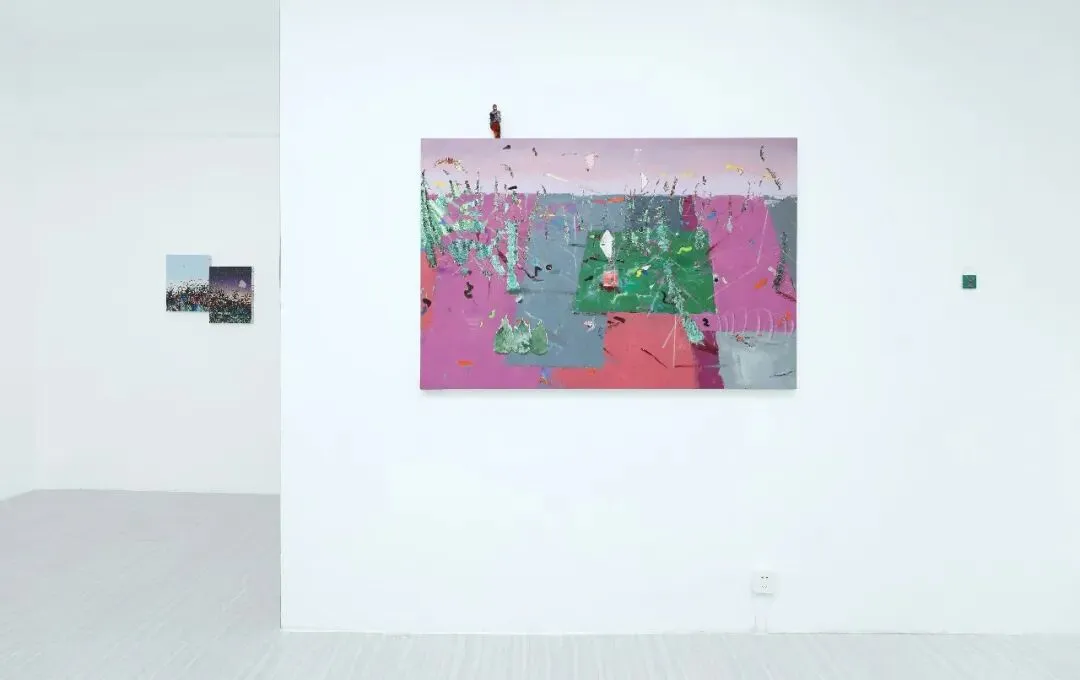
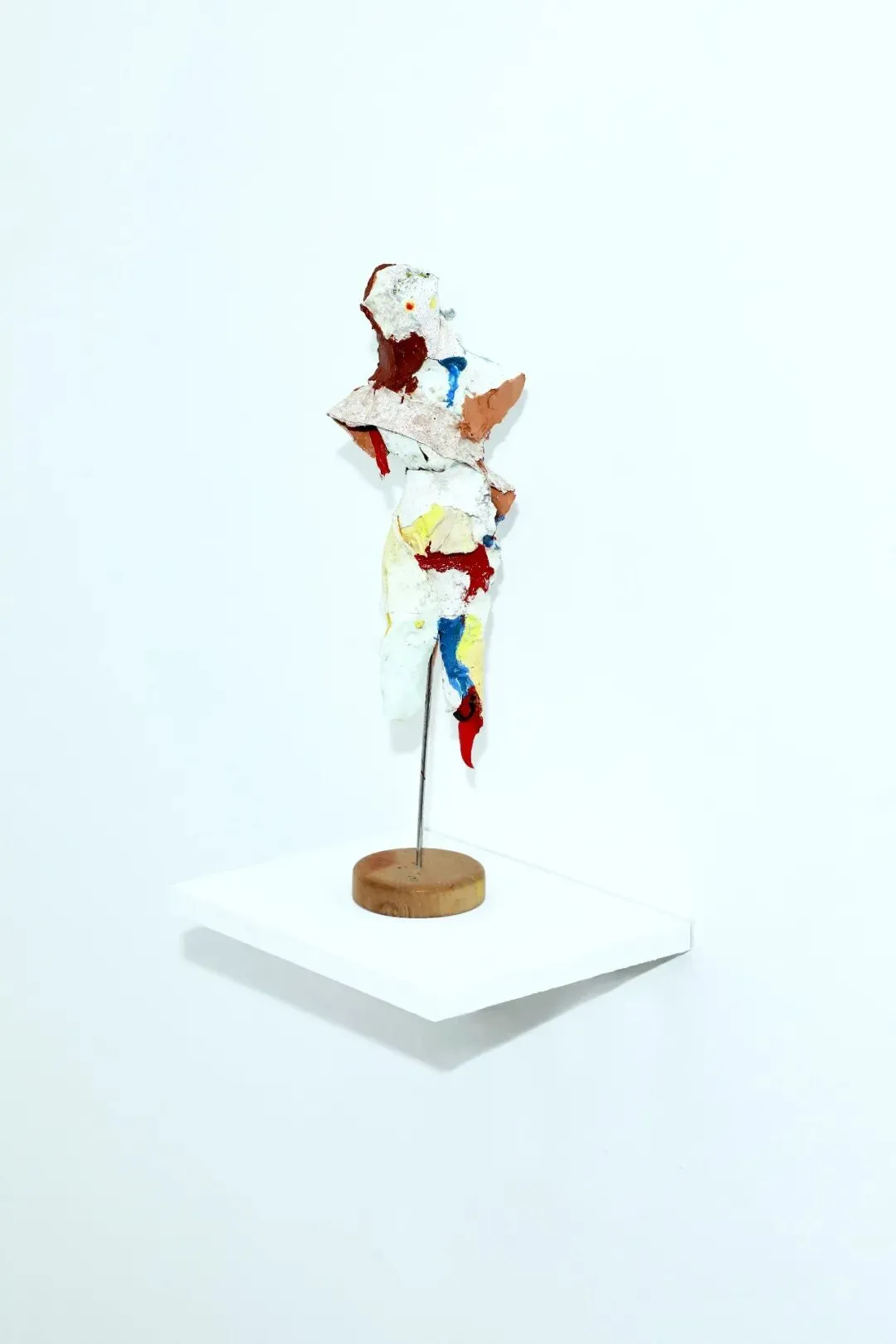
5+1画廊本次展览 [野] 汇集了艺术家柯坎法最新的创作,他的作品“近似”自然对象的再现,但并不意于自然的描绘,而在于对“图像如何生成”的持续研究。他“留变”的创作手法,是一种关于时间、遮蔽与显现机制:图像不是被直接完成,而是在覆盖、延迟、隐藏与重新揭开的过程中逐渐形成。更接近一种“显影”的试验——画面像从内部被慢慢挖掘出来,而非被外部建立。
The exhibition [WILD] at 5+1 GALLERY presents the latest works by artist Ke Kanfa, whose pieces approximate natural forms yet do not aim to depict nature directly, but instead focus on an ongoing inquiry into "how images are generated." His method of "retained transformation" explores mechanisms of time, concealment, and revelation: images are not completed directly, but gradually emerge through processes of covering, delay, hiding, and re-revealing. It resembles a kind of "developmental" experiment—where the image slowly emerges from within, rather than being constructed externally.

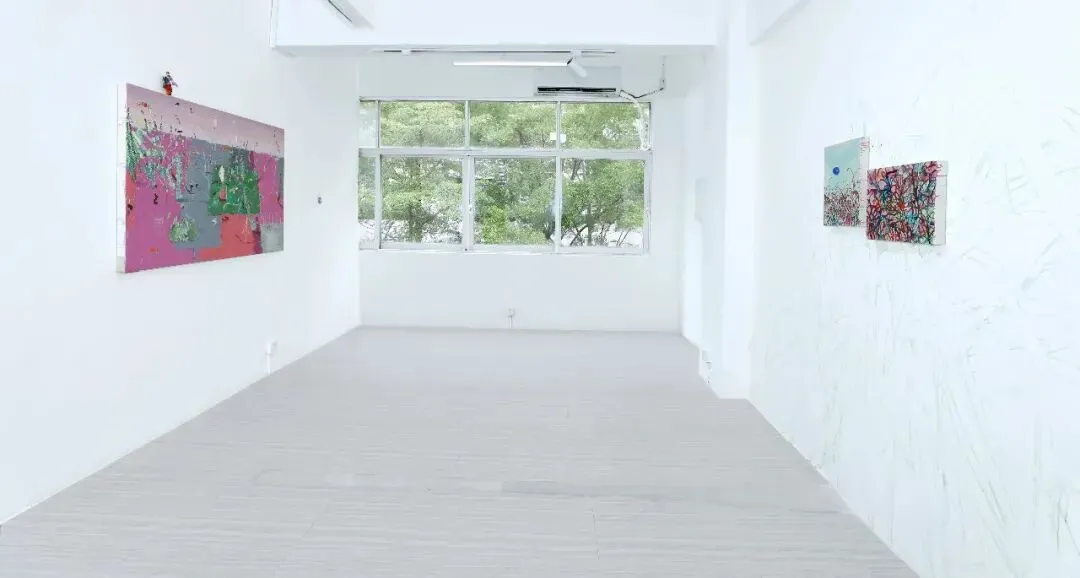
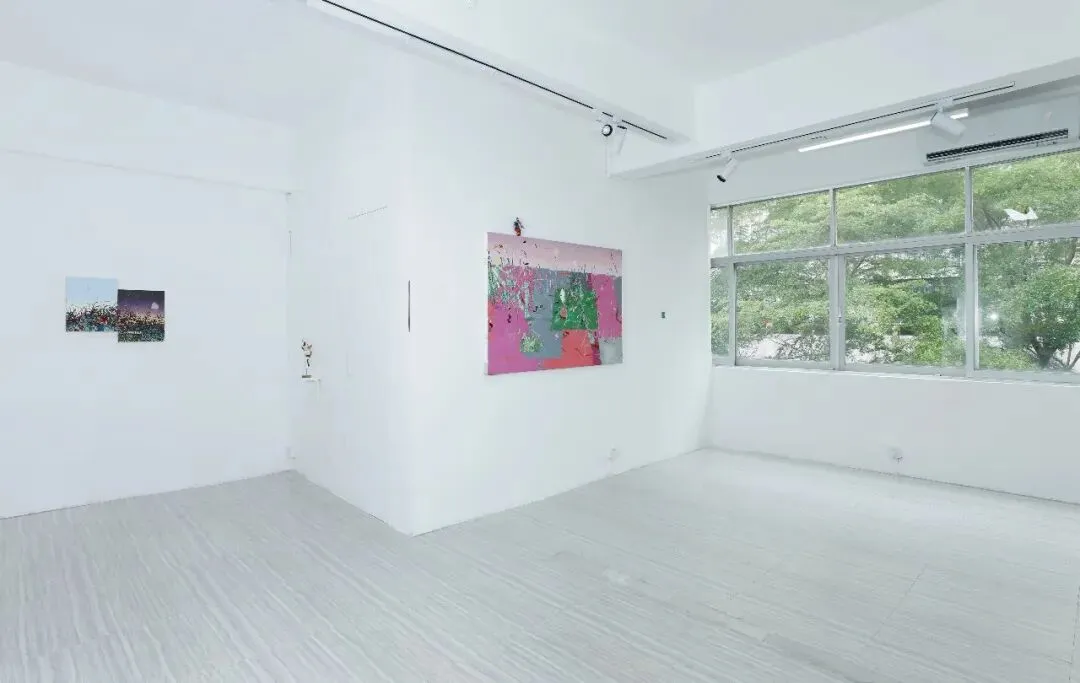
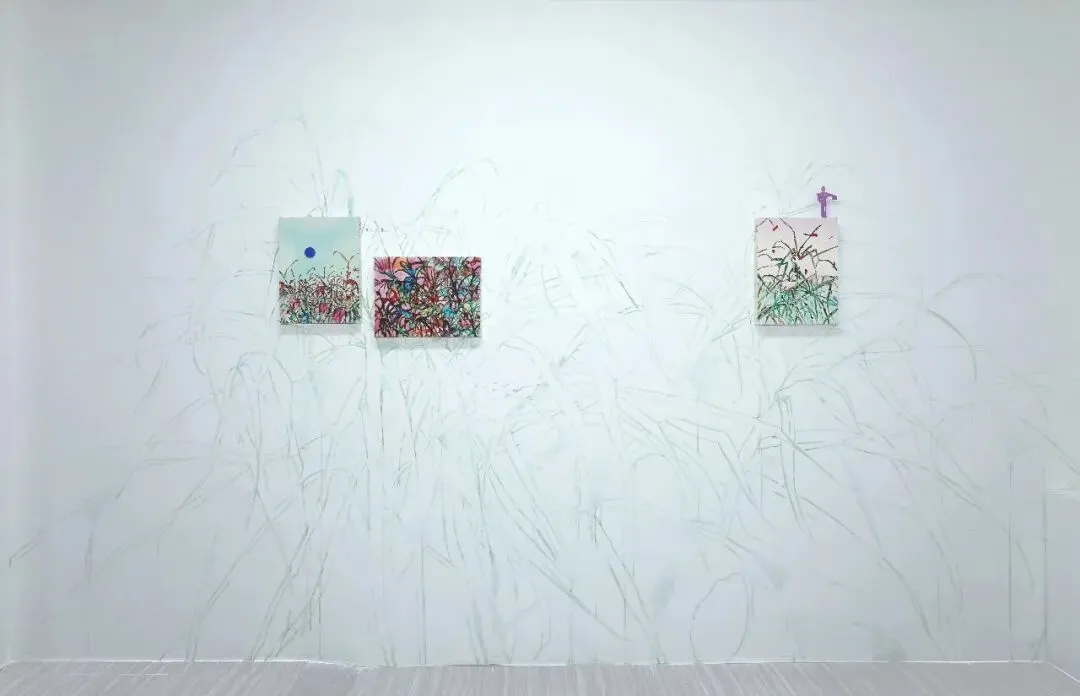
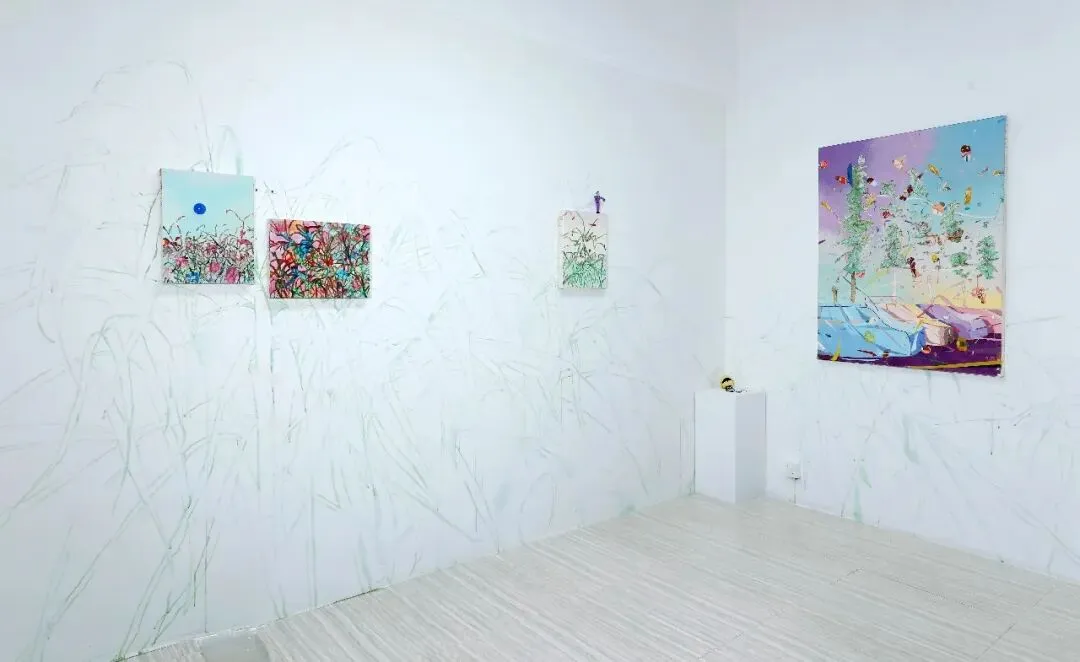
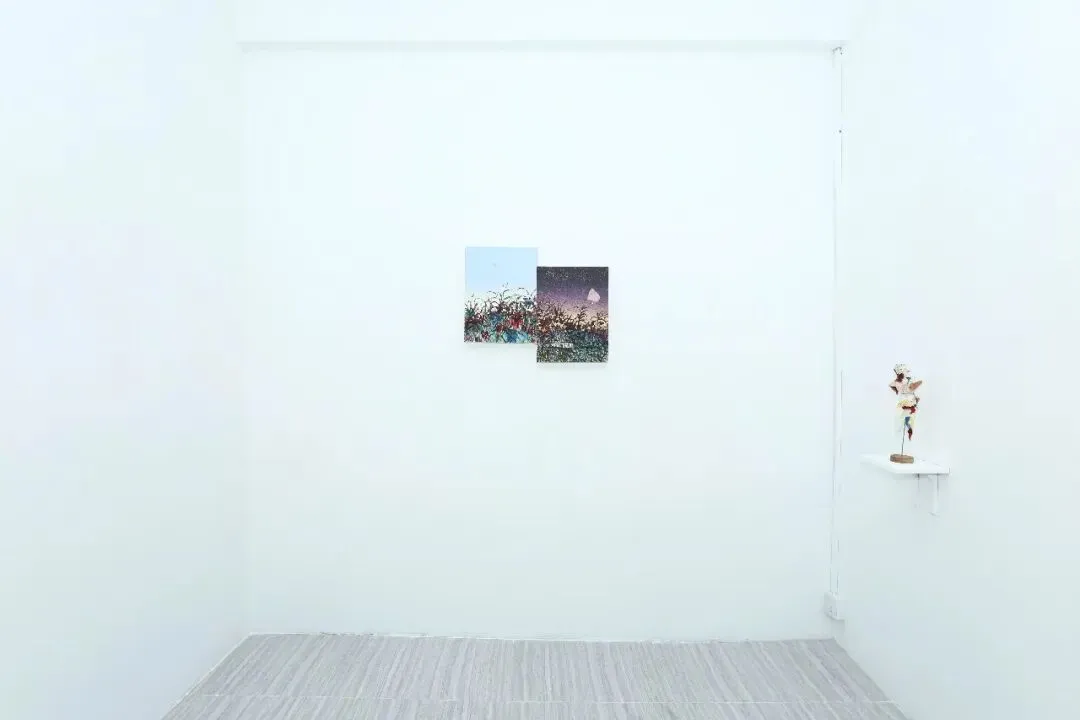

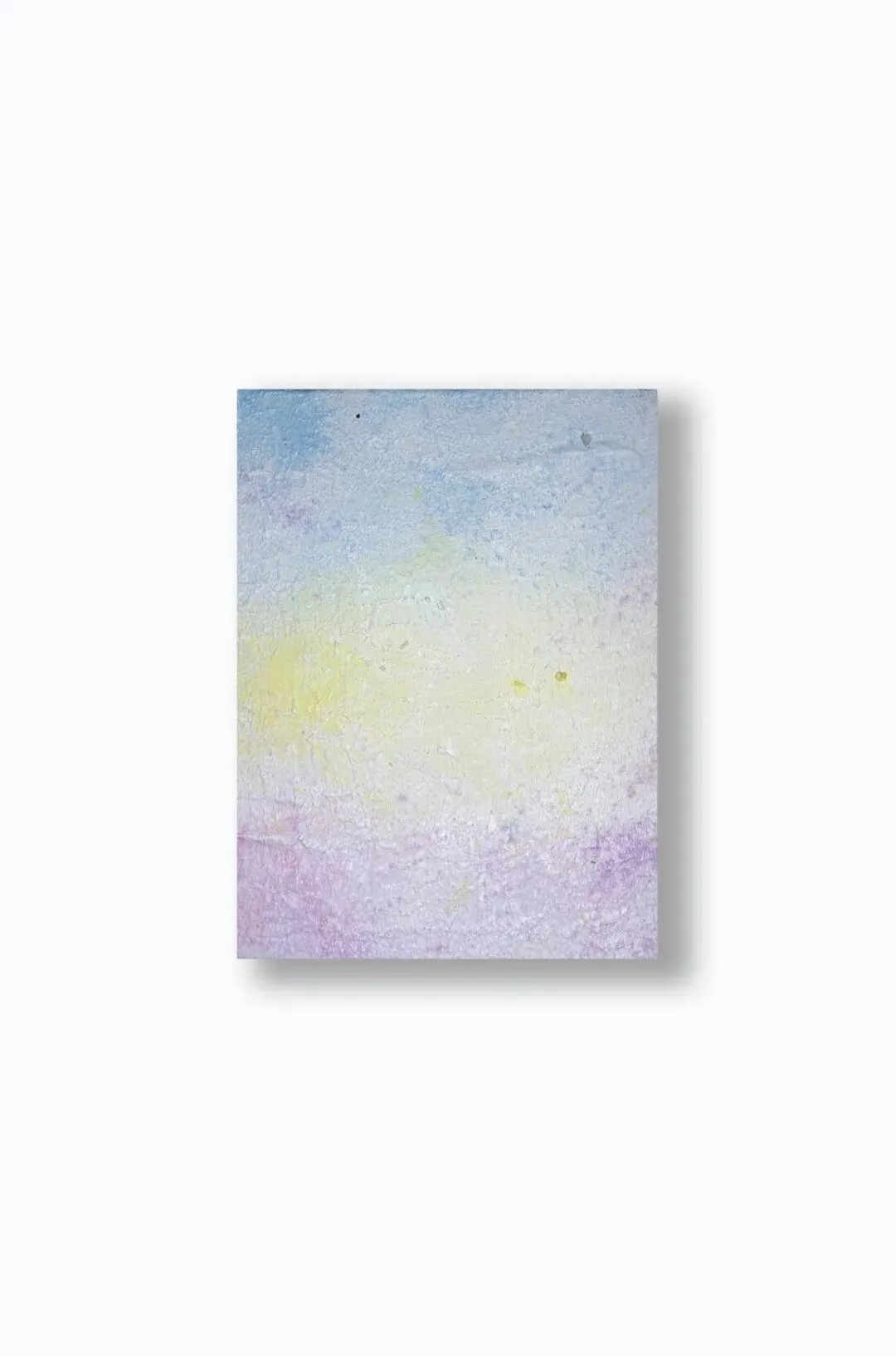
柯坎法的创作通常从大面积渐变色场开始。艺术家先以喷涂、覆盖与贴胶纸的方式构建一个近乎抽象的空间结构,再通过撕开遮挡物,让原本被埋藏的痕迹重新浮现。这一过程使绘画具有明显的时间性与实验性:画面中的每一层颜色、每一次覆盖、每一道残留边缘,都成为时间停留后的证据。那些未被完全揭开的区域、偶然产生的误差与残缺,被艺术家刻意保留下来,使作品拒绝“完成性”,而始终处于一种持续生成的状态。
KeKanfa's creations typically begin with large-scale gradient color fields. The artist first constructs an almost abstract spatial structure through spraying, layering, and applying masking tape, then removes the coverings to reveal traces previously concealed beneath. This process imbues the paintings with a distinct sense of temporality and experimentation: each layer of color, every act of overpainting, and every lingering edge becomes evidence of time suspended. Areas that remain only partially uncovered, accidental errors, and imperfections are deliberately preserved, resisting the notion of "completion" and keeping the work in a state of ongoing evolution.
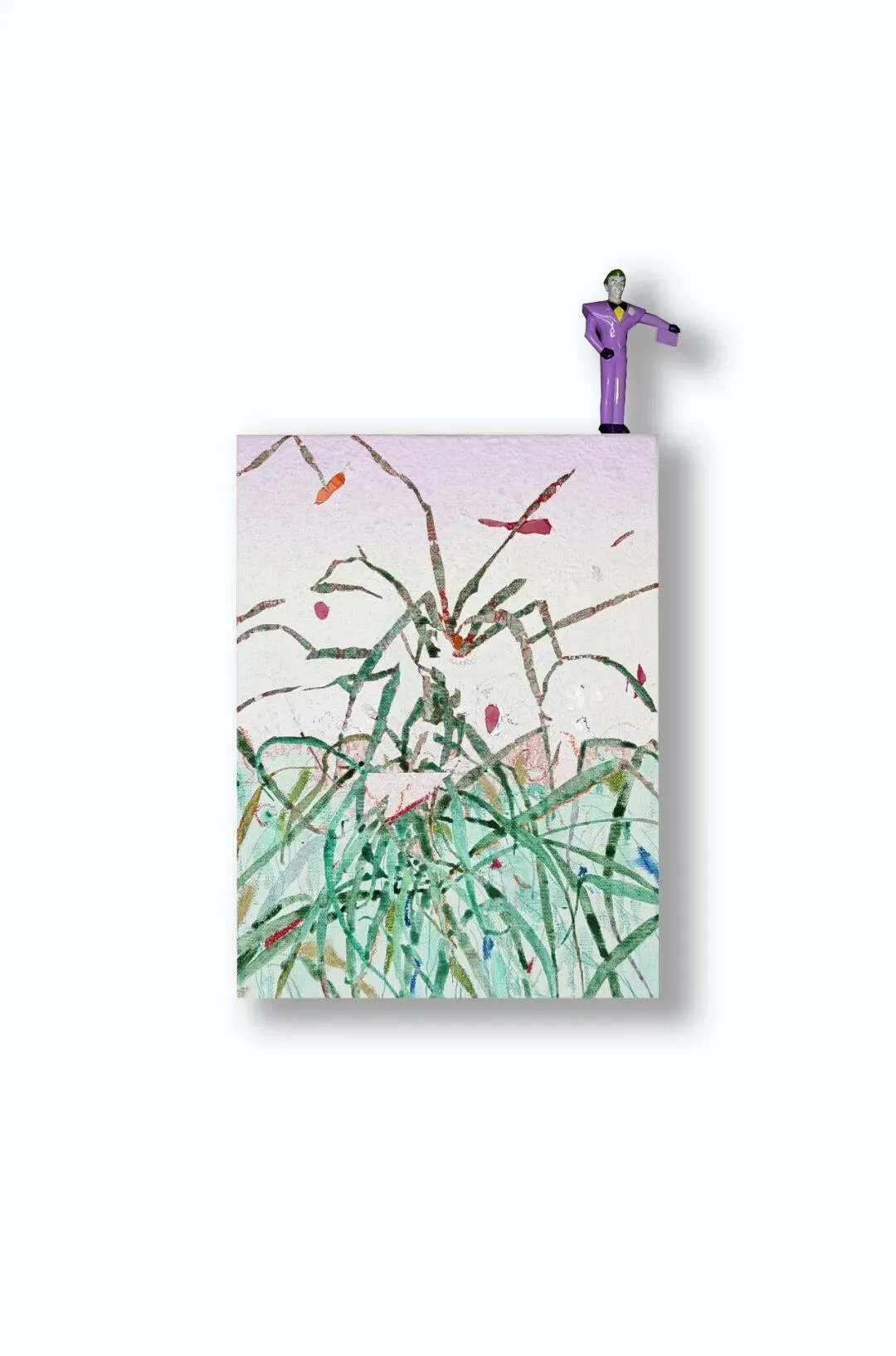
这种手法它重新探讨了绘画与现实之间的关系。传统风景绘画通常强调对自然对象的观看与再现,而柯坎法则将“草”转化为一种结构性语言。草既是植物,也是痕迹;既像自然中的生长物,又像信息社会中的数据流与视觉噪音。密集交错的线条不断在具象与抽象之间摆动,使观看从“识别对象”转向“感知关系”。因此,他的作品真正讨论的并非自然,而是现实如何在时间、记忆与信息覆盖中被不断改写。
This approach re-examines the relationship between painting and reality. Traditional landscape painting typically emphasizes the observation and representation of natural objects, whereas Ke Kanfatransforms "grass" into a structural language—both plant and trace, resembling organic growth in nature yet also evoking data flows and visual noise in an information society. The dense, interwoven lines constantly oscillate between figuration and abstraction, shifting the viewer's perception from "identifying objects" to "sensing relationships." Thus, his work does not truly address nature itself, but rather how reality is continually rewritten through time, memory, and layers of information.
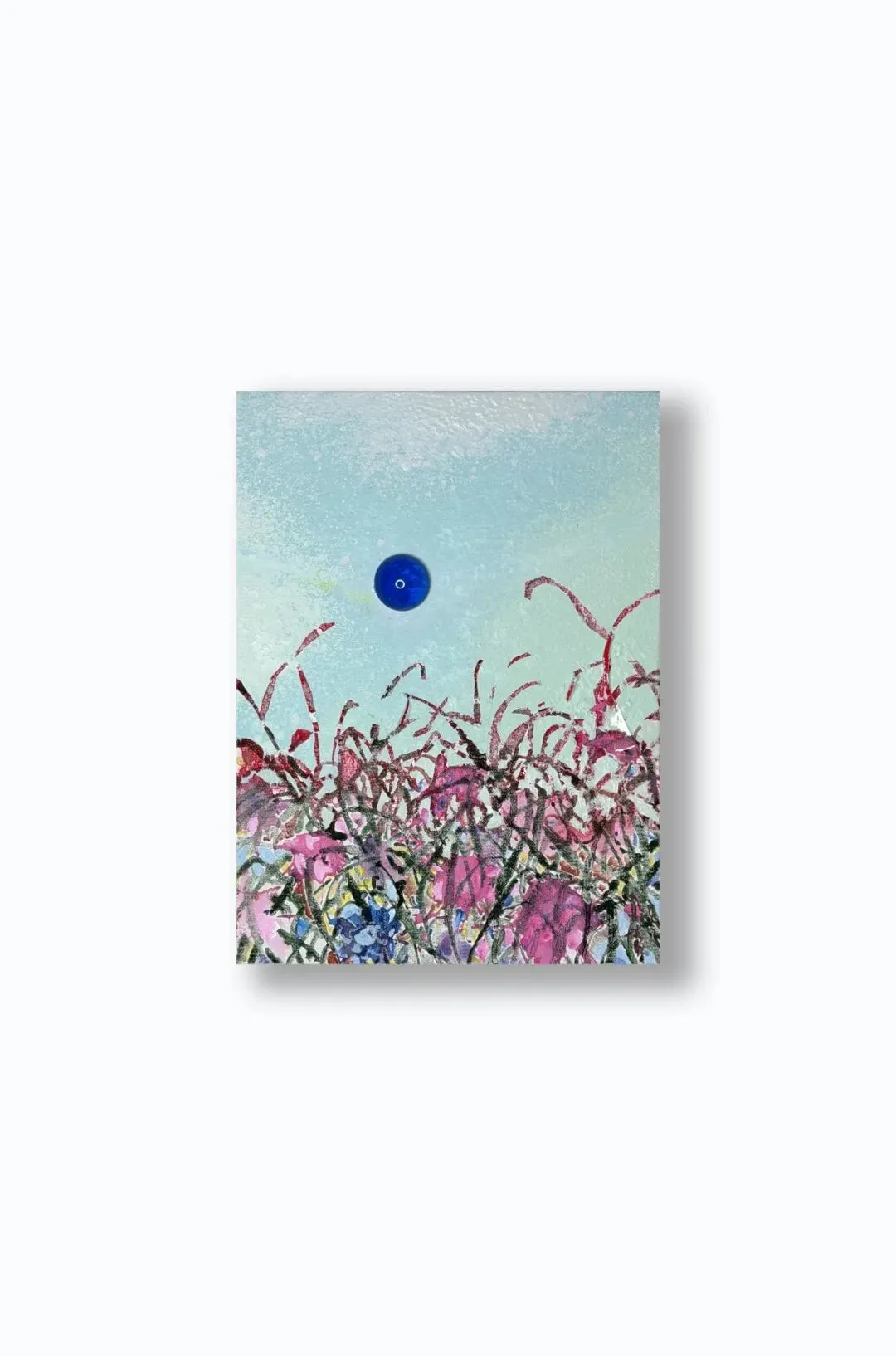
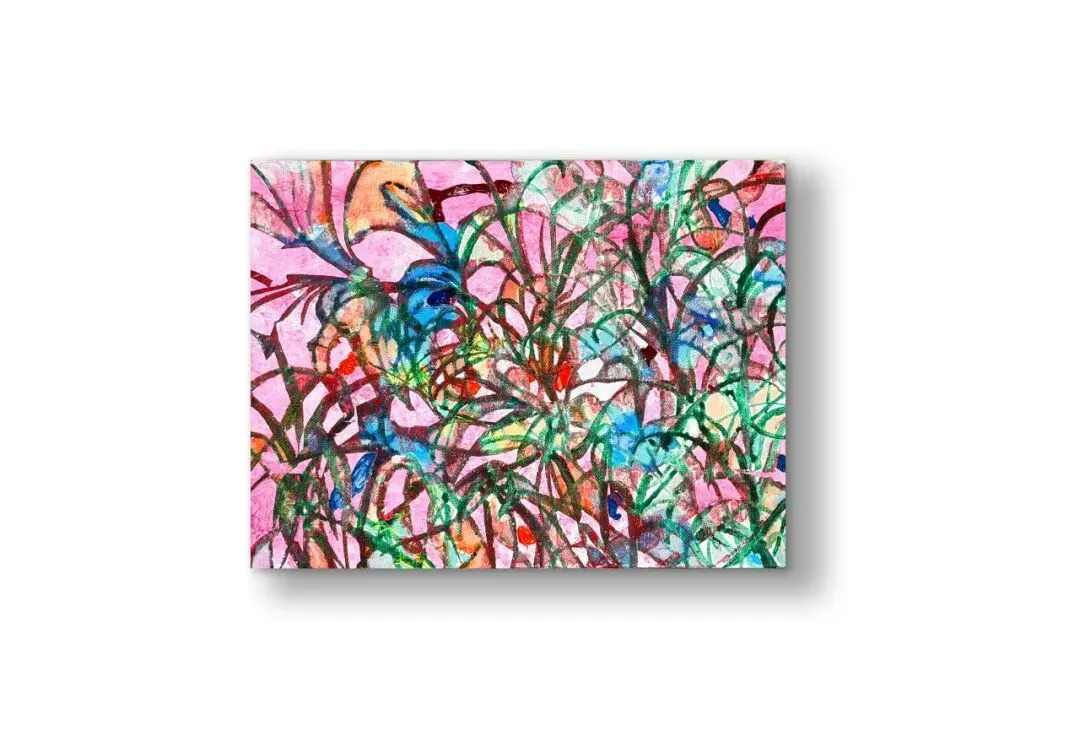
“留变”之中的“留”,意味着残留、停顿与时间沉积;“变”则意味着图像的不稳定性与持续流动。两者共同构成了一种开放性的视觉角度。柯坎法并不试图给予画面固定意义,而是让图像始终停留在某种临界状态:它既像风景,又像意识内部的投影;既具备现实痕迹,又不断滑向抽象结构。这种半抽象半具象的语言,使其绘画具有强烈的探讨性,同时也混淆了观看方式。在讯息变化的当下,图像早已不再稳定——社交媒体、算法推送与数字Ai技术等不断覆盖、更新并重构我们的观看经验,现实本身也开始像一层层被修改而成的数据界面。
In "Liu Bian," the term "Liu" signifies residue, pause, and temporal accumulation; "Bian" implies the instability and continuous flow of images. Together, they form an open-ended visual perspective. Ke Kanfa does not attempt to assign fixed meanings to his images but instead keeps them in a perpetual state of liminality—simultaneously resembling landscapes and projections within consciousness, bearing traces of reality while continuously slipping into abstract structures. This semi-abstract, semi-concrete language imbues his paintings with strong exploratory qualities, simultaneously complicating the way we perceive them. In an era of rapidly shifting information, images have long ceased to be stable—social media, algorithmic feeds, and digital AI technologies continually overwrite, update, and reshape our viewing experiences, as reality itself begins to resemble a layered data interface, constantly revised and reconfigured.
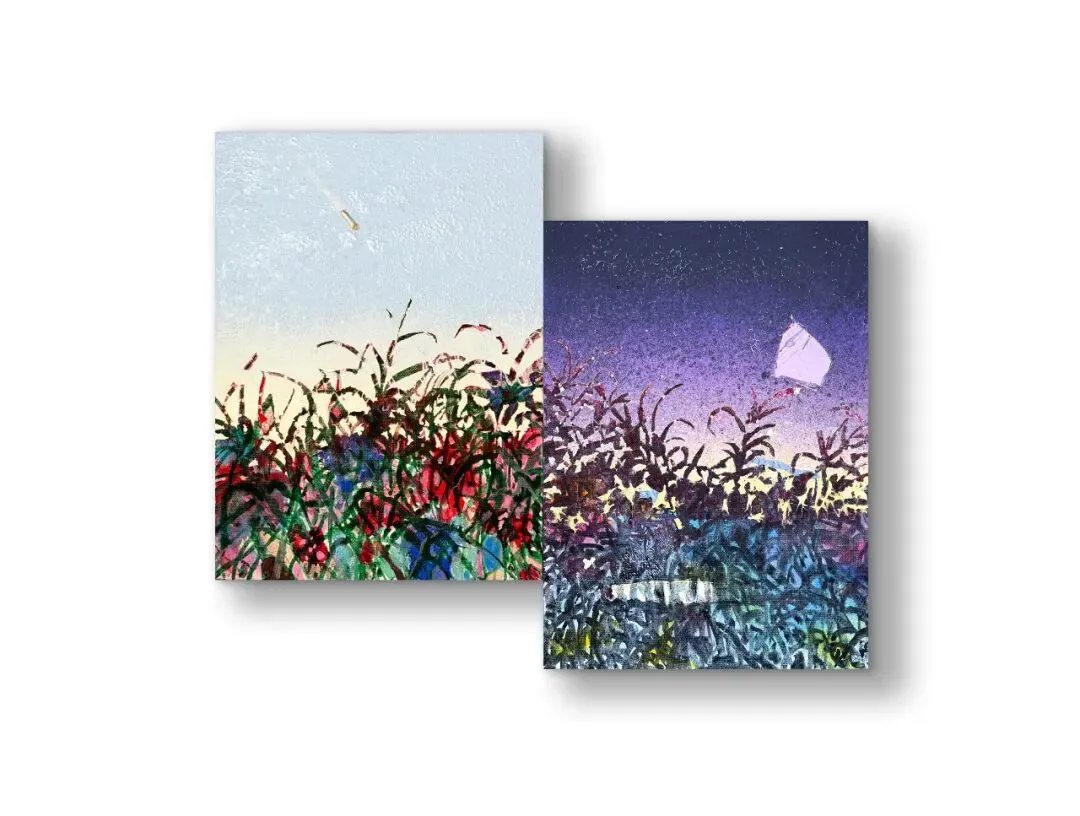
从这一角度看,柯坎法的绘画实际上与当代数字视觉结构形成了某种隐秘对应。他以极其手工化、物理性的方式,模拟了信息时代图像生成与消失的机制模式。贴、盖、喷、撕的制作,是一场实验,一种关于现实结构的隐喻:真实,或许往往并非直接显现,而是潜伏在遮蔽之后。画面因此不再是再现“结果”,而成为一种不断变化中的过程。
From this perspective, Ke Kanfa's paintings actually form a subtle correspondence with contemporary digital visual structures. Through an intensely manual and physical approach, he simulates the mechanisms of image generation and disappearance in the information age. The processes of pasting, covering, spraying, and tearing constitute an experiment—a metaphor for the structure of reality: truth may not always appear directly, but often lies concealed beneath layers of concealment. As a result, the painting ceases to be merely a reproduction of "outcome," becoming instead an ongoing process in constant transformation.
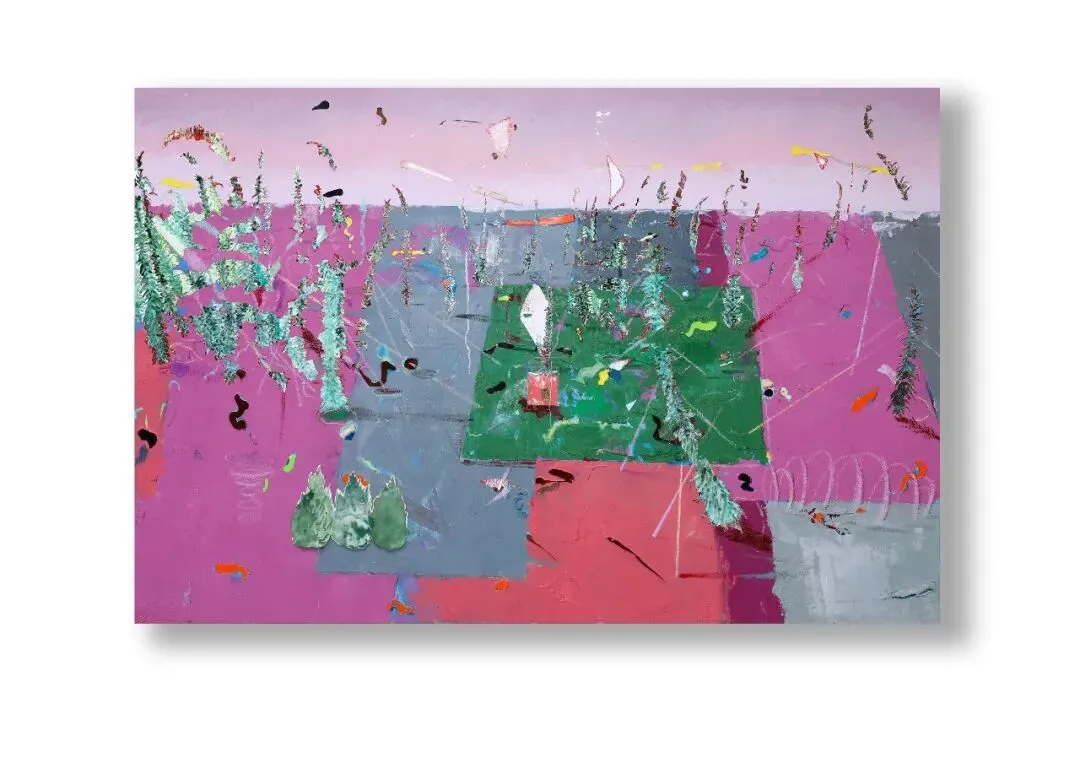
与此同时,他的作品还保留着一种难得的“野性”。这种“野”并不是单指向自然生态,而是一种拒绝被完全规训的内部力量。画面中的草不断蔓延、生长、缠绕、覆盖,像一种无法被彻底压制的生命能量。它既回应个体在当代社会中的漂浮状态,也隐含对标准化视觉秩序的抵抗。在越来越趋向高清、精准与算法化的图像时代,柯坎法反而主动保留模糊、断裂、残缺与偶然性,使作品重新获得一种不确定的构成。
At the same time, his work retains a rare sense of "wildness." This "wild" does not merely refer to natural ecology, but rather signifies an internal force that resists complete domestication. The grass in his paintings continuously spreads, grows, entwines, and covers, resembling an uncontainable life energy. It responds to the individual's floating condition within contemporary society, while also subtly resisting standardized visual order. In an era increasingly dominated by high definition, precision, and algorithmic imagery, Ke Kanfa deliberately preserves ambiguity, fragmentation, incompleteness, and chance, allowing his works to regain an uncertain, dynamic composition.
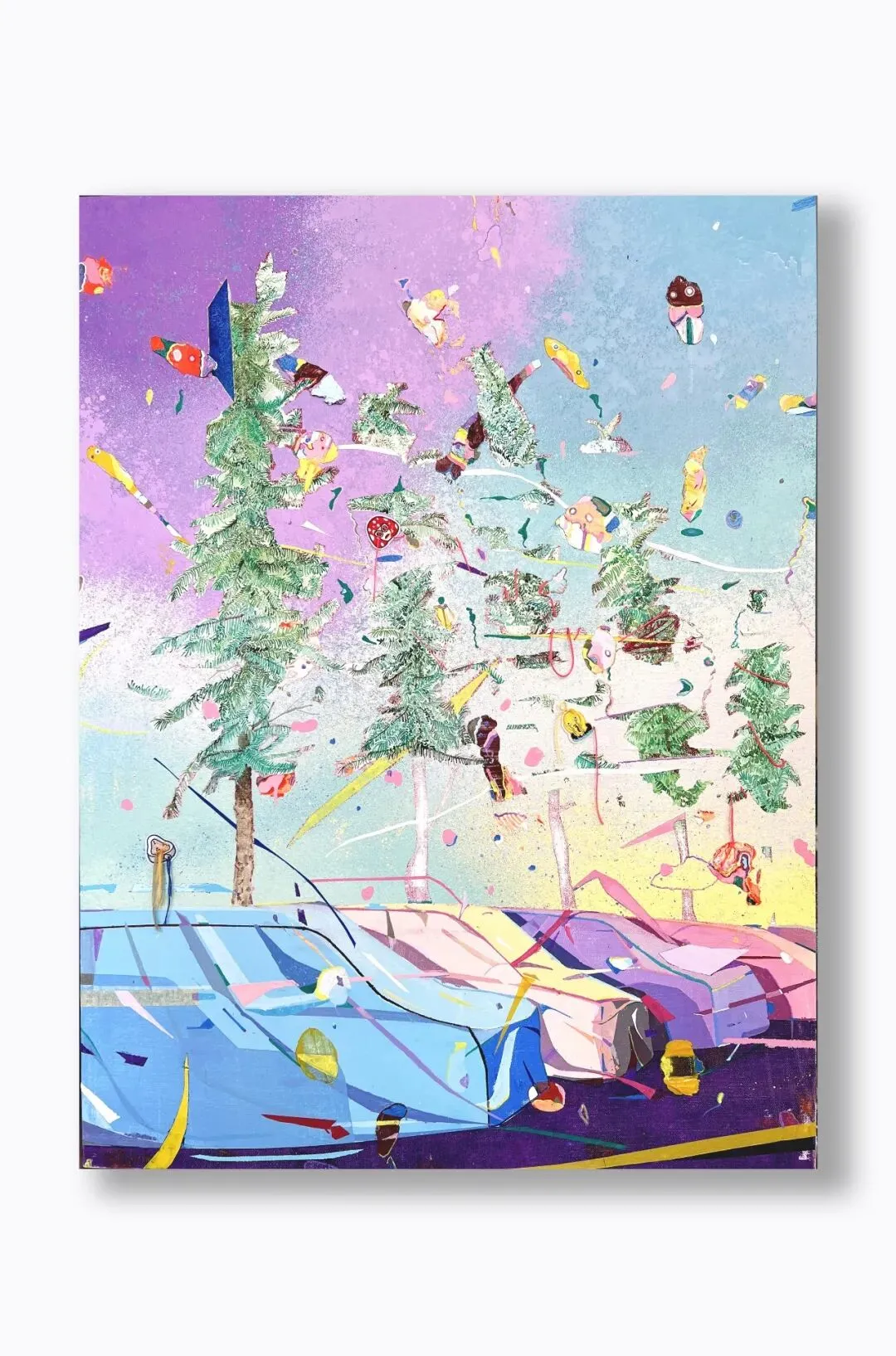
因此,柯坎法的创作不仅是形式实验,更可被视为一种关于“可见性”的研究。拒绝对世界对象的单一再现,转向对图像生产机制本身的思考;从静态结果,转向时间过程;从确定意义,转向流动感知。“留变”所建立的手法,并不是一种单纯的个人感受,而更像一种观看模型:在覆盖与显现之间,理解现实如何被构建,探讨人如何在不断变化的世界中感知自身的状态。
Thus, Ke Kanfa's work is not merely a formal experiment, but can also be regarded as an inquiry into "visibility." Rejecting singular representations of the world, it shifts toward reflecting on the mechanisms of image production itself; moving from static outcomes to temporal processes, and from fixed meanings to fluid perception. The methodology established by "Liu Bian" is not simply a personal sensation, but rather resembles a mode of viewing—one that, between concealment and revelation, understands how reality is constructed and explores how individuals perceive their own condition within a constantly changing world.
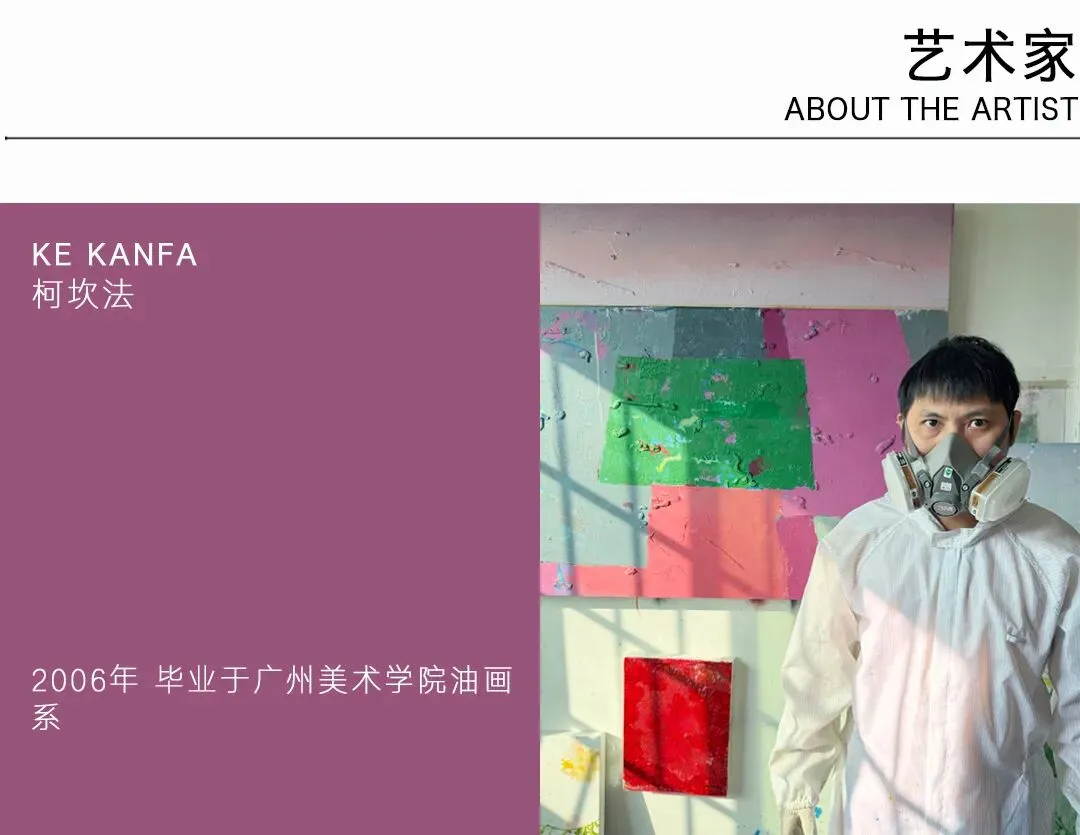
现工作生活于广州,作品曾被21空间美术馆,美术文献艺术中心,53美术馆,华南美术馆等机构及个人收藏。
个展:
2026年
“野” 5+1 画廊,广州
2025年
“景观的N种打开方式” 逵园艺术馆,广州
2021年
“飞行线” 逵园艺术馆,广州
2018年
“天真的和感伤的小说家” 方所,广州
2016年
“舞台” 九月画廊,广州
2015年
“给自己开一个玩笑” 53美术馆,广州
2013年
“‘物件’当代艺术展” 亚盖空间 广州
群展:
2024年
“雷州东西” 哲木空间,广东雷州
2023年
“Hi21” Hi艺术hiart space,深圳&上海&北京
2020年
“游走的观感” 华南美术馆,东莞
2019年
“临时观察” RUND GALLERY,韩国首尔
2018年
“把它划开一个距离” 汇一艺术空间,东莞
2017年
“芳草地艺术节‘三点之间’” 芳草地画廊,北京
“青年100” 今日美术馆,北京
2016年
“首届青年艺术家推荐展” 西汵印社美术馆,杭州
2015年
“MICROCOSM小宇宙” A+艺术文化中心,佛山
“南方森林” 湾仔画廊,香港
“生产机构” 广东美术馆,广州
“首届长江国际影像双年展” 长江当代美术馆,重庆
2014年
“今典—广东当代艺术展” 53美术馆,广州
2013年
“2013成都青年艺术家十人” 成都
“视觉交叉体” 21空间美术馆 东莞
2012年
“野生视觉” 53美术馆,广州
2011年
“无限接近前方” 广东美术馆,广州
2010年
“睬你都傻——当代艺术在广东” 53美术馆,广州
“目眩神迷——新时代动漫美学展” 广东美术馆,广州
2009年
“2009年开放的表达-上海新青年大展” 刘海粟美术馆,上海
“09亚洲年青艺术家大展” 朝鲜日报美术馆,首尔/韩国
2008年
“‘美麗的南方’-广州新生代艺术家群展” 亚洲艺术中心,北京
预约来访APPOINTMENT (提前一天)
请关注5+1 GALLERY公众号点击“预约"按钮进入小程序完成预约
Please follow the Wechat Official Account and press the button below