
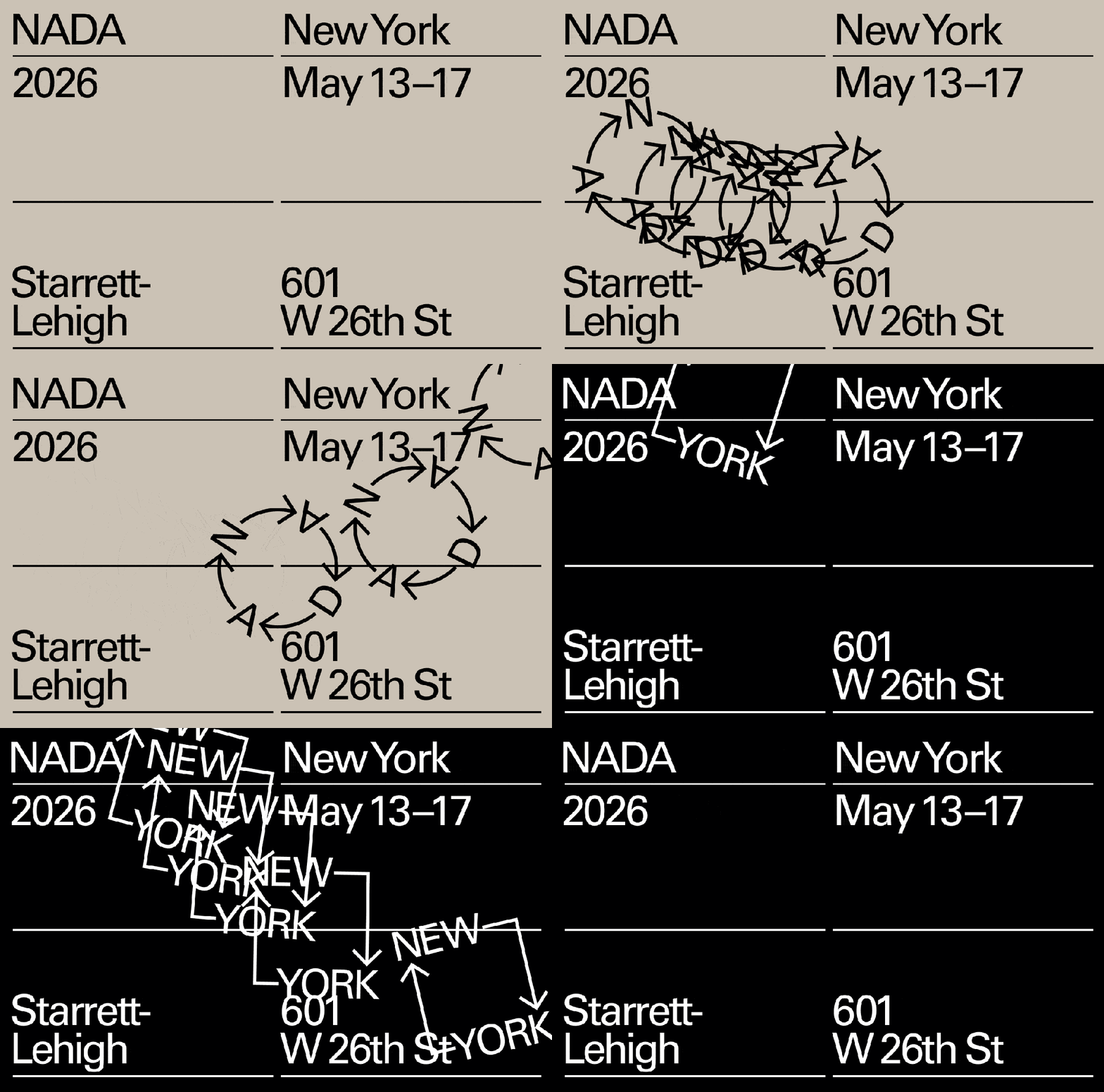
第十二届纽约NADA艺术博览会
New Art Dealers Alliance (NADA) New York 2026
展位 BOOTH C14
5月13日(周三)| 10:00 - 16:00
5月13日(周三)| 16:00 - 19:00
5月14日(周四)| 11:00 - 19:00
5月15日(周五)| 11:00 - 19:00
5月16日(周六)| 11:00 - 19:00
5月17日(周日)| 11:00 - 17:00
地址 Venue
The Starrett-Lehigh Building
601 W 26th Street, 3rd Floor New York, NY 10001
(Enter on 11th Avenue Between 26th St. & 27th St.)
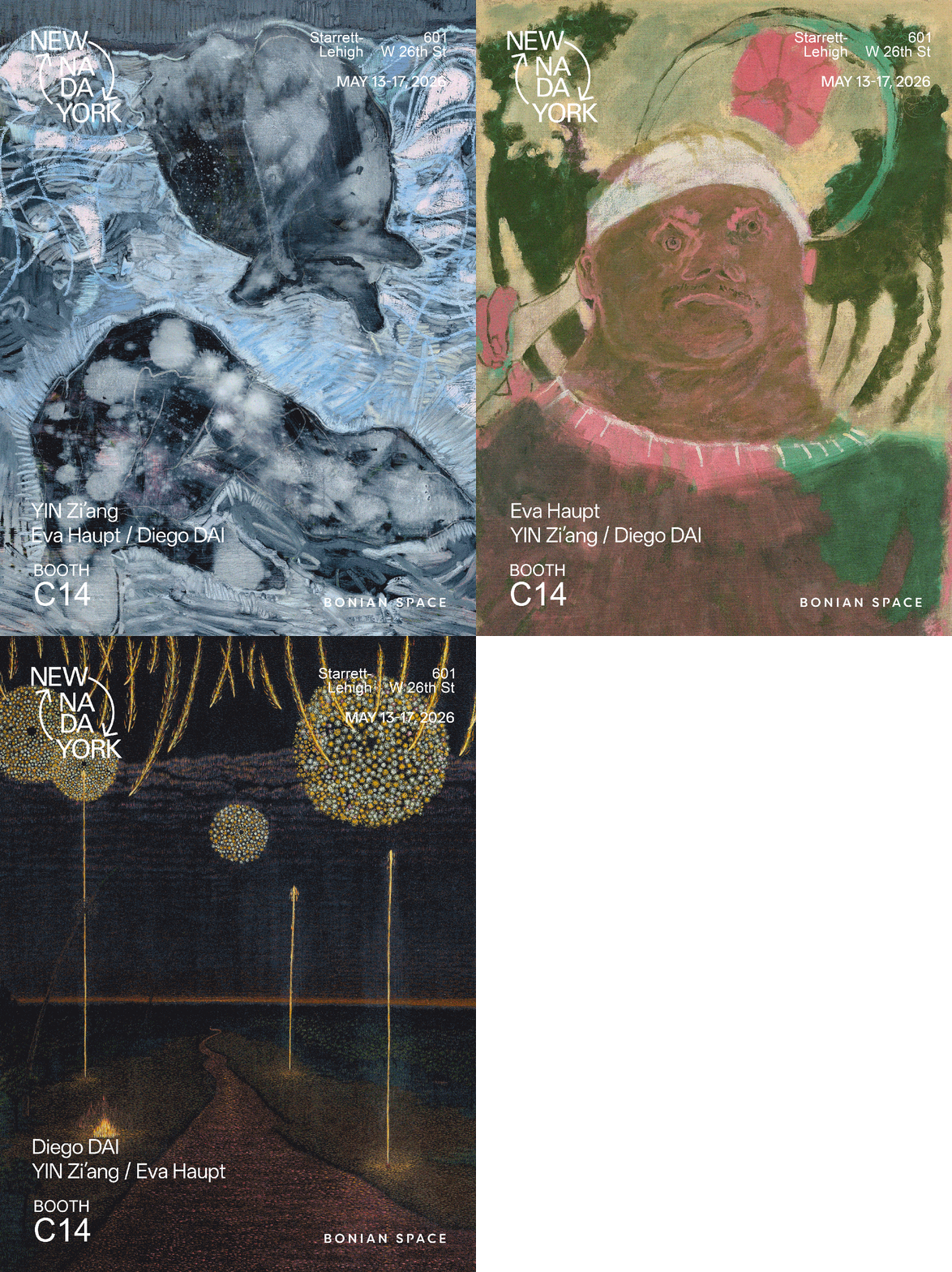
伯年艺术空间将于2026年5月13日至17日期间首次参加第十二届纽约 New Art Dealers Alliance (NADA) 艺术博览会,呈现尹子昂、伊娃·豪普特(Eva Haupt) 与戴鸿华三位艺术家的全新作品,展位C14。此次参展延续了伯年艺术空间对于年轻当代艺术实践的持续关注,三位艺术家分别从各自不同的视觉语言与创作路径出发,回应当下语境中关于个体经验、感知结构与图像表达的多重议题。
NADA(New Art Dealers Alliance)是国际当代艺术领域重要的非营利组织之一,长期致力于支持和推动当代艺术中新兴声音的发展。NADA New York 作为其年度重要艺博会项目,持续汇聚来自全球、活跃于当代艺术前沿的画廊与艺术机构,以其鲜明的发现性、实验性与国际视野,成为纽约艺术周期间备受关注的重要平台。同期举办还有 Frieze New York、TEFAF New York、Independent 及 Future Fair 等国际重要艺术博览会,共同使纽约艺术周成为国际艺术日历中最受瞩目的时刻之一。作为伯年艺术空间首次亮相纽约,此次参展既是画廊迈向国际市场的重要一步,也希望以此为契机,在更广阔的语境中与来自不同地区的策展人、藏家及艺术从业者展开深入对话。
BONIAN SPACE is pleased to announce its first participation in the 12th edition of NADA New York, on view from May 13 to 17, 2026, at Booth C14. The presentation will feature new works by YIN Zi’ang, Eva Haupt, and Diego DAI. Continuing BONIAN SPACE’s sustained commitment to emerging contemporary practices, the booth brings together three artists whose distinct visual languages and working methods engage, in different ways, with questions of individual experience, structures of perception, and the possibilities of image-making in the present.
Founded by the New Art Dealers Alliance, NADA New York is one of the most closely watched platforms during New York Art Week, a key moment on the international art calendar that brings together major fairs including Frieze New York, TEFAF New York, Independent, and Future Fair. Known for its spirit of discovery, experimental energy, and international outlook, NADA brings together galleries and art organizations from around the world that are actively shaping the forefront of contemporary art. As BONIAN SPACE’s first presentation in New York, this participation marks an important step in the gallery’s broader international development, while also opening a new context for dialogue with curators, collectors, and art professionals from different regions.
尹子昂 YIN Zi'ang
(b.1997)
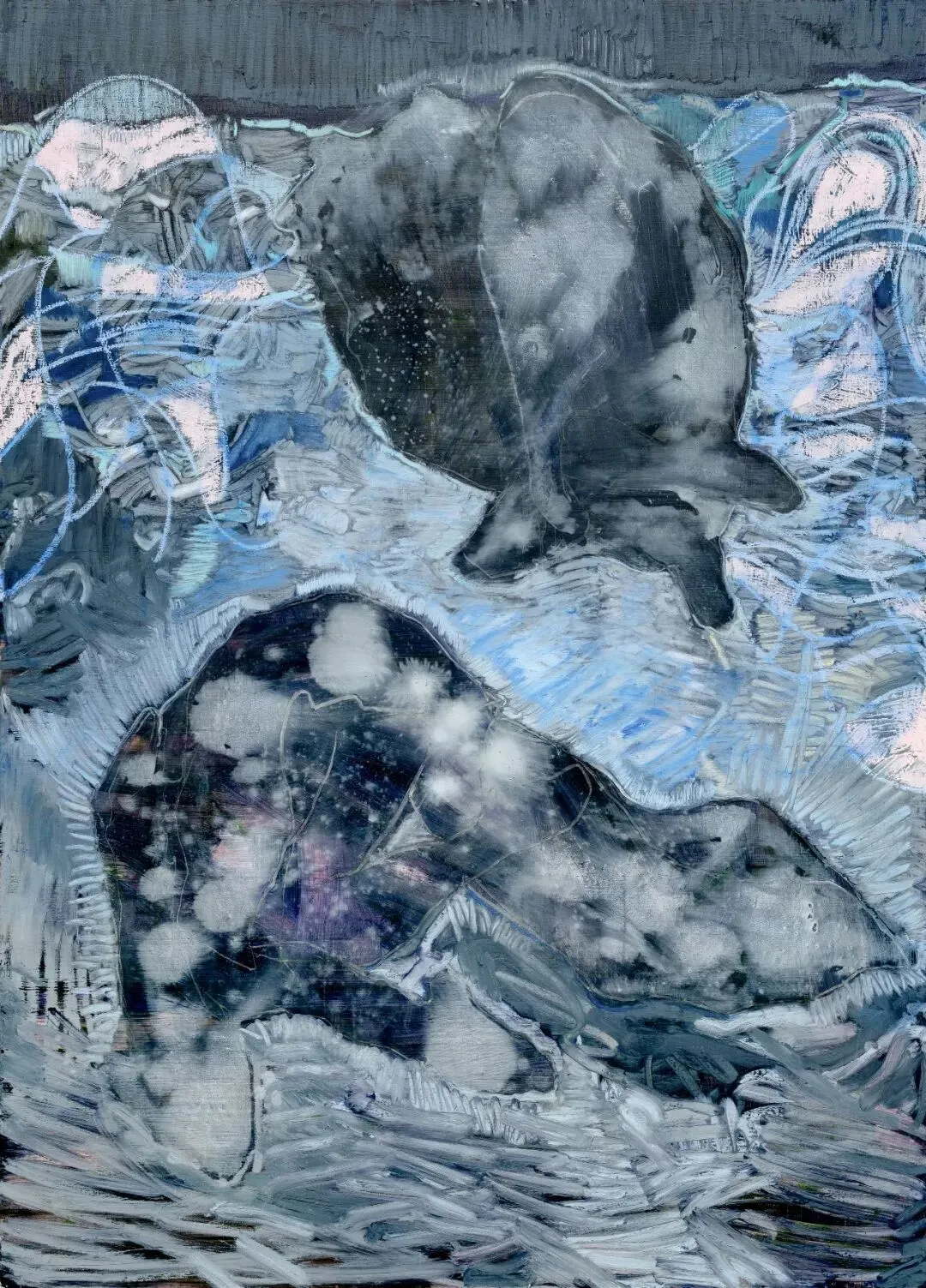
尹子昂 YIN Zi'ang
沙滩上的两具身体 Two Bodies on the Beach
2026
亚麻布面油画、油画棒 Oil and oil stick on linen
212 × 151 cm
尹子昂, 1997年出生于中国安徽,就读于维也纳美术学院,师从Daniel Richter和Christian Schwarzwald,现生活和工作于奥地利维也纳。尹子昂的绘画常游走于抽象与具象之间,在感性与秩序、迷狂与清澈之间展开一种微妙而复杂的平衡。对他而言,绘画并非对现实的再现,也不是观念的图解,而是一种由直觉驱动的生成过程:他拒绝预设草图与既定叙事,而是在不断试探、覆盖、叠加与破坏之中,让图像于画布上缓慢浮现。在他的作品中,人体、器官、动物与植物等意象经常反复出现,并彼此嵌合、渗透,形成介于肉身与自然、生命与异化之间的混合景观。尤其是动物与植物,对艺术家而言不仅是图像中的重要元素,更是能够唤起普遍经验与隐秘记忆的象征之物。尹子昂始终关注绘画如何直接作用于观者的感官,使其在带来美感与愉悦的同时,也唤起共鸣、忧郁、无奈,乃至某种难以言明的悸动。正如艺术家所言,他所追寻的,是酒神的迷狂与日神的清澈,是一种在夜色深处不断生成、并通向心灵幽微之处的绘画。
YIN Zi'ang, born in 1997 in Anhui, China, is currently doing his BFA at the Academy of Fine Arts Vienna under Daniel Richter and Christian Schwarzwald, and lives and works in Vienna. His painting moves constantly between abstraction and figuration, negotiating a subtle and complex balance between sensibility and order, frenzy and clarity. For YIN, painting is neither a representation of reality nor an illustration of ideas, but an intuitive process of emergence. In his works, recurring motifs such as the human body, organs, animals, and plants intermingle and permeate one another, forming hybrid landscapes poised between flesh and nature, life and estrangement. For the artist, animals and plants are not only important visual elements, but also symbolic forms capable of evoking shared experience and submerged memory. YIN remains deeply concerned with the capacity of painting to act directly upon the viewer’s senses, generating not only beauty and pleasure, but also resonance, melancholy, helplessness, and an inexpressible inner tremor.
尹子昂的“春宵苦短”:叹息,抑或沉寂
-
伊娃·豪普特 Eva Haupt
(b.1990)
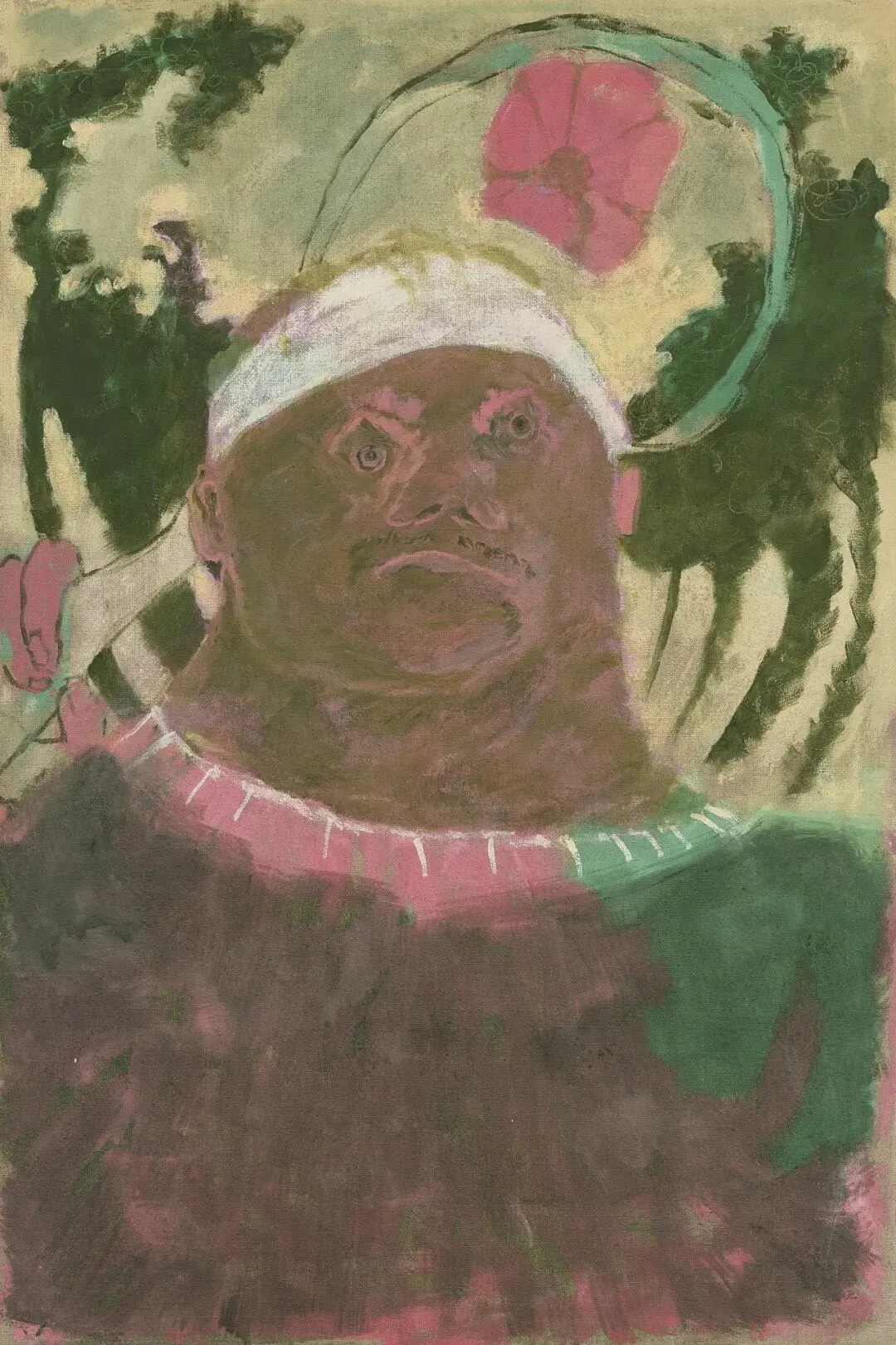
伊娃·豪普特 Eva Haupt
联邦球 Federball
2021
布面坦培拉 Tempera on canvas
91 × 62 cm
Eva Haupt 1990年出生于德国卡门,现生活和工作于杜塞尔多夫。她将绘画视为一种开放而生成的过程,由直觉与偶然共同塑造。她不依赖预设草图,也不急于赋予图像明确的意义,而是通过层层叠加、修正与去除,让画面在不断变化中逐渐成形,使图像始终保持一种流动、未被完全定义的状态。对她而言,绘画不是对既定观念的执行,而更像是一种在不确定性中不断试探、偏移与生成的过程。她的创作建立在对材料的敏锐感知与持续探索之上。粘合剂与颜料在黏度、光泽及表面质感上的细微差异,直接影响着每一幅作品的具体走向,使绘画在推进中始终保留着一种未经修饰的原始感和即时性。她的作品常从日常经验出发,追索自我、他者与非人存在之间复杂而微妙的关系。反复出现的动植物意象,作为不断游移的在场,松动了观看的固定位置,也让关怀、脆弱与潜在的暴力在一种安静而持续的张力中并置共存。
Born in 1990 in Kamen, Germany, and currently living and working in Düsseldorf, Eva Haupt approaches painting as an open-ended process shaped by intuition and contingency. Working without preparatory sketches, she allows images to take form through cycles of layering, revision, and removal, where meaning remains fluid and unsettled rather than fixed. Her practice is rooted in material inquiry. Subtle shifts in binders and pigments—viscosity, sheen, and surface behavior—inform how each image develops. Moving between canvas, paper, and mural-based formats, her gestures maintain a raw, immediate presence that foregrounds the act of making. Drawing on everyday encounters, her compositions trace relationships between self, others, and the more-than-human. Animals and plant-like forms recur as shifting presences, loosening stable points of view, while care, fragility, and latent violence coexist in quiet tension.
-
戴鸿华 Diego DAI
(b.2000)
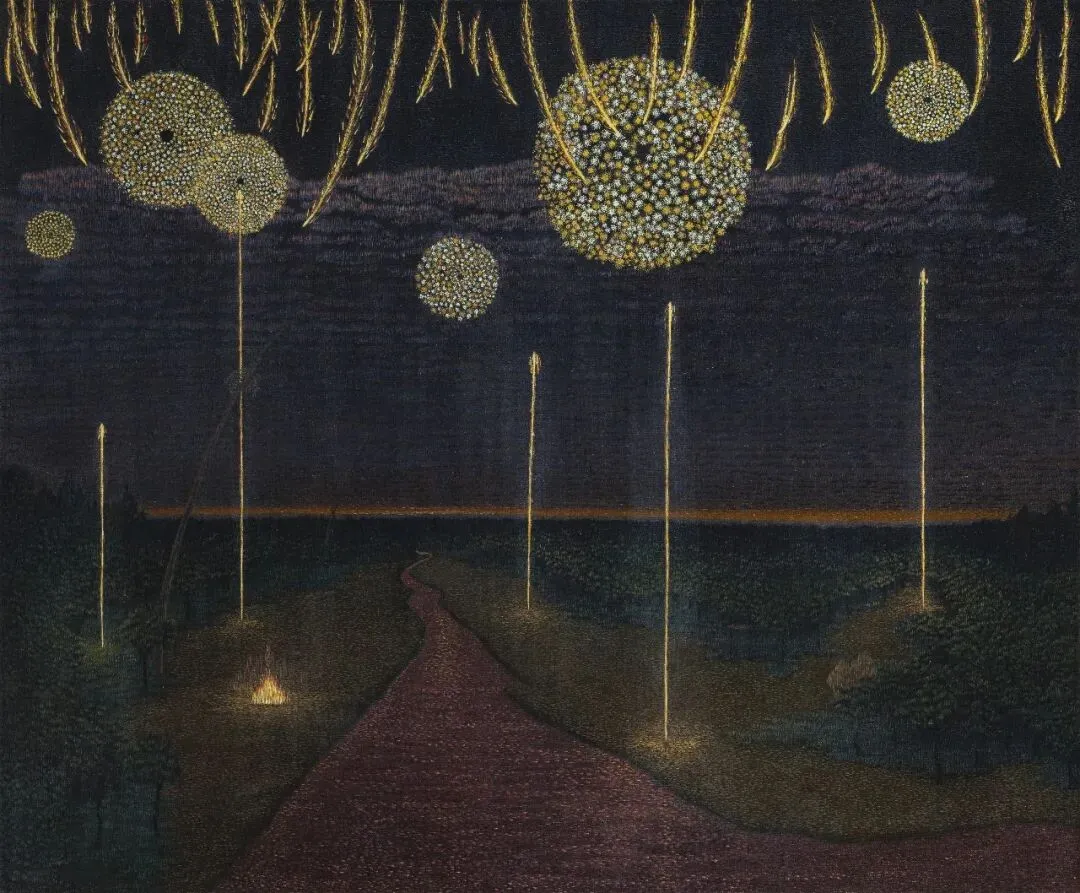
戴鸿华 Diego DAI
无题 Untitled
2025
布面油画 Oil on canva
50 × 60 cm
戴鸿华, 2000 年出生于阿根廷布宜诺斯艾利斯, 2023 年毕业于中央美术学院油画系第三工作室,现工作和生活于中国北京。戴鸿华通过回忆和冥想的方式进行创作,其绘画源自一种被视作 “ 阴影 ” 的深黑底色。通过反复覆盖半透明薄纱般的白色,并结合细密而重复的笔触推进,在隐匿与揭示之间逐步建立起富于层次的画面结构。持续存在的 “ 影子 ” 承载着不确定、恐惧与过往的情绪残留; “ 光 ” 则在不断叠加的过程中逐渐成形,这一过程不仅构成视觉上的明亮生成,同时也指向希望、能量与内在信念,并最终扩展至整个画面。在视觉与感知维度中,作品同时保有潜在的不安与持续上升的张力。烟花、雨林、河流与火焰等意象逐渐脱离具体景观的指涉,转化为承载时间经验与情绪流动的绘画语言。整体而言,戴鸿华的绘画呈现出一种循环性的时间结构:既记录过往与当下,也在经验的不断累积中,持续指向尚未展开的未来。
Born in 2000 in Buenos Aires, Argentina, Diego DAI graduated in 2023 from Studio III of the Oil Painting Department at the Central Academy of Fine Arts, and currently lives and works in Beijing, China. DAI works through memory and meditation, developing paintings that emerge from a black ground conceived as “shadow.” Through layers of translucent white and fine, repeated brushwork, he constructs surfaces in which concealment and revelation occur simultaneously, generating a sustained sense of depth. The “shadow” remains as a trace of uncertainty, fear, and residual emotional experience, while “light” gradually emerges through the same process, functioning as an index of hope, energy, and inner conviction that permeates the pictorial field. Across visual and perceptual registers, the works hold together states of latent unease and intensity. Fireworks, rainforests, rivers, and flames shift away from literal reference, becoming elements of a painterly language shaped by time and affect. The practice unfolds as a cyclical temporality, in which past and present are continually reconfigured, oriented toward an open, not-yet-formed future.