
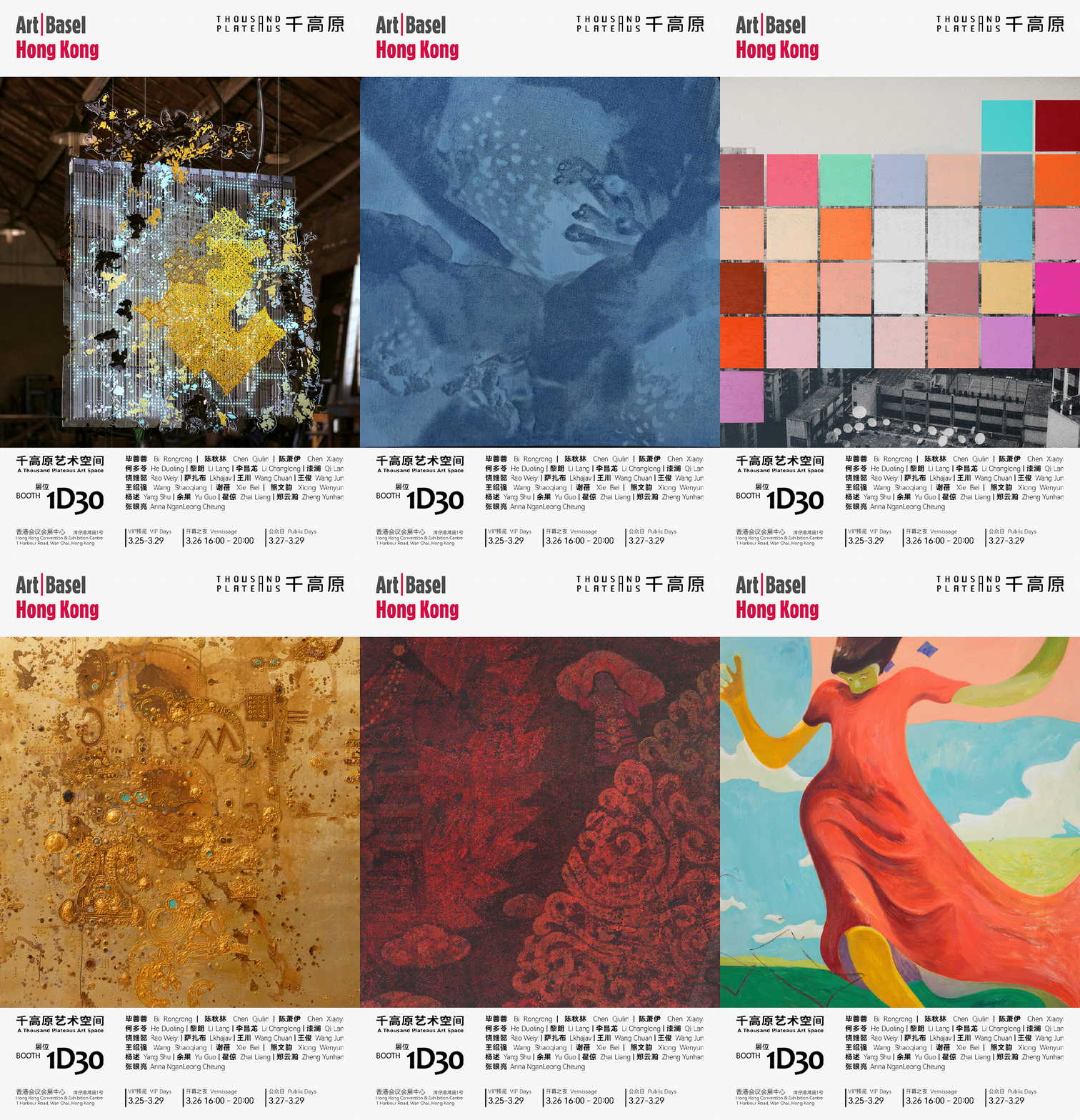
千高原艺术空间欣然宣布参加2026巴塞尔艺术展香港展会,我们将于3月25至3月29日在主展区艺廊荟萃(Galleries)呈现毕蓉蓉、陈秋林、陈萧伊、何多苓、黎朗、李昌龙、漆澜、饶维懿、萨扎布、王川、王俊、王绍强、谢蓓、熊文韵、杨述、余果、翟倞、张银亮、郑云瀚等艺术家的绘画、装置、录像及摄影作品,展位号1D30。
A Thousand Plateaus Art Space is pleased to announce its participation in Art Basel Hong Kong 2026. From March 25 to 29, we will present paintings, installations, videos, and photographic works by Bi Rongrong, Chen Qiulin, Chen Xiaoyi, He Duoling, Li Lang, Li Changlong, Qi Lan, Rao Weiyi, Lkhajav, Wang Chuan, Wang Jun, Wang Shaoqiang, Xie Bei, Xiong Wenyun, Yang Shu, Yu Guo, Zhai Liang, Anna NganLeong Cheung, and Zheng Yunhan—atBooth 1D30in the Galleries sector of the main exhibition area.
亮点推荐
Highlights
毕蓉蓉
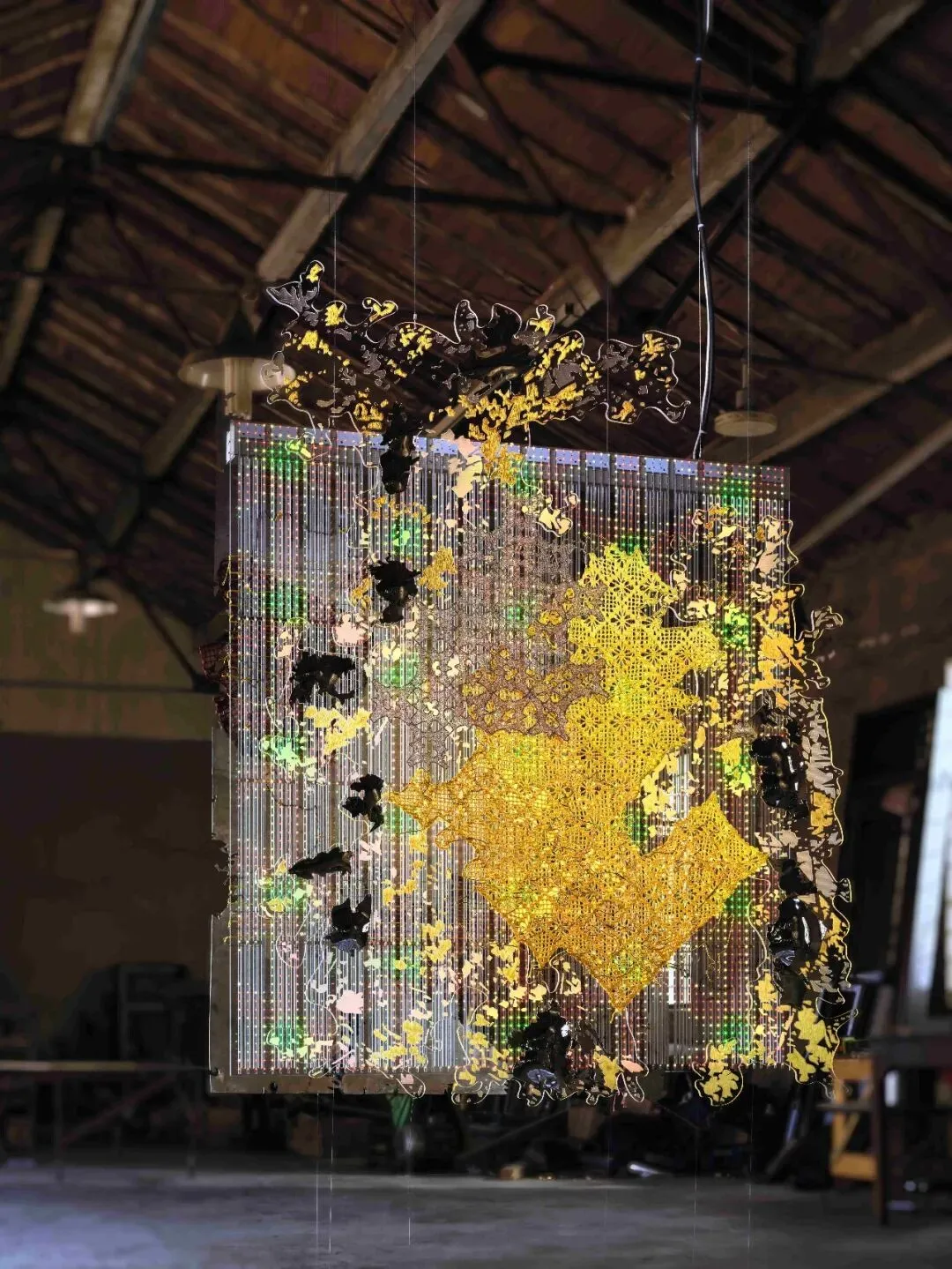
▲毕蓉蓉,缝合的城市皮肤,亚克力,刺绣织物、钩针织物、铝、电镀、喷漆、LED、声音装置,150(H) × 120(W) × 50(D) cm,2022 ©艺术家及千高原艺术空间
Bi Rongrong, Stitched Urban Skin, Acrylic, embroidery fabric, crocheted fabric, aluminum, electroplating painting, LED, sound device, 150(H) × 120(W) × 50(D) cm, 2022 © Courtesy of the Artist and A Thousand Plateaus Art Space
毕蓉蓉(b. 1982) 出生于浙江宁波,2008年获得四川大学中国画山水画专业硕士学位,继而获得荷兰Frank Mohr学院绘画专业艺术硕士学位,现工作生活于上海。她于2024年入围香港M+博物馆“SIGG PRIZE (希克奖) 2025”,并于2022年在劳斯莱斯“Muse (缪斯)”艺术项目首届飞翔女神挑战赛中成为全球三位获奖者之一。
作为2026年巴塞尔艺术展香港展会官方主视觉海报设计的三件作品之一,《缝合的城市皮肤》(Stitched Urban Skin, 2022)取材于层次丰富的城市景观。该作品是一次对传统与创新的编织:作品由三层二维平面组成,其中包括经过特殊锻打处理的金属、光点闪动的LED屏,还有与中国传统钩针工艺交织创作的有机玻璃。艺术家在融合古老工艺和创新技术的同时,也让不同的时空连接交错。
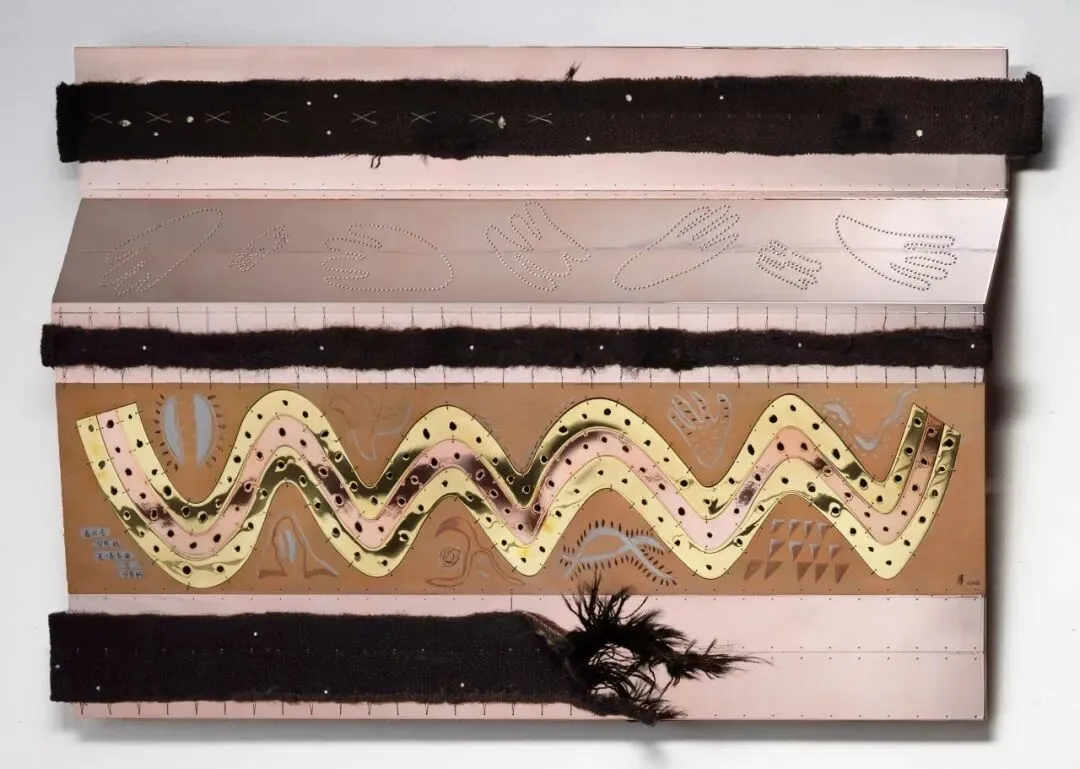
▲毕蓉蓉,南方·北方—移动的建筑-星星,黄铜板,紫铜板,紫铜板上真空离子镀膜(PVD),紫铜板上油画颜料、墨、银粉、铜粉绘画,牦牛帐篷布碎片,施华洛世奇水晶,合金铜丝缝合,68.5(H) × 101(W) × 7(D) cm,2026 ©艺术家及千高原艺术空间
Bi Rongrong, The South · The North – Moving Architecture –The Star, Brass plate, copper plate, PVD (Physical Vapor Deposition) on copper plate, oil painting pigments, ink, silver powder, and copper powder drawing on copper plate, yak tent fabric fragments, Swarovski crystals, alloy copper wire stitching, 68.5(H) × 101(W) × 7(D) cm, 2026 © Courtesy of the Artist and A Thousand Plateaus Art Space
陈秋林
▲陈秋林,一天,单屏彩色高清录像,15’13’’,2014-2016,Ed.3+2AP ©艺术家及千高原艺术空间
Chen Qiulin, Another Day, Single-channel color HQ, 15'13‘’, 2014-2016, Ed.3+2Ap © Courtesy of the Artist and A Thousand Plateaus Art Space
陈秋林(b.1975)出生于湖北省宜昌市,2000年毕业于四川美术学院版画系,现工作生活于中国成都和日本伊豆。陈秋林曾获ACC(纽约亚洲文化协会)奖助金中国受奖人(2006)、JP摩根世界女性论坛首届亚洲大会新星提名 (First Asian World Women Forum Rising Talents Programme Nominee)(2008)等奖项。其作品被桑德拉·吉尔曼与塞尔索·冈萨雷斯-法拉基金会(纽约)、釜山市立美术馆(釜山)、提森-博内米萨当代艺术基金会(维也纳)、哈默博物馆(洛杉矶)、昆士兰美术馆/昆士兰现代艺术馆(布里斯班)等重要艺术机构收藏。
陈萧伊
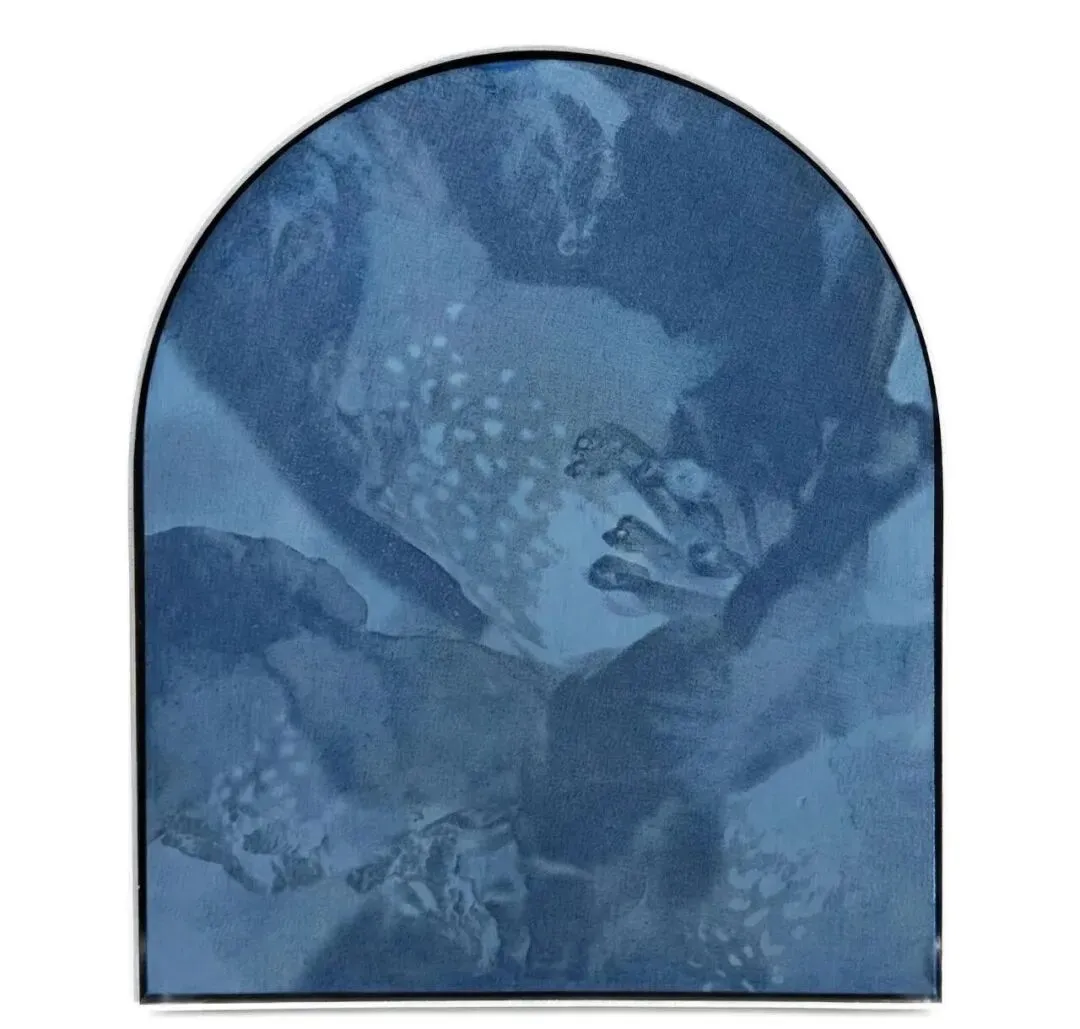
▲陈萧伊,To Blossom Blue - 54,蚀刻锌板和油墨,36 × 30 cm,2025 ©艺术家及千高原艺术空间
Chen Xiaoyi, To Blossom Blue - 54, Etched zinc plate with oil ink, 36 × 30 cm, 2025 © Courtesy of the Artist and A Thousand Plateaus Art Space
陈萧伊(b. 1992)出生于中国四川,2014年获得伦敦艺术大学纯艺术摄影硕士学位,现工作生活于成都。她的作品曾获得中国第七届三影堂摄影奖大奖,入选福布斯2017“30 UNDER 30(Art)”亚洲榜单。在近年来持续进展的项目中,她将中西部横断山脉区域的矿山与开采遗迹视为创作切口,持续地“打捞”那些失落的时间、自然与大地的迷团,并尝试通过更旷阔的叙事对西部山地进行 “影像的扫描”。
何多苓
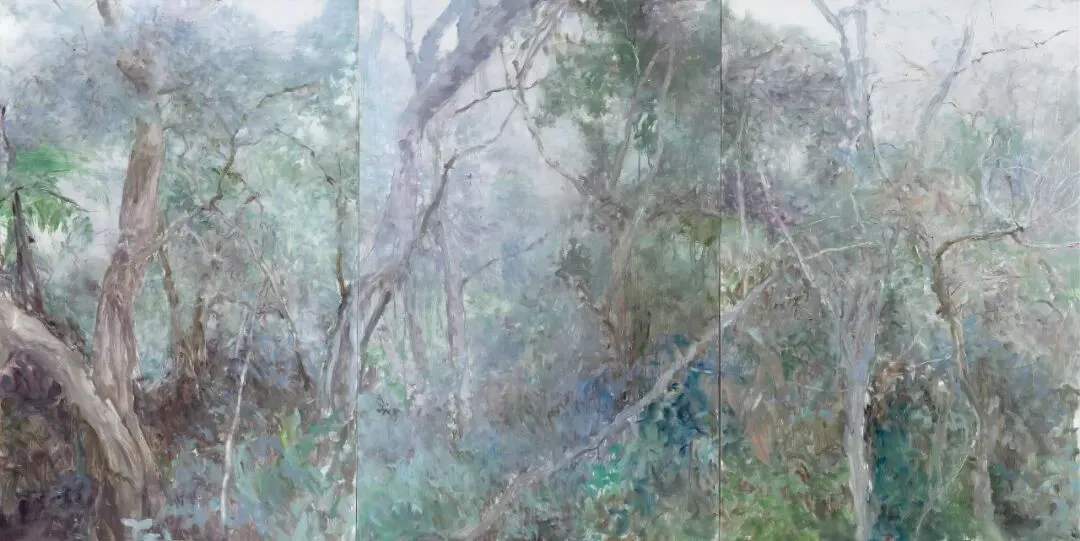
▲何多苓,大风景,布面油画,150 × 300 cm,2013 ©艺术家及千高原艺术空间
He Duoling, Grand Scenery, Oil on canvas, 150 × 300 cm , 2013 © Courtesy of the Artist and A Thousand Plateaus Art Space
何多苓(b. 1948)出生于四川成都,1977年考入四川美术学院油画专业,1979年进入四川美术学院油画系研究生班学习,毕业后在成都画院从事油画创作,现工作生活于成都、深圳。何多苓是中国当代抒情现实主义油画画家的代表,他的艺术深具诗性,重绘画性,于唯美与优雅中透出感伤,追求无拘无束的自由。他造型功底扎实,笔下人物与景象生机勃勃。在形式语言上,他对单纯感的追求与中国传统水墨异曲同工,洗练中见细致,单纯中显复杂,透露出超然的精神境界。
漆澜
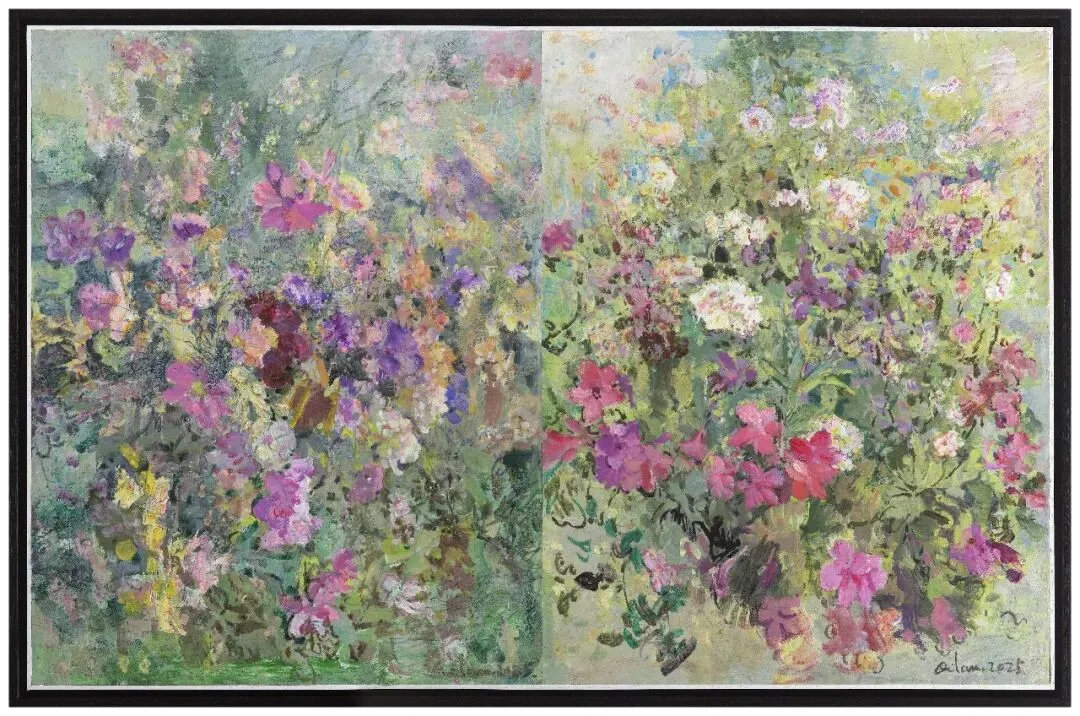
▲漆澜,致巴黎2025之三,纸本综合材料,69.2 × 107.5 cm(w/fr: 74 × 112 × 6 cm),2025 ©艺术家及千高原艺术空间
Qi Lan, To Paris 2025 No.3, Mixed media on paper, 69.2 × 107.5 cm(w/fr: 74 × 112 × 6 cm), 2025 © Courtesy of the Artist and A Thousand Plateaus Art Space
漆澜(b. 1973)出生于四川安岳,1996年获得西南师范大学美术学院中国画专业学士学位,2001年获得南京艺术学院美术学院中国画系硕士学位,2007年师从王孟奇教授攻读美术学博士学位,现工作生活于上海。漆澜的绘画在自然中寻求历史、理想和心灵的慰藉。他用一种类似知识考古学的方法,长时间地盯着画面,不借助现成图像,在记忆和想象中有条不紊地挖掘、分析、筛选、归类、拆解、重组,在画面上不断堆叠、修改、涂抹、消除与重写,物象在画面上随着时间的推移,沉淀出历史遗迹、废墟般的时间感和沧桑感。
饶维懿
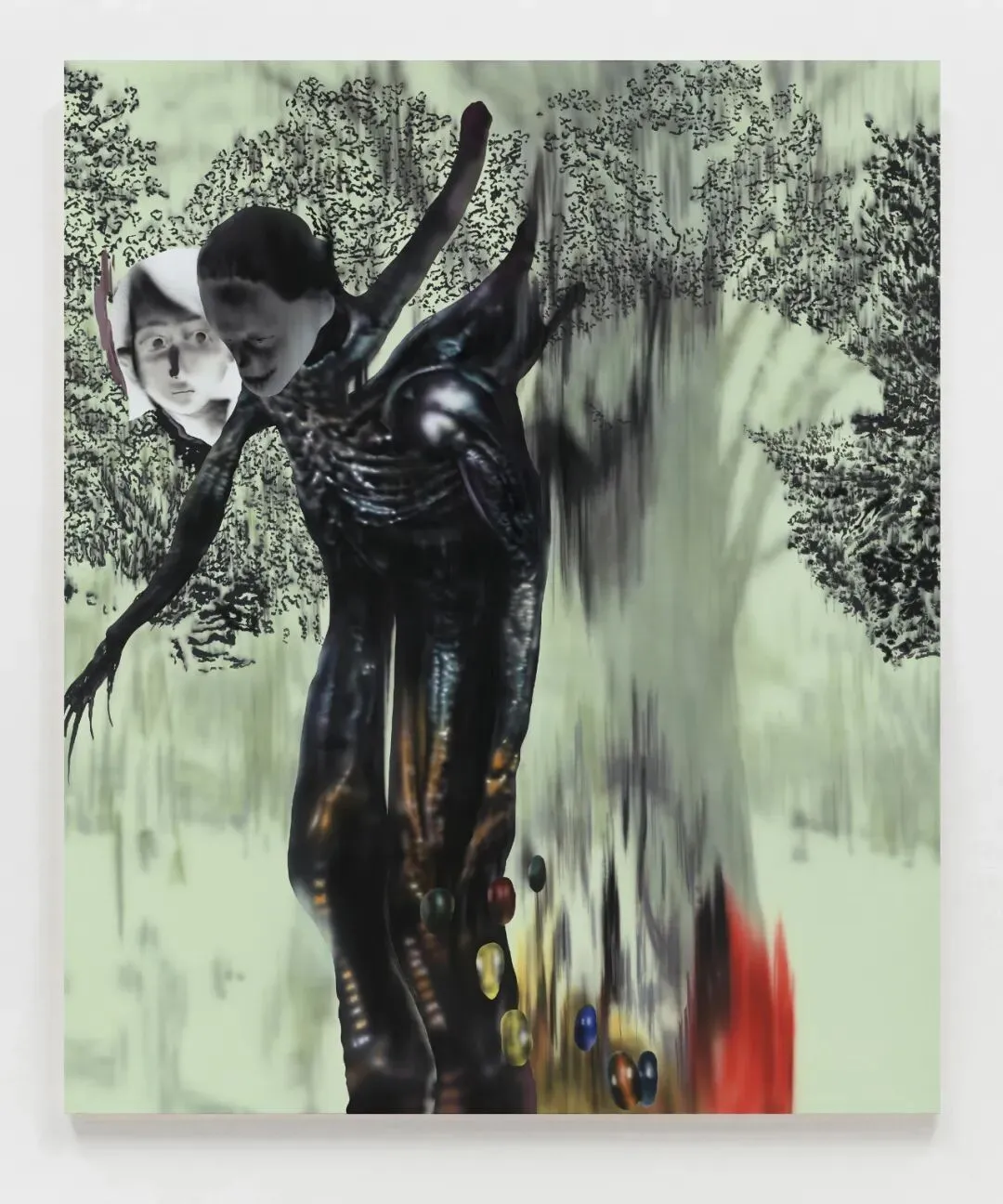
▲饶维懿,引路人,布面丙烯,180 × 150 cm,2026 ©艺术家及千高原艺术空间
Rao Weiyi, The Pathfinder, Acrylic on canvas, 180 × 150 cm, 2026 © Courtesy of the Artist and A Thousand Plateaus Art Space
饶维懿(b.1993)出生于湖南,2016年获得四川美术学院油画系学士学位,现工作生活于重庆。2020年获得四川美术学院油画系硕士学位。饶维懿是年轻一代新锐画家的代表之一,他是2020年保时捷研究奖学金、第三届宝龙艺术大奖银奖的获得者,并于同年荣获四川美术学院造型艺术学院“礼物”提名奖;于2019年入选第十届新星星艺术家TOP100。
萨扎布
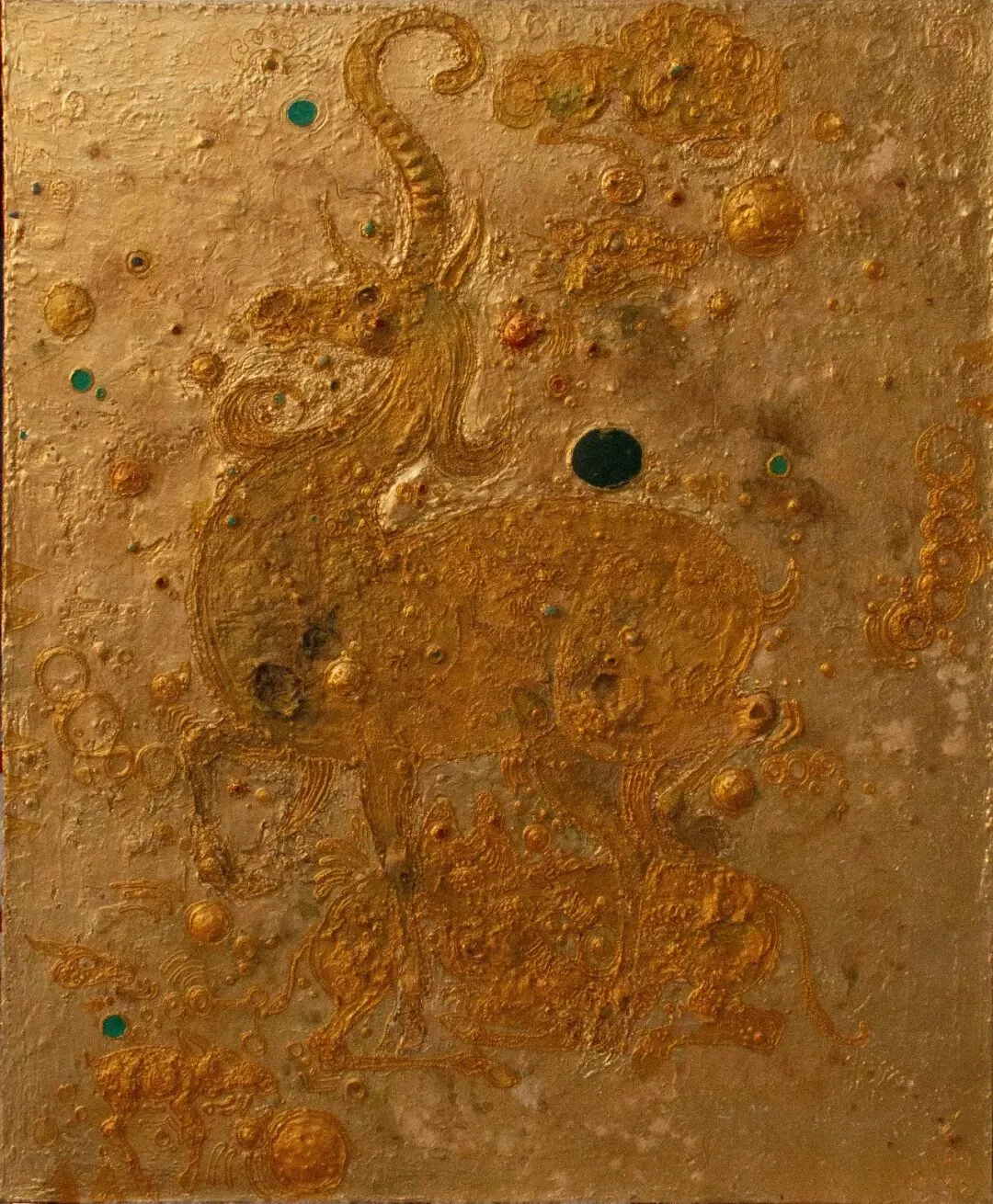
▲萨扎布,金色-7,金箔,天然石头,布面丙烯,180 × 150 cm,2022 ©艺术家及千高原艺术空间
Lkhajav, Golden-7, Gold leaf, natural stones, acrylic on canvas, 180 × 150 cm, 2022 © Courtesy of the Artist and A Thousand Plateaus Art Space
王川
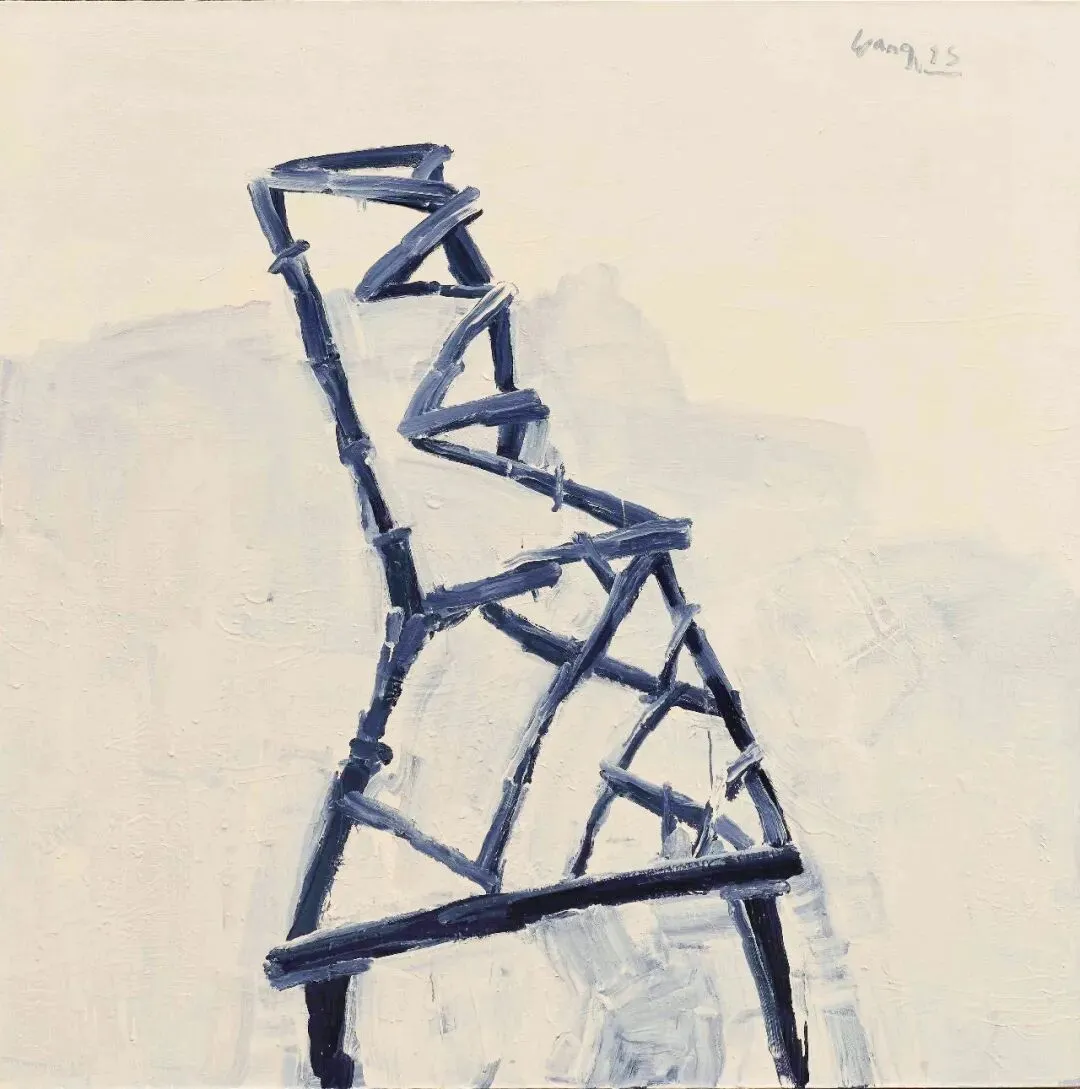
▲王川,色身2号,布面丙烯,200 × 200 × 5 cm,2015 ©艺术家及千高原艺术空间
Wang Chuan, Rupakaya No.2, Acrylic on canvas, 200 × 200 × 5 cm, 2015 © Courtesy of the Artist and A Thousand Plateaus Art Space
王川(b. 1953)出生于四川成都,1982年毕业于四川美术学院中国画系,现工作生活于成都、深圳、纽约。作为“伤痕美术”的代表人物之一,他的创作经历了从写实绘画、表现主义向极少主义的深刻转变。这一转向的契机,源于1990年代末一场重病。在身体的痛苦中,王川通过对东方哲学的体悟,实现了精神上的顿悟式转折——他开始意识到,身体只是灵魂的暂居之所,终将消逝,而精神得以延续。
谢蓓
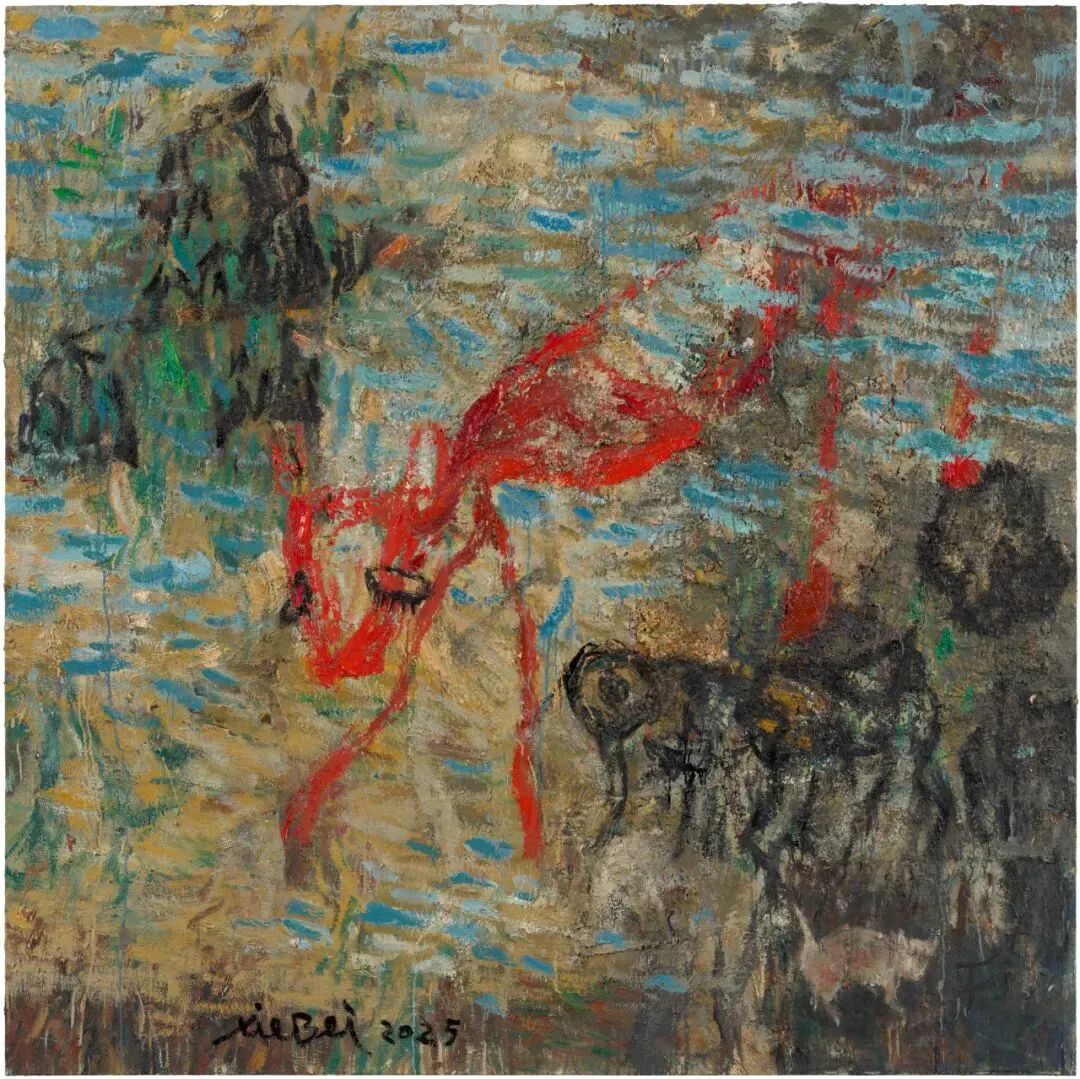
▲谢蓓,梦者花园-No.8,布面综合,200 × 200 cm,2024-2025 ©艺术家及千高原艺术空间
Xie Bei, The Garden of Dreamer-No.8, Mixed media on canvas, 200 × 200 cm, 2024-2025 © Courtesy of the Artist and A Thousand Plateaus Art Space
谢蓓(b. 1964)出生于重庆,1988毕业于四川美术学院油画系,现工作生活于重庆。谢蓓的艺术创作见证一种拥抱即兴、偶然与独立的自由本质,他以表现主义的笔触糅合超现实主义的意向,将文学、诗歌、自然、战争与情感的碎片熔铸为历史复杂脉络的探寻。
熊文韵
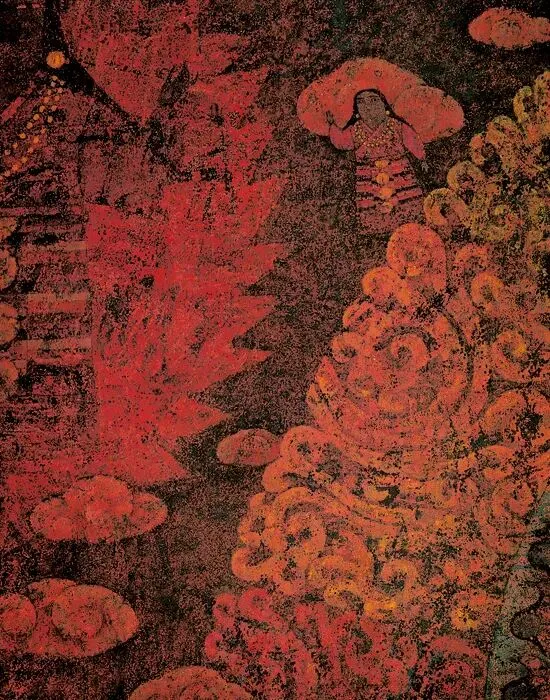
▲熊文韵,焰,日本岩彩于亚麻布上,116 × 91 cm,1995 ©艺术家及千高原艺术空间
Xiong Wenyun, Flame, Japanese rock-dyestuff and mixed media on canvas, 116 × 91 cm, 1995 © Courtesy of the Artist and A Thousand Plateaus Art Space
熊文韵(b. 1955)出生于重庆,1983年获四川美术学院中国画系学士学位,1993年获日本筑波大学艺术研究科日本画专业硕士学位。熊文韵纯熟地运用日本画中所特有的艰苦的工艺制作程序以及矿物质颜料,描绘出了《焰》(Flame, 1994)中的西藏意境和藏女形象。艺术家将川藏雪域的人文景象视为一种单纯、神秘的事物,这与日本画中的那种稳定、和谐、细腻、绚烂又归于宁静的气质不谋而合,其创作过程犹如真诚的藏女不断地转动寺庙长廊中的经钟,在看似重复的劳作中接近心中的希望。熊文韵以怀想的方式把曾经见过的风俗景象提炼成一个个静穆的精神形象,这对她的精神世界是极其重要的。
杨述
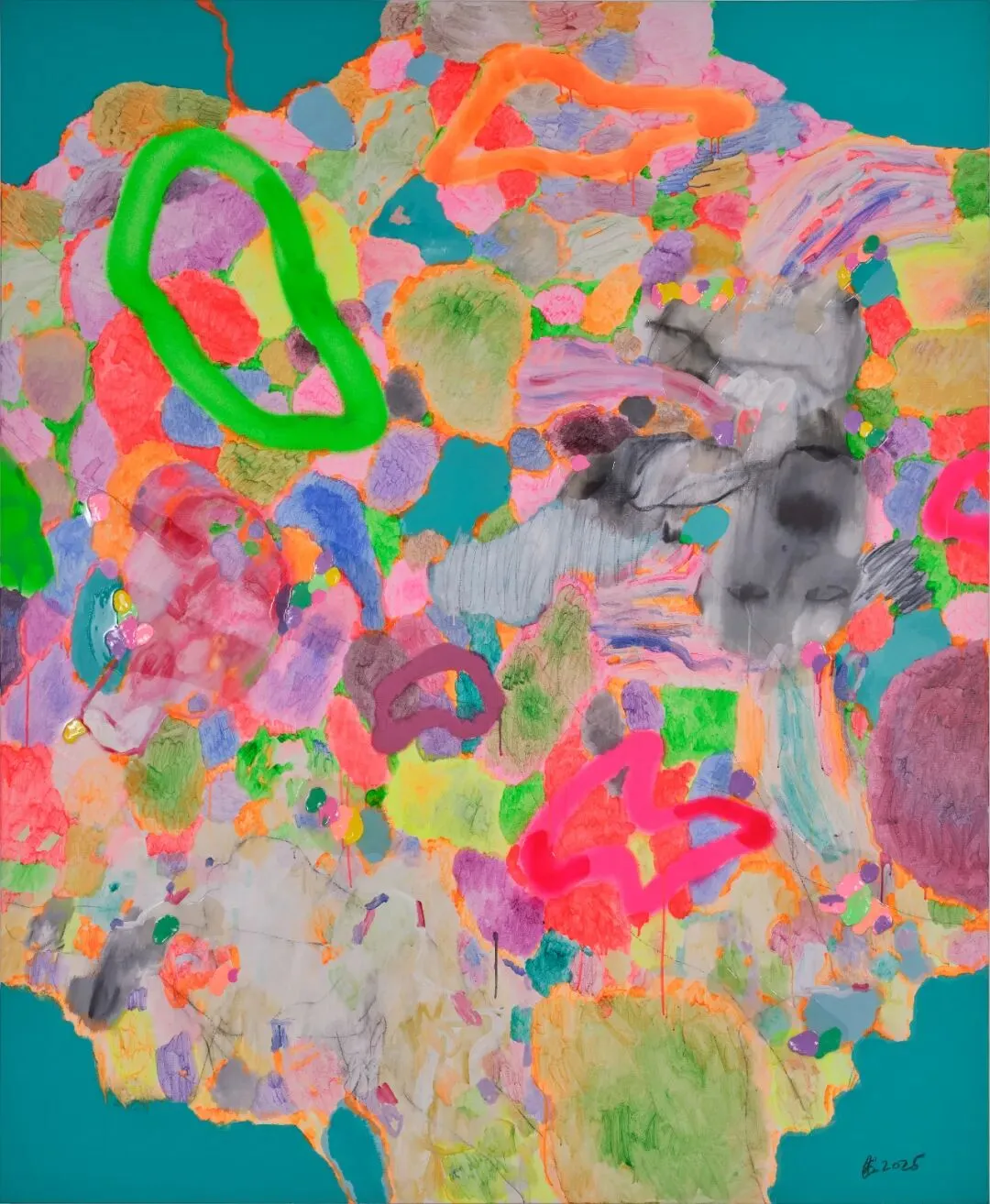
▲杨述,无题2025Y2,布面丙烯树脂,彩色泥,220 × 180 cm,2025 ©艺术家及千高原艺术空间
Yang Shu, Untitled 2025Y2, Acrylic resin and colored clay on canvas, 220 × 180 cm, 2025 © Courtesy of the Artist and A Thousand Plateaus Art Space
翟倞
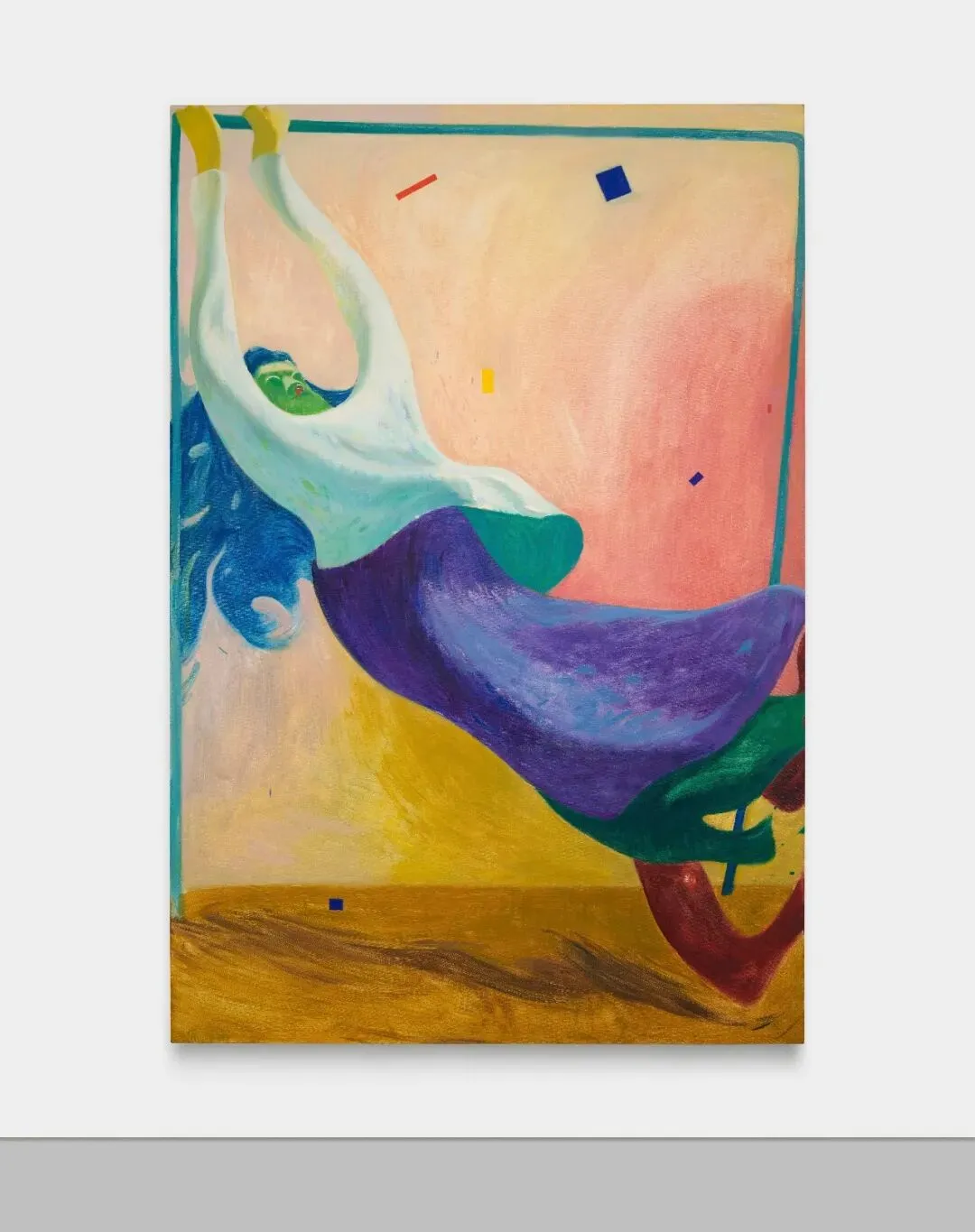
▲翟倞,钥匙,布面油画,231 × 156 cm,2026 ©艺术家及千高原艺术空间
Zhai Liang, The key, Oil on canvas, 231 × 156 cm, 2026 © Courtesy of the Artist and A Thousand Plateaus Art Space
Bi Rongrong
Bi Rongrong (b. 1982) was born in Ningbo, Zhejiang. She received her MFA in Chinese Landscape Painting from Sichuan University in 2008 and later earned an MFA in Painting from the Frank Mohr Institute in the Netherlands. She currently lives and works in Shanghai. In 2024, she was shortlisted for the "SIGG PRIZE 2025" at Hong Kong's M+ Museum, and in 2022, she became one of three global winners in the inaugural "Muse" prize by the Rolls-Royce Arts Programme.
One of three works selected for Art Basel Hong Kong 2026's advertising campaign, Stitched Urban Skin (2022) draws inspiration from layered urban landscapes. The work is a weaving of tradition and innovation: composed of three two-dimensional layers, it features specially forged metal, LED screens with flickering light points, and plexiglass interwoven with traditional Chinese crochet techniques. While merging ancient craftsmanship with innovative technology, the artist also interconnects different times and spaces.
Bi’s latest series, The South · The North (2026), continues the artist's exploration of patterns from her SIGG PRIZE 2025 work,To Connect, To Cut, To Draw. Using copper plates, recycled yak tent fabric, machine-woven textiles, and handwoven fabrics as mediums, the series repeatedly examines the interchange, complementarity, and interconnectedness between soft and hard materials, representing different modes of labor. In the works, industrial elements like metal structures are combined with pliable textiles and fibers, creating forms that hover between rigidity and fragility. Through arduous craftsmanship—bending, welding, stitching, and weaving—these works highlight the physical interaction between the body and material. These actions inscribe time and energy onto the surface of the materials, making them both structure and skin. Through juxtaposition, Bi Rongrong explores how materials bear the traces of labor while addressing the tension between strength and fragility, permanence and transformation.
Chen Qiulin
Chen Qiulin (b. 1975) was born in Yichang, Hubei Province. She graduated from the Printmaking Department of Sichuan Fine Arts Institute in 2000 and currently works and lives in Chengdu, China, and Izu, Japan. Chen has received awards such as the ACC (Asian Cultural Council) Grant for Chinese Recipients (2006) and was nominated for the JP Morgan World Women Forum First Asian Conference Rising Talents Programme (2008). Her works are collected by major art institutions, including the Sondra and Celso Gonzalez-Falla Foundation (New York), Busan Museum of Art (Busan), Thyssen-Bornemisza Art Contemporary Foundation (Vienna), Hammer Museum (Los Angeles), and Queensland Art Gallery | Gallery of Modern Art (Brisbane), etc.
Chen's works span various media, including video, photography, installation, and sculpture. Her practice remains in a state of constant evolution and progression, introducing new perspectives on frequently discussed issues while maintaining a unique sensitivity to social problems. Another Day (2014–2016) is Chen's project examining the lives of women in the remote mountainous regions of southeastern Guizhou Province. The artist immersed herself in Dong ethnic villages in southwestern China to observe women in remote areas. Through a combination of video, photography, and installation, she presents her observations and reflections on the lives of Dong women—a closed environment shaping their silent demeanor, where a monotonous existence is not fate but an inescapable destiny.
Chen Xiaoyi
Chen Xiaoyi (b. 1992) was born in Sichuan, China. She received her MA in Fine Art Photography from the University of the Arts London in 2014 and currently works and lives in Chengdu. Her work won the grand prize at the 7th Three Shadows Photo Award in China and was selected for Forbes' 2017 "30 UNDER 30 (Art)" Asia list. In her ongoing projects in recent years, she has taken the mines and mining relics in the Hengduan Mountains of the midwestern region as her creative entry point, continuously "salvaging" the mysteries of lost time, nature, and the earth, while attempting to conduct an "image scan" of the western mountainous areas through broader narratives.
The series To Blue Blossom (2025) continues Chen Xiaoyi's special focus on the Hengduan Mountains in recent years. Since 2024, the mountains have experienced a rare peak blooming season for alpine azaleas, while an extremely violent rainy season has also emerged. Azaleas, highly sensitive to climatic conditions, serve as the artist's medium for exploring climate change and ecological memory. Based on the highest temperatures and precipitation levels throughout the rainy season, the artist physically etches the invisible fluctuations of climate onto the blooming flower surfaces. Viewers can intuitively sense the rhythm shifting from cool to scorching heat, interspersed with sudden downpours, over the course of three months in the sequence.
He Duoling
He Duoling (b. 1948) was born in Chengdu, Sichuan. In 1977, he enrolled in the oil painting program at the Sichuan Fine Arts Institute, and in 1979, he joined the institute's graduate program in oil painting. After graduation, he worked on oil painting creations at the Chengdu Painting Academy and currently lives and works in Chengdu and Shenzhen. He Duoling is a representative of lyrical realism in contemporary Chinese oil painting. His art is deeply poetic, emphasizing painterly qualities, blending beauty and elegance with a touch of melancholy, and pursuing unrestrained freedom. His solid foundational skills bring vitality to the figures and scenes in his works. In terms of formal language, his pursuit of simplicity resonates with traditional Chinese ink painting—refined yet detailed, simple yet complex, revealing a transcendent spiritual realm.
The work Grand Scenery (2013) showcases the tranquility, mistiness, and depth of nature as depicted by He Duoling, aligning closely with the artistic conception of traditional Chinese landscape painting: cool yet vibrant, serene yet profound, detached yet ethereal, subtly revealing the mysteries of order and chaos, form and emptiness. The mystery that He has been exploring for years is now increasingly associated with vitality, ethereality, and clarity. For him, the so-called mystery is something unknowable yet deeply captivating. The highest contribution of art lies in providing and inspiring an ineffable resonance with the mysterious harmony of life and the universe. This is the deepest tremor of "beauty" within the soul. He Duoling's artistic goal is not to venture outward to document reality but to journey inward, hoping to find his true soul—only his inner world is the real reality.
Qi Lan
Qi Lan (b. 1973) was born in Anyue, Sichuan. He received a BFA degree in Chinese Painting from the School of Fine Arts at Southwest Normal University in 1996 and an MFA degree from the Department of Chinese Painting at the School of Fine Arts, Nanjing University of the Arts, in 2001. In 2007, he began pursuing a Ph.D. in Fine Arts under the guidance of Professor Wang Mengqi. He currently lives and works in Shanghai. Qi Lan’s paintings seek solace in nature—drawing upon history, ideals, and the spirit. Employing a method akin to the archaeology of knowledge, he gazes intently at the canvas for extended periods, eschewing ready-made imagery. Drawing upon memory and imagination, he methodically excavates, analyzes, sifts, categorizes, deconstructs, and reconstructs his subjects. Through continuous layering, revision, smudging, erasure, and rewriting on the canvas, the forms gradually settle over time, evoking a sense of historical relics, ruins, and the passage of time.
The seriesTo Paris (2025) draws inspiration from Qi Lan’s 2025 trip to France with his family. Over the past few years, the artist’s ongoing exploration of the “flower” motif has directly reflected his understanding of language and form, as well as life and aesthetics. In the past, he engaged in a dialogue with masters such as Zhao Zhiqian, Huang Binhong, Delacroix, Cézanne, Bonnard, and Van Gogh in the spirit of homage. While his earlier works still bore the influence of these predecessors, his recent pieces lean more toward the construction of his own artistic language. This series not only reaffirms the artist’s affinity for the symbol of the flower but also highlights how his personal experiences and memories naturally take root, sprout, and flourish on the canvas. This has driven his previously somewhat obscure linguistic exploration toward a clearer and more coherent logic, and it is bound to become a pivotal point in his ongoing artistic development.
Rao Weiyi
Rao Weiyi (b. 1993) was born in Hunan Province. He received his BFA from the Oil Painting Department of Sichuan Fine Arts Institute in 2016; in 2020, he obtained his MFA from the Oil Painting Department of Sichuan Fine Arts Institute. He currently lives and works in Chongqing. Rao is one of the representative emerging painters of the younger generation. He is the recipient of the 2020 Porsche Research Fellowship and the Silver Award of the 3rd Powerlong Art Prize and was honored with the "Gift" Nomination Award by the School of Fine Arts at Sichuan Fine Arts Institute in the same year. In 2019, he was selected for the TOP100 of the 10th New Star Art Awards.
The Pathfinder (2026) is one of the artist's reflections on internet culture and social ecology, featuring alienated figures traversing a jungle with lost expressions. Here, the "pathfinder" is not a dramatic admonition or the guidance of some deity, but rather the individual themselves serving as their own guide. Passing through the dense forest is neither an escape nor a rebellion, but a step toward a new beginning. The artist transforms the unique textures of online imagery into an experimental painting language, using a personal perspective to reflect contemporary anxieties and restrained emotional traits through fictional or hypertext narratives.
Lkhajav
Sazab (b. 1986), of Mongolian ethnicity, was born in Xilingol League, Inner Mongolia. He received his MFA from the Art Research Department of the National University of Mongolia in 2012 and his BFA from the Oil Painting Department of the College of Fine Arts at the National University of Culture and Arts of Mongolia in 2010. He currently lives and works in Hohhot, Inner Mongolia Autonomous Region. In his Gold series (2022-2025), the artist extensively uses gold leaf. For him, gold leaf—both in color and texture—is the closest to the historical artifacts made of gold used by the nomadic aristocracy. Its unique, irreplicable nobility cannot be replaced by any other material. Sazab's work is deeply rooted in the nomadic psyche and the symbolism and philosophy of nomadic culture, pursuing the ideal of harmonious coexistence between humans and nature, and revering the mysterious, divine, and unbreakable inner laws within both. He regards materials obtained from nature, traditional utensils, and even objects from livestock as creative mediums, while also employing concealed and suggestive techniques from traditional life to make his works more substantial, persuasive, natural, fitting, and soulful.
Wang Chuan
Wang Chuan (b. 1953) was born in Chengdu, Sichuan. He graduated from the Chinese Painting Department of Sichuan Fine Arts Institute in 1982 and currently works and lives in Chengdu, Shenzhen, and New York. As one of the representative figures of "Scar Art," his creative journey has undergone a profound transformation from realist painting and expressionism to minimalism. This shift was triggered by a serious illness in the late 1990s. Amid physical suffering, Wang experienced a spiritual epiphany through his contemplation of Eastern philosophy—he began to realize that the body is merely a temporary dwelling for the soul, destined to fade, while the spirit endures.
Thereafter, Wang's compositions grew increasingly refined. Take Rupakaya No. 2 (2015) as an example: the title derives from the Buddhist term "rupakaya," referring to the physical body. In the painting, a few simple lines form a "box," serving as both a metaphor for the physical body and a vessel for the artist's ongoing reflections on the relationship between Eastern and Western painting: detachment and complementarity, persistence and fusion. Wang strives to transcend the binary framework of "East and West," shattering the illusion of mutual exclusivity and returning painting to its essence—where lines are no longer subordinate to concepts but a joyful game. This introspective creative process began with personal trauma but unexpectedly led the artist to more instinctively engage with deeper cultural dialogues.
Xie Bei
Xie Bei (b. 1964) was born in Chongqing. He graduated from the Oil Painting Department of Sichuan Fine Arts Institute in 1988 and currently works and lives in Chongqing. Xie's artistic practice embodies a free-spirited embrace of improvisation, chance, and independence. His expressionist brushwork blends surrealist imagery, fusing fragments of literature, poetry, nature, war, and emotion into explorations of history's intricate tapestry.
His recent work, The Garden of Dreamer—No. 8 (2024-2025), evokes traces of natural landscapes, yet it is by no means a mere representation. The artist deconstructs landscapes, not shaping for the sake of shaping, but rather searching for residual traces—even destroying—through repeated layers of coverage, akin to an archaeological exploration of history. The rough, anti-refinement quality characteristic of Expressionism is the visual atmosphere the artist has long pursued. He believes that only by shattering the polished exterior can the core essence be revealed, allowing his reflections on real society to emerge.
Xiong Wenyun
Xiong Wenyun (b. 1955) was born in Chongqing. She received a BA in Chinese Painting from the Sichuan Fine Arts Institute in 1983 and an MA in Japanese Painting from the Graduate School of Art at the University of Tsukuba, Japan, in 1993. Xiong skillfully employs the laborious technical processes and mineral pigments characteristic of Japanese painting to depict the Tibetan atmosphere and the image of a Tibetan woman in Flame (1994). The artist views the human landscape of the snow-capped regions of Sichuan and Tibet as something simple and mysterious, which coincides perfectly with the stable, harmonious, delicate, brilliant, yet tranquil temperament found in Japanese painting. Her creative process is like that of a sincere Tibetan woman continuously turning the prayer wheels in the temple corridors, drawing closer to her inner hopes through seemingly repetitive labor. Through a process of reflection, Xiong distills the folk scenes she has witnessed into a series of serene spiritual images, which hold profound significance for her inner world.
Yang Shu
Yang Shu (b. 1965) was born in Chongqing. He received his BFA from the Oil Painting Department of Sichuan Fine Arts Institute in 1985 and his MFA from the same department in 1988, after which he stayed to teach. In 1995, he participated in a one-year residency at the Rijksakademie van beeldende kunsten (Royal Academy of Art, Netherlands). He currently lives and works in Chongqing. Yang Shu is not only an early explorer of experimental painting in China but also one of the pivotal figures in constructing the narrative of Chinese contemporary art. His innate talent for form and solid academic training in realism helped him develop a profound understanding of abstract structures and color. InUntitled 2025Y2 (2025), the artist once again employs acrylic as the primary medium, using scattered brushstrokes and random layering to construct a visual field where color rhythms intertwine with material textures. In Yang Shu’s recent works, the compositions appear softer and more approachable. The once stark color contrasts have transformed into a sense of luminosity, while his brushstrokes have become more delicate and intricate. Uneven smears of varying lengths create an overall rhythm and mood, yet retain an enigmatic silence and steadfastness.
Zhai Liang
Zhai Liang (b. 1983) was born in Shanxi province. He received his BFA from the Oil Painting Department of Sichuan Fine Arts Institute in 2006 and his MFA from the Oil Painting Department of the Central Academy of Fine Arts in 2009. He currently lives and works in Shanghai. Zhai treats knowledge as nourishment for painting. He leaps between themes within vast intellectual systems, where an incidental story, word, or lyric can spark his imagination. The new work The Key (2026) was inspired by a scene at a sports ground: a woman swinging on a horizontal bar. That horizontal bar, brimming with the beauty of simple geometry, reminded Zhai of Malevich's Suprematist work, The Feeling of Flight (1927)—thus intertwining an abstract concept with a concrete scene. Zhai excels at capturing fleeting postures of figures, the focal points of gazes, the midway moments of actions, and unfinished states, using them as key elements to construct narratives. In the composition, the vortex-like structures, rugged lines, and intense colors achieve a delicate balance between Expressionist style and profound self-questioning.
开幕之夜(仅限邀请)Vernissage (by invitation only)
3.26 16:00 - 20:00
公众日|Public Days
香港会议会展中心,湾仔港湾道1号
Hong Kong Convention & Exhibition Centre
1 Harbour Road, Wan Chai, Hong Kong
正在展出
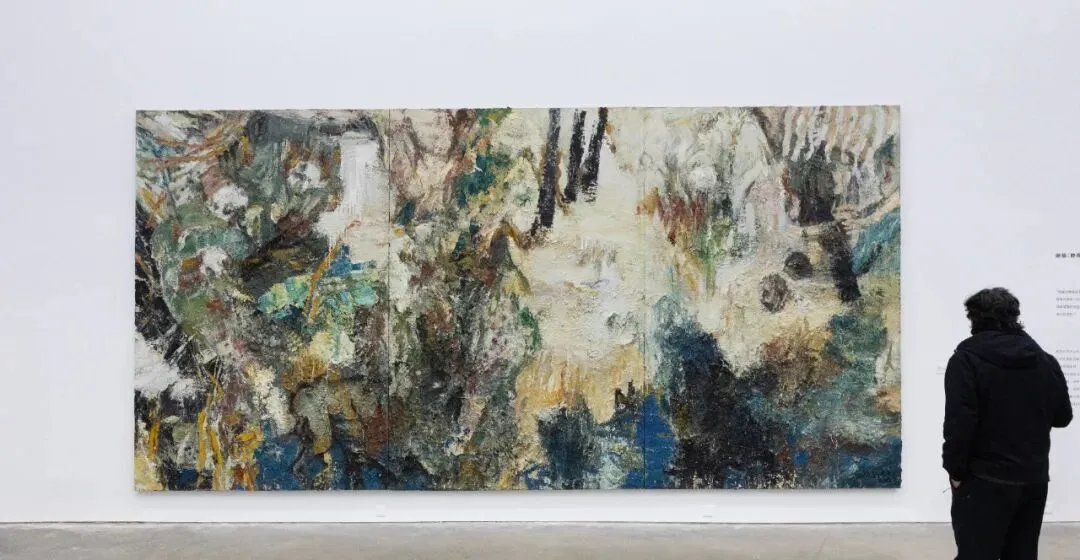
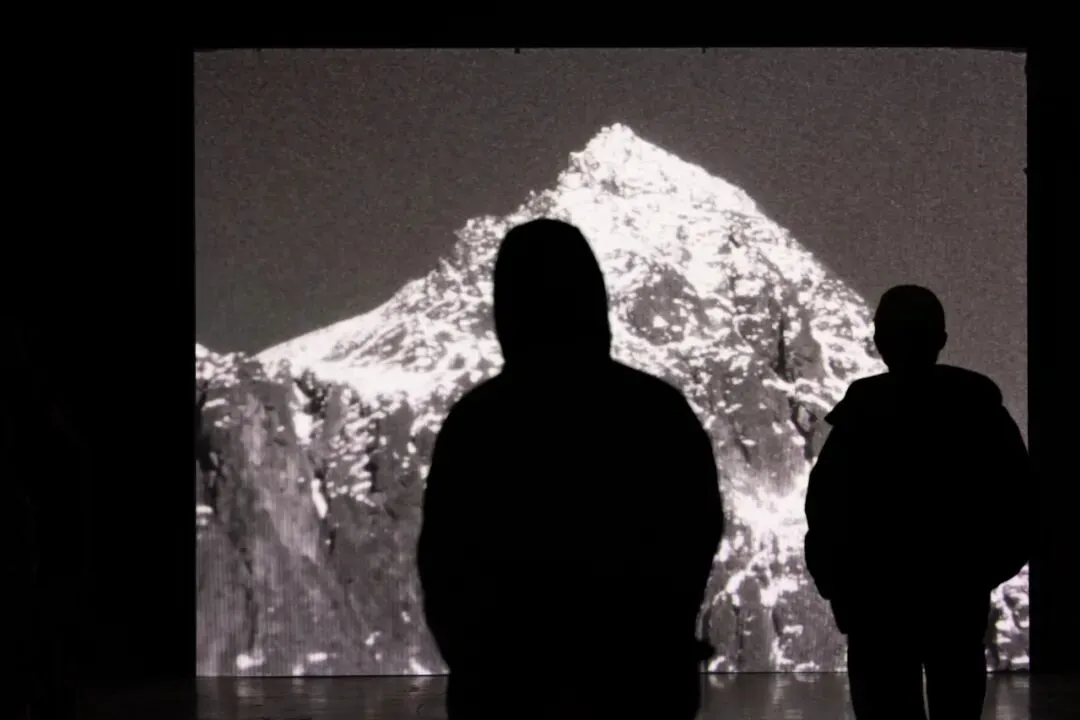
陈萧伊个展:蛾蝶/ 再见 / 世界所有的重量
展览日期:2025/12/27 -2026/04/05
出品:千高原艺术空间
艺术家:陈萧伊
海报设计:音和/ P for Pinecone
展览支持:东来艺术千高原艺术空间 | A Thousand Plateaus Art Space
A Thousand Plateaus Art Space was founded in 2007 in Chengdu, China. It is a professional gallery committing to presenting and promoting China’s contemporary art. Equipped with exhibition halls for artworks and collections and a screening room for videos and discussions, it focuses on researching, presenting and promoting outstanding works and experimental projects of China’s contemporary art and culture by carrying out domestic and international projects.
A Thousand Plateaus Art Space devotes itself to presenting works by emerging artists who have outstanding talent and merit, and to discovering and promoting new creative artists. To date, it has represented and cooperated with over 30 artists of all ages. Using exhibitions, art fairs, academic discussions, publications and so forth, it is dedicated to establishing the communication channels between artists and the society, institutions and collectors. The gallery also organizes artwork sales, tailored art projects, collection management consultings, art education projects and curatings.
▲向下滑动查看更多
更多讯息请关注