Scroll down for English
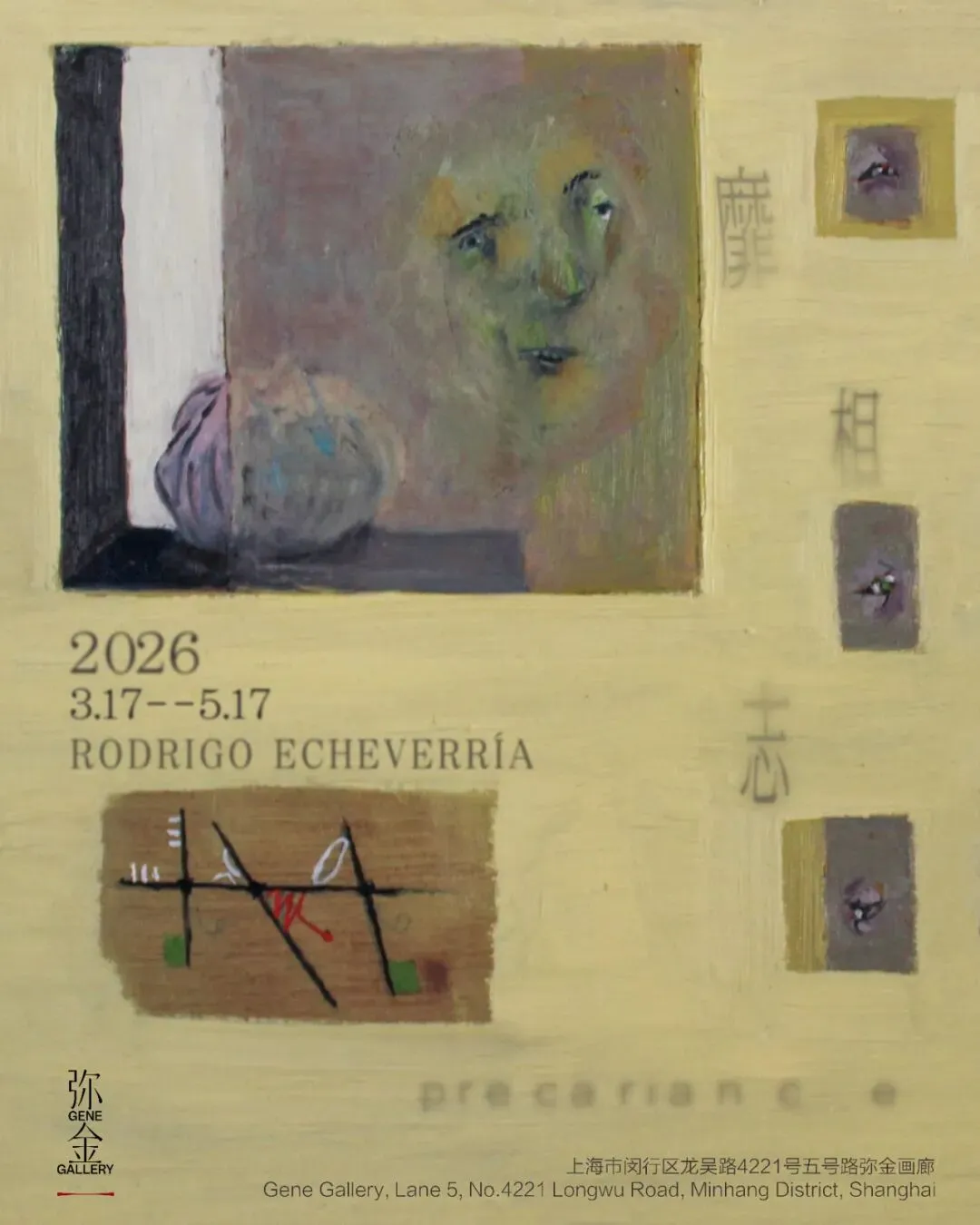
弥金画廊即将推出艺术家罗德里戈·埃切维里亚(Rodrigo Echeverría)个展“靡相志”,展期自2026年3月17日至2026年5月17日。
“我常常设想:倘若明天双手不复存在,那么眼前这幅仍在创作中的作品,或许就是我人生最后一幅画。”
—— 罗德里戈·埃切维里亚
生命仍在持续,只是不再被允许以“绘画者”的身份存在。
所谓“最后一幅画”,并非对终点的预演,也不是对死亡的修辞;它更像是一种存在方式:在某种不可逆的断裂面前,主体虽已无法通过完整的形态而成立,却仍试图维系其显现的最后方式。断裂的肢体、局部的姿态、带有器官感的残片,像是仍保留着行动、观看与承受的惯性,并借由某种微弱的共同体性,回返于画面之中。它们没有彻底消失,也没有真正完成;或许在一次偶然中生长、转化、扩散,又或许在现实的压力下继续断裂、靡散。
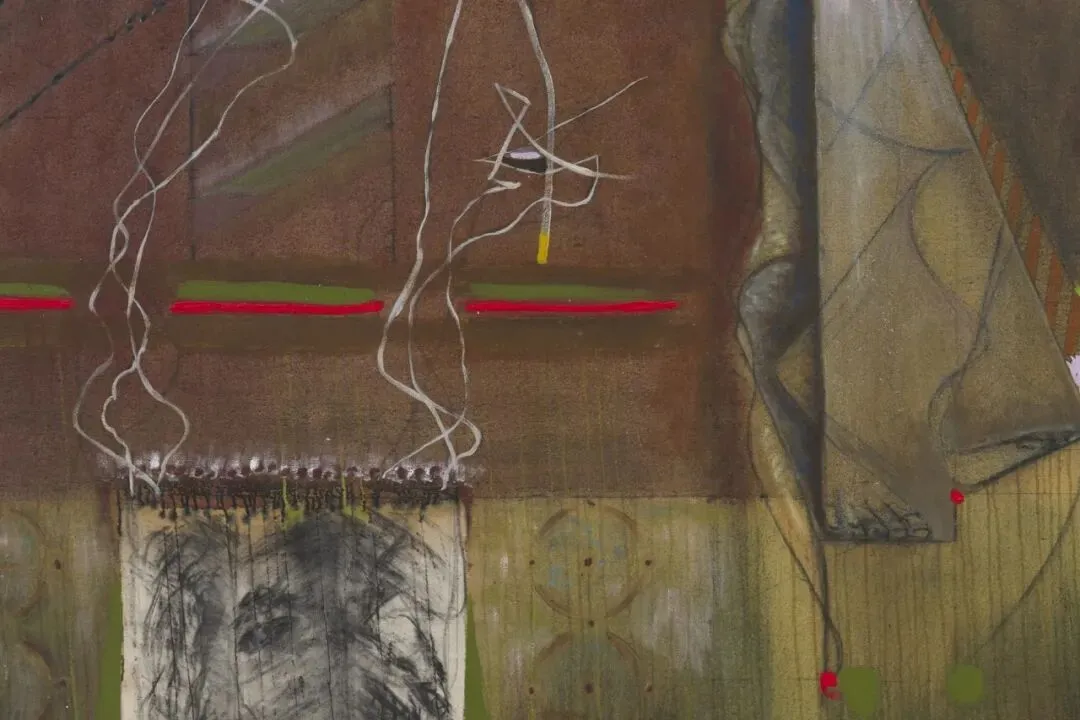
罗德里戈·埃切维里亚 Rodrigo Echeverría, Phantom Limb Sketching for an Eye, 120x190cm, 布面油画 Oil on canvas, 2024
这并非寓言式的设想,也不是超验意义上的偶然事件,而是现实秩序内部始终存在的结构性裂口。秩序从来不是自足而稳固的——那些无法被裁决、无法被安置、无法被完全阐释的异常状态,从未真正被消除,而是不断被遮蔽、吸收、转化并合理化。结构性的失败,被下放到某个能够容纳失败,某个被允许失败的媒介中,最终被转译为个体能力、责任与适配性的缺失,成为一种被迫承载、被迫内化的现实,而秩序本身则继续维持着无懈可击的表象。
当个体被持续要求去阐释、去吞咽、去忍受那些本身无法被阐释、无法被吞咽、无法被忍受之物时,承载便不再是一项可能完成的任务,而是一段注定会崩塌的过程。崩塌到来时,某种确定性被突然切断,意义既无法被个体承载,也无法被系统整合并赋予位置。主体失去了被确认、被定型、被解释的条件,被推入一种更脆弱、更无遮蔽的存在条件之中——无法被安置,也无法真正离场,只能以去功能化的、未完成的状态持续显现。
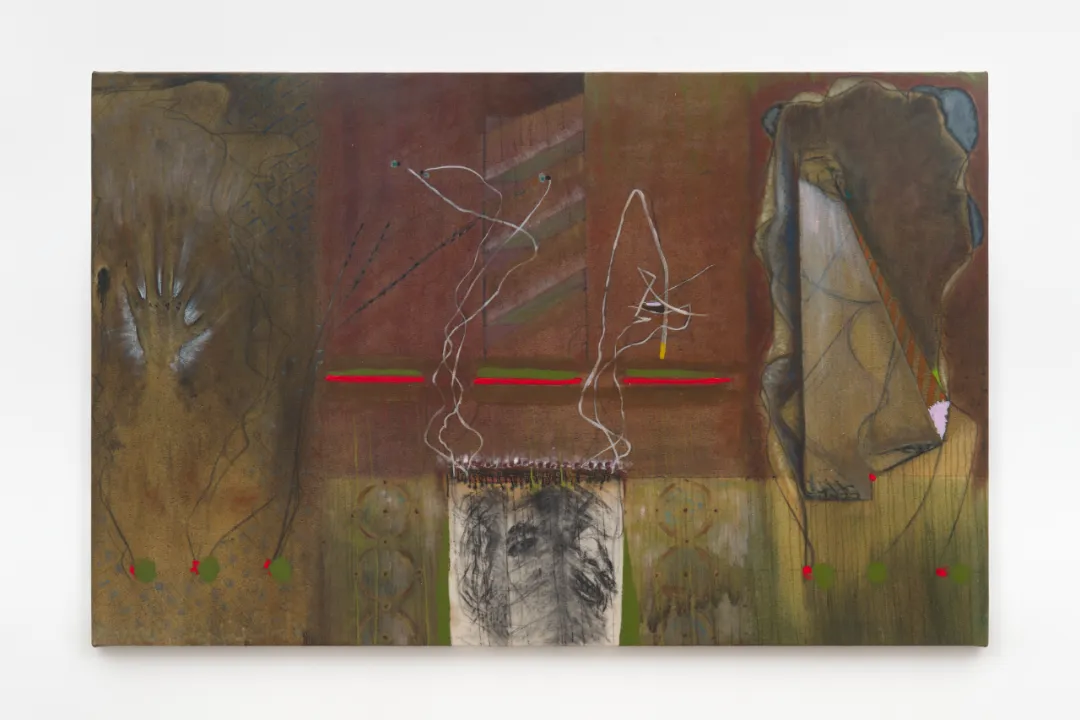
罗德里戈·埃切维里亚 Rodrigo Echeverría, Phantom Limb Sketching for an Eye, 120x190cm, 布面油画 Oil on canvas, 2024
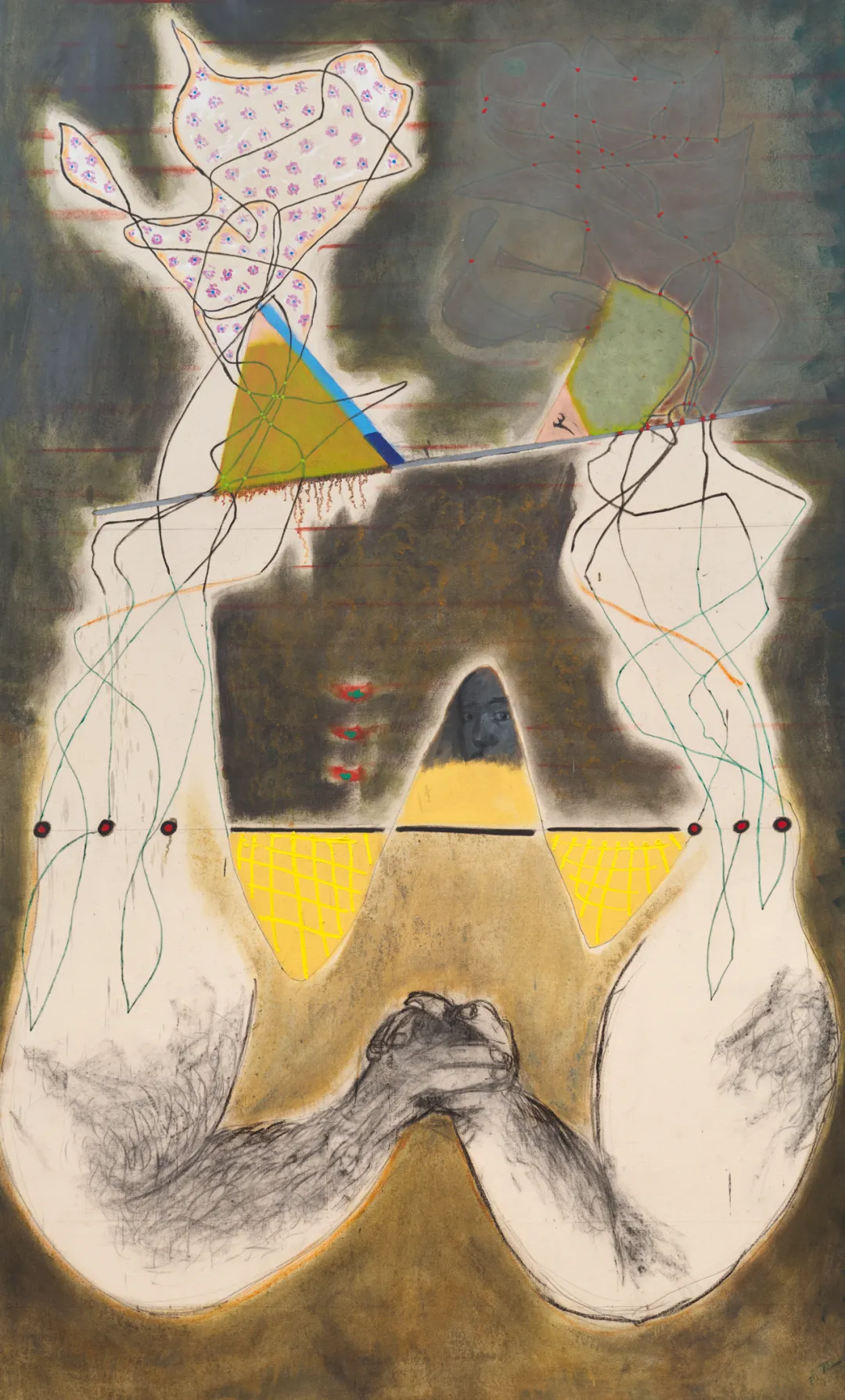
罗德里戈·埃切维里亚 Rodrigo Echeverría, Struggle, 177x127cm, 布面油画 Oil on canvas, 2023
“I often imagine: if tomorrow my hands were no longer there, then the work before me, still in the process of being made, might be the last painting of my life.”
— Rodrigo Echeverría
Life continues, yet it is no longer permitted to exist under the identity of “the painter.”
The “last painting” is neither a rehearsal of the end nor a rhetorical figure for death; it is closer to a condition of existence: in the face of a certain irreversible rupture, the subject, though no longer able to constitute itself through an integral form, still attempts to sustain its final mode of appearance. Severed limbs, partial gestures, and fragments marked by an organ-like quality seem still to retain the inertia of acting, seeing, and enduring, returning to the image through a faint sense of communality. They have not entirely disappeared, nor have they fully come to completion; perhaps, through some accident, they grow, transform, and proliferate, or perhaps, under the pressure of reality, they continue to fracture and dissipate.
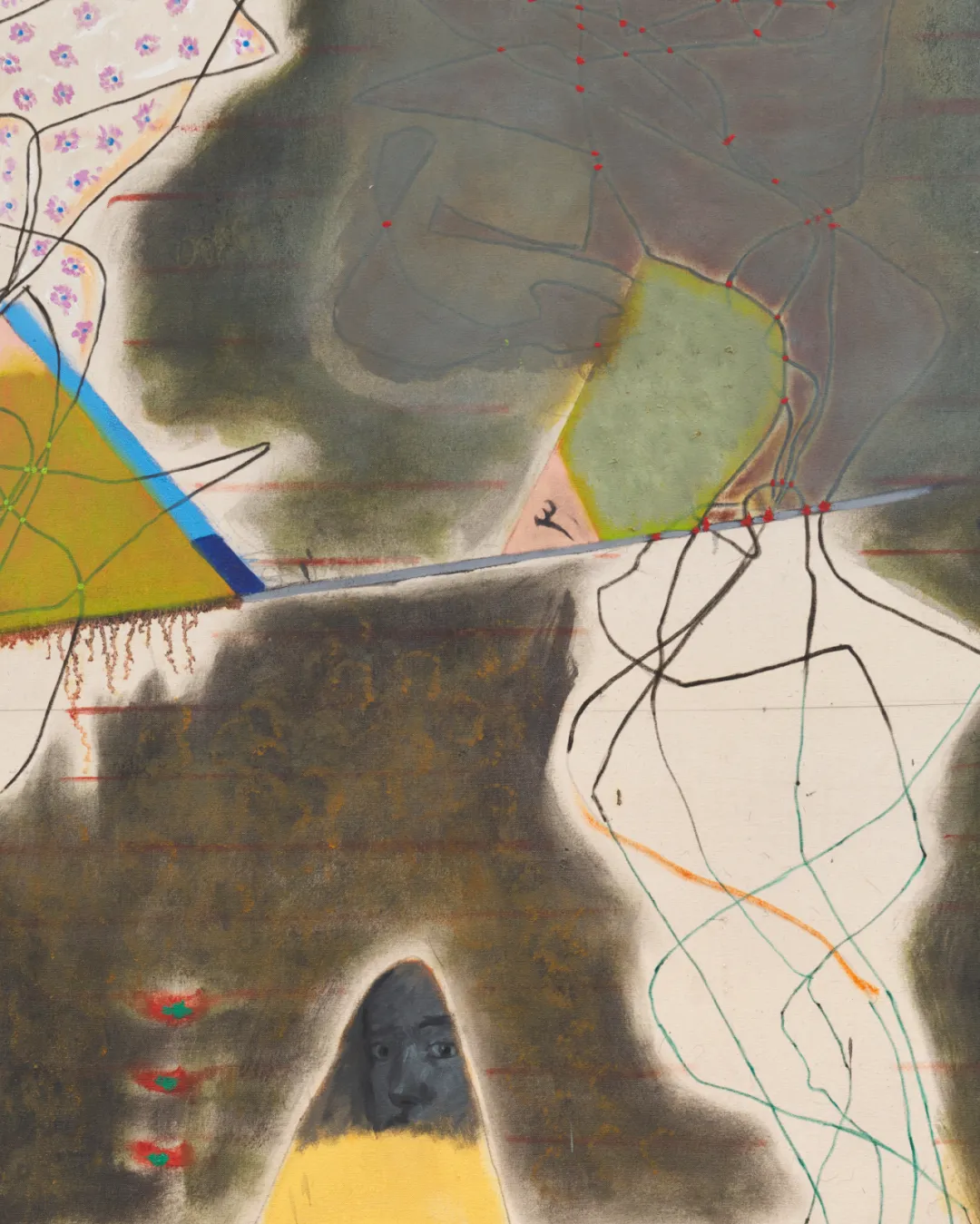
罗德里戈·埃切维里亚 Rodrigo Echeverría, Struggle, 177x127cm, 布面油画 Oil on Canvas, 2023
This is not an allegorical supposition, nor an event of transcendental contingency, but a structural fissure that has always existed within the order of reality itself. Order has never been self-sufficient or stable—those anomalous states that cannot be adjudicated, situated, or fully interpreted have never truly been eliminated; rather, they have been continuously obscured, absorbed, transformed, and rationalized. Structural failure are displaced onto a medium capable of containing failure, a medium in which failure is permitted, and are ultimately translated into deficiencies in the individual’s capacity, responsibility, and fitness, becoming a reality that must be borne and internalized, while order itself continues to preserve the appearance of being unassailable.
When the individual is continually required to interpret, swallow, and endure that which in itself cannot be interpreted, swallowed, or endured, bearing ceases to be a task that can be completed and becomes instead a process destined to collapse. When collapse arrives, a certain determinacy is abruptly severed: meaning can no longer be borne by the individual, nor can it be integrated by the system and assigned a place within it. The subject loses the conditions under which it could be recognized, fixed, and interpreted, and is thrust into a more fragile and more exposed condition of existence—unable to be situated, yet unable truly to depart, and able only to continue appearing in a de-functionalized and unfinished state.
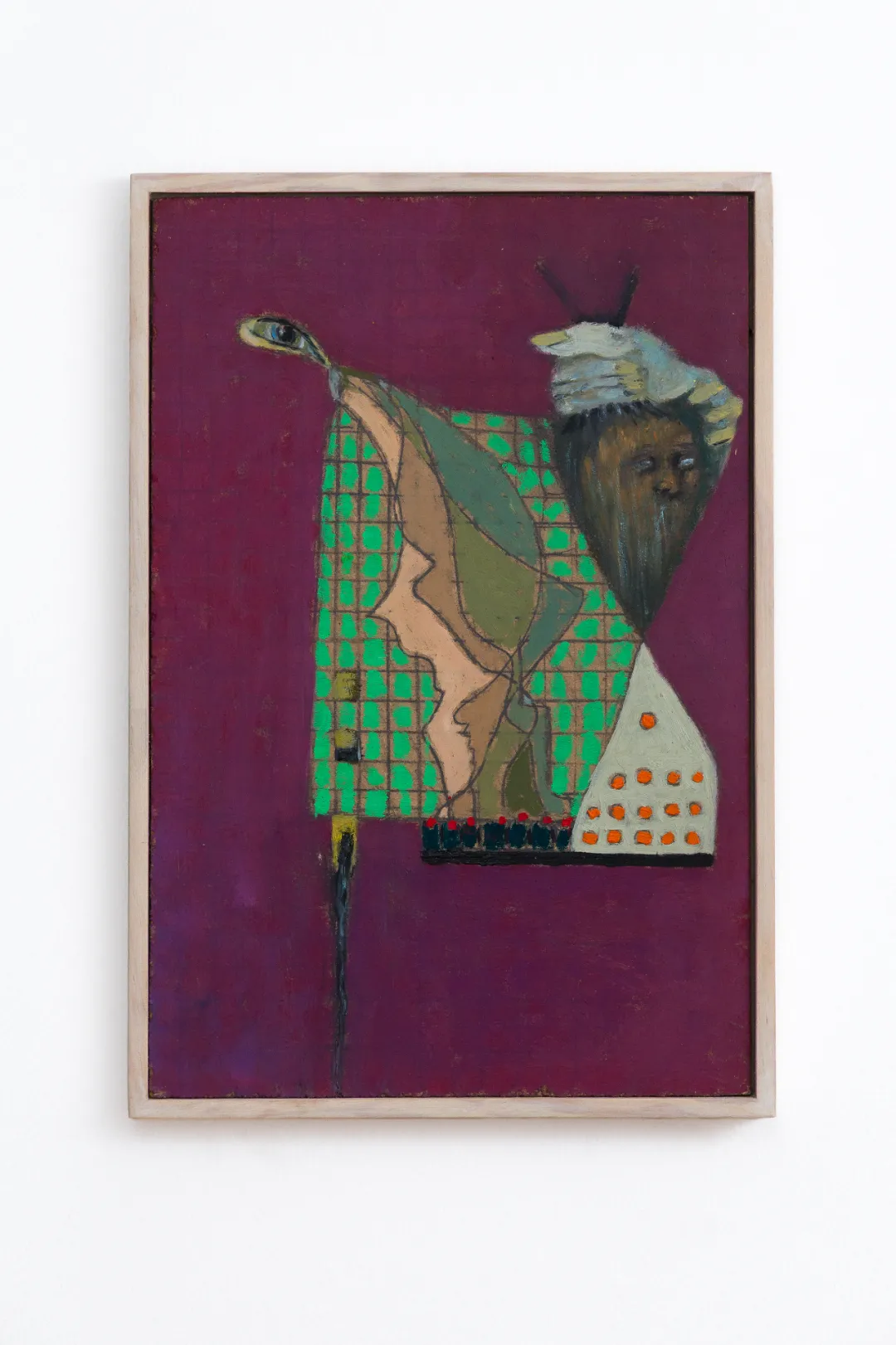
罗德里戈·埃切维里亚 Rodrigo Echeverría, Toxicity between space and time, 30x20cm, 木板油画 Oil on wood, 2024
Deviation, disintegration, and instability become the norm, while interpretation itself begins to form part of the mechanism of concealment, the question is no longer simply how to understand or define, but how to confront, sense, and record—not to repair the failure of the system, not to provide compensatory explanations for the gaps in its mechanisms, and not to establish some new structural center, but to persist in recording the appearance of that which remains present at the site of the collapse of meaning, in the field opened after the rupture between community and the governing order, yet cannot be integrated or recognized.
Recalling what Rodrigo once said in conversation, art matters perhaps precisely because of its capacity to accommodate failure. It need not submit to an order of subjective wholeness, nor respond to the demands of a logic of reintegration. When the conceptual shell is stripped away, when the image no longer remains fixed to theme, when it is no longer required to perform the work of interpretation or integration, painting ceases to be merely the production of images and becomes instead a kind of bearing: a way of holding the failure of meaning and structural fragility.
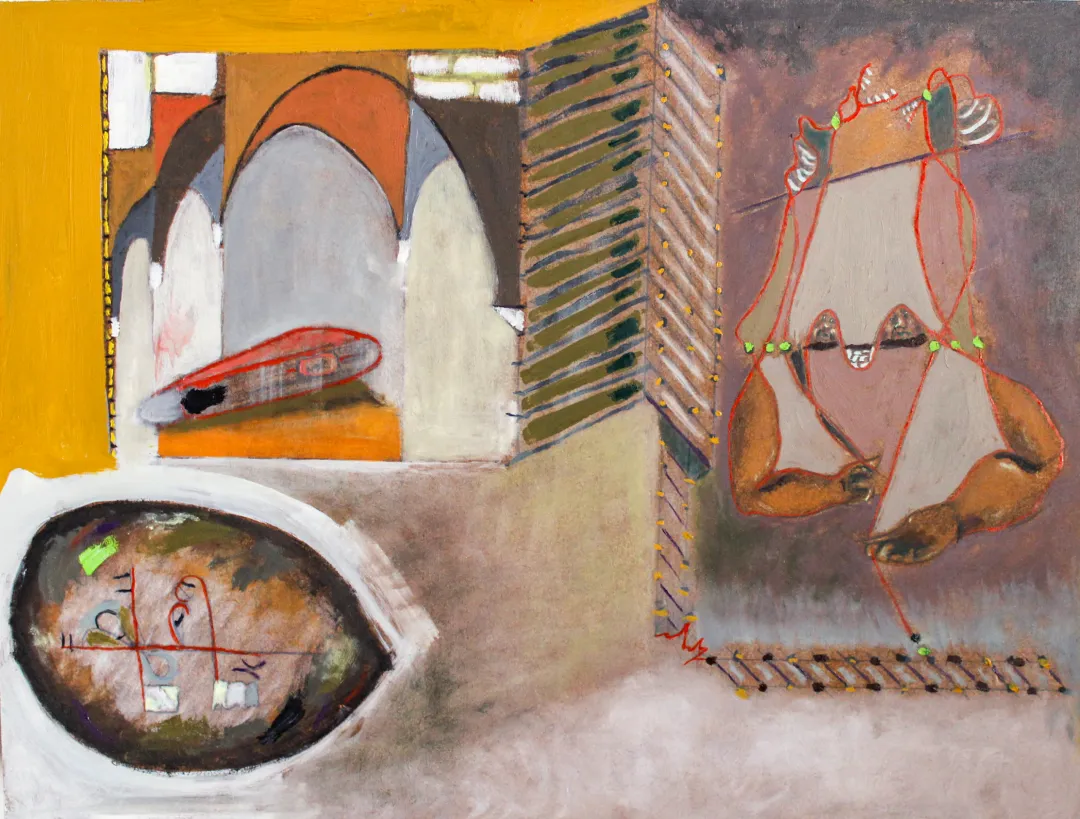
罗德里戈·埃切维里亚 Rodrigo Echeverría,Capitulares.. G de goma o de gloria, 30x40cm, 木板油画 Oil on wood, 2024


如需垂询作品
弥金往期展览