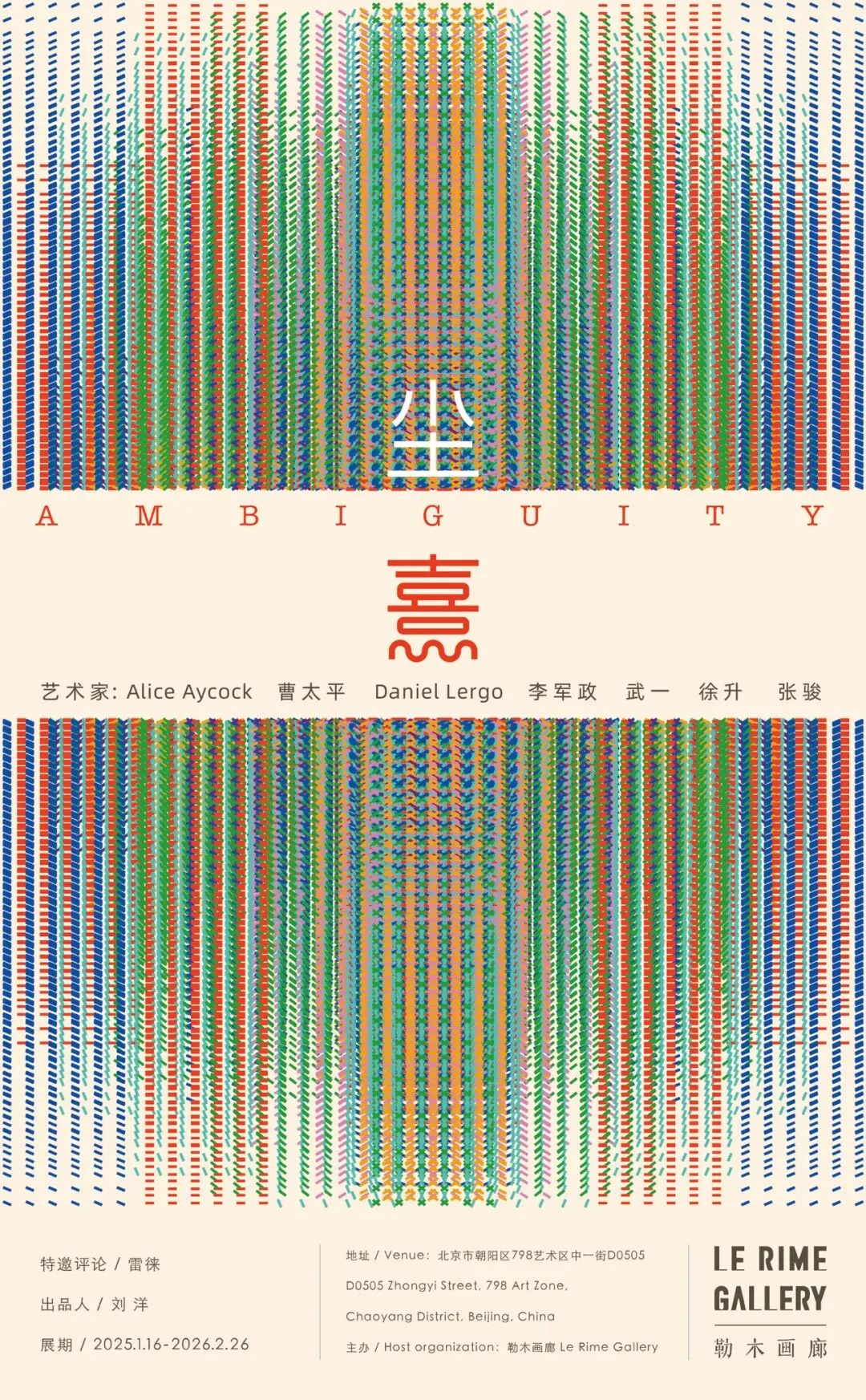
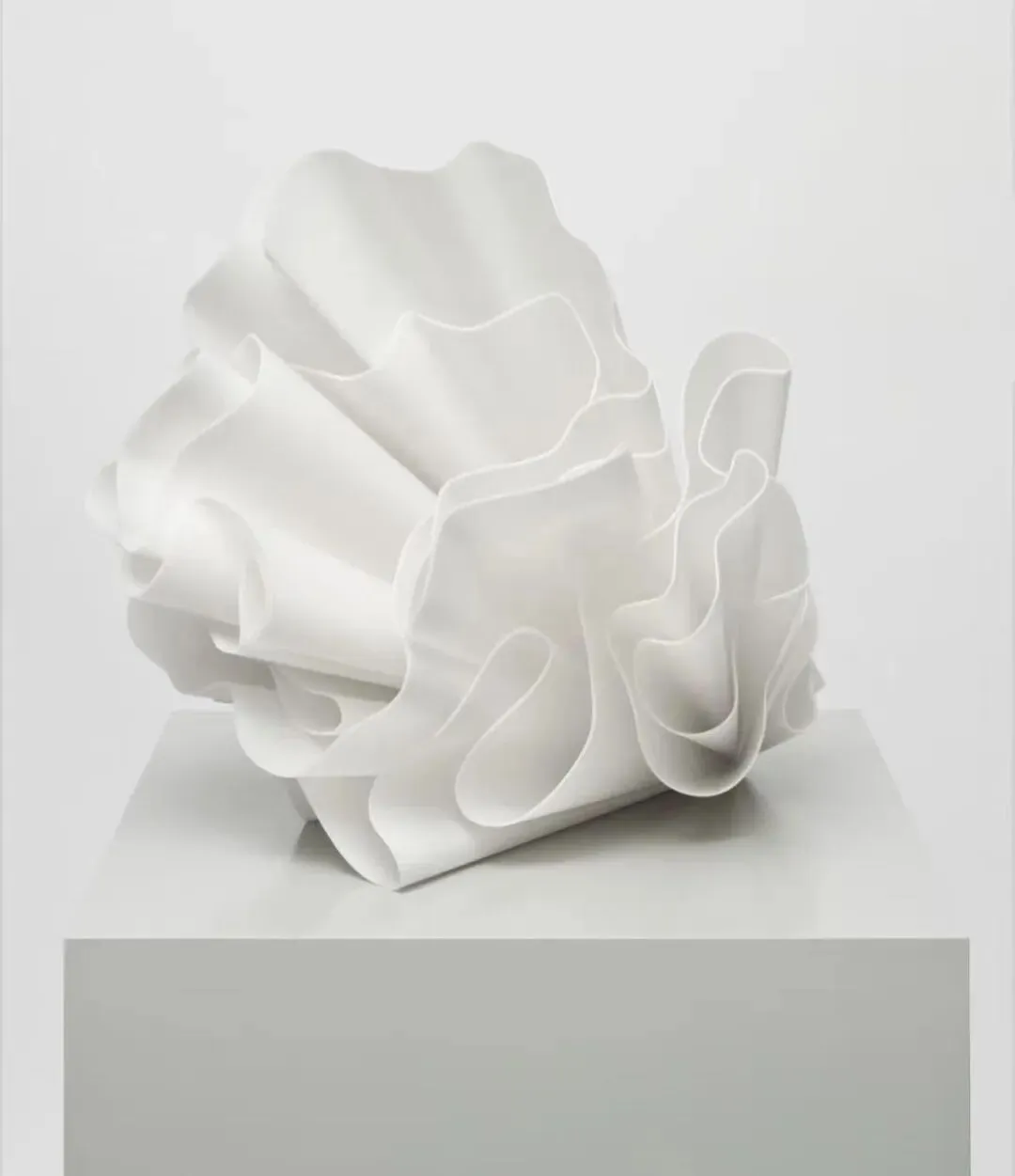
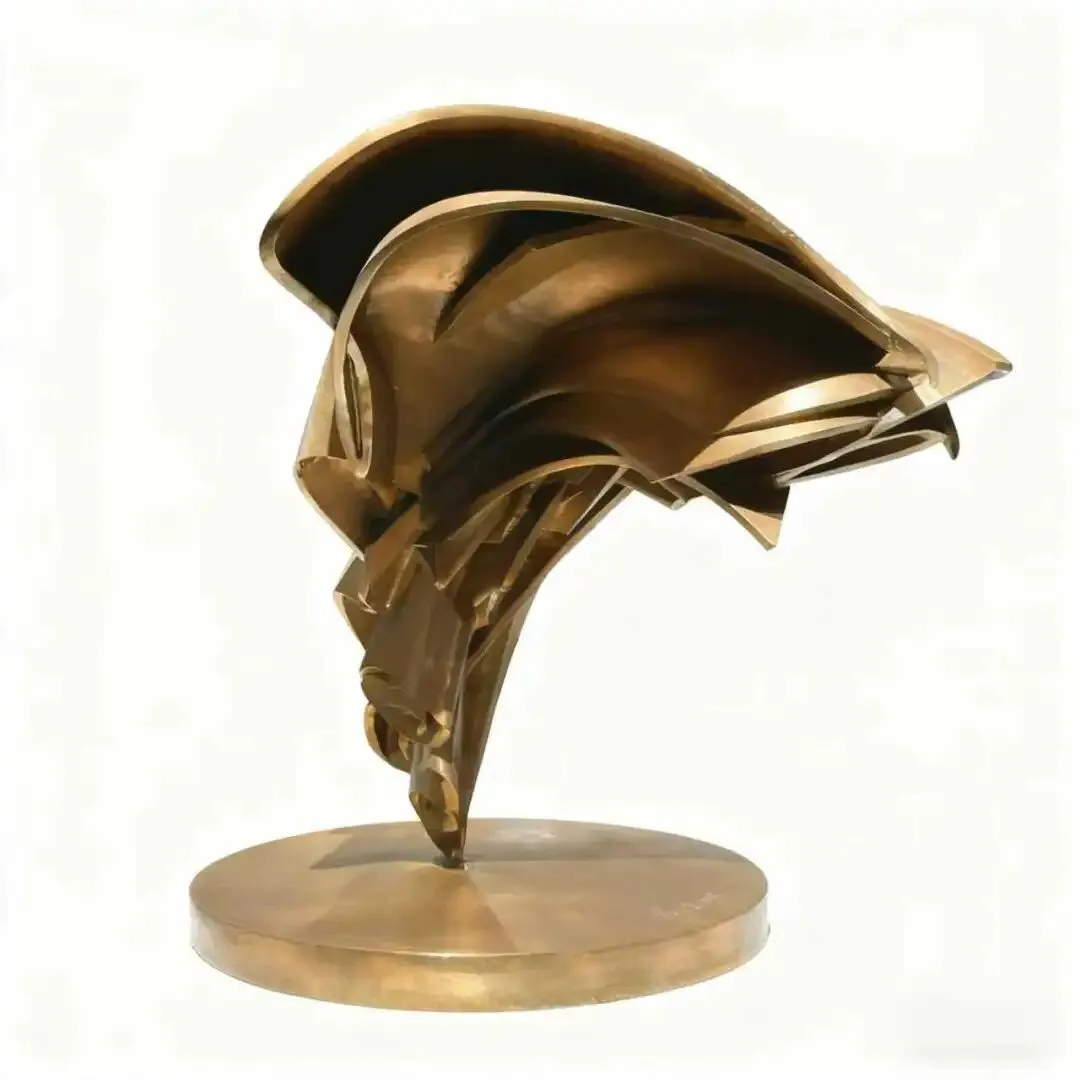
展览《尘熹》中的七位艺术家,都采用一种高度理性的、关注物质与过程的方法,致力于将无形的能量、记忆、物理规律或认知过程,转化为一种融合了多种感官体验的、具有物质实体的艺术形式。爱丽丝·艾科克(Alice Aycock)的艺术实践关注能量、运动与结构在空间中的转化。她常将风、涡旋等自然力或机械运动的无形轨迹,通过大型雕塑具象化为具有动态张力的形态,使不可见的物理过程获得物质实体。其作品常介于建筑与雕塑之间,通过迷宫、塔楼等可进入或引发身体联想的空间结构,强调观众的物理体验与心理参与,而非单纯视觉观看。Aycock广泛涉猎科学史、控制论与哲学理论,并将其概念转化为视觉语言。她将工业材料与建筑元素视为承载历史记忆与科学隐喻的媒介,使作品成为思想过程的物化呈现。在其创作中,能量流动的抽象意象、建筑结构的体验性以及科学观念的转译相互交织,形成一种理性结构与感知体验并重的艺术表达。爱丽丝·艾科克,跳华尔兹舞的玛蒂尔达,2012年,涂漆聚酯树脂,63.5x61x74cm
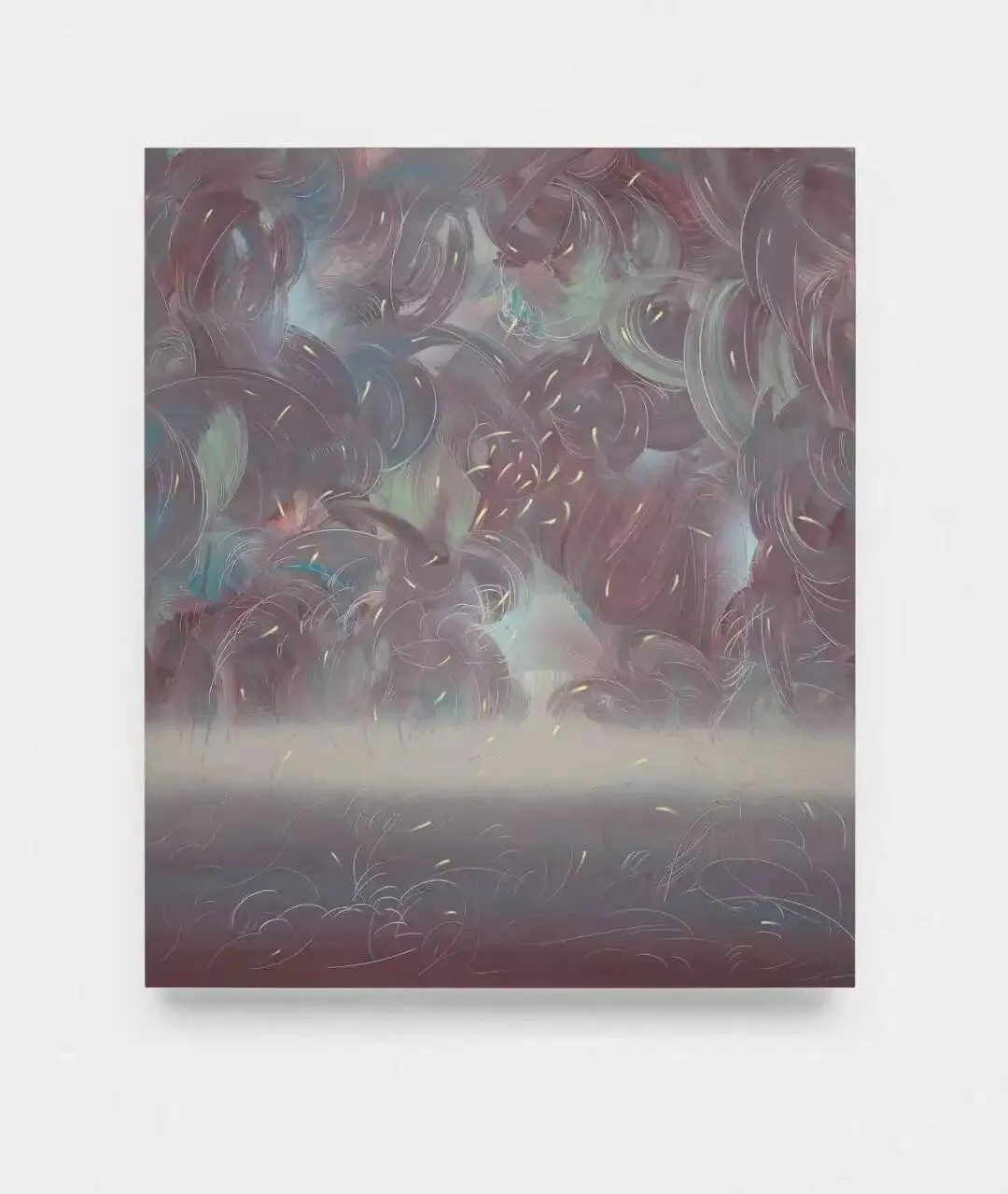
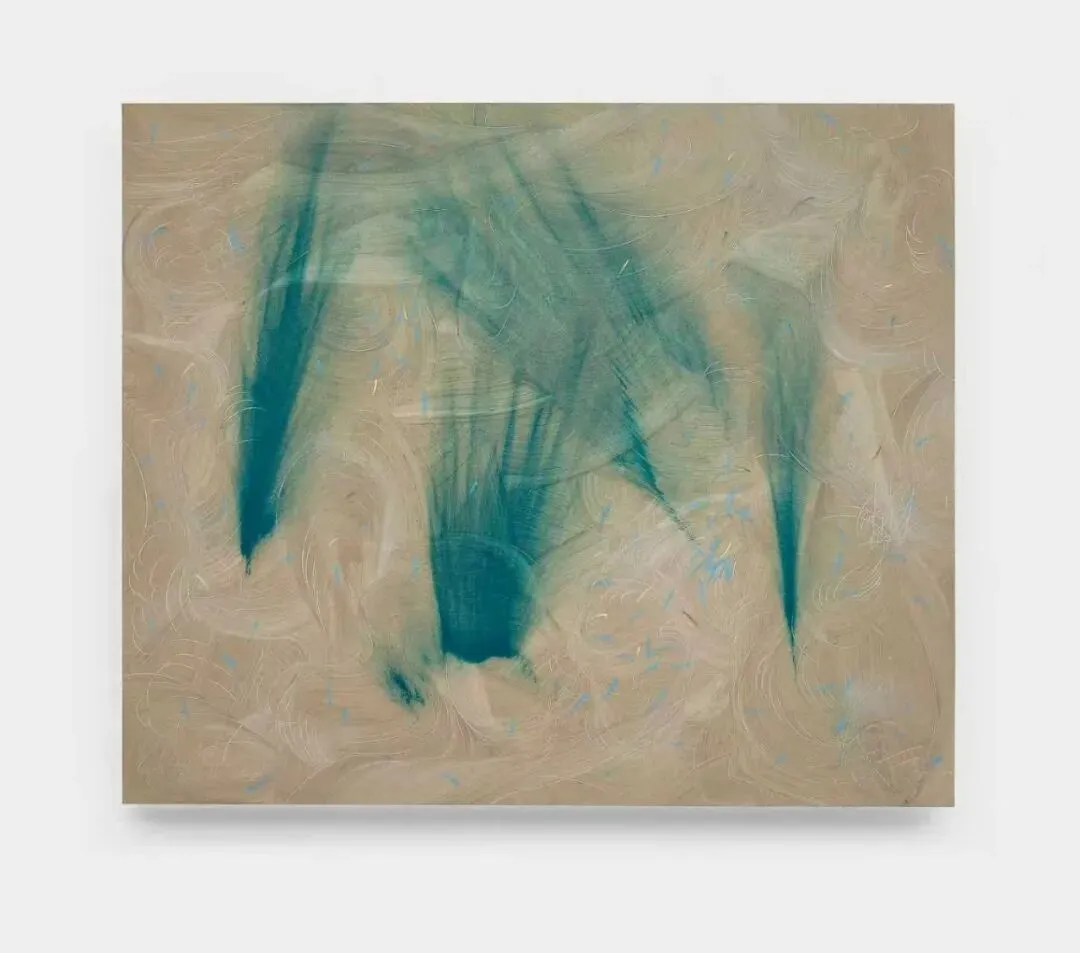
曹太平的绘画将农村生活与劳作场景中常见的非具象元素——如飘散的炊烟、流动的气流、翻耕时扬起的尘土轨迹——抽离为画面意象的基础。这些源自农耕经验的视觉片段,本身携带土地的温度。然而在形式经营上,艺术家并未停留在田园牧歌气质的再现,而是通过多层面的形式手法的重叠植入,将感性记忆纳入高度自律的抽象绘画性中。画面中似乎有种对农耕经验特有的诗意与温度的追忆执念,又融入了更加冷感的技术材料所带来的质感。乡村记忆的空气在早已高度城市经验化、画室经验化的现实中飘荡,构成既熟悉又疏离的视觉场域。这种创作方式对应着艺术家对自身精神认同的复杂心境。而在曹太平的其他创作中,异质层面的复合叠加性往往表现得更为突出。曹太平,播种 2,布面丙烯、油彩,130x110 cm,2024
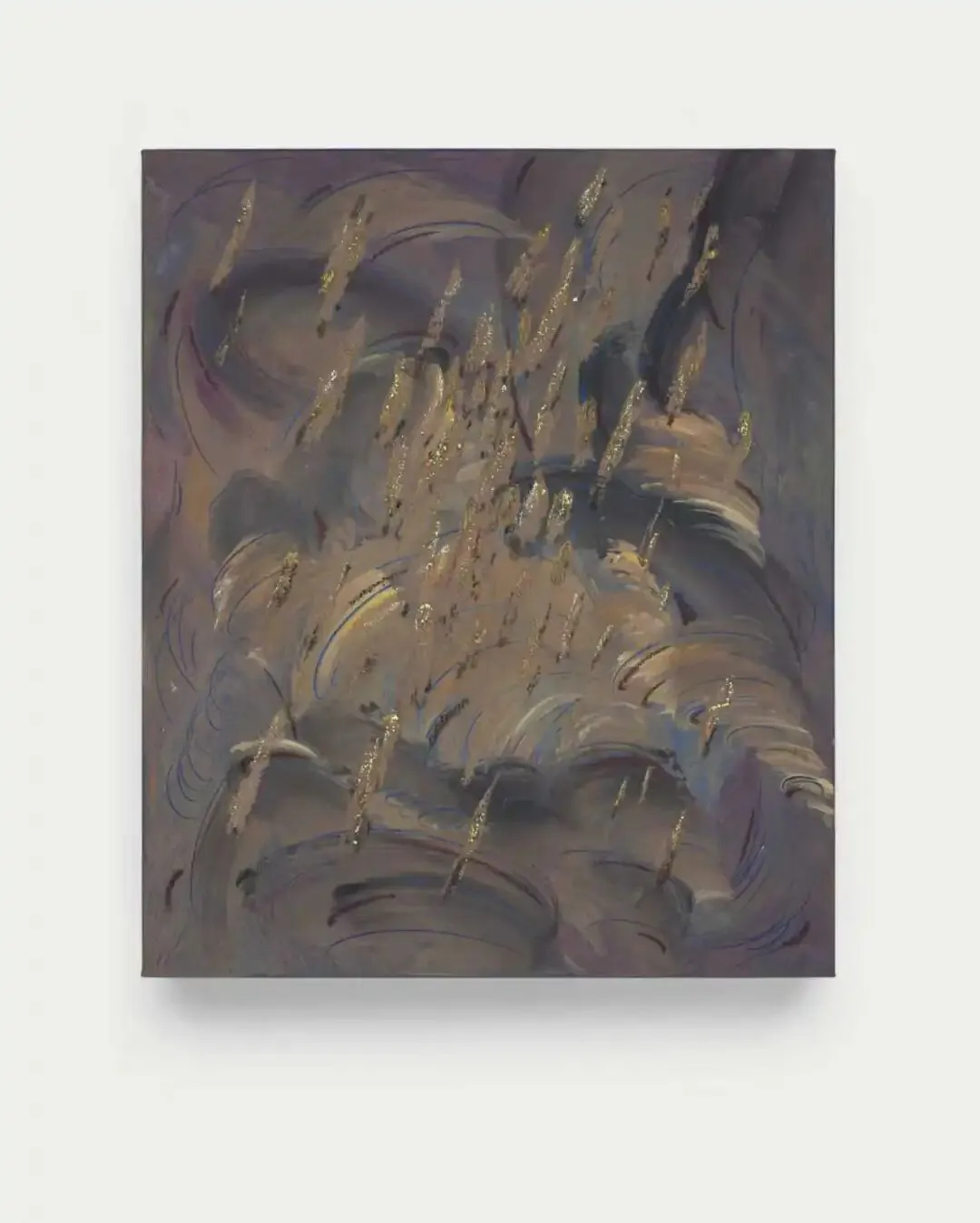
曹太平,语言风暴 H-4,布面丙烯、油彩、泥土,60 x50 cm,2024
曹太平,语言风暴 S-1 ,布面丙烯、矿物色粉、油彩、泥土,110x130cm,2024
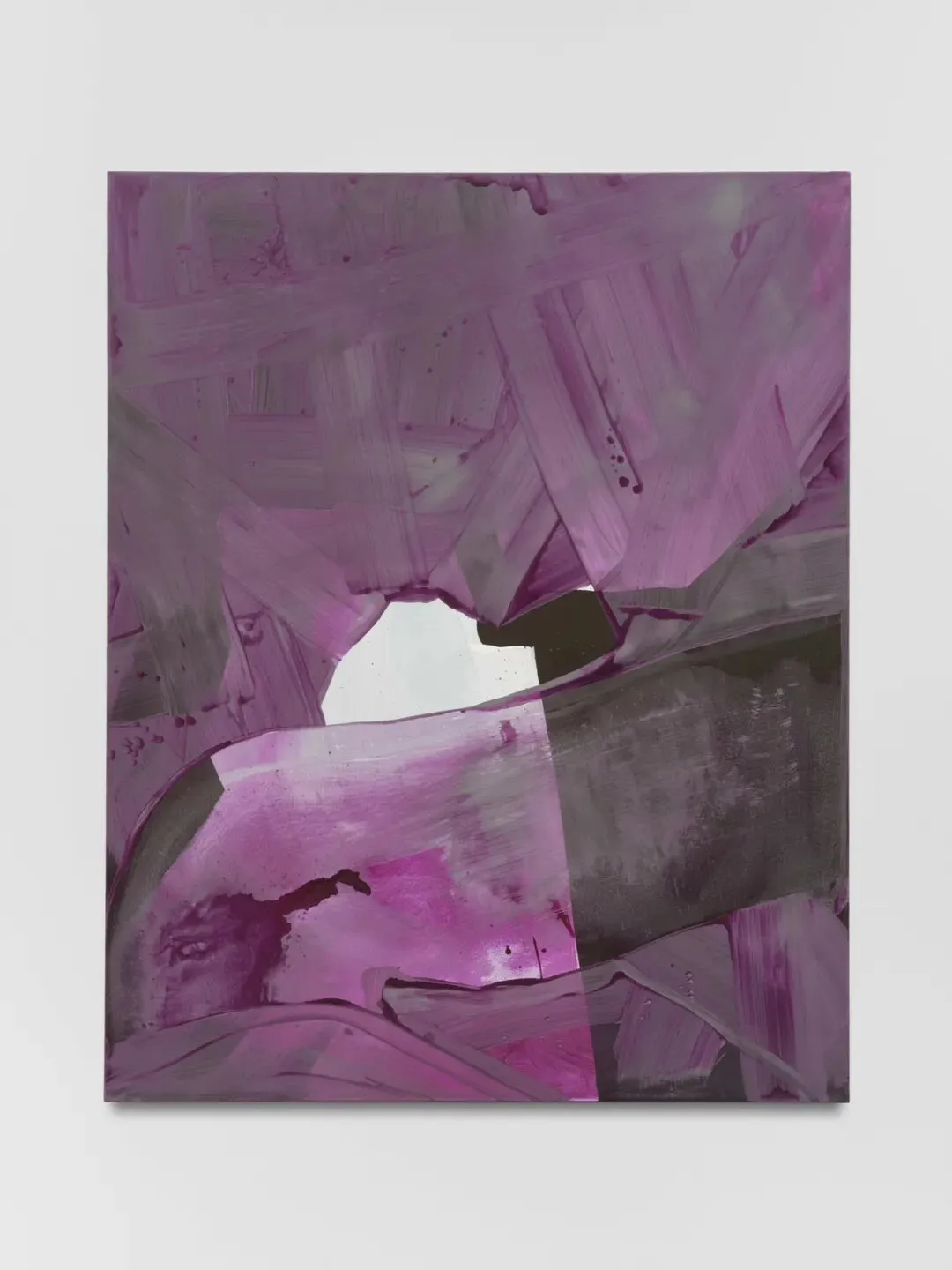
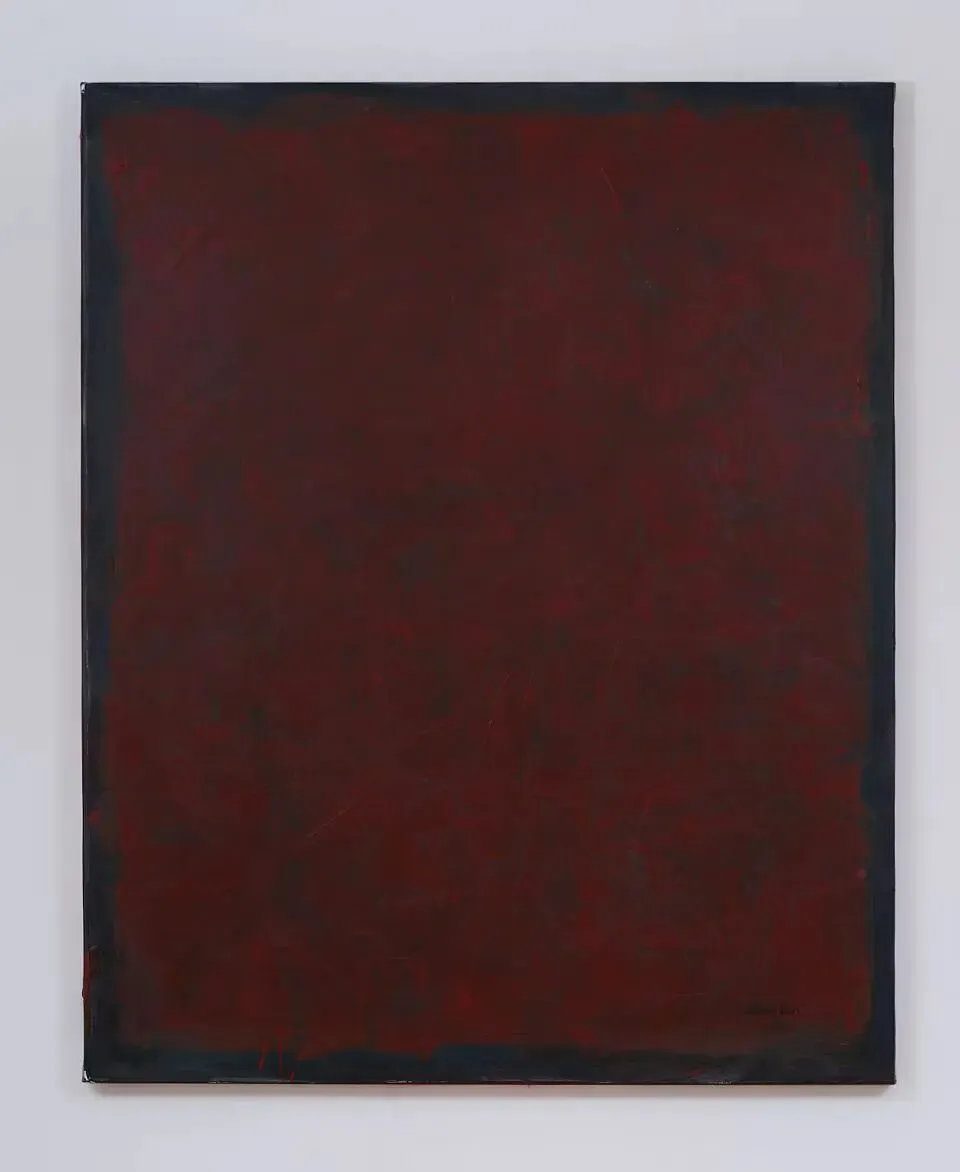
Daniel Lergo的绘画实践以对色料物质性的开展为核心,持续使用单一颜料进行创作,通过控制其在不同底色上的密度与层次,激发色彩从深褐到火红、或从亮绿到墨黑的内在色谱广度。他将颜料视为具有物理属性的物质材料,而非视觉符号,从而在极简的用色中展现丰富的质感变化。其作品常以天文学、物理学概念为结构基础,绘画形式中或许掺入了自然现象的摹写转化,处在纯形式与摹仿的间性中。例如,在《红移》中以画幅尺寸的递增模拟宇宙膨胀,或在金属系列中通过氧化反应呈现元素的化学潜能,绘画似乎成为不可见物理过程的视觉化载体。他强调基底作为“光学界面”的作用,荧光底色通过与表层颜料的互补、透射等效应,主动参与色彩建构。此外,作品的展陈,经常会有剧场化的空间装置特性。Daniel Lergon,无题,布面逆向反射颜料与油彩,200 x160 cm,2025
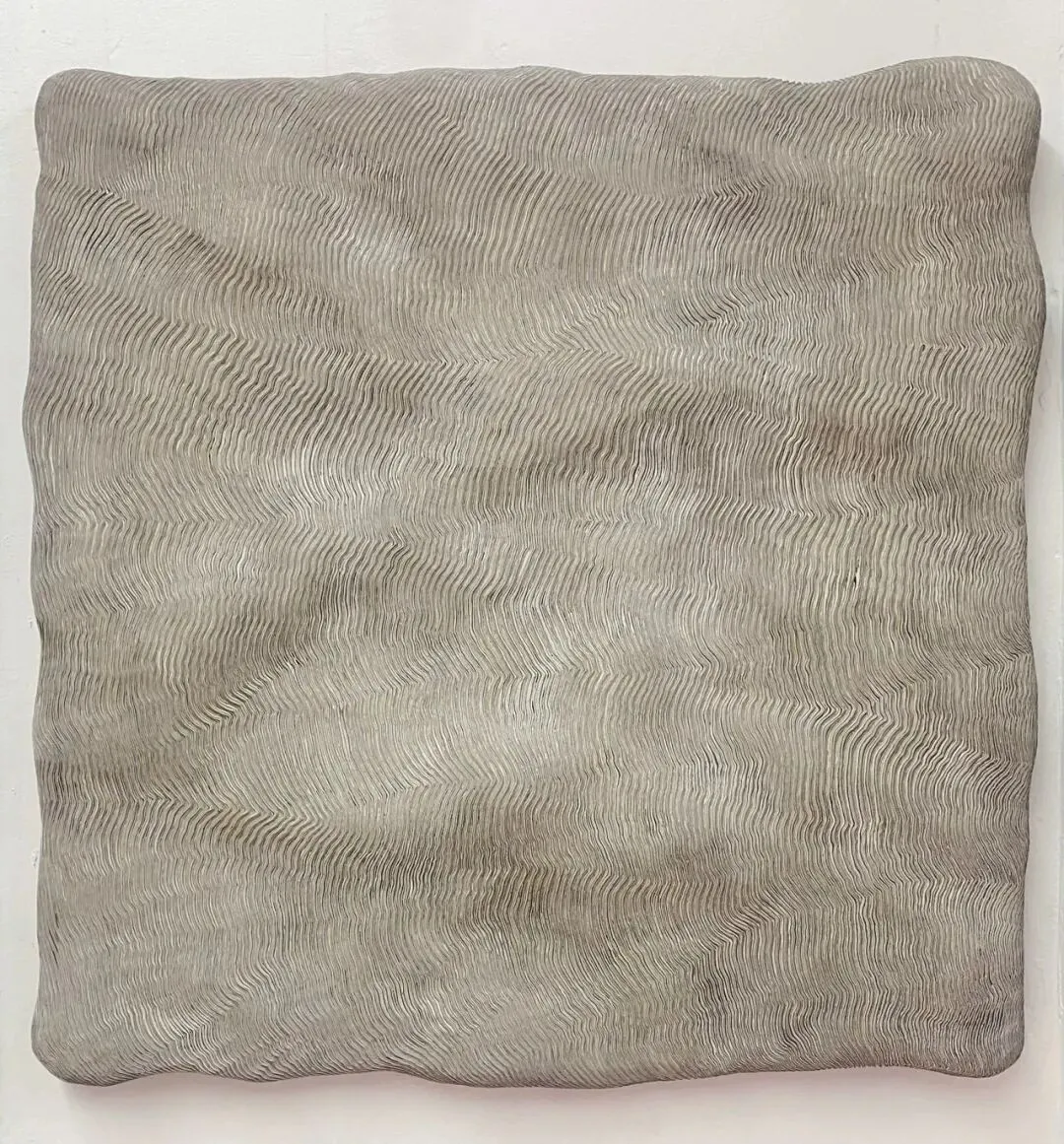
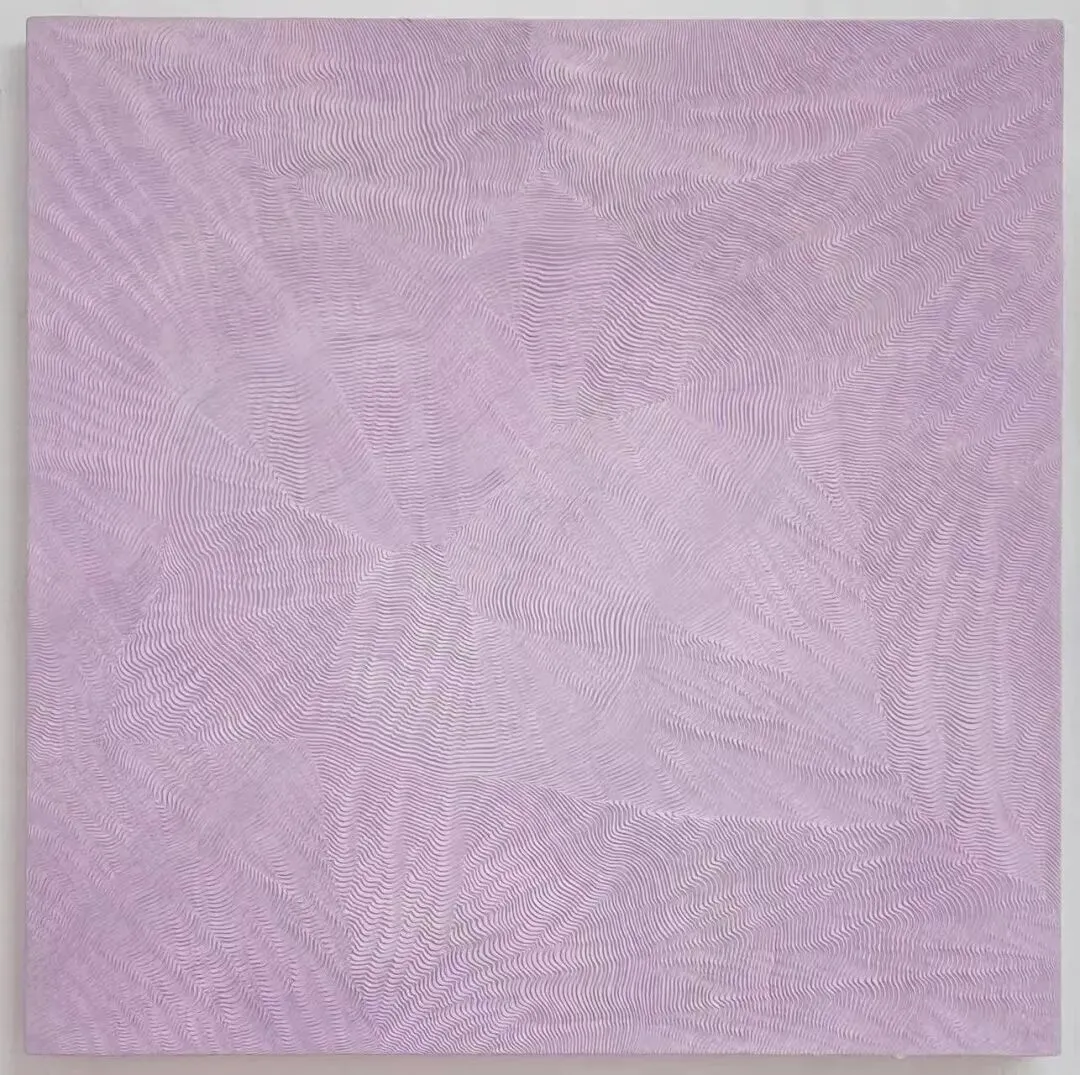
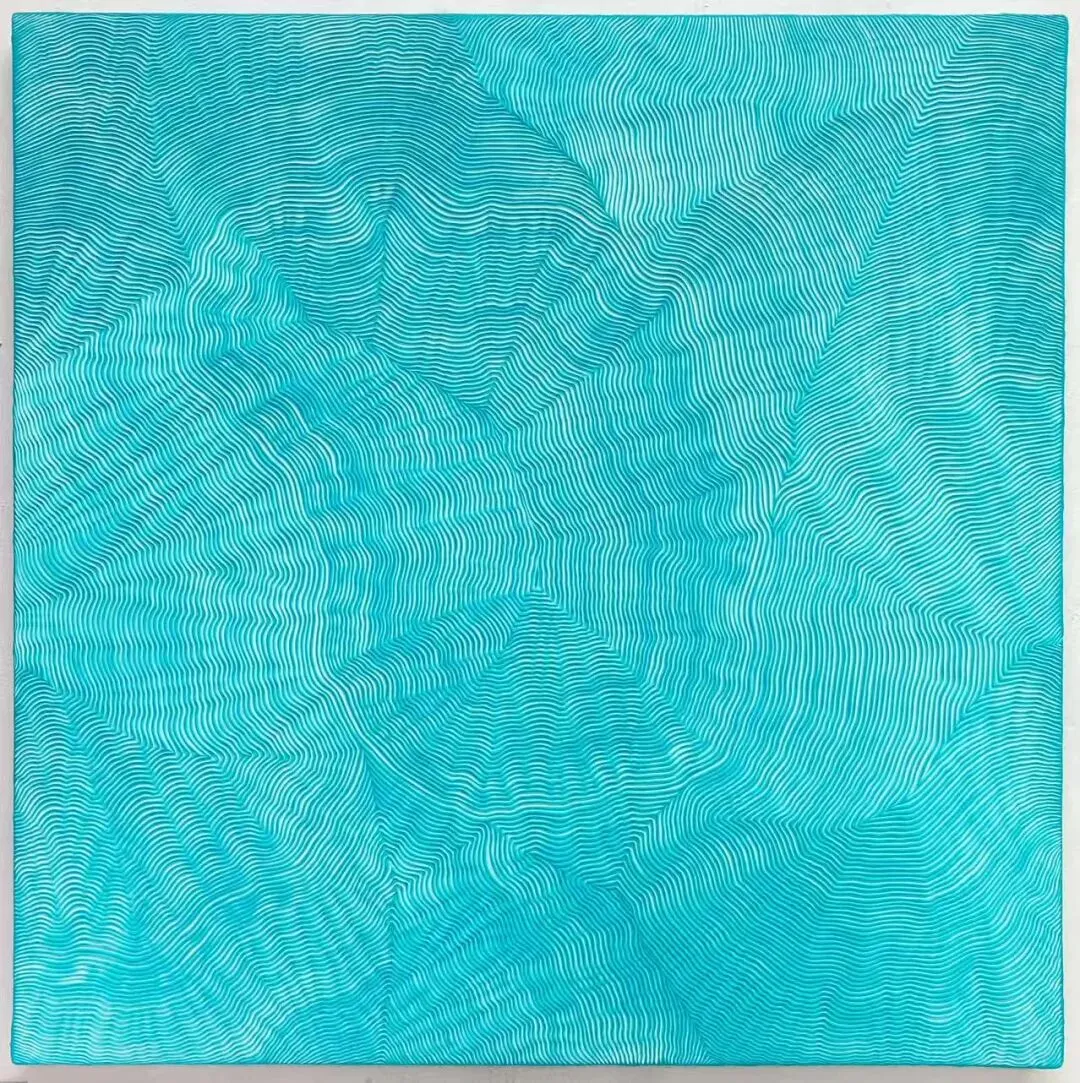
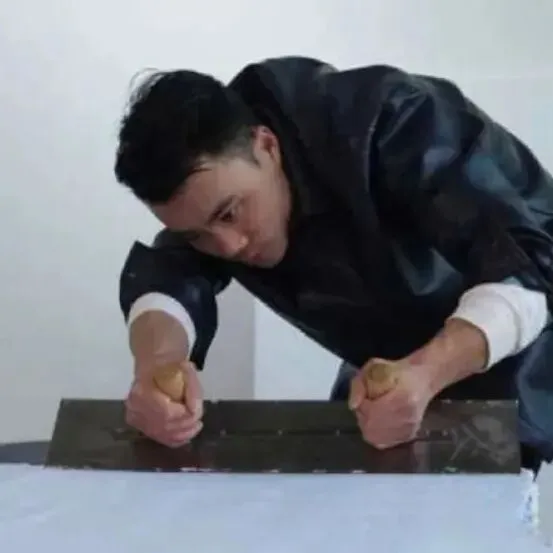
李军政的创作处于抽象绘画的形式谱系中。抽象画长期以构成性为主导,极简主义对物质性的探讨为触感式视觉的出现提供了条件。他的作品结合了单色画或色域绘画的视觉场域与线性浮雕的实体触感,方法是通过反复堆积丙烯颜料并进行刀刻,在单一色域内部形成平面装饰性语言脉络下的三维线刻结构。这些由切割产生的“线”是物质层面的痕迹,而非绘制的图形,从而使绘画的视觉性与雕塑的触觉性得以交织。尽管作品在视觉上呈现出较高的工作量密度——包括层层笔触与密集的剖面线条,但其结构因具备重复性特征,而可以被理解为一种似繁实简的表达方式。李军政,浮光20251106,106x107cm,木板丙烯,2025
李军政,浮光20251028,120x120cm,木板丙烯,2025
李军政,浮光20251202,120x120cm,木板丙烯,2025
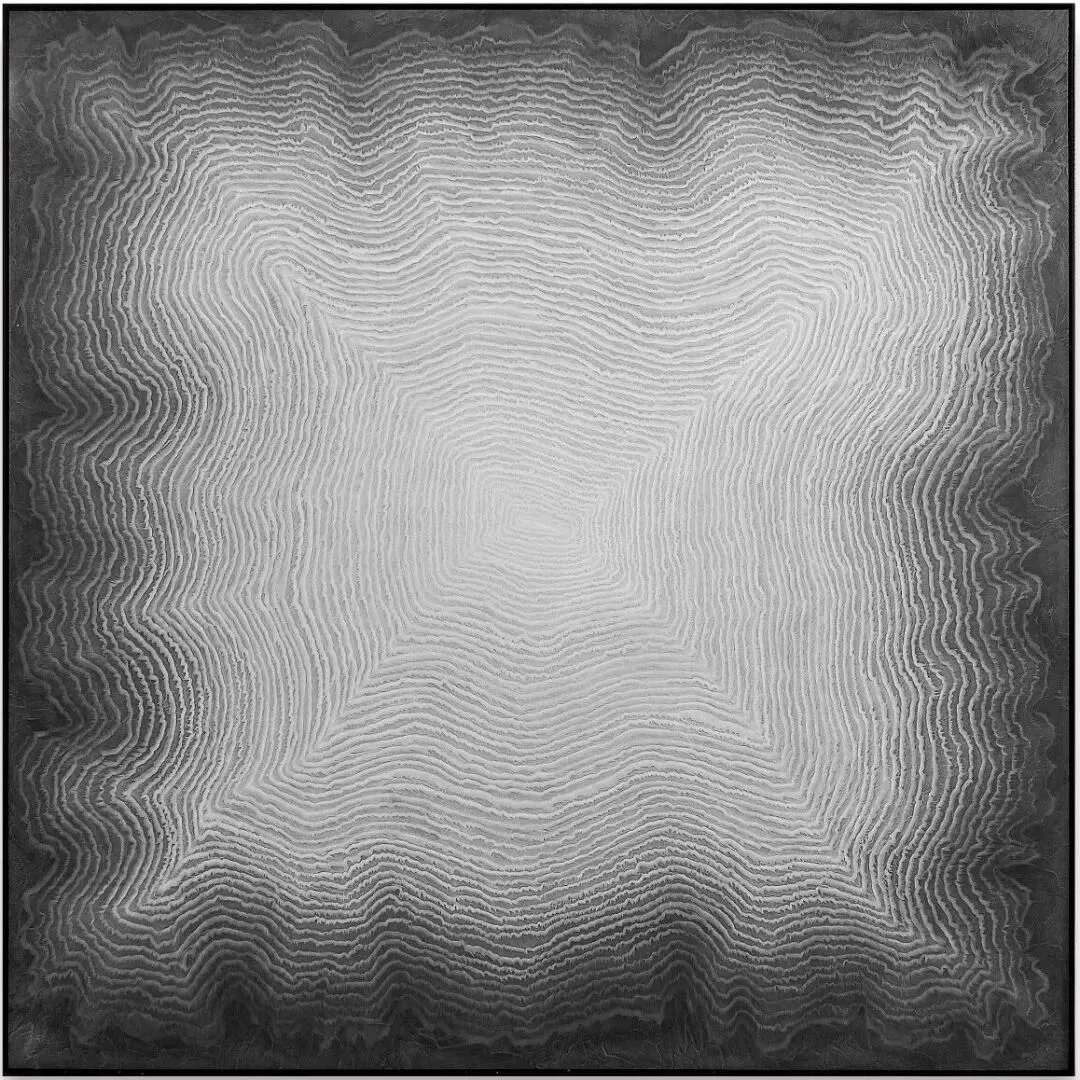
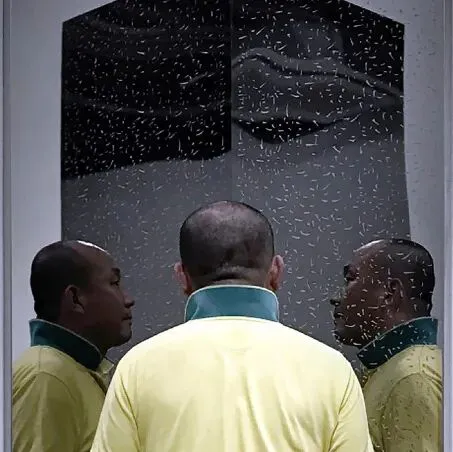
武一的作品通过材料的物质特性,将线性描绘自然地转化为具有渐变层次的氤氲氛围。其形式语言的转变始于一次身体上的偶然——一段时间内视力出现状况,这促使他将绘画媒介改为易渗水晕染的生宣。借此,他突破了以往精心手绘的线条与几何环状结构,利用水墨在宣纸上自然晕散所形成的“屋漏痕”,营造出一种可控的随机性与细微的依附性结构。最终,画面在整体视觉上跨越了纯粹的平面秩序,呈现出一种隐约包含内/外心理空间隐喻的层次感。武一,时光肖像20230315,纸本⽔墨,120 x 120 cm,2023
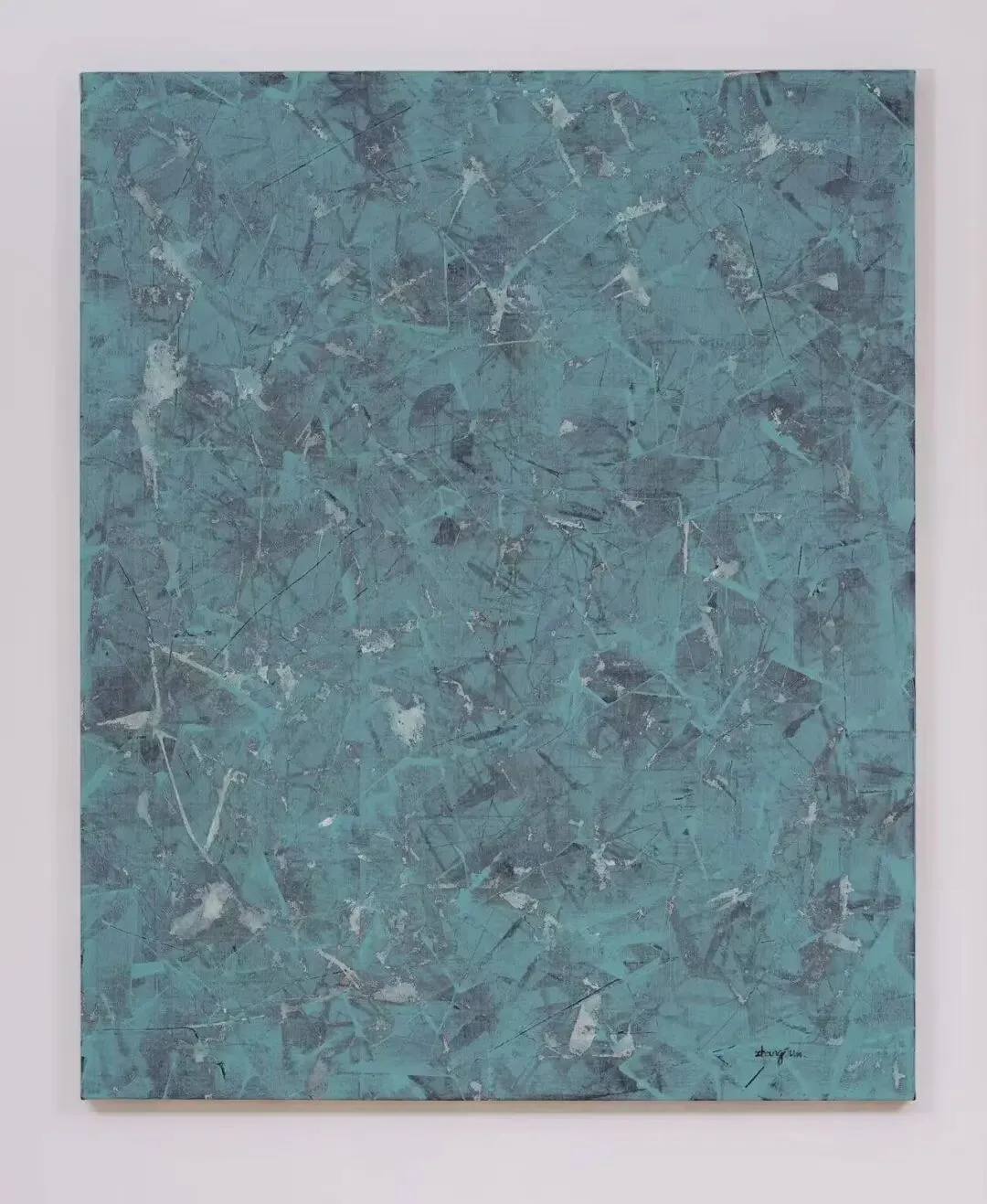
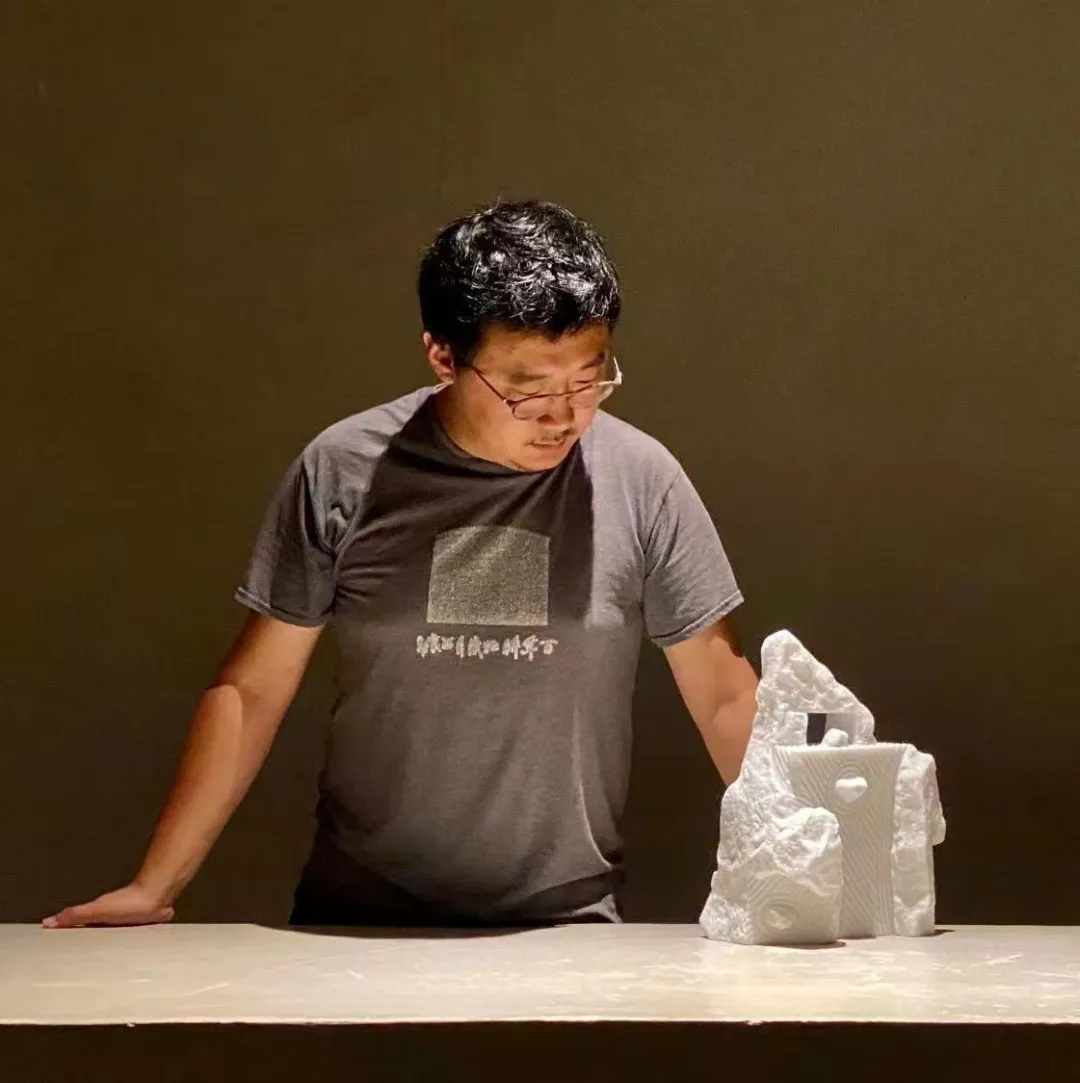
徐升的雕塑创作呈现出从自然意象向数字抽象的演变轨迹。其早期作品如《千层浪》以泡沫材质捕捉海浪的瞬间动态,仍带有具象的自然隐喻。而在《双重进入》系列中,他通过VR技术在虚拟空间中直接构建形态,使创作逻辑从手工塑形转向数字生成。这一技术介入使“浪”的意象被解构为意识流动的抽象结构,最终以青铜铸造呈现为几何化、断层化的冷感形态。作品因此从对外部自然的模仿,转向对内在认知过程的可视化探索,体现了创作媒介与形式语言的深度转化。徐升,《双重进入》,铸铜,58x32x60cm张骏的绘画作品在技法层面采用了色域绘画的平面化色彩基础,同时通过硬质刮板在画布上制造出具有触觉感的肌理痕迹。这些刮痕在本来已经提纯的画面上形成深浅不一的线性结构,这种技法促使色彩感知的适度地再丰富化:痕迹不仅打破了色域的平整性,色料的厚薄,在简单颜料的色彩关系中制造了适度多样化的色感视错觉。其中有颠倒的美术史逻辑在里面。在张骏本人的表述里,肌理的排布被视为自然流动感在幻想中的拟象、也就是对“风”的气息的再现。张骏,风生系列-湖面有风,130 × 160cm,综合材料,2025
张骏,风生系列-波尔多左岸,130 × 160cm, 综合材料, 2025
The seven artists featured in AMBIGUITY share a highly rational, process-oriented approach centered on materiality. They strive to transform intangible energies, memories, physical laws, or cognitive processes into tangible artistic forms that engage multiple senses, merging conceptual rigor with sensory experience.Alice Aycock focuses on the transformation of energy, motion, and structure in space. Her large-scale sculptures materialize invisible forces—such as wind, vortices, or mechanical motion—into dynamic forms that give physical presence to abstract physical processes. Her works often blur the boundaries between architecture and sculpture, incorporating labyrinthine or tower-like structures that invite physical engagement and psychological participation, prioritizing embodied experience over mere visual observation. Aycock draws from the history of science, cybernetics, and philosophy, translating theoretical concepts into visual language. Industrial materials and architectural elements in her works serve as carriers of historical memory and scientific metaphor, rendering complex thought processes in tangible form.Cao Taiping’s paintings extract non-figurative elements from rural life and labor—such as drifting smoke, flowing air, or traces of upturned soil—and elevate them into foundational visual motifs. While these fragments of agrarian life carry an earthy warmth, the artist avoids nostalgic representation. Instead, he overlays multiple formal strategies to integrate sensory memory into a disciplined abstract language. The resulting visual field feels both familiar and alien, reflecting the artist’s complex relationship with cultural identity in an increasingly urbanized reality.Daniel Lergo centers his practice on the materiality of pigment. Working often with a single color, he explores its full chromatic range—from deep brown to fiery red or bright green to ink-black—by varying density and layering over different grounds. Lergo treats pigment as a physical substance rather than a symbolic vehicle, generating rich textural variation within a minimalist palette. His works frequently incorporate concepts from astronomy and physics, hovering between pure form and the evocation of natural phenomena. For example, his series Redshiftuses progressively larger canvases to mimic cosmic expansion, while metal works employ oxidation to reveal latent chemical potential. He treats the painting ground as an “optical interface,” where fluorescent underlayers actively shape color through complementary or transmissive effects. The presentation of his works often incorporates theatrical spatial installation qualities.Li Junzheng operates within the tradition of abstract painting, merging the visual fields of monochrome or Color Field painting with the tactile presence of linear relief. By repeatedly layering acrylic and incising it with blades, he creates three-dimensional engraved structures within a unified color plane. These incised “lines” are physical traces, not drawn illusions, intertwining the visuality of painting with the haptic quality of sculpture. Despite the labor-intensive surface—dense with brushstrokes and intricate cuts—the repetitive structure conveys a simplicity beneath apparent complexity.Wu Yi employs the inherent properties of materials to transform linear depiction into gradients of atmospheric ambiguity. A shift in his eyesight led him to replace controlled brushwork with raw xuan paper, which absorbs ink unevenly, yielding organic bleeds and “traces like leaking roof stains.” This method allowed him to harness controlled randomness, creating subtle dependent structures that suggest psychological interiors and exteriors.Xu Sheng’s sculpture traces an evolution from natural imagery to digital abstraction. Early works like Thousand-Layer Wavecapture the dynamics of ocean foam in foam material, retaining figurative natural metaphors. In his Dual Entryseries, he uses VR to construct forms directly in virtual space, shifting from manual shaping to digital generation. The motif of the “wave” is deconstructed into an abstract structure of conscious flow, cast in bronze as cool, fragmented geometries. This transition reflects a deeper transformation in creative media and formal language—from imitating nature to visualizing cognitive processes.Zhang Jun builds his paintings on the flat color grounds of Color Field painting, then introduces tactile textures by scraping hardened tools across the canvas. These scratches create linear structures of varying depth, breaking the uniformity of the color field and enriching color perception through subtle illusory effects. In the artist’s words, the arrangement of texture simulates the flow of natural forces—an imagined representation of the breath of the wind.This exhibition brings together artists who bridge material presence and intellectual inquiry, offering forms that are as much thought processes as they are sensory experiences.