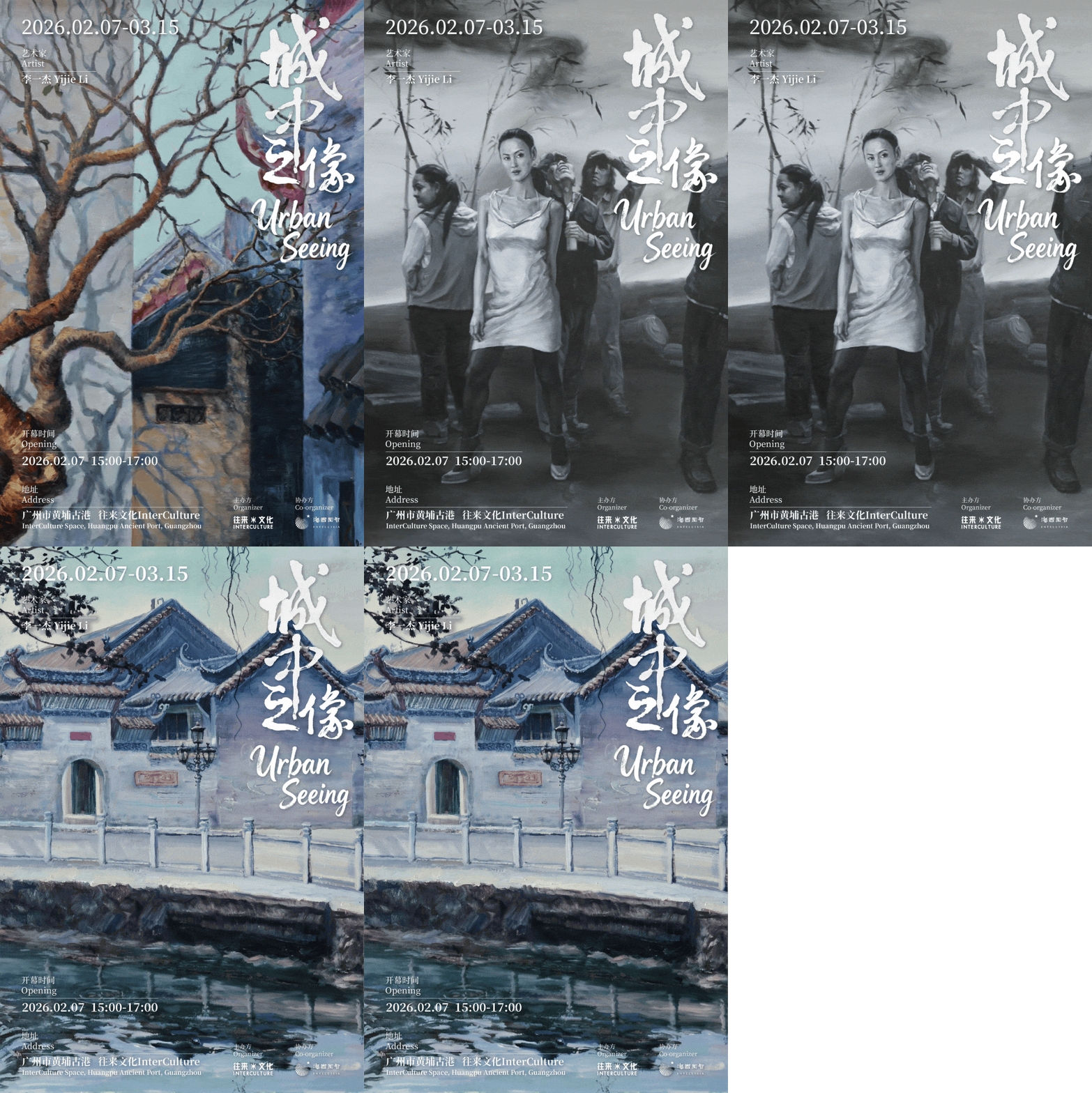
城中之像 Urban Seeing
展览时间|2026年2月07日-2026年3月15日
开幕时间|2026年2月07日 15:00-17:00
展览地点|广州市黄埔古港 往来文化
艺 术 家|李一杰
策 展 人 |龚迎春
主 办 方|往来文化InterCulture
Swipe to English version ▸
Exhibition Dates: February 7, 2026 - March 15, 2026
Opening: 15:00-17:00, February 7, 2026
Curator:Dr. Jasmine Gong
Artists:Yijie Li
Exhibition Venue: InterCulture, Huangpu Ancient Port, Guangzhou
Organizers: InterCulture
◂ 滑动查看中文版本
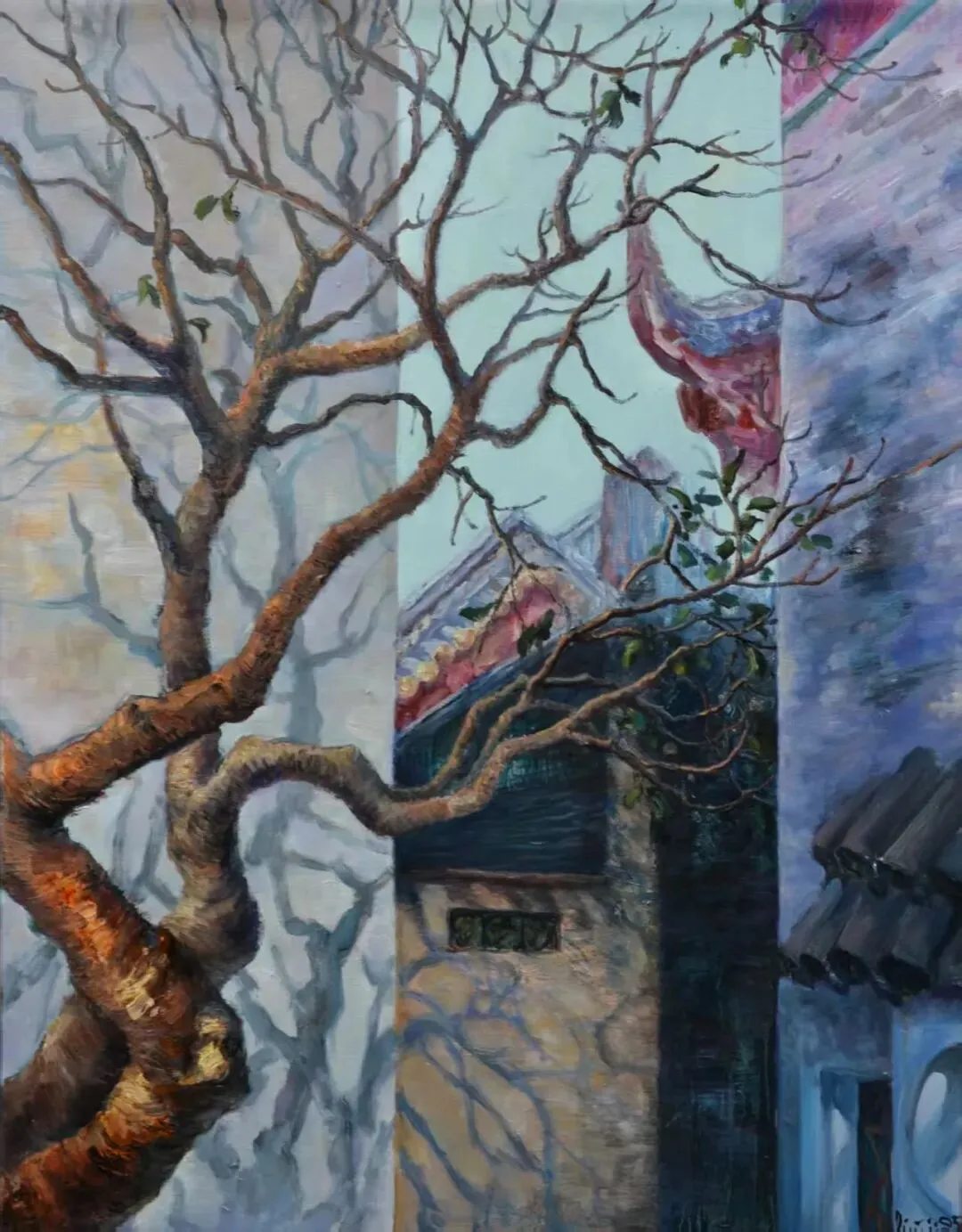
《沙湾古镇 Shawan Ancient Town》,90x70cm
油画 Oil on canvas,2025
城市不仅由建筑和街道构成,也由人在其中不断行走、停留与相遇的经验所塑造。对画家而言,绘画正是在城市经验之中逐渐展开的一种观看与思考方式。
A city is shaped not only by its buildings and streets, but also by the experiences of those who walk through it, live within it, and encounter one another. For the painter, painting emerges from these experiences as a way of seeing and thinking about the world.
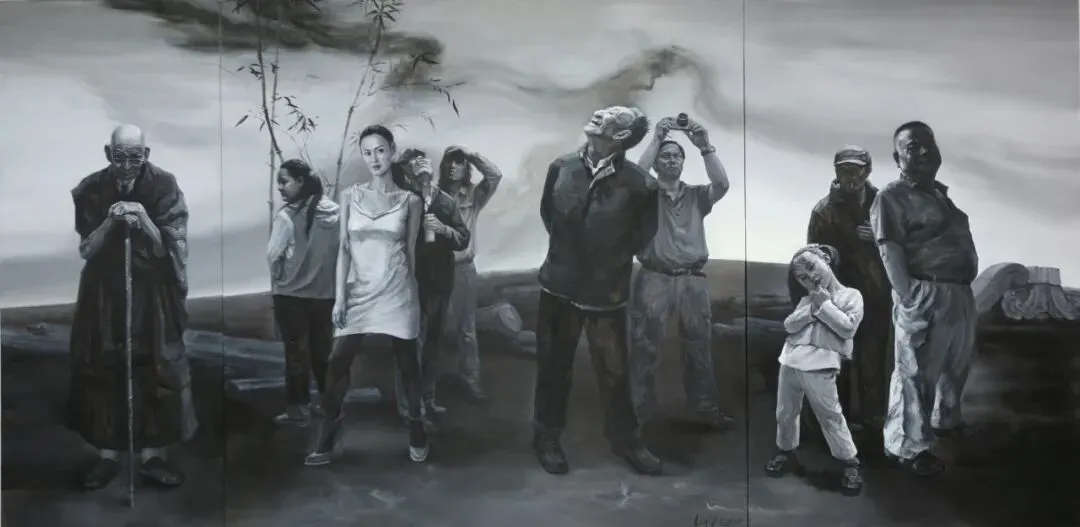
《浮云飘过 Floating Clouds Passing》,425x200cm
油画 Oil on canvas,2012
本次展览以画家李一杰的工作室为原型展开。正如在其真实的创作空间中,旧作与新作、完成的画面与仍在生成的思考并置存在,本次展览亦未按照时间或题材加以分割。不同时期、不同主题的作品被同时呈现,使绘画作为一种持续实践的状态得以显现——观看、思考与感受在时间中彼此叠合。
This exhibition takes Li Yijie’s studio as its conceptual point of departure. As in his actual studio, completed works and recent paintings, resolved images and ongoing reflections coexist in the same space. Rather than being organized strictly by chronology or subject matter, works from different periods are presented together, allowing painting to be understood as a continuous practice in which observation, thought, and lived experience overlap over time.
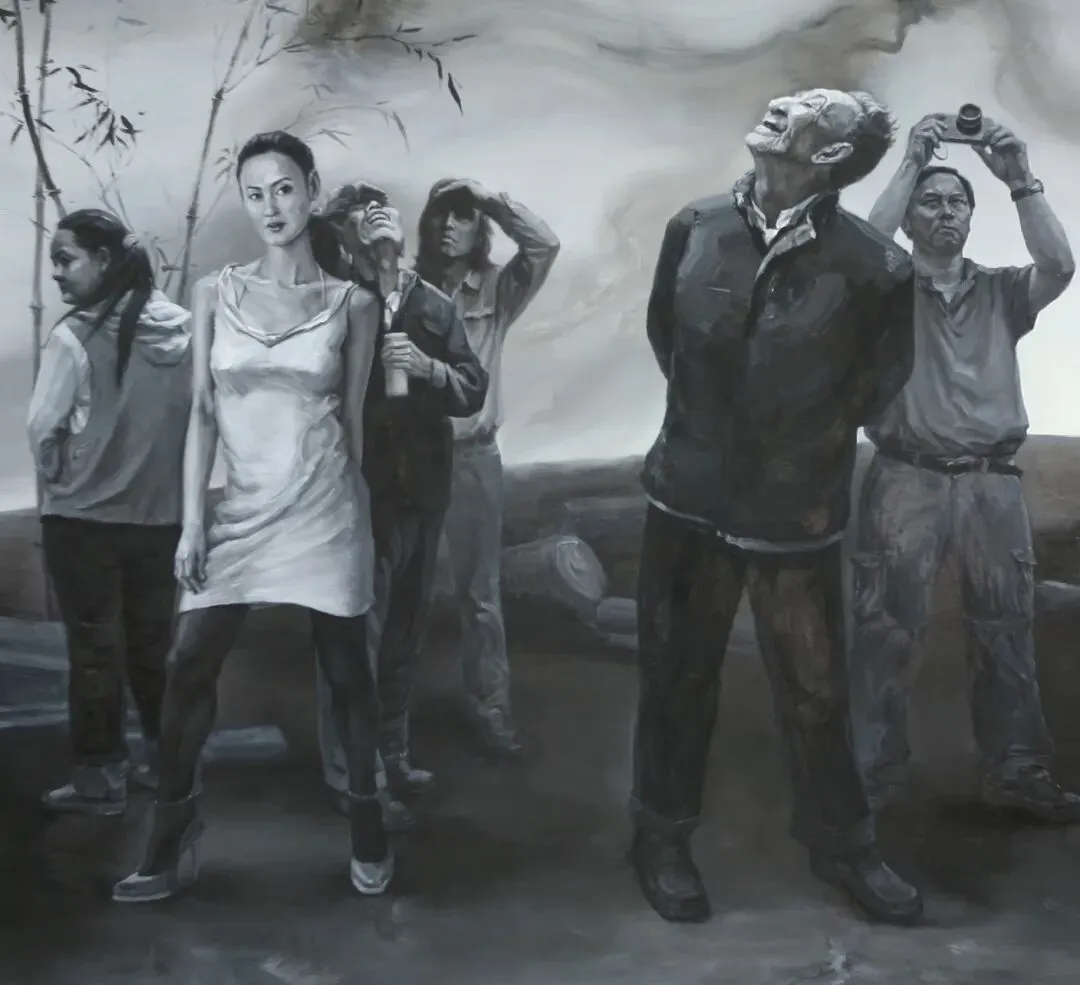
《浮云飘过》细节图
Detailed of Floating Clouds Passing By
《浮云飘过》是艺术家于2012年在广州美术学院油画系完成的毕业创作。这件大尺幅群像将多个个体置于同一场域:画中人物彼此接近,却难以形成稳定的关系,目光游移,姿态错开,若即若离,如浮云般在同一空间中短暂相遇,又迅速分散。城市在这里并未以具体地标出现,却以一种“关系结构”的方式显影——它制造同场,也制造疏离,使个体处于观看与被观看之间。这件作品既记录了艺术家从东北初到广州时的敏感与距离感,也奠定了其对城市的持续关注。
Floating Clouds Passing By (2012), created as Li Yijie’s graduation work at the Oil Painting Department of Guangzhou Academy of Fine Arts, brings multiple figures into a single field. Although physically close, the figures fail to form stable relationships; their gazes drift, their postures diverge, and their connections remain tentative—like clouds briefly crossing the same sky before dispersing. The city is not depicted through specific landmarks, yet it is present as a relational structure: one that creates simultaneity as well as distance, placing individuals in a constant oscillation between seeing and being seen. This work records the artist’s sensitivity and sense of distance upon first arriving in Guangzhou, and establishes his sustained attention to this city.
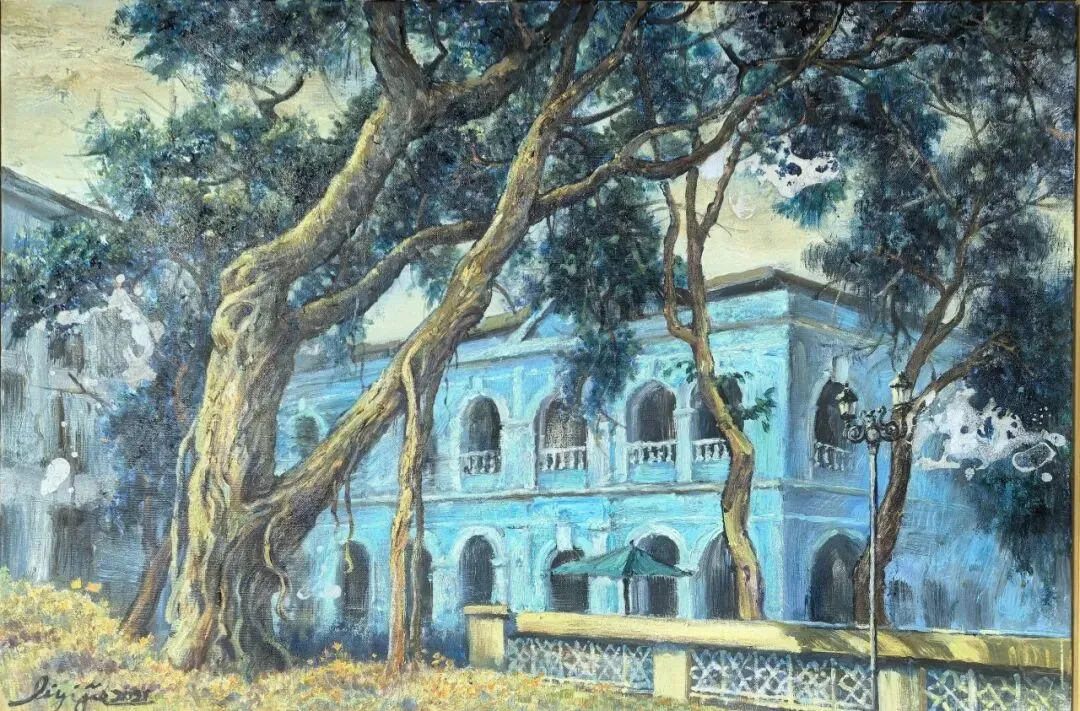
《阳光下的沙面之三》,90x60cm
油画 Oil Painting,2021
随着在广州的长期生活与行走,艺术家的绘画重心逐渐从人物转向城市本身。陈家祠、黄埔古港、沙面、红砖厂与海珠大桥等地点,呈现着广州不同时期的建筑形态、空间结构与历史人文。海珠大桥的钢构与铆钉显露出冷静而理性的秩序;沙面的街区与柱廊,使历史与日常在同一平面中叠合;黄埔古港的屋脊与宗祠,则如地方记忆般沉默而绵延。在持续的描绘中,城市逐渐显现为由历史、生活与结构层层叠合而成的现实。绘画在这一阶段,成为艺术家与城市建立关系、理解自身位置的一种方式。
小展厅里的佛像与马,则指向另一种观看方式。佛造像的静止,与云层中飞奔的马,共同构成一种暂时脱离地面结构的状态。它们并非宗教或象征性的图像,而是艺术家在长期面对城市的人群、建筑、关联与秩序之后,对内在节奏与精神空间的自然反省。观看在这里不再向外延伸,而是向内回返;绘画不再承载地点与结构,而成为安放目光与心绪的方式。
With years of living and moving through Guangzhou, Li Yijie’s focus gradually shifted from figures to the city itself. Paintings of locations such as Chen Clan Ancestral Hall, Huangpu Ancient Port, Shamian, Redtory, and Haizhu Bridge present architectural forms and spatial structures from different historical periods of the city. The steel framework and rivets of Haizhu Bridge articulate a cool, rational order; the streets and colonnades of Shamian allow history and everyday life to overlap within the same plane; the rooflines and details of Huangpu Ancient Port resonate like layers of local memory—quiet yet enduring. Through sustained observation and depiction, the city is no longer treated as a mere object of representation, but emerges as a complex system composed of history, daily life, and structure. Painting becomes a means through which the artist establishes a relationship with the city and locates himself within it.
The smaller gallery introduces another direction of looking. The stillness of the Buddha figures and the galloping horses running through clouds suggest a state temporarily freed from the gravity of urban structures. These images are neither religious illustrations nor symbolic signs, but rather natural responses to an inward rhythm and spiritual space that emerge after prolonged engagement with the crowds, architectures, relations, and orders of the city. Here, looking no longer extends outward, but turns inward; painting ceases to carry sites and structures, and instead becomes a place where gaze and emotion may come to rest.
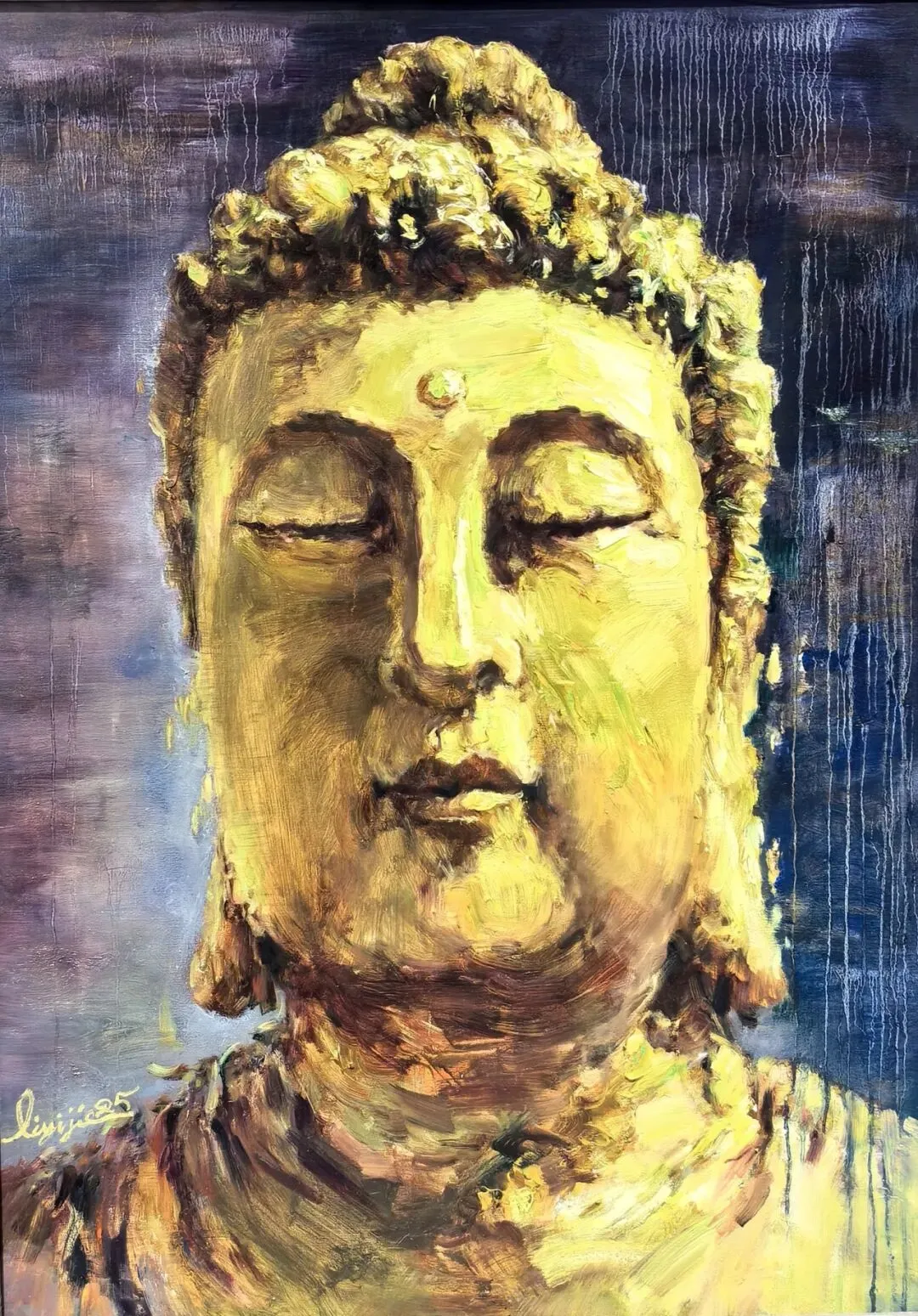
《佛光普照》,130x95
油画 Oil Painting,2025
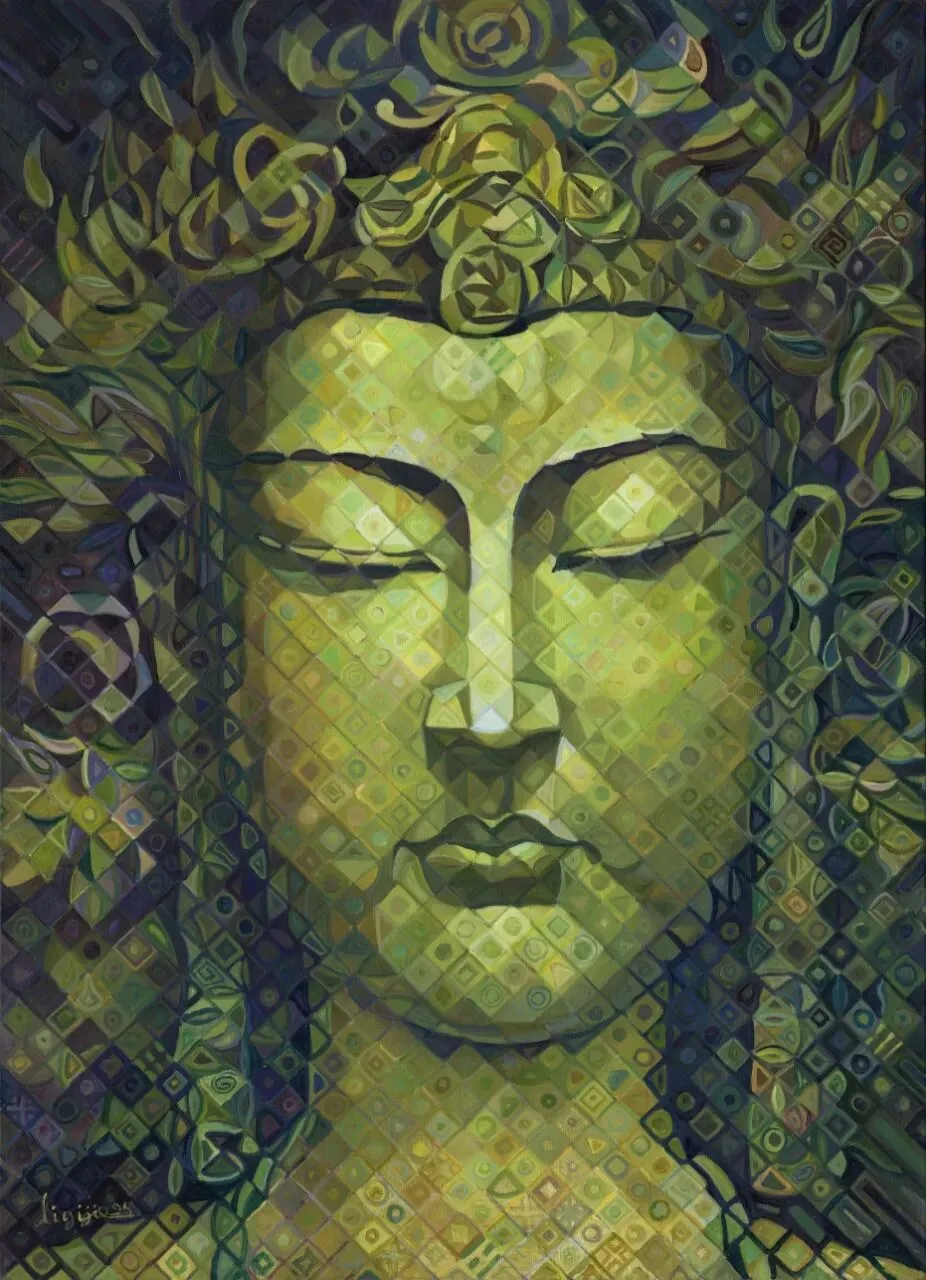
《像素观音菩萨》,130x95cm
油画 Oil Painting,2025
四幅佛造像油画为展览引入精神性的维度。其中一幅以颜料的堆叠建立形象,使重量与光泽直接来自材料本身,仿佛让时间以物质形式停留在画面之中;另外两幅则采用近乎当代工笔的方式,由一个一个精心绘制的马赛克小格构成图像。小格的重复既是技术,也是方法上的自我约束——它迫使绘画减速,使凝视从指向对象,逐渐转化为一种状态。在这里,神圣感不再依赖题材本身,而从秩序、耐心与专注中生成。这些作品并未脱离“城中之像”的命题,而是将其推向另一层面:当城市的外在秩序被反复观看与理解之后,绘画开始建立一种内在的秩序,使观看本身成为图像。
两个展厅如同李一杰工作室的两个侧面:一边是城市中的行走、相遇与经验积累,一边是暂时离开城市重力后的停顿与整理。它们共同构成《城中之像》——并非一座城市的再现,而是一个画家在城市之中,持续观看、思考与生活所留下的痕迹。
Four Buddha paintings introduce a spiritual dimension to the exhibition. One work constructs its image through thick layers of pigment, allowing weight and luminosity to arise directly from the material itself, as if time were preserved in physical form on the canvas. Two others adopt a near–contemporary “gongbi” approach, composed of meticulously painted mosaic-like grids. The repetition of these small units is both technique and discipline: it slows the act of painting, transforming the gaze from one directed at an object into a state of concentrated attention. Here, sacredness does not depend on subject matter, but gradually emerges from order, patience, and sustained focus. These works do not depart from the theme of Urban Seeing; rather, they extend it. After the external order of the city has been repeatedly observed and understood, painting begins to construct an inner order, allowing the act of seeing itself to become the image.
The two galleries rooms function like two sides of Li Yijie’s studio: one devoted to walking through the city, encountering others, and accumulating experience; the other to stepping away from urban gravity, pausing, and reordering inner rhythms. Together they form Urban Seeing—not a depiction of the city’s appearance, but traces left by an artist who continues to live, observe, and think within the city.
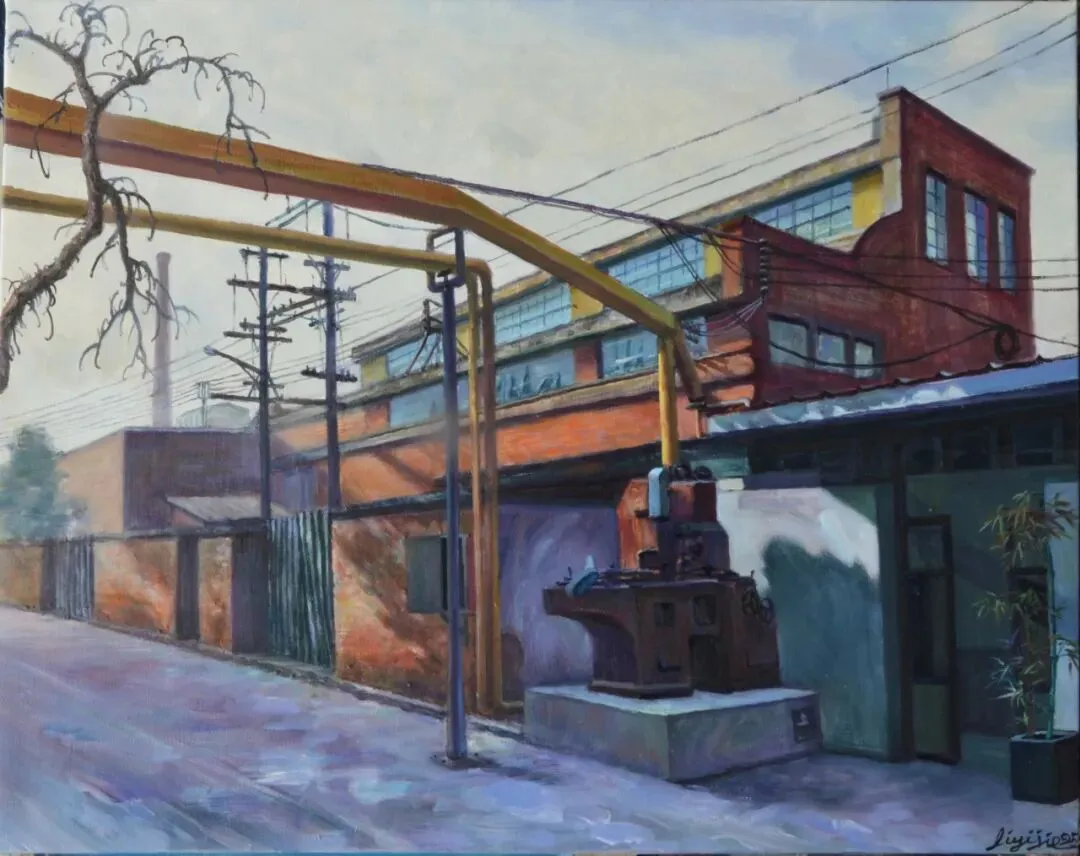
《消失的红砖厂 The Vanished Red-Brick Factory》
90x70cm, 油画 Oil on canvas,2025
本次展览的作品与其所在场域 - 黄埔古港这个千年古村,及往来文化空间所在的有着400年历史的岭南建筑 - 形成了一种自然的呼应关系。我们邀请你走进李老师的工作室,坐一坐,喝杯茶,看看画,与艺术家聊聊你眼中广州的“像”。愿你在观看时发现自己的城中之像,在城市之中找到自己的安心之所。
新年在即,祝大家马年平安喜乐,万事顺遂!
At Huangpu Ancient Port, a place shaped by exchange and movement, and within InterCulture Space—housed in a 400-year-old Lingnan ancestral hall—we invite you to step into Li Yijie’s studio, sit for a while, share a cup of tea, look at the paintings, and exchange thoughts with the artist about Urban Seeing as you experience it.
As the New Year approaches, we wish you peace, harmony, and well-being in the Year of the Horse.
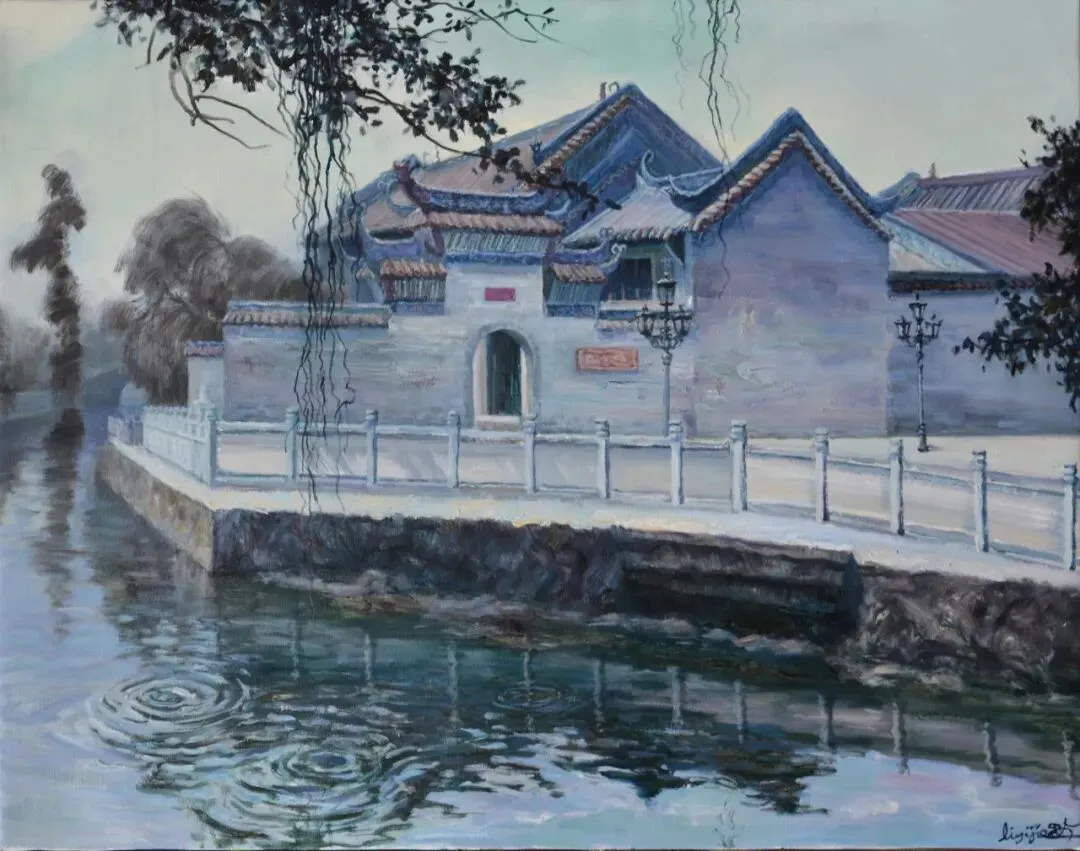
《黄埔古港 Huangpu Ancient Port》,90x70cm
油画 Oil on canvas,2025
艺术家
Artist
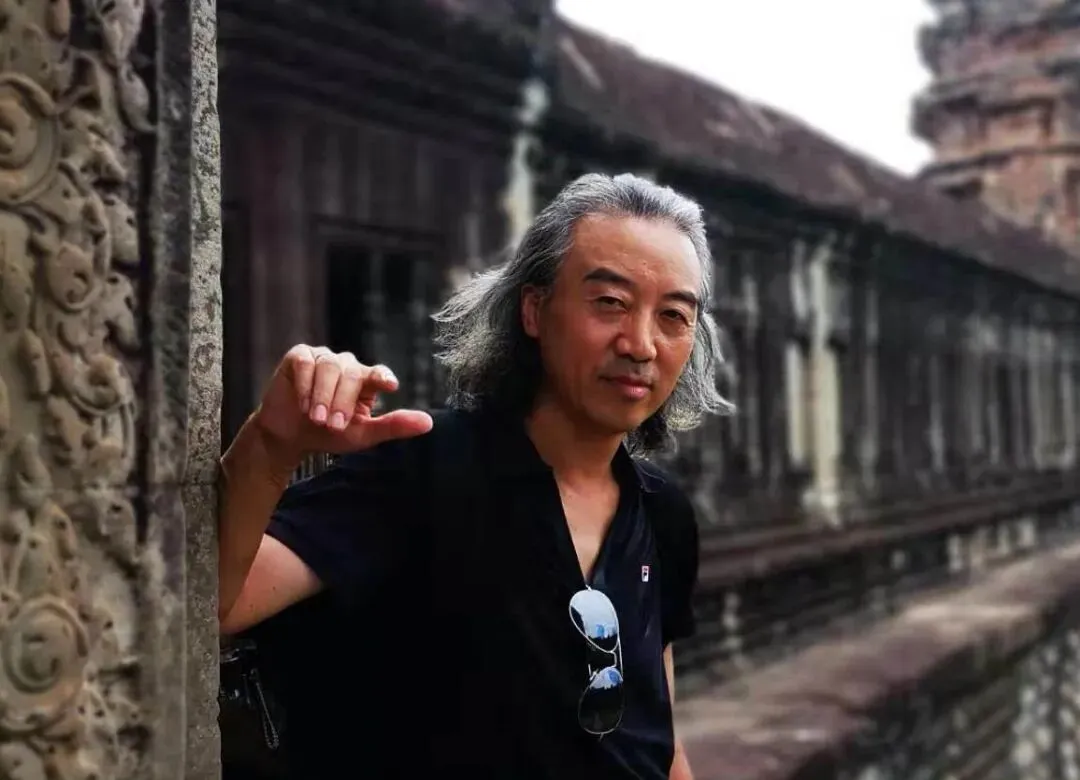
李一杰
Yijie Li
向上滑动阅览
李一杰,出生于吉林,民盟盟员,广东省美术家协会会员,广东省高校美术与设计教育专业委员会会员,广州市美术家协会会员,广东外语外贸大学南粤古驿道文化与艺术研究中心研究员。毕业于广州美术学院油画系,师从著名画家、广州美术学院院长范勃教授,获艺术硕士学位(MFA),作品多次参加省市联展,数次获奖,曾应邀赴英国兰开厦大学艺术与时尚系讲学和举办个人画展,部分作品被桂林博物馆及国内外私人收藏。
Li Yijie, born in Jilin, is a member of the China Democratic League, the Guangdong Artists Association, the Art and Design Education Professional Committee of Guangdong Universities, and the Guangzhou Artists Association. He is also a researcher at the South China Sea Ancient Post Road Culture and Art Research Center of Guangdong University of Foreign Studies. Graduated from the Oil Painting Department of Guangzhou Academy of Fine Arts, he studied under the renowned painter and President of Guangzhou Academy of Fine Arts, Professor Fan Bo, and holds a Master of Fine Arts (MFA) degree. His works have been exhibited in numerous provincial and municipal joint exhibitions, winning several awards. He was invited to give lectures and hold a solo exhibition at the Department of Art and Fashion, University of Central Lancashire in the UK. Some of his works are collected by the Guilin Museum and private collectors at home and abroad.